
The enterprise GTM story this week is less about whether companies are adopting AI and more about how AI is changing the way buyers discover, evaluate and engage with vendors.
Across APAC, differentiation is becoming a serious issue as B2B brands converge around similar propositions. In EMEA, marketers are confronting a new reality where being visible in Google is no longer enough—brands increasingly need to be visible and credible inside AI-generated answers. Meanwhile, Salesforce’s latest India activity reinforces the broader shift toward agentic CRM and AI-led customer experiences.
For sales and marketing leaders, the implication is significant: your GTM engine now has to influence the buyer before the buyer identifies themselves.
This week’s brief focuses on four signals worth taking into your next leadership meeting: AI visibility, differentiation, AI-to-revenue execution, and measurement.
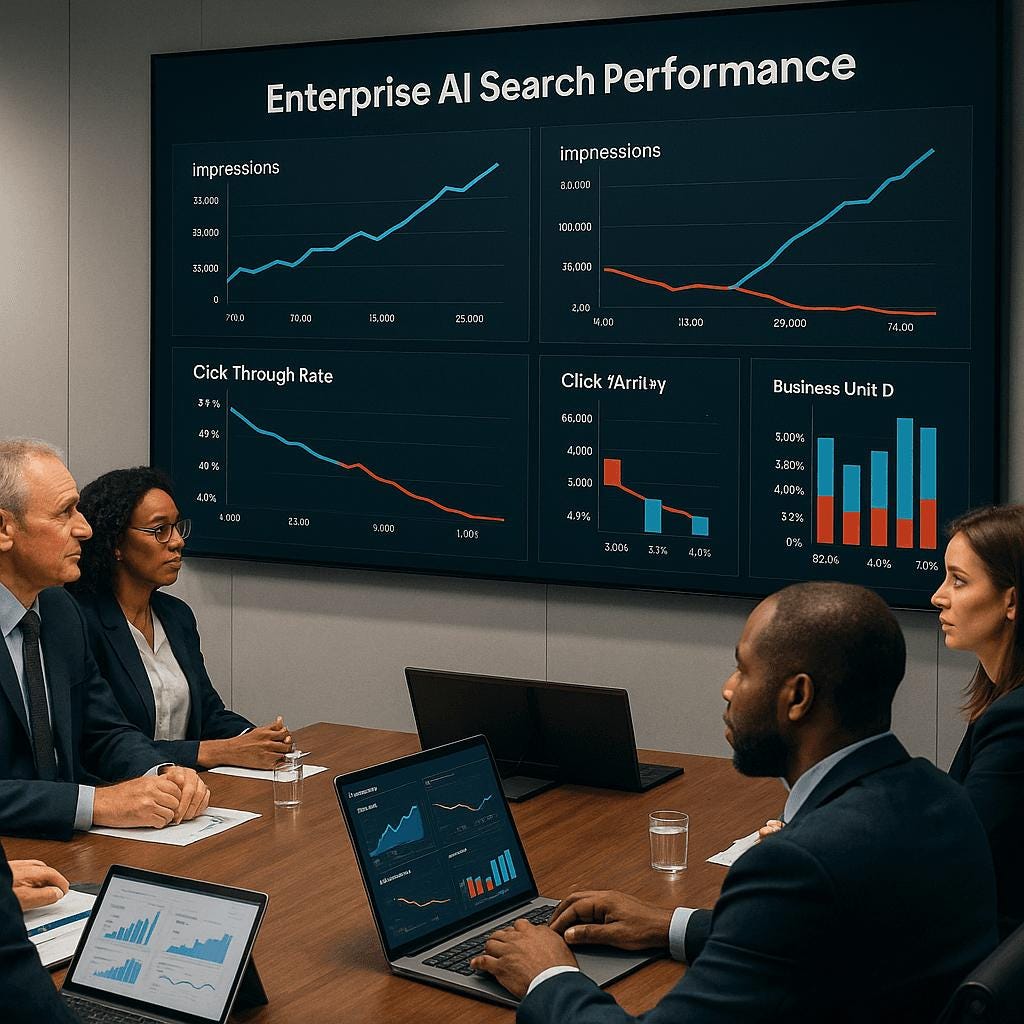
One of the most important developments for enterprise marketers is the shift from SEO visibility to AI visibility.
Marketing Week reports that B2B buying is being reshaped by AI-driven search, digital communities and peer advocacy. Its analysis argues that marketers need to rethink how influencer and expert-led content works when LLMs increasingly participate in the research process. (Marketing Week)
Another Marketing Week analysis highlights an especially interesting case: cybersecurity company Akamai reportedly generated a 133% increase in ChatGPT visibility versus competitors after changing its search strategy to better serve LLMs. (Marketing Week)
Why it matters for enterprise GTM:
The new funnel may look increasingly like:
Problem → AI research → AI recommendation → vendor shortlist → human validation → sales conversation
That means your content strategy cannot simply be designed to generate clicks. It needs to make your company understandable, quotable, credible and recommendable to AI systems.
What CMOs should ask:
What does ChatGPT/Claude/Gemini say when prospects ask about our category?
Are our executives and subject-matter experts visible beyond our own website?
Which third-party sources validate our positioning?
Are we producing content that answers buyer questions rather than simply promoting products?
Read: How influencer strategy is evolving as B2B buying enters AI era
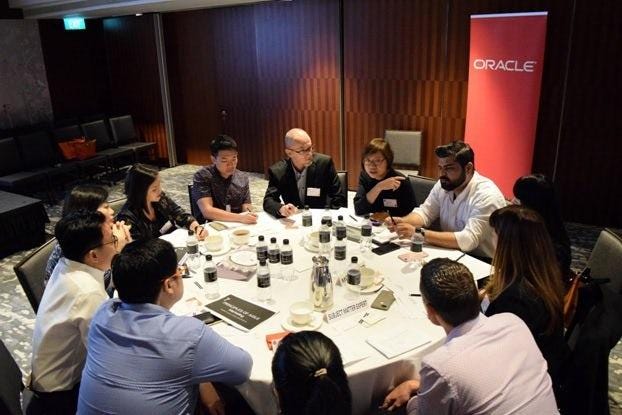
A striking APAC signal this week: 92% of brands in a study were identified as weakest on differentiation, according to Mi3’s report on the region’s B2B marketing landscape. The article also highlights Airwallex’s approach of using sport and culture to create greater distinction for the brand. (Mi-3)
This is bigger than a branding issue.
When enterprise vendors increasingly use similar language—AI-powered, customer-centric, secure, scalable, innovative—the category itself becomes commoditised.
For companies selling across Singapore, Australia, India, Indonesia, Malaysia and other APAC markets, the answer isn’t simply “localise the website.”
The stronger play is to localise the point of view.
Instead of:
“We help enterprises transform with AI.”
Move toward:
“Here’s the specific operational problem enterprises in [industry/market] are facing—and why conventional approaches fail.”
The best regional GTM teams are increasingly building differentiation around:
Proprietary data and insights
Local customer proof
Executive thought leadership
Industry-specific use cases
Strong points of view
Regional ecosystem partnerships
The lesson for CMOs: local relevance is becoming a competitive moat, not merely a localisation exercise.
Read: B2B’s sea of sameness — 92% of APAC brands studied were weakest on differentiation
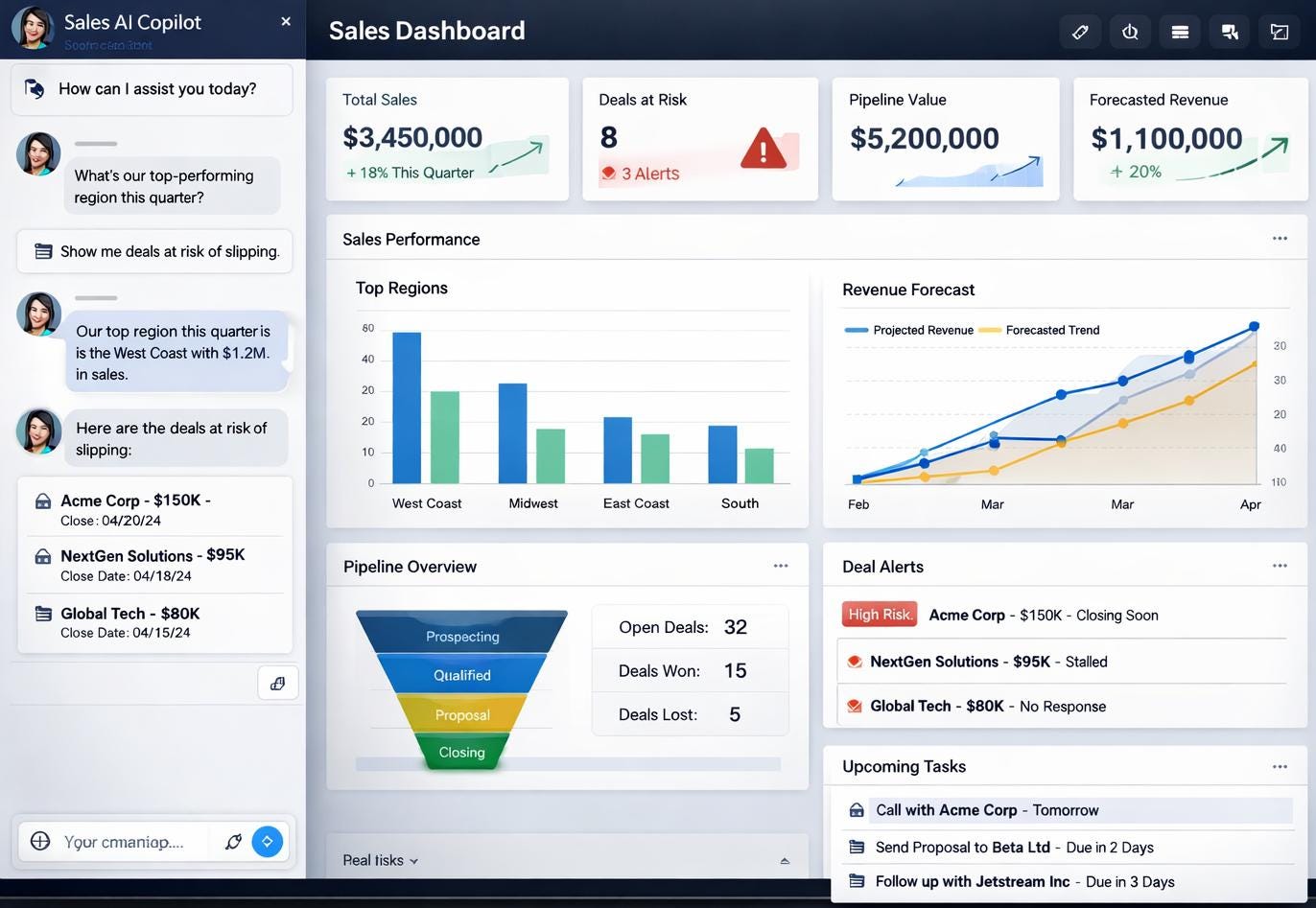
The conversation around AI in GTM is maturing.
TechRadar Pro reports that while 41% of UK businesses are using AI, only 21% have embedded it into existing systems. The focus is therefore moving from experimentation toward integration across campaigns, lead generation, content, sales enablement and analytics. (TechRadar)
That distinction matters.
The next competitive advantage isn’t having more AI tools. It’s having AI embedded into the revenue workflow.
At the enterprise level, that means connecting:
Intent → enrichment → prioritisation → personalised engagement → sales enablement → opportunity intelligence → forecasting → expansion
Salesforce’s Great India Sales, Marketing & Service Summit this week also put AI-led customer experience and enterprise growth at the centre of its agenda, reinforcing the direction of travel in one of APAC’s largest enterprise markets. (Salesforce)
Don’t ask:
“How many AI tools are our teams using?”
Ask:
“Which revenue workflow is materially faster, better or more predictable because of AI?”
That shift moves AI from a technology budget discussion into a commercial productivity discussion.
Read: From experimentation to execution — why AI in B2B marketing must now prove commercial value
Read: Salesforce Great India Sales, Marketing & Service Summit
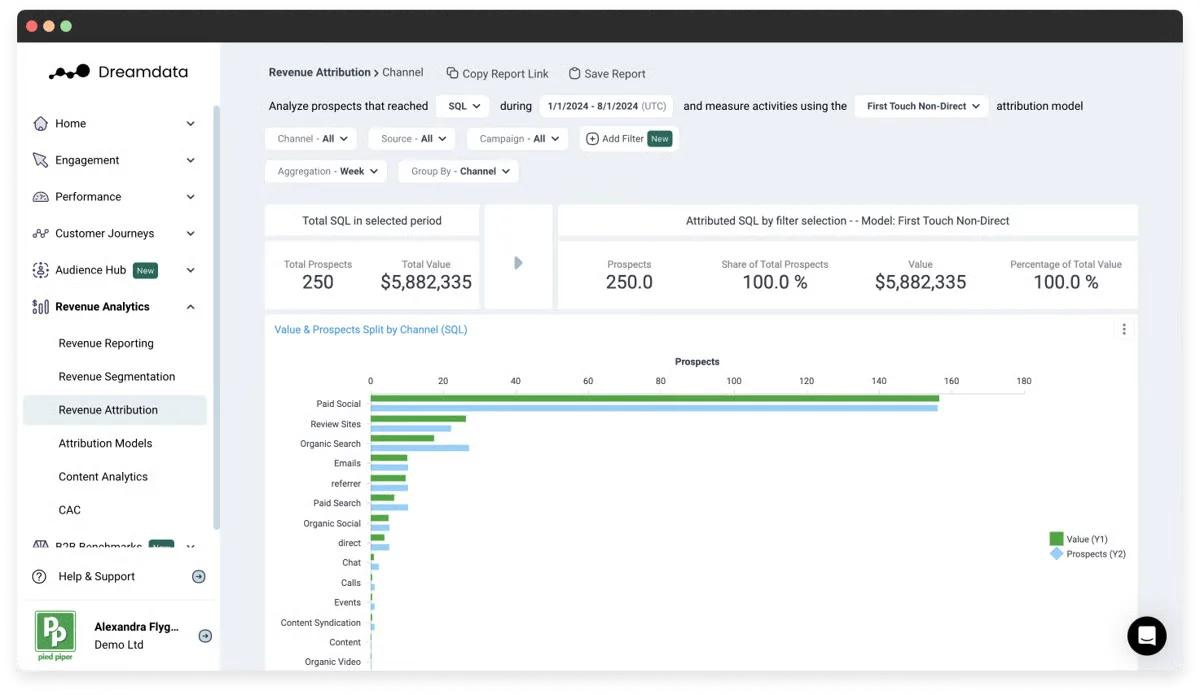
A particularly relevant piece for enterprise GTM leaders this week comes from MarTech.org: long B2B sales cycles make conventional marketing measurement unreliable.
When deals take months—or years—clicks, leads and short-term conversions can create a misleading picture of marketing’s contribution. (MarTech)
This is especially relevant for companies selling complex solutions across APAC and EMEA.
A prospect might:
See your executive’s LinkedIn post.
Encounter your brand through an AI answer.
Attend an industry event.
Read a third-party report.
Visit your website three months later.
Engage with sales.
Enter an opportunity six months after first contact.
Close a year later.
A last-touch model may attribute the entire outcome to step 5 or 6.
Don’t just ask:
“Which channel generated the lead?”
Ask:
“Which combination of activities increased account engagement, accelerated progression and influenced revenue?”
That means CMOs and CROs should increasingly measure:
Account engagement
Buying-group penetration
Executive engagement
Intent progression
Opportunity velocity
Pipeline influence
Win rate
Expansion
Revenue contribution
Read: Why long sales cycles make B2B marketing so hard to measure
☐ Audit your brand’s visibility in AI-generated answers for your top 10 buying questions.
☐ Identify three areas where your positioning sounds interchangeable with competitors.
☐ Reallocate some content investment toward original research, executive POV and customer evidence.
☐ Establish an AI-search/GEO KPI alongside traditional SEO metrics.
☐ Review whether reps are receiving buyer context, not just lead scores.
☐ Identify where AI can remove manual work from prospect research and account preparation.
☐ Build plays around buying groups rather than individual leads.
☐ Measure opportunity velocity—not simply activity volume.
☐ Ask which AI investments are producing measurable commercial outcomes.
☐ Challenge your leadership team to define your company’s strongest regional differentiation.
☐ Review whether marketing and sales are operating against the same ICP, account priorities and revenue definitions.
☐ Treat APAC/EMEA as distinct GTM environments rather than one international market.
14–15 October 2026 | Singapore
A major APAC gathering for B2B CMOs and marketing leaders, covering profitable growth, pipeline, brand, leadership, AI, ABM, sales-marketing alignment and revenue accountability. The programme specifically addresses AI agents, AI search/zero-click discovery and strategic ABM. (B2B Marketing Leaders)
15 September 2026 | London
A full-day B2B marketing event focused on practical insight, peer discussion and the rapidly changing B2B marketing environment. (Hallam)
28–29 September 2026 | London
Forrester’s EMEA B2B forum brings together marketing, sales and product leaders dealing with changing buyer behaviour, digital transformation and the challenge of connecting GTM activity to business outcomes. (Forrester)
Forrester events & registration
The enterprise buyer is increasingly forming an opinion about your company before speaking to your sales team—through AI, communities, peers and third-party content. The winners will be the GTM organisations that influence that decision earlier, differentiate more sharply and measure commercial impact rather than activity.
The Builders Club | GTM Council
Weekly intelligence for leaders building and selling into enterprise markets.
No posts
Comments
Nothing yet. Say the first thing.
Sign in to join the conversation.