
This week’s developments reveal a fundamental shift in how governments and enterprises view technology infrastructure. Data centers, semiconductors, cloud platforms, AI models and digital identity systems are no longer simply technology assets—they are becoming strategic national capabilities.
Across Europe, policymakers and technology leaders are openly discussing dependence on US cloud providers and AI platforms. The conversation has evolved from innovation to sovereignty. Organizations are increasingly asking whether their most critical workloads should depend on infrastructure located outside their regulatory jurisdictions.
India, meanwhile, continues demonstrating how Digital Public Infrastructure can become a growth engine. What began as a digital identity initiative has evolved into one of the world’s largest technology ecosystems, influencing governments globally.
In the Gulf, sovereign wealth funds and governments are investing heavily in AI infrastructure, creating an emerging technology corridor connecting Europe, Asia and Africa. These investments are positioning the region as a future hub for cloud, AI training and inference workloads.
For enterprise leaders, the key takeaway is clear: AI strategy is no longer only about models and applications. It is increasingly about infrastructure, regulation, energy availability and geopolitical resilience.

Europe’s AI debate has entered a more urgent phase. During recent discussions at the Paris AI ecosystem gathering, leaders from governments, technology companies and research institutions emphasized the need to build independent AI capabilities before dependence on external providers becomes irreversible.
The concern extends beyond AI models. European leaders are increasingly focused on ownership of cloud infrastructure, availability of compute resources, semiconductor access and the ability to develop AI systems that comply with regional regulations. The rise of Mistral AI is viewed not merely as a startup success story but as evidence that Europe can create competitive alternatives to American AI giants.
For CIOs and CTOs, the message is significant. Enterprises operating across multiple jurisdictions may soon need multi-region AI strategies that balance performance, compliance and sovereignty requirements. The next generation of technology architecture may be defined by geopolitical considerations as much as technical capabilities.
Why it matters: AI infrastructure decisions made today could determine compliance flexibility and operational resilience for the next decade.
Reference:
https://www.businessinsider.com/mistral-ai-summit-europe-ai-future-waking-up-2026-5
One of the most notable developments this week was the growing alignment between AI policy and national security priorities. Governments across Europe and North America increasingly view advanced AI systems as strategic assets similar to telecommunications networks, energy infrastructure and semiconductor manufacturing.
This shift is driving investments in sovereign cloud environments, government-backed compute facilities and domestic AI research initiatives. Defense agencies are also exploring how AI can enhance intelligence analysis, logistics planning and cyber defense.
For technology leaders, this means future procurement decisions may involve stricter requirements regarding data residency, infrastructure ownership and model governance. Organizations operating in regulated sectors should anticipate additional scrutiny around AI supply chains.
Major AI companies have agreed to greater collaboration with government testing initiatives before releasing advanced models. This marks an important evolution in AI governance and could establish the foundation for future regulatory frameworks.
The initiative reflects concerns about model safety, misinformation, cybersecurity risks and potential misuse of increasingly capable AI systems. While voluntary today, such testing programs may eventually become mandatory across major economies.
Organizations deploying frontier AI should begin preparing for a future where model transparency, auditability and governance become standard enterprise requirements.
A growing number of European enterprises are reviewing their cloud strategies in response to geopolitical uncertainty and regulatory pressure. Many organizations are evaluating hybrid and multi-cloud architectures that reduce reliance on a single hyperscaler.
This trend is creating opportunities for regional cloud providers and managed service partners while encouraging greater investment in workload portability and infrastructure abstraction.
Technology spending patterns across the US and Europe suggest enterprises are moving beyond pilot projects. AI investments are increasingly focused on operational systems, software engineering productivity, customer engagement platforms and business process automation.
✓ Audit cloud concentration risk
✓ Map AI dependencies by geography
✓ Establish AI governance councils
✓ Review compliance readiness for emerging regulations
✓ Identify workloads requiring sovereign infrastructure

The Builders Club has partnered with Dell Technologies and AMD to give our community direct access to the best tech infrastructure for your team — laptops, desktops, servers, data storage, and dedicated infrastructure support.
Built exclusively for Builders Club members who are serious about scaling.

India’s rise as one of the world’s most digitalized economies represents more than a technology achievement. It demonstrates how public infrastructure, policy alignment and private sector innovation can combine to create large-scale economic transformation.
Digital identity, real-time payments, document exchange frameworks and consent-based data sharing systems have enabled rapid innovation across financial services, healthcare, logistics and government services.
What makes India’s approach particularly important is its replicability. Countries across Southeast Asia, Africa and the Middle East are studying India’s digital public infrastructure model as a template for their own digital transformation efforts.
For enterprise leaders, this creates opportunities to export expertise, platforms and services built around these ecosystems.
The rapid growth of AI workloads is triggering a new investment cycle across India’s technology sector. Data center operators, cloud providers and infrastructure developers are racing to expand capacity in anticipation of rising demand.
This growth is supported by increasing enterprise AI adoption, government initiatives and growing demand for domestic compute resources. Several operators have announced expansion plans targeting hyperscale cloud deployments and AI-specific workloads.
The challenge now shifts from infrastructure construction to ensuring sufficient power, connectivity and skilled talent to support long-term growth.
The UAE continues executing one of the world’s most ambitious AI infrastructure strategies. Through investments in cloud facilities, advanced computing environments and AI-focused economic zones, the country aims to become a global hub for AI development and deployment.
The strategy aligns with broader diversification goals while leveraging the country’s geographic location between Europe, Asia and Africa.
Data centers in the Gulf are evolving from commercial infrastructure into strategic national assets. Governments increasingly recognize that AI competitiveness depends on access to compute capacity, reliable energy and international connectivity.
This has led to large-scale investments involving sovereign wealth funds, telecommunications operators and global cloud providers.
India and several Southeast Asian economies continue pursuing semiconductor initiatives designed to strengthen supply chain resilience.
Recent geopolitical disruptions have highlighted the risks of concentrated manufacturing ecosystems. Governments are therefore supporting fabrication facilities, design ecosystems and advanced manufacturing capabilities.
SEA continues benefiting from rapid adoption of digital payments, cloud services and AI-driven applications. Regional enterprises are increasingly moving beyond digitization toward automation and AI-enabled business models.
✓ Lock in future compute capacity
✓ Monitor semiconductor developments
✓ Evaluate Gulf infrastructure opportunities
✓ Build regional data governance capabilities
✓ Assess export opportunities around digital public infrastructure
Australian enterprises are increasingly moving from AI experimentation to operational deployment. Organizations are focusing on measurable business outcomes rather than proof-of-concept demonstrations.
Common use cases include customer service automation, software development assistance, cybersecurity operations and enterprise knowledge management.
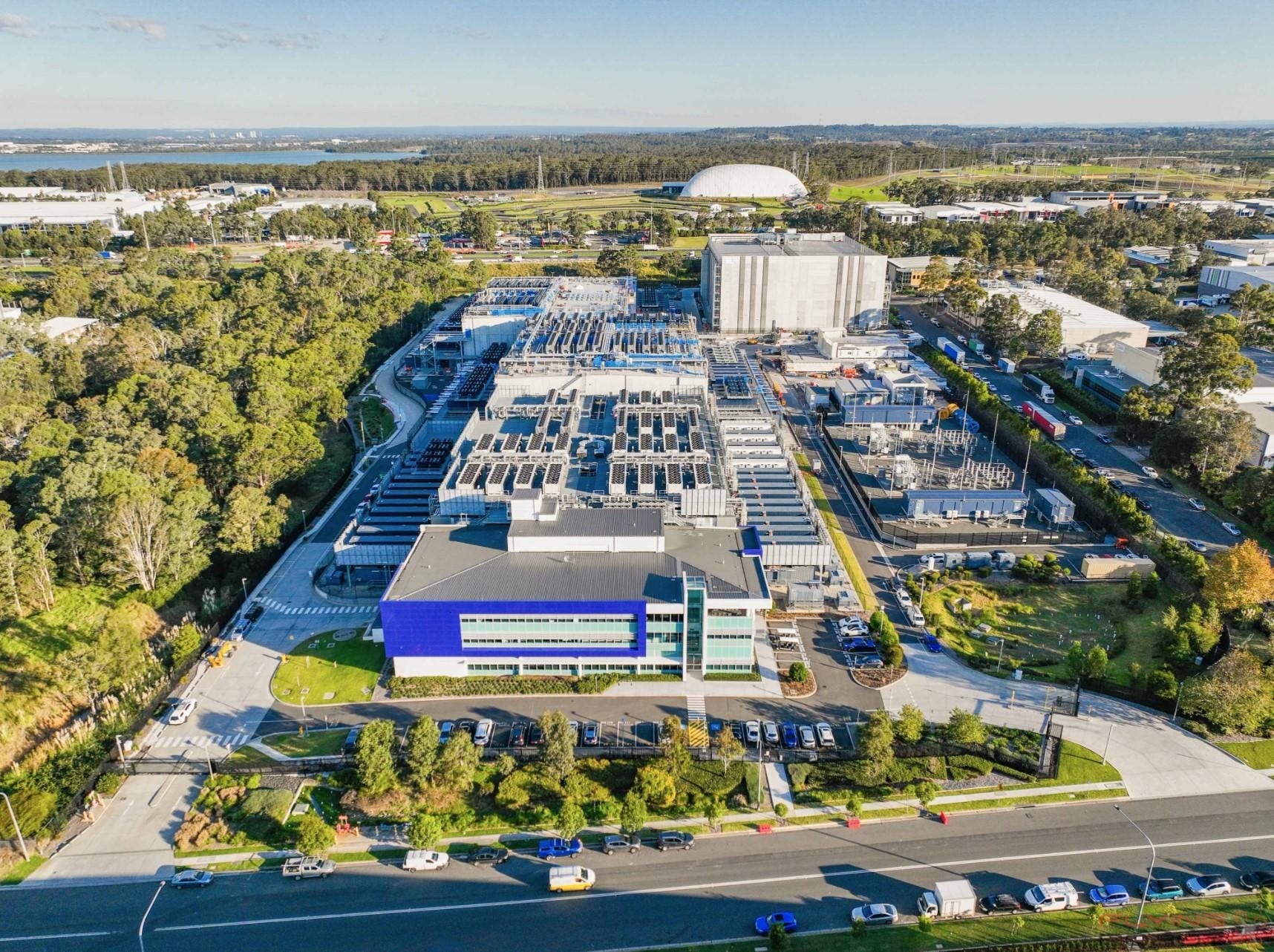
The rapid growth of AI workloads is driving increased investment in Australian data center infrastructure. Operators are expanding facilities to support cloud growth, AI processing requirements and sovereign hosting demands.
Security leaders are increasingly leveraging AI to improve threat detection and incident response. At the same time, attackers are adopting AI tools to automate reconnaissance, phishing and social engineering campaigns.
Many Australian organizations report difficulty recruiting AI specialists, cloud architects and cybersecurity professionals. Talent shortages are increasingly cited as a greater challenge than technology acquisition.
Directors and executive leadership teams are seeking greater transparency around AI risks, ethical considerations and operational controls.
✓ Define AI ROI metrics
✓ Expand workforce upskilling
✓ Strengthen cybersecurity resilience
✓ Review AI governance structures
✓ Align infrastructure plans with future AI demand
Europe’s largest technology gathering, expected to focus on AI sovereignty, cloud infrastructure, cybersecurity, and digital innovation. Watch for announcements from major hyperscalers, AI startups, and policymakers that could shape enterprise technology strategies across Europe.
Why it matters: Signals on European AI regulation, sovereign cloud adoption, and enterprise technology investment trends.
Registration: https://londontechweek.com/
urope’s flagship startup and innovation event where AI, digital infrastructure, and emerging technologies take center stage. Major announcements from AI companies, venture investors, and enterprise software providers are expected.
Why it matters: Early indicators of AI innovation trends and enterprise adoption across Europe.
Registration: https://vivatech.com/
A key forum bringing together cloud providers, data center operators, and government leaders to discuss AI infrastructure and regional digital transformation.
Expected discussions around India’s AI Mission, compute infrastructure, semiconductor ecosystem, and enterprise AI adoption.
Why it matters: Provides a view into India’s next phase of AI-led growth and digital infrastructure expansion.
Registration: https://indiaai.gov.in/
IA leading event for CIOs, CTOs, and data leaders focused on AI governance, analytics, enterprise architecture, and data modernization.
Comments
Nothing yet. Say the first thing.
Sign in to join the conversation.