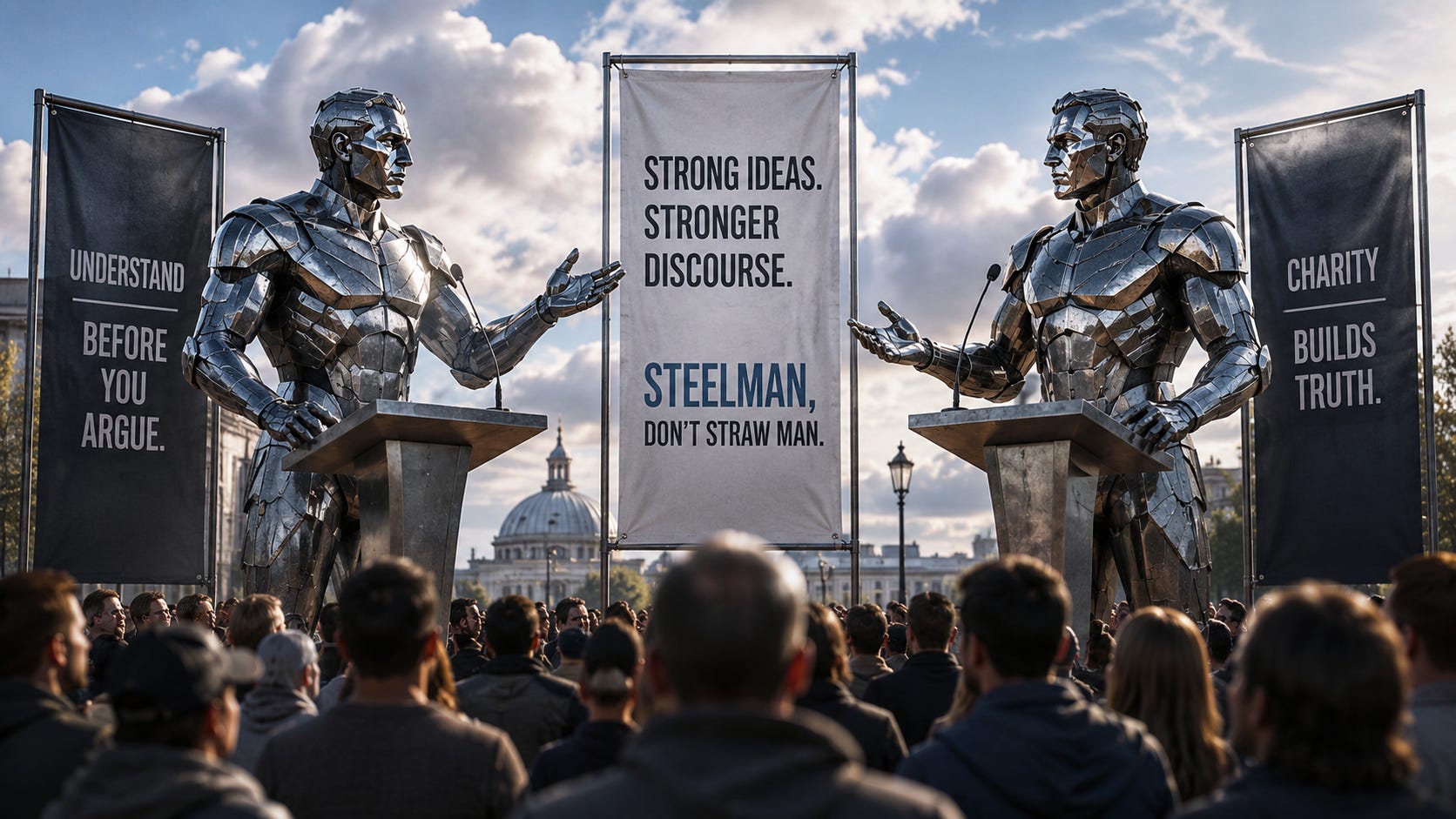
Steelmanning: The Lost Art of Arguing Against the Best Version of Someone’s Idea
It improves debate, reduces misunderstanding, and creates more productive discourse because people feel heard rather than caricatured.

Because better conversations build a better world.
Live Last read · last published · next check
It improves debate, reduces misunderstanding, and creates more productive discourse because people feel heard rather than caricatured.
What research says about extreme rhetoric, political violence, free speech, and why responsible dialogue matters more than ever.
A closing chapter for Fallacy Friday. How to recognize bad arguments, respond with composure, and keep conversations human even when debate gets messy.
The current, standard format rewards comfort, control, and chemistry, not real opposition or accountability.
Everyone thinks they’re reasonable until they’re not. Here’s how to recognize when you’re the friction in a conversation and adjust without losing confidence.
Emotional appeals are everywhere, but when they replace evidence in a discussion, they can derail reasoning. Learn how to spot and respond to this fallacy.
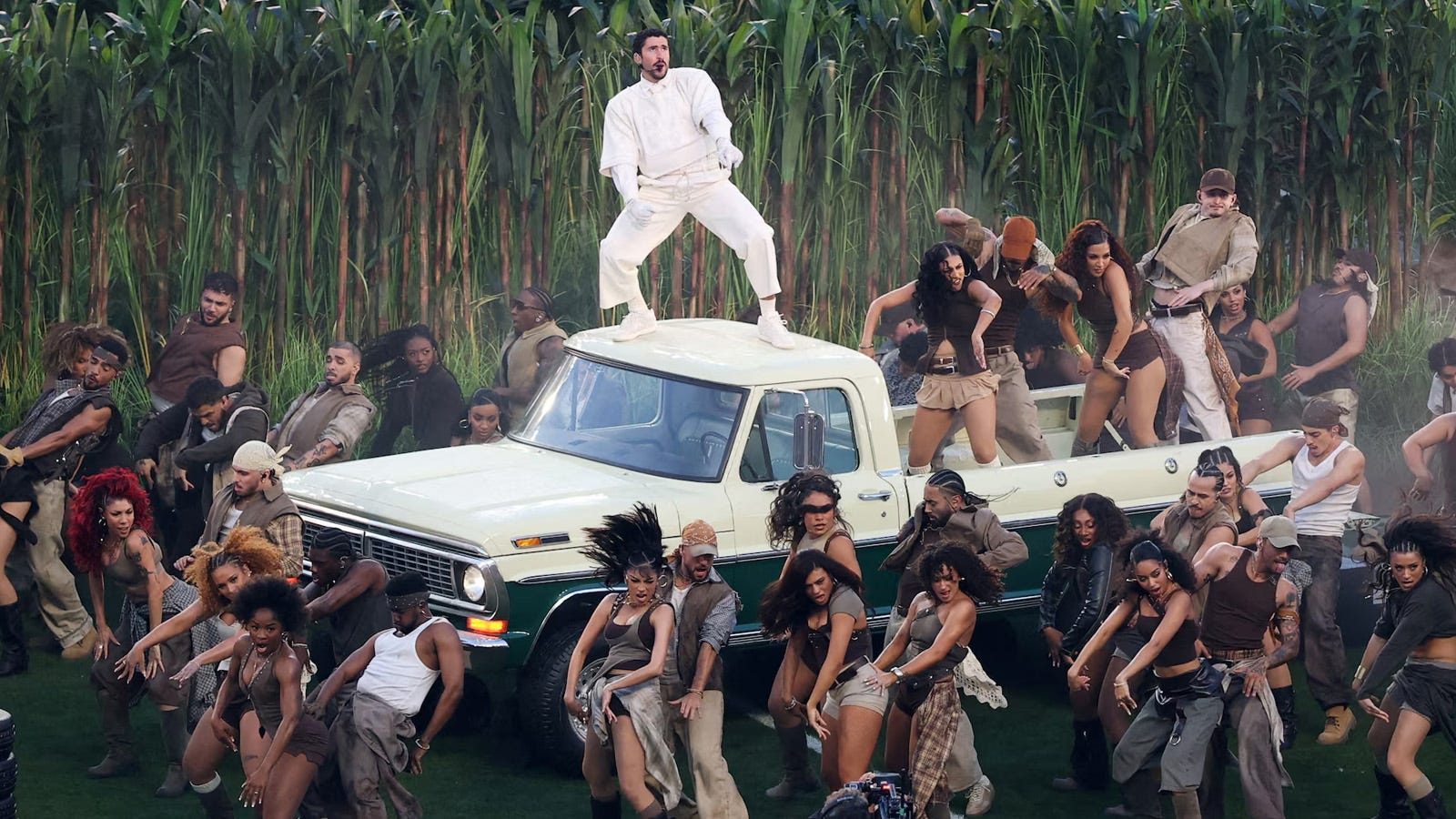
The halftime show lasted 13 minutes. The debate lasted all night. What the reactions to Bad Bunny’s performance reveal about how we argue now.
Spoiler: ChatGPT is an excellent debater. That’s exactly the problem.
When someone selects only the evidence that helps their case and ignores the rest. How cherry picking works, how to spot it, and how to respond without escalating.
Small talk isn’t a dead end. It’s the first step. Here’s how to move naturally into deeper, more memorable conversations using Alison Wood Brooks’ pyramid.