
TL;DR
Bad Bunny’s halftime show lasted minutes. The debate about it lasted all night. The way people argued about it says more about how we handle cultural moments now than about the performance itself. Shared experiences quickly turn into identity debates, amplified by social media and shaped by generational differences.
By the time Bad Bunny finished his Super Bowl halftime set, the internet had already decided what it meant.
For some people, it was a joyful celebration of Latino culture on the biggest stage in America. For others, it was proof that the country had “lost its way.” For many, it was simply a great show with infectious music and wild visuals. But those three reactions rarely crossed paths. They lived in different feeds, different comment sections, different realities.
The performance lasted about thirteen minutes. The arguments about it went on for days.
And that gap between the show itself and the way people talked about it afterward is where things get interesting.
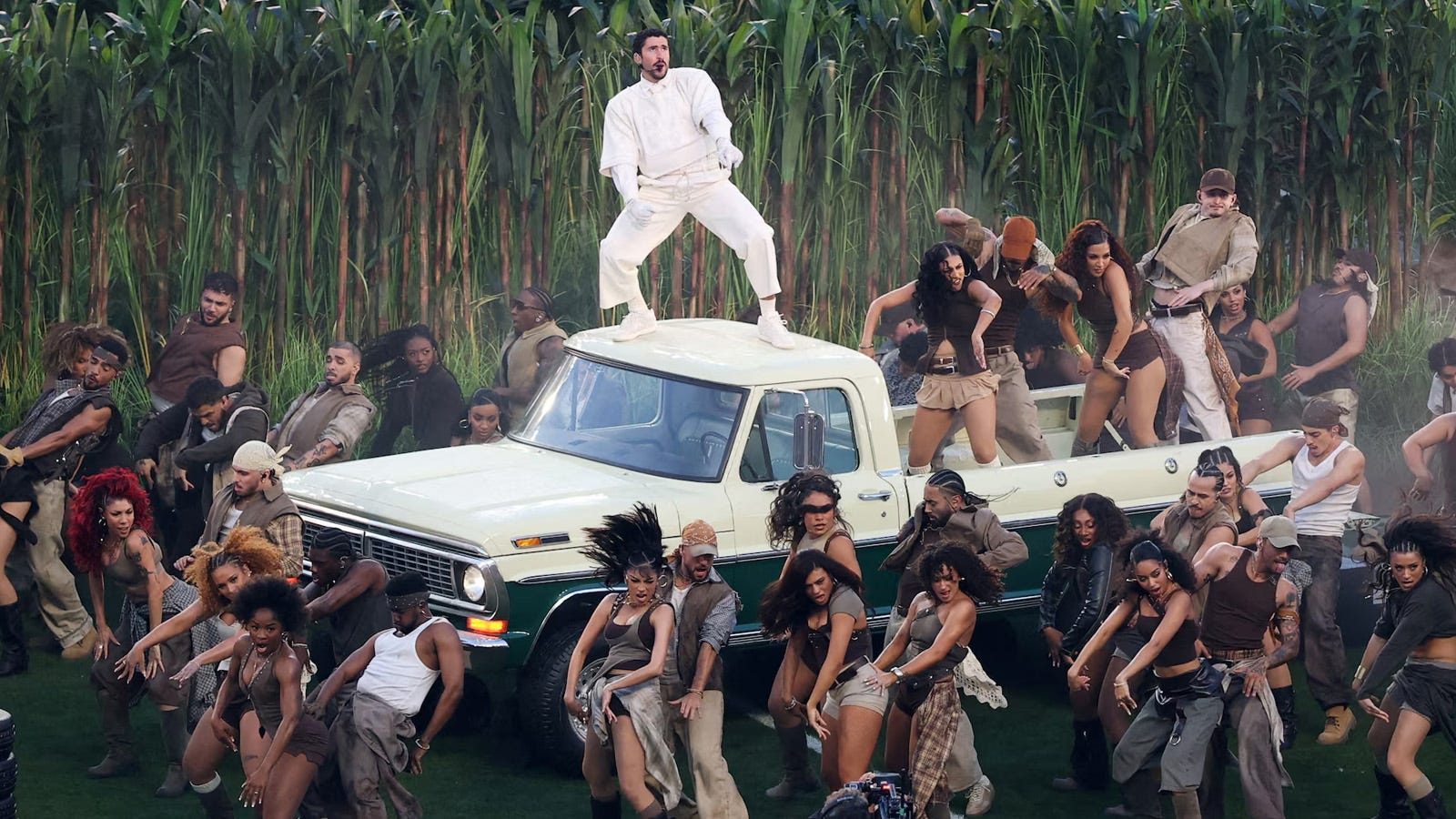
On the field, Bad Bunny delivered exactly what he does, and what he promised. High energy. Spanish lyrics. Visuals drawn from Puerto Rican culture. A massive, celebratory party broadcast to more than a hundred million viewers.
Online, the conversation barely focused on the music.
Instead, people argued about whether it was “too political,” whether Spanish belonged on the Super Bowl stage, whether the NFL was making a cultural statement, whether this best represented America in the year of our 250th Birthday, and whether enjoying it meant you were making some kind of ideological choice.
The actual performance quickly became secondary to what people believed it symbolized.
This is something that happens a lot now. Cultural moments don’t stay cultural. They get pulled into identity debates almost immediately.
Bad Bunny is Puerto Rican. He performs primarily in Spanish. He’s outspoken about immigration and Latino issues. He was the first solo Latin artist to headline the show.
All of those facts existed before Sunday night. But once the lights came on and the cameras rolled, they turned into talking points.
Some viewers saw representation. Others saw provocation. Many never even discussed the choreography, the set design, or the music itself. They jumped straight to what the performance meant for the country.
This is a pattern we’ve seen with other halftime shows in recent years. The performers change, but the reaction template stays the same. The event becomes a stage for a debate that was already simmering.
The Super Bowl happens to be one of the last events that nearly everyone watches at the same time. When something like this occurs in that space, it becomes a national Rorschach test.
A generation ago, people would have talked about the show the next morning at work. Now, they start talking about it while it’s happening.
Clips get posted instantly. Reactions get amplified instantly. Hot takes travel faster than the performance itself.
Most people didn’t see a neutral cross-section of opinions. They saw reactions filtered through their existing networks. If your feed leaned one way, you saw praise. If it leaned another way, you saw outrage.
That makes it easy to believe that “everyone” feels the same way you do and that the other side is unreasonable or extreme.
This isn’t unique to Bad Bunny. It’s how public conversation works now. A shared experience splinters into separate interpretations within minutes.
Become a better communicator
with our curated books & resources.
+ purchasing books referenced in this article helps us too!
Younger viewers, especially those who already listen to global music, mostly treated the show as normal. They danced. They posted clips. They talked about the guest appearances and the visuals.
Older viewers, or those less familiar with Bad Bunny’s music, were more likely to focus on what felt unfamiliar. The language. The style. The symbolism.
That gap isn’t just about musical taste. It’s about comfort with a version of American culture that looks and sounds different than it did a few decades ago.
The halftime show became a place where those differences were suddenly visible at the same time to millions of people.
One of the striking things about the discourse was how quickly people moved past curiosity.
Very few asked, “What was he trying to express?” or “Why might this matter to some viewers?” Most people started with a conclusion and worked backward from there.
If someone disliked the show, it was evidence of cultural decline. If someone loved it, it was evidence of cultural progress.
There wasn’t much space in between for “I’m not sure how I feel yet” or “That’s interesting, I hadn’t thought of it that way.”
That’s not a Bad Bunny problem. That’s a debate problem.
What made this moment revealing is that the show itself wasn’t especially confrontational. It was celebratory. It leaned into culture, music, and spectacle. It didn’t lecture the audience.
The intensity came from the audience’s interpretation, not the artist’s delivery.
That tells you something about the climate we’re in. People are primed to see statements where there may only be expression. They’re quick to sort events into political categories before letting them exist as cultural ones.
The way people argued about this halftime show is the same way they argue about movies, commercials, award shows, and even sports themselves now.
Entertainment is no longer neutral ground. It’s another front in a larger conversation about identity, belonging, and change.
And because those topics are deeply personal, the tone of the debate often becomes sharper than the subject seems to warrant.
For all the noise, one thing stood out. A lot of people who didn’t know Bad Bunny before Sunday now do. Some who were skeptical admitted later that they enjoyed parts of the performance. Others learned a little more about Puerto Rican culture than they expected to.
That’s easy to overlook when the loudest voices are arguing. But it’s there.
Sometimes, even when debates get messy, exposure still leads to understanding for people who are willing to let it. Want to argue about this? Do it on Taout.tv.
Comments
Nothing yet. Say the first thing.
Sign in to join the conversation.