
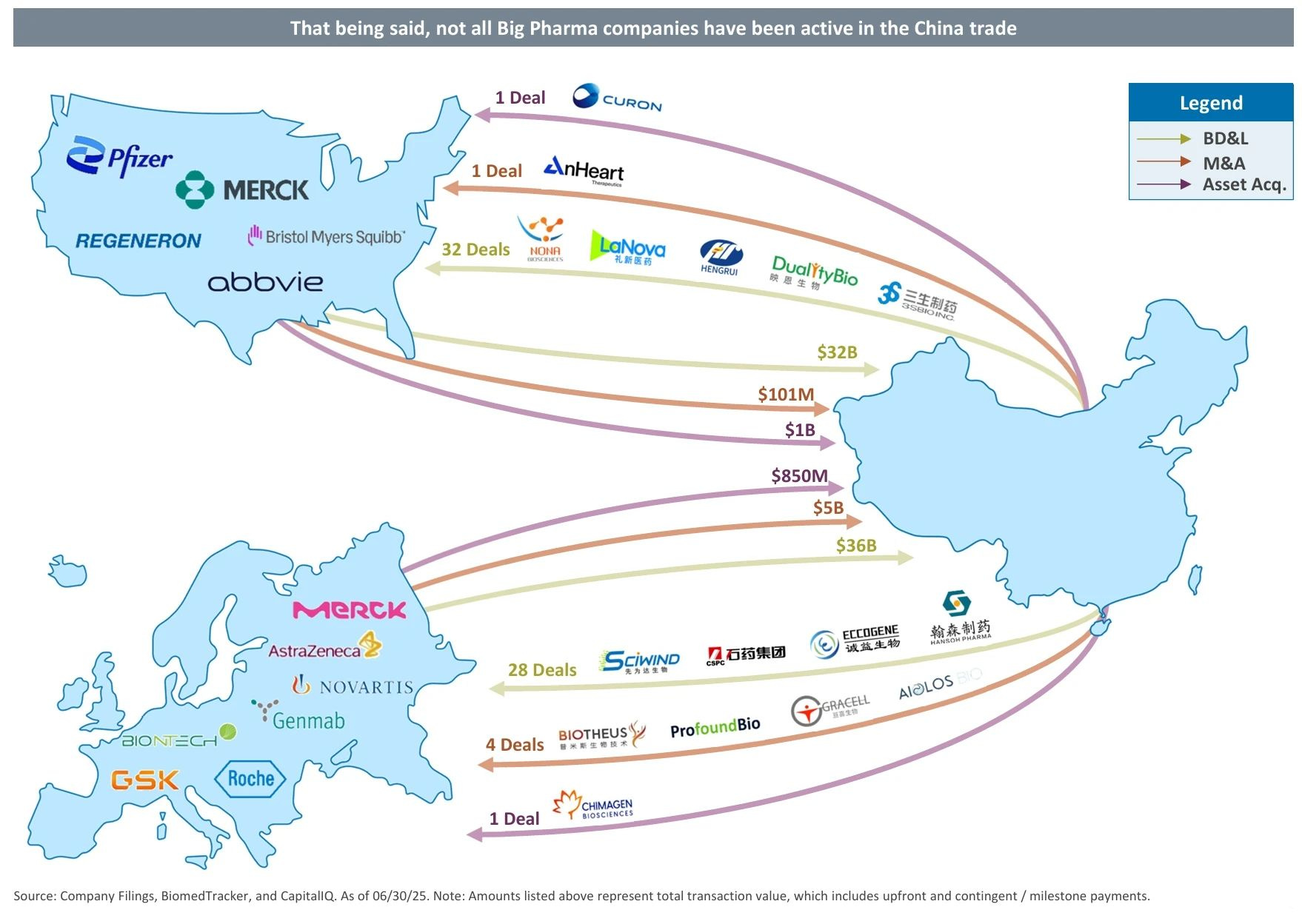
As U.S.–China relations settle into a fragile equilibrium amid an upcoming tariff extension expiry on Aug 12, 2025, and potential regulatory crosswinds, many of China’s innovative pharmaceutical companies find themselves under sharper international scrutiny. Despite this ongoing uncertainty, Hong Kong’s benchmark Hang Seng Index advanced 23 percent year‑to‑date as of July 31, 2025, reflecting investor confidence in sectors.
Strong capital markets performance is powered by some of these Chinese biotech companies delivering positive clinical results and, in some cases, market-leading breakthroughs. One key question to ask is why communications strategies are not keeping pace with the caliber of their science, which might undersell their true global and stock valuation potential.
One reason for this low-profile approach is the harsh funding environment for innovative biotech worldwide. As BioSpace reports, a tightening funding environment has prompted many to focus on out-licensing, a strategy that demands less upfront capital and offers a quicker route to global markets via established partners. Out-licensing aligns with their existing approach: maintain strategic visibility through one-dimensional channels such as press releases, which often results in a transactional and deal-centric communications style.
Against this backdrop, this article analyzes pharmaceutical giant Hengrui Pharma (1276.HK), which is relatively well-known within the pharmaceutical industry in China but under the radar in most other markets.
Hengrui Pharma regularly issues press releases to inform stakeholders about its latest developments. This includes information about its pipeline, which has grown to 147 projects, an increase of 38.7% since 2023. This puts Hengrui Pharma eighth globally in pipeline size, behind Johnson & Johnson and ahead of Merck. Recently, the company secured a licensing deal with GSK, potentially valued at $12 billion, which includes a $500 million upfront payment. This deal covers up to a dozen new medicines, such as HRS-9821, which is being studied to treat chronic obstructive pulmonary disease. Additionally, Hengrui's injectable GLP-1/GIP receptor dual agonist achieved an 18% weight loss in a phase 3 trial, performing on par with Eli Lilly's GLP-1/GIP agonist, Zepbound.
Compare this with Eli Lilly, which is at stage four. Apart from informational press releases, it is striving to promote mutual understanding and respect. For example, with Orforglipron, a once-daily pill poised to rival injectable GLP-1s like Ozempic, Lilly is framing it in terms of choice for patients with a fear of needles, leveraging its latest study data and empathetic messaging while acknowledging that research is ongoing to ascertain whether weight loss is sustained over time. It’s PR that is aspirational while being realistic, shaping public (especially patient) perception, policymaker trust, and getting recognized as a leader in its area of expertise.
When compared to other innovative Chinese drug brands, Hengrui Pharma is at a similar stage relative to most of its peers such as Innovent (1801.HK) and Akeso (9926.HK) with a regular press release cadence, while a few such as BeOne Medicines (6160.HK, ONC, NASDAQ) have advanced their PR strategy to be more like Eli Lilly's, with a name change, tagline of “Revolutionizing Cancer Treatment” and re-domiciliation from the Cayman Islands to Switzerland. BeOne noted that this name change reflects global ambition and an expanded oncology portfolio of over 50 active assets.
What’s next?
Many Chinese pharma innovators prioritize sales-oriented activities, particularly face-to-face meetings and events aimed at securing immediate revenue. While these engagements can help close deals, they should complement, not come at the expense of multi-channel PR and marketing. Additional sales don’t happen in a vacuum; they flourish when potential clients already understand a company’s advantages. This is where industry publications, white papers, and thought leadership can serve as high-value pre-sales tools, creating a content funnel that warms leads long before the first handshake. The companies that master this balance between relationship selling and narrative-driven marketing will be the ones to turn technical success into enduring global recognition.
So, what else should they do?
Make the science human: Ground innovations in real-world impact. Tell the story through patients, scientists, and communities.
Go multi-channel: For most companies, first-tier media such as FT and Bloomberg are out of reach at their current stage of development. Be realistic and get visible in industry media beyond press releases.
Bridge the values gap: Global investors and regulators want the context behind the numbers. Ethical sourcing, equity in access, ESG commitments, these aren’t checkboxes; they’re conversation starters for various audiences.
Don’t wait for a crisis: PR is not a post-incident patch. It’s a strategic reputation moat, build media relationships and goodwill before a crisis. Upon a crisis erupting, PR outreach by an affected brand is almost always less effective.
Given that Chinese pharmaceutical innovators’ strengths lie in their capacity to anticipate, adapt, innovate, and evolve, their PR approach should be similar, not transactional and one-directional. Such an approach is simply too risky amid a more complex and multi-dimensional world.
About the author
JX (Jaxon) Tan founded Momentum AI Communications, a boutique PR consultancy based in Singapore, with a mission to simplify science and spark engagement. He was previously based in China, where he led international communications for BGI Genomics and was head of content (APAC) for PR Newswire. Reach him on LinkedIn.
Comments
Nothing yet. Say the first thing.
Sign in to join the conversation.