
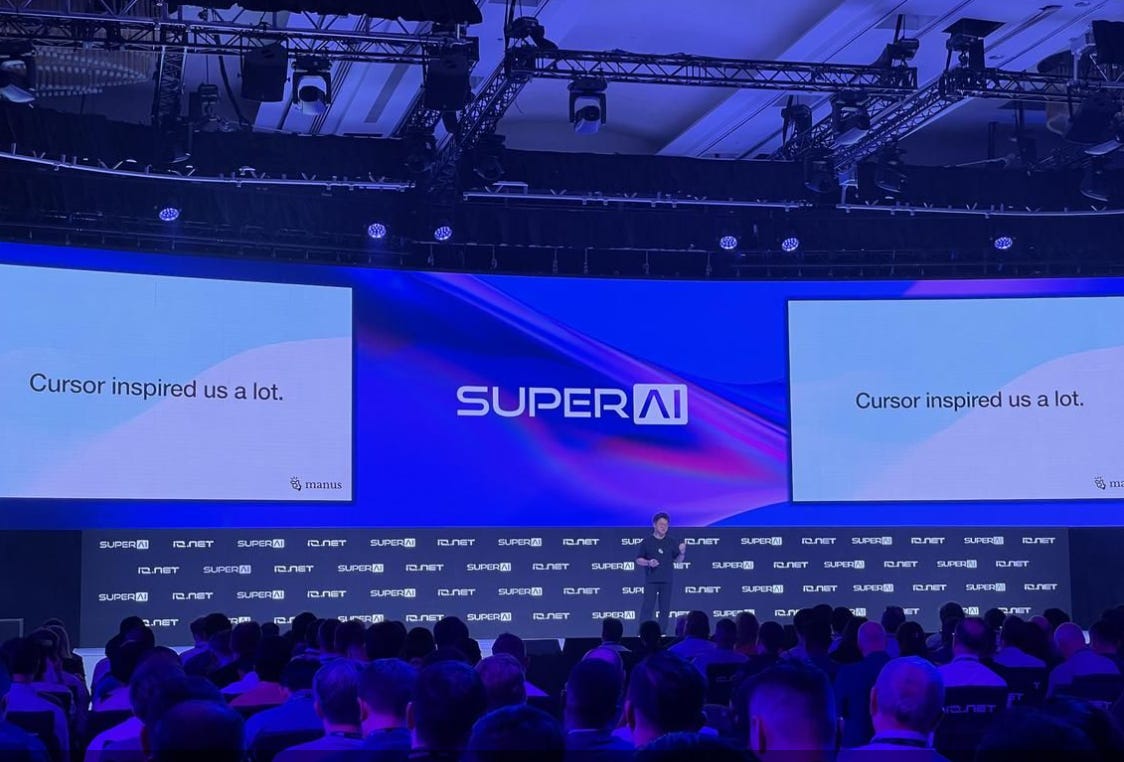
On June 18, 2025, Manus AI announced that it will establish its headquarters in Singapore, possibly to downplay its “Chinese identity” and focus on international markets. To be frank, this strategic move is not new; yet Manus AI made a few less-than-ideal moves, particularly concerning PR. Here’s a sequential checklist (with the benefit of hindsight) for other innovative companies seeking to make a similar move:
Establish a Singapore-based entity
Separate China-based operations from international operations
Transfer international operations to the Singapore-based entity
Seek investments for the Singapore-based entity
Start hiring in Singapore
Announce that your global HQ is now in Singapore
In reality, here’s what appeared to happen with Manus AI based on today’s reporting from Zaobao, Singapore’s national Chinese newspaper:
Establish a Singapore-based entity
Seek investments for the group, which includes the Chinese and Singapore-based entity
Benchmark gets a tap on the door from the U.S. Treasury Department for leading the Series B financing round for Manus AI in April, to verify whether it violated regulations restricting U.S. individuals and companies from investing in advanced Chinese technologies
Evaluate transferring international operations to the Singapore-based entity “at the request of certain investors”
Start hiring in Singapore
Announce that your global HQ is now in Singapore
Decline to answer media questions and get greeted by local news reports that Chinese and international entities have the same parent company
The problems with the latter arrangements are that they put foreign investors at risk of compliance and regulatory issues, and invite and invite a negative wave of publicity that may deter potential foreign investors, particularly from the U.S.
Yes, it’s hard to separate international operations from the China-based entity. And I’ll argue these entities should first establish which group of stakeholders will benefit from such a move and why, and to communicate the potential benefits in a targeted manner. This separation process also requires delineating technology ownership between entities, creating licensing agreements that demonstrate arms-length transactions and developing a separate patent portfolio, among others.
There will be questions expressed about whether management is independent when the books are separate. But it’s a far better look than declining to answer media queries and practically inviting them to write negative stories amid the ambiguity.
Go beyond ‘cosmetic changes’
The biggest lesson from Manus AI's inadvertent stumble amid the fast-evolving geopolitical landscape? Authenticity beats cosmetic positioning every time. Modern stakeholders—whether investors, customers, media or regulators—are sophisticated enough to see through cosmetic changes. The companies that succeed in international expansion are those that make genuine commitments to local markets and demonstrate real value creation.
The path forward isn't about hiding Chinese heritage but about building genuine global capabilities and demonstrating authentic commitment to international markets.
In today's interconnected world, your reputation travels faster than your business strategy. Make sure both are pointing in the same direction.
For those who are keen to learn more from the original Zaobao report quickly, here are the key TLDR details:
The parent company of Manus AI’s Chinese entity is 蝴蝶效应 or “Butterfly Effect.”
The parent company of Manus AI, “Butterfly Effect,” is registered in Singapore under its English name. Records from the Accounting and Corporate Regulatory Authority (ACRA) show that a company named “Butterfly Effect” was registered in Singapore in August 2023 and is wholly owned by a similarly named entity in the Cayman Islands.
Zhang Tao, a cofounder of Manus AI, delivered a keynote speech at the “SuperAI” conference held in Singapore on Wednesday (June 18, 2025), sharing how the company was founded and revealing that its headquarters is now in Singapore, but he did not accept media interviews.
Zaobao raises questions about who truly owns or controls these Chinese tech companies.
In recent years, there has been a growing number of AI startups founded by teams originating from China but headquartered in Singapore. For example, Lu Jianfeng, who has deep roots in China's tech industry, founded WIZ.AI in Singapore in 2019, which has since become a leading AI chatbot company in Southeast Asia.
About the author
JX (Jaxon) Tan founded Momentum AI Communications, a boutique PR consultancy based in Singapore, with a mission to simplify science and spark engagement. He was previously based in China, where he led international communications for a leading biotech company and was head of content (APAC) for PR Newswire. Reach him on LinkedIn.
Thanks for reading The Tao of Communications! This post is public so feel free to share it.
Comments
Nothing yet. Say the first thing.
Sign in to join the conversation.