
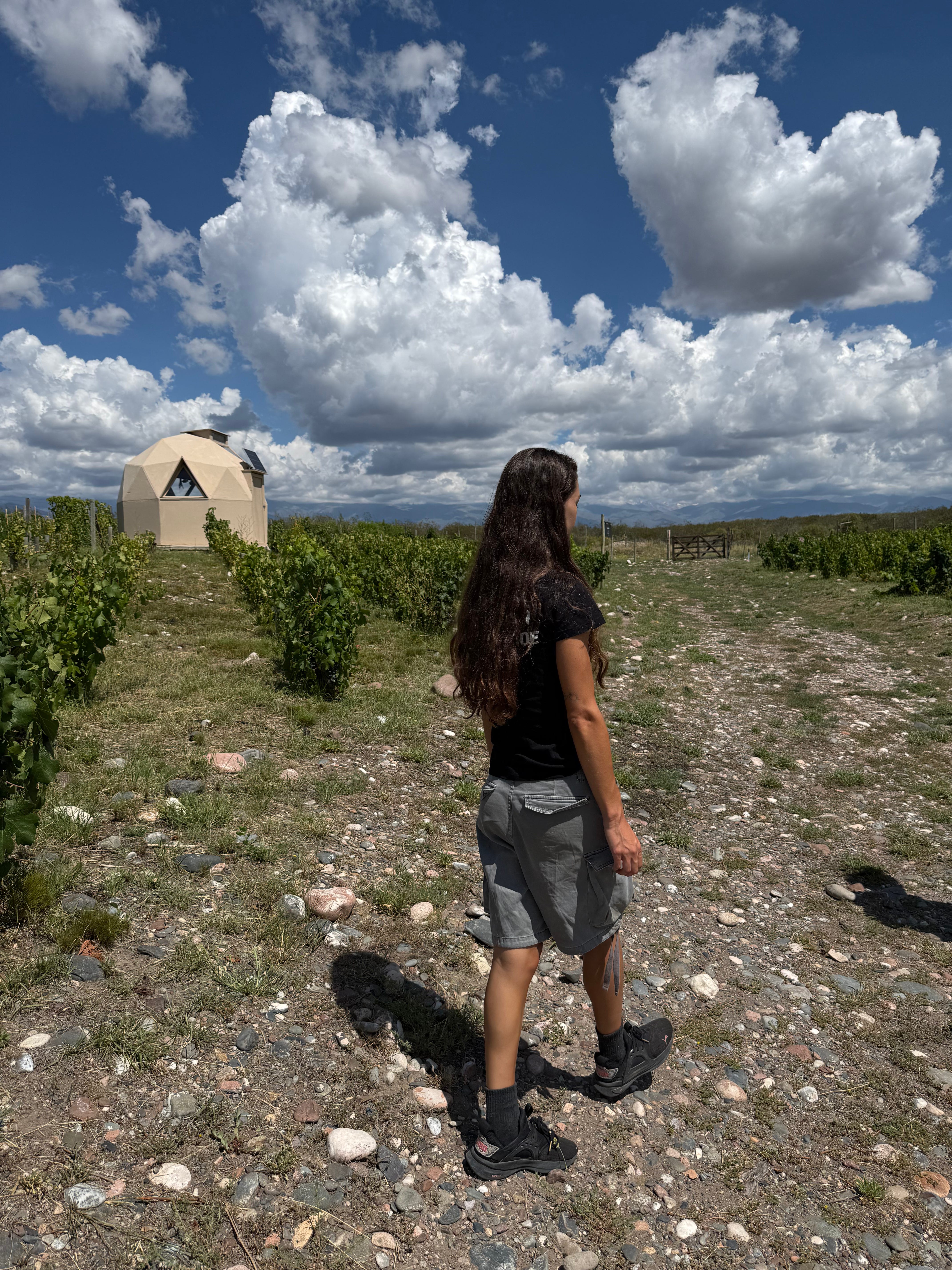
This article is part of a series - ‘La Vid Argentina’ - Letters from my two week immersive wine trip to Argentina, exploring old and new regions, wine makers I know and new voices. Observations and feelings around Latin roots, Argentina today, its makers and its wines. Que disfruten!
Right around the same time that Felipe and I were running a supper club from our apartment and doing so without knowing we were part of a bigger cultural movement, Matias Michelini was experimenting with making a wine that could go perfectly with ‘molleja a la parrilla’. ‘The thing is’, I wanted to eat a molleja a la parrilla but I knew a white wine would be too acid for it, and a red would over power it’ Matias said to me, as we tasted his Via Revolucionaria, Torrontes, the first ‘naranjo’ (orange wine) ever to be produced in Argentina over a decade ago. ‘I wanted something that felt in the middle, that would hit at the grill part and the fatty part of the molleja’.
I was intrigued by how Matias began a wine revolution without even knowing it. ‘I didn’t even know what an orange wine0 was until a reporter came to visit me, we tasted together and in his article he wrote ‘vino Naranjo’. Similarly and around the same time, Felipe and I were bringing people into our home for our Thursday’s at Worth Street culinary experiment - Dinners at our home every Thursday, different guests, always different dishes, and I would write about it. The wine would come via the lovely Christy at her shop Frankly Wines, with whom we’d share the menu beforehand. Guests could order wines from a Christy-inspired list and the bottles would arrive at our home just in time for dinner. Little did we know that there was an entire movement around us. Like Matias, we also only found out about this movement when a writer who had dined at our home wrote about us, in relation to other supper clubs doing other clandestine culinary get-togethers.
But for Matias, the writer’s discovery of his ‘naranjo’ wine wasn’t the beginning. Other writing around his wine had been done and it was mostly terrible. The thing is that a decade ago, Argentina was not prepared for Matias. We are talking about a culture that likes their Malbec only and a type of Malbec that is big, bold and oaky. But he didn’t. That kind of wine never called him. Before making his own wine he was working at making wine for others. He confessed to me that he couldn’t drink at home the wine he was making for his clients. Matias had travelled to Spain, France and Italy and had tasted what wine could be beyond the limited walls of Malbec. ‘I started tasting wine around the world, and there were some wines that would make me cry. I started really asking myself - ‘Why is this wine making me cry?” While Matias couldn’t quite comprehend what about the wine was making him cry, he understood the emotion around it and wanted to chase it.
‘Via Revolucionaria’, the name of his first line of wines is an anarchist call, it translates to ‘revolutionary road’, but his daughter Paula laughs and says that it actually also stands for the literal Latin root of the word - ‘revolutio’ as in return. She says the wines real root name is ‘the road of return’, given that all first orders were actually returned to them, deemed as ‘undrinkable wine’. Argentines could not fathom whites with such texture and malbecs that drink so easy, full of freshness and energy. Because of the ‘road of return’ the Michelinis now have an entire library of wines, dating back to 2000s.
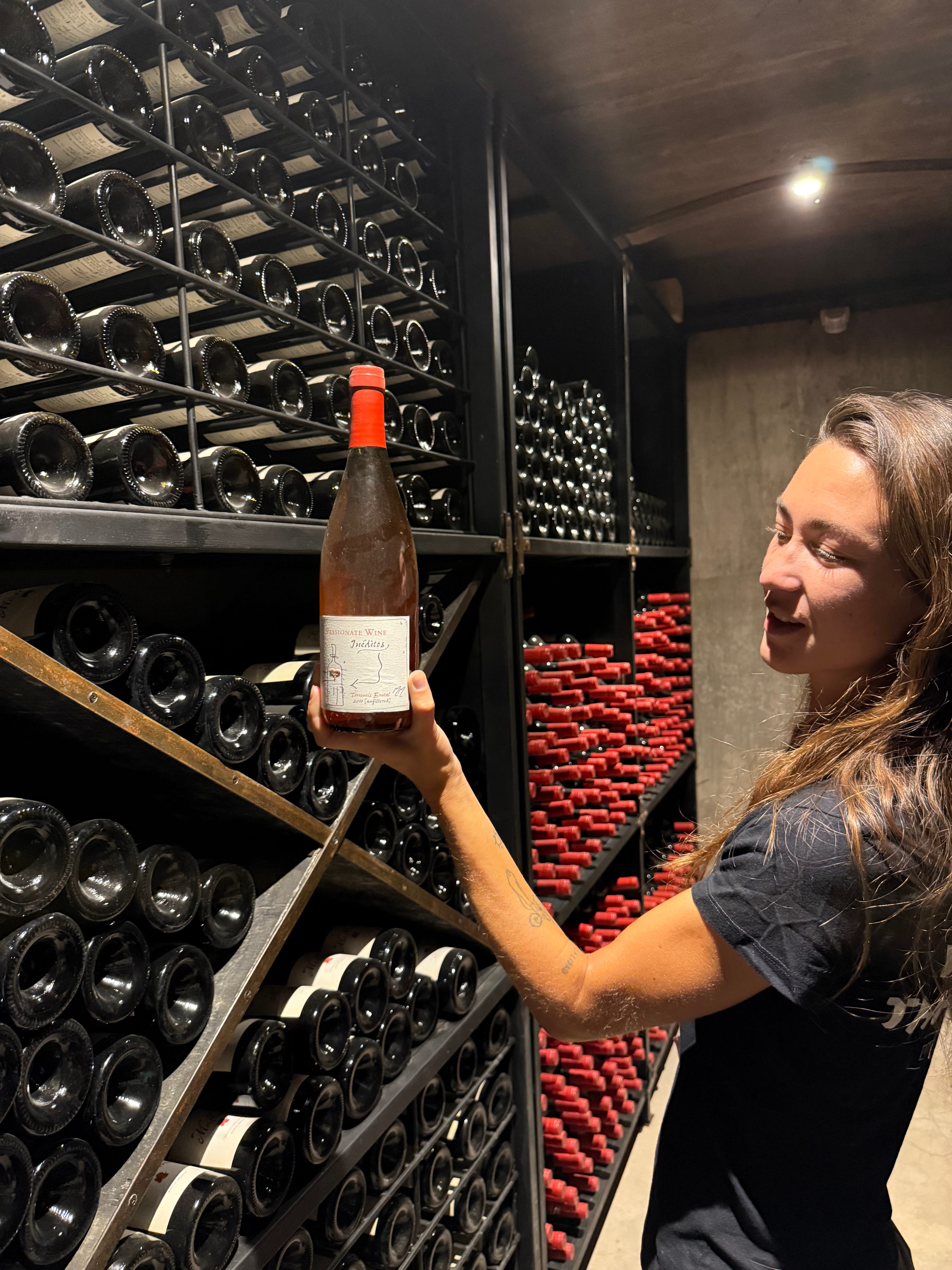
Matias doubled down; he wouldn’t back down from the type of wines he wanted to drink.
‘Porque seguir ese camino cuando la reacción no es buena?’ I asked.
I wanted to know what made him continue down a route that was so obviously not well-received. ‘Porque queria ver que hay del otro lado’ he answered. Matias believed there was something ‘on the other side’.
Via Revolucionaria finally broke through and the writer that believed in that wine wrote about it. The world began to discover ‘the other side’ of wine, a world that bends our idea of what wine should be. He took on a ‘fuck it attitude, and his next line of wines he decided to make for the pueblo, not for the critics. He called it ’Esperando a los Barbaros’, aka ‘waiting for the barbaric critics’. This time around, he expected they’d be coming for him and was ready to give them the finger. It turned out, though, they never did come for him. The wines began to be praised.
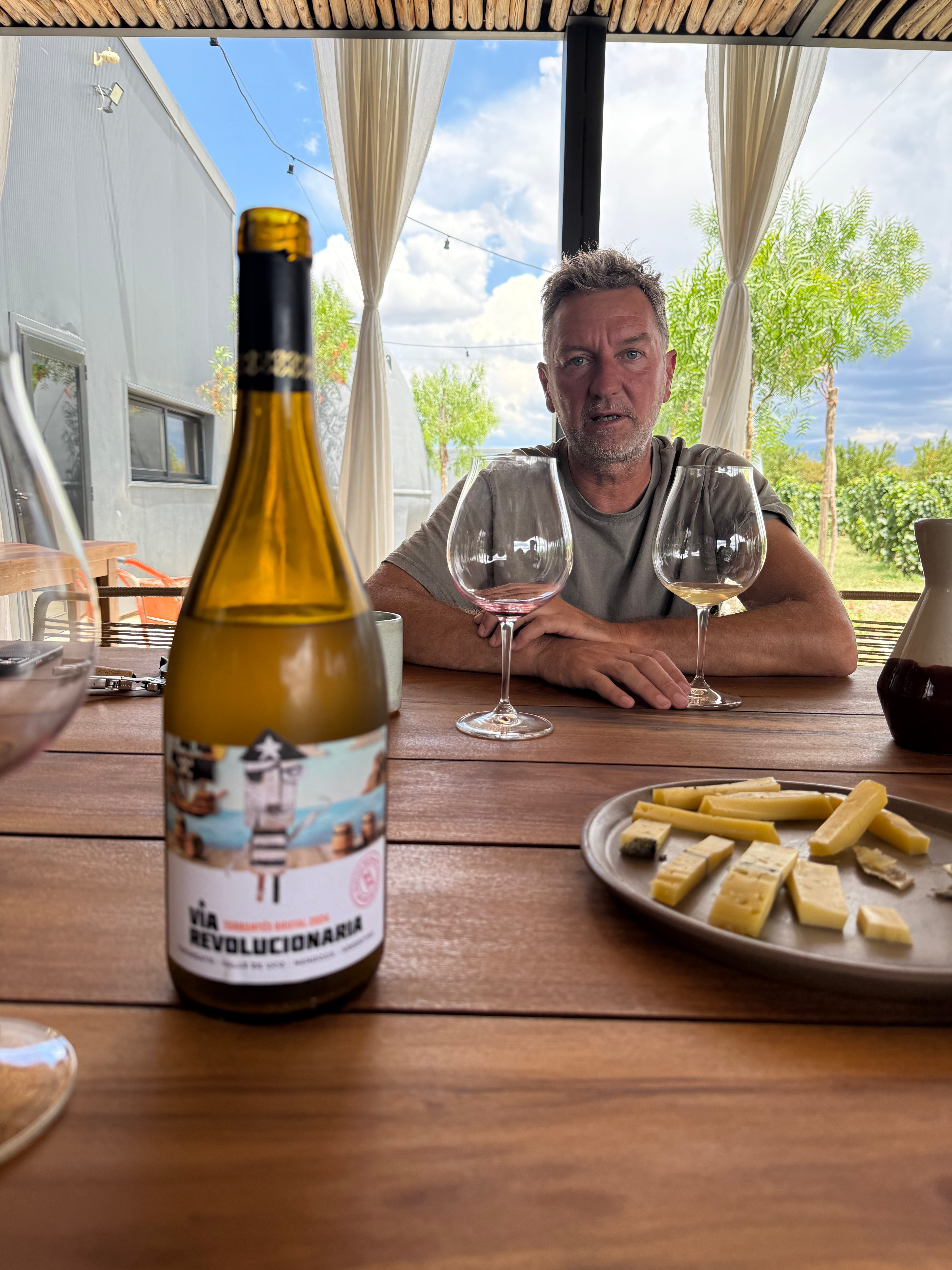
Acceptance came a decade later and Matias and his family were at their peak, enjoying being the wine of the moment and of a movement now revered and loved. The success came with a wine bar and food truck; everything was clicking.
Then the pandemic happened, and everything was lost again. The finca he was buying grapes from all these years gone, the wine bar closed.
The family was activated. ‘Why don’t we plant right here, at home’ his daughter Paula said to Matias. He knew right then and there, she was ready to jump on board, to become part of the project, to make it a family affair. The mom and brother went all in as well.
They spent COVID together, planting grapes, but also planting tomatoes and making their own honey (Matias was an apiarist before becoming a wine maker!). Matia’s wife began planting herbs and making tea and infusions with Aye, the wife of German, wine maker at Escala Humana down the street. It catapulted an entire movement of making, planting, and going into the soil.
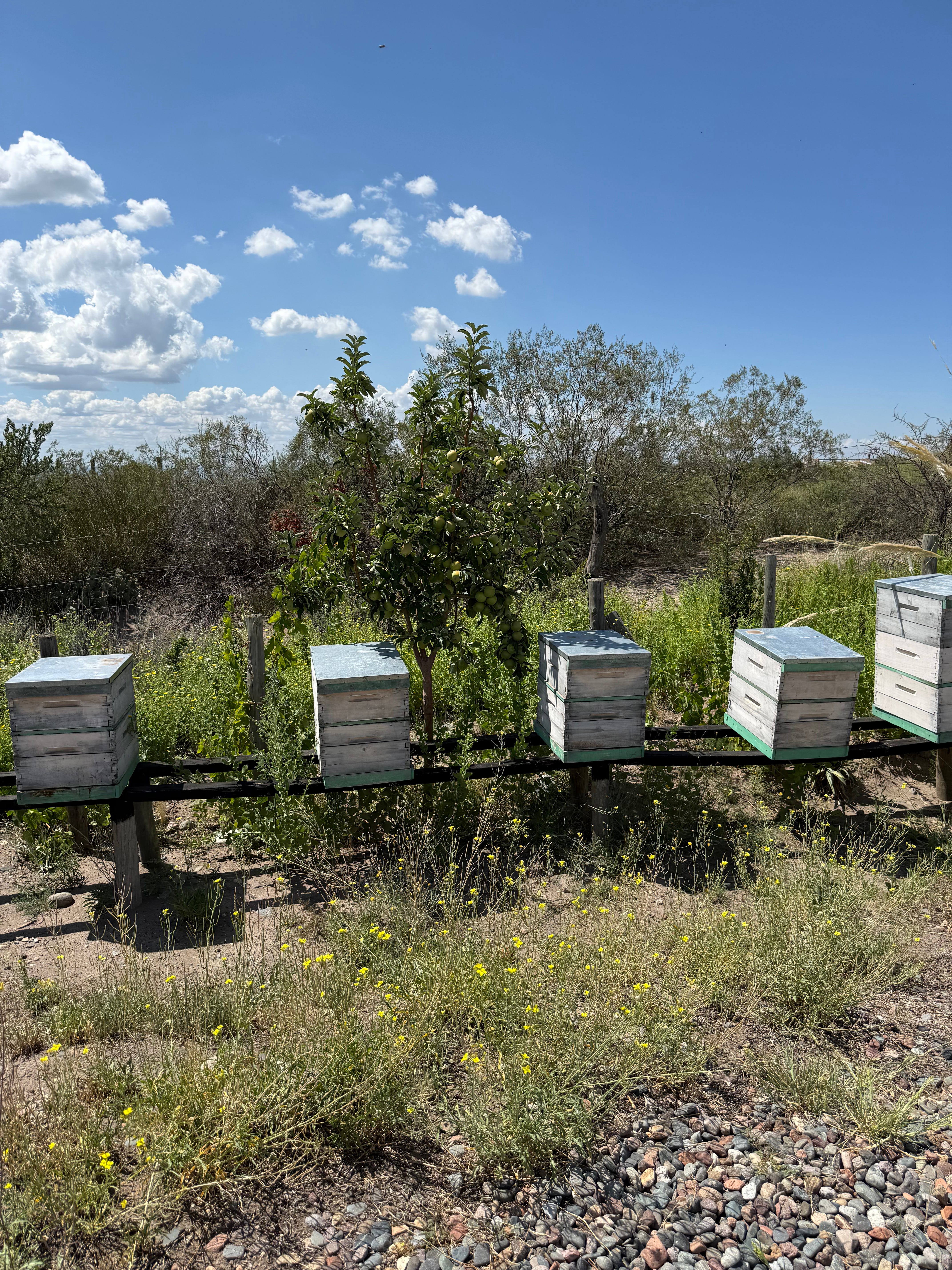
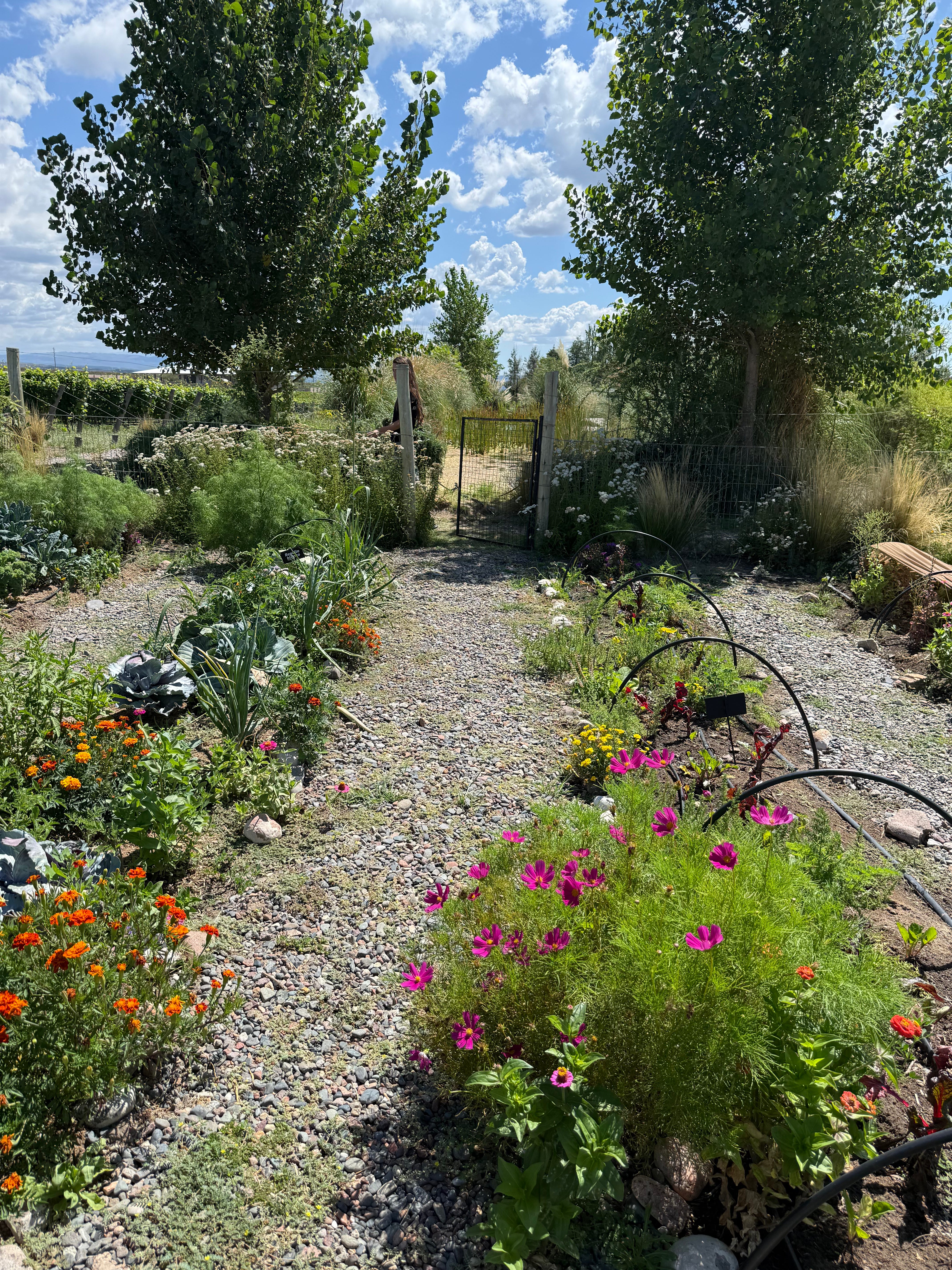
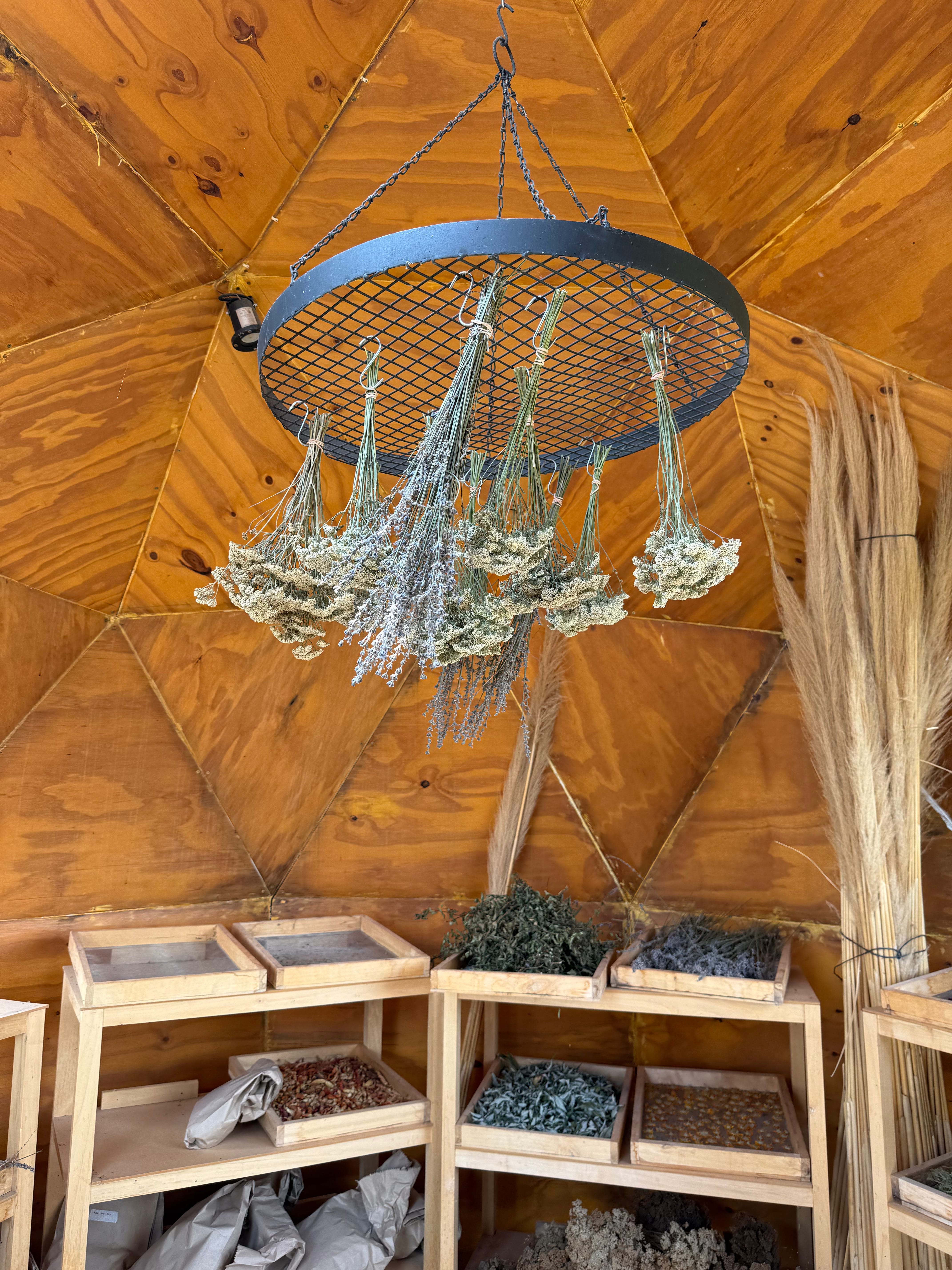
‘La vid’ demanda de nuestra atención completa’. Matias says that the vine demands so much of his family that it has changed how they live entirely. Now they live for it, versus from it. The entire revolution had happened again, except it was now happening on the ground level, amongst the vines.
Paula took us around to show us more. We got into the conversation of biodynamics. ‘Paula, ustedes tambien hacen lo de los cuerons enterrados?’. I wanted to know if they follow the biodynamic tradition of filling cow horns with manure and planting them inside the soil. ‘Claro que si’, she replied with an obvious yes. ‘Digging your hands inside shit solidifies your commitment to the land’ she said. I’ve always thought of biodynamics as ‘extra, extra benefit’ for the earth, but didn’t think of it as a practice so intense that it pulls the hand of the maker in, to fall into the ritual, to live for the vine and its surroundings. With biodynamics, everything works cyclically, and the humans behind the making fall into this cyclical fluidity as well. The makers become active participants in the land, following rituals that revere the earth and become one with it. In the Spanish language, vines are called ‘la vid’ and when I think of ‘la vid’ I think of ‘la VIDA’ aka, LIFE! The Matias family could not attest to this word better - The vine IS life.
The family now lives on the farm, with a restaurant built into it that serves only what they grow. A real turn, a true commitment. Paula, like her father, continues to pick fights with the critics and the writers. Her latest battle is against those who label the new wave of Argentine winemakers as ‘low intervention’. ‘Todo lo que hacemos es de GRAN intervención’ she had said to me, with fire in her eyes. ‘Our wines are of excessive intervention’. She was appalled at the name given to a movement she was part of. ‘It couldn’t be more opposite, she continued. ‘La vid’ demands that we are actively pursuing it, paying attention to it, listening and reacting to its needs at all times’.
The Michelini wines have grown up, they’ve become a family endeavor, they’ve been pulled into the earth. Still carrying fire, character and a rebellious edge, the wines now follow the rythm that mother earth assigns to them. Seeing Michelini and his family do wine is seeing the future of what wine can be and its looking bright, beautiful and alive.
No posts
Comments
Nothing yet. Say the first thing.
Sign in to join the conversation.