
Meet John. John is grieving. His favourite brainchild—his strategy—has passed away. It was so young, only about a year old. John has five suspects. He is certain it was a collective crime, and all five are guilty.
“It was beautiful,” John laments. “But execution killed it.”
John invited me to help him craft a new, stronger strategy. But I insist we investigate the first murder first. “Otherwise,” I say, “the next strategy will become a victim, too.”

“Our strategy is solid on paper, we just can’t seem to execute it on the ground,” John says, echoing many other CEOs. And, like most CEOs, he does not blame himself.
Very human. Mirrors only show us heroes. To find someone to blame, we use other tools.
John has five suspects:
Silo thinking within the company.
Middle managers: trapped in operations and protecting their territory.
A culture that “eats strategy for breakfast”. Employees lack initiative and fear making mistakes.
Sudden market changes and unexpected events.
A talent shortage.
I’m sceptical. Points 1 to 3 do not explain why people behave this way. What are the motives of these suspects? As for points 4 and 5, every executive team should foresee them if they have been in the business for more than a week.
I have investigated ‘strategy murders’ as an executive, CEO, board member, and consultant. I was in John’s position once, and I also blamed these five reasons for my problems. And I know that the ‘great strategy, poor execution’ approach is just a way to hide real crime evidence.
It is all about culture—but not the culture that ‘eats strategy for breakfast’. By the way, Peter Drucker never said that.
Strategy problems start long before ‘the ink dries.’ They begin before anyone even picks up a pen.
John complained he had “realistic, achievable plan”, but the team somehow failed to execute it. He wasn’t a dictator—he discussed every strategic initiative with the team. “And they agreed!” he emphasised.
The frustration in his voice is nothing more than a clumsy attempt to shift the blame. “They agreed, so it’s not my problem any more—it’s theirs!”
Every experienced CEO realizes that there is no such thing as an ‘achievable plan’. Snow is white. Water is wet. Plans always fail—to an extent.
Only 0.5% of projects in the world truly succeed. You just need to account for this unfortunate inconvenience in your plans.
The only way to make an ‘achievable plan’ is to find Doc Brown, fly to the future, and see what goes wrong.
And a world full of surprises is not the only problem. In John’s case, I also had three other suspects—the three ‘horsemen of the apocalypse’ of planning:
The planning fallacy (optimism bias). We are naturally too optimistic when we plan.
Ignoring the baseline. When we plan, we tend to forget that our daily routines and old tasks won’t just disappear. We simply pile new tasks on top of the old ones, and then whine that the day is too short.
Blind faith. We’ve missed many deadlines in the past, yet we somehow believe that ‘this time it will be different.’ But if we change nothing, nothing will change.
But the main suspect for me was the team culture.
I have made a short, four-minute video about what it means to “create customers”. Check it out here.
“You do not rise to the level of your goals. You fall to the level of your systems.”
James Clear.
I first got this suspicion during the interrogations… sorry, not interrogations, of course, but interviews with the executives. And these interviews confirmed my thoughts.
Strategy is usually ambitious. But the more ambitious the plans, the greater the pressure on the team. They react in one of four ways—and all four are bad.
Nobody sees the plans are unrealistic—at least in part (and they always are). Right now, everyone is too enthusiastic to notice.
Everyone sees the plans are unrealistic, but they believe they will manage somehow. Even adults sometimes believe in magic.
Some see the real picture but prefer to keep it to themselves. Nobody wants to look like they are giving up before the battle even starts.
Everyone sees that the plans are unrealistic, but they look at their excited leader and realise it’s not the best time to argue. They accept the plans they don’t believe in, hoping they will find a good explanation when they fail.
This happens in every company—not just in a ‘toxic culture’. Executives are only human, after all. So, the approach ‘they agreed, so it’s not my problem any more’ simply doesn’t work.
This is why, by the way, the Customer-Axis Framework never starts with ambitious goals.

A culture of zero debate and blind optimism kills your strategy before it’s even born.
Think your team is different? I wouldn’t be so sure. To find out, take a look at the checklist at the end.
In John’s case, the executives surprisingly combined problems 2 and 4. They knew John was overly optimistic, but they didn’t argue. It wasn’t because they were afraid to argue with the boss, but because they naively believed they would ‘manage somehow’.
So, the team was overly optimistic, too. And this is not the kind of optimism that moves mountains. John’s team and John himself would benefit more from a a little honest scepticism.
An optimist is nothing more than a badly informed realist. Remember: all dead mountain climbers believed in themselves and were optimists. The pessimists stayed home.
An ambitious strategy is less about optimism and more about rebuilding your management system—your assets and processes. And these changes have their own maximum speed. You won’t turn a conservative family business into a nimble startup in a couple of quarters.
And when a strategy clashes a system that isn’t ready, it leaves people confused. And this very confusion creates silo thinking and traps middle managers in daily operations. It kills initiative and makes everyone afraid of mistakes.
Because when people don’t know how to solve complex problems, they either hide in their departments or focus on simple tasks.
That’s exactly what happened to John’s company.
If you know other CEOs who would find it useful to join this club, just forward them this email. And if you are the CEO someone shared this with, you can subscribe for free here:
Do your executives ever all agree to approve and discuss a plan, only for it to fail completely later?
Have your executives ever failed a task, but then taken on another difficult one, confident that “this time it will work”?
Do you often approve an initiative without a concrete plan, just because you and your team believe they will succeed?
Is it standard practice in your team to openly express opinions that disagree with the majority view?
Is it considered shameful in your team to say a plan or idea is unrealistic?
Do your executives believe it is safe to tell you if a plan might be unrealistic?
Do you believe that a strong belief in success can compensate for a lack of knowledge, experience, or resources?
Below, in a text block behind the paywall, paid members will find a short tip. It is a simple technique I use during strategy workshops to avoid this problem. If you’re not a paid subscriber yet, read on.
Summer is half over, and autumn is near. My schedule for August and autumn is filling up. If you want to hire me to run a strategy retreat or a full strategy project, just reply this email. I’m also taking bookings for guest lectures and keynotes for autumn and winter.
Below is a new poll, followed by the results of the previous one. The more you vote, the better you will know what other club members—CEOs from all over the world—think!
Last week's poll results:
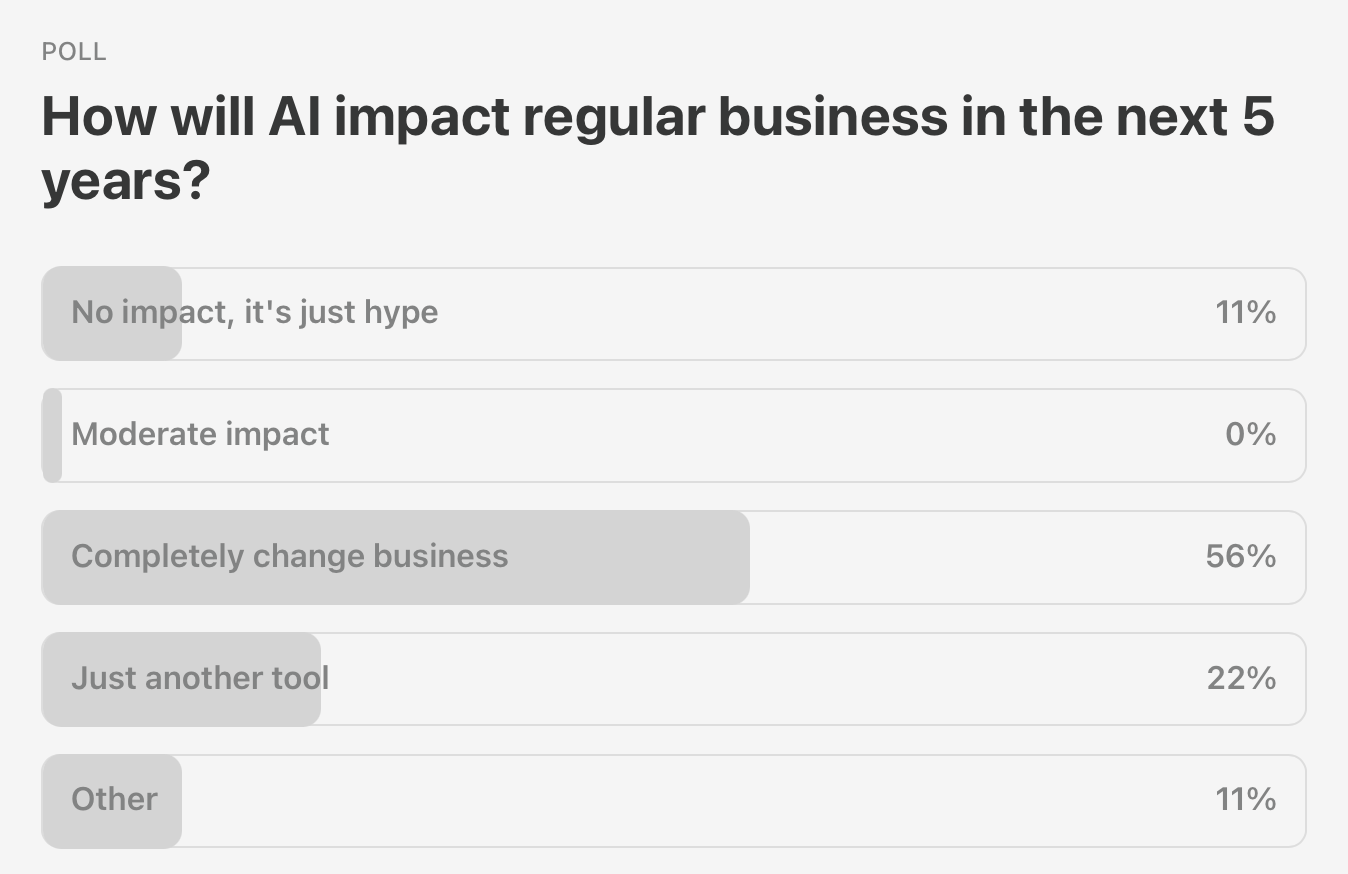
Remember, you can always send me your questions. I will try to answer them in future newsletters. The more you ask, the more these articles will help you become stronger in strategy. Have a nice day!
Svyatoslav (S.B.) Biryulin
Comments
Nothing yet. Say the first thing.
Sign in to join the conversation.