
Many legendary companies started with a single idea. And that idea often came from spotting a Big Customer Problem, or unrecognised customer need.
But even if the idea was brilliant, you can’t survive on it forever. Creating customers must be an ongoing process. The company I’ll talk about today seems to have forgotten how to do that.
It’s August—time for quiet strategic reflection and a bit of rest. We’ll dive into practical strategy tools in September. This month, I want to give Club members some food for thought on strategy as a concept.

In 1998, a 42-year man showed up at a yoga class in Vancouver. He hoped yoga would help him with his aching back.
At the time, the global yoga craze was only just beginning. It didn’t look like a multi-billion market. Such a thing as ‘yoga leggings’, which many women wear outside of yoga classes today, simply didn’t exist.
But the man was an entrepreneur, and his radar was always tuned to opportunities. He sensed something big.
Before that, he had launched and successfully sold Westbeach. The company made snowboard clothing, so he knew a lot about sports fabrics.
Soon, he came up with a pair of yoga pants using a blend of nylon and Lycra. The fabric stretched four ways, wicked sweat, and never went see-through. He used flatlock seams and a high waistband that stayed put.
His name was Chip Wilson. The company he started was Lululemon.
Wilson didn’t just create yoga pants. He built an entirely new category called ‘athleisure.’
Lululemon enjoyed double-digit revenue growth for years. It became the go-to brand for yoga lovers worldwide.
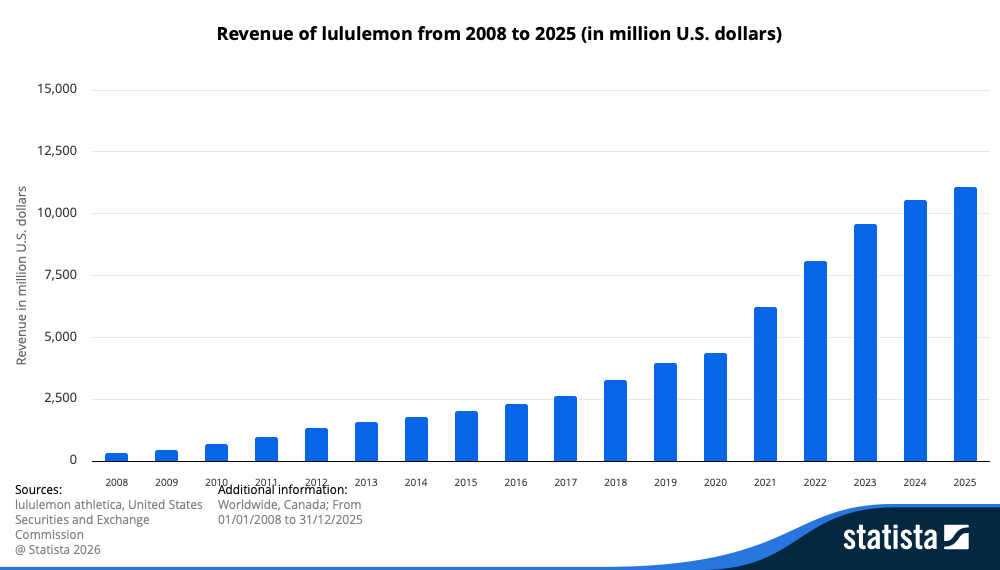
Today, the future of the business no longer looks so bright. The new CEO, taking over in September, will have to figure out how to respond to fierce attacks from competitors.
You might have heard about the scandals around the brand. For instance, when their new yoga pants turned out to be too see-through, customers were furious. But Chip Wilson blamed… the customers themselves. He publicly said that the pants ‘don’t work for some women’s bodies.’
Imagine you buy a smartphone and find the on-screen keyboard hard to use. But the phone maker tells you it’s your fault because your fingers are too thick.
CEOs at Lululemon come and go too often. That never makes a business stronger.
But the core problem that could one day undermine the company is different.
In my new video, I share my thoughts about what it means to run a business. It’s obvious that a company should create value for customers and capture value for itself. But order matters here.
If you do this in the wrong order, the consequences are inevitable. It’s like handing someone a marriage contract on the first date that says you keep everything if you divorce.
In Lululemon’s history there were two game-changing products and a few failures. And behind both the wins and the flops, you can spot the exact same patterns.
The first big win was their yoga pants, which, as Bloomberg put it, “became for the company what iPhones are to Apple.”
The second win was the Everywhere Belt Bag that went viral on social media. And in both cases, the company created customers.
Chip Wilson came up with yoga pants when he became a customer himself. Doing yoga and watching others practice, he spotted the flaws in the clothes people had to wear to yoga class at the time. He found a Big Customer Problem.
Wilson came across an unrecognised need and capitalised on it.
What’s more, Lululemon didn’t have the budget for mass advertising at the time. So Wilson turned local instructors into ambassadors by giving them free gear. But the instructors didn’t just promote the pants—they gave feedback that helped improve the product.
It was a textbook case of customer creation, which lies at the centre of The Customer-Axis Framework. You start with customer needs and build a fast feedback loop with them.
The Everywhere Belt Bag came about almost by accident. Lululemon originally designed it for its store staff, but customers liked it and wanted to buy it. Still, it was a need plus a feedback loop.
At the end of the article, you will find the results of our previous vote. Very interesting, so make sure to read all the way through.
In 2020, during lockdowns, Lululemon’s then-CEO Calvin McDonald bought Mirror, a virtual fitness company, for $500 million. Mirror built its business around a $1,495 interactive screen that let people stream personal workout sessions at home. Users paid a $39 monthly subscription for fitness classes, generating a steady stream of recurring revenue.
McDonald bought Mirror out of a naive belief that people who got used to working out at home would never go back to the gym. He didn’t realise that things like mountains, human IQ, and consumer habits change remarkably slowly. Peloton and Nike made the same mistake in 2020.
In 2023, Lululemon reported that it took a massive writedown on Mirror.

In 2022, Lululemon entered the sneaker market. But, as Bloomberg put it, “Lululemon’s sneaker dreams have yet to materialize.”
The company invested in the sneaker market not because it came across an unmet need. The CEO had too much faith in the brand and aimed to increase revenue and profit. He wasn’t trying to create value—his only goal was to capture it.
Yoga pants aren’t LLMs or starships—they are easy to copy. Competitors like Alo and Vuori are chipping away at Lululemon’s customer base. Even Costco launched a product line that Lululemon found so similar to its own that it sued. But even if Lululemon wins, new competitors will show up.
Commenting on John Sculley’s time as Apple’s CEO, Steve Jobs said: “They cared more about their own glory and wealth than they did about what built Apple in the first place — which was making great computers for people to use... They didn’t care about that anymore. They cared about making a lot of money. What they should have been doing was making reasonable profits and going for market share, which was what we always tried to do.”
When Chip Wilson started Lululemon, it was also ‘making great yoga pants for people to use.’ But the CEOs who followed him, focused on profits, not products.
When Lululemon listened to its customers, it made game-changing products. When it concentrated on the stock price, failure was never far behind.
Whether in B2B or B2C, you do not create a customer just once. You have to keep creating and recreating them continuously—especially in product categories where copying is cheap.
When a company simply tries to ‘stretch’ its brand into adjacent categories, it rarely works. A brand is not a source of revenue. A satisfied customer is.
What share of your revenue comes from unique products? Are you happy with that number?
What share of your profit comes from these products?
Do you have somebody in your company who is responsible for customer creation?
Do you get customer feedback often enough?
Do you measure customer satisfaction regularly?
How often do you actually use customer satisfaction when reviewing performance and making decisions?
Next week, we’ll discuss a major mistake in customer segmentation. Stay tuned!
Here’s a new poll, followed by the results of the previous one. The more you vote, the better you will know what other club members—CEOs from all over the world—think!
Summer is almost over, and autumn is near. My schedule for autumn is filling up. If you want to hire me to run a strategy session or a full strategy project, just reply this email. I’m also taking bookings for guest lectures and keynotes for autumn and winter. I’ve updated my Work With Me page—read more here.
If you like this newsletter and would like to support my work, just forward this email to other CEOs who would find it useful to join this club. And if you are the CEO someone shared this with, you can subscribe for free here:
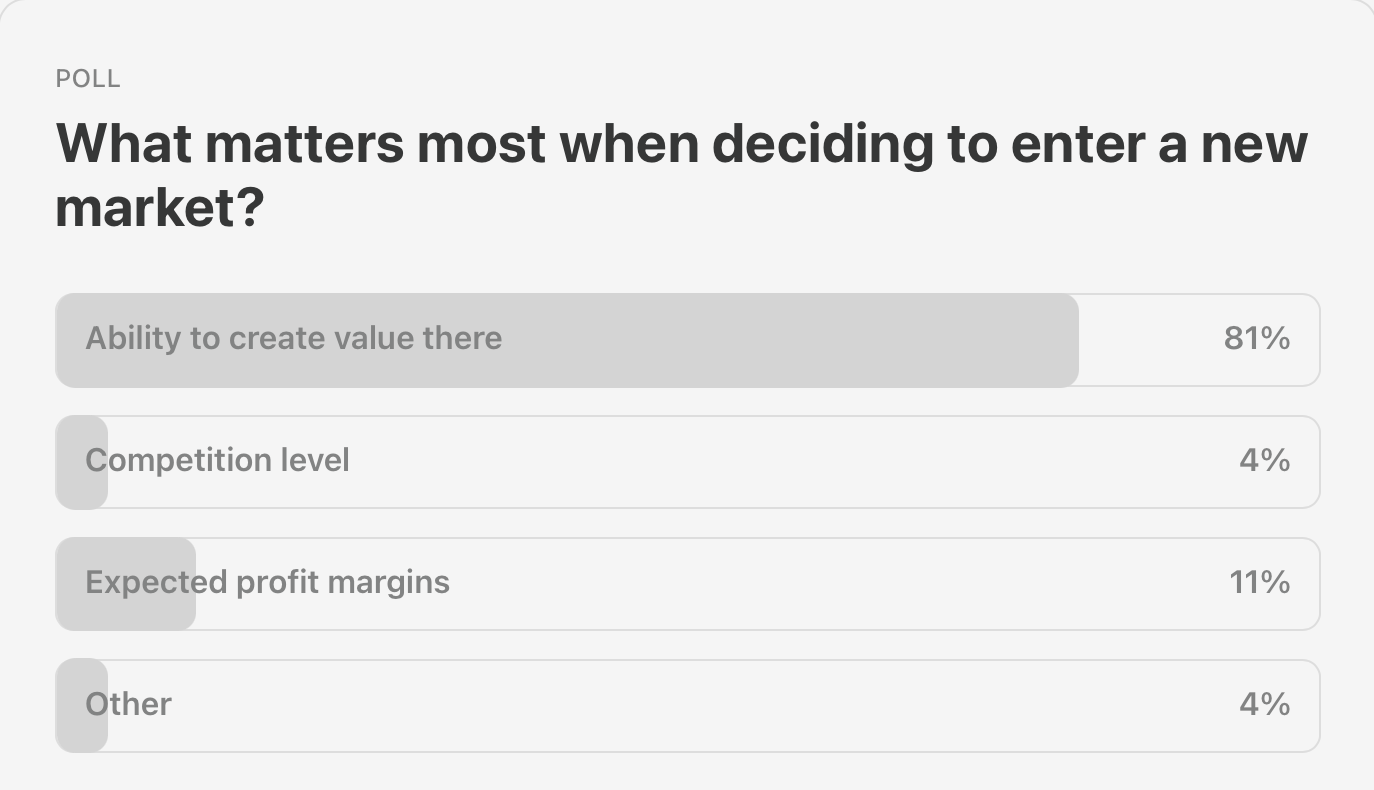
Last week’s poll results:
If you want to share your personal opinion with me or ask a question, reply to this email.
Comments
Nothing yet. Say the first thing.
Sign in to join the conversation.