
Hi everyone,
Plastic-free July is well over but the idea of course is to keep the habits going. So let’s keep talking plastic, starting with some news.
Did you know scientists have built a plastic that eats itself!?! My layman understanding of how it works: The process involves tucking dormant bacterial spores (a common soil microbe called Bacillus subtilis) inside the material, and the spores just sit there while you use it. When the plastic reaches the end of its life and gets the right trigger, the spores wake up and make two enzymes which do the “eating”. Then it takes about 6 days to disappear, and apparently leaves no microplastics behind.
It is early days so we can’t expect our yogurt pots to compost themselves just yet. But the team is now working on a version that activates in water, which would be convenient. A bold new world is in sight (hopefully).
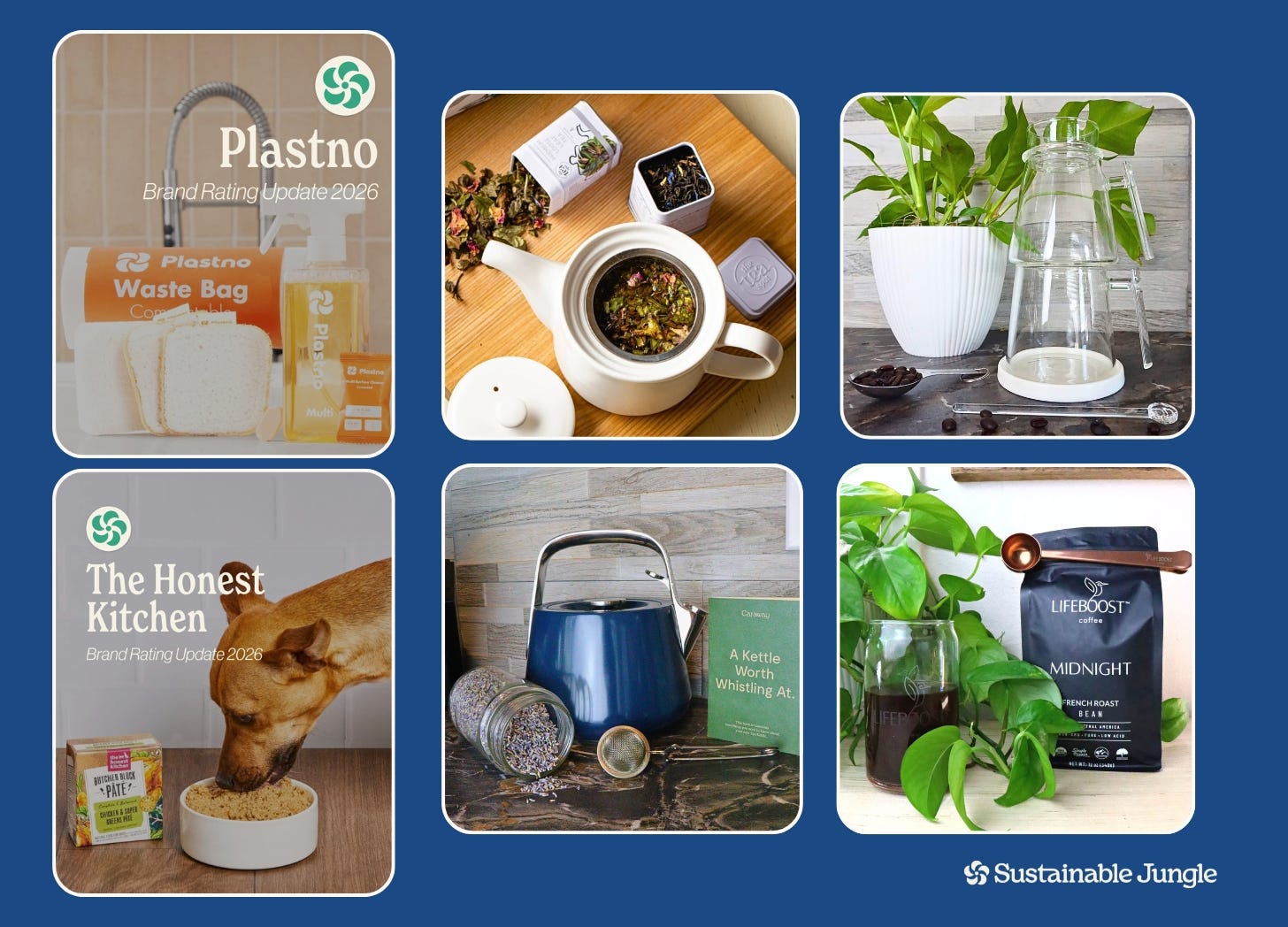
I think I have shared a lot on this before but I was reminded last week when I was on vacation with my family. In the little cabin we were staying in, there was only a plastic kettle. So we went to the local thrift store and bought a stainless steel pot which we used to boil our water for tea and coffee for the week. What a pain! It was very inconvenient, and as my dad pointed out, less safe given we had a little kid running around. We did ask for a stainless steel kettle but we were met with confusion. Perhaps I should send them this article on eco kettles which has plenty of plastic free options.
They also had a coffee machine which was mostly plastic, and used non-recyclable pods. Most frustrating. This meant we spent a lot more on getting coffees from the cafe each day. A simple French press would have done the job! Here’s our guide to plastic-free coffee makers.
Then we get to teabags… as you probably already know, many teabags are made with plastic. This is likely not to be ideal for our health (studies are still underway on the impact) and almost certainly terrible for the environment. If you haven’t switched already, this guide to zero waste tea will help. Though, we can quite easily find options in our local grocery store these days (where the bag material is clearly disclosed), so that’s an improvement.
And while we’re on our high horse, let me share our list of more sustainable coffee brands. These have some important sustainability attributes (like fair trade) but are not plastic-free. Plastic-free coffee is pretty hard to find unfortunately. We get ours from our local zero waste store.
The Honest Kitchen renewed their rating with us! They were the first pet food company to earn the “human-grade” designation from the FDA, meaning every ingredient is sourced, handled, and processed to the same standard as human food. They’re a Certified B Corp making dehydrated, wet, and dry food, treats, and broths with free-range, organic, and non-GMO ingredients, and around 84% of what goes in comes from North America.
New in 2026: They raised their B Corp score from 80.9 to 91.9. The minimum to qualify is 80, so that’s a decent jump.
Read the Full Rating | Shop The Honest Kitchen
Plastno has also renewed their rating with us! Founded in 2022 by Julian Silva, this Delaware-based, minority-owned brand makes BPI- and TUV-certified compostable trash bags, plant-based compostable sponges, and refillable, naturally derived cleaning tablets, all shipped carbon neutral in FSC-certified packaging. Their multi-surface cleaner is Leaping Bunny certified, and the whole line is vegan.
Read the Full Rating | Shop Plastno
Also, thank you all so much for the feedback last week on the directory. All who responded to the poll said they would use the directory, and 67% said “yes, often” which is so uplifting for me! Now to get the next batch of brands done!
Thank you as always,
Joy x
Comments
Nothing yet. Say the first thing.
Sign in to join the conversation.