
Hi everyone,
Many places around the world are in that back-to-school mode again, where the shopping list expands to include new shoes, an even bigger backpack, a(nother) replacement lunchbox, and a small mountain of stationery. I saw a teenager walking home from school the other day with both the huge backpack full of books, a laptop bag, and a sports bag so while the digital age is upon us, it seems kids are still straddling both worlds.
So with that inspiration, this week I’m sharing a few guides for kitting the kids out, with as little plastic (or new things) as possible.
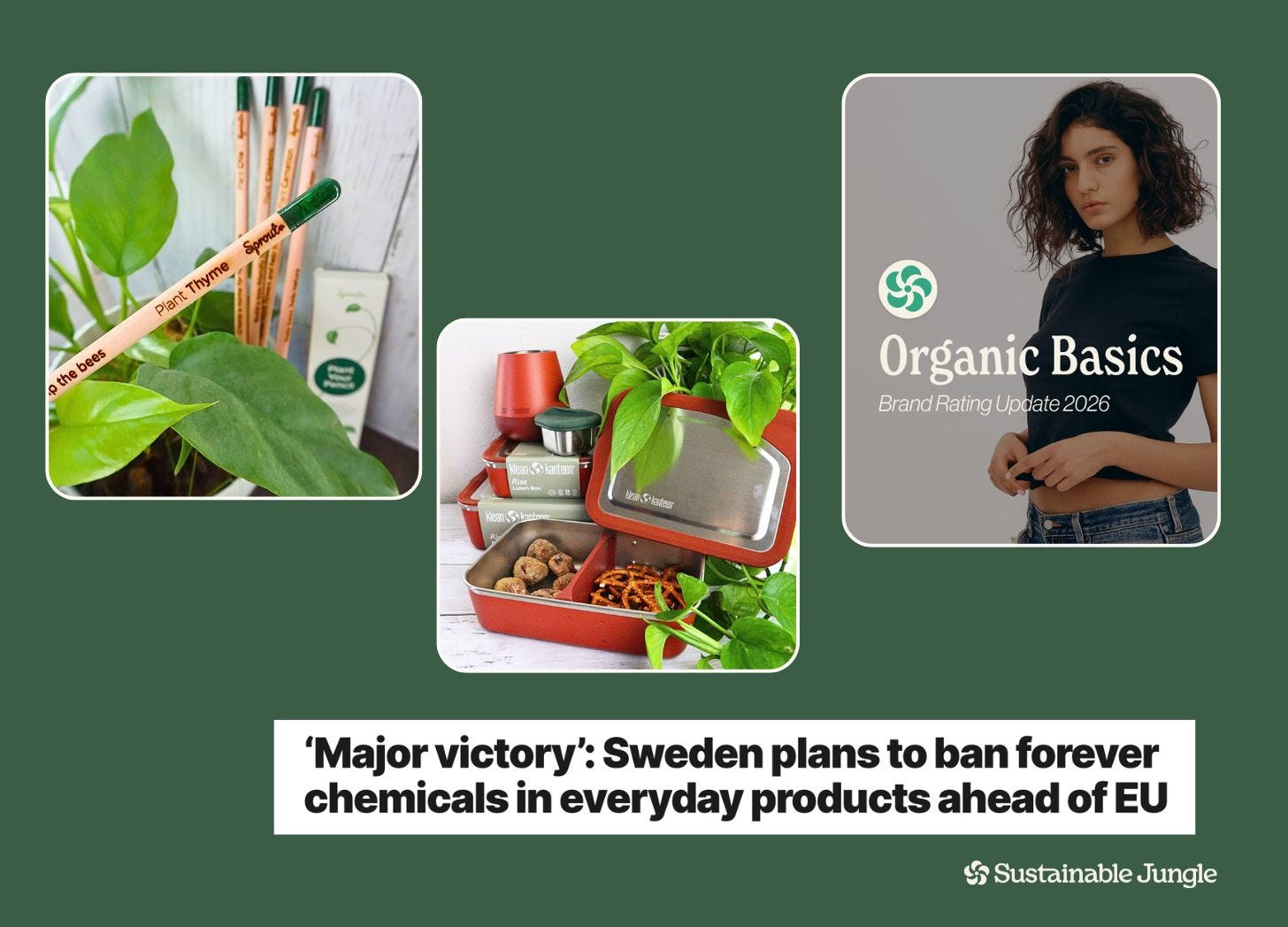
But first, as you know, we love a bit of news! Sweden is planning to ban PFAS (the “forever chemicals”) in everyday things like clothes, shoes, waterproofing sprays, kitchenware, and cosmetics from 2028. Recap: PFAS or forever chemicals make fabrics and other things resist stains and water but they don’t really break down, in the environment or in our bodies. They have even shown up in stain-resistant school uniforms!
As we all know, the most sustainable approach is to buy as little new as possible. This is especially true for kids and their ridiculous growth rates. For someone who hardly buys anything, I’m still getting used to the fact that I need to replace my boy’s wardrobe every year (and sometimes more)! Thank goodness for hand me downs.
On clothes, if you don’t have ready access to hand me downs, I would start secondhand where possible. Our roundup of shops selling used kids’ clothes is a good place to look for pre-loved basics, and also check out Baby Mint which is an app on our directory that sells secondhand kids everything. If you do need to buy new, our guide to sustainable kids’ clothing features brands that mostly use organic cotton (including a couple of rated brands). And our guide to sustainable kids’ shoes includes some ideas for lower impact footwear.
When it comes to the backpack, one well-made backpack can last for years and our sustainable backpacks guide includes bags made from recycled and natural materials.
Lunchboxes are tricky in my experience, given their propensity to break or get lost. I have purchased some secondhand (sometimes you can get lucky at thrift stores and find stainless steel versions). Otherwise our guide to reusable lunch boxes or bags will help, and a plastic-free water bottle if needed. For all of these, we looked for options that would limit exposure to plastic.
Then to tackle the mountain of stationery, eco-friendly school supplies, eco-friendly pens, and sustainable notebooks are our go to guides. But again, so much can be found secondhand, or just dug out of the corners of your everything cupboards and drawers where things with no clear home go (I assume everyone has one or more of these?).
And finally, when it’s time to clear our last year’s things, our guides to what to do with old shoes, clothes and books will hopefully be of use. Do let me know if you have any more ideas to add!
🎉 Rating Renewed: Organic Basics
Organic Basics has renewed their rating with us and given their various progress and new initiatives over the last year, they have moved up to our top “Disrupting” rating, placing them within the top 10% of brands in our fashion category. The Copenhagen-based B Corp makes everyday essentials, underwear and activewear from GOTS-certified organic cotton (and other materials). Since our last rating, they launched ReOB, a free take-back recycling program in select EU countries, and a Digital Product Passport sharing full lifecycle data (carbon, water, energy and more) for every product.
Read the Full Rating | Shop Organic Basics
Thank you for being here as always,
Joy x
Comments
Nothing yet. Say the first thing.
Sign in to join the conversation.