
If you’re in the sweltering northern hemisphere, using a ton of sunscreen, and wondering what is in it, here is a nice bit of news out of the FDA. In June they approved a new sunscreen ingredient called bemotrizinol, which has been used across Europe and Asia for years.
US sunscreens have lagged behind Europe and Asia on safer UVA protection for a while so it’s good to see a better ingredient like this one get some recognition. It unfortunately only takes effect in August, so it won’t be on shelves this summer - keep an eye out for it though!
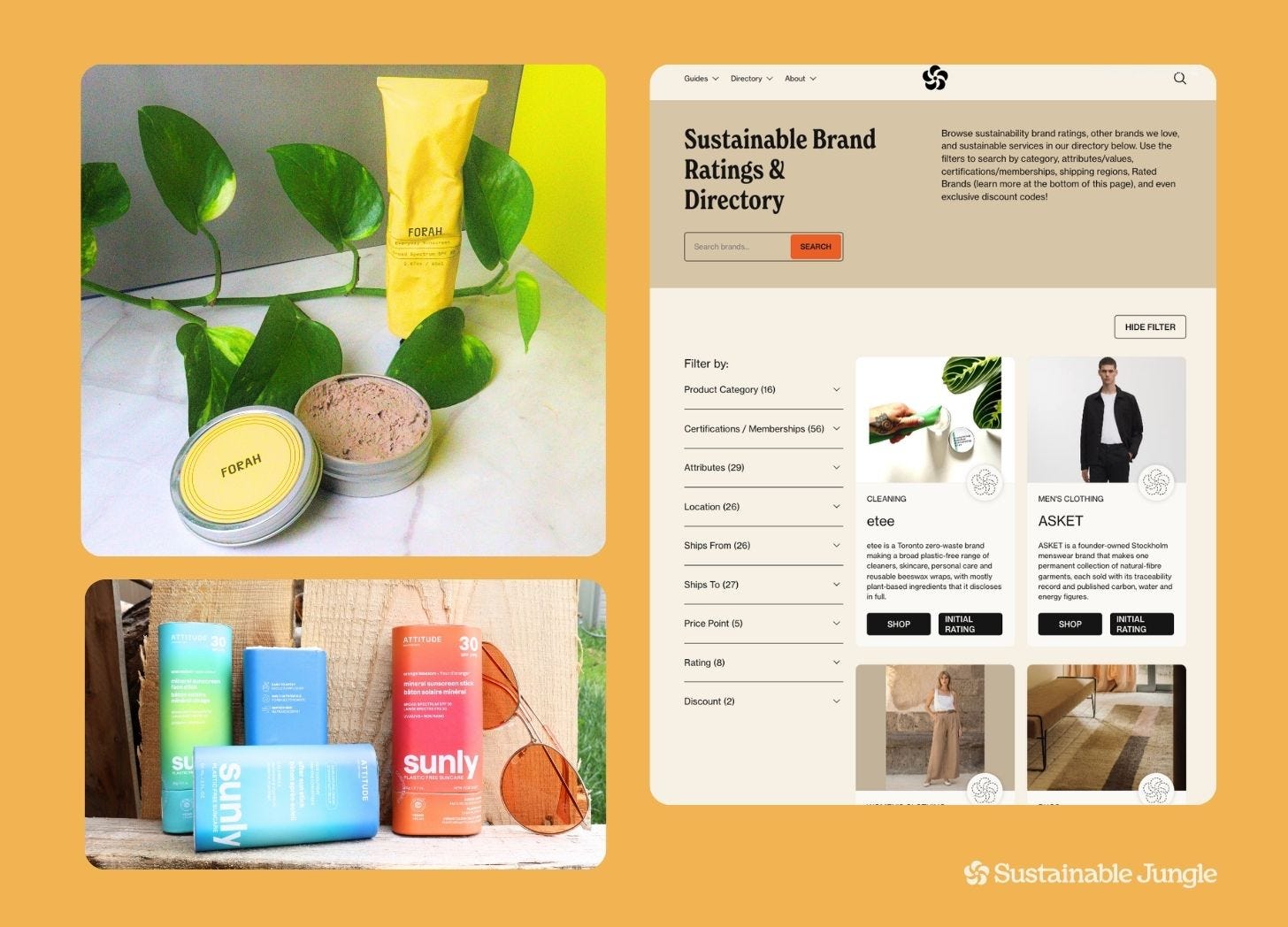
Sunscreen is a complicated summer essential. It’s critical for protecting our skin (along with sensible additions like clothing, sunglasses, and hats) but most conventional sunscreens include harmful UV filters, and often come in overdone plastic-packaging. So we’ve done our best to address these two issues with a couple of sunscreen guide refreshes (there’s a bit of overlap so pick your own adventure):
A lot of the common chemical filters, oxybenzone and octinoxate in particular, rinse off in the water and stress coral reefs. Our reef-safe sunscreen guide rounds up brands that use mineral filters (mostly zinc oxide). This guide casts a wider net, so hopefully easy to find one that suits you and your budget.
If you also want to drop the plastic tube, our zero waste sunscreen guide leans toward reef-safe formulas in plastic-free tins and sticks.
I also wanted to share a new approach to ratings that I’m testing out. For the last few years our brand ratings only covered companies that came to us and went through the full assessment, which leaves out a lot of the brands we have worked with over the years (and many more). So we’ve started rating a wider range of brands by looking at their public disclosures.
We’re calling these “initial ratings”. They run on the same scoring as the “full ratings” and we give an indicative view of how they score based on what we can learn about them from publicly available information. We also verify any certifications they have (where possible) on third party certification databases.
Obviously, a full rating is way better as these involve a brand sharing deeper layers of information with us about what they do behind the scenes and we can put more work into understanding them. But at least these indicative ratings help our readers get a better feel for brands who are taking sustainability seriously and it means our directory will be a more useful destination for readers with more brands covering more needs (that’s the plan anyway - let us know if you agree in the poll below).
You can browse the first batch in our directory here.
We’re doing this in part because search traffic isn’t what it was (now that AI answers so many questions before anyone clicks through to our site). So we’d love the directory to stand on its own, as a place you can look a brand up before you buy. And we also hope it helps entice brands to opt in to a full rating with us.
Thank you as always,
Joy x
Comments
Nothing yet. Say the first thing.
Sign in to join the conversation.