
It’s the most nostalgic time of the year. I feel pretty confident in saying I’m not the only person somewhat transported back to childhood by a sensory overload of Christmas (for better or for worse; for me, it’s bittersweet): The first notes of the opening theme to your favorite holiday movie, the taste of those weird fruity rainbow candy canes, the smell of ham wafting from the oven while you fight over new toys, the itchy flannel of matching pjs, the wide-eyed jumpscare vintage smirk of Elf on the Shelf when you accidentally make eye contact walking into a room, etc etc etc depending on your own traditions.
Even for those who don’t celebrate Christmas, I’d imagine at this point it’s pretty impossible to leave the house in December without creating/resurfacing past memories and associations that involve at the very least Mariah Carey and twinkly lights. Both a blessing and a curse, this time of year can start to feel like there’s a lot riding on it because of how strongly sensory associations can be attached to our emotions and vice versa (I don’t make the rules and neither do you; it’s neuroscience).
Anyways, all that is to say: work with your brain, not against it. Notice which sensory inputs are grounding or comforting this time of year and lean in. Get curious about your friends’ and family’s different memories and sense associations. Or try a new one to lay the groundwork for a future memory a few years down the line. Give yourself a little grace — both current you and childhood you.
And…read the first linked article in our “What We’re Into” section below: it’s a Brian Eno piece from 1992 on his attempt to collect and map the bazillion or so different scents that exist (the sense that is most closely tied to memory and emotion because of its direct and unfiltered connection to our hippocampus and amygdala. You can trust me on that one, I did a middle school science fair project all about smell). It’s a cool concept to bounce around and wander through alongside Eno, and the “punchline” also manages to feel relevant to today’s current conversations on AI (and Doug’s article below) decades later.
Merry nostalgia season,
– Shanna
by Doug Freeman
In the last Superposition, we looked at LLMs as an information system through the lens of Media Studies, arguing that its inherent conversational mode is conflicting with our traditional mode of an archival information system. The distinction between archival and conversational exchanges of knowledge arguably sets up one of the biggest challenges with how we are currently utilizing AI and why it is failing us as we move from the Information Age to the Generative Information Age.
We proposed that the root of our current problems with LLMs is that we are treating them like an archive instead of as conversational engines.
I want to take this idea a step further now though, and look at what it might mean when the information systems that we consider the anchor of knowledge become generative rather than archival. You could say this has been the case since the Web opened the archive to more public contribution, but generative AI is pushing us into entirely new territory.
In his recent essay that received a ton of attention, The Dawn of the Post-Literate Society, James Marriott basically argues that civilization is going down the tubes because nobody reads anymore. He cites a litany of studies that have chronicled the nosedive of literacy rates, IQs, and attention spans since the smartphone emerged as the medium of choice for so much of our information.
I think Marriott is being wildly hyperbolic here, though I don’t disagree with what he’s saying. He’s following along the Neil Postman lines of Amusing Ourselves To Death in saying modern media has wrecked our ability to think critically and deeply, and that our modern civilization was enabled by the ability to read, which – in the tradition of Walter Ong – actually reshaped how we think.
Sure, I buy all that. My grandmother, who grew up during the Depression, used to say sagely that “If you can read, you can do anything,” which I still want to hold as some basic tenet of humanity. But man, I’ve fixed so much more stuff in my house thanks to DIY Youtube videos than instruction manuals.
My point is, I don’t think people reading fewer books is a sign of civilization’s collapse, and I say this as someone with an over-devotion to the books stacked around my house. Marriott conflates literacy with reading, but literacy takes many forms, and isn’t simply about books. Literacy is a competence, knowledge, and critical thinking, and can be applied to everything from baseball to baking, from books to TikTok - and from an archival literacy to a conversational literacy.
What Marriott is really bemoaning is a lack of literacy for our new information environment, and I would argue (admittedly optimistically) that new generations are learning more every day about how to think critically within these new modes. Right now it’s exceedingly messy because old literacies are increasingly ineffective, and new literacies are still being formed. And it’s happening incredibly rapidly before norms can be fully established.
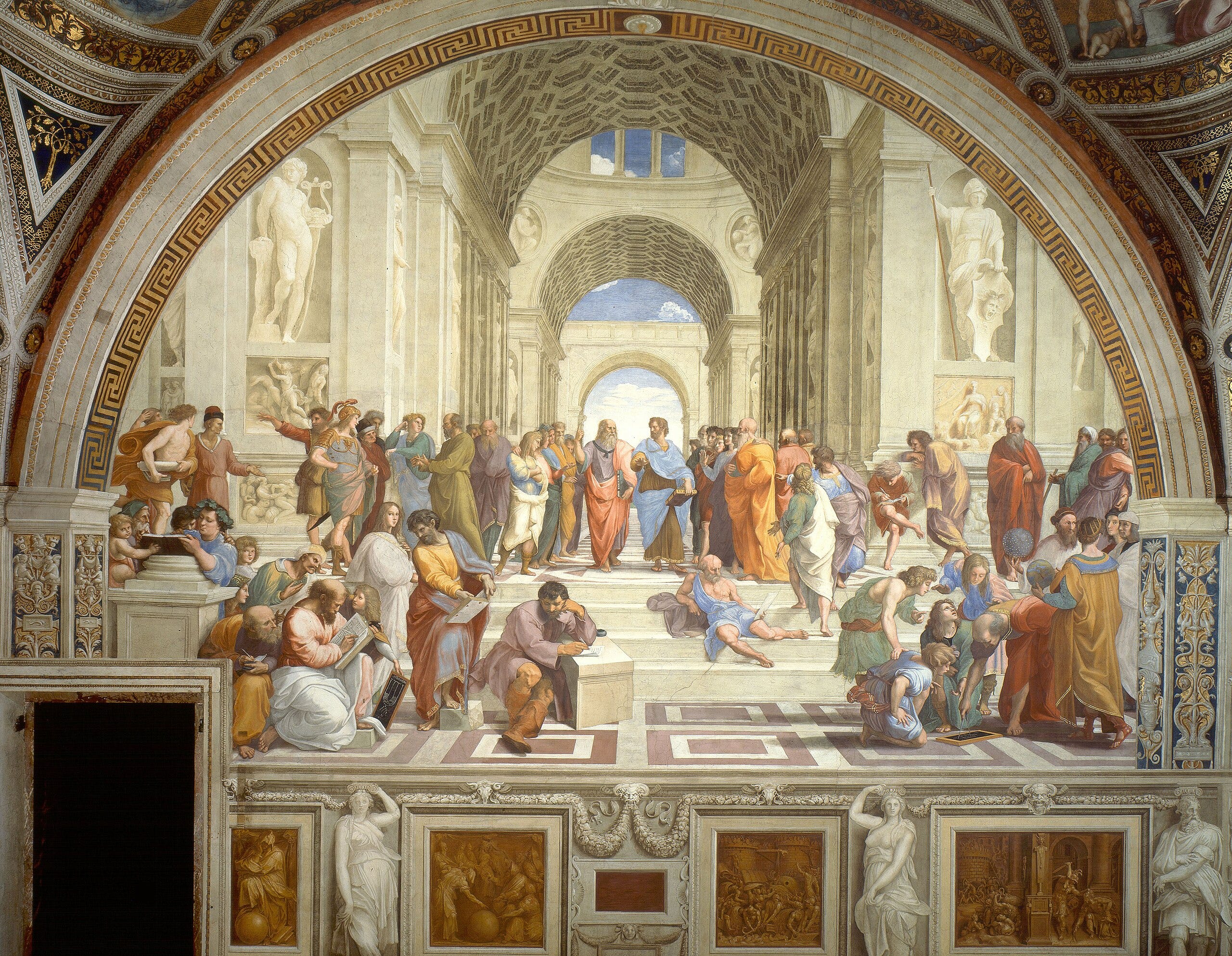
This of course is a debate that goes back to Plato’s Phaedrus (and probably even earlier) when he has Socrates warn of the effects of writing as potentially destroying our human capacity for memory. In fact, it’s impossible not to read Phaedrus today and not think of AI in Socrates’ description of bad rhetoric, of performance and form without soul and substance.
Which brings me to our current civilization-collapsing calamity of AI literacy. My biggest concern is not that we haven’t yet developed the proper critical understanding of how to understand or use AI — we’ll get there just as we have with past media and technologies — but rather the disruption to our sense of the archive with the rise of the Generative Information Age.
The Generative Archive
The archive isn’t going away, but our relationship to it is certainly changing. If, as we argued in the last Superposition, the Information Age has exposed a lot of the fictions and fragility of how we organize knowledge, the Generative Information Age is transforming how we interact with it.
The biggest change I would anticipate is a shift away from the notion that there is a stable (if evolving) body of knowledge, and that access to it can provide “wisdom.” As Dr. Sarah Bentley noted in her excellent article in Nature earlier this year:
“What generative AI inadvertently did was to expose the highly ‘constructed’ nature of knowledge, both its origin story (who, where and why) but also the subsequent representation of that knowledge as it is composited onto our digital screens. This particular form of AI, along with its limitations, biases, and hallucinations (Sun et al., 2024), serves us with a timely reminder of the fallible nature of knowledge (Emsley, 2023). For social scientists, this may not be news. But for the world at large—the voting electorate, the summoned juror, or even the doomscroller—this is big news. And when it comes to the need to understand and tackle the reality of mass-scale mis- or disinformation (which significantly predates the arrival of generative AI), this is much-needed news (Posetti, 2018).”
Instead, what we get with generative AI is the idea that the conversation is how knowledge is built. We don’t just go to the archive to find a received knowledge, but rather to dynamically engage with it, probe it, evolve it. This conversational and generative construction could actually be very empowering, even as it upsets so many of our traditional knowledge systems.
So what does conversational knowledge look like in comparison to archival knowledge?
Most immediately, it’s not about direct answers. It’s about the process of how we come to those answers and the questions we ask. Bentley compares this new mode to the Sophists of ancient Greece, and proposes we should adopt a more Socratic approach to interactions with conversational AI. But we also need to appreciate Generative AI for what it actually is — a tool rather than some kind of oracle.
Let’s be clear that there are many problems with this generative information mode as well, including reinforcing our own assumptions and echo chambers, the lack of transparency in these systems, and the disruption to our perception of a shared, concrete “knowledge” base. We used to think that the digital archive was a path to a more stable permanence, but I’ve had enough writing disappear when an online publication goes away to fill several books!
But more concerning is what happens if we imagine the Web as completely dynamic and generative, with a generative UI that constructs webpages and content on demand based on what the visitor wants.
It’s easy to imagine that future, and it’s in fact already somewhat happening as websites and search results become more individually personalized. Right now, we still largely go to a website and expect the information to be the same for everyone. We may have to click around to find what we’re looking for — and it can of course be updated — but we’re all working from the same text, as it were.
But in a conversational knowledge mode, we’d simply ask a website what we want to know, and it would return answers, perhaps even generate graphics and web-pages on demand with a Generative UI. ChatGPT and other LLM engines are making this notion more familiar, and I imagine that’s the battle the major players are gearing up for - to be the fount of all information and essentially replace the WWW. It makes the browser wars seem quaint.
This shift from archival webpage to generative conversation is essentially what we’ve already experienced from customer service FAQs to customer service chatbots. FAQs were a shared, collective archive of knowledge, whereas the chatbot puts the onus on us to ask the right questions.
The challenge with this is the not-knowing what we don’t know — what we might be missing because we’re not thinking of asking. We like to pretend that our LLMs are tapped into some omniscient archival brain, but even if that was any semblance of realistic, the problem remains with how we retrieve and understand the information it is presenting. We have fully crossed over the Rumsfeldian Rubicon into a world of unknown unknowns.
The Generative Information Age requires that we consider ourselves generative information intakers, and understand how to use the information in a conversational, interrogative mode. It requires a reliance on our own critical thinking even more than the mode of accepted archival knowledge, and the holding of divergent perspectives at once. This may be discouraging to a lot of folks who have watched skepticism towards science or other expertise erode so much of the past couple of decades.
But I believe we can flip that perspective too, as messy as the repercussions may be. Maybe the distrust in expertise is a questioning of “received” information, of the archive. We’re in a period of such social flux precisely because we are skeptical of information, which we will need to be in a Generative Information Age. This new AI Literacy will need to better cultivate our overall critical skills so we’re not simply seeking reinforcement of our thinking but embracing the uncertainty and ability to evolve our understanding with new perspectives.
I think Socrates would dig it.
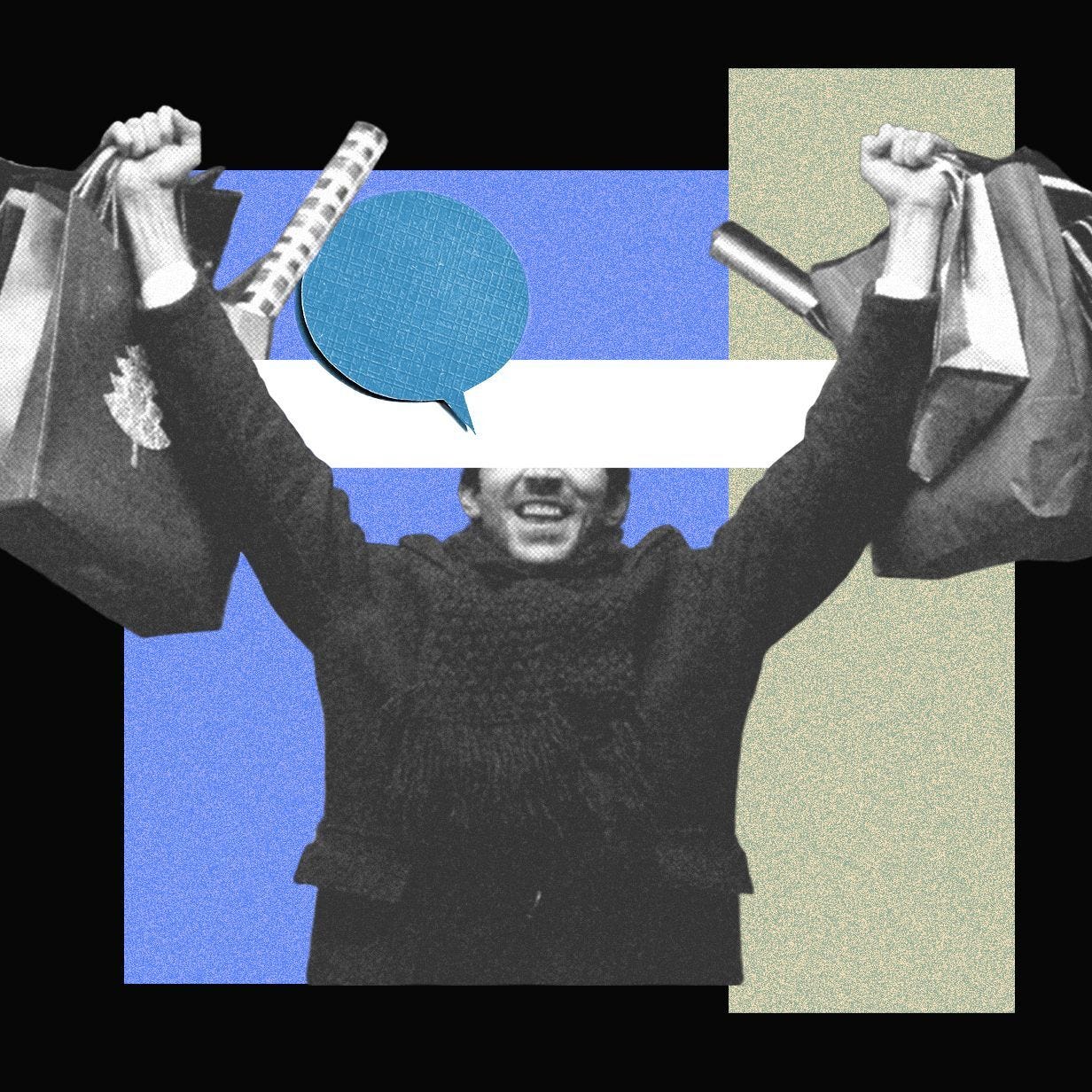
According to Adobe, referral traffic to retailers on Black Friday from AI chatbots and search engines jumped 800% over the same period last year. The Media CoPilot digs into what this means for the future of review sites, and our own purchasing behavior, especially as we move from SEO to Generative Engine Optimization (or whatever we’re going to end up calling this new pocket of publishing and marketing).
Brian Eno on scents? Yes, please.
If a water molecule were the size of a grain of sand, E. coli would be the size of a cow. Metaphors for Biology: Sizes
Oh no, WSJ is on to us! Companies are Desperately Seeking “Storytellers.”
A conversation on the impossible math of maps from the Science Friday podcast.
A beautiful, devastating, and poetic plea amid the impossible possibilities of our attention-addled era.
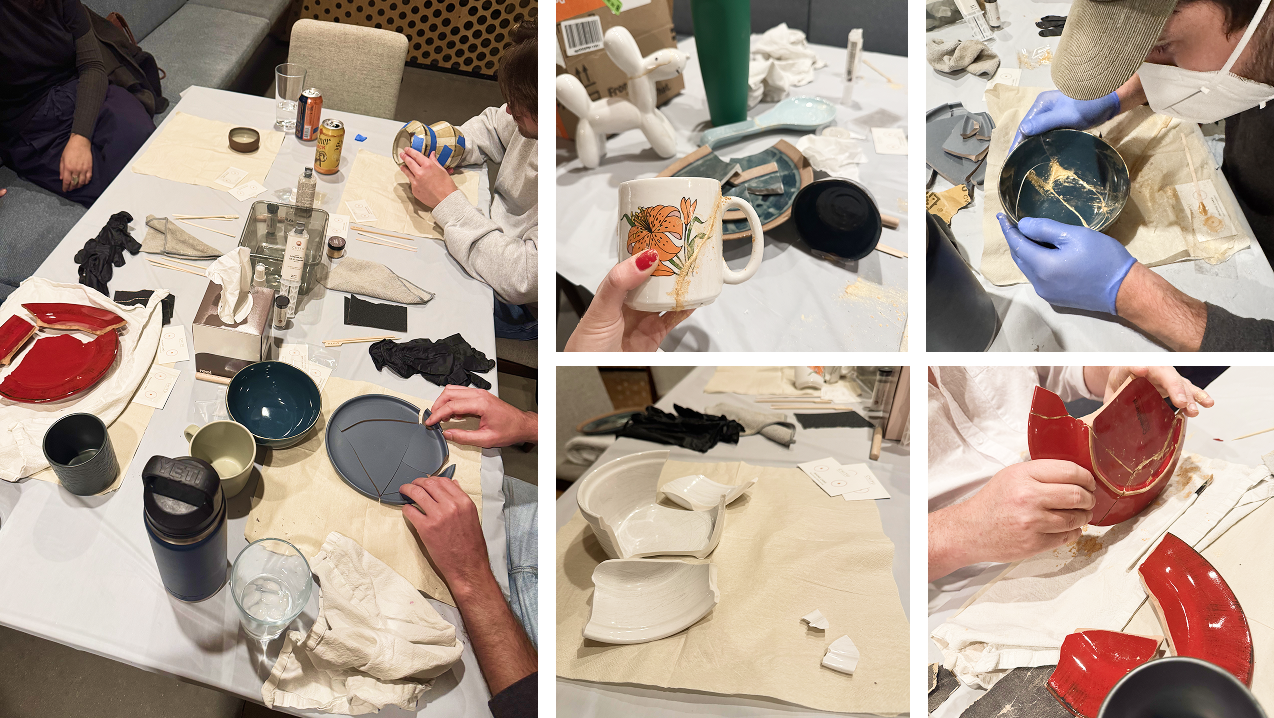
We hosted 2025’s final JDI Sidetracks event of the year last week (our first one partnered with CreativeMornings!), and it was one of our favorites that we’ve done so far: Lauren Luscombe, Austin’s only certified kintsugi artist, joined us to lead a hands-on workshop. We’ve long been fascinated by the ancient Japanese tradition of mending cracks in broken pottery, and it was amazing to try it together. Follow our Sidetracks Instagram for more events in 2026!
We don’t know what the new year will bring, but we’re excited to continue to explore all the weirdness and possibilities emerging on our scientific and cultural frontiers. Thanks for reading Superposition this year, and we’ll see you in 2026!
Superposition is a production of JDI, designed and written by Shanna Gerlach and Doug Freeman
No posts
Comments
Nothing yet. Say the first thing.
Sign in to join the conversation.