
Women in sports, to be specific. The audiobook that I’ve been listening to on long solo runs over the last couple weeks (Marathon Women by Kathrine Switzer, the first woman to run the Boston Marathon with an official bib) has been an interesting dovetail with the Olympics coverage that’s been the background to the rest of my waking hours recently. Switzer’s memoir details not only her experience as a long distance runner back when the pervading school of thought was that women’s uteruses would fall out if they ran farther than a mile, but her career-long journey to reverse that school of thought (including finally bringing the women’s marathon to the Olympics). That’s one of my favorite not-so-fun facts: there was no women’s running event in the Olympics longer than 1500m until the marathon event was finally included in 1984 – recently enough that my mom was already my age. Every woman runner from that era had to fight to prove that they were capable of more than anyone gave them credit for, without athletics causing them to lose their femininity or childbearing abilities (not that that should matter, but I digress), creating a counterculture that feels almost impossible to imagine in this era of running influencers and an absolutely thriving female running market.
In stark contrast to Switzer’s fight for women in sports, these Winter Olympics have shown women utterly dominating – powerful bodies, feminine bodies, aggressive and confident and technical and tough and graceful bodies. When the US women’s hockey team won gold in overtime as I was writing this, the entire (packed!) stadium roared as the women tumbled out of the bench onto the ice and into each other, and I’ll be honest, I teared up a bit. Further proof of the death of another counterculture – this time because it’s fully embedded into culture.
– Shanna
by Doug Freeman
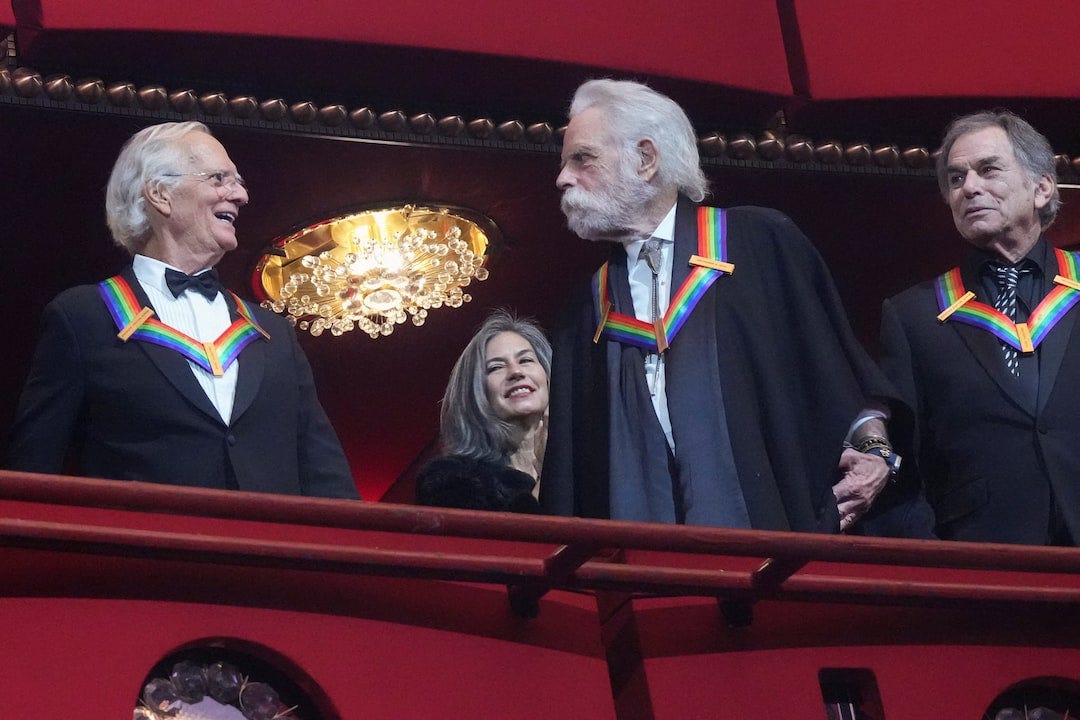
Last month when Bob Weir passed away, the founding Grateful Dead guitarist was rightly celebrated by everyone from political leaders to the nightly news. It all felt a bit incongruous to me, though. Here was one of the cornerstones of the Sixties’ counterculture, being feted by the most mainstream of culture.
It got me blasphemously wondering if it is fair to even still consider the Grateful Dead countercultural? Certainly they were for “their time,” but probably not for the past 40 years, at least. By the 80s the Deadhead stickers were on Cadillacs and their logo plastered on tee shirts at the beach. Hell, the Dead even received Kennedy Center Honors. And Bob Dylan has a Nobel Prize for Literature.
That’s not a knock necessarily on the Dead, but really more a recognition of what counterculture is and how it operates. Countercultures, by their nature, are not meant to last. A counterculture has an inherently limited life-cycle.
By definition, counterculture is set up against a homogenous mainstream culture. It questions what the mainstream culture considers right, just, healthy, and proper. And there are only so many ways that it can evolve from that position of opposition.
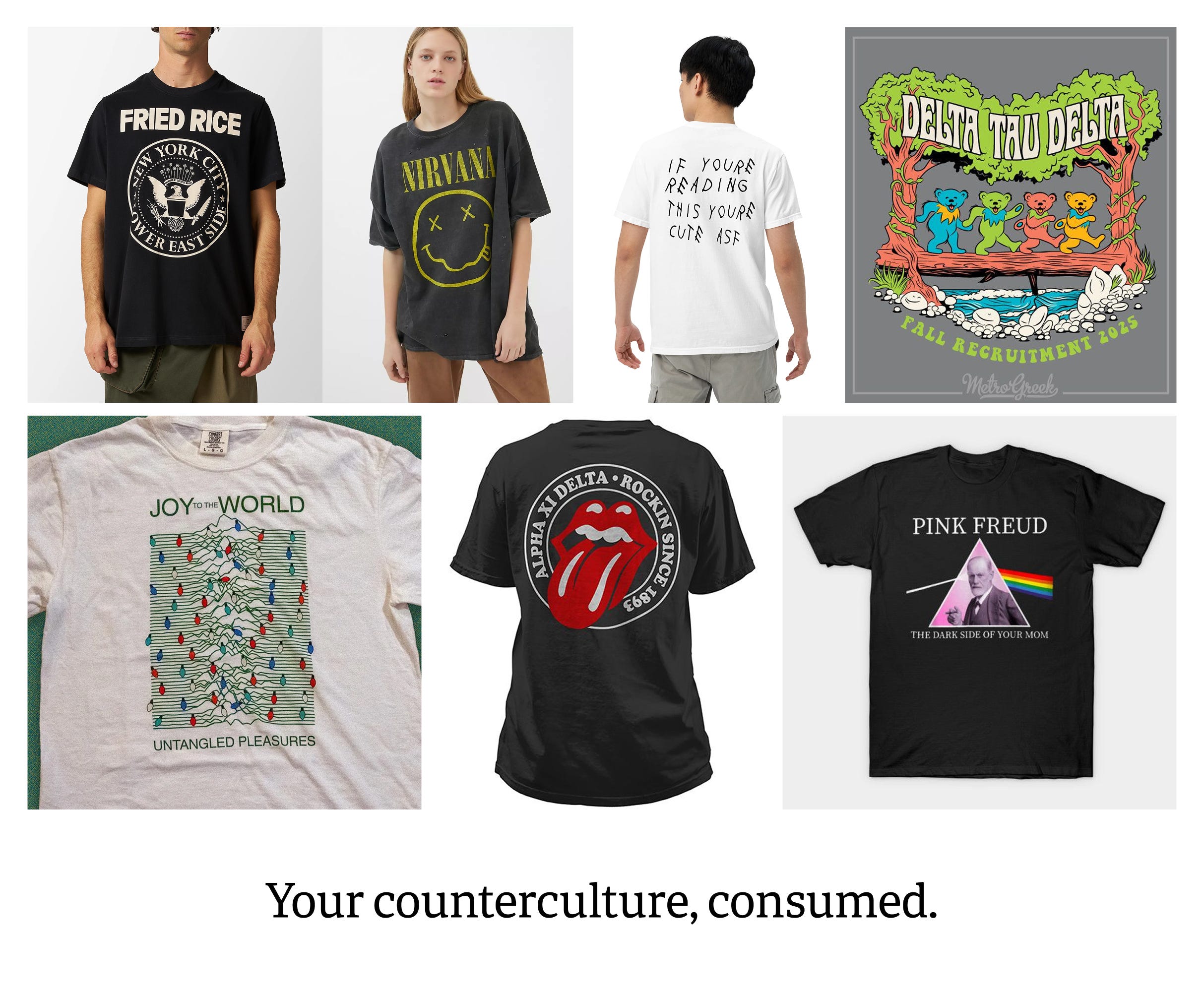
Most countercultures will burn out. They are not compatible with the ecosystem, so will die or be pushed so far to the edges as to lose any sense of threat to the culture. But they are also often eventually consumed by the mainstream, and if it manages to keep its ethos, at best become a harmless subculture. This strikes me as the Grateful Dead’s path.
The reason we celebrate and idealize the Sixties so much is because it was largely a counterculture that was consumed and diffused into the mainstream. On the one hand you could view this as the movement having gained real cultural power, and in that sense maybe even “won.” I don’t think that’s invalid, and in the half-century since the 1960s the US has certainly moved more socially progressive in notable and important ways. On the other hand, though, you could see this as the dilution of its power. Those views aren’t incompatible.
A true counterculture is inherently political, because as much as it is a stance against a mainstream culture, it’s a stance against power. If it’s not truly threatening to the mainstream ideologies, it’s really just a subculture.
That brings me to the final way a counterculture can evolve, which is into revolution - a sudden overwhelming shift that breaks the system when the counterculture gains control of power. For a counterculture to actually succeed in revolution though, it has to have made enough mainstream inroads to actually have popular support. Otherwise, it will likely need to become authoritarian and against the “people” to maintain its power.
So we have three potential paths for the counterculture lifecycle. It can be ostracized to the edges and burn out; it can be sublimated into the culture and maybe maintained as a subculture; or it can become a revolution, in which case it has either tipped into mainstream culture, or holds onto power by force.
American capitalism prefers the consumption model, while American power seeks the destruction. Right now in the US, and to some extent globally, we’re witnessing a cultural cataclysm of these forces playing out before us.
Where is Today’s Counterculture
Adam Mastrioni recently wrote a substack post on “The Decline of Deviance” about how our culture has lost these pockets of weirdness, dangerousness, and rebellion. There’s a lot of good data and points in the post, and indications that perhaps the internet has flattened culture and suppressed outliers rather than allowing them to flourish.
I have another hypothesis though. What if there is a vibrant and powerful counterculture, but it just doesn’t look like what we expect? And what if we don’t actually like it? What if the counterculture today is anti-science, socially regressive, isolationist?
If a counterculture is set in opposition to mainstream culture, and our culture in the U.S. has become increasingly progressive over the past 50 years, then the reactionary culture of MAGA is in fact the most impactful counterculture we have right now.
They have certainly positioned themselves as such, which I think is a large part of the confusion for most liberals (and perhaps even MAGA itself). Everyone has come to see themselves as the outsiders, underdogs, and oppressed. Liberals love the idea of a counterculture, because we think in terms of 1960’s countercultural values and non-conformity as a positive, but there is absolutely no rule that says a counterculture has to be progressive.
As with most culture clashes, this moment has created an absolute mess, not the least because MAGA is currently in power right now. To be clear, I think most of the political push of MAGA is about power and money more than culture, but a number of these regressive countercultural forces have coalesced around the movement in a messy swirl. You can have anti-vaxxers and peptide-experimenters converging over self-directed healthcare; crypto-bros and anti-capitalists looking for an alternative to a K-shaped economy; anti-government activists and authoritarian thugs. It’s turned into a toxic mess of opportunism for all these groups to take advantage of this moment of upheaval.
But if a counterculture by nature must die, then we are at an inflection point right now. Perhaps this is an extinction burst for many of these cultures and they’ll fade back to the edges. Perhaps it’s a revolution, one that seems increasingly tipped towards authoritarianism against the norms of mainstream culture and social values. Or maybe the current countercultural power-play will dissolve into another half-century of steady dilution into mainstream culture, and we’re set on a path to a regressive era in the US, and perhaps worldwide. I can’t pretend to know how this will play out.
I do think this framing is useful though, mostly because the underlying force of any counterculture is change.
The system isn’t working for a lot of groups of people, and suddenly many of those folks previously on the outside or in opposition have found themselves part of the “party” in power, like a dog that caught the car and now has no clue what to do with it. The current countercultural coalition can’t hold together, especially as it becomes more clear that it’s really just the same powerful interests co-opting a populist angst.
The Sixties counterculture was of course also an oddball mix of various groups and goals and grievances, and certainly not as coherent as our Woodstock nostalgia would have us believe. But the overwhelming discontent with the systems of mainstream culture and power was a shared feeling, and that discontent was turned into a real political will.
Even if these countercultural forces of today seem rallied into a regressive MAGA miasma (however tentative that coalition may be), this chaotic moment also offers an opportunity to reclaim the counterculture narrative, and a reminder it won’t happen by fighting for a “return to normalcy.” It’s a moment to boldly imagine something better rather than timidly argue for the safety of the status quo. That includes social, cultural, and scientific visions, not just systems of power and money.
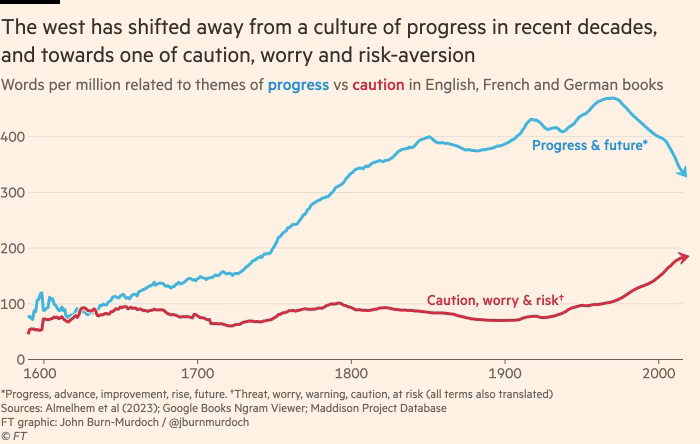
The common underlying sentiment of all countercultures is a need for change. It’s difficult to rally that energy into something meaningful and progressive if all of our visions of the future that we’re projecting are catastrophic. Right now, we have the opportunity to build a narrative counter to the regressive pushes of power, but it needs to go beyond the necessary resistance and opposition to present a galvanizing and inspiring alternative counterculture vision.
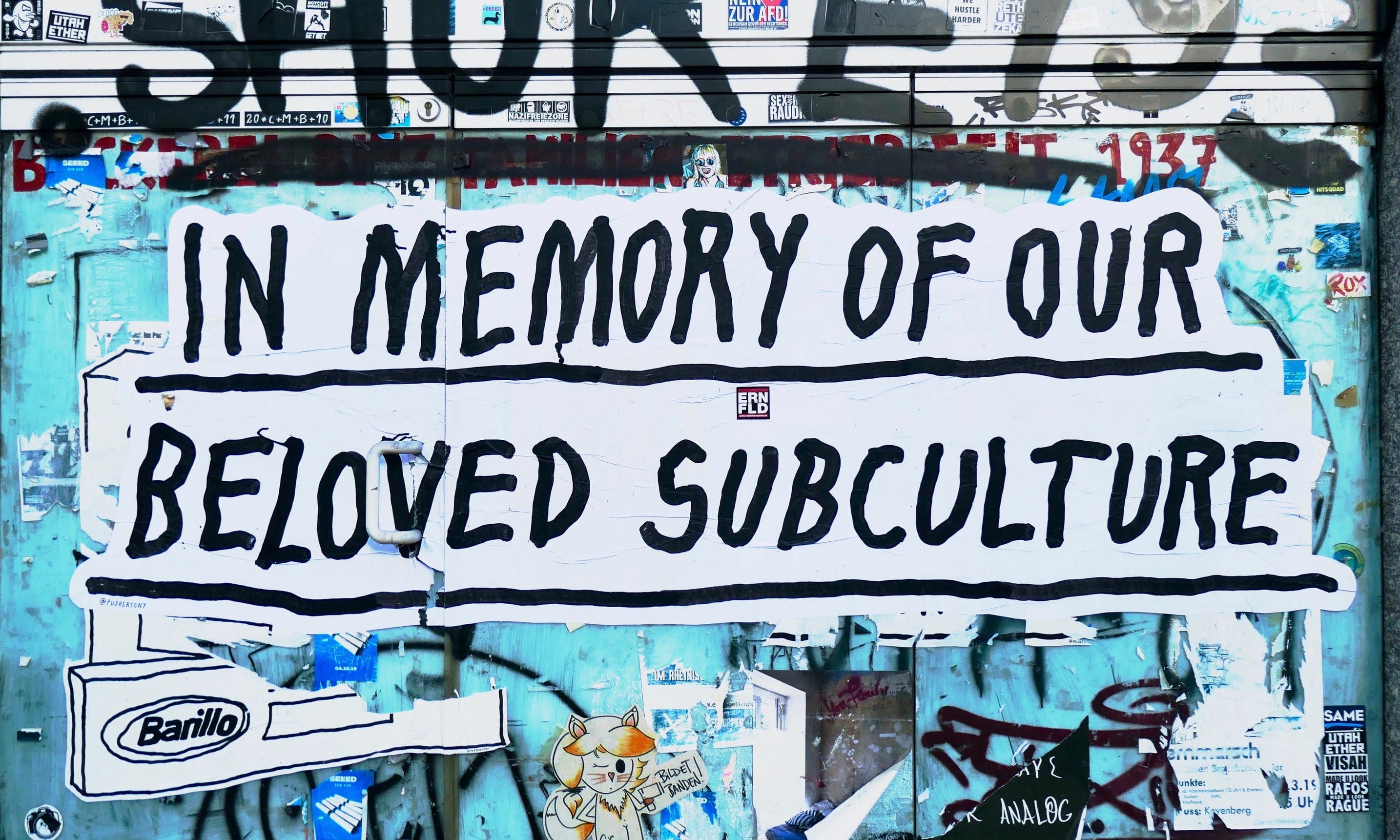
Looking at what might define the counterculture today, here are two interesting visions. For Florencia Lujani writing in 2021, she finds it in the Black Lives Matter, Afrofuturism, and Solar Punk. For Arek O’Connell of the Christian Reformed Church of North America, its religion (and Christianity has of course always been a bundle of internal countercultural splinters!). While they see counterculture in different places, they both identify how so many folks, and especially youth, are searching so desperately for those meaningful alternatives. It’s a good reminder of how toxic cultures have been able to attract so many youth online these days - looking at you, manosphere.
We spent way too much time drawing stick horses this week.
A weekly roundup of cool data visualizations, with a heavy emphasis on the Winter Olympics (as it should).
And speaking of the Olympics, if you haven’t yet stumbled across SportsBall’s data viz videos, please enjoy a sharp nudge down the rabbit hole with his most recent curling, hockey, and figure skating breakdowns.
Depending on the day, our feelings on AI bounce between Matt Shumer (we’re all screwed!) and David William Silva (Calm down, fools!).
Peptide biohacking is all the rage, but honestly these parties sound like they suck.
Starting on March 4th, we’re turning the first Wednesday of every month into community co-working days at JDI. We’re opening up our office and inviting anyone that wants to come in and use a desk to swing by and work on their projects. Whether you need a place to hunker down or hang out, we’d love to have you! Just shoot us an email at hello@jones-dilworth.com.
Also, SXSW will once again be taking over Austin next month, and we’re not exactly sure what to expect this year. Under new management, they’ve consolidated all the various festival tracts (film, music, and interactive) into a single week. We’re excited to have so many friends return this year, and for their panels on everything from biomimicry to how AI is transforming the lab. If you’ll be in town, let us know. We’re hosting several events throughout the week and would love to have you join us!

THE BOOK BOOK: JDI’s annual roundup of our favorite books we read last year.
Superposition is a production of JDI, designed and written by Shanna Gerlach and Doug Freeman
No posts
Comments
Nothing yet. Say the first thing.
Sign in to join the conversation.