Ravi Chandra, M.D. · Letters from a Psychiatrist: The Pacific Heart, Ravi Chandra
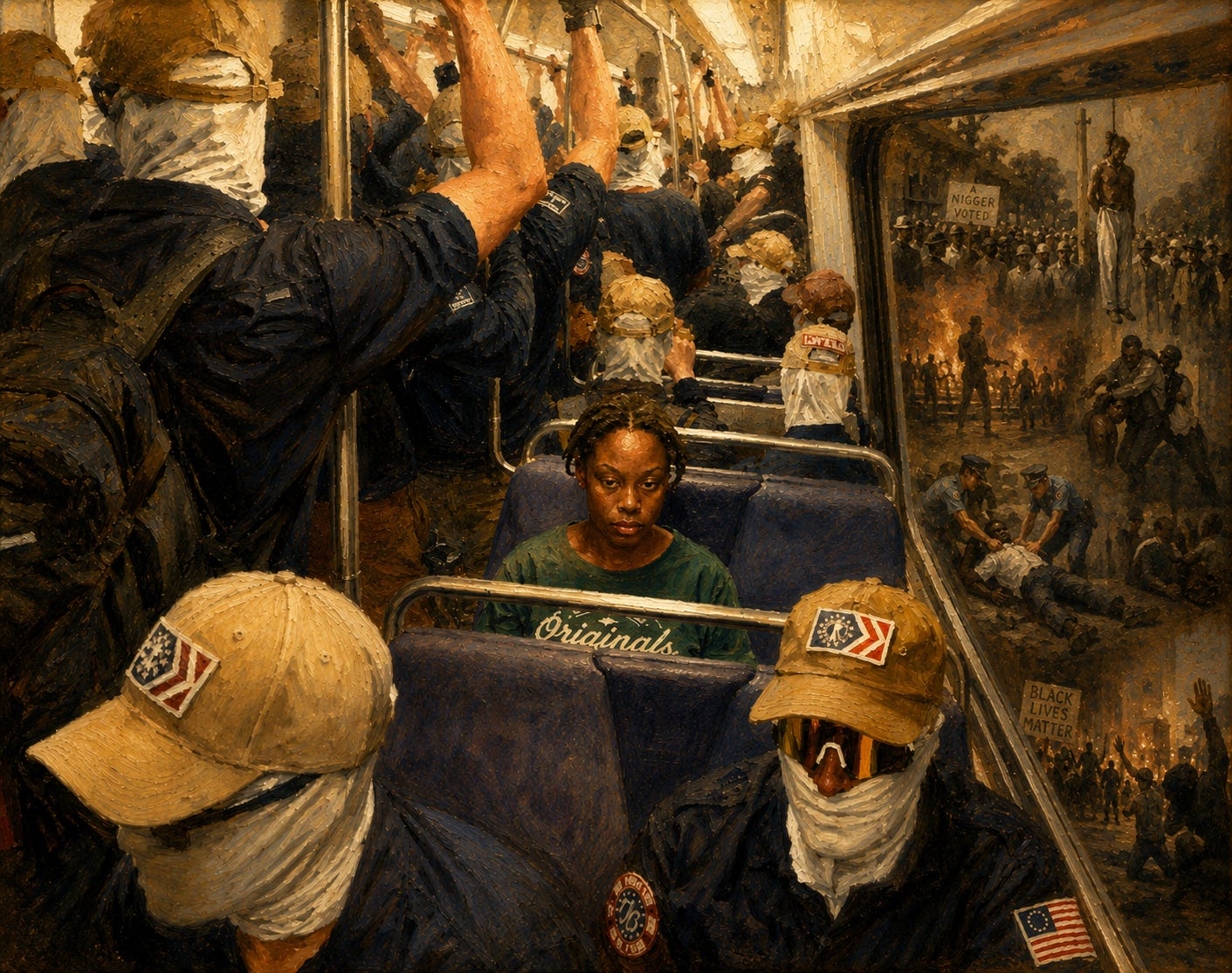
ChatGPT prompted transformation of Cheney Orr’s photo - into a Norman Rockwell-esque painting but with ominous reflections of America’s history of racial violence.
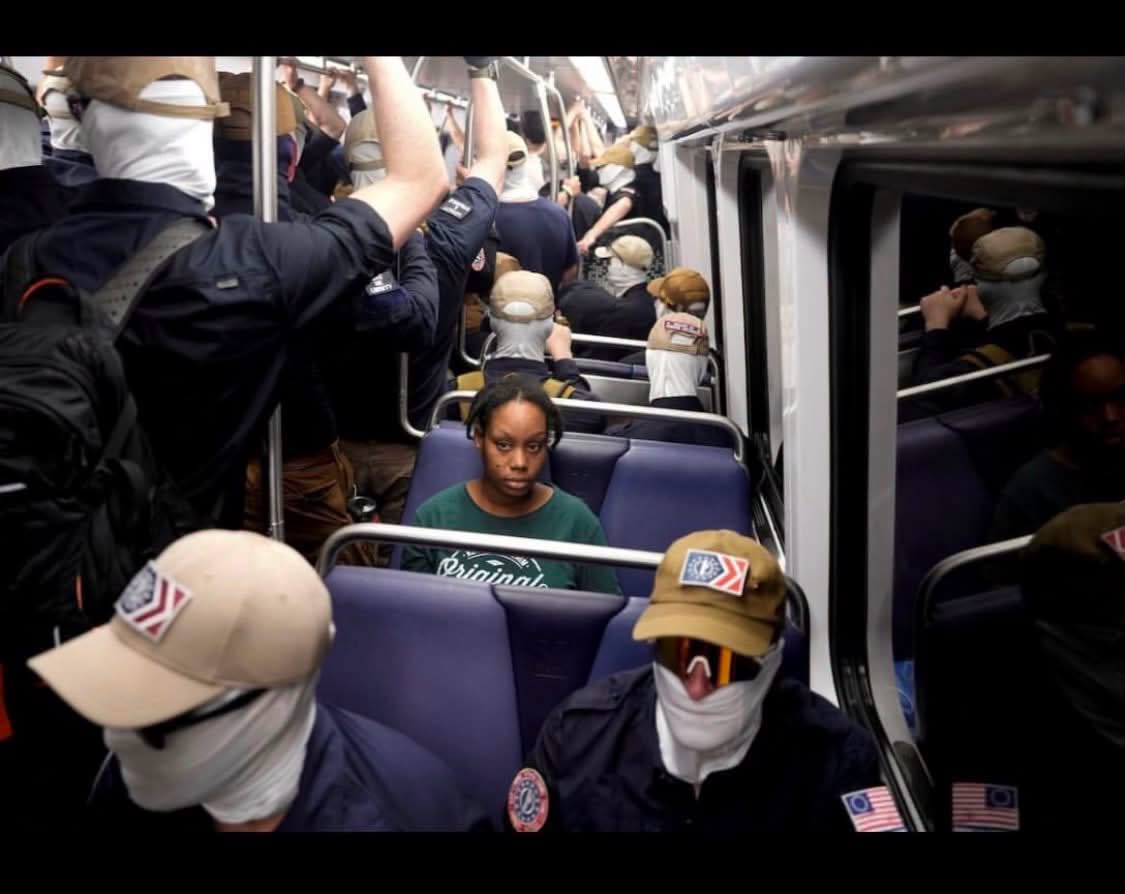
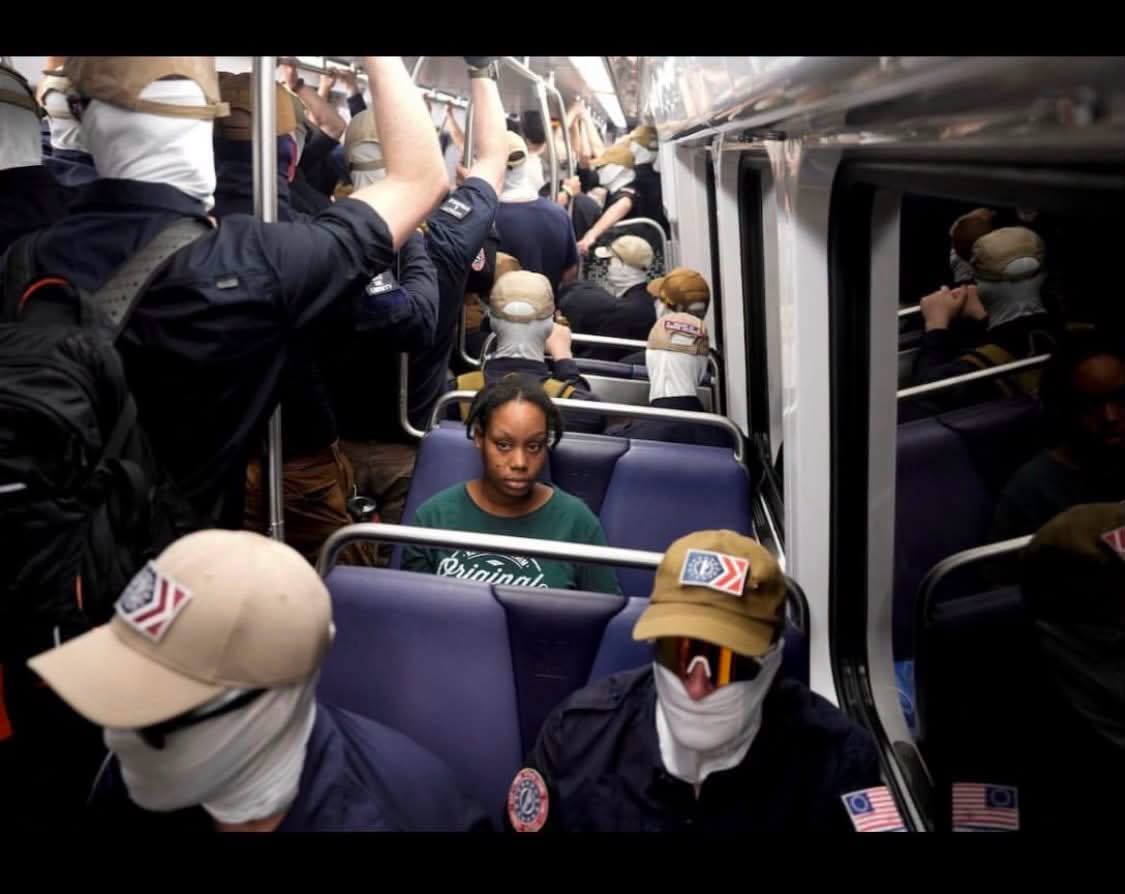
When I first saw Cheney Orr’s now-viral image of masked men wearing baseball caps with an unfamiliar logo, surrounding a lone Black woman on the DC Metro, I didn’t know what to think. That was partially a problem of context. The image was supplied by a friend on Facebook, and he mostly drew attention to the cap patch, stating that the chevron looked like a backwards KKK. I didn’t really see it, and went searching in vain to identify the patch. ChatGPT claimed that it was a DC Metro Transit Worker’s patch.
ChatGPT was hallucinating benign possibilities. And perhaps, so was I.
As my eyes widened to include the mob of men completely filling the train, their identical masks - caps - and whiteness - their masked and hooded Whiteness - surrounding the Black woman - I got it.
Why had it taken me a moment? I was embarrassed for myself. This confusion I carry is a danger. But it is the same confusion that the nation carries.
This morning, I asked ChatGPT to transform Orr’s image into a Rockwell-esque painting, with reflections of America’s history of racial violence reflected in the glass at right. Is it too “on the nose?” Is it the equivalent of Braille for those who, like me, while not quite blind still have some scales on their eyes?
This little story of my journey in sight mirrors the journey of American consciousness and conscience, doesn’t it? How long have Black and Indigenous, and other vulnerable and harmed people been trying to get us - to get me - to see?
We should all know shame, and commit to the journey of seeing more clearly, and loving more deeply.
Orr’s viral photo is deeply disturbing. A snapshot of America that we cannot take our eyes from. The modern Klansmen in Orr’s photo are marching openly, as is their First Amendment Right, as long as they keep it peaceful. But there’s violence in their history, in their minds, and in the history of this country. Their display is an open acknowledgment of their fear of America’s diverse future, and one has to feel that at least some among them would do anything to prevent that future.
But maybe there were reasons other than ignorance bending my gaze.
That viral photo is not the only snapshot of America. Maybe, even as we must see it, know it, we are not be fully defined by it.
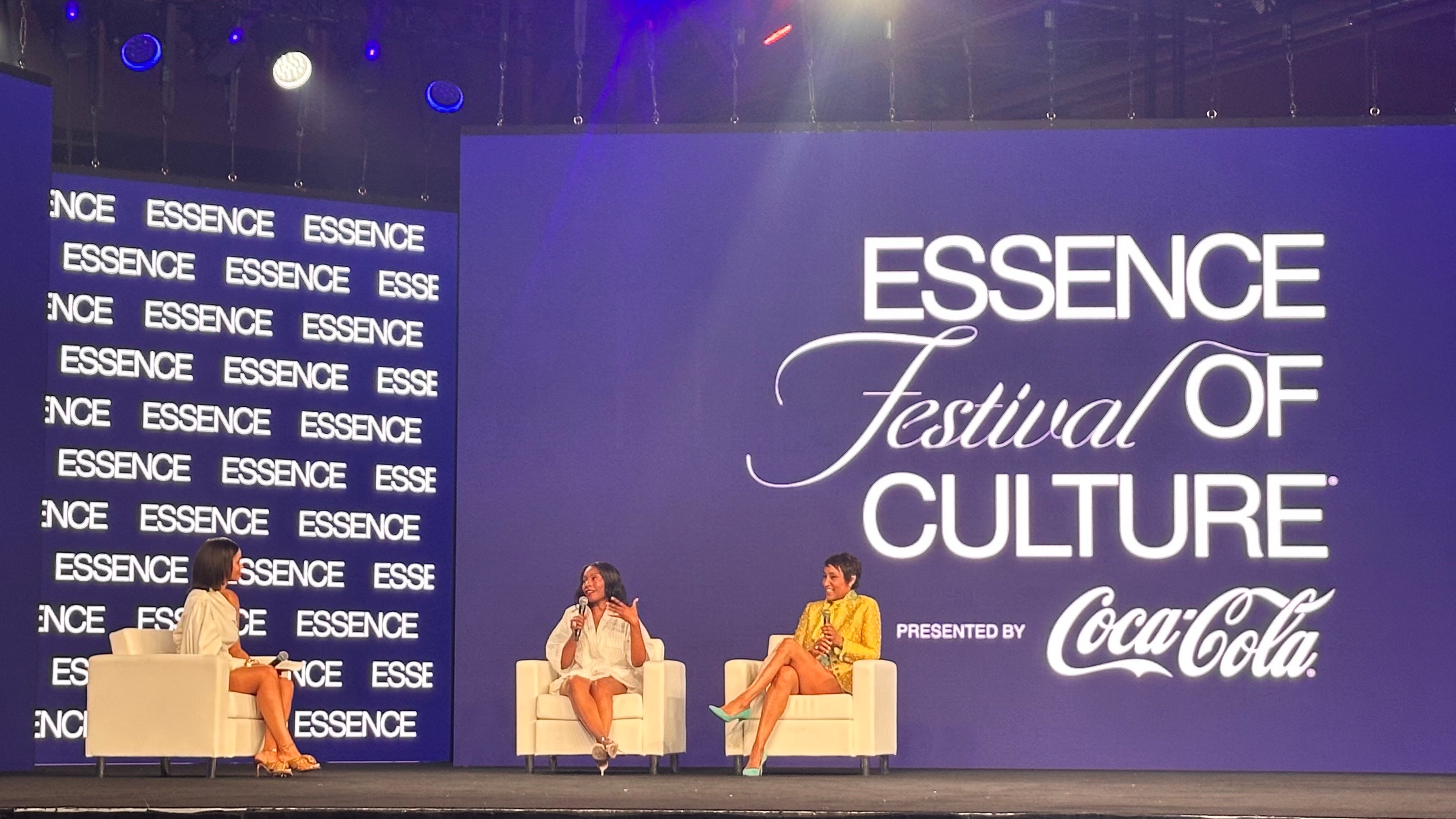
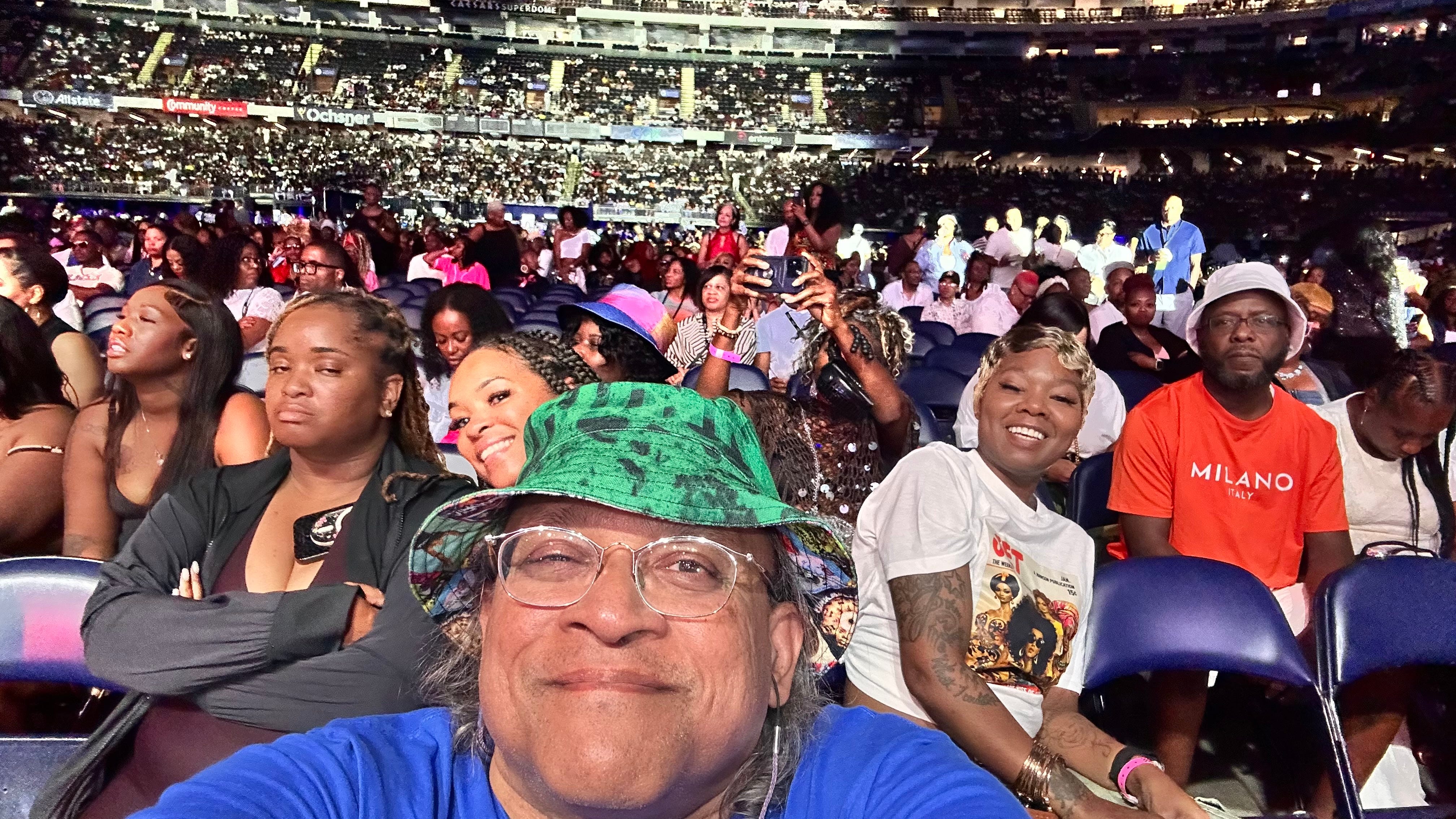
I am at the Essence Festival of Culture in New Orleans, a city that I’ve come to love in two visits this year. The first was for the Black Psychiatrists of America annual meeting, and the second for this festival, which will be capped tonight by a concert at the Superdome, where George Clinton and P-Funk will land the Mothership.
What better way to celebrate and calibrate the nation’s 250th birthday weekend?
(Find out more about the Essence Festival on their Essence 360 app and on their website.)
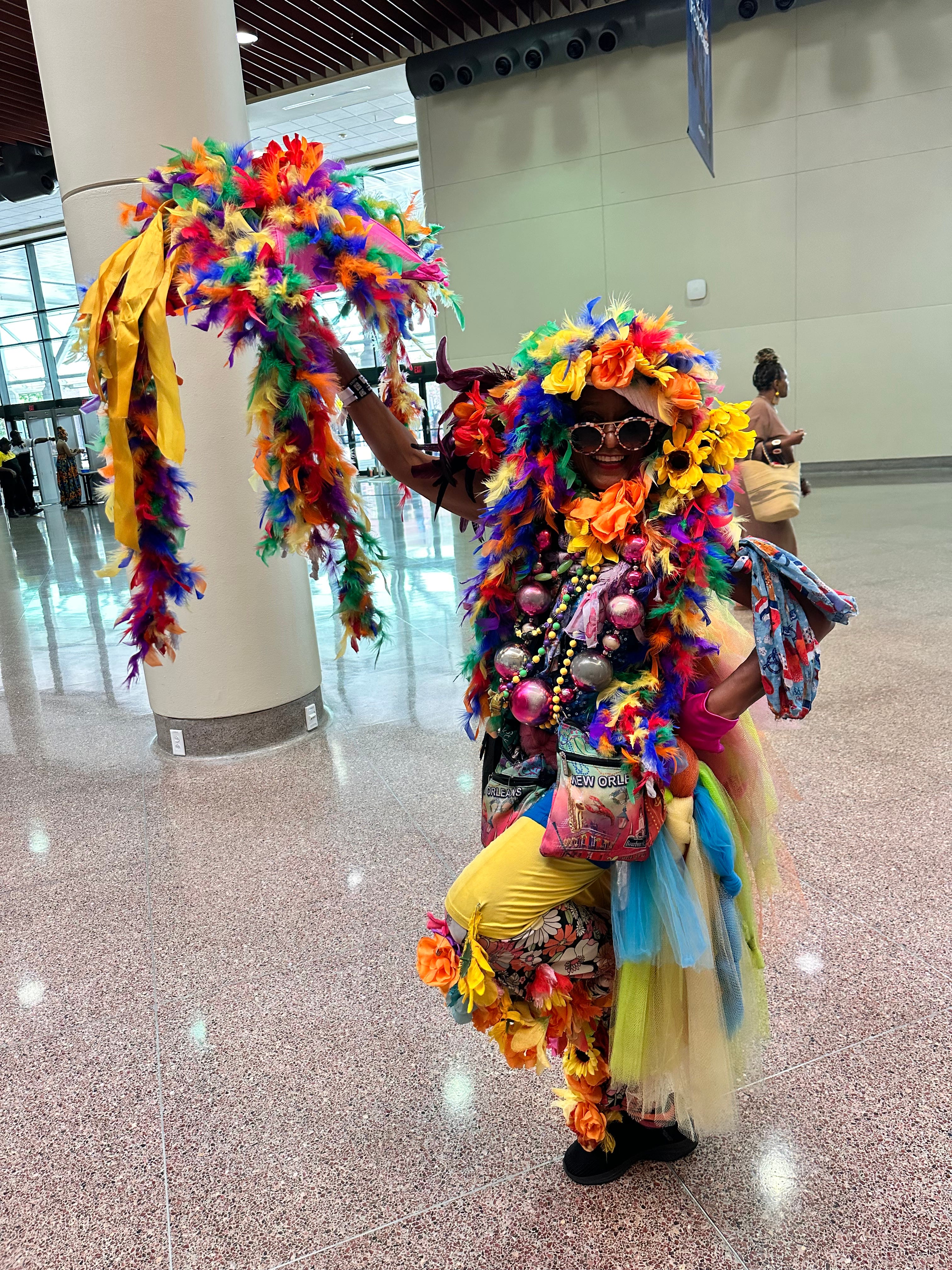
Walking through the Morial Convention Center, I am surrounded by Black people. A Black world. A Black universe. I feel at home, welcomed, and even appreciated. (I was wearing my P-Funk t-shirt and boat hat yesterday, and got a lot of positive comments.) Every glance brings evidence of values of uplift, memory, and beauty, that I breathe into my molecules. This is a community that gathers, celebrates, learns of itself, and dreams.
We too sing America.
The water is warm. Come on in. Take off that cap and mask, and let us swim, and sing, together, into a future we will share, because it’s either coexistence or nonexistence.
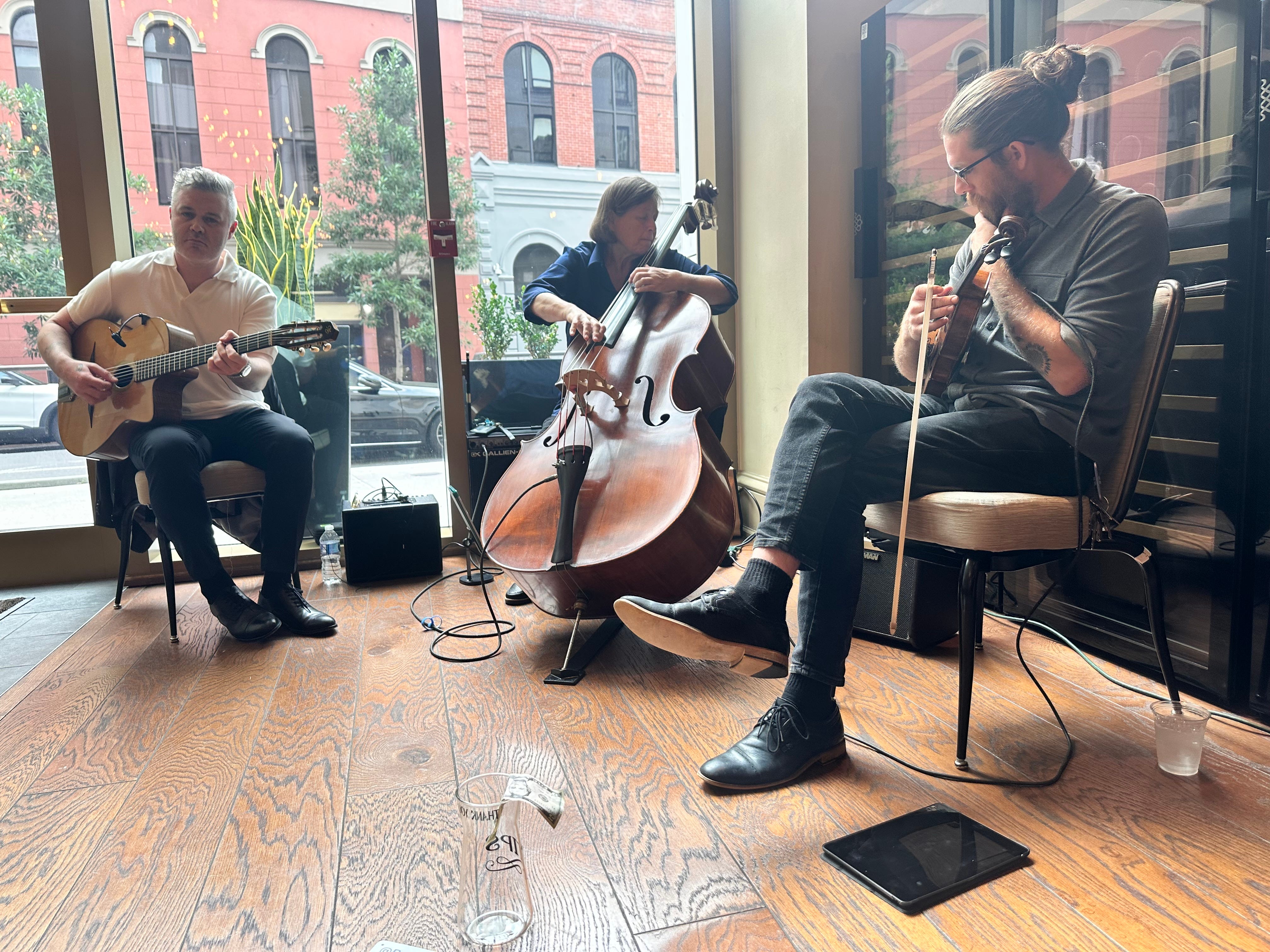
I’m writing this as I listen to the Belinda Moody Caravan (@Belinda-Moody-3 on Venmo) at the NOPSI Hotel, playing Django Reinhardt. The music of Congo Square in NOLA journeyed to France, Australia, and back to NOLA. (Belinda is Australian.)
Humanity sings this America. Blues, Jazz, Rock - all invented by Black America, from African roots planted in American soil.
This is our country. Black America sees clearly and loves deeply, as I aspire to.
The Atlantic recently ran an article about the “two ships” theory of America.
Historian David S. Reynolds argues in his book Two Ships: Jamestown 1619, Plymouth 1620, and the Struggle for the Soul of America, that America is a tale of two ships: the 1619 slave ship The White Lion, and 1620’s Mayflower. In this seminal split, Reynolds sees racial hierarchy and exploitation vying with and threatening the fermentation of Enlightenment values. Traub and any cursory glance at American history shows this is far too simplistic. The North, even the Abolitionist movement, was not free of racism, sexism, or hierarchy.
The tango of power vs. proximity (to vulnerability, suffering, and reality) contend in each of our psyches. We must all make choices. Which do we feed? Which do we nurture? What do we allow to fester, with our apathy, silence, avoidance, complicity, and complacency? What will we take an active stand for, and against?
During the first of my collaborations on Narcissism in the American Psyche, in 2017, I reached for a neurological and spiritual equivalent of the Two Ships theory. We contend with the selfish and selfless within us. We are inherently “two-spirited,” I said, borrowing from Indigenous naming of transgender identity. We are of at least two minds. Every year, I ring a ceremonial bell at the Asian Art Museum in San Francisco, in a Buddhist ceremony to shed the bonno or selfish inclinations and actions of the past year. We recognize that we all are inherently selfish, and perhaps must be so to a certain extent, to navigate our way in the world. But the ship that illusively promises personal survival will not. For true survival, we must nurture selflessness, and shed the habits and traits that obscure the wisdom of interdependence.
I can hear you now: “sure, tell that to Elon Musk, Jeff Bezos, and Donald Trump.”
In my most compassionate and generous moments, I think they and folks like them are evolutionary prompts, forcing us to see our shadow and envision something beyond.
You can’t heal what you don’t feel.
What snapshots will define us? What will our movie reveal?
What will we see when we look in the mirror?
I too sing America
I trust the music we can make together.
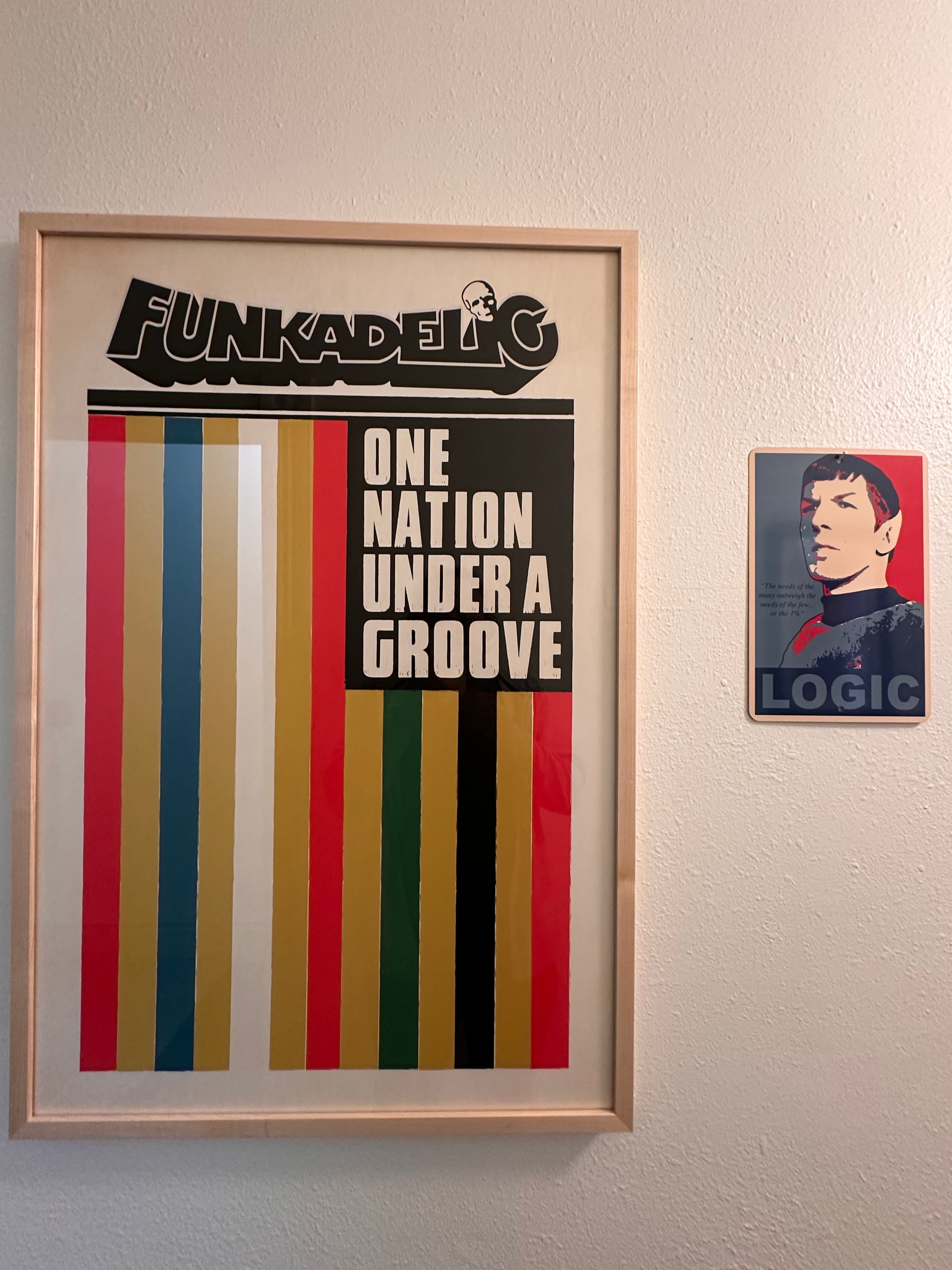
One Nation Under the Groove. George Clinton and P-Funk tonight! It’s only logical.
The P-Funk Mothership Train was much more inviting than that DC Metro Snapshot.
Gettin’ down just for the funk of it!
Thanks for reading Letters from a Psychiatrist: The Pacific Heart, Ravi Chandra! This post is public so feel free to share it.
Becoming a paid or founding subscriber allows me dedicated writing and research time. You can also now tip me at Ko-Fi.com/sunmoonlight, or donate to my compassion non-profit SF Love Dojo via PayPal. Thanks, though, to all my readers, free and paid! I very much appreciate the Substack Nation we are forming!
Ravi Chandra is a psychiatrist, writer, compassion educator, and civilizational health shaman in San Francisco, and a Distinguished Fellow of the American Psychiatric Association. He is the recipient of the 2025 Kun-Po Soo Award for Achievement in Asian American Psychiatry from the APA and APA Foundation. Here’s his linktree. Please sign up for updates via Substack where you can also support his educational and creative mission by becoming a free, paid or founding subscriber. For fourteen years, he was lucky to have his MOSF posts published by the Center for Asian American Media, and is now at work broadening and building a diverse creative community and coalition through reflecting on culture and psychology for East Wind eZine.See all the East Wind posts here. He writes from the metaphorical intersection of The Fillmore and Japantown in San Francisco, where Black and Asian communities have mingled since the end of the incarceration of Japanese Americans during World War II. He literally works there, between two Indian restaurants, go figure. His debut documentary was named Best Film (Festival Director’s Award) at the 2021 Cannes Independent Film Festival. The Bandaged Place: From AIDS to COVID and Racial Justice is available on-demand. His nonfiction debut, Facebuddha: Transcendence in the Age of Social Networks, won the 2017 Nautilus Silver Award for Religion/Spirituality of Eastern Thought. You can find him on Psychology Today, Medium, Twitter, Threads, Facebook, Instagram, YouTube, TikTok, SoundCloud, or better yet, in the IRL.

Comments
Nothing yet. Say the first thing.
Sign in to join the conversation.