
How many assassination attempts has Donald Trump survived?
Turns out he was likely the victim of “soul murder” by his father, in childhood, and he’s just letting us in on the experience. He received extraordinary aggression, was indoctrinated in antagonism as a mode of survival, and this landed on his own aggressive instincts. He now incites antagonism against his perceived opponents, and inflames antagonism against him – our fight, but also our flight-freeze-fawn-and-comply survival brains. To truly survive, we must contain and transform his malevolent, invasive input. To thrive, we need to evolve beyond it. I’ve called him the self-centered UnBuddha. But America has been rated the most individualistic and antagonistic nation on Earth. Trump’s rise depended on the willingness of the powers-that-be and people: their complicity, enchantment, and weakness. Too much about America thrills in his MO for power, profit, attention, and distraction from accountability. Too much of America has always been in violent flight from relationship with diversity. And too much of America has never rationally and compassionately dealt with its dissatisfaction and anguish, and has sought to blame others, to feel powerful for an instant by expelling our trauma and psychological waste onto the expanse of a nation and world instead of healing from within. Too much of America fears that expanse, rather than welcomes it, so we must control it and wrest ourselves “above” it, rather than be a part of it.
Trump’s soul murder has joined with the murdering force in the nation and world.
Are we stronger than this death?
Our enlightenment journey depends on us overcoming the nightmare that our unresolved collective mind has produced. Disruption has been revelation - of White Supremacy, Christian Nationalism, and the psyche of cruel domination and threatened annihilation. The knife is at our throat. Can we break free? Or will we, like Donald, be murdered?
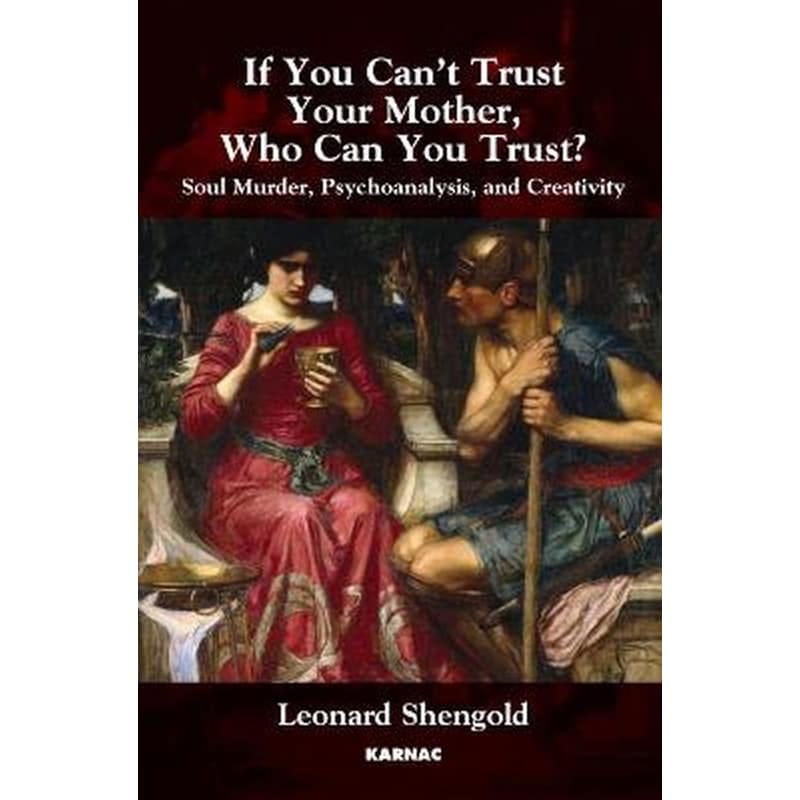
Psychoanalyst Leonard Shengold described soul murder as the “deliberate attempt to eradicate or compromise the separate identity of another person,” their human dignity and autonomy, their subjectivity, their capacity for joy and love. Certainly, also, their capacity for calm and rest. In his 2013 book If You Can’t Trust Your Mother, Whom Can You Trust? Soul Murder, Psychoanalysis and Creativity, he wrote:
“My historical references stress soul murder as a crime expressing man’s inhumanity to man. One human being uses power over another to crush his or her individuality, self-esteem, dignity. The capacity to feel deeply—joy, love, and even hate—is compromised or lost; there is…a stifling of the victim’s use of his mind, of the capacity to think clearly and to test and evaluate reality. In the twentieth century we have seen soul murder used against prisoners of war and in concentration camps and gulags. Orwell’s 1984 is a primer on soul murder, described by him as a principle of totalitarian domination.”
Psychologist Richard Wood writes of Trump:
“Soul murder was occasioned by a brutal father whose intransigent ascriptions of toughness, ruthlessness, and contempt created a terrible dilemma for his son: either surrender and let the monster who was invading him define him, replicating the actualities that father possessed (RC - identification with the aggressor), or he could resist, attempting in the process to create his own identity—but as a consequence face psychic annihilation perhaps much like his “weaker” brother did.”
Wood R. Given His Liabilities, Why Would We Allow Donald Trump To Lead Us? in Lee BX The Much More Dangerous Case Of Donald Trump: 50 Psychiatrists And Mental Health Experts Warn Anew. World Mental Health Coalition, 2025
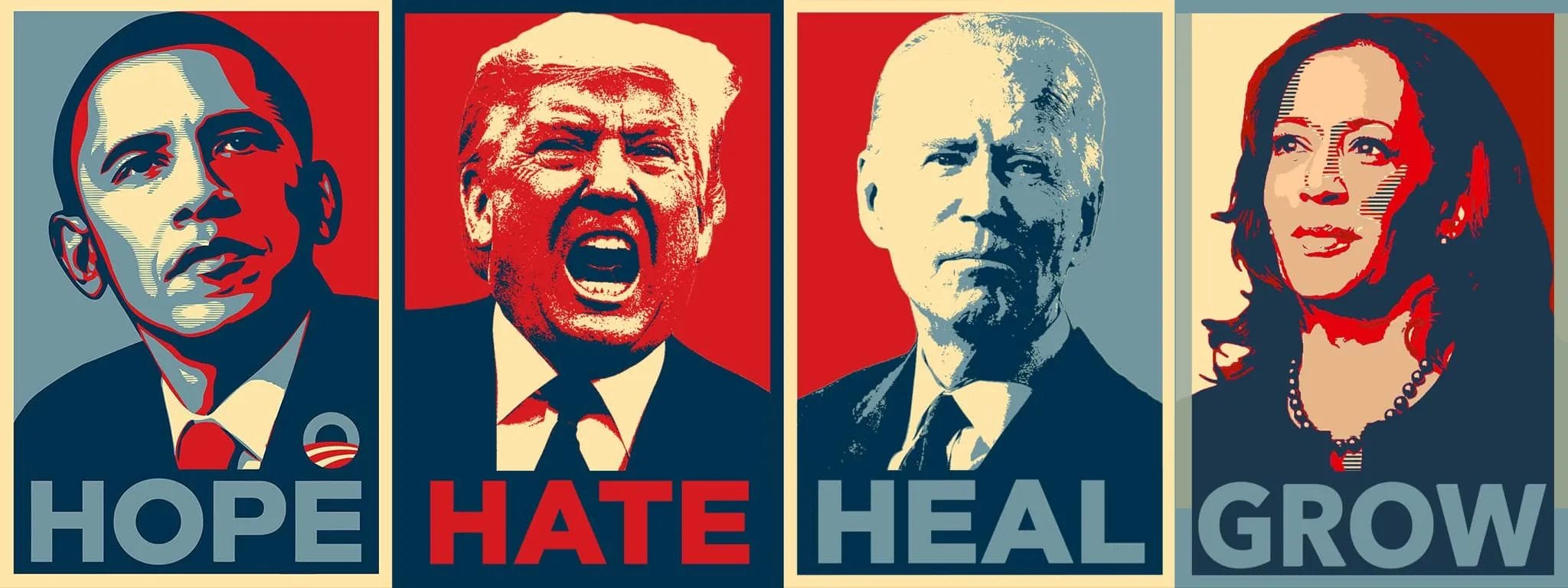
The murderer’s presence forces a split between the world of the victimizing autocrat and a hidden inner world, struggling for survival, growth, transformation, and expression. To the extent that hidden world survives, the murder is not complete. Tara Brach says “attention is how love says yes.” Love is saying yes to our inner worlds of affirmation, insight, joy, calm, and presence.
The great unforgivable sin is—to murder the love in a human being…You’re the guilty one. You put to death all the natural joy in me!” (Henrik Ibsen: John Gabriel Borkman, 1896). (Quoted in Shengold, 2013)
We all need someone to love us, even unconditionally. Balint described “the basic fault” as the dearth of warmth, love and care in early life relationships. Soul murder leaves a chasm. All our lacks leave a residue of resentment, fear, anxiety, sadness, and longing. Or melancholy, futility, and nihilism. The murdered soul, scraped bare, can be left with only instinctive aggression.
Not the capacity for this.
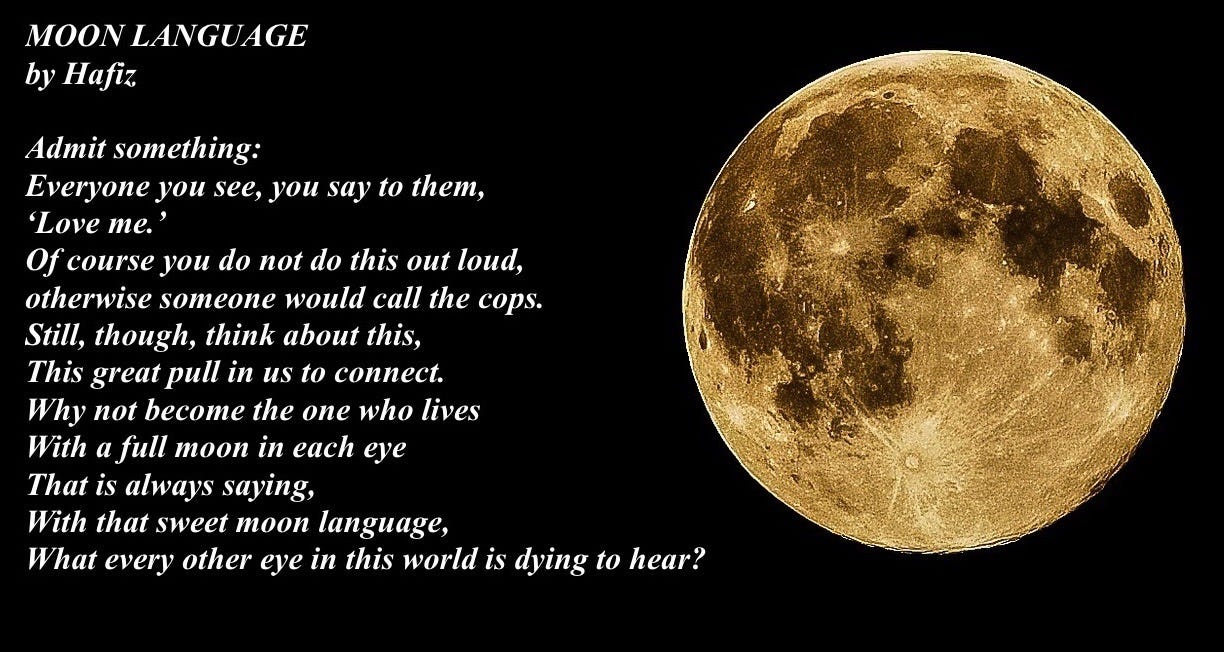
If only Kaspar Hauser, Dickens, Kipling, and others Shengold discusses had met and learned from Rumi and Hafiz. Instead, America has bombed their homeland, which had also turned from their words. All the deprived, threatened, and abused, from person to nation, need just a little more - kindness, safety, understanding, nurture, belonging - than this world has offered itself.
In a recent discussion, a colleague said that the British Empire has killed and subjugated more than any other. He wondered whether it was due to their own experiences of traumatic conquest by other empires. I’ve heard that unhappiness as much as gumption drove the British to explore and conquer what became their Empire. I guess a siege mentality can only be resolved by suicide or ever-expanding conquest, until threats and fears are eased.
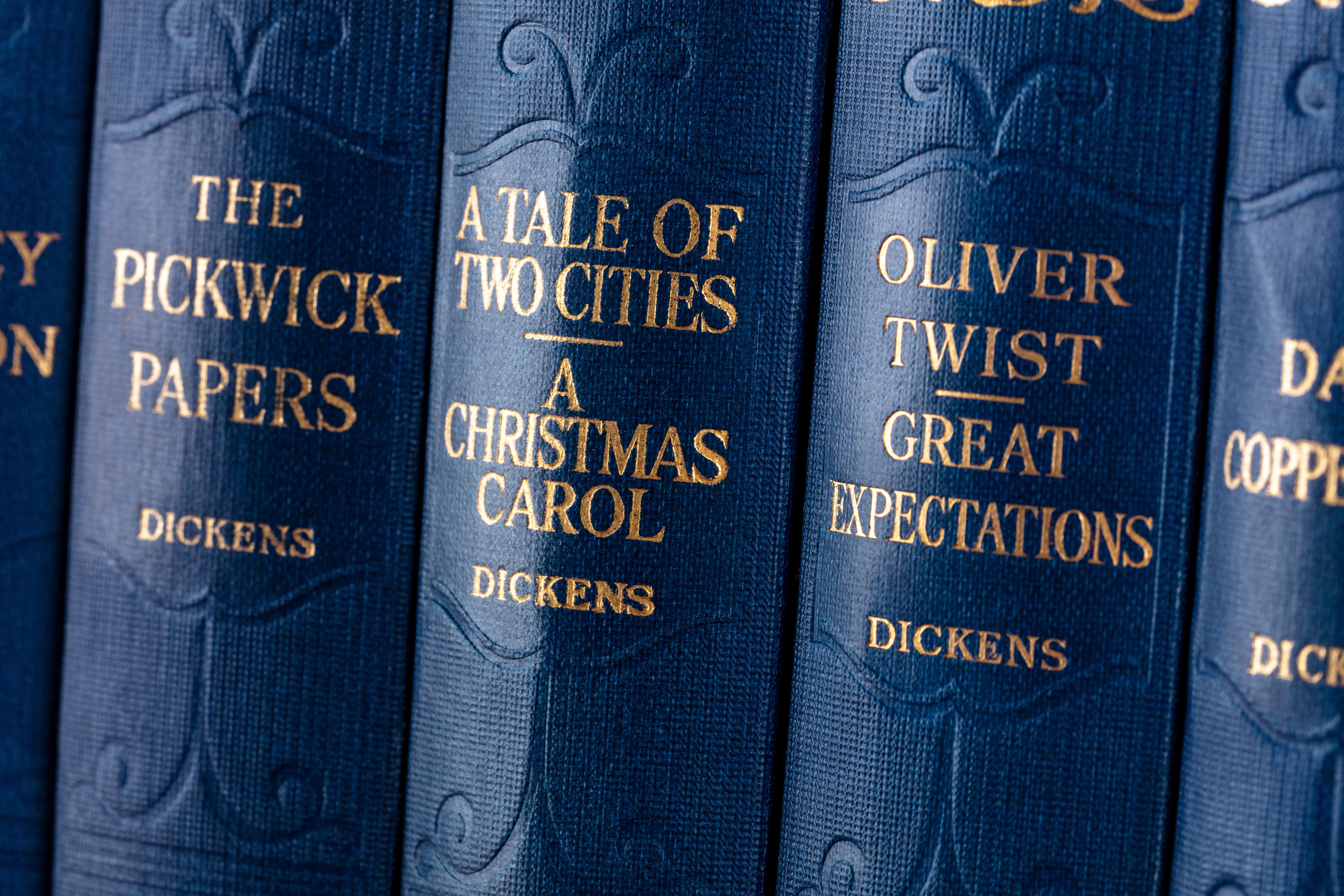
Dickens experienced a siege in childhood, and wrote his way forward, but he never escaped or healed his demons. Perhaps he’s as good of a stand-in for 19th century British mentality as any. Ours, perhaps being a less literary society, has to settle for the real-life drama of Trump, our mad emperor with no clothes.
Charles Dickens’ father’s debts left him destitute, and at ten years of age, Dickens was sent to work at a blacking factory, 12 hours a day. His father went to debtor’s prison, and the rest of the family soon went to stay with him. “Charles spent Sundays at the prison with them, and had barely enough to eat for the rest of the week. He had to pay for his own food out of what he earned at the blacking factory.” He later wrote:
“I lounged about the streets, insufficiently and unsatisfactorily fed. I know that, but for the mercy of God, I might easily have been, for any care that was taken of me, a little robber or a little vagabond.”
“Dickens wrote of the “secret agony of my soul” (p. 26) of these months when he felt abandoned and condemned to a future of failure and misery.”
“The deep remembrance of the sense I had of being utterly neglected and hopeless…even now, famous and caressed and happy, I often forget in my dreams that I have a dear wife and children; even that I am a man; and wander desolately back to that time of my life.”
While he is able to love, he is continually agonized and tortured by his childhood experiences of deprivation and abuse. He grew to see those in all of British society, and he was not wrong.
In Little Dorrit, Dickens examines several instances of emotional deprivation and demonstrates how the “undeveloped heart” of the parent can warp the character and inhibit the ability to love in the child. It is a work of terrible accusation—of parents, of society, of the government, and of the capitalistic system in mid-nineteenth century England…
Little Dorrit contains the great metaphor of the English governmental bureaucracy as the Circumlocution Office, the motto of which is “How Not To Do It.” Dickens transfers his parents’ failure of empathy and ineffectuality to those who rule England—and not only in Little Dorrit. Edmund Wilson noted: “In Dickens’s novels from beginning to end, Dickens is making the same point always, that to the English governing classes the people they govern are not real” (1941, p. 30). This lack of empathy is portrayed in those who govern families and institutions as well as the nation. His books provided for his readers the sensory and emotional details of what it was like to be dependent, to be poor, to be in prison, to be a disregarded servant or clerk or workman or, most of all, a neglected child. (Emphases mine - RC)
Rudyard Kipling and E.M. Forster suffered abuse as well. Shengold writes of Kipling’s mother:
At the very least Alice Kipling shared the lack of empathy for children—children customarily raised chiefly by servants—that was frequently passed down from one generation to another in Victorian upper-class households—sowing misery even in the homes of the wealthy and aristocratic. (Here too E. M. Forster’s characterization of the British middle and upper classes as suffering from “undeveloped hearts” is relevant.)
Hasn’t Donald Trump painted his childhood experience of abuse and victimization on the world- and government-write large? Hasn’t he transferred his childhood wish for admiration and praise from his parents onto all of us, as a brittle demand? Doesn’t he throw a tantrum when he doesn’t get it?

Dickens had a weak heart, and apparently pushed himself to exhaustion and an early death at 58 by acting out his scene of misogyny and murder in Oliver Twist.
“Both murderer and victim had motivations and vulnerabilities that Dickens could share; killing Nancy provided a cathartic outlet for the author’s suppressed murderous feeling toward betraying and uncaring women.”
It’s not hard to see Donald Trump’s misogyny as unsuppressed “murderous feeling” towards his own “betraying and uncaring” mother. (Maybe women reporters should start wearing pacifier pendants to troll him. Or maybe real ones to give him.)
It makes me feel like I’m living in a dadaistic Dickens novel, in which Trump’s surreal, tortured, meager inner life has become our reality. His murdered soul demands to be the hero, demands to be mirrored back the way he wishes his parents had seen him.
But only a third or so “approve,” even as some still proclaim him “the greatest president who ever lived.” They insistently double down, perhaps because it’s the only way to feel good, unconflicted, and certain about their own questionable life choices and identities. Head strong and dead wrong.
Perhaps they and we can discover, like Kaspar Hauser, that the world is not the prison of Trump’s expectations of us.
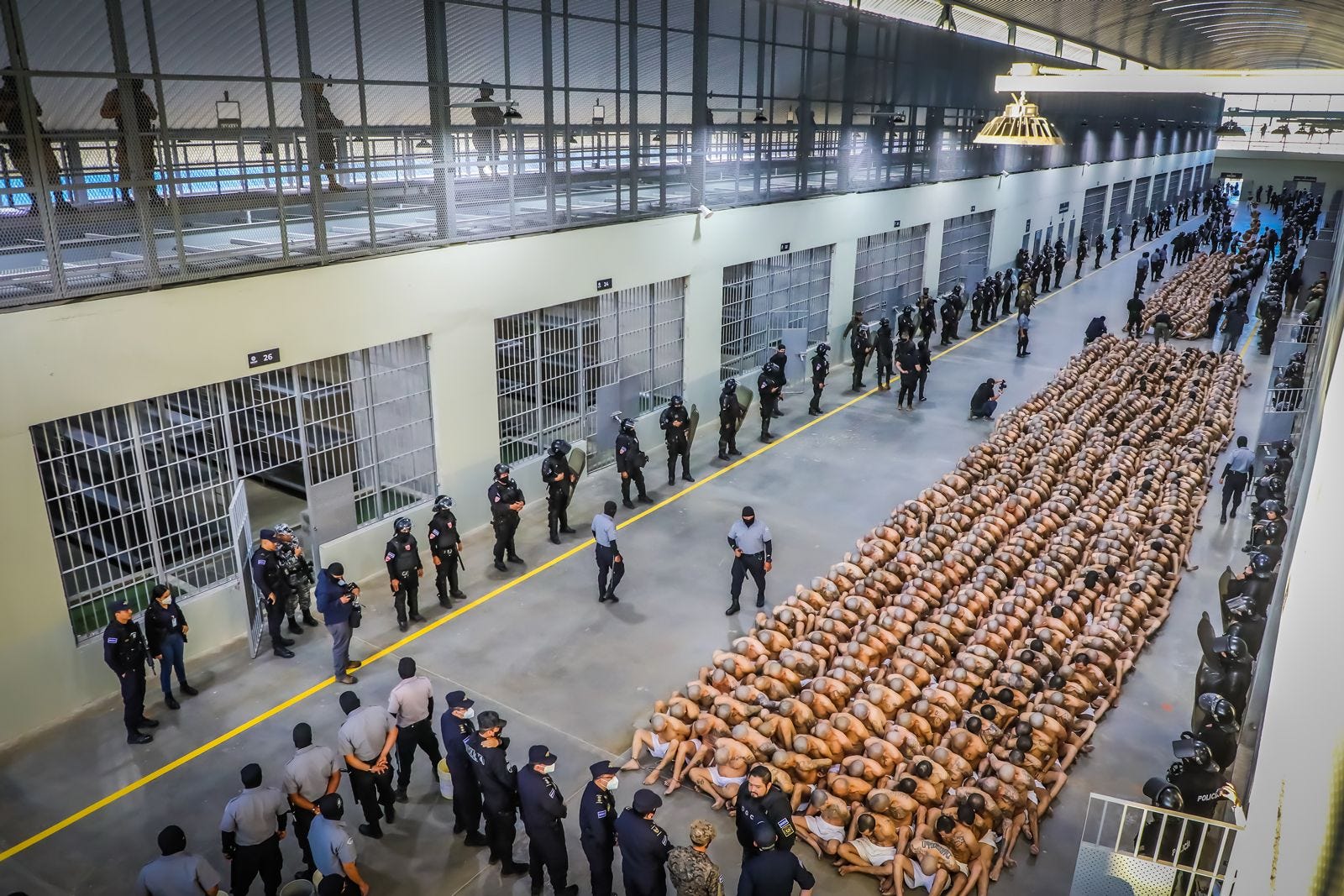
Hauser’s story was the talk of Europe in the early- to mid- 1800s. He had been “Kept in a Dungeon, Separated From All Communication With the World, From Early Childhood to About the Age of Seventeen.” (Part of a title of a book about him.) He was described as a “human savage,” but “incapable of anger,” putting up with all manner of abuse. “[D]eprivation has crushed the boy’s physical, emotional, and mental development.”
“[T]he physical cruelty is less criminal than the terrible deprivation of the rights of the child to the benevolent parental care and contact needed to develop a sense of identity, a sense of reality, and the capacity for emotion and thought that make up the growing child’s human qualities—his soul.”
The title of Werner Herzog’s film about Hauser tells it all: Every Man for Himself and God Against All. (Also called The Enigma of Kaspar Hauser.)
Dickens, Hauser, and Trump all tell us uncomfortable truths. People can indeed be this cruel, and even worse. If we’re not murdered, we long for better. We long for benevolence. Our imagination for benevolence runs into hope and faith in God, but runs into mistrust, fear, disappointment, and alienation from one another.
Benevolence, like our soul, is something we must make, out of whatever gifts we have been given. We must create our own non-abusive, life-affirming, “soulful” identity, or surrender to a murderous scheme.
We can actively choose to be a mensch, or else become Trump’s tool, the tool of the engine that has him. It’s as simple as that.
Thanks for reading Letters from a Psychiatrist: The Pacific Heart, Ravi Chandra! This post is public so feel free to share it.
I came late to the writings of analyst Leonard Shengold, who died in 2020 at age 94. We are fortunate indeed that he left an important legacy in eleven books. I found him riveting, erudite, compassionate, and thorough, and wished I’d had the chance to meet him and learn from him directly.
Kakutani M. Destruction of Young Minds And Some Who Overcame. New York Times, November 21, 1989 (Gift Article)
Sandomir R. Dr. Leonard Shengold, 94, Psychoanalyst Who Studied Child Abuse, Dies. New York Times, February 4, 2020 (Gift article)
Becoming a paid or founding subscriber allows me dedicated writing and research time. You can also now tip me at Ko-Fi.com/sunmoonlight, or donate to my compassion non-profit SF Love Dojo via PayPal. Thanks, though, to all my readers, free and paid! I very much appreciate the Substack Nation we are forming!
Ravi Chandra is a psychiatrist, writer, compassion educator, and civilizational health shaman in San Francisco, and a Distinguished Fellow of the American Psychiatric Association. He is the recipient of the 2025 Kun-Po Soo Award for Achievement in Asian American Psychiatry from the APA and APA Foundation. Here’s his linktree. Please sign up for updates via Substack where you can also support his educational and creative mission by becoming a free, paid or founding subscriber. For fourteen years, he was lucky to have his MOSF posts published by the Center for Asian American Media, and is now at work broadening and building a diverse creative community and coalition through reflecting on culture and psychology for East Wind eZine.See all the East Wind posts here. He writes from the metaphorical intersection of The Fillmore and Japantown in San Francisco, where Black and Asian communities have mingled since the end of the incarceration of Japanese Americans during World War II. He literally works there, between two Indian restaurants, go figure. His debut documentary was named Best Film (Festival Director’s Award) at the 2021 Cannes Independent Film Festival. The Bandaged Place: From AIDS to COVID and Racial Justice is available on-demand. His nonfiction debut, Facebuddha: Transcendence in the Age of Social Networks, won the 2017 Nautilus Silver Award for Religion/Spirituality of Eastern Thought. You can find him on Psychology Today, Medium, Twitter, Threads, Facebook, Instagram, YouTube, TikTok, SoundCloud, or better yet, in the IRL.
Comments
Nothing yet. Say the first thing.
Sign in to join the conversation.