
(Just my personal recommendations & curiosities for cool products. Note — I don’t earn affiliate fees on these links.)
Edits
Complex video edits in a simple UI
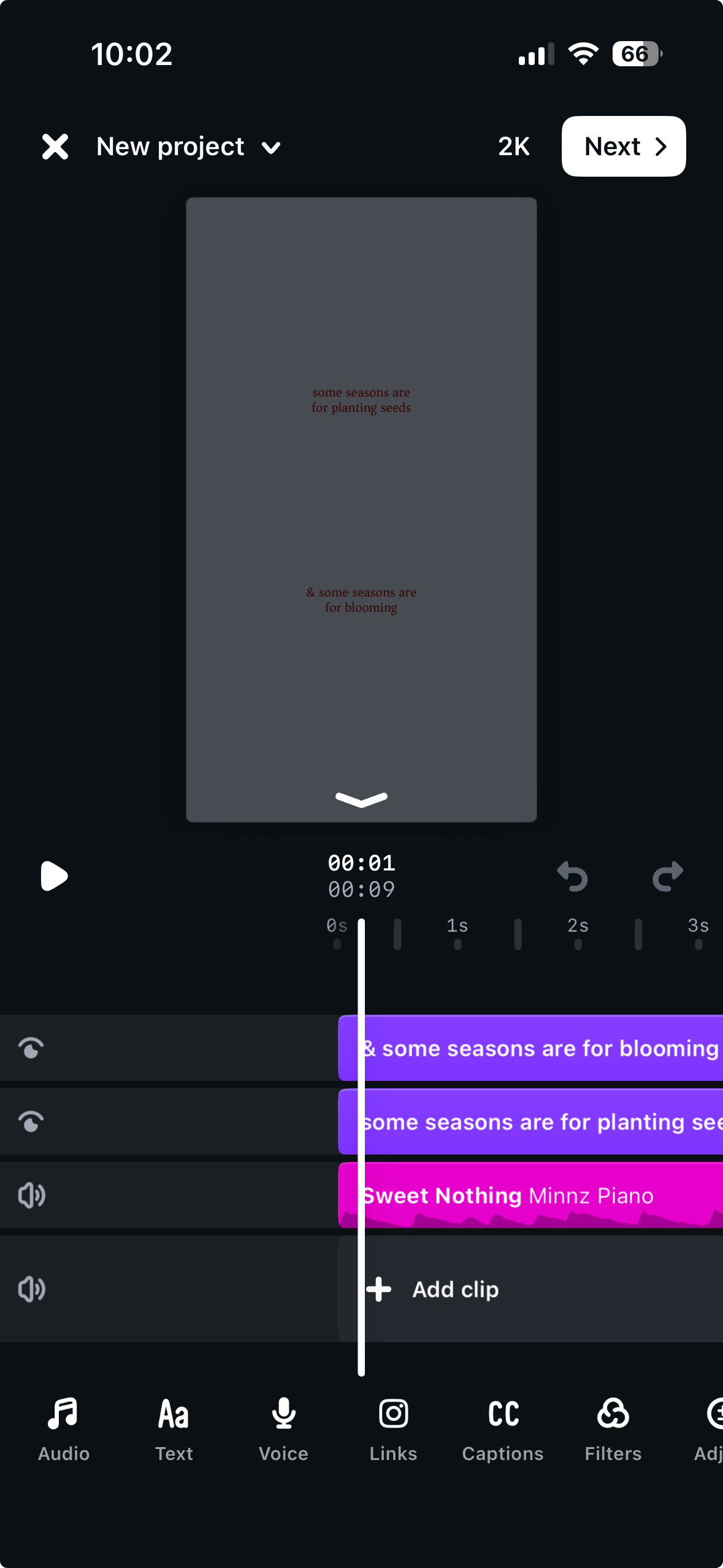
Products from Meta rarely qualify in the “well-designed” category (Instagram was made by Kevin Systrom & Mike Krieger, not Facebook), but I have to make an exception for Edits. This is a super well-executed mobile app that makes editing videos a breeze. Having to do brand-building online these days is a big hassle but a necessity if you’re a creator — tools are always either trying to sell you very expensive plans or are so poorly designed that you spend hours putting effort into a video that gets viewed for 5 seconds by 100 people. Edits turns complex workflows like adding typography, animating elements, adding music or sound effects, or transitions into fairly simple mobile-native flows. Moreover, it provides nice summaries on Reels in a clean, noise-free interface, with just the right feedback on taps. It’s almost as if it’s built by a very design-forward team at Meta.

Language Learning Flash Cards
Flashcards you will want to display as decor
These minimally and beautifully designed flash cards serving as an introduction to scripts like Devanagari and Gurmukhi are household decor items as much as they are educational. Printed on matte-finish luxury heavyweight stock, each card deck contains two sets — one for each letter of the alphabet and one for a word using that letter. Both sets come with romanized names of the letters and words, printed alongside beautiful, full-colour illustrations on each card. Each deck includes numbers, days of the week and months of the year. Available for Gurmukhi (powering the Panjabi language) and Devanagari (powering the Hindi language), this Toronto brand, with the help of illustrator Parmeet Birdi and designer Keya Vadgama has gone above and beyond in the design of this simple educational tool. In case you like the vibe of this brand, see Product Discoveries from Issue #13 where I covered another line of products from the two-decades old The New Delhi Company.
Elk
Currency conversion done right
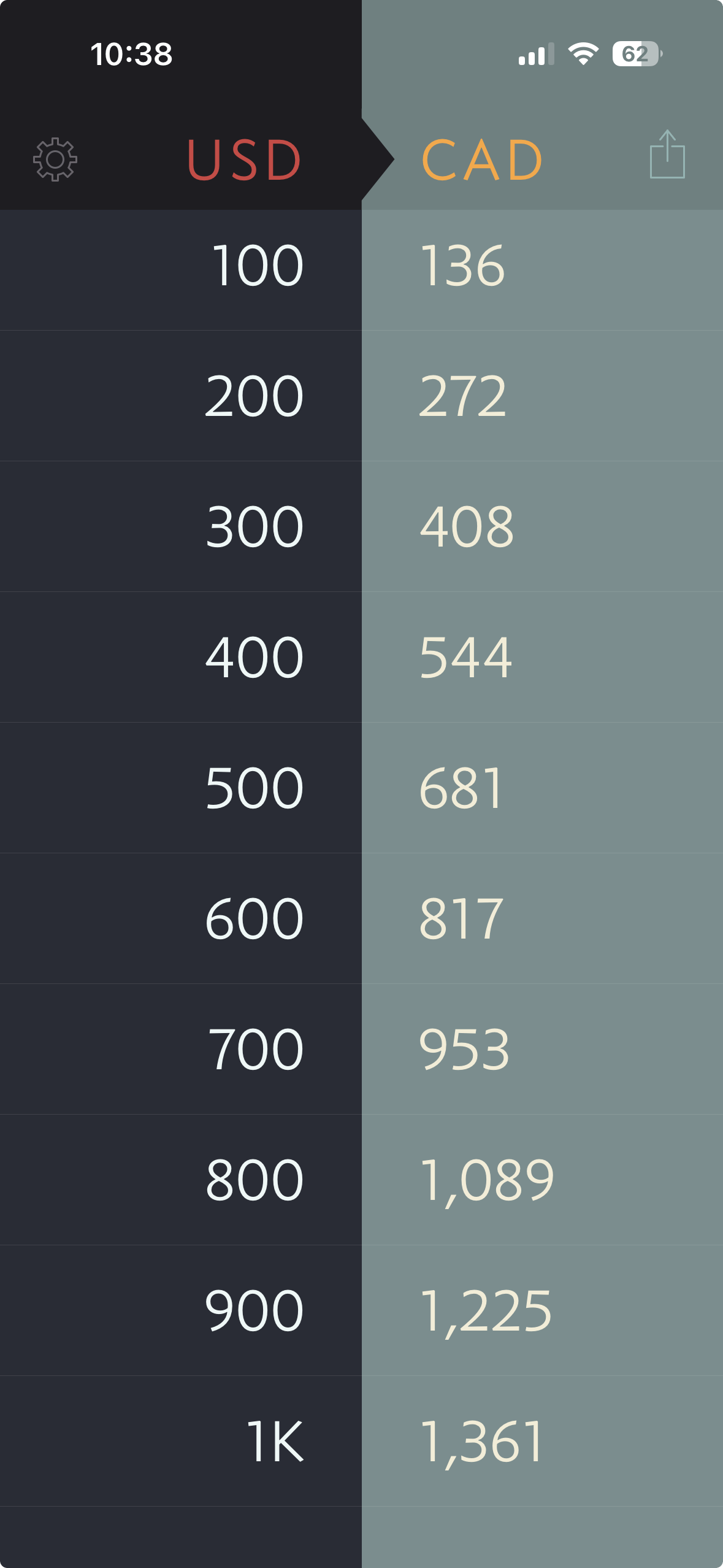
Elk is a gesture-based currency conversion rate app that’s designed thoughtfully. I don’t get to say this often because most currency converter apps are either littered with annoying ads or feel like they were designed to expire in 2010. On Elk, you set two currencies you want to find the conversion between — then you swipe left to divide by 10, and swipe right to multiply by 10 (I had to double-check I’m saying these gestures correctly as I’m not a native of the “swipe left/right” generation.) You can tap to see values in-between (like 11, 51, 6100 etc.) and a couple more taps can change the swap or change the currency. You could even set a custom rate if you wanted to. It takes a lot of interaction design thinking to design experiences like this, and it’s easy to get it wrong — no surprise that Elk won a coveted Apple Design Award a few years ago.
A book from my shelf or one I aspire to own.
What was design?
Slanted Publishers
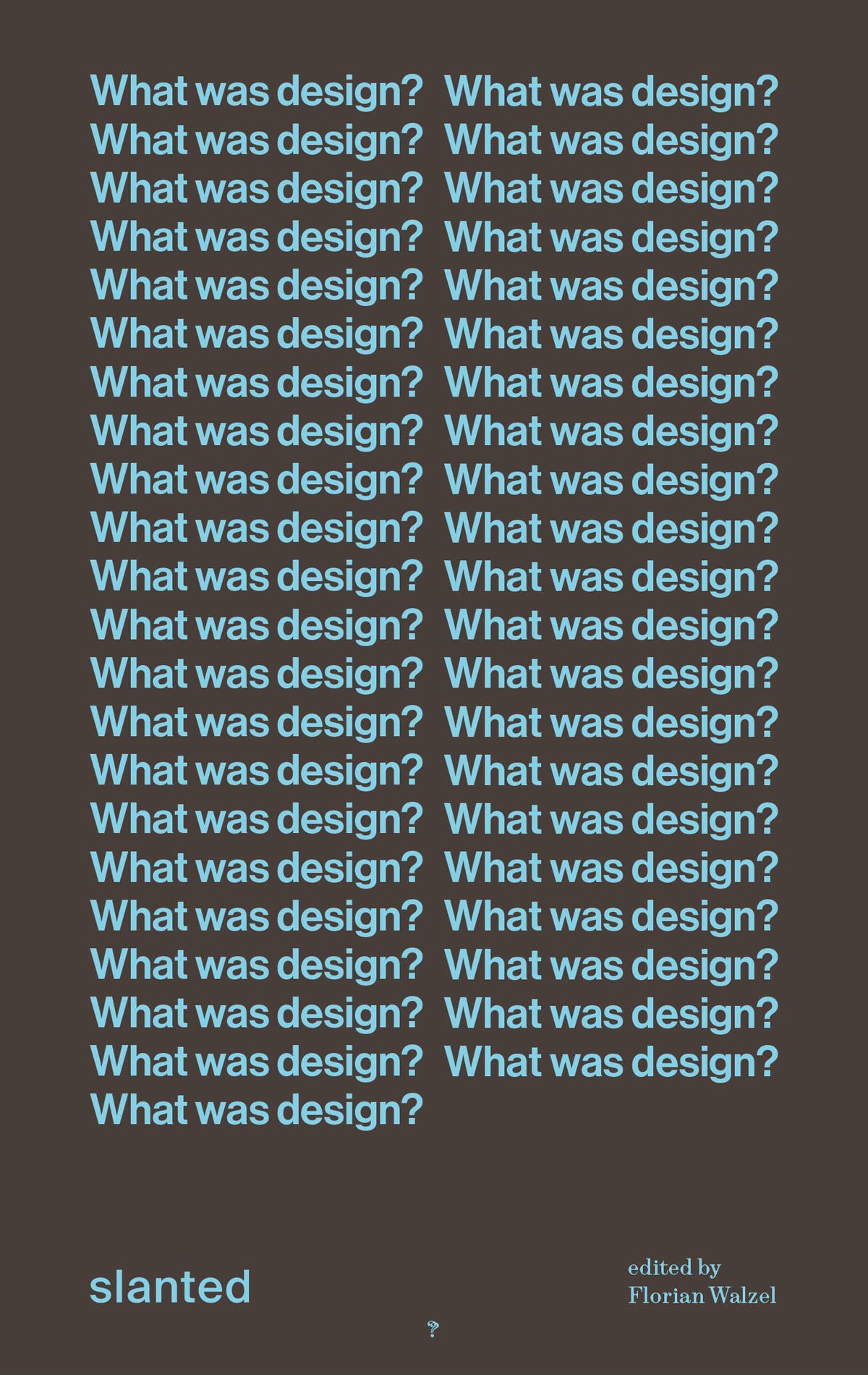
What was design? published by Slanted is a collection of brief, historical definitions of design from theorists, philosophers and artists over the past century. It goes to show how contradictory definitions of design can be between practitioners and thinkers in the field. In Swiss-style design set in classic grotesk sans-serif type, this is more of a coffee table book that you might keep on your shelf for reminding yourself that your practice of design can be named and defined on your unique terms.
A figment of history.
Most of us have a soy sauce dispenser in our fridges from the brand Kikkoman. I know I do.
Kenji Ekuan, a designer born in 1929 in Tokyo, designed this timeless soy sauce dispenser bottle during the post-WWII era. A former monk, Ekuan lost his sister and father in the Hiroshima atomic bombings.
After the war, Ekuan “decided to be a maker of things”, as per a NYT interview referenced in his eulogy. In 1957, he founded GK Industrial Design Lab that worked with Kikkoman to design this piece.
Over a period of three years, Ekuan designed around a 100 prototypes before arriving on the final form. The bottle had a Japanese object aesthetic — wide bottom, narrowing near the top, along with a transparent design and a bright red cap. This revolutionary design was based on a new idea that soy sauce could be packaged in a table-top dispenser, the way salt & pepper shakers are, instead of very large one litre bottles. As a result, pouring soy sauce would make less of a mess on the table when poured.
This same design by Kenji Ekuan is still in production 65 years later and has sold well over 300 million bottles to date.
The next time you see this in the supermarket aisles, know that it is the product of great toil & triumph and a lot of thought has gone into its design.
The drip of the soy sauce bottle was probably the most challenging aspect of working on this design problem, owing to the viscosity of soy sauce. This problem remained unsolved (and clearly, un-productized) for at least over 2300 years, dating back to the earliest mentions of soy sauce-like paste in ancient China. Despite being a messy problem, no one “solved it for good” until Kenji Ekuan thoughtfully designed this new form.
It reminded me of a quote I mentioned from a design futurist in Issue 4 that for a very long time, we had luggage and we had wheels, but wheels on luggage wasn’t invented until recent history.
Design tool maker Figma is hiring a Brand Designer, Product Demos for the Figma Brand Studio team | Location: in-office or remote (US) | Base annual salary range: $153,000 - $269,000 (USD)
Art enthusiast platform Artsy is hiring a Lead Product Designer | Location: Hybrid in London, UK | Base annual salary range: £90,000 - £110,000
Software dev tools maker GitHub is hiring a Staff Design Engineer | Location: Remote (US) | Base annual salary range: $140,400 - $372,300 (USD)
Publisher Condé Nast is hiring a Lead Product Designer for The New Yorker | Location: in-office London, UK
Free-form thoughts.
AskJeeves
AskJeeves (later Ask.com), one of the earliest internet search products, has officially shut down. To be honest, I didn’t know it was even in operation. AskJeeves was founded around 2000, and quickly and universally, became where people on the internet went to find answers. Well, until Google Search came along.
Today, while Google Search isn’t anywhere close to the position Ask.com found itself in — it is starting to become less relevant for users of AI chatbots. With the advent of ChatGPT and Claude since ~2023, personality is back in search. This time, instead of basic machine learning that Jeeves relied upon, it’s transformer-based generative AI. Technologies change. But the needs remain the same as ever.
I grew up in India, so AskJeeves wasn’t as popular as some of the other search engines like Yahoo, but my wife, who grew up in Canada, was apparently a big user of AskJeeves. And interestingly, since the launch of AI products, she’s almost never used any of them. Though, lately, she has asked Claude’s Opus 4.7 (through me) for advanced tricks for a new iPad drawing app she’s learning how to use. Another time, she asked Claude (again, through me as the mediator) how to open a stuck lunch box lid while she was at work. She will likely be one of the last movers in AI. In the technology adoption lifecycle, she would fall under the laggard group.
Bill Gurley on the Industrialization of Venture Capital
I listened to an interview recently where Ben Thompson of Stratechery interviewed legendary investor Bill Gurley. Bill Gurley is most known for being an investor at Benchmark, one of the most principles-driven boutique VC funds in the world.
When asked by Thompson about very large funds writing gargantuan seed checks for early-stage startups (the a16z kind), his critique was straight-forward:
I do think that once you start behaving in that way and start writing checks at $500 million or $1 billion and having to raise money and manage money of that size, your fidelity to care about the $5 million seed or Series A, it gets hard. […] I lived companies being overfunded intentionally and the things that causes from a company evolution standpoint and understanding unit economics, I think it’s mostly for the evolution of these companies.
I couldn’t agree more. It’s in line with a quote I like from a song called Islands by Canadian rapper Shad: “You can’t do all things. Don't dream big till you handle small things.”
And yet, a lot of these AI startups with no product-market fit but just an Ivy League resume get funded with hundreds of millions, while burning well more than a billion dollars a year.

Meanwhile, Benchmark is principles-driven with its portfolio, even if that means saying no a lot. Gurley is played by Kyle Chandler in the Showtime TV drama Superpumped, the inside portrayer of the rift between him and Uber CEO Travis Kalanick (played by Joseph Gordon-Levitt), leading to Gurley ultimately forcing Kalanick out from Uber. Clip (warning: language)
Frankly, I look up to people like Bill Gurley who talk sense and are focused on disciplined unit economics while the others lose their minds.
Solarday
I’ve been enjoying quietly refining new features & improvements for Solarday, the app for mindful productivity I designed in October 2025. In the coming weeks, there is lots to release, and if you haven’t already, I highly recommend you to download it for free from the App Store. Being an indie app developer in 2026 isn’t the same as being one a decade ago — you can go faster, but the market is more crowded than it ever has been — but I’ve enjoyed the process, as much as I enjoy writing this newsletter.
And if Solarday made your life better in any way, it would mean a lot if you rated it on the App Store or told your friends about it.
Hope you have a nice rest of the week.
—Siddharth
~ That's it for this edition. Embrace the peculiar and unanticipated. ~
No posts
Comments
Nothing yet. Say the first thing.
Sign in to join the conversation.