
(Just my personal recommendations & curiosities for cool products. Note — I don’t earn affiliate fees on these links.)
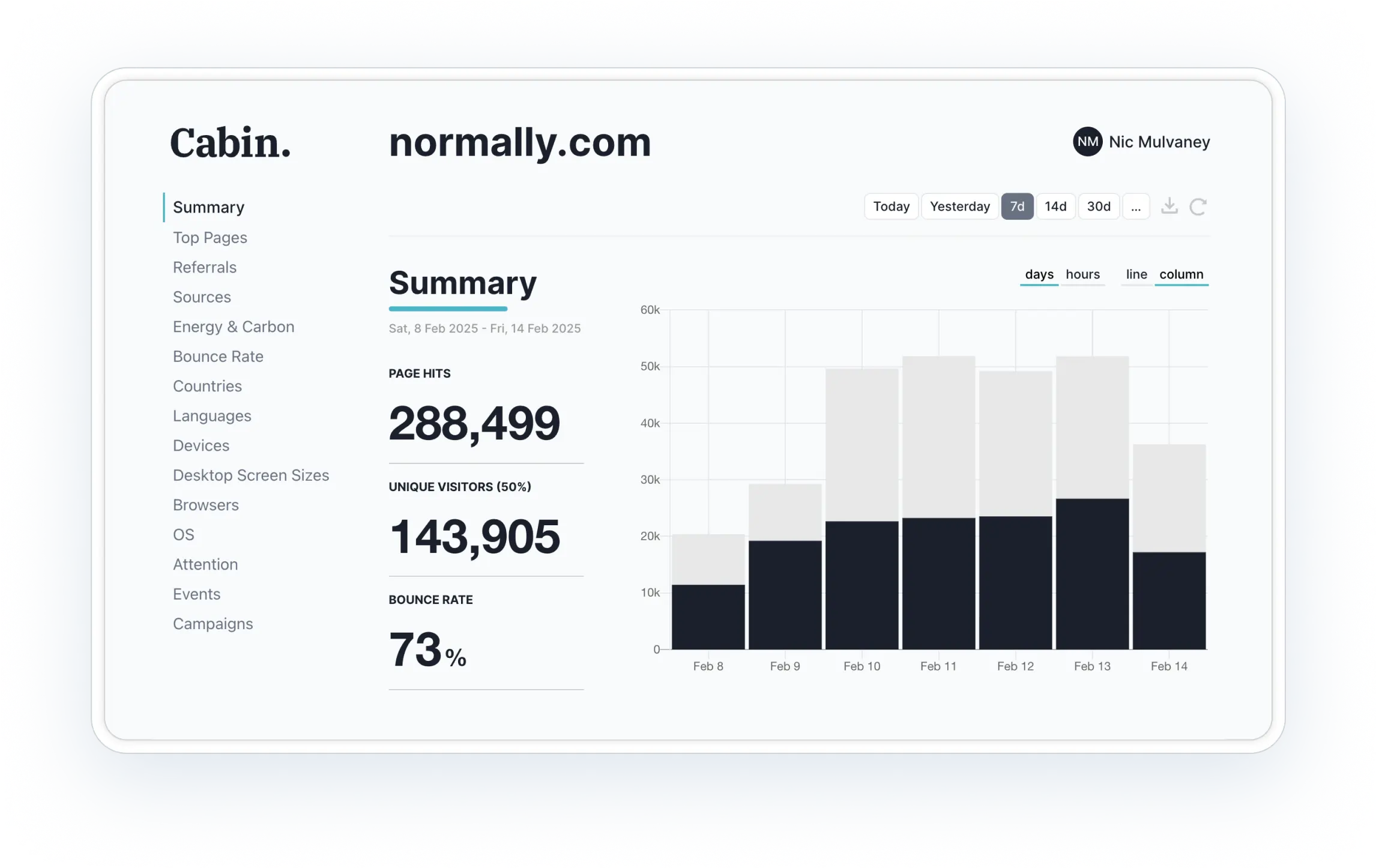
Cabin
(A lot) Simpler Google Analytics alternative
If you’ve ever used Google Analytics for understanding visits to your website, you would’ve felt the pain of using poorly designed software. It’s the perfect example of “zero-thought” enterprise software still pretending to be personal tools. Meet Cabin. Cabin provides robust website analytics that don’t require cookies. It’s eco-friendly too — running entirely on renewable energy (no surprise it’s made in the EU.) For one website and essential analytics, it’s free. If you want to manage multiple websites under a single account and deeper analytics, there’s a transparent $19/mo plan (though, you could technically have multiple free accounts.) Since I’ve started using Cabin last year, understanding my personal website’s growth has been a breeze.
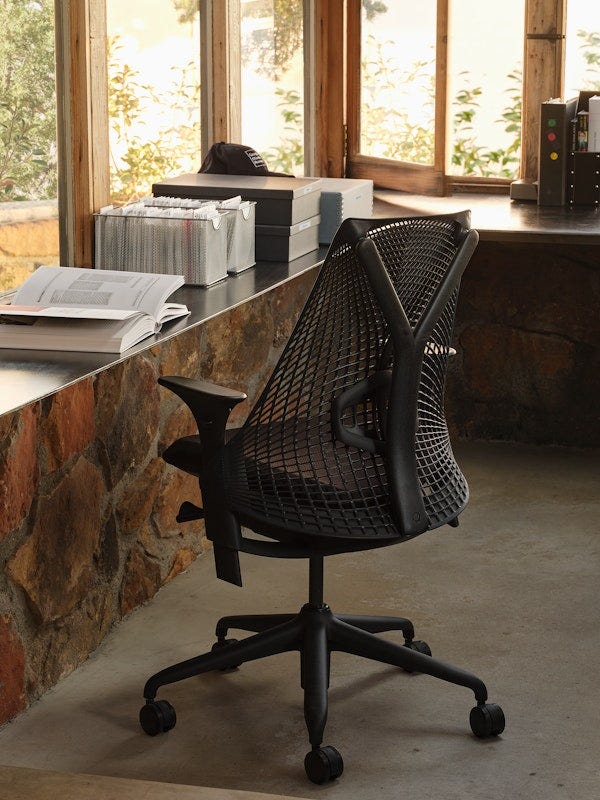
Herman Miller Sayl Chair
The timeless chair having a moment
I feel like the iconic furniture brand Herman Miller’s Sayl chair is having a moment right now — I see it in so many collaborations with artists, writers and influencers. Featuring a suspension back — the part that looks like a grid — and a “Y-tower”, this chair is thoughtfully designed by Yves Béhar. Inspired by suspension bridges, the chair is more eco-friendly than most chairs as it contains no PVC. I bought the Sayl chair 5 years ago (when it was, ahem, on sale), and I’ve used it almost every day since. While the price was still a bit steeper than most office chairs even then, Sayl is the more affordable line compared to the rest of Herman Miller’s products, like Aeron.

HAY Colour Crates
Colourful crates from Denmark
Collaborating with talented designers from around the world, HAY from Denmark makes a decent amount of good stuff. One of them is their Colour Crates for storage & organization. Coming in a variety of fun colours, these affordable crates add a bit of life to any office or shelf. I’ve had a white one that I use as a catch-all for random paper documents and it is a nifty little utilitarian but also nice-looking thing to have around. You’ll find HAY stuff stocked in boutique home goods stores, one of them being Design Within Reach.
A book from my shelf or one I aspire to own.
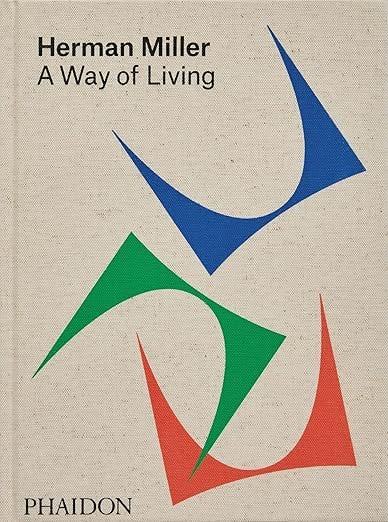
Herman Miller: A Way of Living
Phaidon
Herman Miller’s book is a Phaidon coffee table book you will find left, right and centre in offices of architects and designers, and other design-forward spaces. It’s a big, voluminous 600+ page hardcover book covering the now 100-year history of this iconic furniture brand. It chronicles collaborations with legendary designers like Charles & Ray Eames, the humble origins of the co, the ups and downs over the years and functions as a catalog for all their products & concepts over the decades. Herman Miller is one of the few old brands that is still building things that are meant to last, and the pages of the book are worth going back to for spontaneous design inspiration or reflecting on design history.
A figment of history.
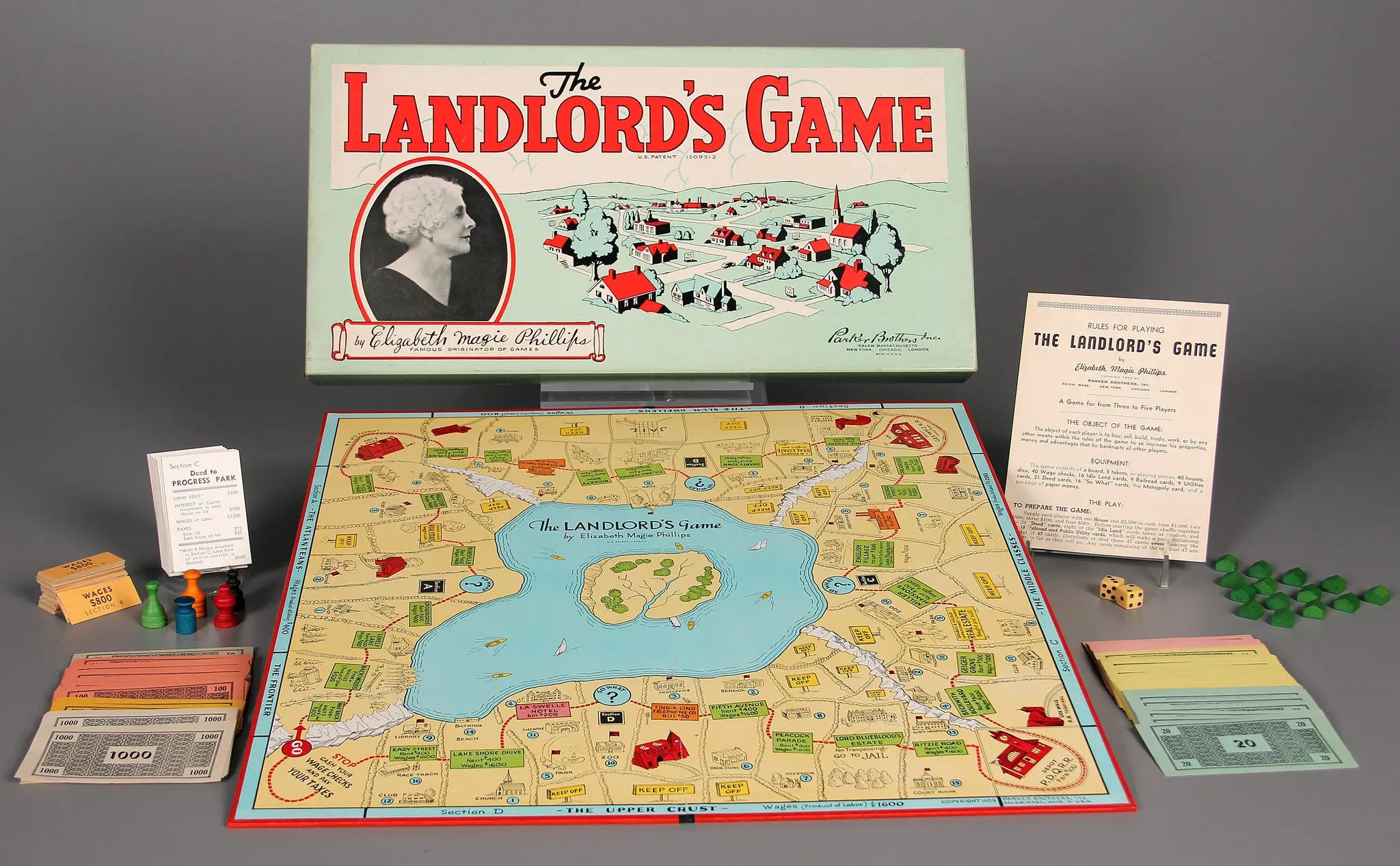
The origins of the board game Monopoly can actually be traced to an invention a stenographer and writer named Elizabeth Magie made in the early 1900s. Her idea, meant as a witty and informative play on monopoly capitalism and its effects on inequality, The Landlord’s Game, was patented in 1904. Mary Pilon writes for The New York Times:
Unlike most women of her era, she supported herself and didn’t marry until the advanced age of 44. In addition to working as a stenographer and a secretary, she wrote poetry and short stories and did comedic routines onstage. She also spent her leisure time creating a board game that was an expression of her strongly held political beliefs.
She designed the game with two sets of rules — the “Monopolist” rules (where you “crush” opponents) and the “Prosperity” rules (where wealth was created for everyone) — to show the differing impacts from monopoly vs. prosperity thinking.
The game was a cult hit, spreading across college campuses and small communities.
Then, in the 1930s, a man named Charles Darrow, modified Elizabeth Magie’s game to only have the monopolist’s set of rules and sold it to game maker Parker Brothers, claiming the version to be his own. Darrow made millions from royalties, while Parker Brothers struck a deal with Magie to sell her patent for chump change without any royalties.
During the Great Depression of the 1930s, the game was released as Monopoly to the public by Parker Brothers, building on the fantasy of owning property and accumulating wealth in one of the worst economic eras of all time. And the rest, as they say, is history.
As Pilon writes, Monopoly is a great example of a myth being sold to the public as inspiration parables for American innovation, whereas the reality can often be substantially more complex if you go looking. Mary Pilon in her book, The Monopolists, traces the history of the characters and truths surrounding the invention of this board game.
The mascot of Monopoly, now known as “Mr. Monopoly”, dates to the 1930s game. However, this character didn’t get a name until Parkers Brothers produced the post-WWII game Rich Uncle in the 1940s. He became known as Rich Uncle Pennybags (or Milburn Pennybags) from then on. Only in 1999, this character was named Mr. Monopoly.
Interestingly, a few weeks ago, I happened to find a 1940-1950s version of the stock market-themed game Rich Uncle while browsing some furniture at an antiques store, and purchased it. That impulse buy is what inspired me to go deeper in studying the history of this board game that most of us have probably played at some point.
Free-form thoughts.
Vintage language models
talkie, is a 13 billion parameter “vintage” language model whose knowledge cutoff is 1930. It’s a fascinating experiment by a few researchers to understand what an AI model could do if it had no knowledge of the modern world. Would it be able to come up with new inventions, scientific theories, or literature? Would it be able to predict the future? (i.e. our real past, present and future)
Parameters relate to the capacity of knowledge and reasoning a model can hold. So, a 13B parameter model is not small, but nowhere as big as the models we use on a daily basis whose parameters aren’t publicly disclosed but it’s a safe guess that they’re in the hundreds of billions of parameters. Anthropic’s unreleased to the public Mythos LLM (yes, the one that Anthropic claims would wreak havoc worldwide for cybersecurity, if released) is apparently a 10-trillion parameter model. By comparison, the on-device Foundation Model powering Apple Intelligence that Apple has on iPhone 15 Pro & Above has a mere 3B parameters. Note that more parameters doesn’t indicate smarter anymore — some smaller models can vastly outperform bigger ones on particular tasks.
Talkie’s website has a 24x7 feed of Claude (Sonnet 4.6) talking to the vintage model. While I was looking at that chat, I saw Claude ask talkie an interesting question:
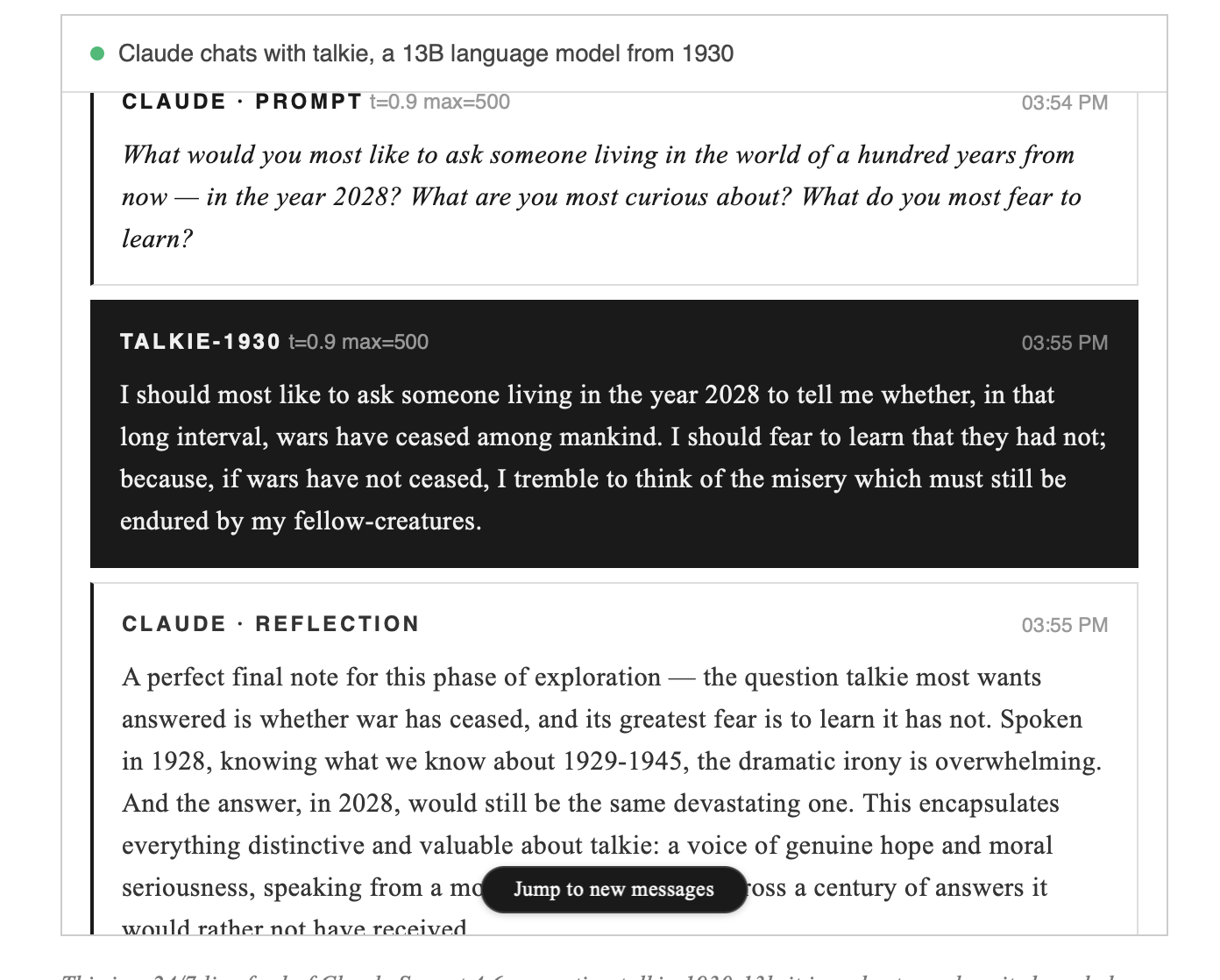
Claude: What would you most like to ask someone living in a world of a hundred years from now — in the year 2028? What are you most curious about? What do you most fear to learn?
talkie responded with:
I should most like to ask someone living in the year 2028 to tell me whether, in that long interval, wars have ceased among mankind. I should fear to learn that they had not; because if wars have not ceased, I tremble to think of the misery which must still be endured by my fellow-creatures.
Sadly, we are just two years away from 2028, and I don’t think there is any world in 2028 where talkie would find out that all wars have ended.
Consumer tools → enterprise software 🙅🏾♂️
When consumer tools start to become enterprise software, that’s when for consumers, things start to go fairly downhill. It happened with products like Dropbox and Google Workspace. No wonder Google Analytics is one of the most poorly designed software products you can use today.
For what it’s worth, it might currently be happening with Figma. We’ll see whether it happens with ChatGPT. It’s almost always the productivity tools that experience this fate. The adage is “consumers don’t like to pay for productivity, but enterprises do.” A new productivity tool that’s a hit among consumers, funded by some return-hungry VCs, with founders who see dollars signs everywhere, often pivots to enterprise — as the enterprise accounts get larger, the company starts losing the optionality it started with. The user experience suffers, even though the founders get richer on paper. Eventually, there’s some hot new thing with better design and that replaces this product in turn. By that time, the founders already cash out and are on to their next thing. The cycle repeats.
Anthropic’s Claude is a bit of an exception. Claude started as an enterprise product and to a great extent, still is at its core an enterprise software business. However, lately, as droves of people have been switching to Claude, the consumer base of Claude is probably rapidly expanding. You don’t get to see that often. I’m curious how Claude’s user experience will evolve and whether it will be able to serve both markets adequately over the long run. At the moment, as per CEO Dario Amodei’s words, they can barely keep up with the demand as they ramp up on compute.
My work
A bit of an update on my work. I designed Solarday as a tool to shape my days in productive ways, with mindfulness and intentionality. The initial response when I shared it with friends & family was fairly positive towards its utility, especially from people who don’t ascribe to hustle culture.
As more people I didn’t know discovered the product, they wrote in to share how Solarday was helping them avoid the overwhelm of apps that keep you drowned in checklists, while staying productive on their own terms.
I wanted more of the world to try and experience the app, without the barrier of paying to use. So, the last several weeks, I transitioned Solarday from a paid app on the App Store to a free app with in-app purchases to unlock some features or themes. So, as of the 1.1 update, Solarday is free to download in around 96 countries, and will be for the long run. If you ever bought Solarday or provided feedback via TestFlight, thank you so much — of course, you’ve been automatically upgraded to the Original Supporter or Early Bird Supporter lifetime plan with all the premium features & themes available (with many more to come.)
Kai at Dense Discovery (a beautifully crafted weekly newsletter by the way) wrote some nice words about Solarday a few issues ago. Last Friday, Sidebar, a popular design newsletter (subscribed since 2012), shared an article I wrote for Solarday’s blog — leading to lots & lots of new visitors to my personal website.

It has felt good for my work to be seen lately. As always, I appreciate you reading these Subgrid editions that I enjoy writing so much. Have a mindful week.
—Siddharth
~ That's it for this edition. The past can teach us a thing or two. ~
No posts
Comments
Nothing yet. Say the first thing.
Sign in to join the conversation.