
Good books, better strategy lessons is a series where we share our takes on interesting books and what lessons can we as strategists learn from them.
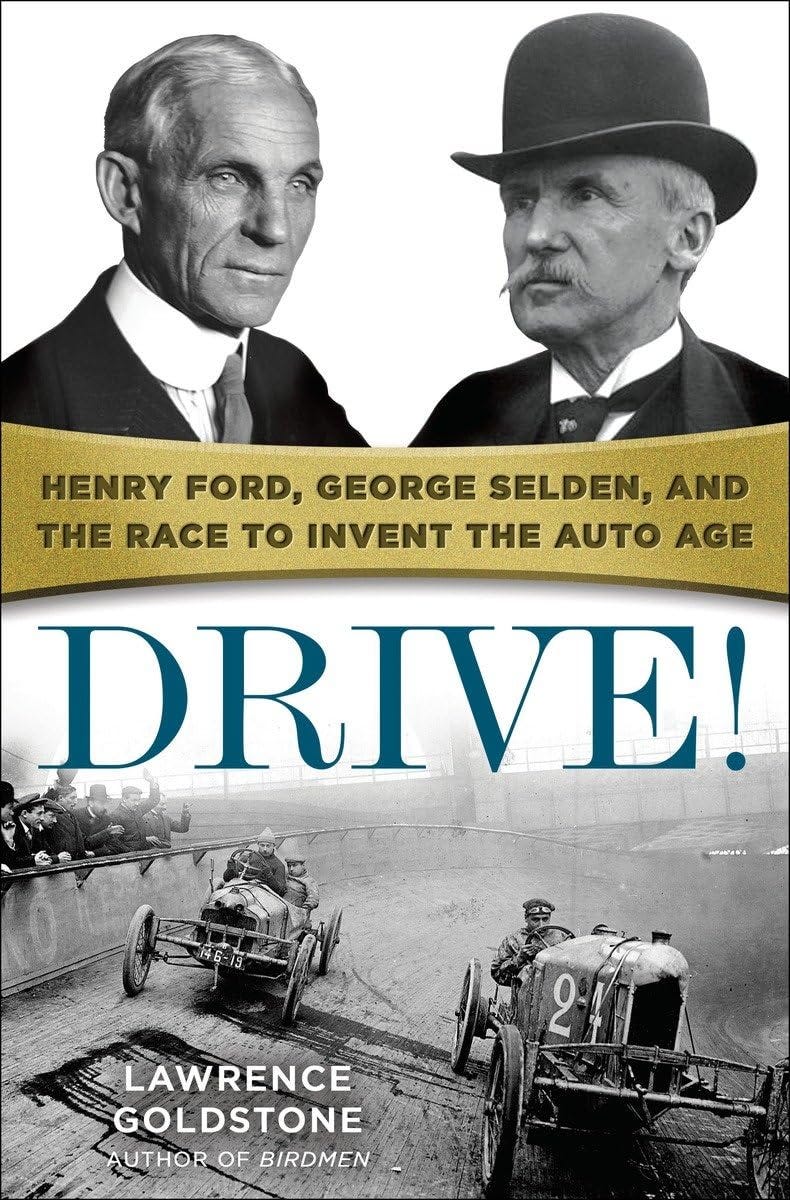
Drive: Henry Ford, George Selden and the race to invent the Auto Age.
The book takes us back to the late 1800s and early 1900s and gives an account of the evolution of the modern automobile while touching upon different characters who shaped this era including the likes of Ford, Dodge brothers, Durant (General Motors), Benz, Daimler amongst many others.
It is a fascinating read on how the horsecarts were replaced, albeit stubbornly and how racing played a key role in not just building positive public perception for early automobiles but also pushing innovation forward.
I was also fascinated by how close electric vehicles were to becoming the mainstream cars and how they lost out to gasoline/petrol vehicles. I guess now is the time for their second reckoning.
I think I am currently in a fascination phase with period business books. I will give this book a solid 9 out of 10. It is a very easy and engaging read. Certainly a very eye opening read and gives so much insight into the man behind the name of Henry Ford.
When we think of Henry Ford, we do not know of any other name associated with the Ford company from that period who was instrumental in its success but nothing can be farther from the truth.
One of Ford’s greatest talents was getting the right people for the right job and then letting them be, to deliver at their best.
Be it Couzens, his treasurer or CFO or Wills, his chief designer or Flanders, the guy who helped him set up his first plants, Ford had a team of brilliant people around him who deserve a lot of credit for what he has been eventually given credit for.
While the book is overly critical of Ford at times, I feel it underestimates the charisma and enigma of the man to employ such talent and keep them with him (despite not seeing eye to eye with them at times) for long enough to make Ford one of the earliest great American companies.
Had it not been for this team, with all his talent, Ford would have gotten nowhere. As Jim Collins often says, “first get the right people on the bus”
Very early on in his third company (yes first two Ford companies ended in failures), Ford saw the trend of moving towards a more economical car for the masses based on large volume rather than high end car for the elites. This was a strategic bet.
Note a lot of other car companies bet in the opposite direction and did do well for sometime but eventually, Ford’s read of how the market would evolve turned out to be correct.
There was risk involved in choosing this path but Ford was a man of high conviction. Results did not appear overnight but when the tide did turn, he was there with his Model N and then Model T to capitalize on the booming market of below $1000 cars. Eventually Model T sold over 15 million cars in a time period from 1909 to 1927.
If he had been dilly dallying between both high end cars and mass cars, he would have not been able to capitalize in the dominant manner Ford company did post 1910.
One of the central themes of the book is the fight between the Selden patent (a patent registered with George Selden, which claimed all gasoline automobiles were based on his design and therefore needed to pay royalties) and Ford Motor Company.
While many other car companies of the time agreed to pay the royalties towards the Selden patent, Ford and Couzens refused to budge and continued to fight the patent. Even after a defeat in the lower court, they did not back down and eventually prevailed in the High court.
During this time period, they faced high legal costs and increasing liability as the sales of their cars picked up. But they also were able to build a persona with the masses as David, vs the Goliath organization against which they were fighting the case (it seems weird to think that Ford was an underdog at one point of time).
This high risk appetite is what enabled Ford to reap the benefits once the matter was decided in their favour. Had they gone ahead and agreed to royalties early on, they might not have been able to put sufficient capital back in innovation, build that public image on the back of free marketing from the court case and finally that belief that nothing could stop them from meeting their destiny.
The higher the risk, the higher the reward.
I really loved the book and would highly recommend. Hope you had fun reading this, see you all next week.
PS: Apologies for no post last few weeks, I promise to be better :)
No posts
Comments
Nothing yet. Say the first thing.
Sign in to join the conversation.