
Walk a Main Street that city officials describe as rebounding and you will find a very similar inventory. Nail salons. Hair studios. Phone repair shops. Fast-casual food. The lights are on and the sidewalks have foot traffic. Even the vacancy rate has improved.

And yet, something is missing that no amount of streetscape investment or ribbon-cutting seems to restore.
The satisfaction of success hardly ever arrives in downtowns, save for some very sweet victories that we duly celebrate. The conditions that would allow it have been quietly removed.
Economist Eugen von Böhm-Bawerk spent his life hammering on one clear truth: the most productive work takes the longest path with more steps to completion and more people involved. Yes, there’s a longer wait before the payoff hits, but it will be a bigger payoff.
A craftsman who spends a week building a better tool before beginning his actual work will outproduce the one who starts immediately with whatever is at hand. The detour through patience delivers massive upside.
Take two honest hours of work. One assembles a jet engine and one flips burgers. Both deserve respect. But despite the burger’s life-altering potential, the jet engine hour creates way more than a paycheck.
Once that engine lifts off, it shrinks time and space for everybody. A surgeon can see patients in two cities in one week. Global supply chains snap together. Markets that never touched before start trading. That single hour multiplies the value of every later hour that flies through the air and builds huge new wealth.
The burger hour delivers a solid burger. The restaurant resets for the next order and adds zero extra productive power to the town.
Böhm-Bawerk’s roundabout production idea fits the ground floors of our cities perfectly. The longer the chain from first investment to final return, the more productive it gets. A downtown stuck with only short chains runs into a hard ceiling. Hype, pop-ups, and activation events cannot lift it.
Our job as downtown professionals is to permanently seek to increase the complexity and shove that ceiling higher.
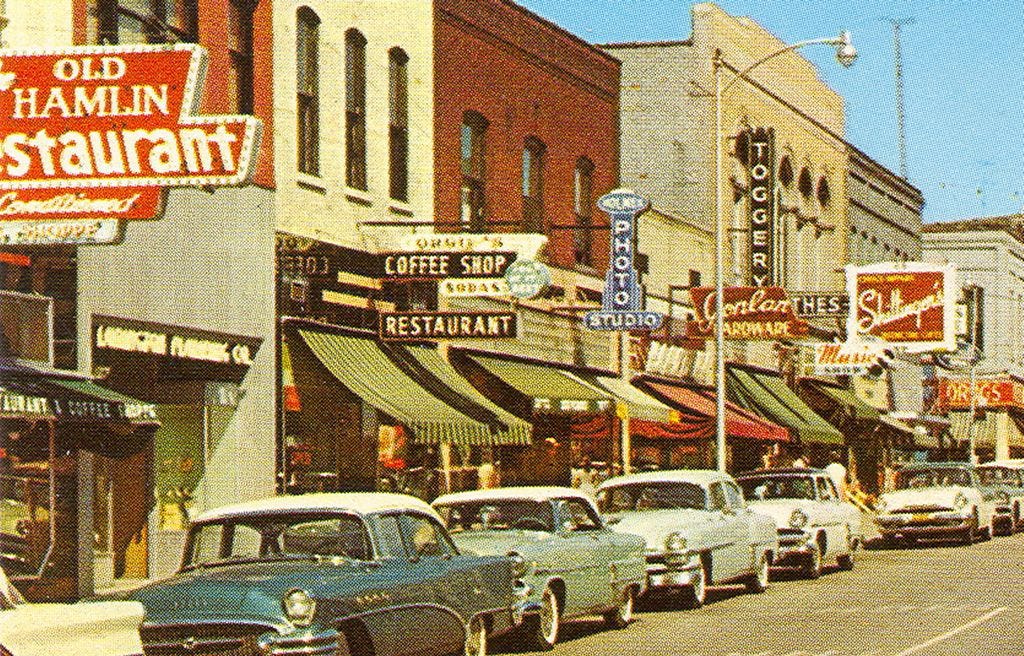
The length of the productive chain does not come from raw ambition or abstract piles of capital. It comes from whether the environment actually rewards waiting.
When rules, permits, and the overall cost of compliance turn the first year of a new business into a brutal fight, and when every signal screams “survive today,” the patient entrepreneurs get priced out.
The serious restaurateur who needs eighteen months to build a following. The skilled trades workshop that requires two years of local trust before the phone rings consistently. The design studio that has to grow a client base before it can sign a long lease. These are the businesses that compound.
When the owners run the numbers and walk away, because the environment has made their patience unaffordable, we will never know what new ideas will never be born, what new companies will never exist, and what spectacular innovations this town will never host.
So the spaces fill with whoever can crank out enough cash right now to cover rent. Those owners are not dumb. They are doing exactly what the environment demands. The real problem is structural. It reliably selects for low-capital, high-turnover operations. The market “works,” but on the wrong clock.
Think about nature after a fire or a strip-clearing. First you get moss and lichens on bare rock. Then fast grasses shoot up. It is life, sure. It covers the surface and does basic jobs. But it builds no real soil. No canopy. It cannot feed the richer ecosystem that would turn the spot into a full forest.
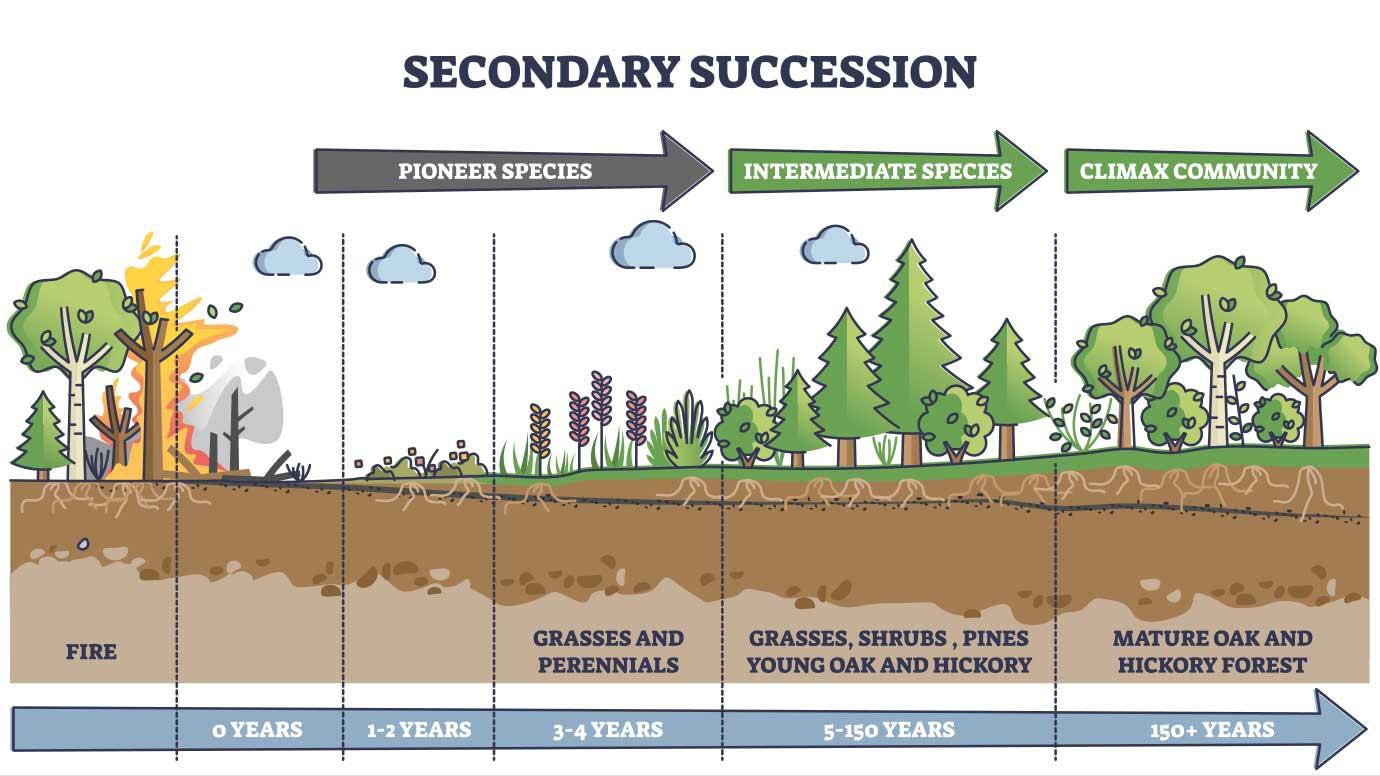
The business clusters in patience-punishing downtowns act exactly like that. Elemental. They bunch together because it lowers individual risk and survive on thin overhead and light inventory. They provide the visual feel of a commercial street and pay the bills, but without delivering any real economic muscle. They may thrive, even, but there are no “deep soil” forms, no skill building, no business-to-business networks, no capital deepening, so they cannot mature into anything richer. They stay early-stage clusters with no real path forward.
This does not mean those shops are worthless. People need those services. They just cannot be the main pillars of a strong, growing economy.
Many cities and place managers look at these clusters and see momentum. They are seeing the moss and calling it a forest.
Proud, robust communities cannot be marketed into existence. They grow around things that stayed put: a hardware store that has been on the corner for forty years, supplying tools that let local builders and makers take their own longer production routes. A precision machine shop where apprentices spend years mastering tolerances measured in thousandths of an inch. A design studio that started small, grew a regional client base, and now exports ideas and products far beyond the town.
These long-haul places become the anchors of local identity. Historically, they have been the backdrop for new waves of local entrepreneurs. Entrepreneurship relies on strong institutions, trust, and civic pride, neither of which is built overnight. Theybtake time but prove someone placed a serious, long bet on the town and won.
A downtown of provisional tenants generates no permanence, and permanence is the prerequisite for pride. Residents sense this even when they cannot articulate it. They shop there when they must and drive somewhere else when they want something that feels like it matters. Their ambivalence is entirely rational. The place has not yet done anything to deserve their loyalty, because the conditions that would allow loyalty to form have never been established.
A strong, innovative economy grows with patience. Patience comes before permanence. Permanence comes before pride. Cities chasing pride without setting up patient investment are skipping the steps that actually deliver it.
An environment that rewards patience Attracts entrepreneurs and long term investors. It builds networks, foot traffic drivers, local anchors, and real civic ties that make a long bet feel doable.
Most importantly, it accepts that the best downtown investments are expensive, slow, and stay invisible longer than political cycles would find comfortable.
A serious business incubator that graduates three enterprises over five years will do more for a downtown than twenty short-term activations. A skilled trades program tied to the main corridor will reshape the neighborhood workforce over a decade, even if the next financial report shows nothing flashy.
The work that actually builds strong downtowns operates on a time horizon that most institutions are structurally set up to resist.
That mismatch between the long patience real urban growth demands and the short cycles politicians and finance prefer, is the core problem. Cities get the downtown their own rules and incentives create, whether they meant to or not.
Changing those rules demands a longer commitment than most cities have been willing to make.
That longer commitment is the plan. There is no other one that works.
Storefront Mastery works with BID managers, Main Street directors, and municipalities to transform commercial corridors through storefront strategy, design standards, and regulatory reform.
No posts
Comments
Nothing yet. Say the first thing.
Sign in to join the conversation.