
In 1903, two bicycle mechanics from Dayton, Ohio, did what every university in Europe said couldn’t be done, and outsmarted a prestigious and expensive government-funded program to make the first recorded flight in history. The Wright Flyer that leapt over a field in Kitty Hawk for a brief 120 feet was made of wood, fabric, and a twelve-horsepower engine that weighed 180 pounds. Basically a kite that got ambitious. But it flew.
Twenty four years later, Charles Lindbergh crossed the Atlantic. Alone. In a plane built so tight that the fuel tank sat in front of the cockpit, where saving weight and protecting the pilot mattered more than forward visibility. He navigated with a compass, a clock, and nerve. The Spirit of St. Louis now hangs proud in a very visible spot in the Smithsonian Air & Space Museum. An impressive sight. A little airplane designed by people who understood that simplicity and elegance emerge from ingenuity, economy, and wit.
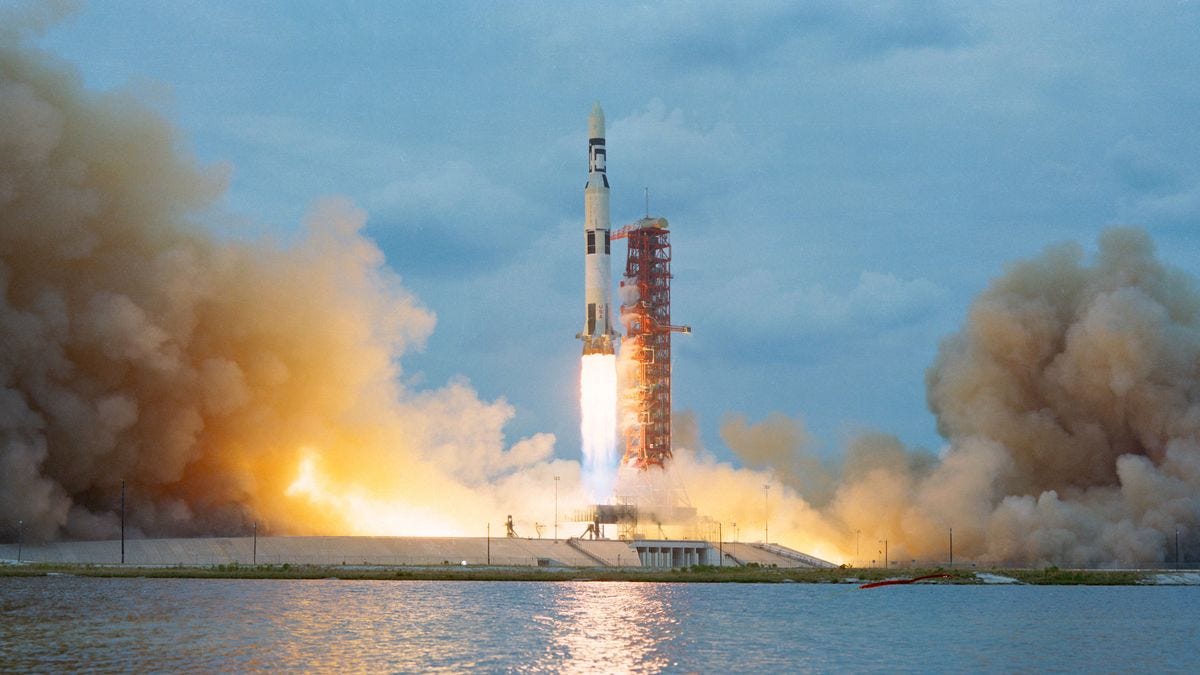
In July 1969, only 66 years after the Wrights, Neil Armstrong took America for a Moon walk. The Saturn V had 3 million parts, 3,000 miles of wiring, and five F-1 engines producing 7.5 million pounds of thrust. The computer onboard had less processing power than the phone in your pocket. And yet two human beings got to walk on the Moon because engineers figured out how to make impossibly complex things work together with absolute reliability.
The Space Race was a Cold War flex, and the technology and innovation that came from those years still astonishes. In the late 1950s, an engineer named Clarence “Kelly” Johnson was leading Skunk Works, an advanced division of the Lockheed Corporation.
Kelly Johnson designed the SR-71 Blackbird, an airplane that flew at the edge of space, at three times the speed of sound, so fast that no missile or interceptor could reach it. The airframe expanded inches from thermal friction and it leaked fuel on the runway because the panels only sealed properly once the heat of Mach 3 expanded the titanium into a perfect fit.
From Kitty Hawk to the Blackbird to the Moon landing, the story is always the same. Americans take something impossible, wrestle it down to earth, build it, fly it, and then make it simpler, faster, and better until the rest of the world just stares.
We are a country that knows how to do this. It’s in the DNA.
History doesn’t repeat, but rhymes. It’s rhyming now on a concrete pad in Starbase TX.
The Falcon 1 was a small rocket, built in 2006 by a startup by the name of SpaceX, in a hangar in a remote Pacific island with no air conditioning. It rose off the pad, flew straight for about twenty-five seconds, caught fire, and tumbled back into a dead reef two hundred and fifty feet from where it launched. The payload, a satellite built by Air Force cadets, smashed through the roof of a storage shed and landed next to its own shipping container. The cause of the failure was a five-dollar aluminum nut that had corroded in the island humidity. They tried and failed again and again, until the fourth Falcon 1 reached orbit.
The Raptor is SpaceX’s flagship rocket engine. It’s the machine that powers Starship, the launch vehicle designed to carry humans and cargo to the Moon, to Mars, and beyond. SpaceX built the Raptor with a design so demanding that similar attempts had never left the test stand. Raptor runs on liquid methane and liquid oxygen, burns cleaner than kerosene, and was engineered from day one for something no rocket engine had ever been designed to do: fly again.
The story of Raptor begins with the failed Falcon 1 and the founder, Elon Musk, standing over the recovered debris in a hangar. Three generations of engines, each one more powerful, lighter, and radically simpler than the one before, to arrive at the current stage, where rockets complete their missions, fly back to Earth, and are caught in a process that was thought impossible by most.
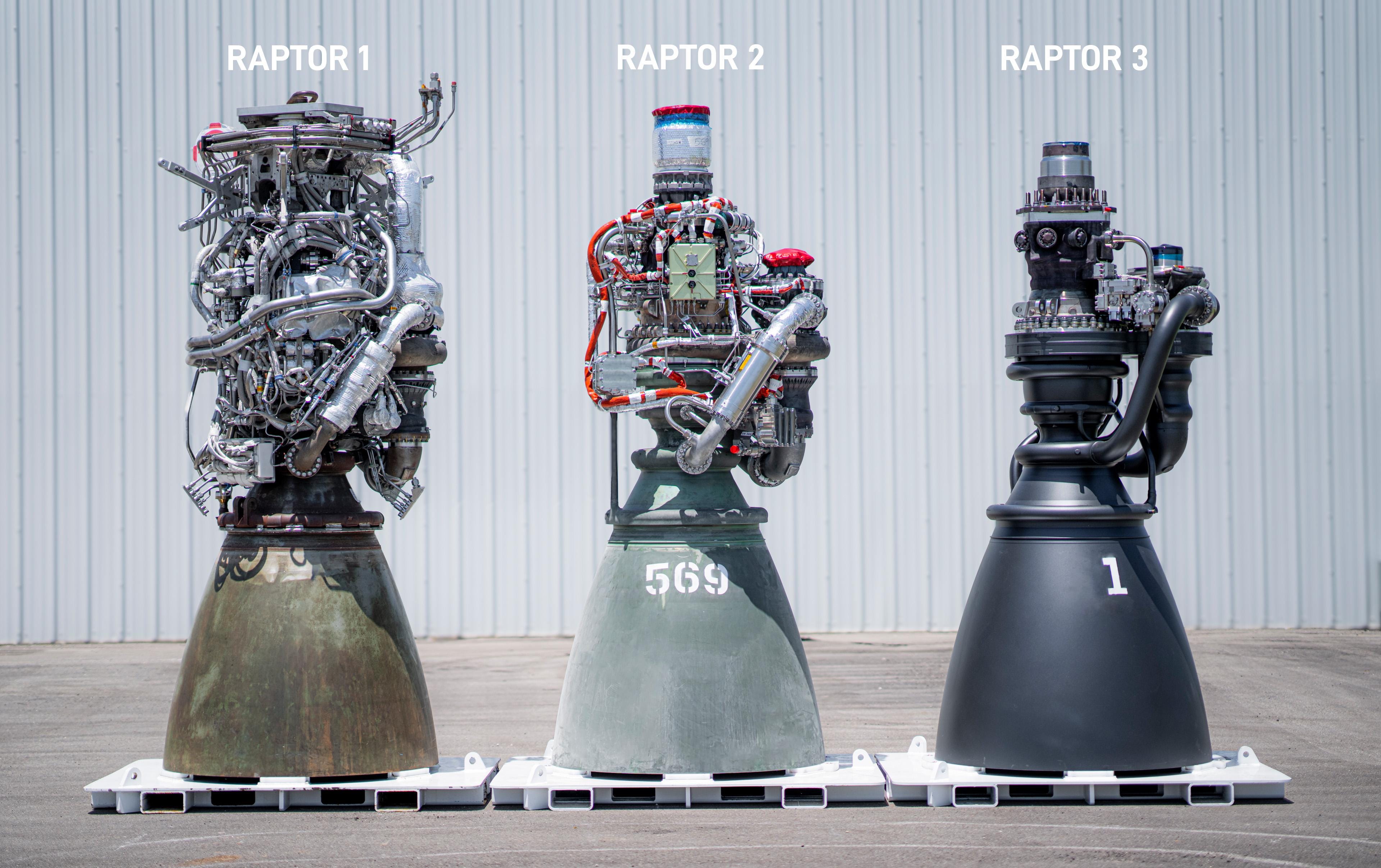
Raptor 1 was a plumbing nightmare with thousands of external tubes, flanges, and sensors bolted on as lessons were learned the hard way. Raptor 2 cleaned house: engineers ripped out flanges, welded what used to be bolted, trimmed the tangled lines, and cut the engine’s mass and cost by roughly half while boosting thrust.
Then came Raptor 3. In a single leap, SpaceX internalized the cooling channels into the structure itself, integrated the sensors, and eliminated every external bolted flange that once leaked hot gas and started fires. The result: 51 % more thrust than Raptor 1, less than half the all-up hardware weight, a fraction of the original parts count, and no heat shield required. The engine now looks like it was carved from one thought instead of assembled from a thousand compromises.
The engineers at SpaceX looked at a machine that worked and asked: what can we take away and still have it work better? What parts don’t need to be parts? What bolts can become welds? What pipes can become channels carved into the structure itself?
That question, “what can we remove?” is the most American engineering question there is.
Now let me tell you about a different machine.
Your local zoning code.
I have spent years reading sign codes, façade standards, zoning ordinances, and overlay district regulations in towns across this country. And I can tell you with absolute confidence: Many are Falcon 1 on the launchpad, waiting. Most of them are Raptor 1. We have the knowledge and means to get to 3, but none of the grit and will.
In a rocket engine, every single component has to justify its existence with physics. Thrust, pressure, temperature, flow rate. If a part doesn’t contribute to putting fire out the bottom of that bell and generating force in the right direction, it gets deleted. The laws of physics are unforgiving editors. You can’t bluff a combustion chamber.
Codes don’t answer to physics. Codes answer to the last person who complained at a city council meeting.
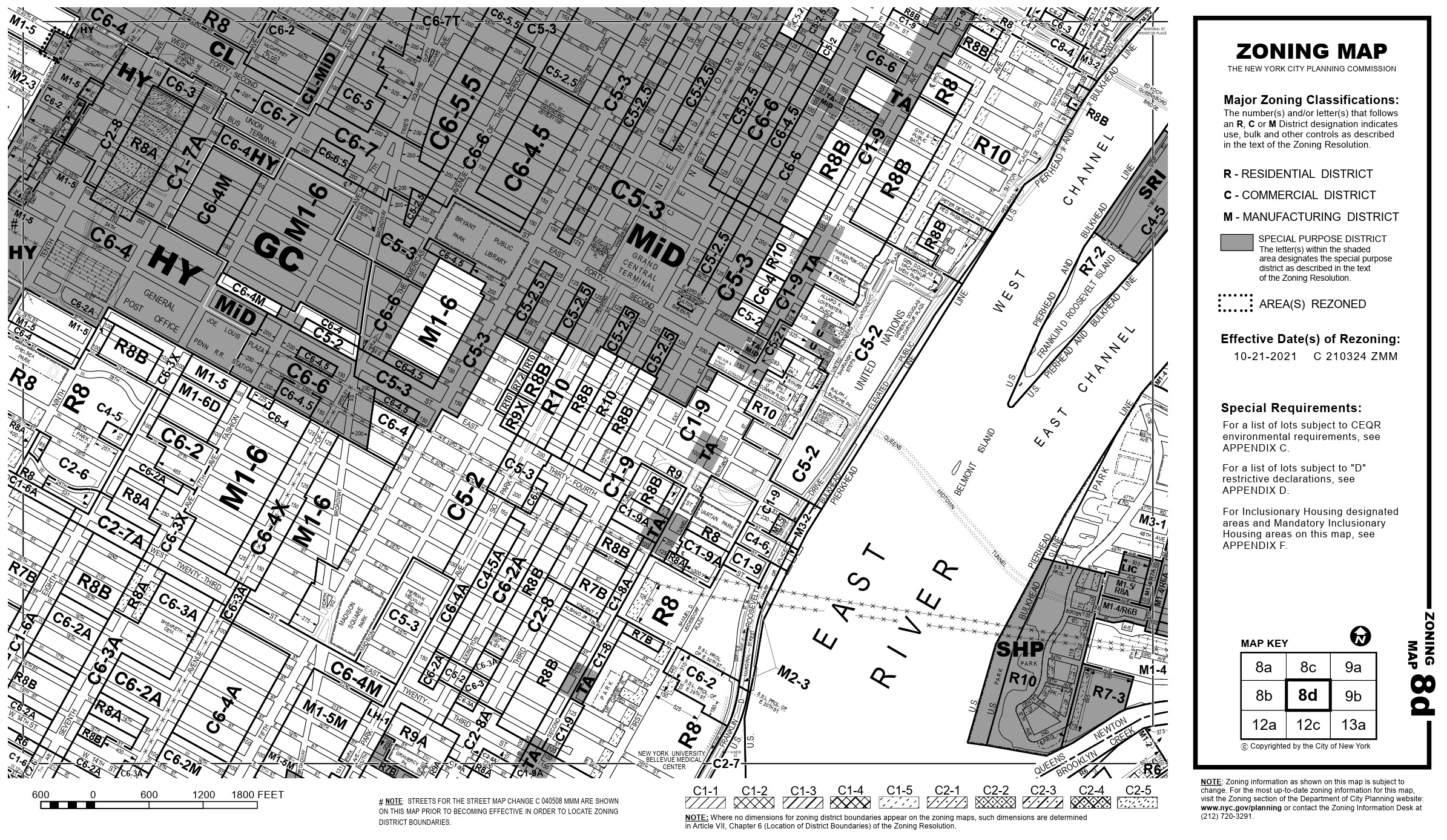
That’s the fundamental problem. When a rocket engine gets a new rule, it’s because an engineer proved with math and fire that the rule makes the engine work better. When a local code gets a new rule, it’s either because engineers try to design risk out of urban systems, or because an activist threatens to take votes from council members who don’t vote their whim.
And unlike rocket engines, code rules almost never get deleted. They accumulate. Layer after layer, year after year, each new provision stacked on top of the last one, until you have a document that reads like it was written by fourteen people who never spoke to each other across three decades.
Granted, some of those layers were written for legitimate reasons: public safety, equity, neighborhood character, etc. but they have calcified into a system that punishes the very creativity and innovation we celebrate in the launch pad.
The result is a code that looks like Raptor 1. Wires everywhere. Redundant systems. Flanges where there should be welds. Parts that were added to fix problems that no longer exist, protecting against threats that were never real, referencing technologies that haven’t been used since Bill and Monica walked into the Oval Office.
I’ve seen sign codes that regulate the luminance of neon tubes but say nothing about LED panels. Codes that limit sign area to a fixed number of square feet regardless of whether the building is twenty feet wide or two hundred. Codes that require a business owner to submit an application, get a review from the planning department, wait for a public hearing, and pay three separate fees to hang a blade sign that a fabricator could install in an afternoon.
None of these rules answer to physics. None of them have to prove they make the street better. They just exist, because they’ve “always” existed, and removing a single code provision requires more political courage than adding a dozen.
SpaceX looked at a rocket engine and asked: what if we moved the plumbing inside? What if the structure itself became the cooling system? What if we stopped bolting things together and just made them one piece?
The Raptor 3 engine has fewer parts, less weight, more power, and no need for an external heat shield. The complexity didn’t disappear. It was internalized, made elegant, integrated into the bones of the machine.
NASA spends about $2 billion per launch. SpaceX launches are roughly $100 million. This is sadly similar to how regulatory thickets have driven the cost of ‘affordable’ housing far above market-rate construction. But the worst thing is we don’t know who we’re deterring from coming to town, what businesses will never open, what great innovations and solutions will never be thought because we make it too hard to start up in our town. We really ought to rethink how our rules are designed and written.
Instead of listing two hundred things a business can’t do, we could write standards that describe what good design looks like. Instead of blanket rules that ignore the specifics of spaces between buildings, we could design regulatory systems that adapt. Instead of requiring a business owner to hire a lawyer to figure out if their awning is compliant, make the code clear enough that they can read it themselves over coffee.
Internalize the complexity. Make the rules structural, not ornamental. Build codes that protect themselves, the way Raptor 3 protects itself, not by adding layers of external shielding, but by being designed so well that the shielding isn’t necessary.
We can adopt form-based standards that describe outcomes instead of micromanaging inputs, slash review timelines, and pre-approve common improvements the way Raptor 3 pre-cools its own plumbing.
The engineers at SpaceX didn’t get from Raptor 1 to Raptor 3 by adding parts. They got there by understanding the mission so deeply that they could subtract everything that didn’t serve it.
Our downtown codes need the same revolution. Not more rules. Better ones. Fewer of them. Clearer. Faster. Designed to help people create great storefronts, not to punish them for trying. I know this for a fact that this can be done when there is will. Shoutout to my friends and clients in Perth Amboy, Mayor Caba and his team at the Community and Economic Development office, Tashi Lopez and Noelia Colon, with whom we created a solid new set of guidelines to reform their code, and introduced several innovative ways to enforce it preemptively and organically.
The country that went from Kitty Hawk to the moon in 66 years, that built an airplane too fast for missiles to catch, that simplified a rocket engine until it looked like a sculpture, can certainly figure out how to make it easier to hang a beautiful sign on Main Street.
We just have to want to.
No posts
Comments
Nothing yet. Say the first thing.
Sign in to join the conversation.