
Welcome and thank you for being here. It’s been quite nice to garner this little audience. I enjoy writing about wine. Drinking it can be a very complex and emotional experience for me, so putting it all to words helps me to make sense of it and figure out what it is I really think of the thing. Next, I spit it all up to my sales representatives at inventory meetings, hopefully get money, and Bob’s your uncle!
One such Monday afternoon, I looked up during this talking ritual and gazed out the open window, fearful that the blue light from my excel spreadsheet was disrupting my mitochondrial DNA. I watched a Dorito truck drive past. I appreciate the Dorito people for hanging onto a really psychotic logo in the age of extreme Blanding. I thought, “Good for Nabisco or whomsoever! I know what it’s like to fight against the moralizing tides of nutritional optimization. We’ll see whether alcohol or whatever-the-hell a Dorito is made out of gets a government warning first.”
Besides the logo, there was a slogan that read, “Doritos, driving towards a sustainable future.”
That put a succinct end to my sympathy. It was funny to think about the flaming nacho company brand their version of the deleterious product with the same moralizing tune that we like to use selling alcohol. It was not funny to see my dinky little wine company’s ideological sales tactic writ large on the side of a megacorporation’s truck.
Still, I can name more than a few somms or professional tasters who, after a long shift, enjoy blowing their palates’ out with Dorito-like products from the Frito-lay people, or someone And the reason has very little to do with the company’s drive towards a sustainable future. I’d venture to guess that the reason is exactly the opposite — more akin to our chef friends crushing junk food on their nights off. You can like it or not, but there is an inverse relationship between moralism and pleasure. If you need to be given a reason to enjoy something you’re consuming, then something is backwards.
I have a bad, and I think common habit of being very impressed when I hear someone talking about something I don’t understand. It’s maybe a kind of reverse narcissism from ignorance where I find it incredible for someone to be versed on a subject I know nothing about. I become competitive and also enamored. I can do that. Who does this guy think he is? This guy is brilliant!, etc. It’s a lot of these thoughts followed by a lot of shame and a litany of reminders of my ignorance from past embarrassments. I call it, Catholicism.
Anyway, if I’m honest, this is the really dumb way that I first fell in love with wine: a silly trick of the mind. In a wine shop, I watched a lot of red faced bozos (my dearest friends) rattle off jargon and predicates from the top of their head like birds, completely thoughtless and without contemplation. I get really stupid when people can also sprinkle in aesthetic judgements here and there, thinking of how badly out of the know I must be, allowing shame to supercharge my ego. I can know about this alien set of information. Just give me a few premises? A list of bottles that’ll make me sound like I know something and why? Which wine do we hate? Which wine will make the wine waiter send my girlfriend a free dessert? Give me the Lou Reed wine, the Mozart, the Michael Jordan…
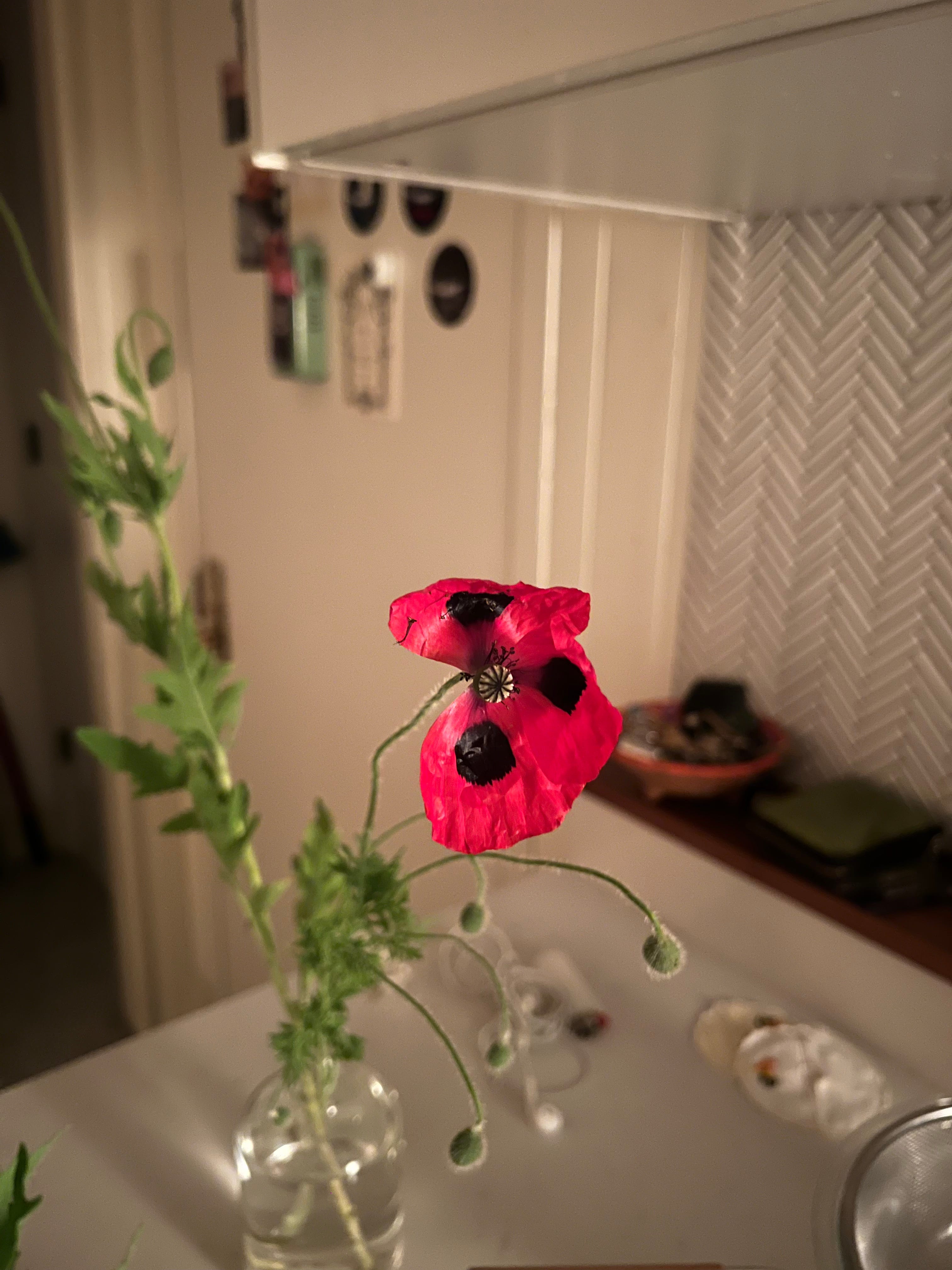
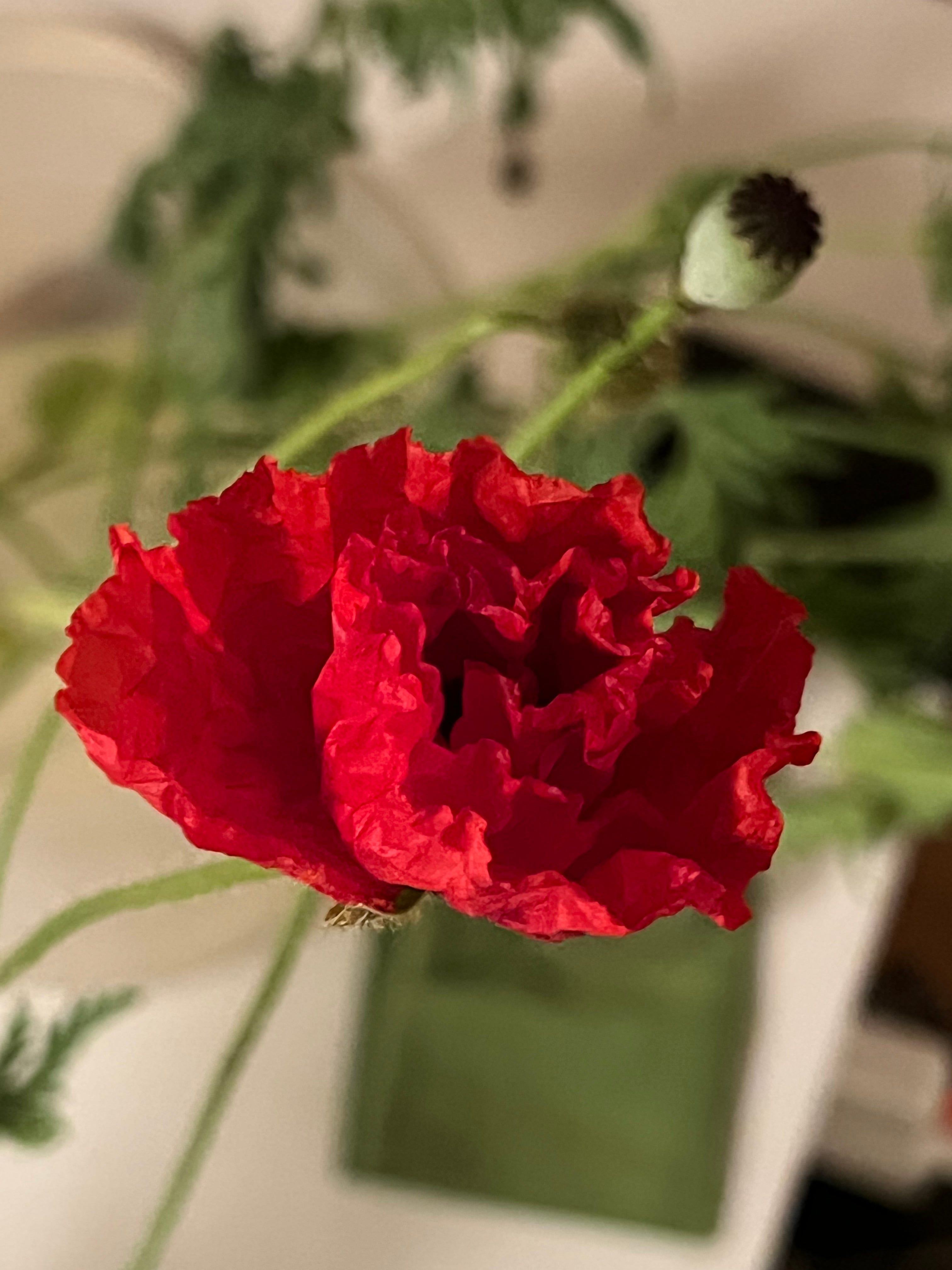
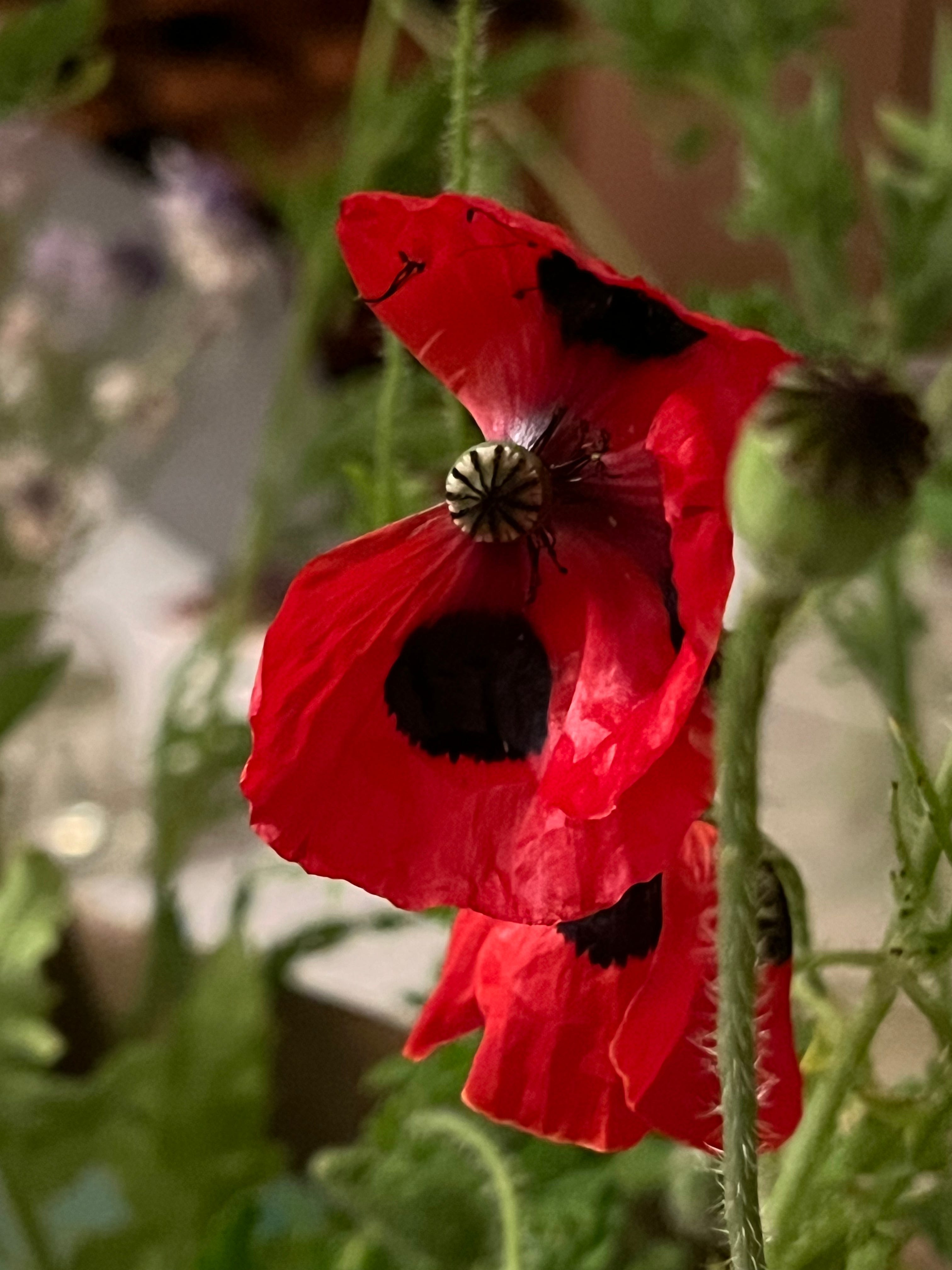
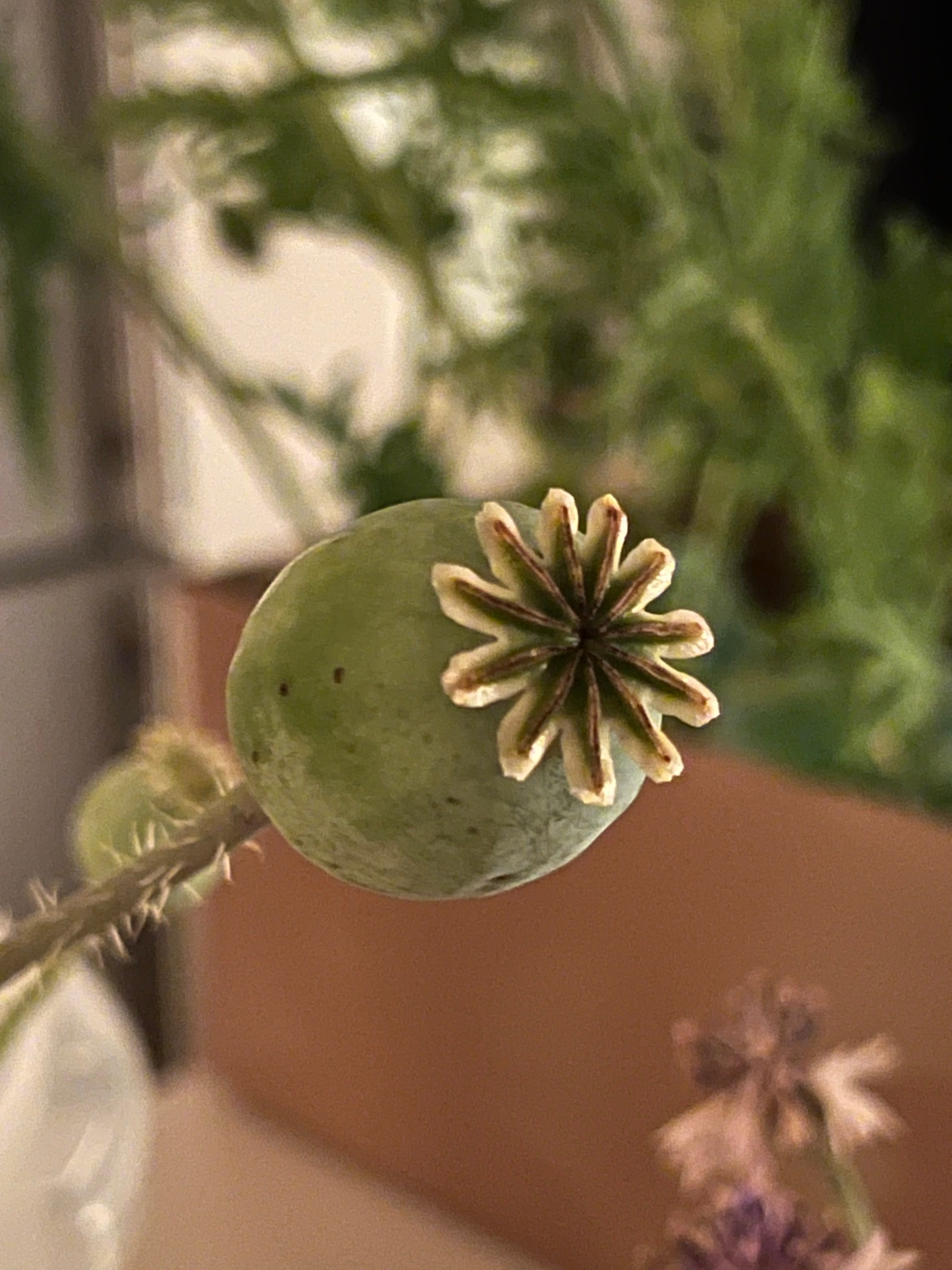
Tonight, I’m writing on the eve of my 5th year as a vested wine LLC. Marian is putting red poppies in bud vases for our anniversary tasting, and I have become a genuine wine bozo myself, but more long-winded. I’d be foolish to admit that there isn’t some profound joy in the intellectual aspect of wine. Its morality but also its aesthetic nature, the normative aspect of balance, trends, styles, and characters. When a wine conforms to my understanding, or when a wine completely surprises me, there is a perverse pleasure that is antithetical to the thundering consistency of the Dorito and its counterparts. In the words of Lou Reed, our love is chemical: dextrose, maltodextrin, disodium inosinate, various dyes… we love it because we can’t help it! It is the opposite of surprise. It is the meeting of your tongue and its counterpart.
Sure, some of you very cool and interesting people may deny that you like or derive pleasure from foods like this. You are very likely the same type of person who pretends not to like the Beetles or Rembrandt. You make a category mistake conflating an aesthetic judgement and pleasure.1 Of course Doritos are bad insofar as they are evil and manipulative, but this judgment is derived purely from the fact that a Dorito (or an Oreo, peach ring, or whatever such industrial food-type you allow in your life [Sancerre?]) just is whatever ‘Good’, in the sense of pleasure, must be. Were the brilliant artists who develop such flavors to discover that a touch more or less Sucralose produced more dopamine in consumers, then that would be the Dorito.
The point being that, just in this sense, Fine Wine is the anti-Dorito. It values complexity, authenticity, and novelty. Industrial foods value decadence, artifice, and addiction. “Driving towards a sustainable future” came off as such a laugh simply because it so deeply betrays the shameless, demonic, zeal of consumption über alles. Not for the sake of beauty or curiosity, but for the shortest and simplest path from package to face. There’s an elegance in the honesty of this principle, and one that is betrayed by the limiting notion of a sustainable/progressive future — a betrayal of the contract that you will treat me like the pig I am and tailor a product to that thing inside of me.
Or, I speculate, it is a lie so bold and so ludicrous that the underlying fidelity of the brands’ mean principles are psychologically reinforced. Hegel’s famous “Spirit is a bone” aphorism is relevant here. Also, the famous “pee is stored in the balls” graffiti. Some things are so untrue on their face, they speak to a stronger fidelity.
It reminds me of my very favorite corporate lie, given in every hotel bathroom across the western world. Here, every upstanding citizen of Mother Nature’s green Earth is asked to help fight Climate Change by reusing towels. Nothing to do with the cost of labor or energy to run washing machines, just ubiquitous solidarity around our utopian future.
Sadly, it really makes me want to use every towel in the room, each and every day, all against my superlative, moral character. And in this stupid and contrarian headspace, I identify with all of our staunchest haters. Natural wine is as obnoxious as all the rest of Fine Wine, but with an additional dollop of moralizing re. sustainability, anti-capitalism, labor, ecology, and whatever else we may find to wag a finger at. It doesn’t matter that our industry is genuinely interested in doing better on all of these fronts, nor to what extent that we succeed.
The problem is that doing the right thing is not something you can appeal to in order to sell a product, especially one like alcohol. No one is rewarding a salesman for not being an asshole. Exploiting labor and/or resources, lying, or cheating are all things one is expected not to do. Drawing attention to the fact that we don’t do this or that evil only draws attention to the fact that we take the low road as a viable alternative at all. It’s sort of like if that Doritos truck instead read: “Hey, we could have used an even more potent carcinogen to make it even more difficult to stop eating, but we didn’t. Can we have 5 bucks?”
Of course we buy from small, family farms that care about the earth, don’t put shit in your food, and want to make a genuinely aesthetic artifact. Why else would anyone buy wine from us? It certainly isn’t the cheapest wine in the market, nor is it consistently the most straightforwardly “good” in the sense that a Tropicana product strives to be. Natural wines, even in the broadest interpretation, don’t only come from famous/prized terroirs. Yes, it matters to our consumers that there is a moral sense behind the people who make and distribute this product, but the more we say it, the less it seems true.
What’s worse is that we also obscure the things that actually sells our wines: the positive aspects. Here, we’re free to choose from a very long list, but my favorite is sort of the obvious one. A natural wine almost always tastes better than its industrial facsimile. Yes, for various reasons it is easier to drink more of it, it has way less detriment on your health, it’ll get you drunk, on and on, but this point of quality is one we gave up on too easily and too long ago. We do so much apologizing and justifying that it’s no wonder every order of natural wine and charcuterie has slowly morphed into a martini and a Caesar salad. Yes, modern science can chemically manipulate us into a metabolic fever dream of unearthly delights, but nature has been working on that one for a few million years and the results can be pretty good?
But Steven, I just don’t like the taste! For that, Hegel has another helpful line, “Uneducated people delight in argument and fault-finding, for it is easy to find fault, but difficult to recognize the good and its inner necessity.” Children are good at deciding, “I don’t like it.” If you can’t convince yourself that it’s possible to acquire a taste for fermented fruit that hasn’t been “cleaned” for you with a cocktail of industrial chemicals, then you are maybe not interested in the kind of joy that wine offers in the first place. Yes, some wines are complicated (not only the natural ones!), and part of the enjoyment is having the modicum of knowledge that tells you when and where certain wines work or don’t. The wine you order might not be right or ready, but sometimes being wrong is better than being a fool.
Crane, Tim. “Wine as an Aesthetic Object.” Questions of Taste
Hegel, G.W.F. Phenomenology of Spirit. Translated by A.V. Miller, Oxford University Press, 1979
Pollan, Michael. “Opium, Made Easy, by Michael Pollan.” Harper’s Magazine
You are this person or else you are someone very lucky.
No posts
Comments
Nothing yet. Say the first thing.
Sign in to join the conversation.