
Welcome and thank you for being here. Here is a map of Piacenza, Italy
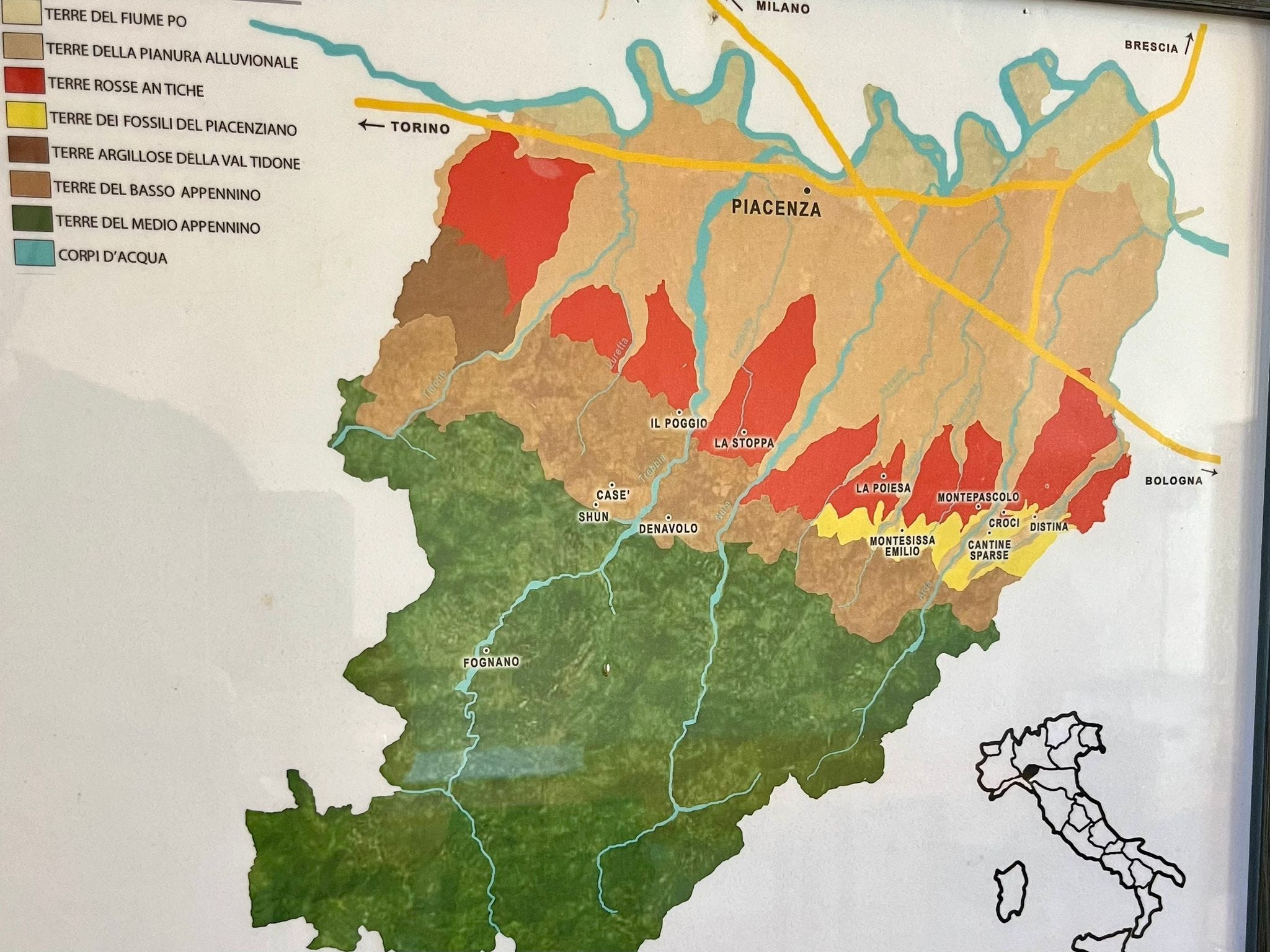
Piacenza was invented by an American wine importer in 2016. At the time, it was known as Emilia- Romagna and it was a place where Italians made an ancient style of pet nat from red and white grapes, both. They were sort of like Lambrusco, and came from - sort of - near Lambrusco but not really. Don’t ask him why.
The bliss began at a wine tasting in Paris, organized by T. Puzelat & family with a focus on natural wine from Italy. It was the breakout event for Valentina Passellaqua’s rainbow of sparkling wines from Puglia. The states were in the throes of Pet Nat Fever and anything that wasn’t squarely red or white, and had a bit of fizz, was basically free money for the natural wine salesman. Like, me! As Phil Sareil liked to say at the time (he really liked to say it), “clear bottles are the new terroir.”
As I’m writing, 10 years on, I’m putting together a playlist for Marian’s birthday party, which includes wine friends and not. She is sitting in the kitchen, trying to save NYC community gardens from the most loved mayor Eric Adams, and I am blasting Peter Gordon and yelling “I think the pet nat is kicking in!” This is a reference to a fun time I once had with an American Master Sommelier and winemaker who liked to drop a tab of LCD into his pet nat before serving it to friends.
Playlists are hard in the ‘post-’, ‘post-’, ‘post-’, after-modern era of streaming cloud music, especially when you don’t know 2/3rds of the guests at the party. Maybe pet nat post-punk is too spicy for the octogenarian gardeners of the “Down to Earth Garden,” East Village? Will we dance? Will we eat? Will we play parlor games? How will we drown out the squawking sound of our wine geniuses shouting “mouse!” at one another across the room?
![Sparks – The Number One Song In Heaven – Vinyl (12", 45 RPM), 1979 [r799110] | Discogs](https://substackcdn.com/image/fetch/$s_!Yyqu!,f_auto,q_auto:good,fl_progressive:steep/https%3A%2F%2Fsubstack-post-media.s3.amazonaws.com%2Fpublic%2Fimages%2Fc2a655da-2707-49ea-a4fb-49a15635f1c0_600x600.jpeg "Sparks – The Number One Song In Heaven – Vinyl (12", 45 RPM), 1979 [r799110] | Discogs")
I’m scrubbing through old playlists looking for the gems: the “good” songs. The songs that cross all the train tracks and play when cats and dogs are living together - the number one song in heaven. In that sweaty little salon in Paris, I had a little taste of heaven that I dip back into as often as I can. Including today. “Bonissima” was and is the wine. Any english speaker might surmise what that name means. It is a wine from Malvasia di Aromatica, which contains another delightfully transparent cognate. I never had more fun at subsequent wine tastings than pouring this cuvée over and over, saying, “Malvasia di Aromatica from Elisabetta Montesissa in Emilia- Romagna,” feeling like Pavaratti and Casanova in one. Try it for yourself at home.
In any case, we’ve bought “Bonissima” to the states every year since, and usually as much as we can afford. But from that day on, the dream of the place would grow and grow in my mind. A place where they thought, “Fuck it, we’ll just make all the wine sparkle,” Where they thought, “Let’s put meat and cheese inside the pasta. Where they first did Lasagna. Where salumi was a food group. Balsamico was a way to describe the flavors of all kinds of things — all a paradise of opulence and richness. You don’t like the wines? You can’t handle the wines! You don’t know how to couch a wine’s acidity in fat, or bitter tannins in umami. Put a ravioli in your pie-hole and tell me about volatility… Have you ever even been to Emilia- Romagna? I had not been. And it took me a long time to get there.
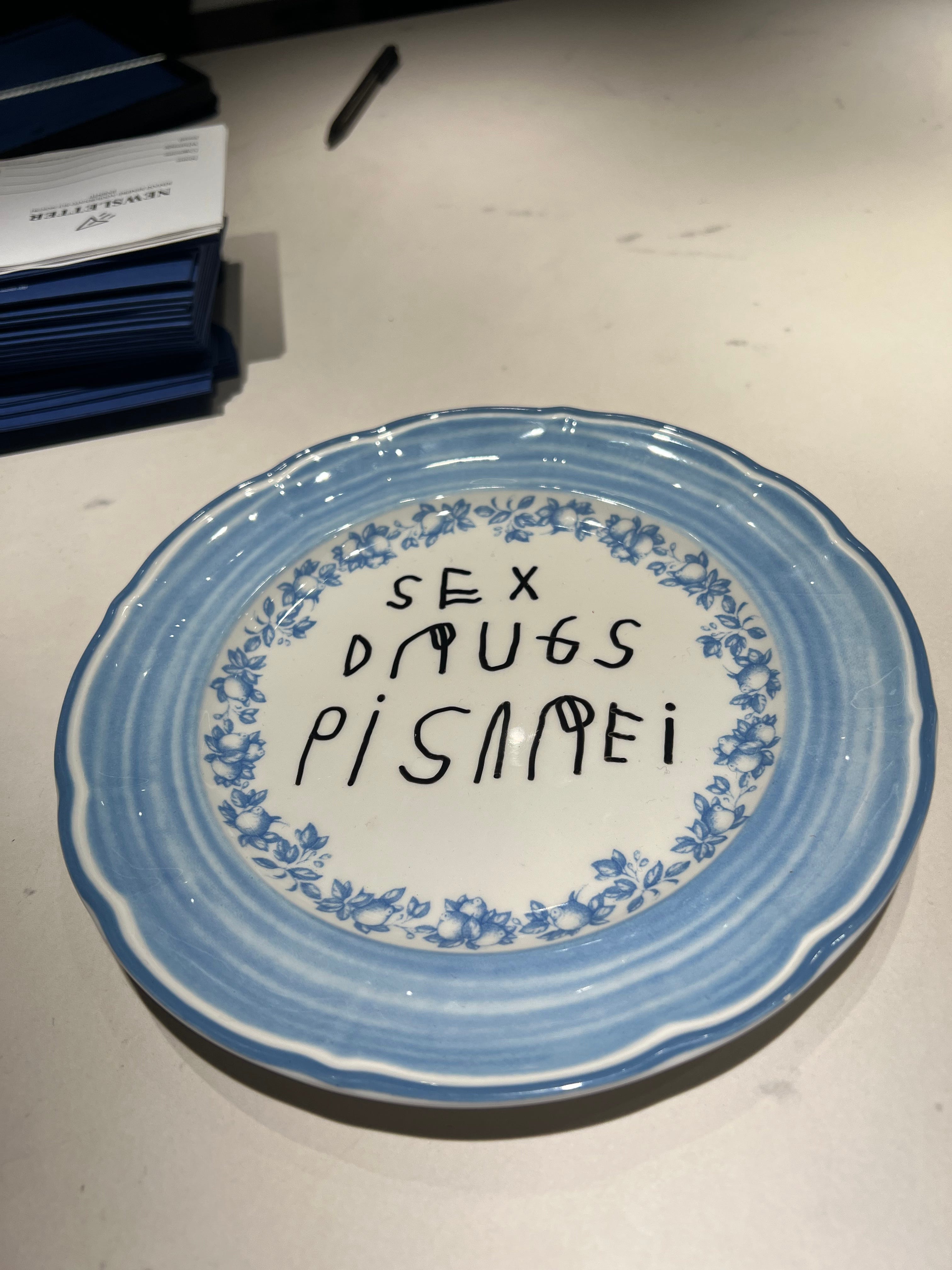
I think, vacillating, who am I to ask a roomful of strangers to listen to “Dinosaur Sex” for 9 minutes straight? Even if it is good for them. Who could really get mad about dinosaur sex? Why am I bothering people who just want to enjoy Paul McCartney like the rest of us?
One beautiful morning, I woke up and my dream of Emilia- Romagna had come true. It was on a short flight from Palermo with Frank, who I’d recently discovered spoke very little Italian. Fortunately, he did have great credit such that when my passport was eaten up by that small, delayed flight, we were able to rent a car and pull into Piacenza only 7 hours late for antipasti.
We pulled up a typically crunchy, low gear kind of road in the pitch dark, then walked on soft ground down into a cellar filled with plates of cured meat, Frizzante wine (that’s what I called it now [because that’s what it is]), and a lot of sleepy grape growers waiting to meet us, or waiting to eat dinner.
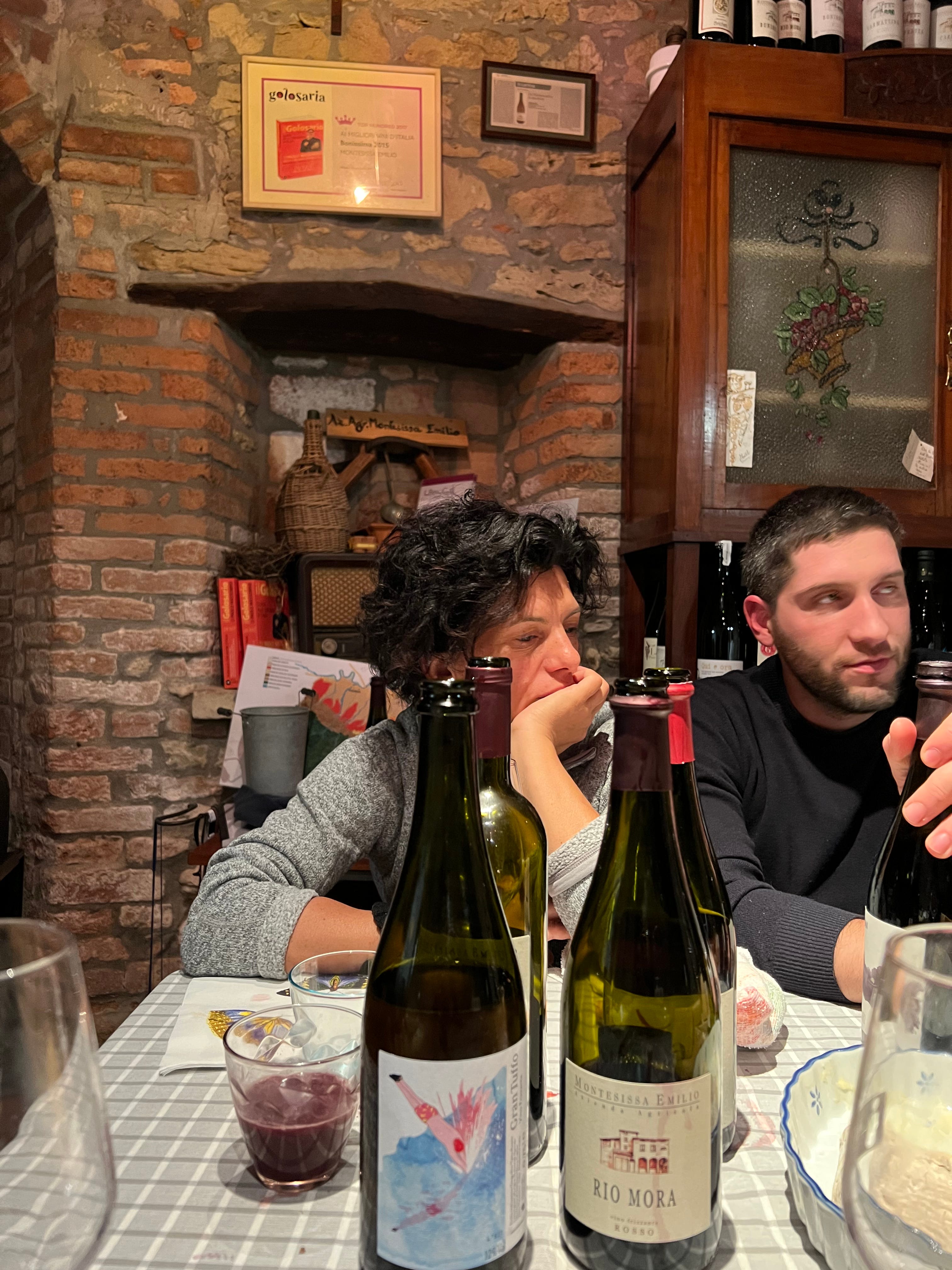
And these folks like to eat! The lunches and dinners were enormous, similar to the winemaker dinners in France, but with a medium-sized pasta dinner snuck in-between courses. Simple, transparent, typical meals. You didn’t have to think about pairing or when to open the red or the white. Hundreds of years of tradition had figured it all out. It took me years to understand that these wines had almost nothing to do with pet nat culture in Paris or the United States. Massimilliano Croci told me, “I want to put on the label: THIS IS NOT PET NAT.” These wines were part of a bigger, culinary experience, a cultural one that’s easy to admire when you’re stressing about a disparate group of New Yorkers coming together in a tiny loft to eat, drink and be merry. There are no rules here, but it’s stressful.
One of the very cool results of this tension is the necessity for a position that is often maligned or laughed at in the American wine world. The sommelier is a hugely important position in a world where all these wines are available from all these very specific cultures. For years, we fought an uphill battle selling these unique Frizzante wines as pet nat, based on a very superficial similarity. And sometimes it works and you get very interesting pairings and combinations, but life got much easier with a modicum of knowledge. Taste may be subjective, but there is a great utility in the priming one gets from a knowledgeable shop employee or a bartender who’s spent a summer abroad in a tiny corner of the wine world. The real wine heads that I admire almost always lean on the expertise of these professionals, and the people who know nothing about wine almost never do. Weird!
Jean Baudrillard is a weird, French thinker who likes to talk about a particularly American genre of representation I often like to think about. He describes the world of the “Hyper-Real” with an allusion to a non-wine fruit beverage. On planet Earth, you have a thing that grows called a raspberry, which has tastes and qualities. When companies develop a product like raspberry soda, they make some more or less superficial reference to an actual raspberry, or else the flavor of one. What Americans really like to do (says he) is develop things like, “blue raspberry soda,” which completely leaves reality to reference some essential “berry-ness” and “blue-ness,” that transcend all the possible or contingent fruits in one.
I always found this a funny idea because the concept inoculates the representation from veracity just because it ranges all the categories in total. There’s no such thing as a blue raspberry so how could the flavor be false? Yet still, these sodas often taste more "berry-like” than any raspberry on its own. ‘Blue raspberry’ provides a cartoonish, American picture of a thing, but the idea really describes the way we talk about think about wine. Baudrillard himself often took these hyperreal simulacrum as more real, or truer than other aspects of our life. Wine drinkers love to range over the entire taxonomic rank of fruit in order to describe a grape. What is more lemony than Aligoté or a better example of green apple besides a crispy Chardonnay. I even called a liquid crispy!
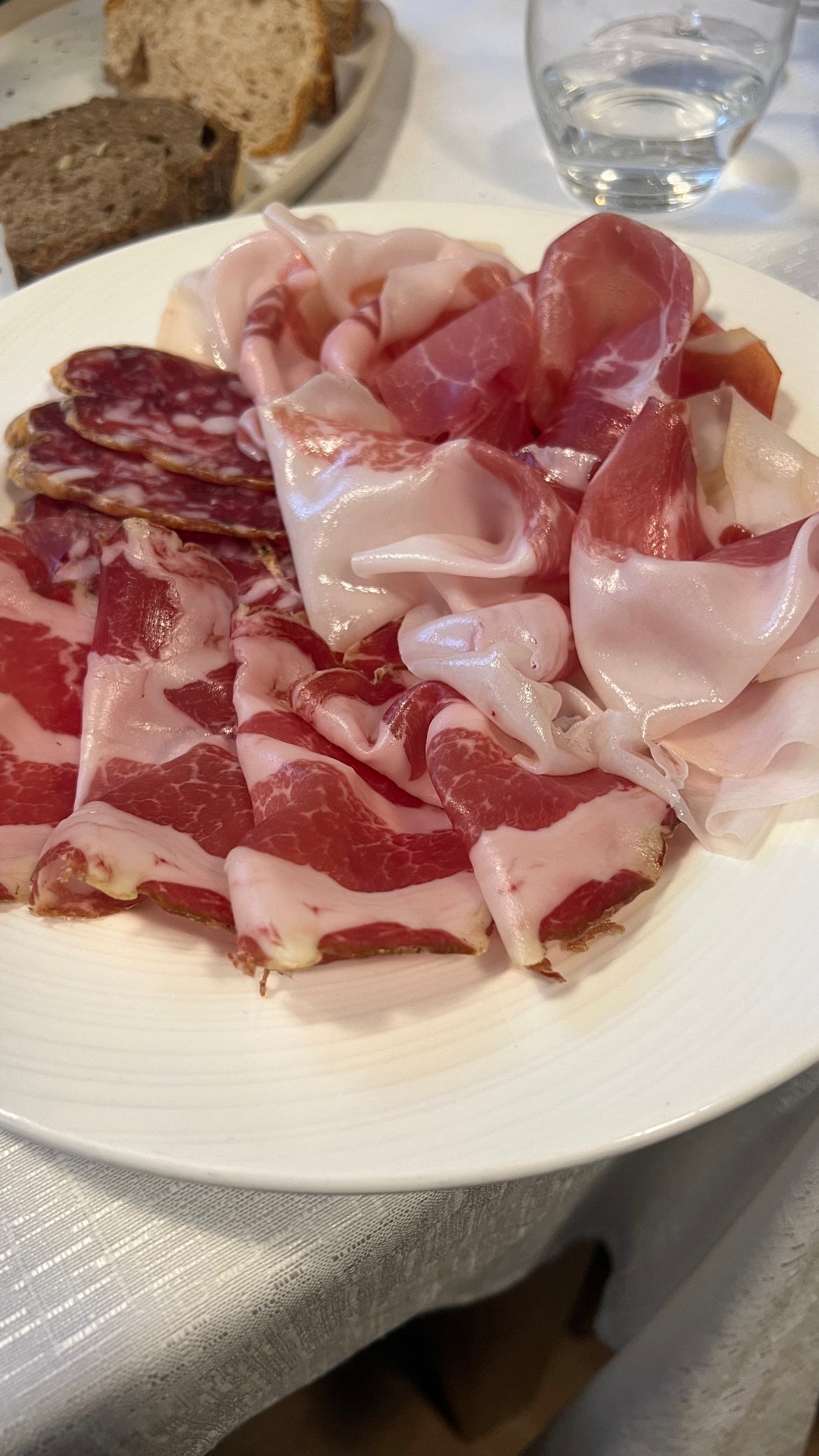
Did any of this mumbo jumbo play a part when the Romans decided to pair their pork with grapes from… over there? Who’s to say, but they sure have stuck with it for a long time. Does that make the pairing more correct or the wine more real? Who knows? As I sit at this party, stressing about the volume of the music slowly going down with the host’s disapproval, a young wine rep is mixing some pet nat surprise in the corner. Marian is debating wether or not to project Pee Wee Herman onto the walls. My brother is describing a video game he’s working on to a museum appraiser. The food is being plated in such a way to inform those of us with food allergies. So, all the wine tastes like whatever it tastes like, and that’s also fine.
I start talking about my recent trip to Piacenza, pouring some foamy, red Frizzante wine. I say things like, the bubbles really cut through the fattiness of the local cuisine. Polite florists nod. Fun is had by all. I implore you to make use of our rock and roll playlist if you ever find yourself in a similar situation. All things seem to go with all things, so long as you’re willing enough to blather about it.
No posts
Comments
Nothing yet. Say the first thing.
Sign in to join the conversation.