
Look at this photo of 2.4 acres of land for sale on Cerrillos Road. Notice the features of this landscape: Giant parking moats, one-story boxes set way back behind the asphalt, national chains, and low-density single-family sprawl in the background. That’s what you get at Cerrillos Road and Zafarano. But it could also be Menaul in Albuquerque, Route 66 outside Flagstaff, and whatever they call the commercial strip in Euclid, Ohio. It looks the same everywhere because it came out of the same rulebook. A rulebook written around cars.
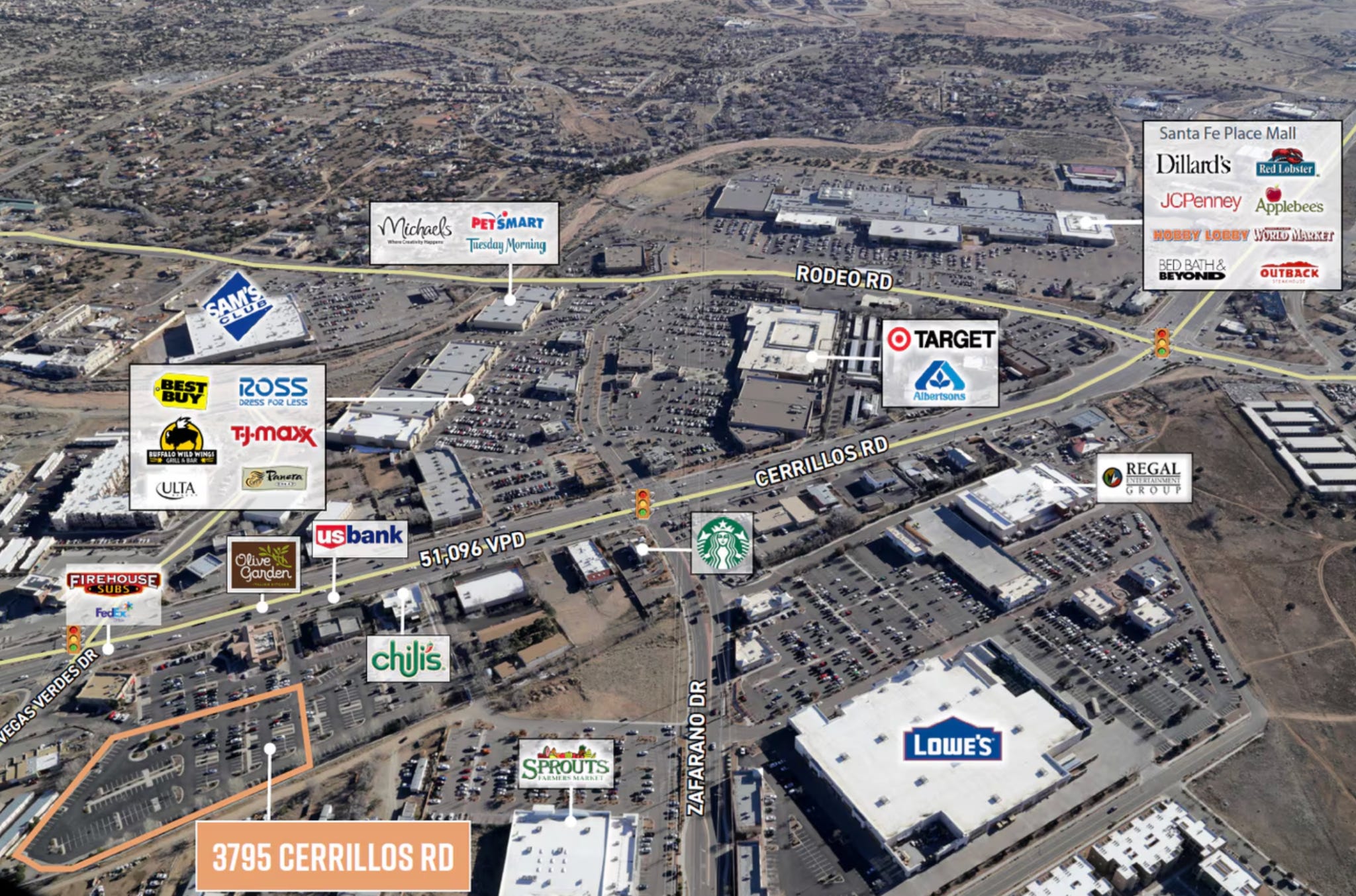
People see this and blame developers: Greedy corporations! No sense of place! But developers build what the code permits, and this is what the code permits. If you are a developer, you may know how many parking spots you need, but what you know doesn’t matter: the government tells you how many you must build, picks that number almost entirely at random, and does not pay you back for the overbuild. It also tells you your building must be short, must be far away from the street, and caps how much building you’re allowed to put on the land at all.
And tenants? The big-box chain tenant is what pencils out after you’ve committed your acres to mostly car storage. A local mom-and-pop shop doesn’t have a chance.
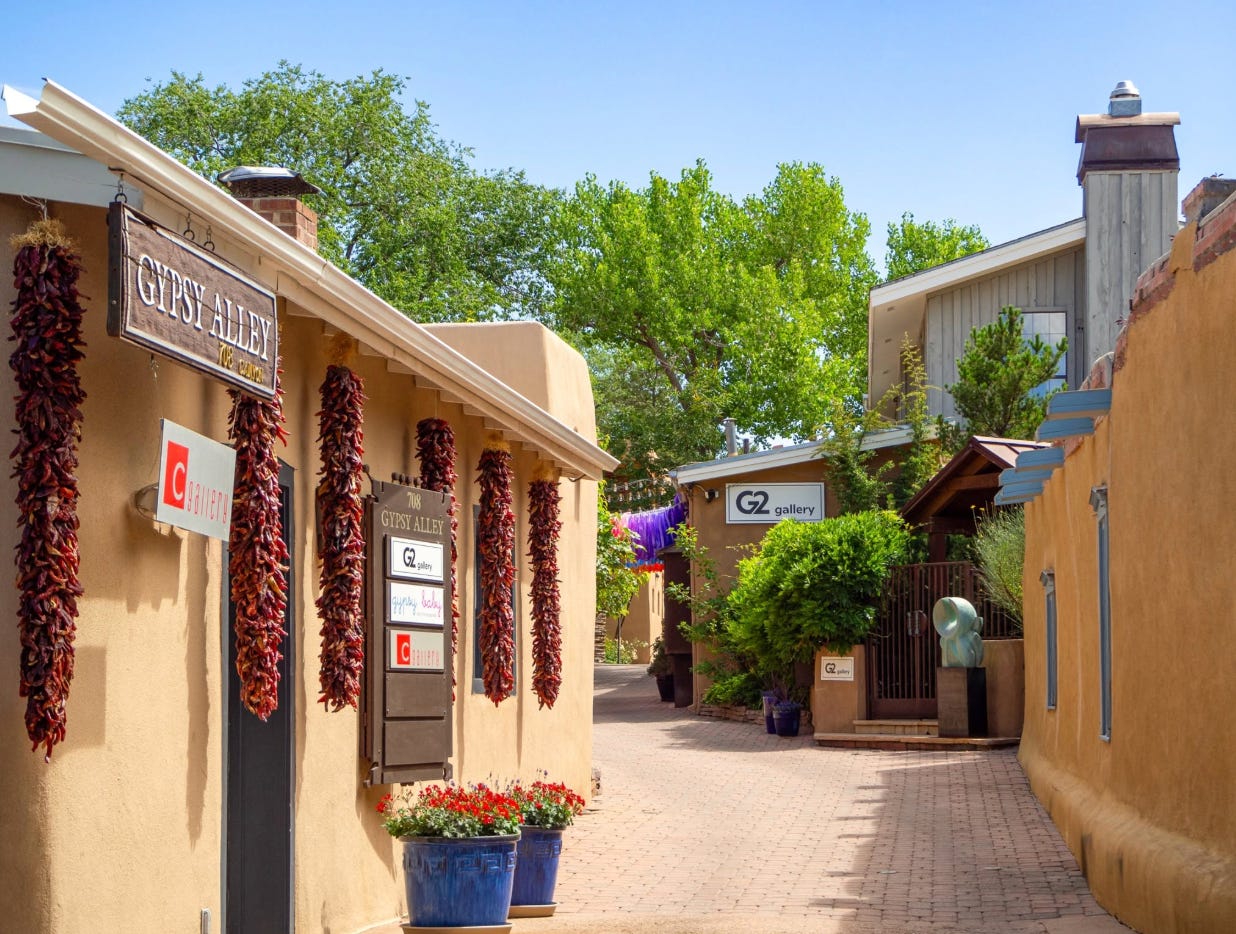
Drive along Cerrillos Road fifteen minutes to its northeast end, and you enter downtown and the East Side. Your shoulders immediately relax. Here we have narrow streets, trees, taller buildings that meet the sidewalk, multifamily dwellings, homes, and small shops close enough that you can walk down a non-terrifying street for a coffee and newspaper. This is postcard Santa Fe, the reason people move here, and what “The City Different” is supposed to mean.
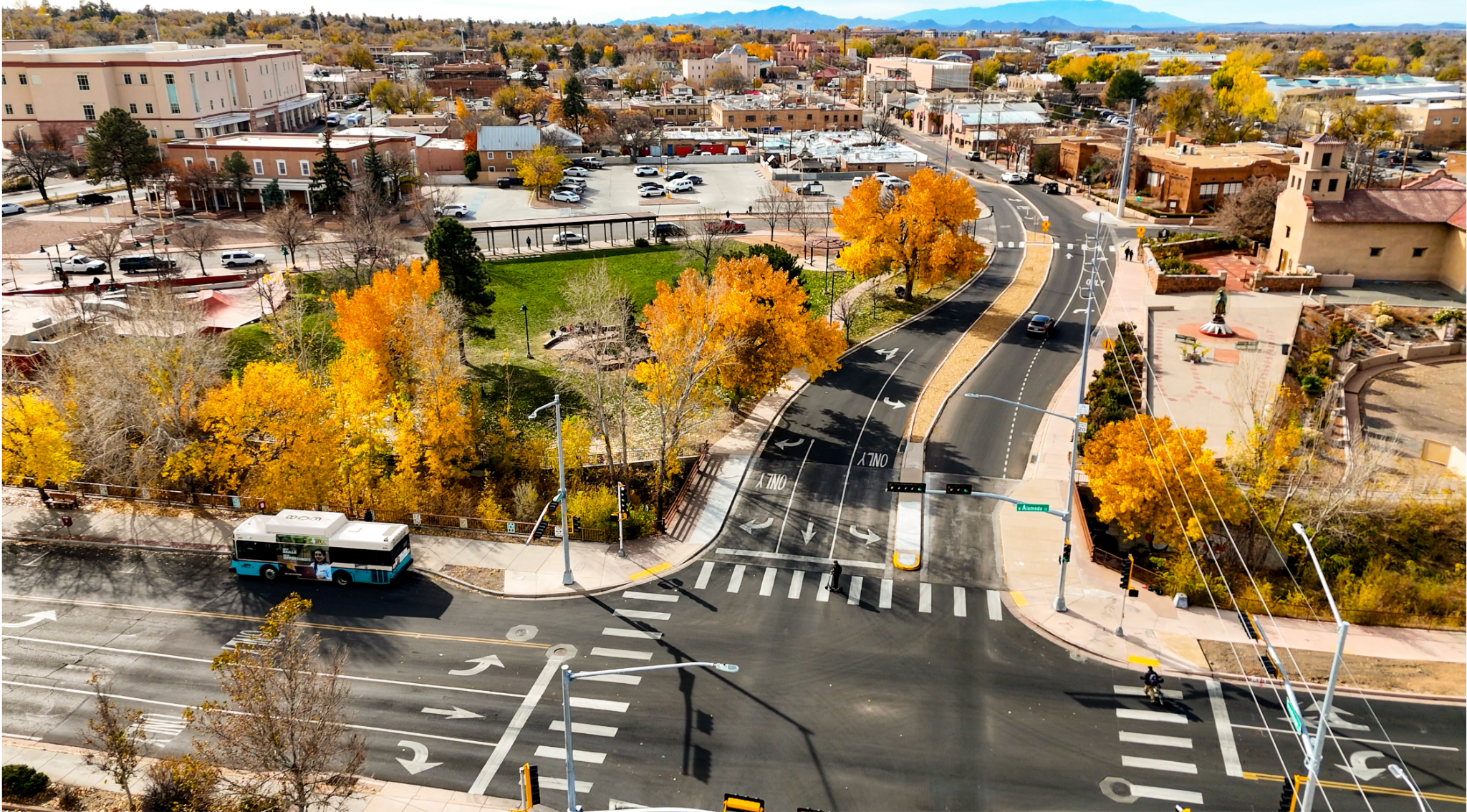
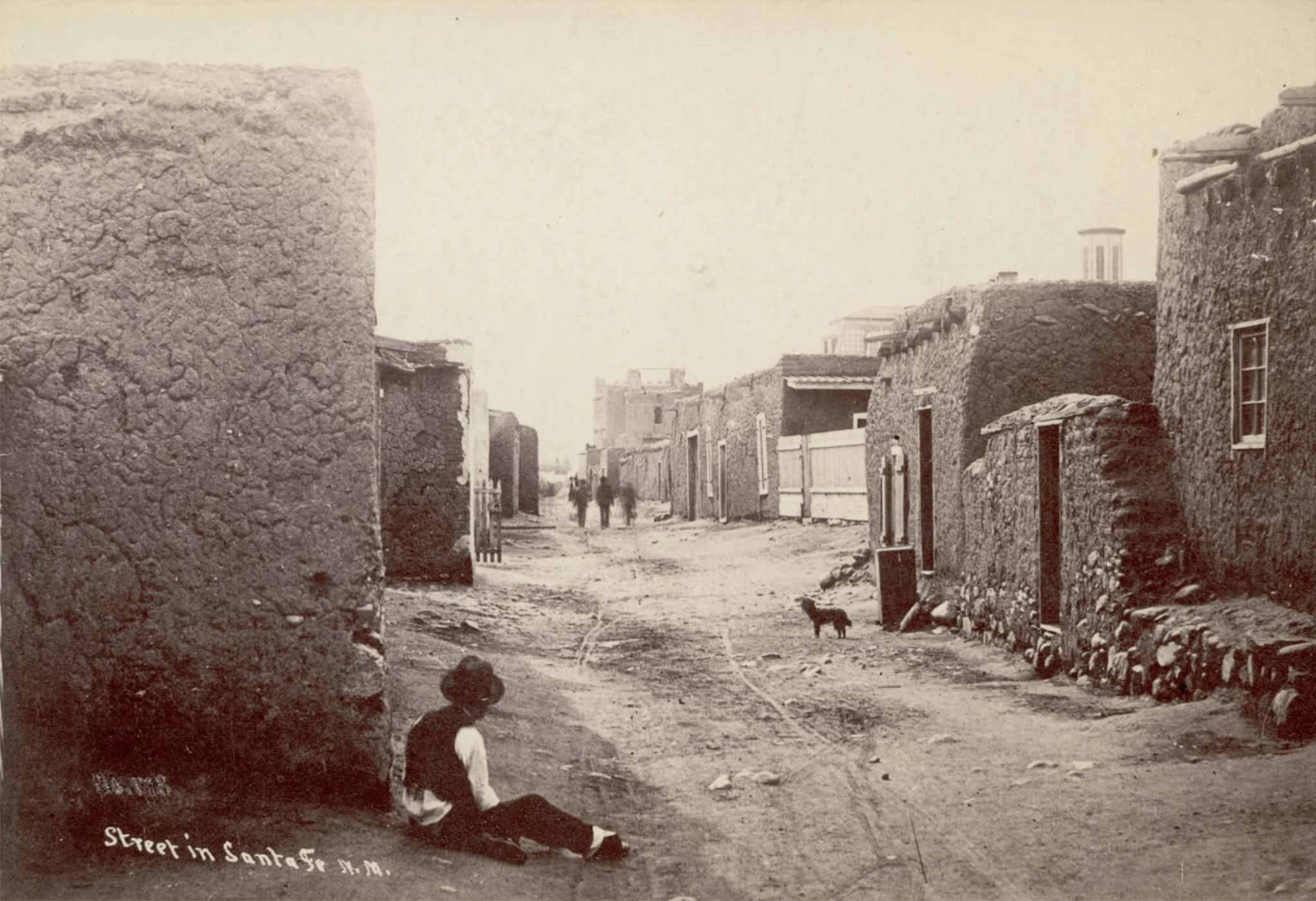
The bones of downtown Santa Fe, the streets and form and many of the actual buildings, long predate zoning. Nobody can replicate this look outside the downtown core. In fact, it couldn’t even be replicated in the downtown core.
Daniel Alvarado, the city’s former senior planner, told the audience at a Homewise event with Jerusalem Demsas in 2024 that the East Side compounds and dense pre-zoning neighborhoods are “basically illegal to build today.” On the same stage, Homewise president Johanna Gilligan said the pre-car part of town is “illegal to recreate.” And when Oscar Rodriguez, the city’s former finance director, ran for mayor, he told the Santa Fe New Mexican: “Under the current code, the most cherished parts of Santa Fe could not be built. This must change.”
What they’re all saying is that if some catastrophe leveled the East Side and we rebuilt it under the code that governs most of the rest of Santa Fe, we’d get something much closer to the intersection of Cerrillos and Zafarano. All that downtown charm would vanish. It doesn’t matter whether the developer is local, loves Santa Fe, or hires an award-winning architect. The rules determine the form.
Think about that the next time you drive through the intersection of Cerrillos Road and Siler, which will be featured on nobody’s postcard of Santa Fe Style.
We’ve treated the historic core like a museum exhibit placed under glass: carefully preserved, charming, and now priced so that only multimillionaires can afford to live there. The adobe bricks and single-pane glass have been preserved but the people sure haven’t. Meanwhile, the rules governing the rest of the city virtually guarantee that we won’t build anything resembling the neighborhoods we claim to love. We froze the good stuff, made it illegal to copy, and then got mad at developers when everything new looked horrible.
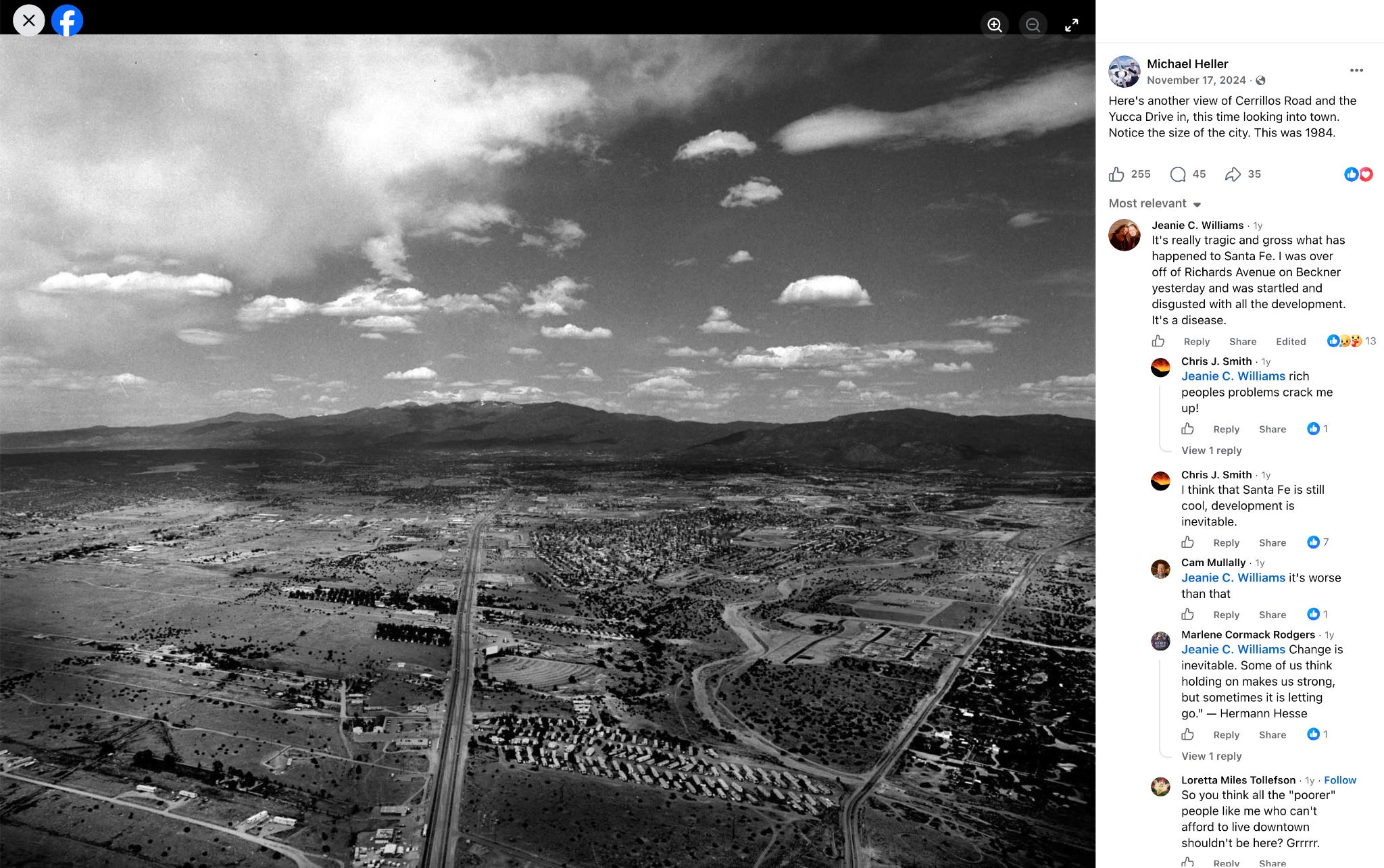
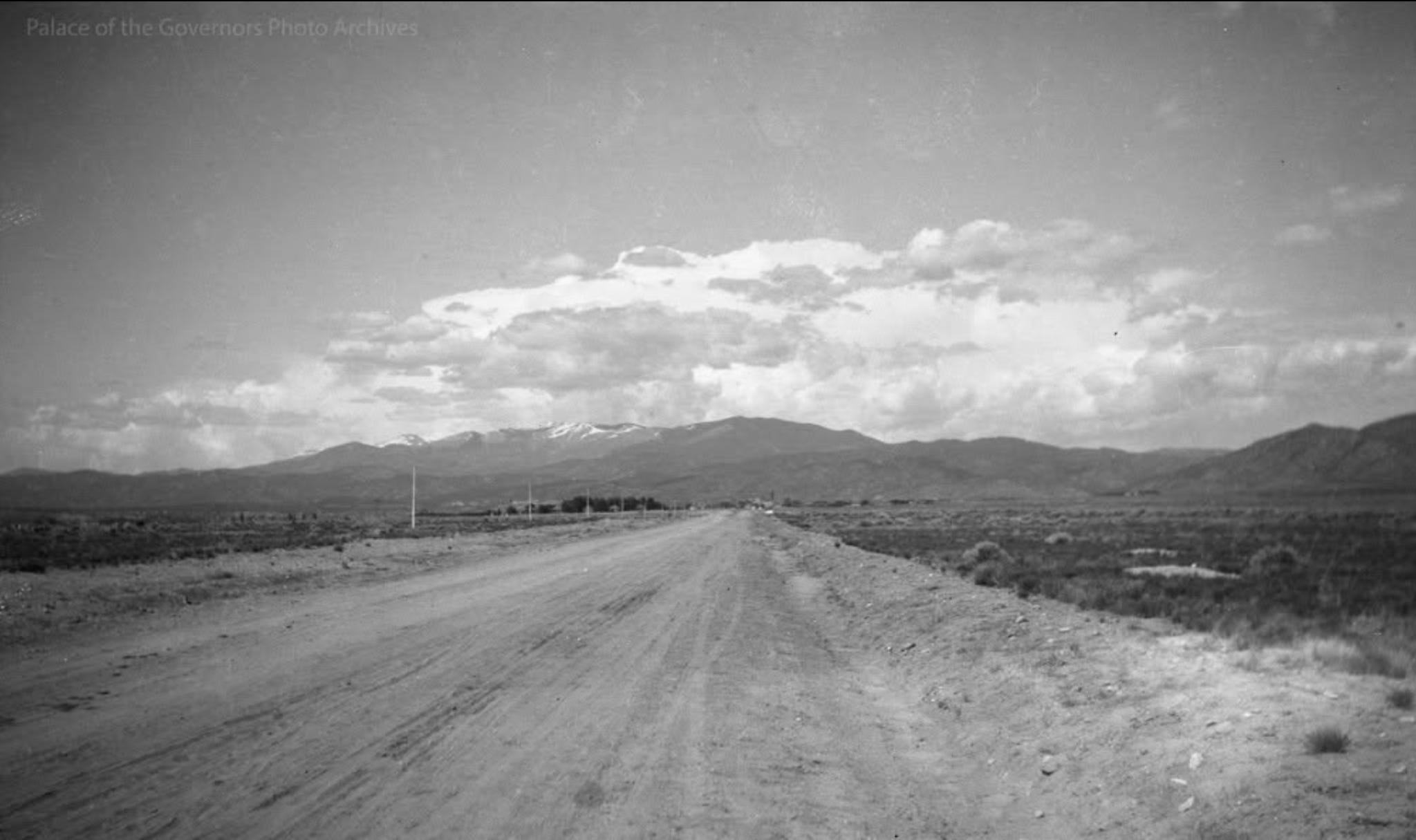
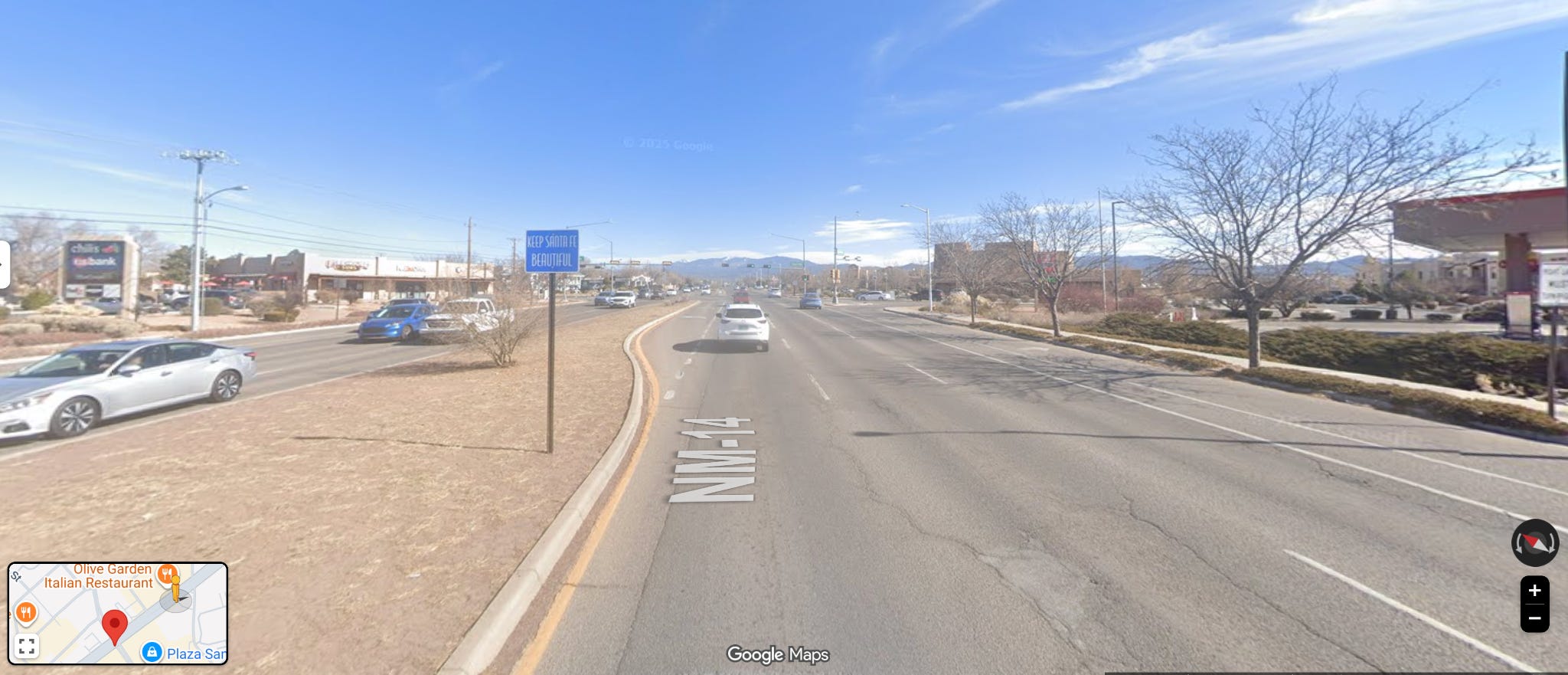
It’s perfectly reasonable to want a beautiful city. It’s also understandable to look at the strip malls, parking lots, and beige boxes we’ve been building for decades and conclude that new development is the problem. But this is the development we chose. We picked this look when we built everything around the car.
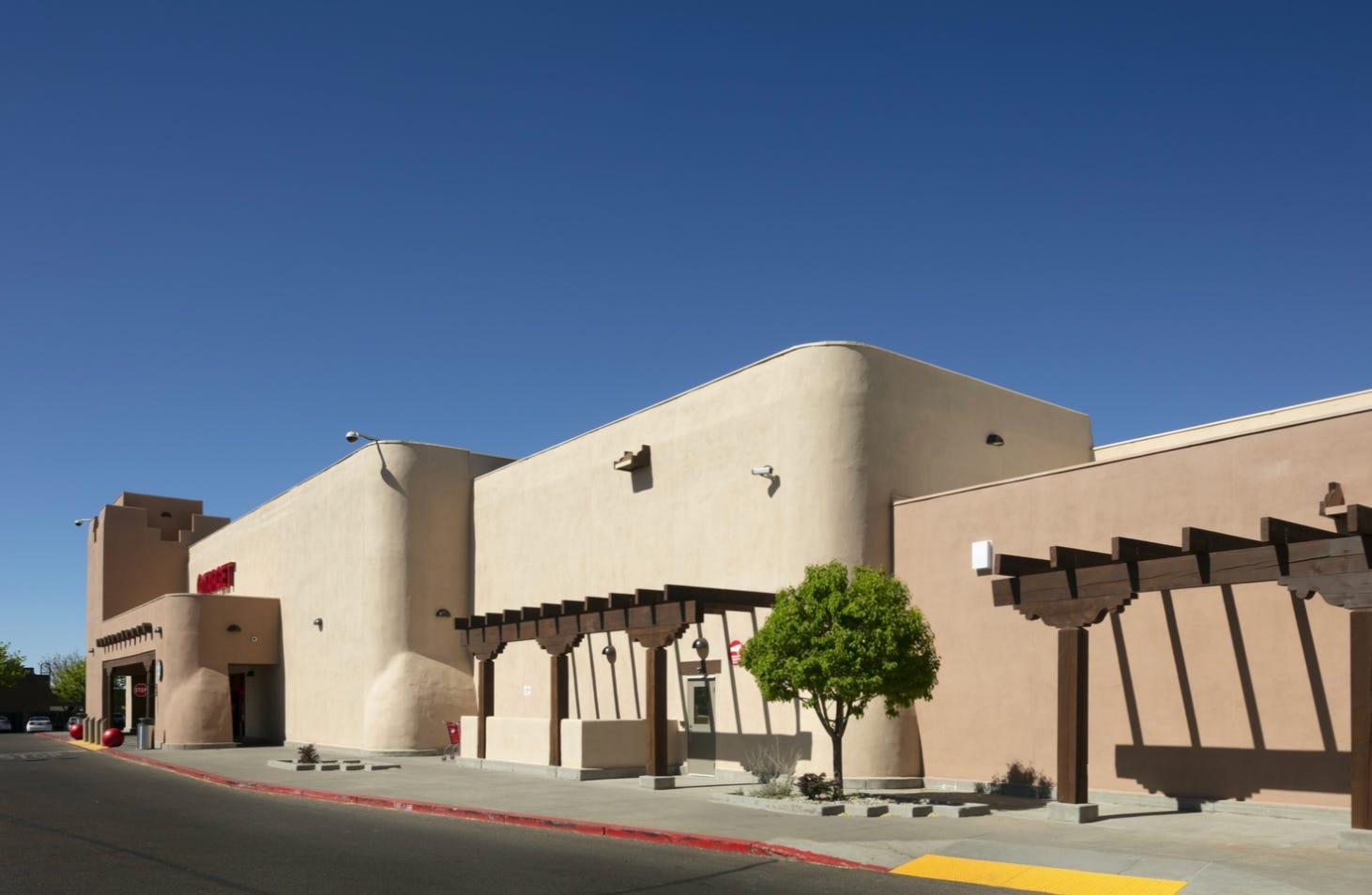
The rules do more than make everything ugly. By limiting how many homes can share valuable land, they make housing dramatically more expensive and push it farther from jobs and amenities. By requiring destinations to be spread far apart and connected by wide arterial roads, they increase traffic deaths. By making a car necessary for nearly every trip, they lock in greenhouse emissions that no amount of “green building” mandates can touch. And car-centric low-density zoning makes everyone miserable. Spending your life driving from one parking lot to another, between isolated brown boxes with chain stores inside and fake vigas bolted to the outside, doesn’t make people feel connected to their space. It doesn’t create a sense of home or community.
We keep hearing that we need “innovation” to fix this mess, but we really don’t. It’s not that complicated. Mid-20th-century zoning rules produce places almost nobody puts on a postcard. They produce asphalt and strip malls. So get rid of those rules. Phase 2 of the land development code update is where Santa Fe decides whether traditional Santa Fe urbanism becomes legal outside the historic overlay.1 Santa Fe can make duplexes, triplexes, and courtyard compounds legal by right in every neighborhood. It can re-legalize the small lots Santa Feans actually built on for centuries before we started designing around cars. It can let a building touch the sidewalk. The city made a start by reducing parking mandates downtown, but it hasn’t spread that blessing to most of the city.
People can argue about what gets built, and where, and how, until the final installment of Phase 2, which follows the general plan and probably wraps up in 2027. That’s a long time for a housing shortage to wait. It also gives status quo defenders plenty of time to marshal opposition. Planners are writing the draft standards now. As long as most voters believe developers are the problem, elected leaders won’t have the political backing to make the changes Santa Fe needs.
Santa Fe calls itself The City Different. Under the code that governs almost everything outside the historic overlay, the city is permitted to be different in only two ways: the shortness of the buildings and the color of the stucco.
Meanwhile, if you’re interested, there are 2.4 acres for sale near the intersection of Cerrillos and Zafarano. Under the current code, you’ll need to put up a one-story box surrounded by an ocean of parking. You’ll almost certainly put a national chain inside. It will look like Anywhere, USA.
Running alongside the land development code update is Santa Fe Forward, the city’s general plan update. A general plan lays out what kind of growth a city wants, and where; the code determines what you may legally build. The plan can call for walkable, mixed-income neighborhoods while the code forbids them. This plan-says-one-thing, code-says-another dynamic is common in city planning.
No posts
Comments
Nothing yet. Say the first thing.
Sign in to join the conversation.