
Phoenix has always been a hot, dry desert city. For many years, that was its main attraction. Health seekers came for the dry air in the early 20th century, followed by retirees fleeing gray northern winters. Phoenix winters were divine, and air conditioning made the summers survivable.
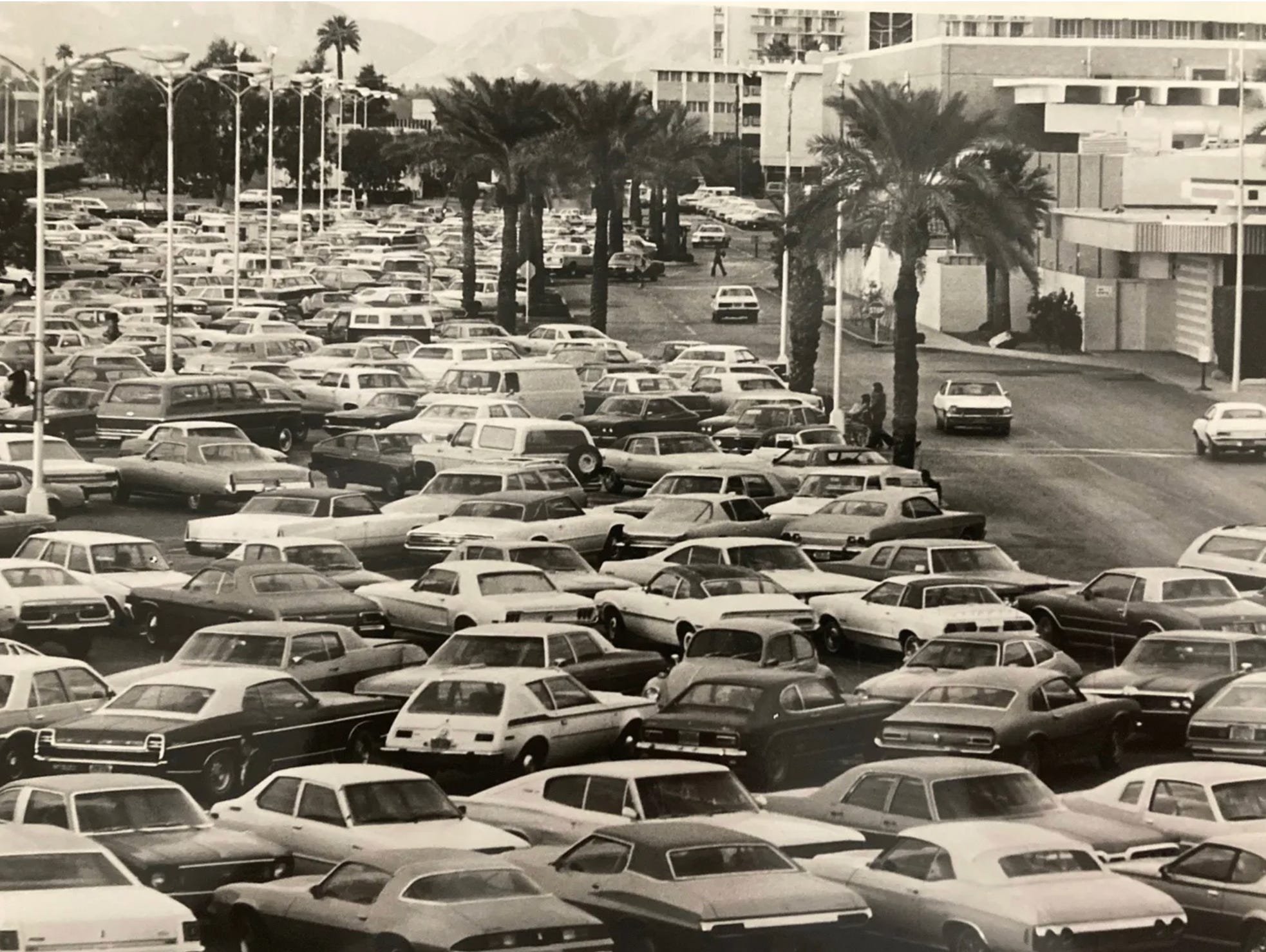
Cheap housing augmented that appeal, and it has been the Sunbelt’s advantage over everywhere else for the past half-century. As the coastal metros started to shut—and then slam—their doors, Dallas, Miami, Atlanta, and Phoenix kept building outward across readily available flat land. Their magic formula was sprawl. Because sprawl leaves existing neighborhoods untouched, political opposition is muted. At any given time, it was easier and cheaper for developers to add another minute to the commute than to confront existing homeowners. New residents were more than willing to spend that extra minute on the road in return for their piece of the American Dream. And so, the suburban subdivisions rippled ever outward, bringing with them wide arterial roads, strip malls, and, of course, plenty of free parking. Housing abundance and oceans of asphalt arrived together.
That formula is now breaking down. First, in an era of global warming, the desert sun is a punishment. Back in the early 1990s, Phoenix hit 110° only about 10 days a year. In 2023, it hit 110° on 55 days, and then 70 times in 2024. By August 22 of this year, it had already logged 33 days—fifth-most on record, with the hottest stretch of the calendar not yet over.
Second, housing production in Phoenix and other Sunbelt cities has slowed to rates seen in exclusionary coastal metros. While Phoenix’s housing stock grew more than 2.5% a year in the 2000s, that growth had slowed to 1.2% per year by the 2010s. Even as supply dried up, demand remained high, so prices rose, leaving the region hotter and with less cheap housing. Phoenix is not unusual in that regard; it is following the closed-door trajectory of many other American cities.
What is peculiar to Phoenix is the combination of how it has built its housing (and everything else) and the sun’s overwhelming influence. Phoenix has arranged itself around the car, and car infrastructure turns desert cities into ovens.
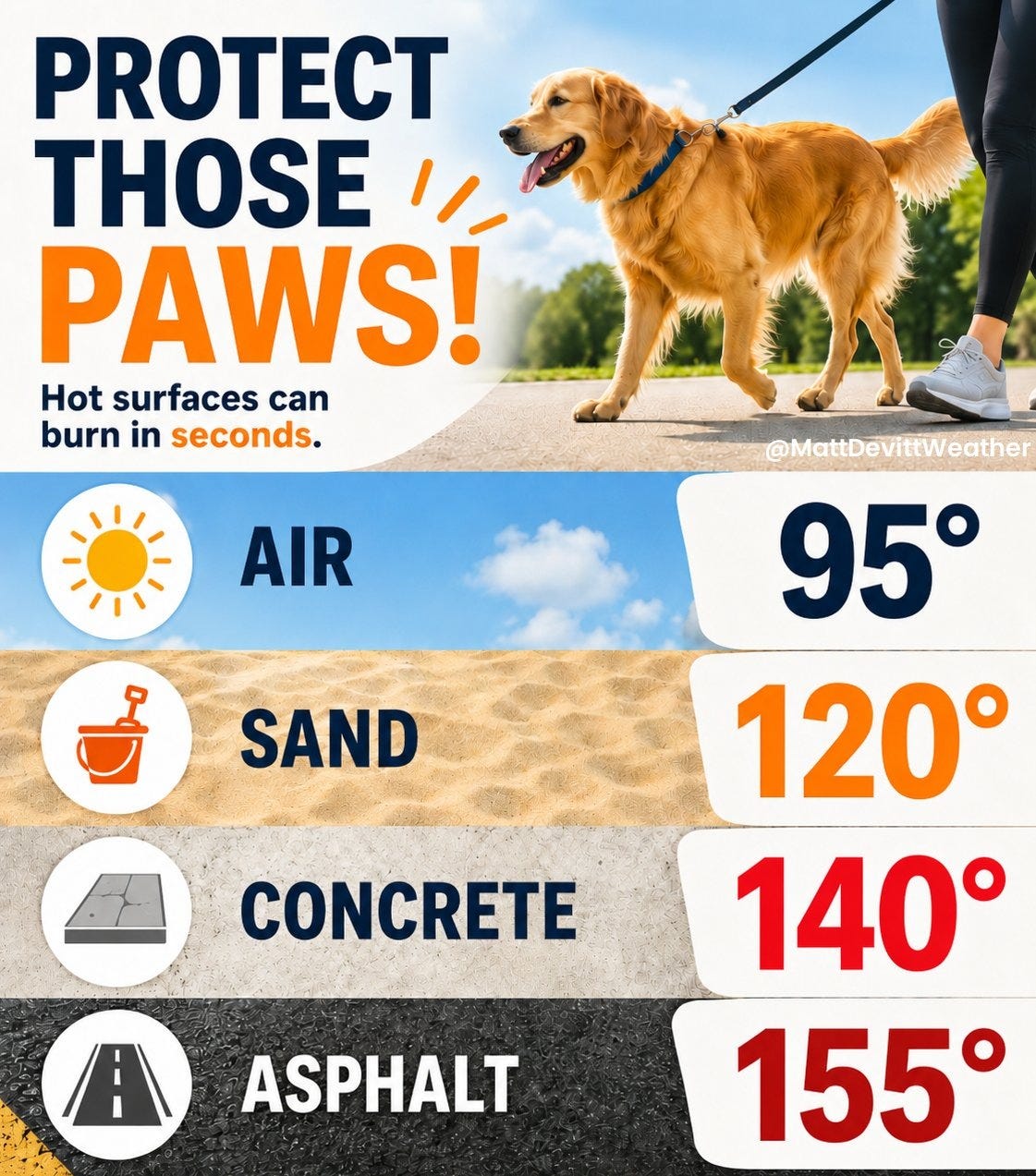
“The lots that we’re surrounded by, these asphalt lots, hit anywhere from 150° to 170°,” said Bryce Cristiano, who writes The Heat Ledger, an essay series on Phoenix’s built environment and the impact on its residents, especially the most vulnerable. The upper end of that temperature range is hot enough to cause a second-degree burn in under 30 seconds, he said at a July 30 panel on parking and urban heat. The Parking Reform Network sponsored the panel, which included David King, an urban planning professor at Arizona State University, and was moderated by Daniel Herriges, the network’s policy director.
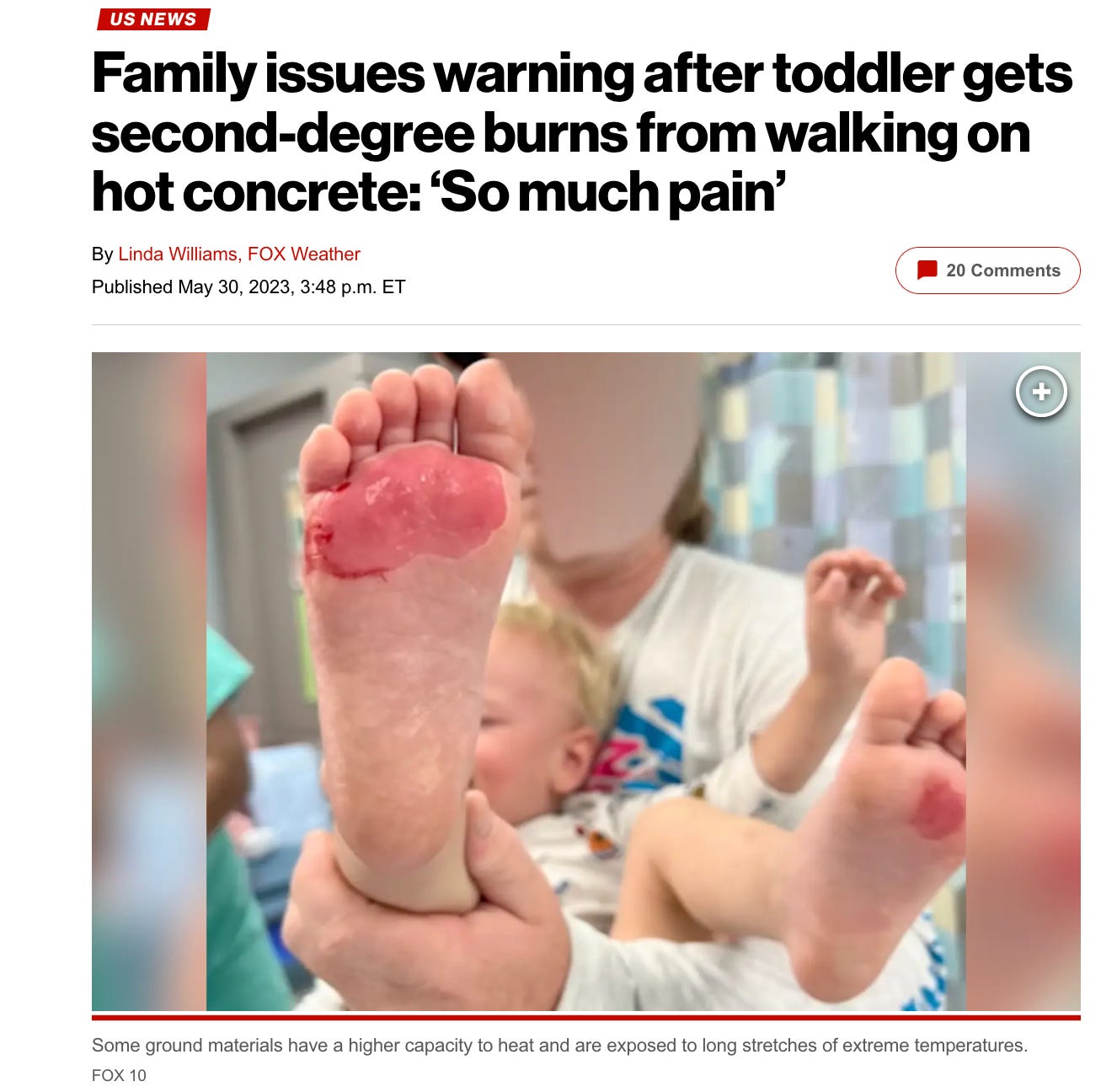
As King noted, the physics is basic: “[Asphalt] is absorbing solar energy throughout the day. It gets up to 170° or something, but that is stored energy that has to dissipate. It has to go somewhere. And so overnight, that continues to be released … I mean, that’s thermodynamics.”
Overnight heat release puts vulnerable people and pets at greater risk. A body handles a hot day by cooling off when temperatures dip at sunset. But when temperatures never drop far enough for recovery, the stress carries into the next day and compounds. Researchers who have separated nighttime from daytime exposure find that hot nights raise deaths on their own, independent of how hot the afternoon was. According to King, the average summer overnight low in Phoenix has risen from the low 80s in the early 1980s to more than 87° in 2024.
A cool night’s sleep is a luxury good. Some of us enjoy air conditioning, a roof, and a bed indoors. Unsheltered people sleep on asphalt, which radiates heat all night after collecting it all day under a relentless sun. A roof is no guarantee either: mobile and manufactured homes, which comprise about 5% of Maricopa County’s housing stock, accounted for one in four indoor heat deaths last year. Residents say it’s “almost impossible” to hold the inside of a mobile home more than 10° or 12° below the outside temperature. In 2023, county investigators found bodies in houses where broken air conditioning had let indoor temperatures reach 130°, according to this episode on heat stress from 99 Percent Invisible.
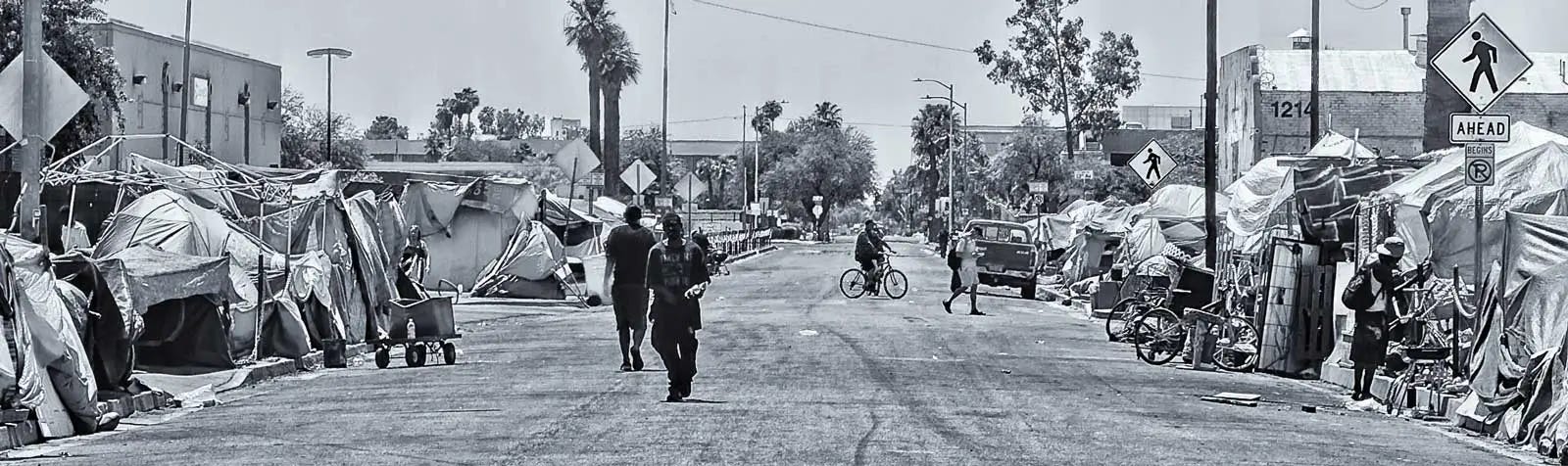
King points out the issue is exposure: not just how hot it is, but how long a body has to manage it. He argues that heat exposure belongs in planning codes alongside setbacks and parking ratios. “Being outside in July isn’t that bad if you’re only doing it for a few minutes,” he said. But crossing a major arterial road on foot can take much longer. “Because of the light cycles and everything else, you might be there five, six, seven, eight minutes. Then you get across the street, and you still have to walk through a parking lot, the surface of which [might be] 170°. A typical Target is about an acre in size. Its typical parking lot is [also] going to be about an acre in size, so that’s a nontrivial amount of walking that you have to do through the parking lot, which is not a pleasant place to walk to begin with.”
Phoenix is an extreme case, but the speakers said it is no longer special. “I want to emphasize at the start of this that [Phoenix] is not really the outlier, especially anymore,” Cristiano said. “So what’s true here in Phoenix is true in Houston, is true in Jacksonville, and is true of most of the Sunbelt now.”
Albuquerque, at 5,300 feet above sea level, is somewhat protected by its elevation—but not entirely. It’s already experiencing significant heat stress, and it will only get worse. It, too, has an autocentric environment similar to Phoenix’s. The city has a fraction of Phoenix’s population, but it is also warming faster than the models say it should.
Austin Anaya, an economist at a local electric utility, pulled nearly a century of weather data from the Albuquerque Sunport and found that the city is warming about a third of a degree per decade—faster than state and federal agencies project for the Southwest as a whole. Seven of its ten hottest years have come since 2000.
Just as with Phoenix, the heat is being released at night. Albuquerque’s average daytime high has risen only a degree or two since the 1930s, about what the regional forecasts predict. But its overnight low has risen six degrees. When Anaya regressed temperature against the share of city land that has been built on, the effect on nighttime lows came out three times the effect on daytime highs.
The intolerable heat is coming for us, too. And we are inviting it in.1
It is interesting to ask how many parking spaces exist in a city. It turns out that most cities have no idea, because the only way to find out is to count them. Phoenix is an exception, however, because King has done just that. The Phoenix metro area has a staggering 12.2 million parking spaces, or 4.3 for every registered vehicle, covering about 10% of urbanized land, according to the inventory King worked on.
“Every city that has not removed their parking requirements prescribes a specific number of parking spaces, but they don’t have any idea how many parking spaces are out there,” King said. “So it’s really blind policy after blind policy.”
Cities have overbuilt parking for half a century—a problem with so many terrible, compounding effects that city leaders increasingly find it hard to ignore, try as they might. But rather than replace the parking with better land use, they’ve mostly shuffled deck chairs on the Titanic.
“We require parking with our development, but often on individual parcels, we then require mitigation efforts to deal with the parking,” King said. “So we build a lot of parking, and then we require stormwater management because of the flood risk; or we build a lot of parking, and then we insist on landscaping to minimize heat effects or to maximize shade.”
This is asking more of trees than they can deliver.
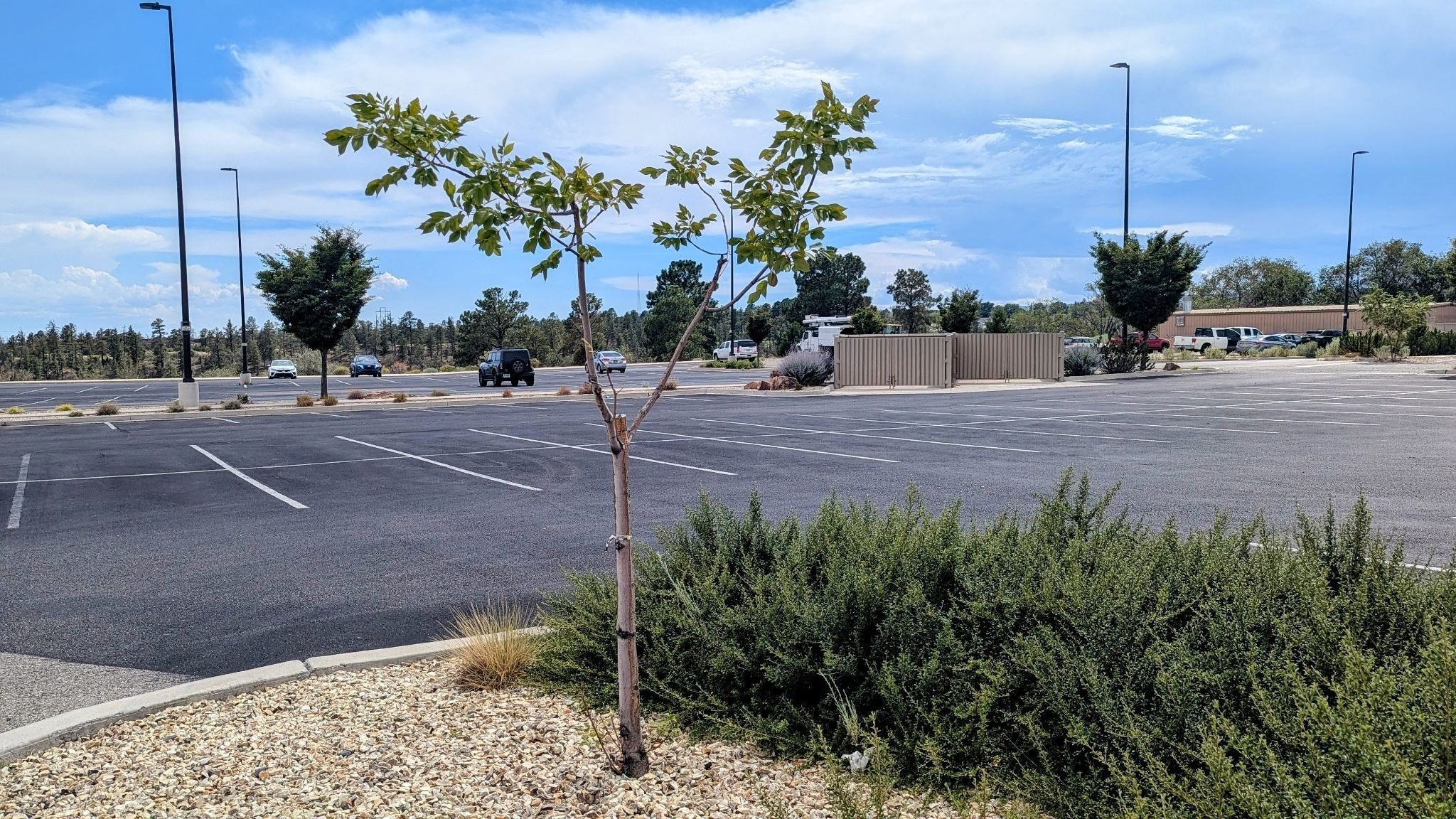
“Being a tree in the middle of a parking lot is a terrible life for that tree,” King said. “Like, that’s just not a happy tree. We should try and minimize that. And we really should get our development codes lined up so we’re not trying to mitigate everything on site.”
Another popular solution is to paint asphalt white. But reflective coatings have limits too. Phoenix has applied them to more than 140 of its more than 5,000 street miles, with unclear outcomes.
“Cool pavement doesn’t really work. It’s not really an effective strategy for reducing heat, in part because the pavement gets covered in dirt and grime and tire wear,” King said. “There are steps we can take, but there really aren’t going to be any half measures. …This idea that we’re just going to be able to paint our way out of the problem is not realistic.”
Yet another half-measure is solar canopies over parking lots. They do generate power and cast shade, but as Herriges noted, they can also lock in a surface lot for the depreciation life of the panels—15 years of the worst land use a city has.
King said for his part, he has nothing against the panels, only against stacking requirements.
“If you require parking and then, on top of that, require solar canopies, that adds a lot of required cost to any development, which I think is problematic,” he said.
Shade is provided randomly and often where it isn’t needed. Cristiano cited a bus stop at 19th Avenue and Northern in Phoenix. A gas station awning shaded it until 2020, when a Salad and Go drive-through replaced the station, and a nearby tree was removed. The drive-through lane is covered, he said. The menu board is shaded. The pickup window has an awning. But the bus stop 15 feet away, where human bodies are directly exposed, has no shade at all.
“What the drive-throughs prove in Phoenix [is that] these private businesses, they know how to build shade,” Cristiano said. “But they ultimately just allocate that shade to cars instead of people.”
Northern New Mexico has the advantage of being closer to outer space—Santa Fe and Los Alamos are both more than a mile above sea level—which buys us a few more years to get our act together. Phoenix and Albuquerque are strongly indicating the possible future if we don’t.
Los Alamos County’s 2021 Downtown Master Plan found that surface parking and roadways occupy more than 70% of available downtown space. Albuquerque’s downtown study counted more than 21,000 parking spaces that occupy about one-third of all downtown land. In response, Albuquerque has at least been sensible enough to remove its downtown parking mandates—a very good thing—but once the built environment is baked in, it’s mighty difficult to undo the damage. Tomorrow’s building is free of mandates, but that doesn’t solve the previous fifty years of them. (There is in fact a solution to this—the land-value tax—which is a topic for another day.2)
Phoenix got cheap housing out of its sprawl, at least for a while. Los Alamos never had that option, at least not after it spread as much as it could into its tiny footprint by the early 1980s. So it just closed up shop instead, using its zoning to put out a “you’re not welcome” sign for commuters making their way to work on the hill every day. It has the parking of a Sunbelt exurb and housing costs that keep out the very workers its largest employer is trying to hire. In the 2024 National Community Survey, 80% of residents rated the ease of public parking as excellent or good, which is what happens when you turn your entire town into a parking lot. But only 7% of survey takers said they were satisfied with the availability of affordable housing.
Phoenix’s magic formula for success no longer works. Commuters are at the outer limit of their tolerance, and desert asphalt is making the cities of the plain uninhabitable. If our cities can no longer stretch out, they must build up and in—preferably by building tall and dense enough in sunny cities to cast shade on the streets and the people who use them. If only we could find the land in our cities to build up! Oh, wait…
“I’m only partially joking when I argue that surface parking is America’s greatest natural resource,” King said. “These are places of opportunity that we need to come up with solutions for, and we need to replace the parking with things that people value in cities. Nobody’s coming to Phoenix to park.”
As a Georgist and a cool-climate enthusiast, I am contractually obliged to say the fix for parking lots is really LVT, which perhaps we should rename “the parking lot tax.” For more:
and
No posts
Comments
Nothing yet. Say the first thing.
Sign in to join the conversation.