
In hosting The Giving Habit podcast, a new show dedicated to the grit, hope and creativity of social impact, I hope to grow the giving pie. I am not just talking about donations, welcome as they are for many deserving causes; giving is not only financial. Giving might involve mentoring, volunteering, social entrepreneurship, community leadership, advocacy, hospitality, or even simple yet practical acts of care.
Giving our expertise is more relational, more practical, and often more transformative. Our judgement, our lived experience, our time is incredibly valuable when placed into the service of social impact organisations trying to make a difference.
And of course, the transformation often runs both ways, for it is in giving that we receive. Giving our time and skills often proves to be a pathway toward finding meaning and purpose, especially for those of us navigating midlife.
Encapsulating and enabling these truths is TalentTrust, a charitable entity in Singapore. Led by CEO Lisa Gainer, TalentTrust strengthens charities and non-profits through structured skills-based volunteering, matching experienced business professionals with organisations that need specialist expertise in areas like strategy, finance, marketing, digital transformation and governance.
I have volunteered my time through TalentTrust in the past, and have partnered with them and The Majurity Trust to deliver strategy masterclasses for ground up initiatives in the social impact space. I have learned a great deal in doing so, about the social sector, as well myself. I have subsequently introduced several friends, including a colleague from the Distinguished Senior Fellowship Programme at the National University of Singapore.
At first glance, the TalentTrust model, skills-based volunteering, sounds deceptively simple, yet beneath it sits a profound shift in how we think about giving. What TalentTrust offers is not charity as transaction, but contribution as capability-building. And perhaps even more importantly, contribution as mutual transformation.
Lisa’s own path into this work reflects that same philosophy. Long before leading TalentTrust, she had already absorbed the instinct to help from her family environment growing up in Canada. Her father worked in what Australians might call pastoral care, mentoring and supporting students through life and career decisions. Lisa watched him regularly bring international students into their home, investing time and emotional energy into helping them find their footing. “I saw that helping behaviour a lot growing up,” she reflected during our conversation.
That early exposure shaped her trajectory toward social work and nonprofit management, eventually leading her through the impact sector in Toronto, then Australia (where she developed a healthy appreciation for cricket), and finally Singapore.
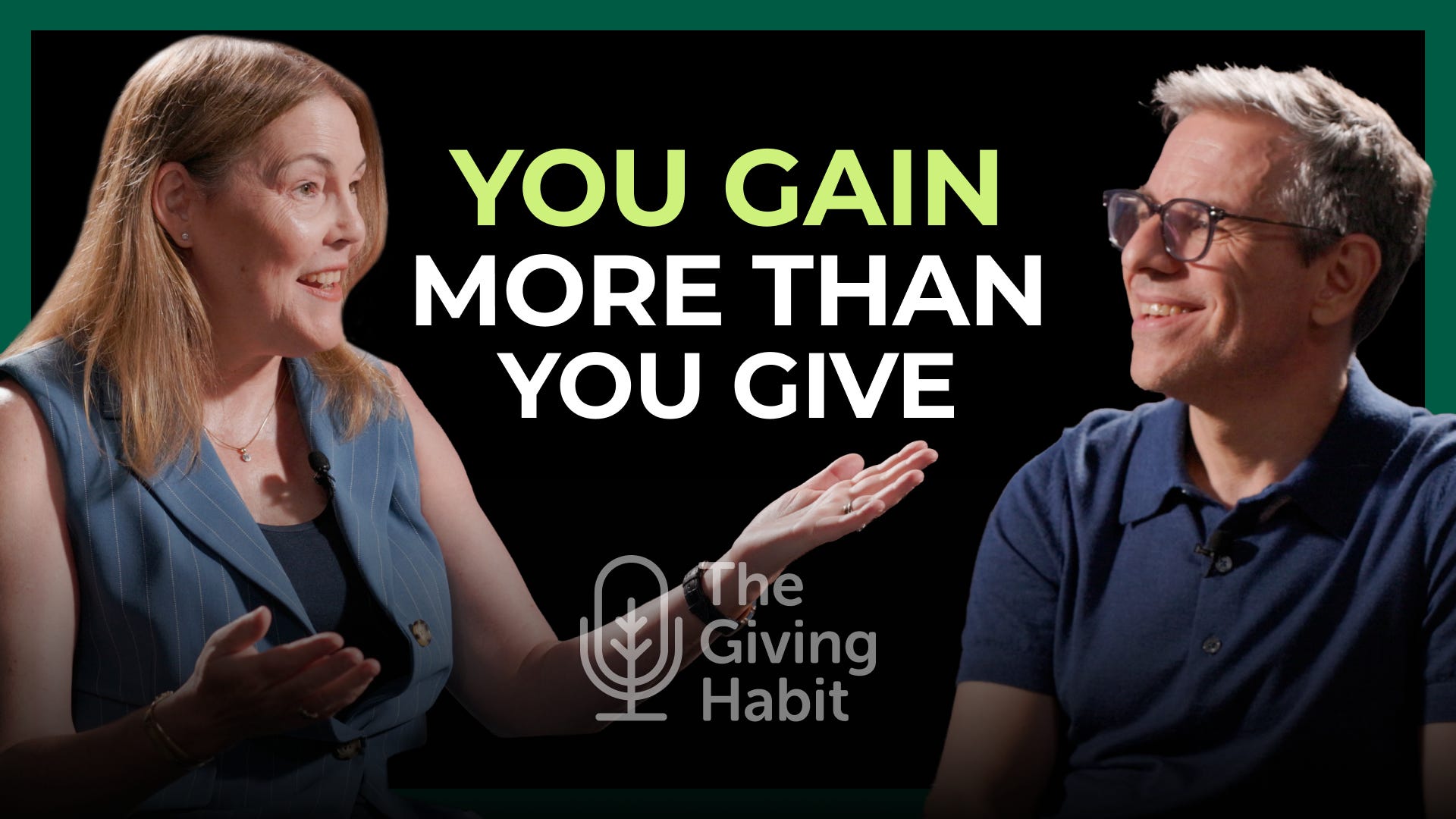
It strikes me, when I am talking with Lisa, how naturally she bridges two worlds that are often treated separately: the corporate sector and the social impact sector. Most people still imagine volunteering primarily as hands-on service. Packing food hampers, or painting walls, maybe a beach clean-up. All important and valuable work, of course, but TalentTrust focuses on something different. What happens when an experienced finance leader helps a charity redesign its operating model? What happens when a senior strategist helps align a board around growth priorities? What happens when a marketing executive helps a grassroots organisation finally communicate its mission clearly enough to attract funding?
Those questions matter because one of the greatest constraints facing many charities is not passion. It is capability. Many nonprofits are led by extraordinary people deeply committed to service delivery: social workers, psychologists, counsellors, educators and case managers focused relentlessly on helping vulnerable communities. But often they lack access to the specialist functional expertise that businesses take for granted. Dedicated finance teams. Digital specialists. Data analysts. Strategic planning expertise. Fundraising systems. Operational infrastructure.
TalentTrust steps into that space. A charity identifies a key organisational challenge. TalentTrust then curates a small team of volunteers alongside a project manager who works with the organisation over six to nine months to co-create practical solutions.
The phrase co-create matters here. Lisa speaks openly about one of the biggest misconceptions corporate volunteers sometimes bring into the nonprofit space: the assumption that business solutions can simply be transplanted directly into charities.
The reality is more complicated. A corporate marketing leader may arrive expecting sophisticated systems, budgets and specialist staff. Instead, they discover an executive director trying to manage everything personally with perhaps a $1,000 annual marketing budget. That moment of realisation can be confronting, and humbling.
Volunteers slowly start to understand that nonprofits operate under radically different constraints. Many arrive accustomed to hierarchical corporate environments where resources, authority and execution pathways are relatively clear. Then suddenly they are sitting around a table with overstretched charity leaders trying to solve deeply human problems with extremely limited means.
This is a process that requires adaptation, patience, a willingness to listen, humility, and perhaps most importantly, it requires unlearning. It also requires an understanding that traditional, corporate command-and-control approaches often struggle in social impact work because the underlying conditions are very different. Command-and-control works best when the challenge is complicated but predictable. Social impact work is often complex and adaptive.
In complex systems, leadership shifts from telling people what to do toward creating shared purpose, building trust, enabling local decision-making, fostering learning, and coordinating diverse actors. The teams deployed through TalentTrust serve as useful outsiders, precipitating change in a way that must and can only be led and owned by the charity itself.
As such, skills-based volunteering is not simply about transferring expertise into the nonprofit sector. It is equally about reshaping the volunteers themselves. Lisa has countless stories of experienced executives emerging from projects changed by the experience.
To take just one example. An Australian managing director, volunteering on a project with a youth organisation in Singapore, initially entered the engagement thinking primarily about strategic planning. But after repeatedly visiting the centre, meeting disadvantaged children and understanding the realities many families faced beneath Singapore’s polished exterior, something shifted in him. He began reflecting differently on his own leadership, his mentoring, his use of time, his role in the community. He started volunteering more broadly. He became more intentional in how he coached younger staff within his company.
That is the hidden power of proximity. Many social problems remain abstract until we encounter them relationally. Singapore, like many global cities, presents a polished external image. Glass towers. Financial districts. Formula One. Luxury retail. But within every society, even successful ones, are unmet needs, communities that still struggle.
Skills-based volunteering creates bridges between worlds that otherwise rarely interact meaningfully. And that deeper context, that bridge-building, feels increasingly important.
For decades we have witnessed a systemic underinvestment in nonprofit capability itself. Many funders are happy to fund programmes, but reluctant to fund the operational infrastructure necessary to sustain them properly.
Yet every organisation, whether commercial or charitable, requires strong operational foundations. Think finance, data systems, leadership development, staff wellbeing, digital infrastructure, career pathways, impact evaluation.
Without those things, burnout becomes inevitable. Indeed, burnout is one of the great hidden risks inside the social impact sector. The irony is painful: organisations dedicated to caring for vulnerable people often lack the resources to properly care for their own staff.
How easy it is for employee development and organisational capability-building to be overlooked because service delivery always, and quite naturally, feels more urgent. The beneficiary is always front and centre, as it should be I suppose. But sustainable impact requires sustainable organisations. That insight feels especially relevant as societies age and workforce dynamics shift globally.
One of the fascinating trends Lisa has identified is the growing number of highly experienced professionals entering transitional phases of life: redundancy, semi-retirement, portfolio careers or intentional career breaks. Rather than disengaging, many are actively searching for meaning beyond the corporate treadmill, purpose beyond the pay check.
Perhaps this is one of the most hopeful developments emerging right now. There is a vast reservoir of untapped experience sitting inside ageing societies. People who have spent decades building expertise, leading teams, solving problems and navigating complexity. These skills do not disappear as soon as one steps away from corporate life.
Increasingly, many no longer want simply to retire quietly. They want to contribute, to mentor, to stay engaged, to apply those hard-earned skills in service of something more important, and to remain useful. TalentTrust is creating pathways for that contribution, not only through structured volunteering projects, but also through mentoring circles, learning communities and bite-sized advisory engagements that allow professionals to contribute in ways that are practical and sustainable.
TalentTrust usefully bases itself at the Foundry in Singapore, a co-working hub for collective impact, home to dozens of charities. That decision places TalentTrust at the heart of early stage social impact organisations who are also based there, easing the process of knowledge transfer, enablement and collaboration. The Foundry is sited at 11 Prinsep Link, the former Elections Department building. Its transformation as a social hub is testament to the power of partnership, involving the Singapore Land Authority, the Singapore Government Partnerships Office, Tote Board and The Majurity Trust which runs and operates the Foundry. This feels like the perfect home for TalentTrust.
Similar models exist elsewhere, including Gate8 in Melbourne, Impact Hub King’s Cross in London and New York Civic Hall. They all rest on the principle that overhead costs be shared and that, ultimately, we are stronger when we work together.
TalentTrust refuses to romanticise either the corporate sector or the nonprofit sector. As CEO, Lisa sees clearly the strengths and weaknesses of both. Corporates often bring structure, expertise and strategic discipline, while nonprofits often bring purpose, empathy and deep human connection. The magic happens when those worlds learn from each other rather than judge each other.
That mutual learning sits at the heart of TalentTrust’s philosophy, and perhaps at the heart of meaningful giving itself. It sits with me now, as I reflect on the reasons why I started The Giving Habit podcast miniseries.
I want to help grow the giving pie. I want to spotlight the many different ways we can give meaningfully. I want to reclaim the sense of agency, that we as citizens can shape society, and show that anyone, anywhere, can spark change. Many of us feel the pull but don’t know how to get started. TalentTrust offers a way forward, the first step toward a more purposeful and fulfilling second act.
Most people do not wake up indifferent to suffering. More often, they lack pathways, confidence, invitation, or connection. What organisations like TalentTrust do so effectively is lower the barrier between intention and action. They help people realise that their professional skills are not separate from their capacity to contribute socially. In fact, those skills may be precisely what is needed.
A finance professional helping a charity improve governance. A strategist helping a youth organisation scale sustainably. A relationship manager teaching donor stewardship. A mentor helping a young nonprofit leader navigate uncertainty. This too is generosity.
Giving evolves across a lifetime. In youth, perhaps we give energy. Later, we give experience. Eventually, (hopefully?) we give wisdom. But at every stage, we remain capable of contribution. Not because we have perfected ourselves, but because we are willing to participate. We are willing to bring whatever we have — skills, time, insight, empathy, experience — and place it in service of something larger than ourselves, and in so doing find something more profound. Meaning. Connection. Community.
To find out more about TalentTrust, click here. Equivalent organisations exist in other countries and are well worth checking out, for example: https://www.pilotlight.org.uk.
To learn more about the Distinguished Senior Fellowship Programme, click here.
To learn more about the Foundry, click here.
To watch the full interview with Lisa Gainer, click here.
No posts
Comments
Nothing yet. Say the first thing.
Sign in to join the conversation.