
Walk into almost any conversation about philanthropy and the discussion often turns to money. How much was raised? Which donor gave the largest gift? How can we unlock more capital?
These are important questions. But they are not the most important question. A better question might be: What actually creates lasting change?
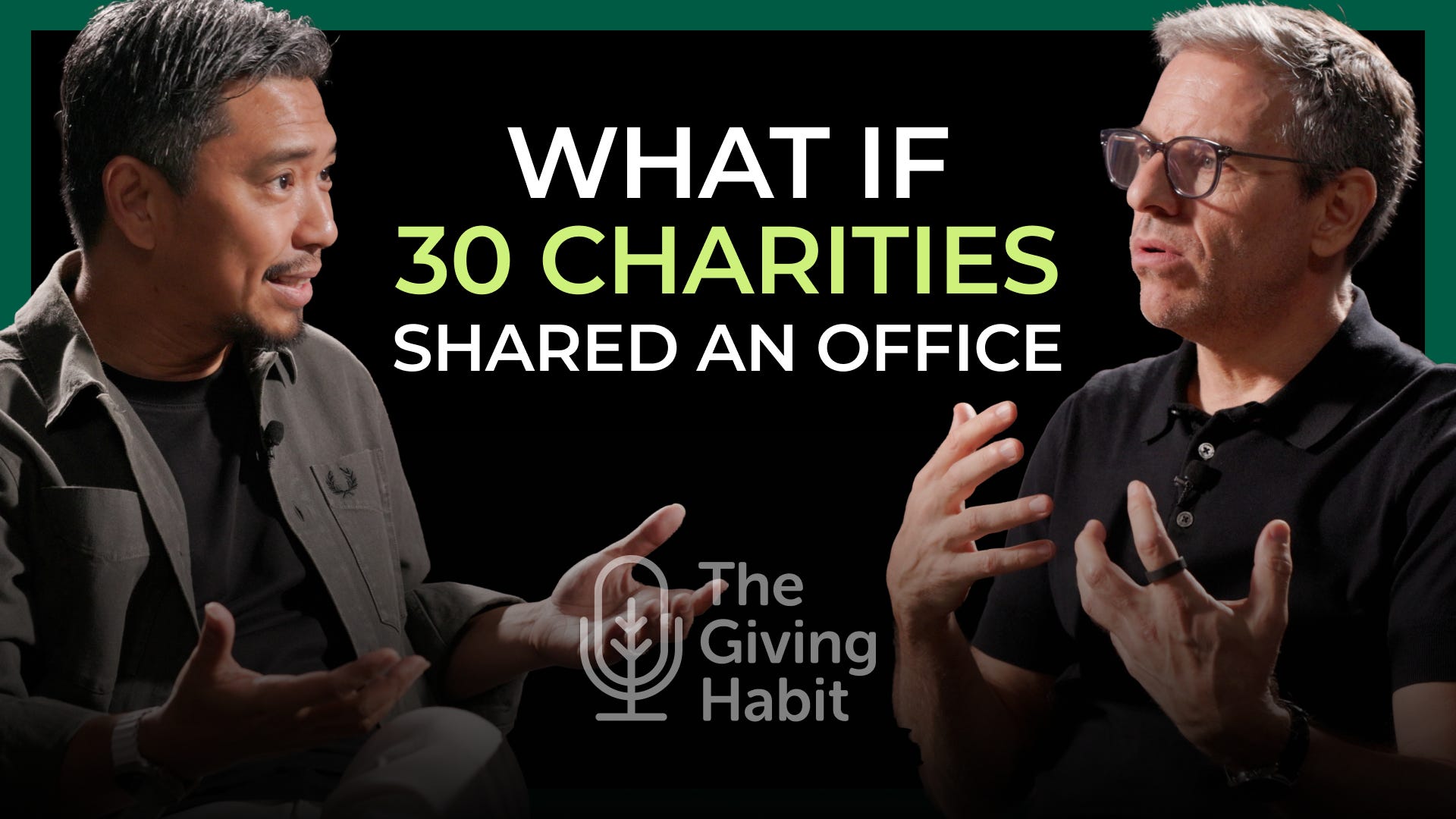
My recent conversation on The Giving Habit with Martin Tan, CEO of The Majurity Trust, challenged many of the assumptions we make about philanthropy. His insights suggested that perhaps we’ve been thinking about giving too narrowly. Money matters, of course. But money is only one lever. Relationships, trust, place, community and shared ownership often matter just as much. Perhaps the future of philanthropy will not be defined by wealth alone, but by our ability to bring people together.
Modern society celebrates the sovereign individual. We admire the entrepreneur. The visionary founder. The philanthropist whose name appears on the side of a building.
Martin argues for something different. The Majurity Trust was built on a simple idea: that people working together can solve problems that none of them could solve alone. Rather than one family office funding one project, what happens if ten donors pool their resources? What happens when charities collaborate instead of competing? What happens when government, business, volunteers and communities all sit around the same table?
The scale of possibility changes.
Collective giving isn’t simply about creating a larger pool of money. It changes the nature of the conversation itself. Instead of asking, “What project would I like to support?”, we begin asking, “What challenge could we solve together?” A recognition system that graduates from “did you give” to “did you bring someone else along” is asking the more interesting question. That subtle shift moves philanthropy from individuals and transactions towards systems and communities, and underpins the convening power of The Majurity Trust.
One word appears repeatedly throughout Martin’s thinking: thrive. Not succeed, thrive. The Majurity Trust manifesto aspires to a Singapore where everyone, regardless of age or status in life, thrives. This is an important distinction. Success is often measured by external markers: income, status, qualifications or possessions. Thriving is far more personal.
Some of the wealthiest people in the world are not thriving. Equally, some people with very modest means live rich, purposeful and deeply connected lives. That matters because philanthropy has historically been guilty of assuming it knows what success should look like for other people. Too often, solutions are designed far away from the communities expected to live with them.
The better approach begins with a different question, one “What does a good life look like for us?” Rather than imposing solutions, the question invites communities to define their own aspirations. Rather than treating people as recipients, it recognises them as partners. Rather than measuring outputs alone, it starts with dignity.
Yet letting communities lead is easy to say in a mission statement and much harder to build into an actual funding process. There is discomfort in relinquishing control to the point where a programme is supported by us, not run by us, or started by us. Are we prepared to listen, then precipitate, serving as useful alongsiders? For this is where agency and true partnership is formed.
One example from our conversation has stayed with me. Many food programmes distribute standard food parcels to low-income families. The intention is generous. But generosity without choice can still diminish dignity.
What if someone is diabetic? What if they have young children? What if they simply don’t eat the food they’ve been given? Instead of deciding for people, The Majurity Trust funds programmes that support ways to give families choice, allowing them to shop with greater autonomy. It sounds like a small operational change. It is actually a philosophical one.
Poverty should not mean surrendering agency. The best forms of philanthropy doesn’t simply meet immediate needs. It protects dignity while doing so.
One of the most encouraging developments in social impact is the growing emphasis on place-based and community-based giving. The traditional model often starts by asking what a community lacks. The newer approach begins by asking what already exists.
Who are the natural leaders? Which organisations already have trust? What relationships can be strengthened? What skills, experience, networks and local knowledge already live within that neighbourhood?
Money is important, but it is rarely the only asset available. Communities possess social capital, cultural knowledge, lived experience and informal leadership that outsiders frequently overlook. The role of philanthropy is not always to build something new. Sometimes it is to help communities discover the strengths they already possess.
Perhaps the most powerful idea Martin shared is that philanthropy should think less like a grant-maker and more like a gardener. If you only fund programmes, you often miss ethe things that allows those programmes to succeed. Leadership. Technology. Communications. Governance. Training. Mentoring. Relationships. Organisational capability. These are rarely glamorous budget lines, but they determine whether good ideas survive.
The Majurity Trust has deliberately invested in the wider ecosystem surrounding charities. It supports leadership development, capacity building, shared learning, donor engagement and collaborative networks, because stronger organisations create stronger communities. It promotes progressive thinking around social impact, including sponsorship of The Giving Habit podcast. In business, we instinctively understand that successful companies require finance, marketing, people, systems and operations. Social impact deserves the same level of thinking.
One of the most fascinating examples of this philosophy is Foundry in Singapore. At first glance, Foundry is simply a co-working space for charities. In reality, it is something much more interesting. It is a physical home for collective impact.
Around thirty charities now share the same building. They also share meeting rooms, event spaces, training facilities, and breakout areas. Countless conversations and informal interactions occur daily that no strategic plan could ever manufacture.
When organisations stop seeing each other as competitors and start seeing each other as neighbours, ideas spread. Problems are solved faster. Friendships form. People discover they are no longer carrying difficult work alone. Community itself becomes infrastructure.
Foundry also reminds us that collaboration is rarely created through organisational charts. It grows through proximity.
It is easy to dismiss philanthropy as the preserve of the wealthy and idle rich. Yet financial giving is only one form of contribution. You may have expertise. You may have networks. You may have mentoring experience. You may have professional skills that a charity could never afford. You may simply have time.
One of the recurring themes throughout The Giving Habit has been that contribution takes many forms. Sometimes intentionally introducing two people creates more impact than writing a cheque. Sometimes volunteering your expertise transforms an organisation’s effectiveness. Sometimes simply showing up consistently is the greatest gift.
The giving habit is not fundamentally about wealth. It is about participation. This idea sits at the heart of The Majurity Trust. It welcomes, and encourages, contribution in all its forms.
This is perhaps the question each of us should consider. Not whether we will solve society’s biggest problems. None of us will individually. But what part might we play? Could we become a mentor? Could we partner with a local community organisation? Could we join a giving circle? Could we family pool resources with friends rather than giving individually? Could we volunteer our professional skills for a few hours each month? Could we help connect people who should know each other?
Or perhaps the first step is simply to spend time in places where social impact is already happening. If you’re in Singapore, please visit Foundry. Attend an event. Meet the people building stronger communities every day. Heartfelt conversations have a way of changing assumptions and perspectives.
Once you spend time alongside people doing this work, philanthropy starts looking very different. It becomes less about charity and more about citizenship. Less about rescuing and more about precipitating. Less about donors and recipients and more about neighbours.
The future of giving will certainly require financial capital. But it will also require something even more valuable. Communities willing to believe that together they can accomplish far more than they ever could alone. That may be the most powerful form of generosity of all.
To learn more about Foundry, visit:
https://foundry.sg
To learn more about The Majurity Trust, visit:
https://www.majurity.sg
The full interview with Martin is available at https://www.youtube.com/@thegivinghabit or wherever you get your podcasting kicks.
No posts
Comments
Nothing yet. Say the first thing.
Sign in to join the conversation.