
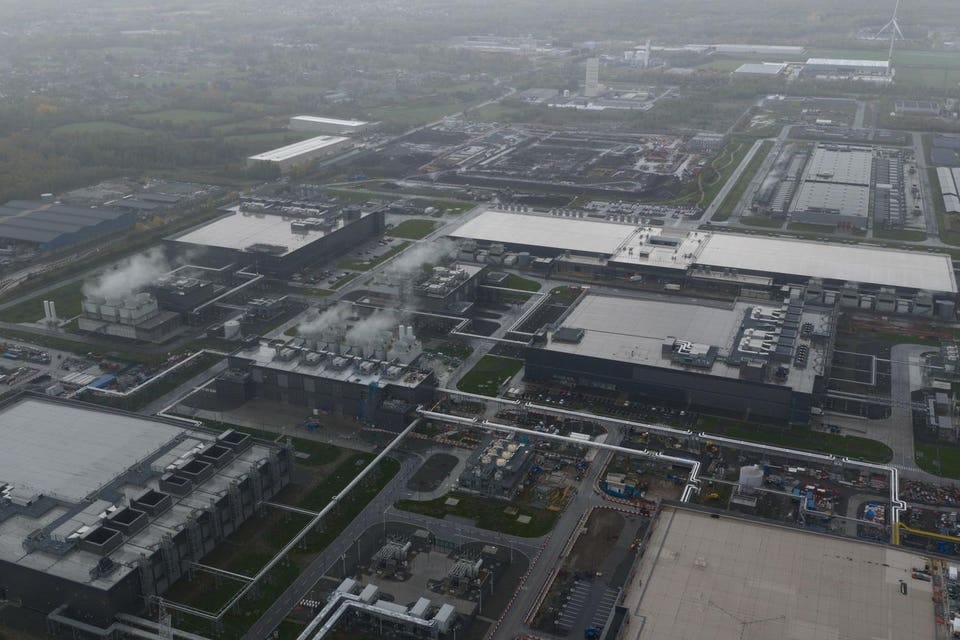
The scale of AI infrastructure investment is staggering: in 2026 alone, cloud hyperscalers — Meta, Alphabet, Microsoft, and Amazon — are pouring more than $700 billion into data centers to power the construction and compute capacity of global systems. That figure represents a 600% increase from just a few years ago, when ChatGPT first entered the public consciousness.
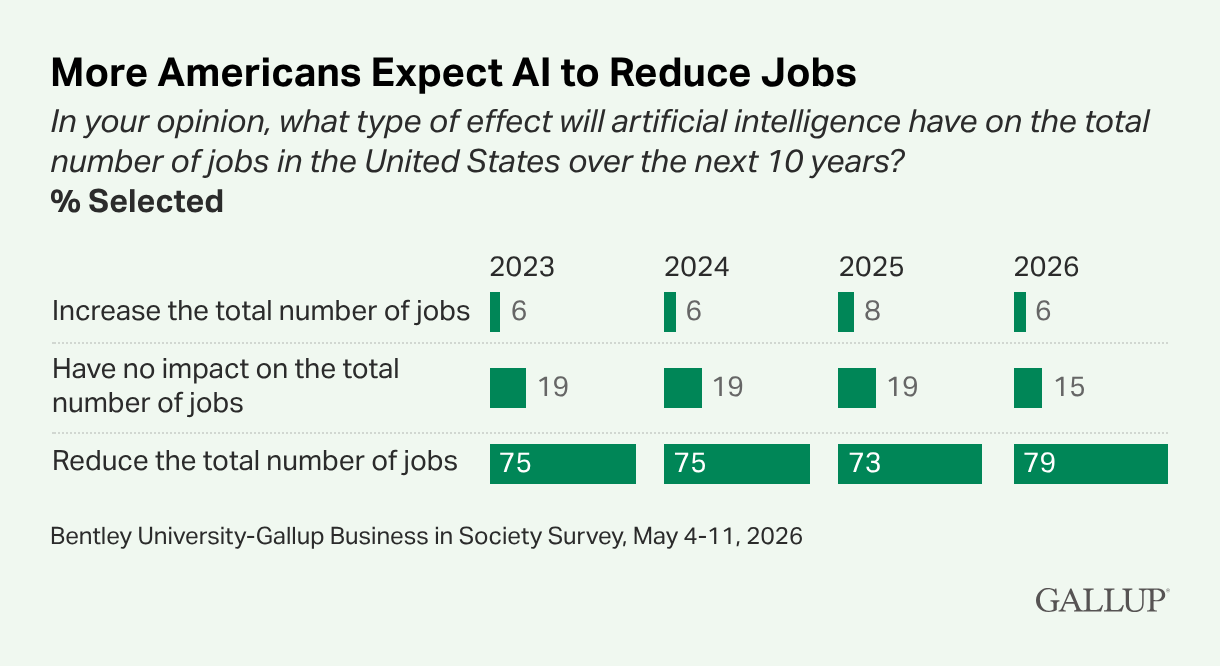
However, public sentiment is shifting. A recent Pew Survey reveals a significant spike in concern following the emergence of advanced LLMs, and a recent Gallup survey found that nearly 80% of Americans fear AI will eliminate jobs.
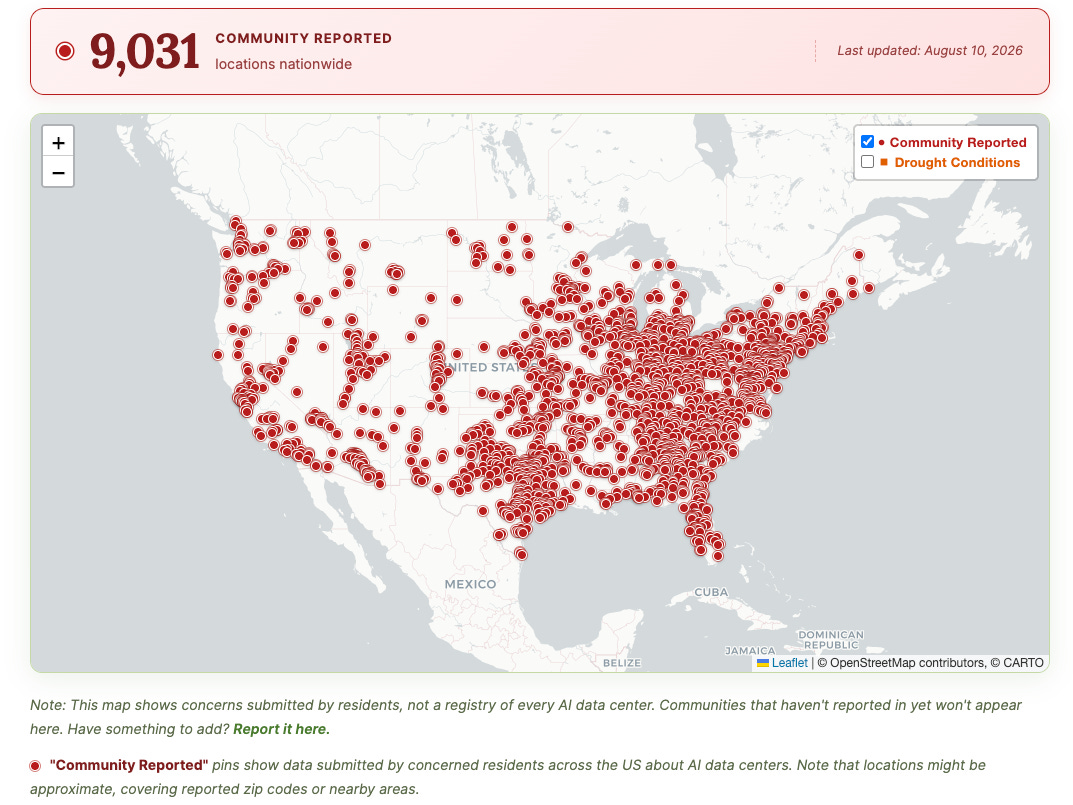
Beyond the existential, there is a tangible backlash against the physical footprint of the AI revolution. Data centers don’t rise quietly; they can reshape landscapes, strain local grids, and disrupt communities. While acute, this local unrest is merely a symptom of a larger, systemic problem: the “trust deficit.”
While $700 billion is being poured into silicon and concrete in a single year, the public investment in human readiness is a rounding error by comparison. Current initiatives total roughly $924 million, but nearly all of it is pledged over three or more years rather than committed annually. Annualized, that works out to something closer to $150 million to $300 million a year. That isn’t just a gap; it’s a chasm.
Current initiatives are a necessary start, but they are seeds that will need to grow rapidly to meet this collective challenge:
AI Ready America: The National Science Foundation’s initiative commits $224 million over three years to establish a national coordinating hub and regional hubs across every state and territory. Award notifications are expected this fall.
The Economic Futures Fund: A partnership between the Gates Foundation and Anthropic, this $200 million commitment targets research and programs to prepare workers and institutions for AI’s economic impacts, building on Anthropic’s Economic Policy Framework.
RAISE US: Launched by former Commerce Secretary and Rhode Island Governor Gina Raimondo and former Governor Eric Holcomb, this private-sector mobilization has secured over $500 million toward a $1 billion goal. With corporate backers like Amazon, IBM, Microsoft, and Bank of America, they have already initiated state partnerships in Arkansas, Connecticut, Maryland, and Utah.
Building $700 billion worth of data centers is a known playbook; it is purely capital and engineering. Changing human behavior and building the skills, trust, and habits necessary for society to effectively utilize AI is exponentially harder.
That difficulty is already visible. The trust deficit described above is creating an unlikely, powerful coalition of critics that cuts across the usual ideological and sectoral lines. It includes familiar names like Erin Brockovich and new faces like Elena Schlossberg, whose grassroots advocacy stopped Amazon from installing a data center in Prince William County. It includes politicians of all stripes, from Alexandria Ocasio-Cortez to Marjorie Taylor Greene, voicing similar concerns from opposite ends of the political spectrum.
When figures this disparate converge on the same target, it indicates that this is no longer a niche concern; it is a systemic risk. And it is exactly the risk that investment in human infrastructure is meant to address: not by building more data centers faster, but by building the public trust and readiness that make those data centers worth building in the first place.
To ensure these “big bets” on AI pay off, we must move beyond the current pilot phase.
Increase Funding to Scale: Current public-private partnerships are effective models, but they require funding that approaches a scale commensurate with the physical buildout.
Earn Trust Through Transparency: Infrastructure alone will not earn public buy-in. It must be earned through community involvement and tangible proof that AI creates value for citizens, not just the corporations building the systems.
Prioritize Moral Ambition: Technovation CEO Tara Chklovski puts it plainly: “If we truly want to tackle the world’s biggest problems…we must focus on moral ambition, leveraging education to inspire and orient young people, and upskilling the current workforce.”
That kind of moral ambition does not stay abstract; it has to be built into concrete, local partnerships between the institutions preparing the next generation of workers and the organizations that will employ them. Our network at STEMCONNECTOR includes some of the world’s most innovative corporations, postsecondary institutions, and leading STEM-focused nonprofits. We are collectively mobilizing local efforts to build human infrastructure through innovative collaborations, such as maker learning programs where students solve real-world problems using technology.
If you represent an organization or institution ready to build this infrastructure, join us in mobilizing these local efforts.
No posts
Comments
Nothing yet. Say the first thing.
Sign in to join the conversation.