
“More than a fragrance – a dialogue between memory and desire.”
“Not simply a t-shirt. but a meditation on form.”
“This isn’t skincare. This is a ritual of becoming.”
You know the voice.
Sometimes the lines are written by people. Sometimes they are generated by a model in four seconds. Increasingly, it is hard to tell. The formula is always the same: take a commercial product; attach a philosophical claim; hope nobody asks what you actually mean.
This is the dominant language of modern branding.
Not only, but also. Not just, but really.
It’s a strange sentence structure if you think about it. It works by diminishing the first half – the actual product – to elevate the second half – the borrowed meaning. There is a small cruelty in that construction. Not only a candle. As if a candle has failed by being a candle and needed rescuing by language.
And for a while, it worked.
Ten years ago, when fewer brands spoke this way, adding a layer of ethics or aesthetics felt like a genuine upgrade. Ethical. Aesthetic. Sustainable. Purpose-driven. These words carried weight because relatively few brands used them. But language works like currency. Print too much and it devalues.
Why does this happen?
Because it’s easy to add meaning.
When something can’t differentiate through what it is – through quality, form, function, the experience of using it – rhetoric fills the gap. The product that should speak for itself starts speaking in borrowed tongues. Mindfulness. Heritage. Ritual. Words taken from real human experiences and repurposed as adjectives.
Most brands start with a real product insight. But somewhere between the third deck and the fourth agency brief, the question shifts. It’s no longer what does this product do well? It’s what else can we make it mean?
Then generative AI arrived and turned this into an industrial process.
When most marketing teams use the same tools, trained on the same data, with similar prompts, you get what you’d expect: everything starts sounding not just similar but identical. The same “elevated” register. The same “intentional” vocabulary. The same warm, vaguely spiritual nothingness. A moisturiser and a monastery, described in the same tone of voice.
The instinct to find meaning in objects isn’t the problem.
It’s human. It’s ancient. It predates branding by thousands of years.
In Polynesian gift cultures, objects carried something of the maker’s spirit. In Japanese craft, broken pottery is repaired with gold (kintsugi), so the cracks become the most beautiful part. The meaning wasn’t applied from outside. It came from the object’s actual material, its real history, its honest relationship to damage and time.
The anthropologist Daniel Miller spent decades studying how things shape our lives. His sharpest observation: objects are most powerful when we don’t notice them. A well-designed chair changes how a room feels without announcing itself. A good knife just cuts. The less an object demands attention for its meaning, the more powerfully it shapes experience.
He called this “the humility of things.”
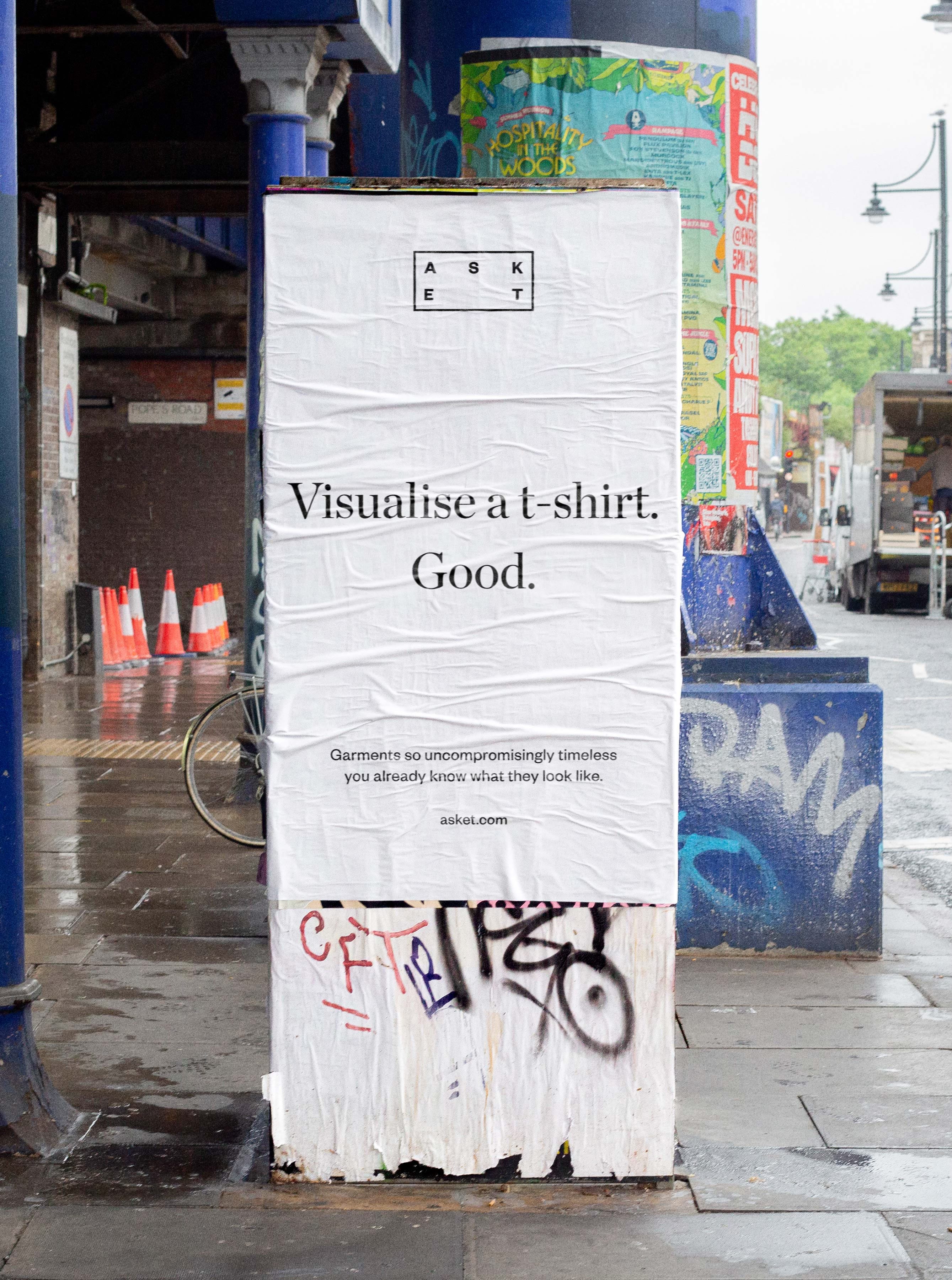
In May 2024, the Swedish brand Asket did something odd.
They removed every product image from their website. For three days, where photos used to be, you saw only text: “A t-shirt so uncompromisingly timeless you already know what it looks like.”
No lifestyle photography. No visual proof of taste.
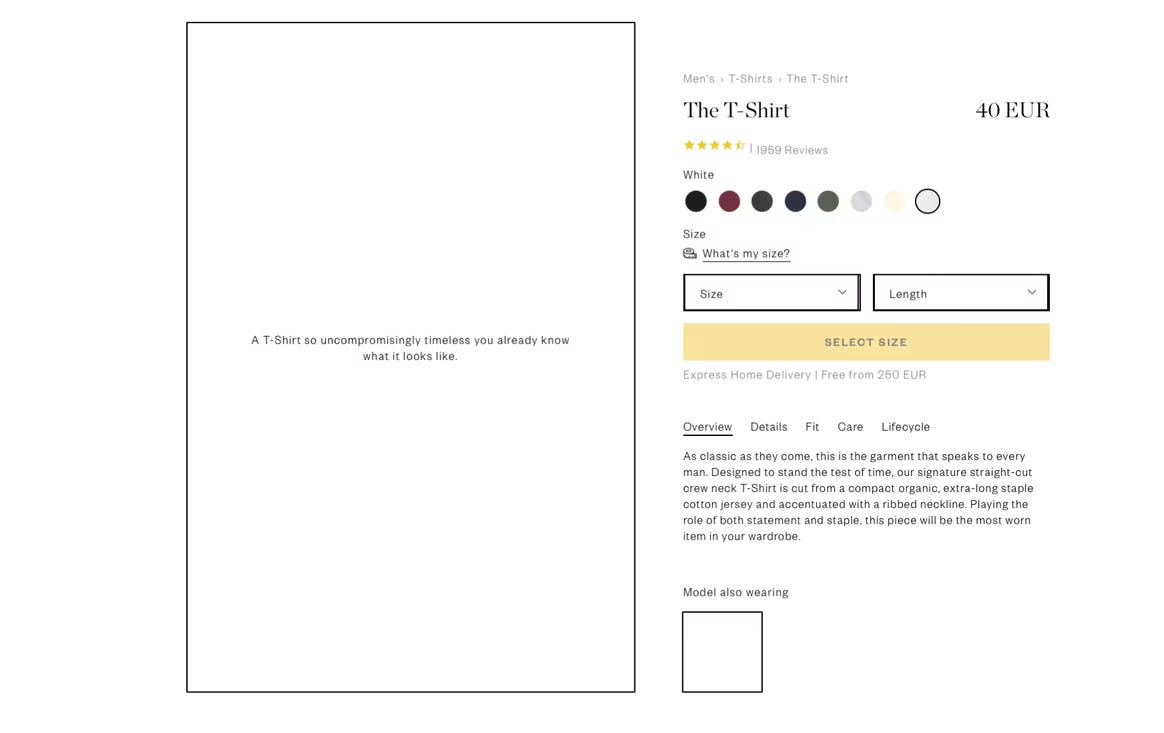
Just: t-shirt. You know what it is.
410 people bought 1,013 garments without seeing them. Nearly half were new customers.
When a product is genuinely good, when it’s been refined for ten years, made from traceable materials, offered in fifteen sizes – the image is almost beside the point.
So, this isn’t an argument against meaning.
It’s an argument about where meaning lives.
For the past decade, brands have looked outward for it, piling words on top of products like insulation, as if the thing underneath might be cold. When perhaps it should have been looking inward, toward the object itself – trusting that the product, honestly made and honestly described, already contains what matters.
What does this product actually do?
What is it actually made of?
How does it honestly feel in someone’s hands, in someone’s life?
Not “not only… but also.”
Just: this is what it is. And it’s good.
“Finding that essence – the real thing at the centre – is some of the hardest strategic work there is. It's also the most valuable.”
Spring Studios
No posts
Comments
Nothing yet. Say the first thing.
Sign in to join the conversation.