
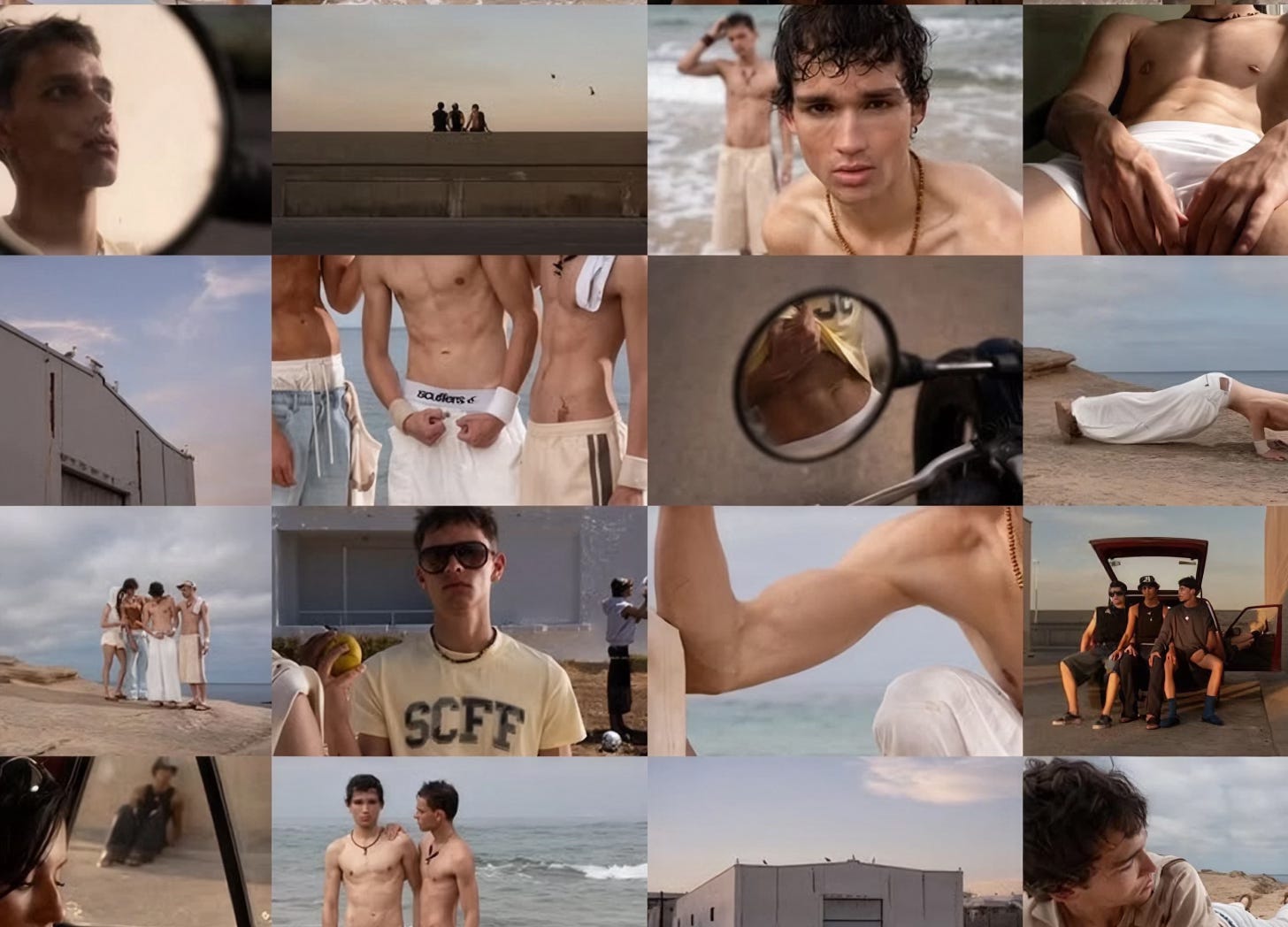
World-building entered English with two exclamation marks and a raised eyebrow.
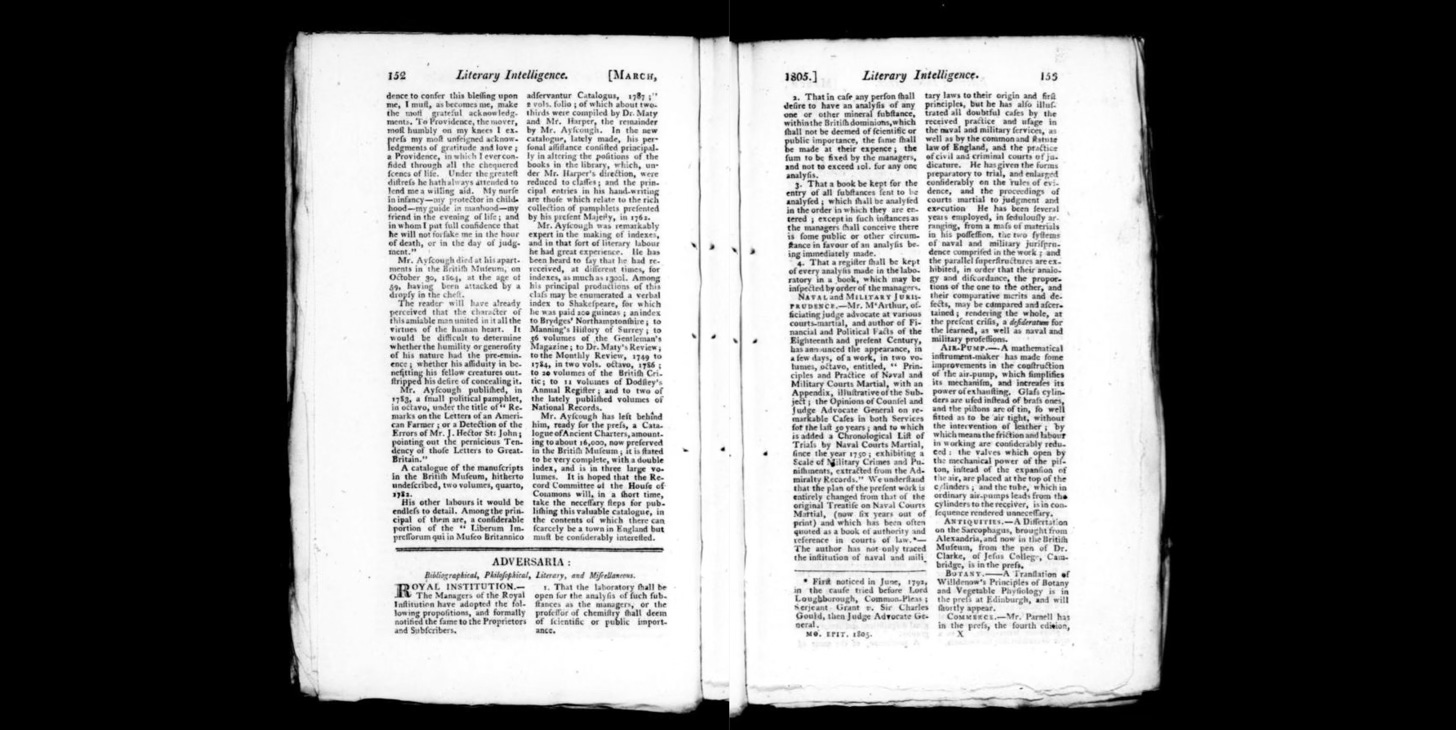
In August 1805, The Literary Magazine announced a forthcoming natural-history book with the line: “Another touch at world building!!” The phrase referred to theories about the formation of the Earth. It was a gentle joke about the ambition involved in explaining how an entire reality holds together.
By the early twentieth century, the term had moved beyond geology and astronomy into imaginative territory. In Space, Time and Gravitation, published in 1920, astronomer Arthur Eddington used “fantastic world-building” while discussing H. G. Wells: an invented reality with altered physical conditions, used to think through questions of time and perception.
Then Tolkien gave the practice its most useful test. In On Fairy-Stories, he distinguished image-making from true sub-creation. Anyone, he argued, can imagine a green sun. The difficult work is creating a Secondary World in which that green sun becomes credible: a reality with enough inner consistency to command belief while the reader is inside it.
By the late twentieth century, world-building had become part of the working vocabulary of science fiction and fantasy. Writers treated ecology, economics, language, religion, politics and geography as interconnected design problems. The question was no longer simply what could be imagined, but whether the imagined elements changed one another convincingly.
Marketing arrived later.
One of the clearest bridges appeared in the mid-2000s, when the logic of transmedia storytelling began to inform transmedia planning. In Convergence Culture, published in 2006, media scholar Henry Jenkins described stories distributed across channels and assembled, discussed and circulated by participating audiences. He called the ideal work both a cultural attractor and a cultural activator: something that gathers people and gives them something to do. The branding industry soon translated that logic into its own terms.
Today, world-building is no longer shorthand for richer creative direction. It is a response to a noisier, faster and more participatory culture. Brands are not only designing how they appear; they are designing systems of meaning, expectation and behaviour that people can recognise, inhabit and extend.
But a living world cannot be delivered as a folder of assets. It needs rules, roles and room for other people.
Across the strongest examples, six laws recur.
1. Build gravity, not a moodboard
An aesthetic tells us how a world looks. Gravity explains why its parts keep pulling towards one another. It usually comes from a productive contradiction:
Innocence and menace.
Discipline and pleasure.
Exclusivity and intimacy.
Heritage and experimentation.
Utility and obsession.
Good taste and bad behaviour.
A productive contradiction creates movement. It gives the brand a question it can keep answering without ever fully resolving.
2. Write a language, not a template
We call it a language because it supplies the world’s operating rules: recurring images, tensions, objects, phrases, behaviours and moves that make each expression feel as though it comes from the same place.
A template makes every expression identical. In the age of instant replication, that is close to worthless. A language is harder to build and more valuable: flexible enough to generate expressions nobody has seen before, yet legible enough that people can sense when a move is false.
That sensitivity to a wrong note is proof that the language has taken hold. People only object to what they have learned to understand.
3. Design roles, not target audiences
We describe people from too great a distance. A target audience is an outside-in description, useful for media planning. A role is a position someone can occupy from within: newcomer, regular, collector, interpreter, host, archivist.
Each role needs a path: a way to go deeper, learn more, earn recognition and eventually give something back.
The honest question is not Who is this for? It is What can a person become here? That is a question of participation and progression, not demographics.
4. Create rituals around touchpoints
Touchpoints still matter: the out-of-home ad, the social post, the store visit, the launch film, the email, the object. But a touchpoint is only the encounter a brand plans. A ritual is the behaviour that grows around it: the unboxing, the weekly order, the annual return, the way an object is photographed, displayed, stored or passed on.
The work is to make touchpoints ritualisable: easy to repeat, distinctive enough to mean something. When people repeat an action without being asked, positioning stops being a claim and becomes behaviour. Behaviour is what survives the campaign that produced it.
5. Leave open edges
Leave parts of the world unfinished. If a brand explains every symbol, joke and use case, people have nowhere to enter.
Participation needs gaps: room to interpret, imitate, remix, argue and make the thing their own.
The job is to decide what must remain fixed and what can be played with.
6. Build institutions, not just activations
Worlds need to last, not simply launch. A campaign rents attention. An institution accumulates meaning over time and signals an intention to stay: a place, an archive, a prize, a school, a publication that keeps returning.
A living world runs at several speeds at once. Jokes and drops can change by the day. Rituals take years to settle. The governing ideas should barely move at all.
The fast layer keeps a brand current. The slow layer makes it credible. Brands with only the fast layer feel urgent and weightless—which is another way of saying forgettable.
LEGO: a world built to be continued
Testing the theory against a system millions of people have learned to extend.
LEGO’s central tension is freedom through constraint. A small number of fixed physical rules makes almost unlimited invention possible. The stud-and-tube principle was patented in 1958, and the modern brick system remains built around compatibility. The grammar stays stable while the possible expressions keep multiplying.
That grammar gives people more than things to recognise. It gives them verbs.
Build. Rebuild. Combine. Modify. Collect. Display. Trade. Teach. Archive.
Destroy and begin again.
It also gives them roles: child builder, adult fan, set designer, collector, custom builder, community host, archivist, teacher. Adult Fans of LEGO have built clubs, events, magazines, media and online communities, many of them independent of the company. LEGO works with some of these groups through the LEGO Ambassador Network, but it did not invent every practice or relationship that now surrounds the brick.
This is what makes LEGO a particularly strong example of a living world: the company does not need to author everything that happens inside it.
People have developed their own rituals—sorting bricks, following instructions, abandoning them, displaying finished builds, dismantling them, hunting for specific pieces and bringing custom creations to conventions. The fan term MOC, short for My Own Creation, is itself a piece of folklore: a shared category for work that sits outside official sets but remains legible within the system.
LEGO Ideas formalises one route through which unofficial culture can enter the canon. Fans submit designs and support one another’s proposals; after reaching 10,000 supporters, an idea enters official review and may be selected for production. The company does not promise to manufacture every popular proposal. It preserves a threshold between what the community imagines and what the institution chooses to publish.
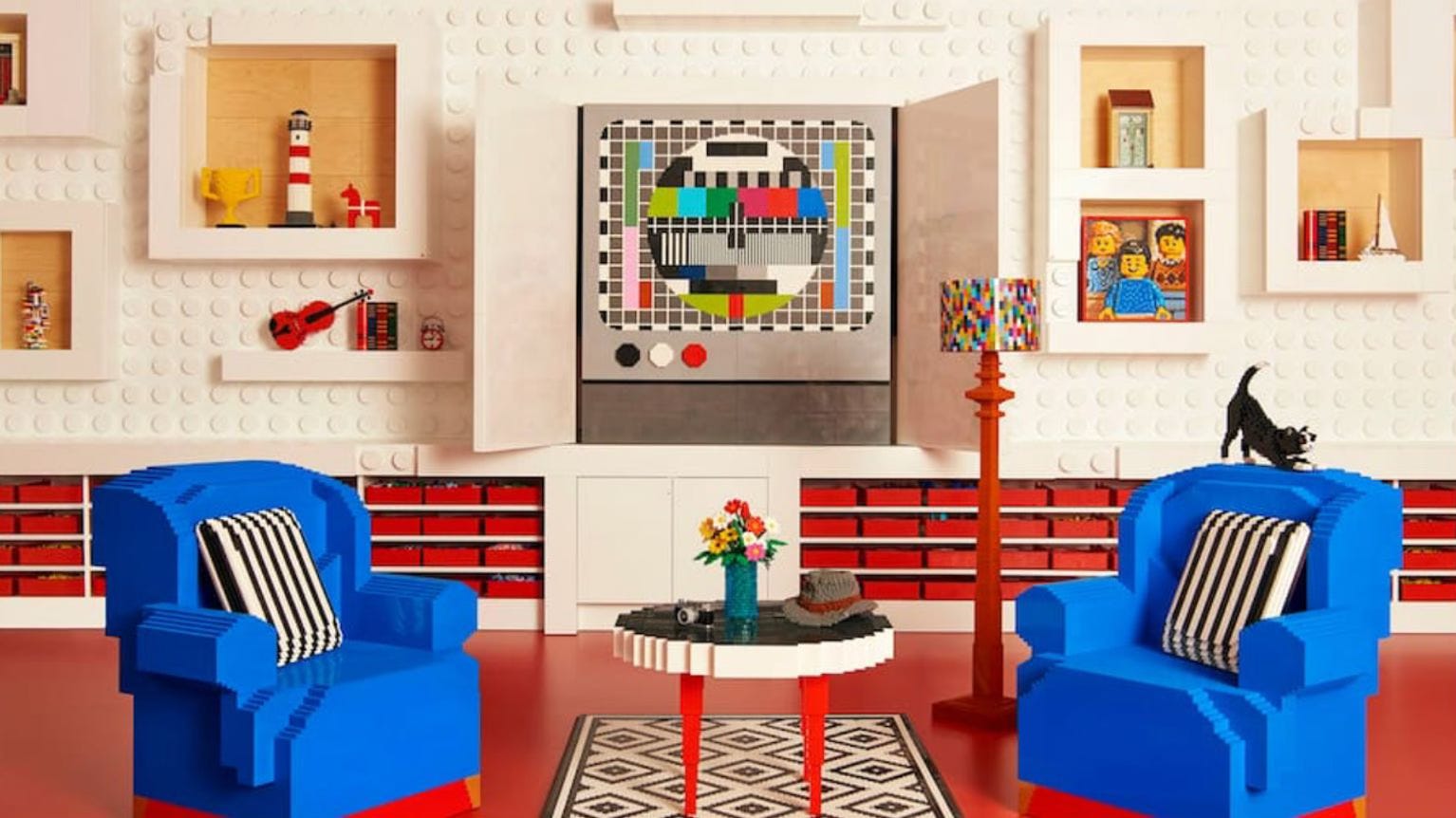
Its institutions extend beyond the product portfolio. LEGO House contains spaces for play, learning, archives, workshops and exhibitions of fan-made work. Since it opened in 2017, its Masterpiece Gallery has displayed creations by Adult Fans of LEGO from around the world. The company also supports recognised user groups and recurring fan events. These are not temporary expressions of a campaign. They are places where knowledge, technique and memory can accumulate.
LEGO is not a perfect case, which makes it more instructive. Its early-2000s crisis followed a period of costly diversification, proliferating products and operational complexity. Its recovery required renewed discipline around the brick, the building system and the boundaries within which innovation could remain coherent and commercially sustainable.
The case demonstrates both sides of world-building. A world needs enough structure to stay recognisable and enough openness for other people to produce something the company did not anticipate.
What LEGO ultimately shows is that a brand world does not need to be a fully written story. It can be a strong set of rules through which other people make stories of their own.
The product is not only an object inside the world. It is a tool for continuing it.
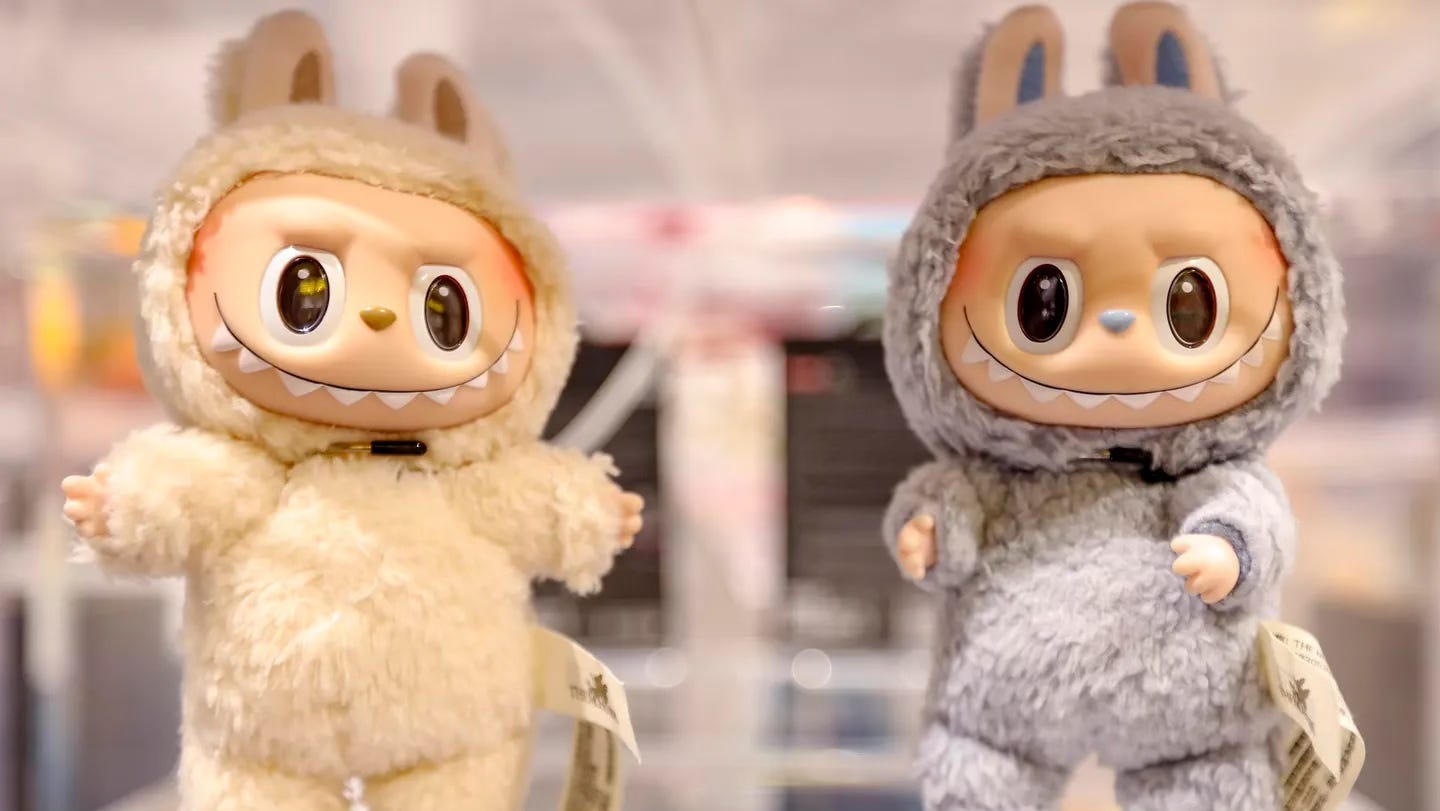
Pop Mart already contains many of the mechanics marketers seek: recognisable characters, blind-box suspense, scarcity, collecting rituals, display behaviour, status signalling and audience circulation.
Its 2025 revenue rose 184.7% to RMB37.12 billion. Yet when the results were reported in March 2026, its shares fell more than 20%, as investors questioned the durability of its growth and its reliance on The Monsters, the IP family that includes Labubu and generated about 38% of annual revenue. Pop Mart’s answer is to widen the world through film, licensing, new product categories and physical experiences, including an expanded theme park.
The market reaction is not proof that the world has failed. It exposes the question that matters:
Can participation deepen as quickly as distribution expands?
A collectible world can scale through scarcity, novelty and social display. Its longer life depends on whether people are given more to do than acquire: whether characters accumulate relationships and memory; whether collectors can become interpreters, hosts and makers; whether institutions can outlast the transaction.
Pop Mart’s challenge is to ensure that Labubu becomes more than a moment people once competed to own.
Virality creates velocity.
Folklore creates ancestry.

By late 2025, Hailey Bieber’s name had disappeared from Erewhon’s Strawberry Glaze Skin Smoothie, while the product itself remained on the menu. Neither Erewhon nor Bieber formally explained the change; reports linked it to the end of the collaboration.
The cultural lesson is more interesting than the contractual one.
The smoothie no longer functioned only as celebrity content. It had become an order, a tourist ritual, an object of imitation and a small piece of Los Angeles folklore.
The campaign created the object.
Repeated social behaviour gave it a life beyond the campaign
World-building is one of marketing’s most powerful ideas because it borrows the architecture of belief: origin stories, symbols, rituals, sacred objects, transformative promises, insiders, pilgrimage, heresy, repetition.
Recent consumer research has described “brand faith”: the process through which consumer–brand relationships can take on spiritual dimensions, with brands becoming sources of meaning, identity, ritual and existential reassurance.
That language should make marketers pause.
This is real power, and power comes with a bill. The deeper a brand enters identity and belonging, the greater its responsibility not to exploit uncertainty, loneliness or the desire for moral orientation.
A healthy world expands a person’s agency. It connects people to one another, tolerates irony, criticism and exit, recognises contribution, and leaves value behind after the spending stops. It gives people something to practise, make, learn or share.
An unhealthy world converts identity into obedience. It makes belonging contingent on purchase, then relabels extraction as community and recurring revenue as ritual.
The test is unsentimental. If the relationship dies the moment the customer stops paying, it was a loyalty programme wearing a costume.
The half-life of an aesthetic keeps shrinking. The half-life of a practised culture can keep extending. That divergence will decide which brand worlds remain attractive sets and which become places people carry with them.
A brand can author the grammar, fund the places, protect the principles and create the conditions for participation. It cannot declare the world alive. That verdict belongs to the people who repeat it, reinterpret it, argue over it, ritualise it and pass it on.
“A world is not real because someone can walk into it. It is real when something new walks back out.” — Spring Studios
No posts
Comments
Nothing yet. Say the first thing.
Sign in to join the conversation.