
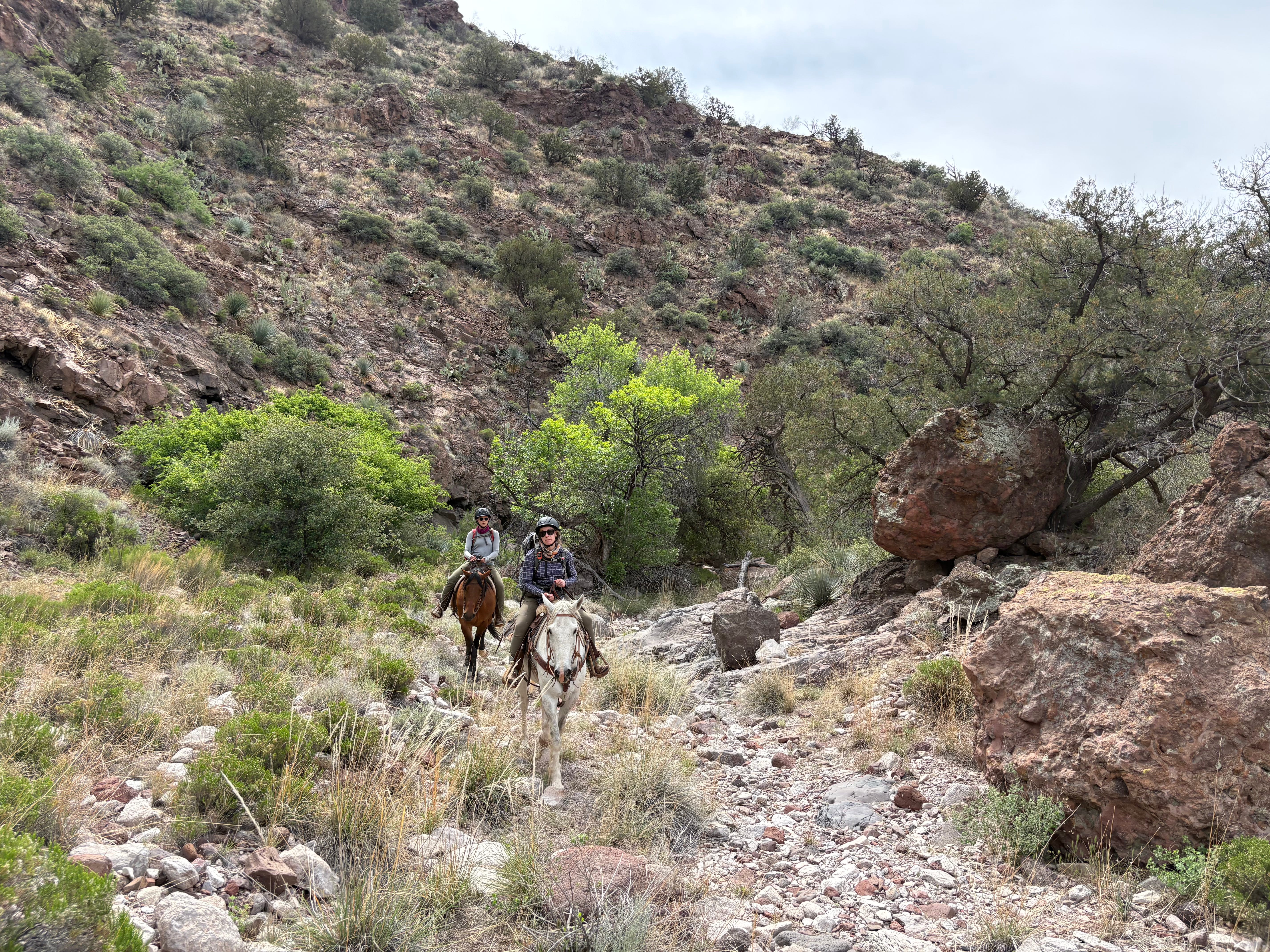
Last week, in the rugged country of southeastern Arizona’s Clifton Ranger District, we reached springs the only way you really can out there — on horseback. Riding Fuego, Lincoln, and Chappo, we moved through dry country that resists easy entry. It’s the kind of terrain that reminds you quickly what matters: distance, heat, and the limits of getting there on foot or by truck. And then, almost abruptly, a spring appears. Water in the middle of it all.
Late Monday afternoon after a long drive we arrived to a familiar scent — desert rain still hanging in the air. Globe mallow was in full bloom, scattered across the landscape in bright orange patches that seemed to hold onto the moisture just a little longer than everything else. We were fortunate this week. Our hosts, Jason Corbin and his family of Jubilee Ranch, opened their land, their horses, and their table to us — the kind of welcome that has become rare, and that field science of this scale cannot do without. Not just a place to stay, but the means to reach the springs themselves. Horses for all of us.
There’s often a misconception about what we do — that we show up to take water, restrict use, or push an agenda. But that’s not our role. We don’t make the decisions. We do the science. We measure, document, and try to understand how these systems function so that better decisions can be made by and for the people and organisms that depend on them.
And the truth is, we are on the same side as the ranchers, the agencies, and the communities who live and work on this land. A healthy ranch depends on healthy springs. A healthy landscape depends on functioning water sources. In places like southeastern Arizona, agriculture, ranching, biodiversity, and ecosystem function are not opposing forces — they are tightly linked. The land is the foundation; the work that depends on it only endures if the foundation does.
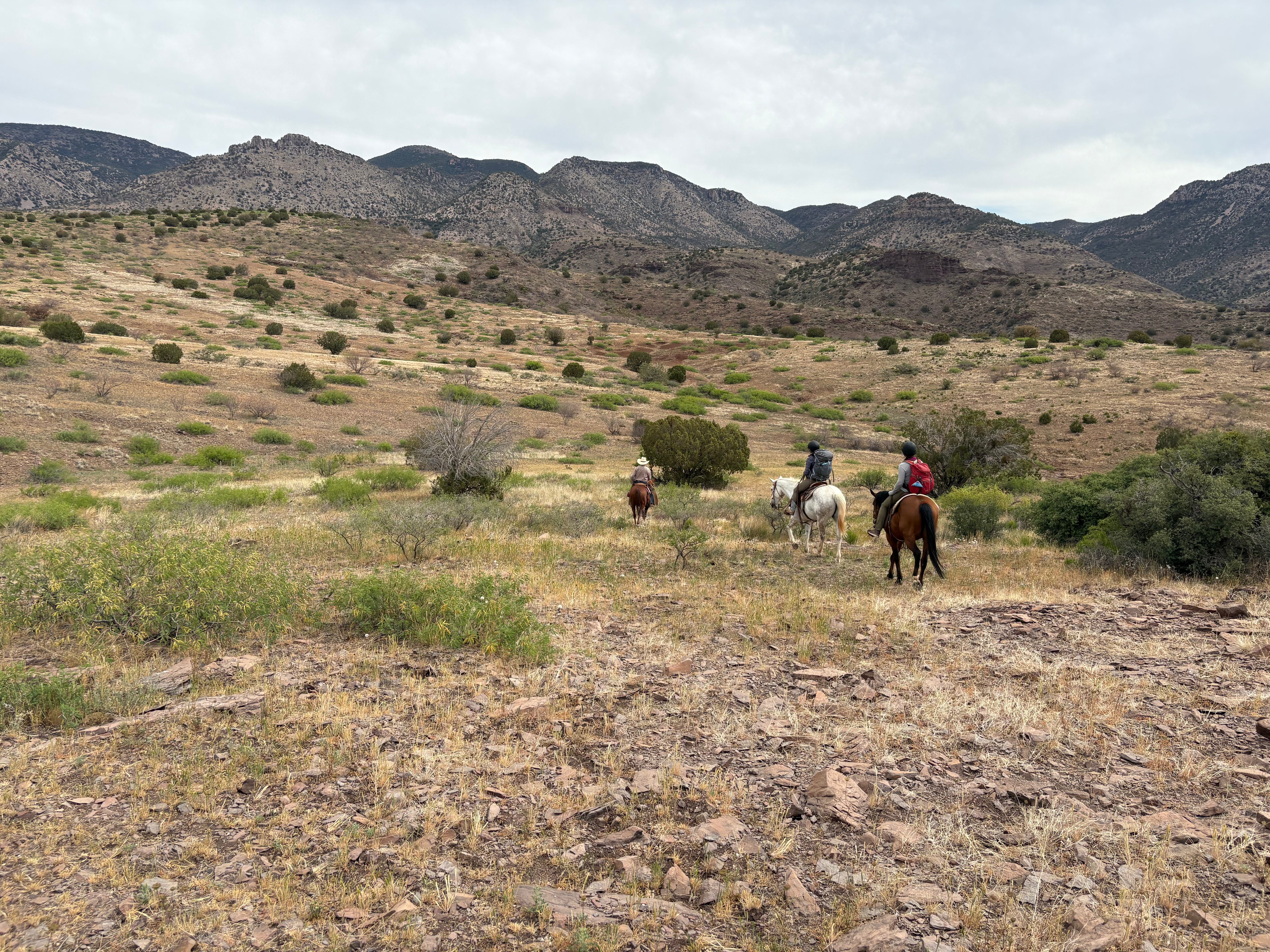
We spent several days moving across that country, sometimes on horseback, sometimes on foot. The horses made access to the more remote canyons possible, though it wasn’t without its own challenges. Thick stands of juniper forced us to duck low and shift constantly in the saddle, leaning from side to side to avoid branches that would have easily knocked us off. But there was something different about traveling this way. Most of our field seasons are defined by driving and hiking. Eyes down, watching your footing, thinking about the next step. On horseback, that changes. The movement becomes shared. You’re not just navigating the terrain — you’re moving through it with another animal that already understands it. And because of that, you get to look up.
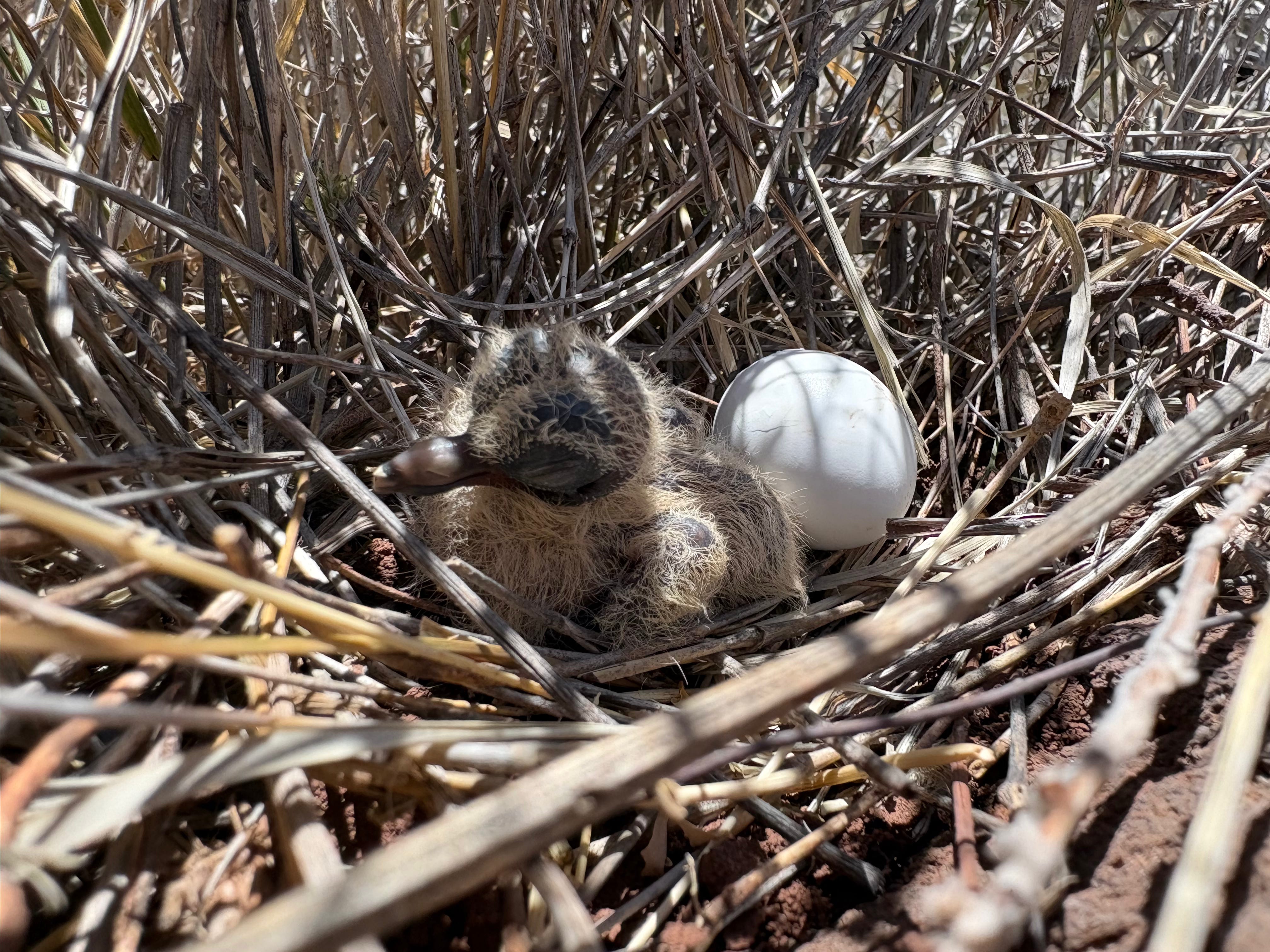
On a quieter morning of the trip, off-trail in the scrub, we watched a mourning dove burst into flight from a ground nest just feet away. The eggs tucked into shallow depressions were a quiet presence nearby. A single chick was still and almost invisible against the soil. Across a few days, we saw more dove nests than any of us had encountered in the rest of our careers combined. There’s a rhythm to riding that slows you down just enough to take it all in — not in a romantic sense, but in a practical one. You see more because you’re able to.
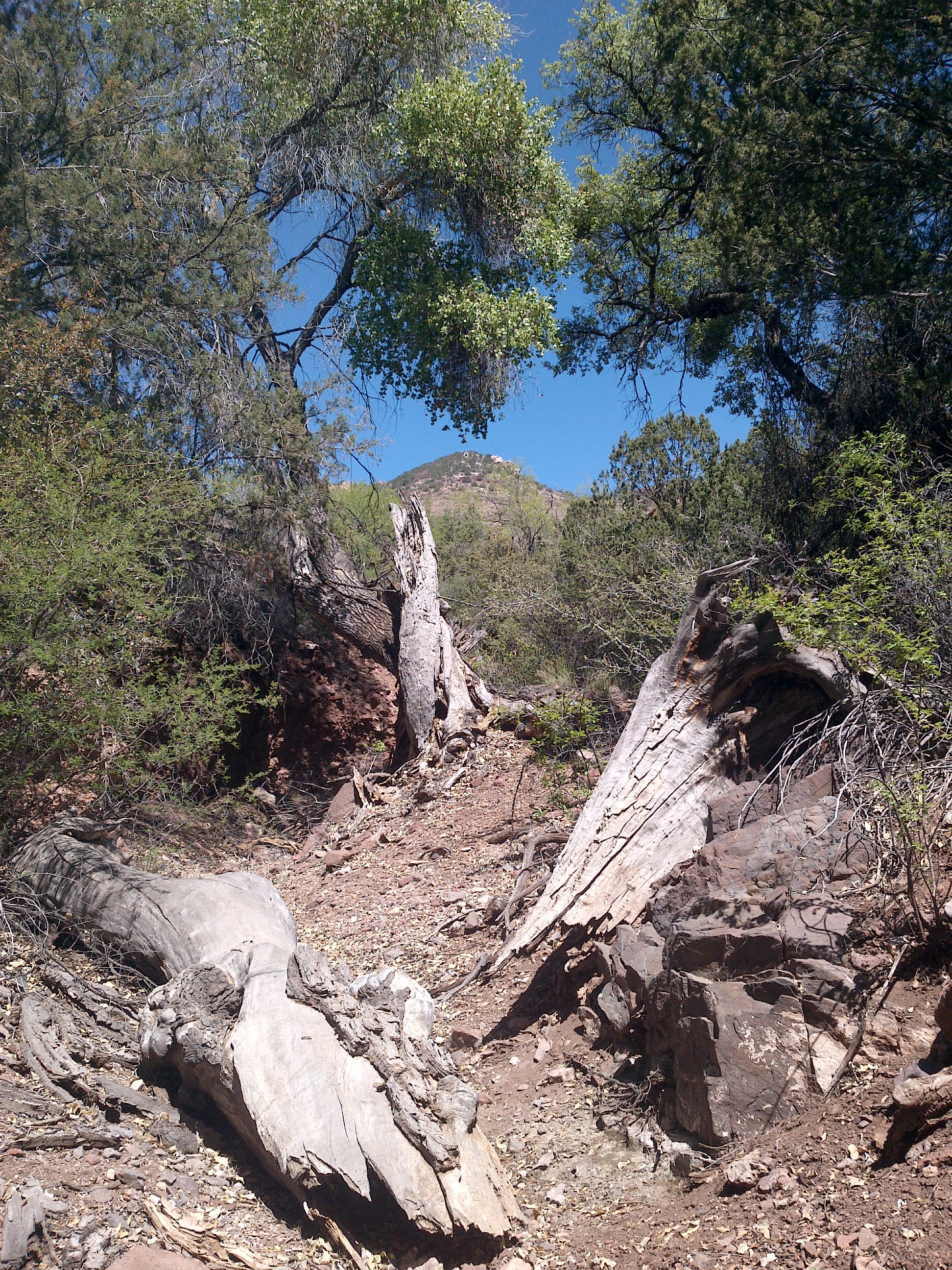
And then there are the springs themselves. Each one different. Some barely holding on, others still flowing strong. Each one a small but critical node of life in an otherwise dry system. Places where insects gather, where birds return, where tracks in the mud tell the story of everything that passed through the night before. But not all of what we saw was healthy. Across the landscape, there were signs — subtle in some places, unmistakable in others — that this is a landscape under pressure. Springs that should have been flowing were quiet. Cottonwoods and willows, long rooted in reliable water, were thinning or dying back. Old stock tanks sat empty, their pipes tracing back to spring boxes that no longer produced. In some places, upland vegetation had begun to move in, slowly reclaiming what had once been wet ground.
It’s always difficult to draw firm conclusions from a single field season. Springs fluctuate. Seasons matter. But taken together, these observations point in a direction that’s hard to ignore. As precipitation patterns shift and temperatures rise, some springs will go dry. And when they do, the consequences arrive quickly. The species that depend on them — often highly specialized, often found nowhere else — disappear. The water that has supported livestock, wildlife, and people for generations evaporates just as fast. What remains is a quieter, drier version of the same place.
That reality is hard to sit with, especially in landscapes where so much — ecologically, culturally, economically — has been built around these small, persistent sources of water. But none of this work happens in isolation. It depends on people like our hosts this week, who live on and with this land, who understand it in ways no dataset or short field visit can replicate. What stood out most this week wasn’t just the access they provided. It was the openness to engage. To ask questions. To share perspectives. That is where real progress happens.
Climate change is reshaping precipitation patterns, and we are part of that change. In response, we hold two levers: confronting it at the global scale, and managing thoughtfully at the local one. Both matter, and both need better science — to clarify which springs are most vulnerable, which are most resilient, and why. The same science helps us prioritize where to act, how to restore, and where small, targeted interventions can make a meaningful difference. Thoughtful management — built in collaboration with the people who live and work on this land — can extend the life of springs, improve their function, and in some cases bring them back. That’s the work ahead. Weeks like this are a reminder of what’s at stake — but also of what’s possible. With the right information, the right partnerships, and the right commitment to the future, there is still a path forward. One where springs continue to support both biodiversity and livelihoods, even in a changing climate.
No posts
Comments
Nothing yet. Say the first thing.
Sign in to join the conversation.