
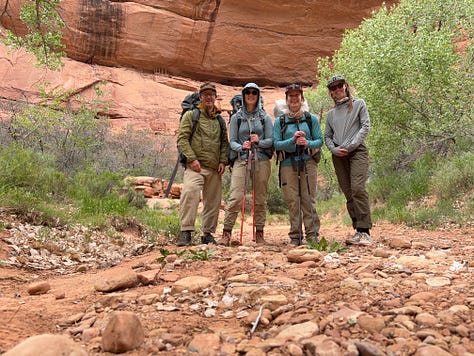
Last week we wandered the sandstone canyons of southeastern Utah in Bears Ears National Monument. For me, the trip carried a deep sense of gratitude for several reasons. In January, I suffered a bad ski accident that left my right leg dangling from the knee down—a torn PCL and MCL. Doctors warned it could be a twelve month recovery. I assumed field work was over for the year, and for many of us at SSI, field work is what draws us to this work in the first place. Yet only a few months later, I found myself backpacking through the canyon country of Bears Ears, climbing over slickrock, navigating pour offs, and following narrow ribbons of water winding through the desert.
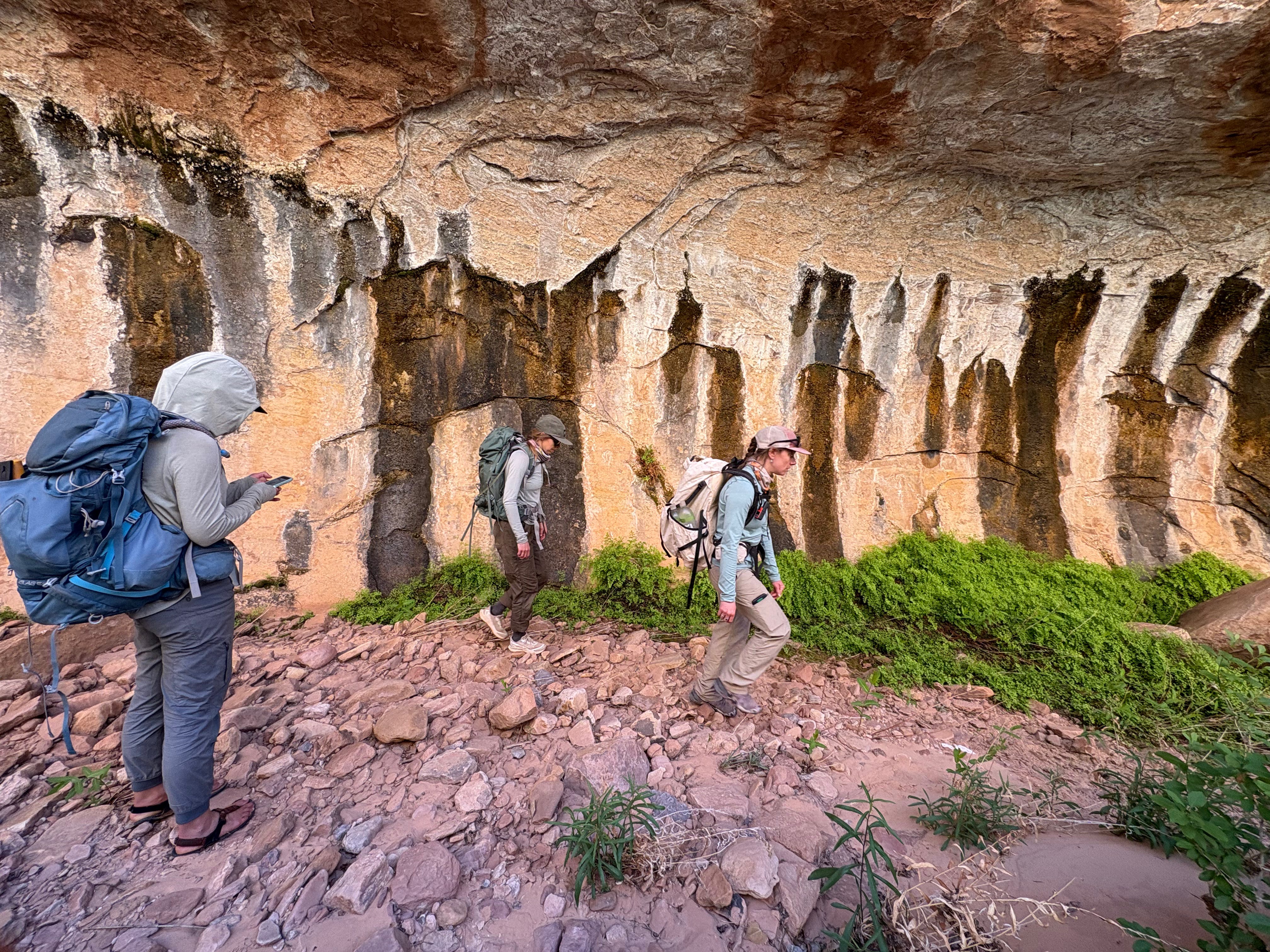
I also found myself feeling grateful for public lands in a way I never fully had before. Growing up in the West, it is easy to become complacent about the sheer scale of accessible wild country around us. We take for granted the ability to disappear into a canyon for a week and know that beyond the next bend lies another drainage, another spring, another thousand acres of open country. But public lands are increasingly under pressure, and being in Bears Ears reminded me how inseparable they are from the identity of the American West.
Regardless of political leanings or profession—whether you ranch, hunt, climb, hike, run rivers, or simply drive dirt roads looking for solitude—public lands are the defining feature of the Southwest. To spend an entire week meandering through the twists and turns of a remote canyon, only to realize you have explored a tiny fraction of a single drainage while thousands more canyons stretch beyond the horizon, reshapes your sense of scale. It reminds you how small you are in the best possible way.
Selling off public lands would feel like tearing pages from a collective history book and scattering them to the wind. Once fragmented, fenced, or privatized, these landscapes cannot easily be stitched back together. The freedom to wander, to learn, and to experience the immense scale of the West is something that belongs to all of us.


If you have spent time in Bears Ears, you likely understand the astonishing density of archaeological sites tucked beneath the sandstone alcoves. Nearly every south facing overhang contains remnants of structures once warmed by the low hanging winter sun and shaded from the intense heat of summer. There was clearly a thriving human presence throughout these canyons for centuries. And like nearly every civilization in the arid Southwest, water was at the center of it all. Few springs in this region are perennial. Many flow only briefly after winter snowmelt or significant precipitation events. Yet given the density of archaeological sites scattered throughout the canyons, it is hard not to infer that these were once more robust riparian systems than many are today. Across the globe, we are witnessing the consequences of shifting precipitation regimes and groundwater extraction. Springs are declining, and with them many of the freshwater ecosystems that depend on them.
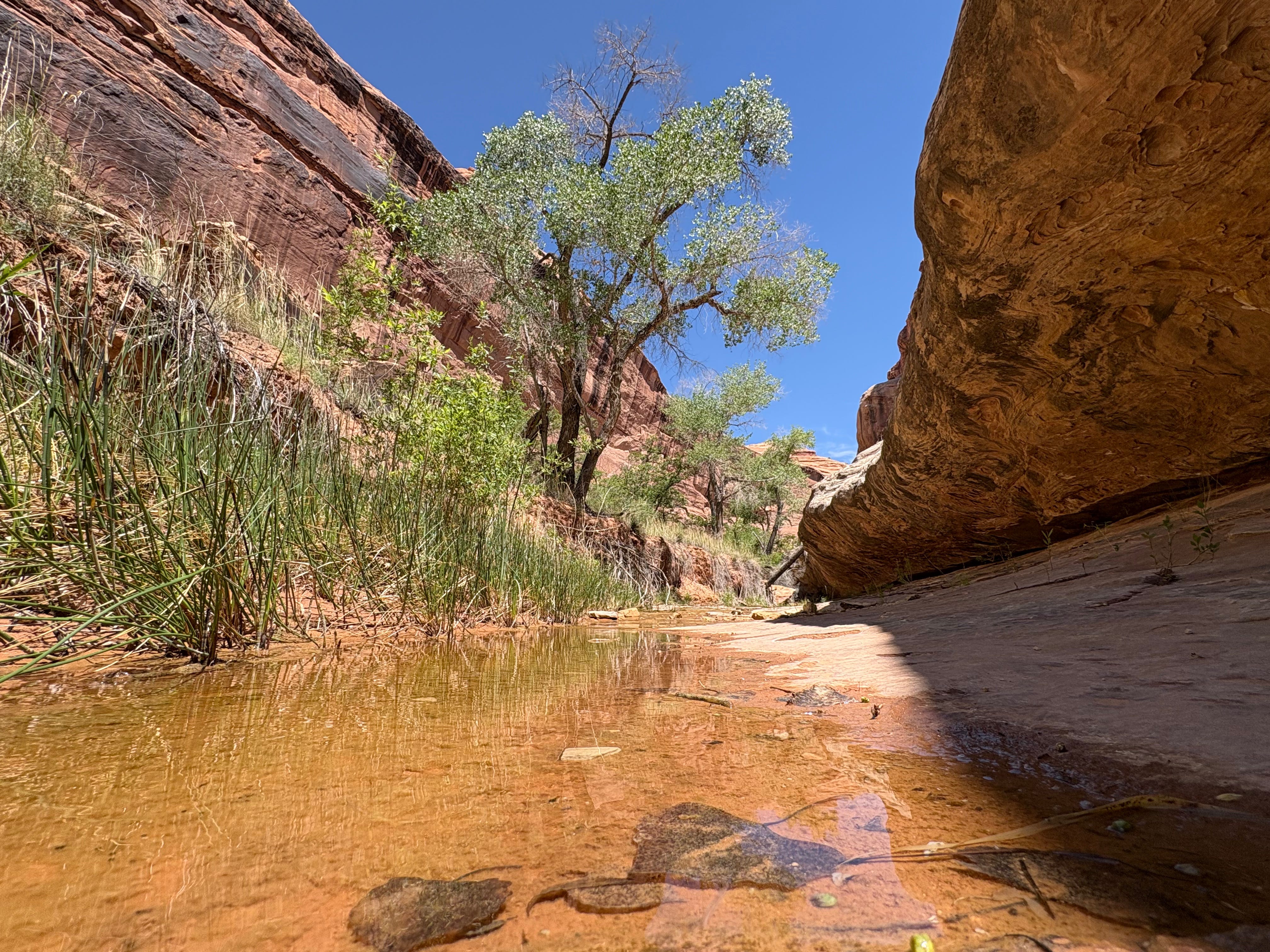
Many of the springs we visited this past week were flowing at less than a gallon per minute. But surface flow tells only part of the story. Beneath the ground there is still enough moisture to support pockets of extraordinary life. Cottonwoods rise improbably from canyon bottoms. Birdsong echoes through otherwise dry landscapes. Throughout the week we listened to the full range of the Yellow Warbler—short metallic chirps, soft buzzing, and lisping calls drifting through the trees. The rapid trill of the Spotted Towhee followed us constantly through the brush. And almost everywhere, the distant descending call of the Canyon Wren reverberated off the sandstone walls, echoing into every corner of the canyon. Even diminished springs continue to sustain life in otherwise unforgiving environments. A little water makes an enormous difference in the desert.
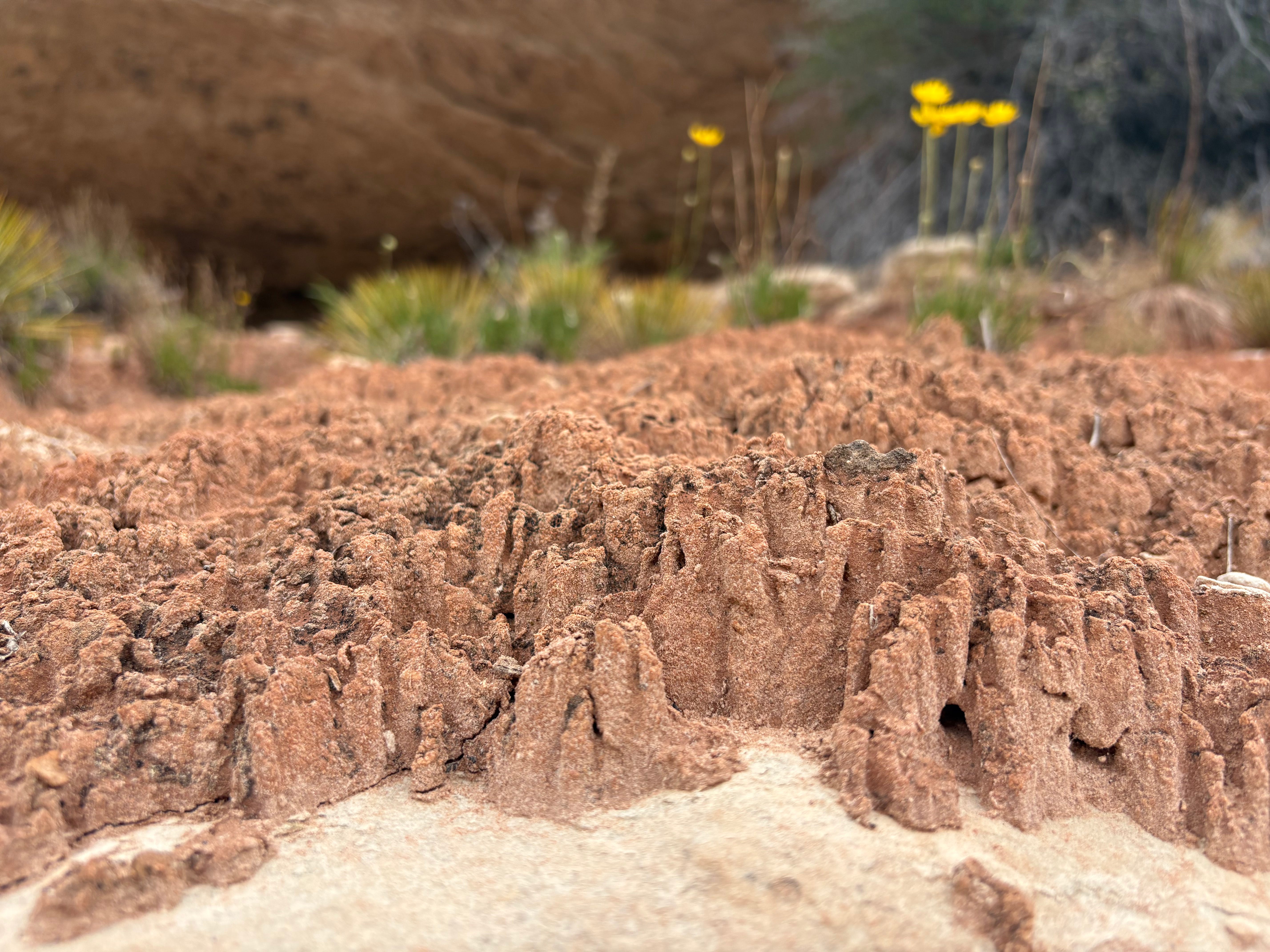
One of the other remarkable features of Bears Ears is the cryptobiotic soil crusts that cover much of the landscape. They look almost otherworldly—dark, knobby living surfaces woven together by cyanobacteria, lichens, mosses, and fungi. These fragile crusts stabilize desert soils, reduce erosion, retain moisture, and help cycle nutrients through ecosystems where productivity is otherwise incredibly limited. In many ways, they function like the skin of the desert. And like springs, cryptobiotic soils remind us how delicate arid ecosystems truly are. One careless footprint can destroy decades of growth. One drying spring can alter an entire canyon ecosystem. These systems persist through balance, patience, and resilience.
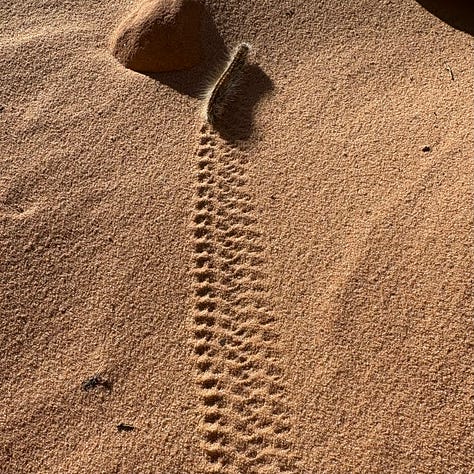
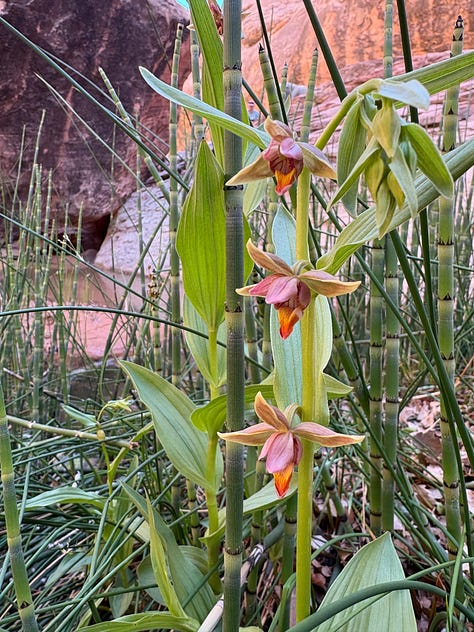
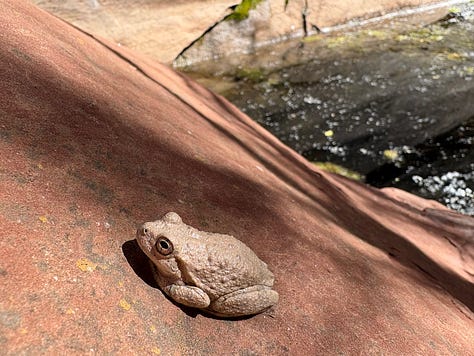
At SSI, we often talk about springs as small features with outsized importance. Bears Ears is a powerful reminder of that truth. Tiny flows of water—sometimes barely visible on the surface—continue to shape entire ecosystems, sustain biodiversity, and connect us to thousands of years of human history. In landscapes as dry as the Colorado Plateau, life persists because of springs. Protecting them means protecting far more than water alone.
No posts
Comments
Nothing yet. Say the first thing.
Sign in to join the conversation.