
Previously in the series: Who harms whom? An economics lesson from down the pub. This post is also pub-themed.
The Sekforde is a very nice pub in Clerkenwell, in central London, which has been going since 1829. It’s exactly my kind of place: small, cosy, a nice clientele, ale on tap, and it doesn’t feel like a gastropub. It’s also one of the few event spaces in central London that is both nice and free for the organiser. Like most pubs, people stand outside it drinking. The local area is fairly quiet and residential, but by no means is it isolated: the Sekforde is about a ten-minute walk away from Farringdon station.
Even if you don’t know the story, you can probably guess where this is going. Local residents complained about the noise, and tried to get the local council to restrict the pub’s licence. Given that inflation has hit the pub trade extremely hard, the Sekforde claimed they would have to shut down if the restrictions were implemented.
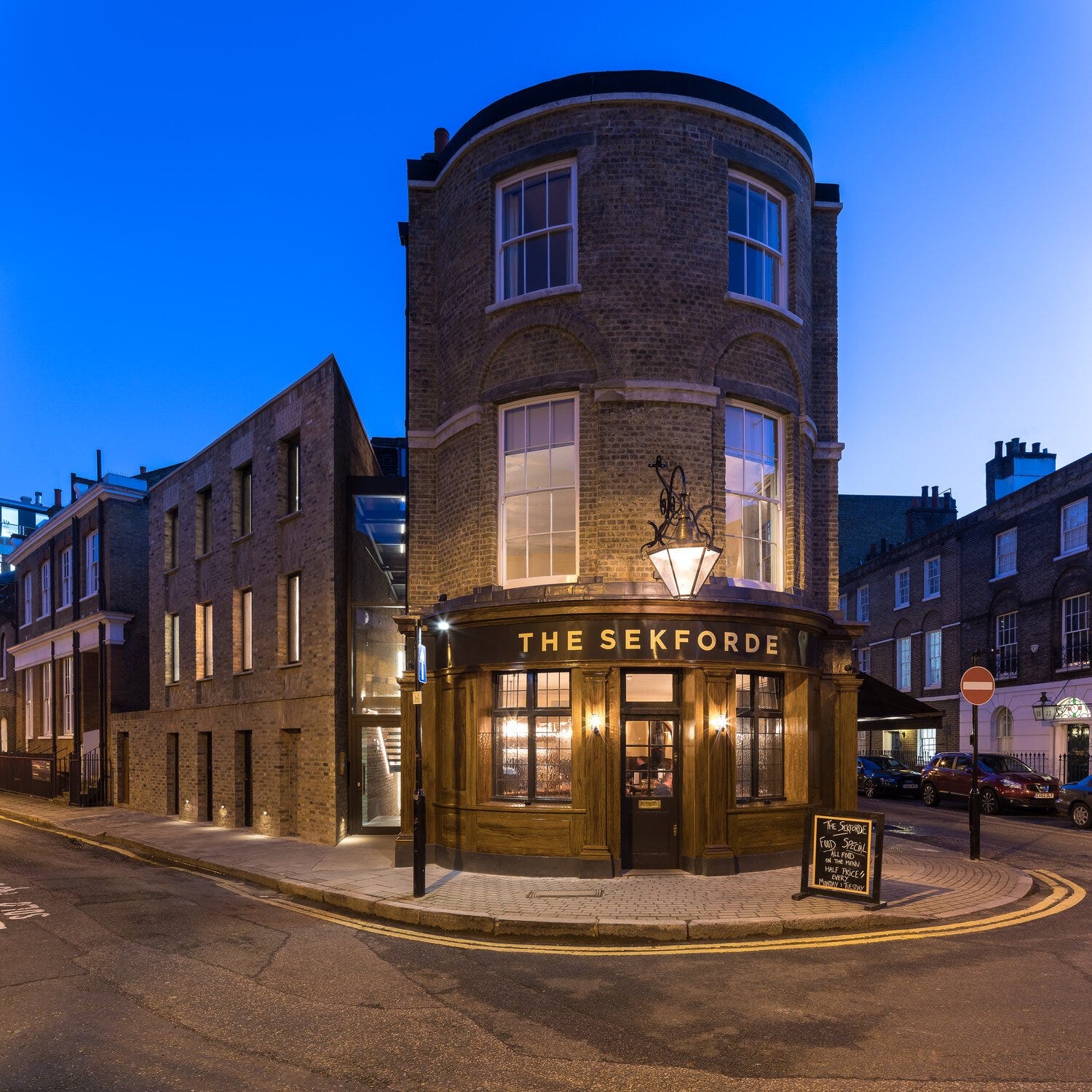
Thankfully, the council did not carry out the residents’ will, but the story (which is merely one of many in the genre) is extremely depressing. Much like my previous pub-related example, there seems to be something fundamentally unfair about what the local residents were trying to do to the Sekforde. London’s nightlife is already atrocious – most places shut at eleven – and inflation has put enormous pressure on pubs. As the price of a pint climbs ever higher, it feels like all pubs are fighting for their lives. And in come a very small number of vocal local residents, who want to stop people enjoying themselves. They were trying to impose a tyranny of the minority on the patrons of the pub.
What’s more, the Sekforde is not exactly a newcomer. It would be one thing to take a quiet, residential area and put a noisy pub in the middle of it. But the Sekforde has been operating since 1829. The grumbling locals are the newcomers; the pub got there first. Why, we might reasonably ask, should they be so much as given a chance to put a stop to the thing that predates them?
Lord Denning MR, one of the greatest1 judges of the 20th century, had this to say about an analogous situation in the 1977 case of Miller v Jackson. His inimitable style means it is worth quoting him at length:
In summertime village cricket is the delight of everyone. Nearly every village has its own cricket field where the young men play and the old men watch. In the village of Lintz in County Durham they have their own ground, where they have played these last 70 years. They tend it well. The wicket area is well rolled and mown. The outfield is kept short. It has a good club house for the players and seats for the onlookers. The village team play there on Saturdays and Sundays. They belong to a league, competing with the neighbouring villages. On other evenings after work they practise while the light lasts. Yet now after these 70 years a judge of the High Court has ordered that they must not play there any more. He has issued an injunction to stop them. He has done it at the instance of a newcomer who is no lover of cricket. This newcomer has built, or has had built for him, a house on the edge of the cricket ground which four years ago was a field where cattle grazed. The animals did not mind the cricket. But now this adjoining field has been turned into a housing estate. The newcomer bought one of the houses on the edge of the cricket ground. No doubt the open space was a selling point. Now he complains that when a batsman hits a six the ball has been known to land in his garden or on or near his house. His wife has got so upset about it that they always go out at week-ends. They do not go into the garden when cricket is being played. They say that this is intolerable. So they asked the judge to stop the cricket being played. And the judge, much against his will, has felt that he must order the cricket to be stopped: with the consequence, I suppose, that the Lintz Cricket Club will disappear. The cricket ground will be turned to some other use. I expect for more houses or a factory. The young men will turn to other things instead of cricket. The whole village will be much the poorer. And all this because of a newcomer who has just bought a house there next to the cricket ground.2
What this “newcomer who is no lover of cricket” did is known by lawyers as coming to the nuisance. Coming to the nuisance means that the person who is trying to stop the nuisance got there after it had started. In various cases, nuisance-makers have tried to defend themselves by saying, ‘I got here first, so you have lost your right to complain about the nuisance.’ They have failed. Coming to the nuisance is no defence in English law.3 It does not matter in itself who got there first.4
Nuisance is, in law, an activity that unduly interferes with the use or enjoyment of land. One example would be a factory belching out pollution into a nearby health club. This obviously affects the club’s ability to operate. The prototypical examples are air pollution and noise, but in Miller v Jackson it was flying cricket balls that landed in the garden and house, sometimes breaking windows.
In Miller v Jackson, Lord Denning attempted to change the law. He thought the cricket club should be allowed to use ‘coming to the nuisance’ as a defence. He failed; the other to judges of the Court of Appeal with whom he was sitting felt that they had no power to alter such a long-standing rule of law.
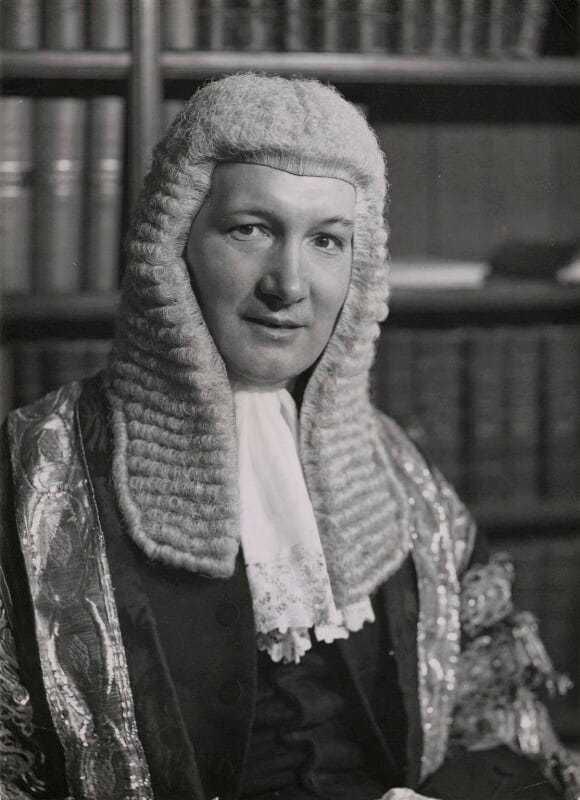
But Lord Denning’s view that coming to the nuisance should be a defence seems to accord with our moral intuitions about what the law should be. As is the case with the Sekforde, ‘who got there first’ seems to matter.
I disagree. I think that coming to the nuisance should be no defence. This is not to say that the local residents who tried to get the Sekforde’s licence restricted are in the right. I think they are in the wrong, but for a different reason. The issue is more subtle than ‘who got there first’.
Lawyers have the habit of using ordinary words with a more precise or restricted meaning than in everyday conversation. Nuisance is no exception. In law, nuisance is a wrong that is committed to land. A wrong is the opposite of a right: nuisance restricts the rights that people enjoy over their land. Lawyers use the word ‘tort’ here, which just means a civil wrong.5 ‘Civil’ just means non-criminal: nuisance is a wrong, but committing a nuisance is not a criminal offence.6
The fact that nuisance is a tort to land is crucial. It is not about personal discomfort experienced by the person who happens to be there, but about whether they can use and enjoy their land:
A sulphurous chimney in a residential area is not a nuisance because it makes householders cough and splutter but because it prevents them taking their ease in their gardens.7
The two are clearly linked. The coughing and spluttering will usually be the reason the residents cannot sit outside. But to see the difference, suppose that an exceptionally asthmatic householder lives near the sulphurous chimney, but far enough away that an ordinary person would have no issues. They will not be able to complain of the nuisance, even if they are coughing and spluttering, because a normal person would not be affected by it. Even if their personal rights may be infringed, their property rights are not. The value of their property will not be diminished by the fact they are abnormally sensitive to smoke.
I think that nuisance has to be a tort to land. This is because of the underlying problem that the law of nuisance is trying to solve. Any nuisance is a social cost: by committing a nuisance, you impose costs on others. But is this social cost imposed on other people, or on their property?
In my previous post, I used the example of a noisy pub which prevents a judge who lives nearby from sleeping (for these purposes, let’s assume the noise amounts to a nuisance).
The problem would go away if the pub simply bought the flat. There would then be no nuisance: the pub could let the flat out to a tenant who didn’t mind the noise, probably at a below-market rate. The costs of the noise caused by the pub would be borne by the pub and the pub alone; in the language of economics, the externality would be internalised.
Conversely, the problem would not go away if the judge sold the flat to a person who wasn’t the pub. The fact that the externality is only internalised when the property is absorbed by the pub confirms the intuition that nuisance is a tort to land. The law mirrors the underlying economics.
Furthermore, the nature of nuisance as a tort to land is consistent with the nature of property. We often think of property as being something unitary – “that sole and despotic dominion which one man claims and exercises over the external things of the world, in total exclusion of the right of any other individual in the universe” as the jurist William Blackstone put it. This view is wrong. Property is best viewed as a bundle of rights. For instance, a leaseholder and a freeholder both own different bundles over the same property. A leaseholder owns the right to exclusive possession (i.e. they can exclude others from the property, including the landlord). The freeholder owns the right to the reversion (i.e. when the lease ends, they get the property back).
Rights are resources, so as well as a bundle of rights, we can think of property as being a bundle of resources. The cricket club’s right to use and enjoyment of its cricket ground, and the nearby householders’ right to use and enjoyment of their gardens, are both resources.
It is quite hard to see how these resources could attach themselves directly to the person who happens to be on the land. An example of a right that is attached to a person would be the right protected by negligence – the tort that enforces the concept of a duty of care. Road users, for instance, owe a duty of care to other road users to take reasonable care while using the road. This creates a corresponding right for the road users, which protects them as road users. They do not ‘own’ this right, at least not in the sense that property is a resource that is owned.
Conversely, a resource (i.e. a property right) is something that can be owned by a person, but it cannot be something that is inherent in a person. The rights that are balanced by the tort of nuisance have to be property rights, not personal rights.
The fact that nuisance is a tort to property is very important. If ‘coming to the nuisance’ were a defence, then it would be essentially according priority to whoever got there first. This would be inconsistent with the nature of nuisance as a property right. It would be very odd if property rights were contingent on whether you got there first: it would imply that “a defendant was no longer liable for nuisance owing to the fact that the identity of his neighbour had changed, even though the use of his neighbour’s property remained unchanged.”8
Going back to Miller v Jackson, the attempt to raise ‘coming to the nuisance’ as a defence failed, and the cricket club were found to be liable. This does not mean it got shut down – the Court of Appeal decided that paying damages to the Millers would be the appropriate remedy, given the public interest in enabling the cricket club to stay open. Cricket is still played there today.
Let’s imagine that the locals who tried to get the Sekforde shut down sued the pub in nuisance. The pub would not be able to raise ‘we got here first’ as a defence. Does that mean the NIMBYs would win?
I think not. Even though ‘coming to the nuisance’ is no defence, the NIMBYs would still probably lose, because a pub is an eminently ordinary use of land, especially in a city.
In my previous post, I explained the insight offered by the economist Ronald Coase: the problem of nuisance is reciprocal. The pub is infringing on the residents’ rights; the residents would be infringing on the pub’s rights if they got it to stop operating. The problem is therefore about finding the right balance between these two rights.
The law of nuisance solves this problem by according priority to the ordinary use of land, over more uncommon uses. It is normal that we must put up with a certain degree of interference from others, as the price of living side-by-side with them. For instance, we must put up with neighbours occasionally having noisy parties. It is a different matter if they are partying every single night and playing loud drum and bass music until the small hours. But there is a level of noise which is “reasonable according to the ordinary usages of mankind living in … a particular society.”9
What is ‘ordinary’? The character of the neighbourhood is extremely relevant. In the case of Sturges v Bridgman, it was said that:
whether anything is a nuisance or not is a question to be determined, not merely by an abstract consideration of the thing itself, but in reference to its circumstances: what would be a nuisance in Belgrave Square would not necessarily be so in Bermondsey.10
This quotation should not be taken to mean that the working-class district of Bermondsey should be subject to a lower standard of protection by the law than a rich area like Belgrave Square. At the time, Bermondsey had many smelly tanneries, while Belgravia did not. If the character of the neighbourhood were not relevant, it would be possible for a person to go
into the midst of the tanneries of Bermondsey, or into any other locality devoted to a particular trade or manufacture of a noisy or unsavoury character, and, by building a private residence upon a vacant piece of land, put a stop to such trade or manufacture altogether.11
Imagine that somebody moves into Soho, and immediately starts complaining about all the nightclubs and bars. They lose their right to complain, not because the clubs and bars got there first, but because Soho is a district famed for its nightlife. It would be a different matter if it were a late-night bar in Hampstead Garden Suburb, or even if the Sekforde tried to transform itself into a club.
I think that the law of nuisance manages to capture both our moral intuitions about nuisance (the character of the neighbourhood is relevant) and also the underlying economic reality (nuisance is concerned with protecting property, not persons). This is often the case: though the common law can often look messy, its internal logic is usually consistent and correct.
But in the Sekforde dispute, the neighbours were not (as far as I know) trying to sue the pub in nuisance. There are, of course, other aspects of the law which are relevant to these questions: planning law, environmental law, licensing, and so forth, and the expansion of the empires of these areas of the law has conquered territory once reserved for nuisance.
For pubs, licensing is the most relevant of these. The difference between licensing and nuisance ought to be that licensing is ex ante, and nuisance is ex post. You need to obtain a licence before you start doing a licensable activity, like opening a pub late. With nuisance, however, you need to wait until after the nuisance has started before complaining. This is the justification in principle for licensing: it is more efficient, because it means neighbours don’t need to go to court to protect their rights.
But the internal logic of licensing is not the same as that of nuisance. As an example, the London Borough of Hackney’s licensing policy applies a ‘Special Policy Area’ to Shoreditch, which [emphasis mine]
creates a rebuttable presumption where applications for new premises licences and club premises certificates or variations of these authorisations will be refused unless the applicant can demonstrate in their operating schedule that there will be no negative cumulative impact on one or more of the licensing objectives in order to rebut any such presumption.
Shoreditch has many late-night venues. It should not be treated like De Beauvoir, which is a quiet residential area, for precisely the same reason that a tannery in Belgravia would be a nuisance, while a tannery in Bermondsey would not. The marginal social costs of a late-night bar in De Beauvoir may well outweigh the marginal social benefits; the same cannot be said for Shoreditch.
I think that licensing could learn a lot from the wisdom of the common law. Licensing only looks at one side of the scales: it seeks to minimise social costs, without considering that in doing so it deprives us of social benefits. The internal logic of a licensing regime does not see rights as resources, but rather sees them as problems to be solved. As is so often the case, the bottom-up, evolutionary nature of the common law has arrived at a much better solution than the blunt instruments wielded by local councils.
Although not one of the best.
Recent Supreme Court authority has confirmed this: Coventry v Lawrence [2014] UKSC 13 [47]–[58] per Lord Neuberger; Fearn v Board of Trustees of the Tate Gallery [2023] UKSC 4 [42]–[46] per Lord Leggatt.
This is not to say that time is irrelevant. If the nuisance has been ongoing for twenty years, and the victim has not complained about it, then the claimant ‘wins’ the right to continue committing it.
This definition is a little imprecise, but then again, ‘tort’ is itself a somewhat imprecise term.
Strictly speaking, a private nuisance. Public nuisance is a crime.
Francis Newark, ‘The Boundaries of Nuisance’ (1949) 65 LQR 480, 488.
Coventry v Lawrence [52], per Lord Neuberger.
Sedleigh-Denfield v O’Callaghan [1940] AC 880, 903 per Lord Wright.
(1879) 11 Ch D 852, 865 per Jessel MR.
No posts
Comments
Nothing yet. Say the first thing.
Sign in to join the conversation.