
On June 14th, 1897, a group of soldiers known as the “Iron Riders” set out from Fort Missoula, Montana. Their mission was to complete an arduous 3,058km cross country journey to St. Louis, Missouri.
The Iron Riders were 20 black soldiers specially selected from the 25th Infantry for the mission. These were a tough and tight knit bunch, part of the group nicknamed “buffalo soldiers” by First Nations people.
Pitting African-American soldiers, who had come from a background of slavery, against indigenous people fighting to retain their homes and land was a particularly callous and brutal move by the US government.
The National Museum of African American History highlights “the irony of African-American soldiers fighting native people on behalf of a government that accepted neither group as equals.”
These soldiers, from exclusively black regiments, faced as much prejudice and racism within their barracks as they did outside them.
What made the gruelling 41 day expedition by the Iron Riders unique was that the soldiers and their commanding officers were all travelling by bicycle. They were part of an experiment that was trying to ascertain if bicycles were an effective means of moving troops across large distances.
The sporting goods company Spalding developed single speed, iron frame bicycles specifically for this expedition. Some of the bikes had water tanks built into the spaces of the frame. Some carried pots and pans. All the soldiers carried rifles, ammunition, and sleeping gear. The clatter and rattle that the Iron Riders made as they cycled across rutted mud trails, and pushed their bikes along train tracks, was tremendous.
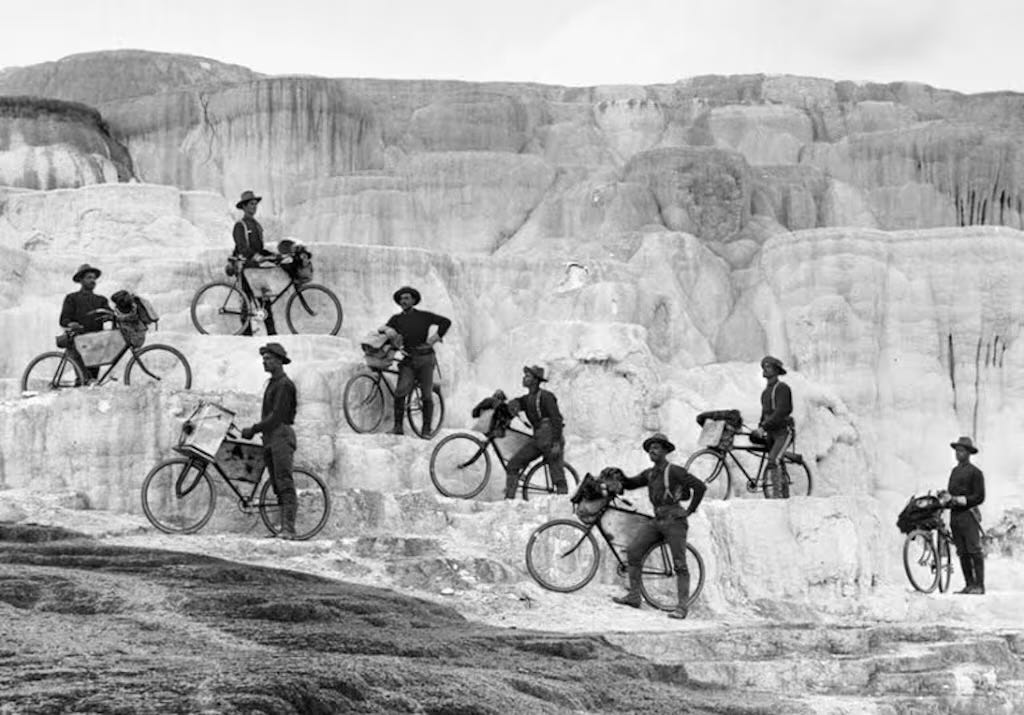
The average weight of a fully packed bicycle on this expedition was 59lbs (26.7kg). Both myself and Ellie were shocked and a little bit impressed that each of our own fully loaded bicycles weigh a little more than that.
After a testing and difficult journey, an adventure worthy of a Hollywood movie, the 25th Infantry Regiment Bicycle Corps made it to St. Louis, where they received a hero’s welcome. They were joined by mounted police and 1,000 cycling enthusiasts as they paraded through the city. An estimated 10,000 civilians visited their camp to marvel at their achievement and celebrate the successful completion of their journey.
“The practical result of the trip shows that an army bicycle corps can travel twice as fast as cavalry or infantry under any conditions, and at one third the cost and effort,” Lieutenant James Moss, the commander of the mission, told the United States Army and Navy Journal after their arrival in St. Louis.
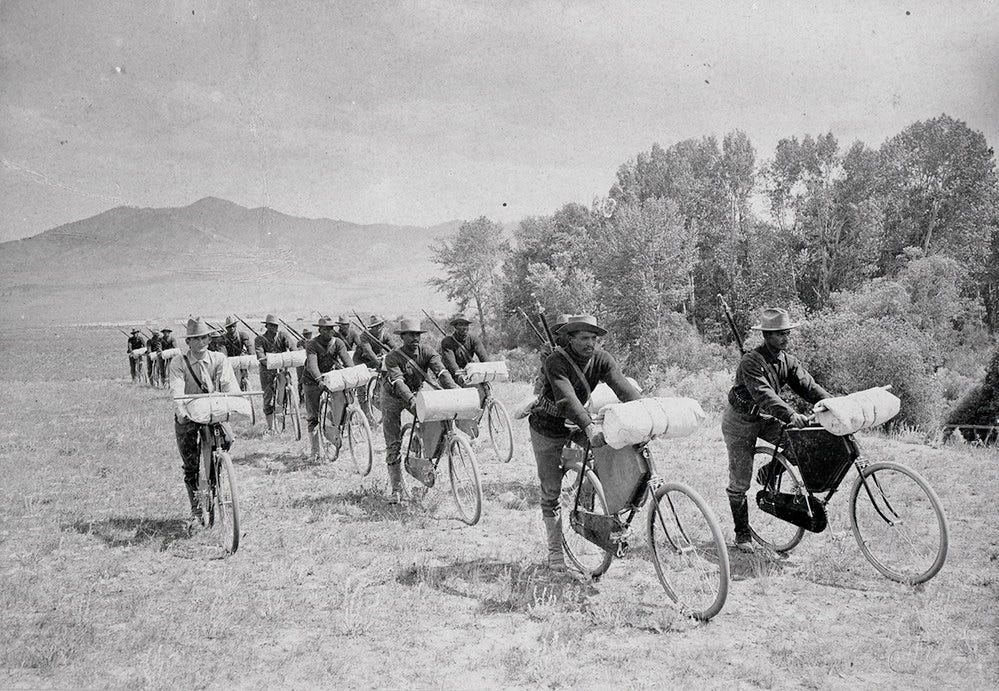
When we were on a rest day in Missoula back in April, I’d read Ellie the story of the Iron Riders, detailing some of the trials and tribulations they faced. We had already decided not to go to St. Louis, to skip the city in favour of a faster and more direct trail towards the Canadian border. We were hyper conscious of the ticking clock that is our 90 day visa waiver for travel within the United States; the current climate doesn’t feel like a good time to be in America without valid paperwork.
The story of the Iron Riders was inspirational. “Will we just go St. Louis?” Ellie asked. We both knew that following some of the roads that the 25th Infantry Regiment Bicycle Corps cycled would mean pushing a bit harder than usual, longer days in the saddle, fewer stops, and cutting our valid visa free period fine. I didn’t have to think about it for long. “F@€k it, let’s do it!”
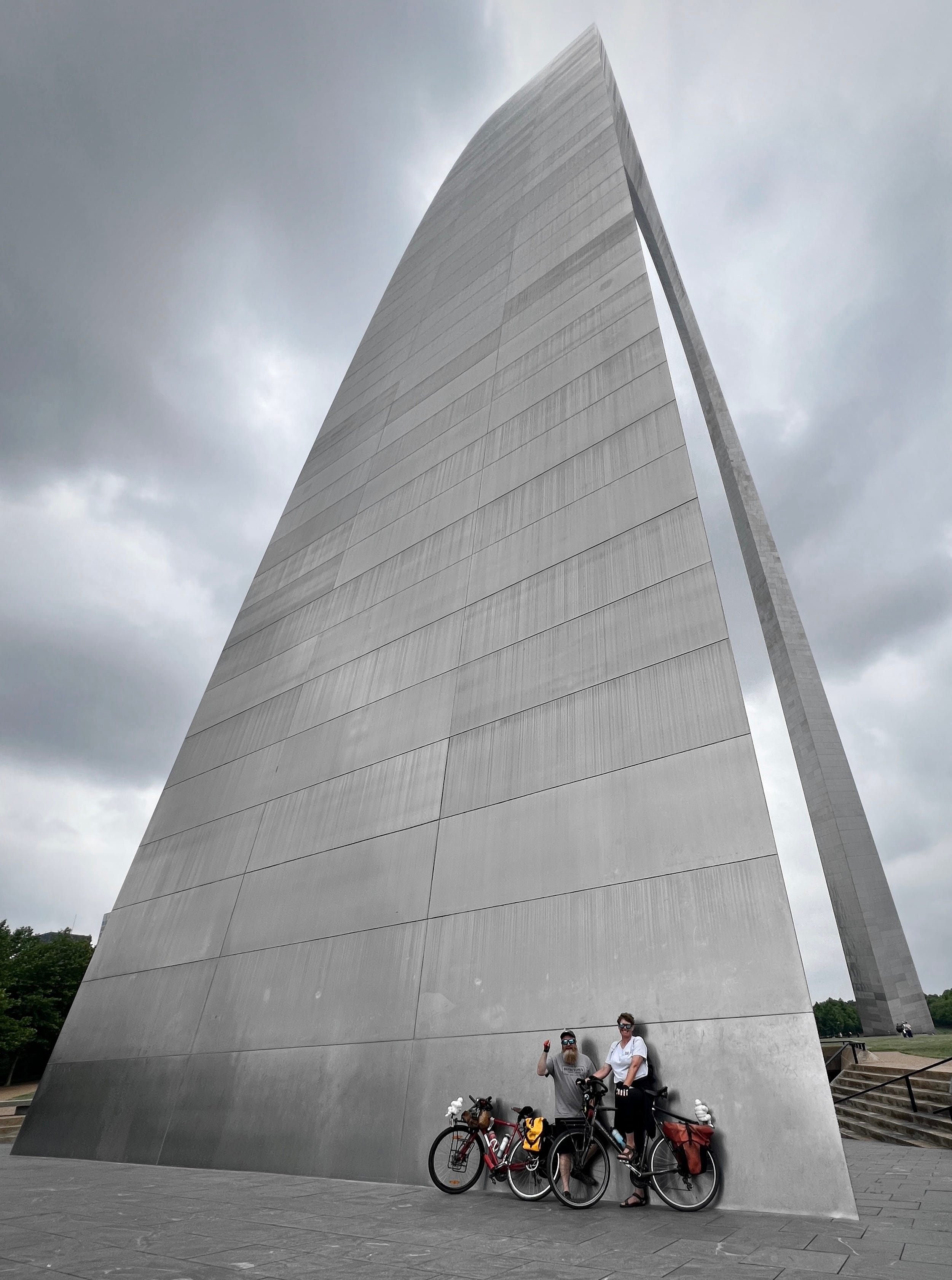
42 days later, as we rolled into St. Louis, we could see the Gateway Arch in the distance. We could feel the historical significance of this place as a starting and end point of some very important journeys. This is where the Iron Riders completed their mission. This is where the Lewis and Clark expedition began, and where it triumphantly ended. The Gateway Arch was built to commemorate these and other journeys that contributed to the western expansion of the United States.
When we’d sat down in the depths of an Irish winter, more than four years ago, we’d picked out the Lewis and Clark trail to take us most of the way across the United States.
Seeing the line on a map, and the towns dotted along it is one thing.
Actually completing the route, by cycling from Astoria to St. Louis, is a whole other kettle of fish.
We’d crossed the Rocky Mountains, the high desert, the badlands of Montana, the prairies, the Mississippi River, and there we were, cycling along Route 66, into the heart of the city of St. Louis, towards the Gateway Arch.
We’d completed the Lewis and Clark trail and we’d followed the tyre tracks of the Iron Riders.
That 192 metre metal loop that we could see reaching into the sky on the horizon felt like a significant milestone.
Two weeks earlier, we left Sioux Falls, South Dakota to follow a path that felt purposely planned by the universe to teach us some important lessons about life, kindness, and bellends.
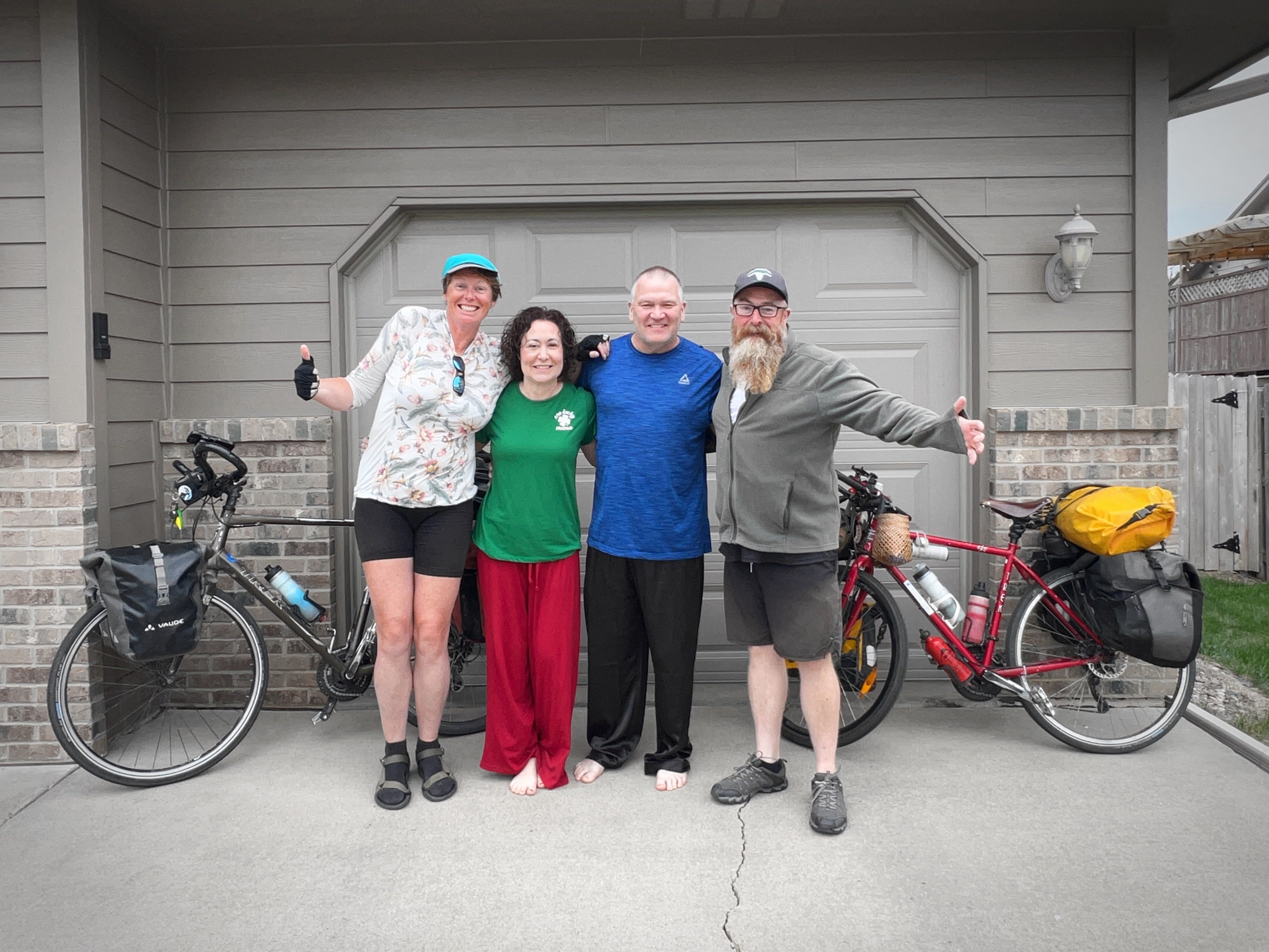
Emily and Erin had invited us to stay with them in Sioux Falls. Their generosity and hospitality was off the charts. We talked, we drank, we played pool, and we laughed. What we didn’t know at the time was that one of them was preparing for a very serious surgery a few days after our departure.
Maybe we were a welcome distraction. Maybe we were an annoying inconvenience. Whatever we were, when we eventually found out that these folks had much bigger things to be worrying about than the welfare of two bedraggled wanderers, we were even more humbled than usual by the kindnesses they’d extended to us.
They had purposely chosen not to tell us about the impending surgery while we were there. We were still oblivious to their medical situation as we waved them goodbye.
Not far down the road, in Sioux City, we passed a cyclist with a flat tyre. We doubled back to assist however we could. We’d noted that one of the differences between cycling in Vietnam and the United States is that in Vietnam, within seconds of starting a roadside repair, people would stop to try to lend some assistance.
By contrast, at one point on the road here in America, a pickup truck revved past us, the driver beeping and pointing at us fixing a puncture as he sped by laughing.
We are acutely aware that we play an important role in addressing the asshole/empath balance wherever we go. Whenever possible we’re trying to tip the scales in favour of the benevolent rather than the bellended.
In short, we’re trying to have a positive impact on the delicate balance of the agathokakological scales.
As we neared the edge of Sioux City, I found a wallet on the road. There was $300 dollars in there, along with some baby photographs, and a few ID cards.
We’re living beyond our means here in the United States at the moment. As we mentioned in previous posts, America is the most expensive country we’ve cycled in.
We’re trying to cut all the corners we can, but we’re still far beyond our budget each month. We’re feeling the pinch. Pocketing that money and dropping the wallet back on the road was tempting, but even without considering the kindnesses and generosity we’ve been receiving, that would have tipped the scales towards abysmal bellends. What if a laughing prick in a pickup owned the wallet? It felt like we were being tested.
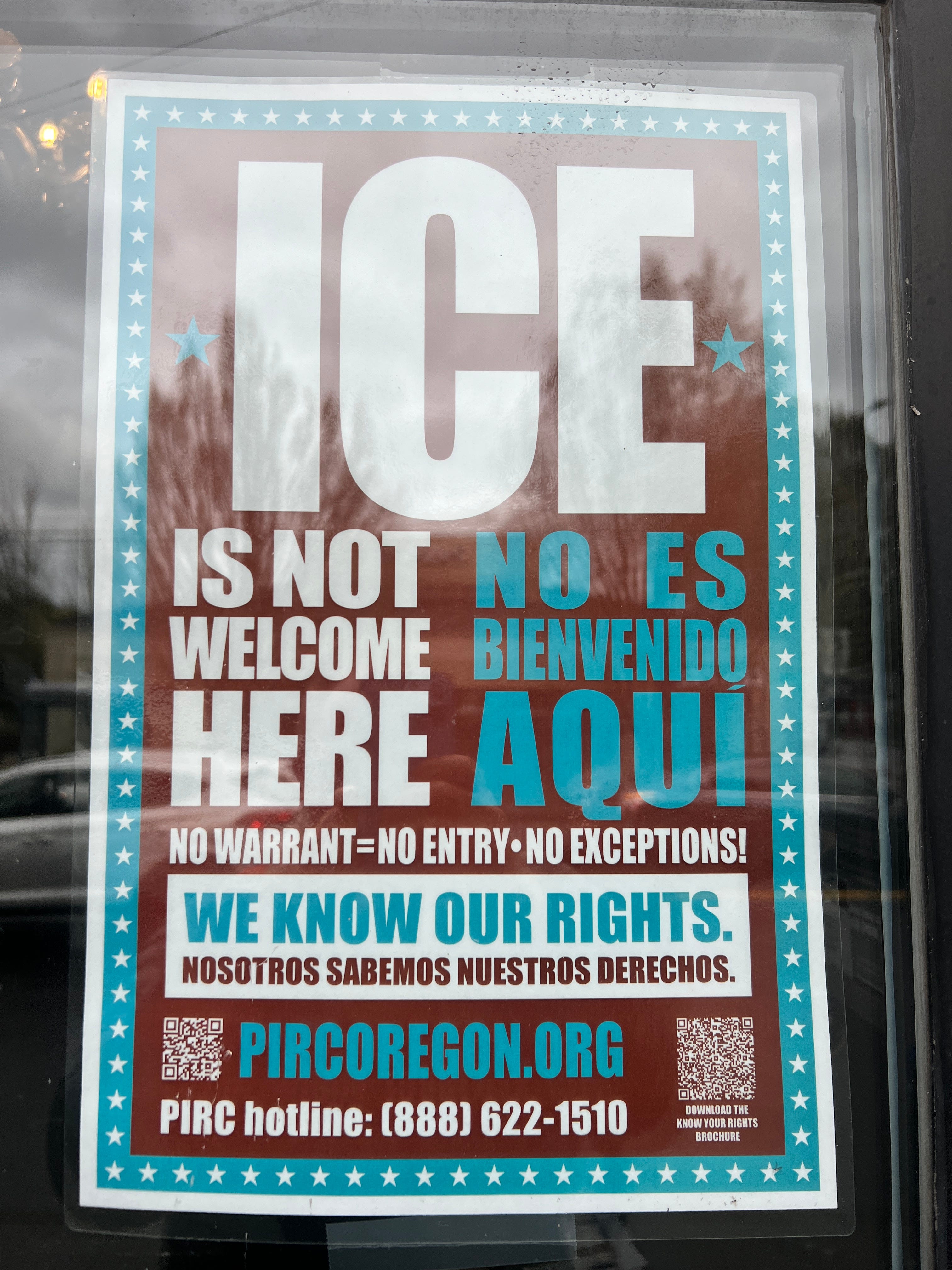
We dropped the wallet back to the address on the ID cards, getting some very suspicious looks from the neighbours and the young lad who answered the door as we did so. In neighbourhoods that have “Everybody welcome except ICE” signs in the window, and “Fuck ICE” scrawled on the walls, a couple of strange looking and very white folk calling to the house of a Hispanic family, looking for a resident by their full name, is regarded with grave distrust. We hadn’t realised the depth of the nervousness and suspicion until we were up to our necks in it.
We left the wallet with its owner’s brother, who quietly thanked us. He and the neighbours stood and watched us leave. Even as we cycled away, it felt like they were still unsure about us.
We’ve received lots of warnings about cycling in the United States at the moment. My favourite of these came from a post I added to the community Facebook page of a town we were visiting.
“I recommend you just keep peddling through,” a resident of the town warned us. “This town is full of scallywags, junkies, perverts, creeps, vampires, losers and dickshitters. If you decide to stop, I guess welcome to the Thunderdome B1tch. God bless.”
For a start I love that dickshitter is unedited but b1tch got watered down. I have no idea what a dickshitter is, but it sounds unpleasant. The “God bless” at the end was a nice touch.
The dude who posted this colourful warning was called out by another resident, who asked why they don’t just leave town if their opinion of the place is so low. As is so often the case with online community groups all over the world, this thread then descended into a string of insults.
The original poster told one of those who challenged him that they could stick their utopia up their “candy ass”, but he then politely finished this pronouncement with his habitual “god bless” sign off.
There’s a part of me that relishes watching online discussions disintegrate into mayhem. They read like realtime tragicomedy. This very American example, where the words “liberal” and “conservative” were being bandied about, on a post that I’d initiated, was particularly enjoyable. My fiendish glee at reading these townsfolk swapping insults was tipping that agathokakological scales towards the dark side. Maybe I’m the dickshitter!?
We later passed an extremely apt sign outside a church. It read “Love thy neighbour*” Beneath this maxim the terms and conditions of the asterisk clarified “*no exceptions.” The pastor must read the town’s community Facebook page.
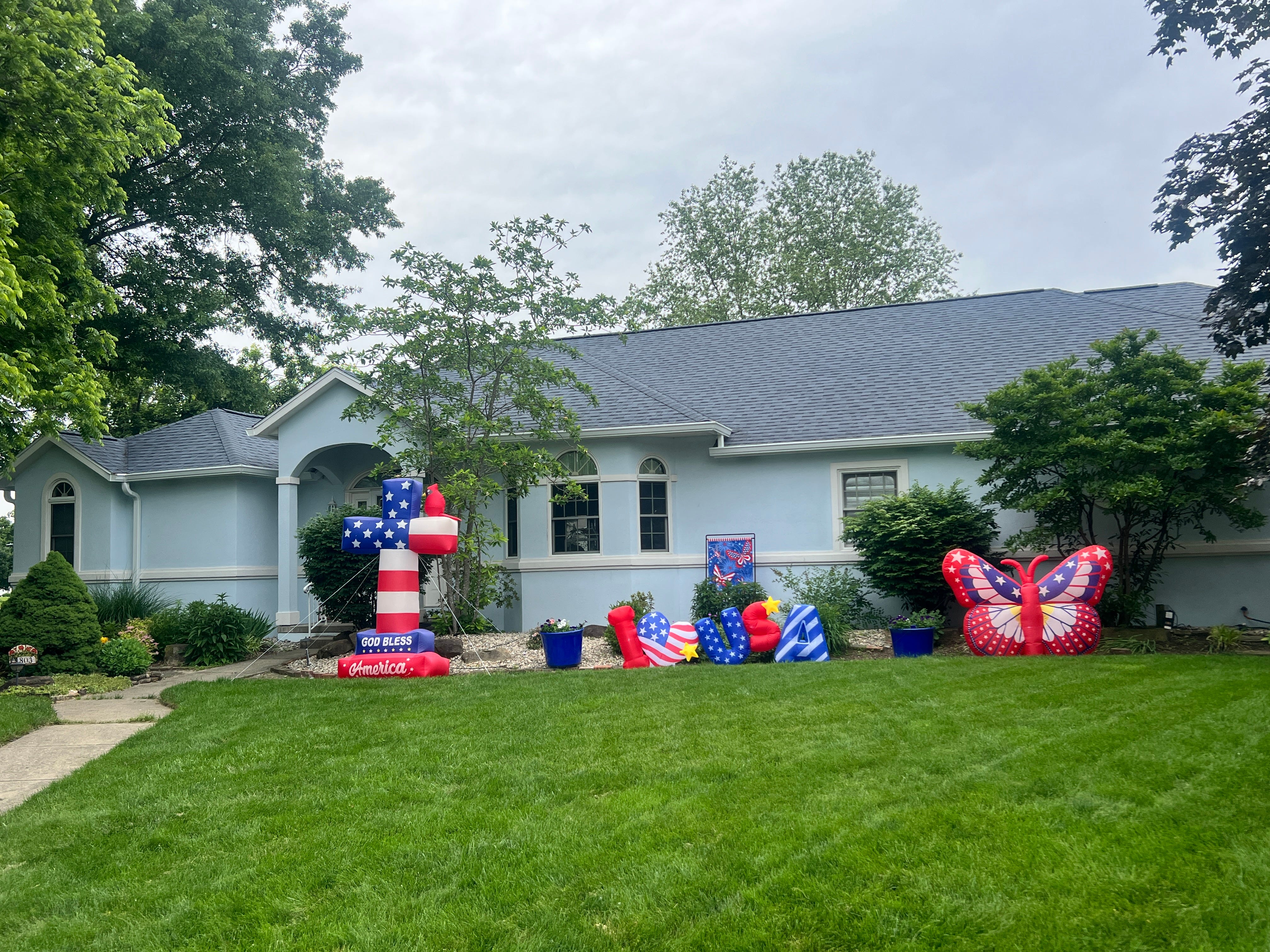
Many of the warnings we’ve received about drivers in the United States relate specifically to drivers of pickup trucks. The truth of the matter is that motorists in America are no better or worse to cycle amongst than those at home. America isn’t even in our top 5 of the most dangerous traffic we’ve encountered on this journey. Georgia, the country not the American state, still holds the #1 spot.
In the past 50 or so years, there’s been an exponential increase in the size of vehicles on the roads in the US, with pickup truck size increasing by 75% in some instances. Unfortunately, the width of some older roads hasn’t magically increased to accommodate the swollen SUVs. It can get a bit tight out there along the edges.

That said, some of the most bewildering and dangerous encounters we’ve had out on the highways and byways of the USA have actually been with pickup trucks.
There is an American motoring phenomenon known as “rolling coal” which involves modifying an engine to allow for one-off huge injections of fuel into the cylinders that causes a large plume of black smoke to be emitted from a vehicle when the engine is revved hard.
In 2021, the 16-year-old driver of a pickup truck in Texas seriously injured six cyclists when he ran over them as he attempted to roll coal beside them. It’s incidents like this that are behind some of the warnings we’ve received.
We’ve been treated to a few exhibitions of rolling coal as modified trucks have passed us on the roads. To underline one incident, the passenger of the truck stuck their arm out the window and stuck up their middle finger as they revved past.
No matter how many nice people you meet, or how much they help you, somebody reviving a truck at you and making the universal symbol for “fuck you!” stays in your head for the rest of the day as you cycle along the road.
Individual, extreme, and isolated incidents like this don’t come close to tipping the agathokakological scales fully towards the bellends, but they still manage to monopolise your thoughts. Maybe that’s why they do it: because they know that it will annoy, confuse, and frustrate. It’s rolled coal trolling.
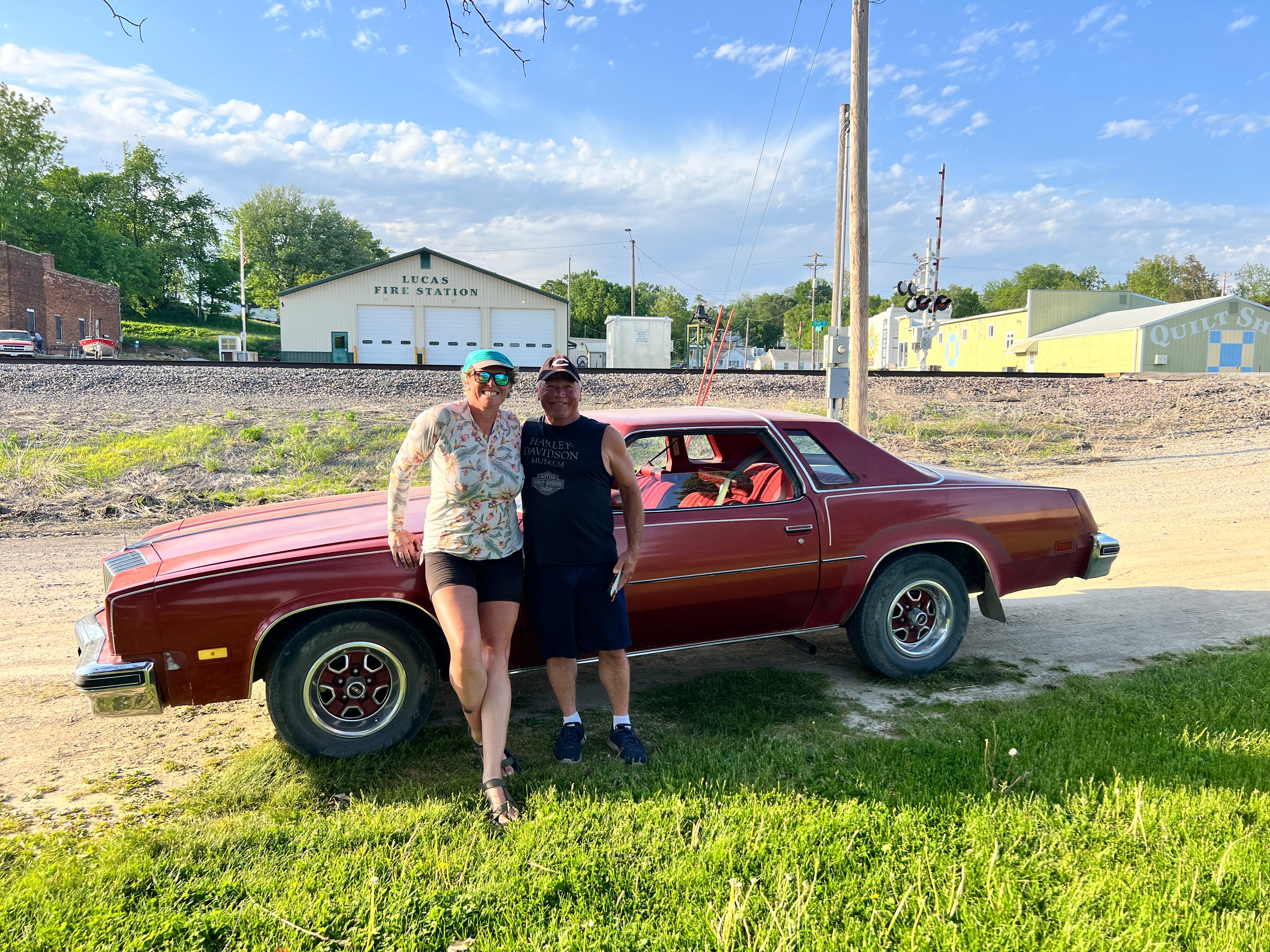
I was still trying to make sense of it at the end of the day when we were pitching our tent beneath a shelter in the park of a small town in Iowa called Lucas. Some heavy weather was on the way, so we found a spot that had a wooden sheltered area with picnic benches beneath it.
We hoped that setting up camp under cover would keep all of our gear out of the worst of the wind and rain. We weren’t relishing rolling our mats out on the concrete, but it wouldn’t be the first or the last time we’d do it.
The public toilets in the park were boarded up. There was no convenience stores in this town. Thankfully, we were well stocked with grub, and after Ellie called up to a house to ask them to fill our water bottles, we resigned ourselves to the prospect of making our toilette behind the hedges once the sun went down.
Just as dinner was ready and the tent was almost pitched, a beautiful vintage Oldsmobile pulled up beside the park. A friendly guy got out and confirmed that there was a storm coming in.
Without pausing to ask us anything about ourselves, he pointed at his house across the road and said “I gotta go into Des Moines for the night, but I changed the sheets on the bed, and the key is under the doormat. There’s water and sodas in the fridge. Let yourselves in, stay the night, and make yourselves at home. I might get back in the morning to make some coffee before you leave.”
Scott knew absolutely nothing about us, but he made his home available to us for the night, without him even being there.
We’d commented on his house earlier as we checked out the town. It was a beautiful old red brick building that used to be the town bank. “The old safe is still in there,” Scott said with a laugh. “We’ve never been able to open it. There’s a stethoscope hanging on it, and if you manage to crack it you can keep what you find.”
He told us that lawyers representing the old owners of the bank were trying to get that safe back, but it was now legally his and he is arranging to get a professional safe-cracker to come out to open it up. He reckons whatever is in there is worth more than what he paid for the old bank.
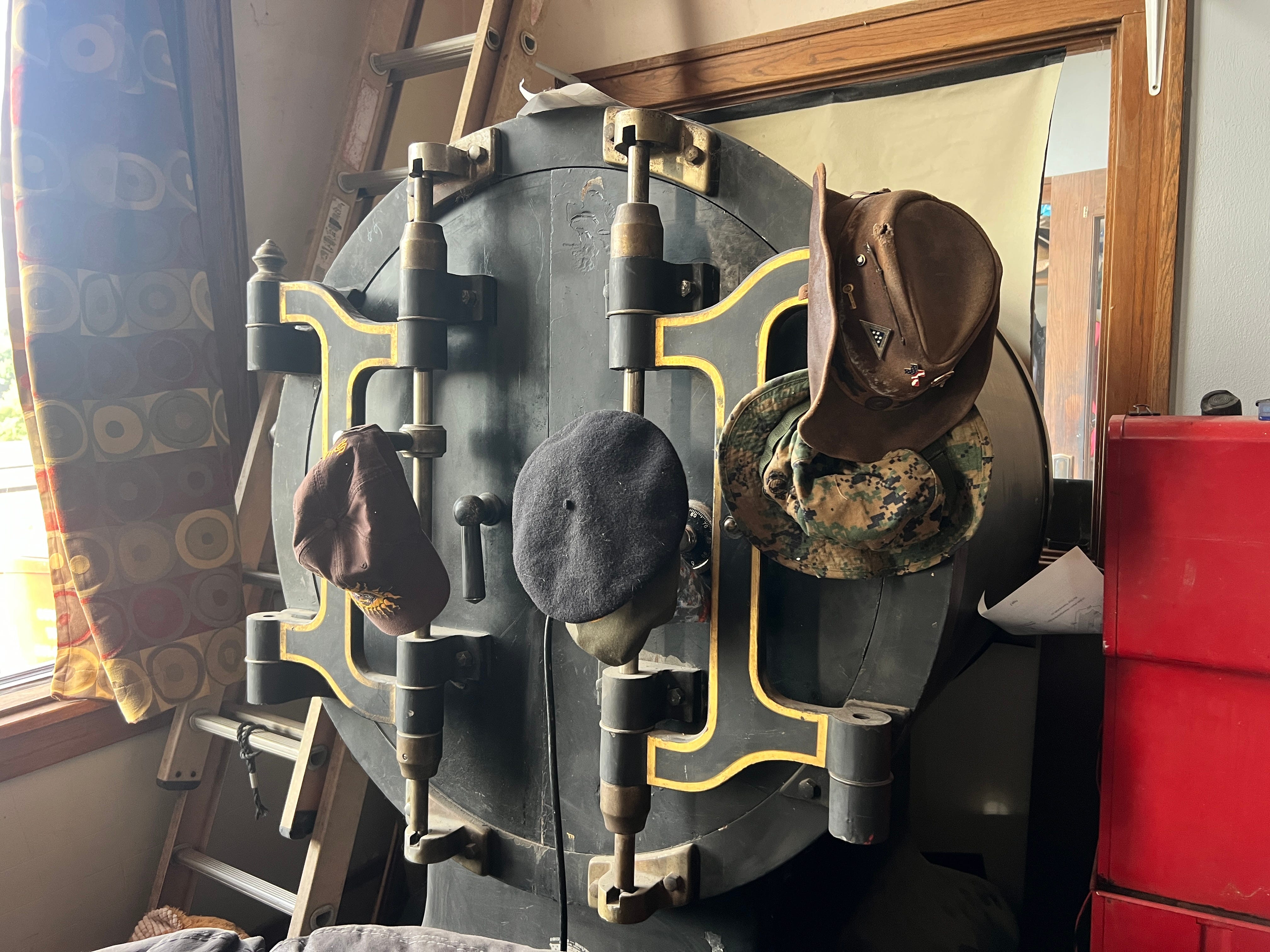
Scott’s house is as characterful as he is. He told us that there are 500 people living in the town now, but at the height of Lucas’ prosperity, the population was 7,000. We’d been cycling through lots of communities that are on the verge of becoming ghost towns. Lucas seems to be just about hanging on.
We didn’t manage to crack the safe, but we’d once again been advanced a hefty wad of hospitality and generosity. Those weighing scales of the callous and the kind thudded down heavily on the bright side, coal rolling trolls be damned!
As we made our way further east, the weather continued to deteriorate. Storm clouds gathered and the authorities upgraded their tornado watch to a tornado warning when a couple of serious storms started to make landfall in neighbouring counties.
There were also alerts for the golf ball size hail stones that we’d seen in the news a few weeks earlier. “What’s the forecast?” Ellie asked me as I checked my phone for an update. “Cloudy with a chance of deathballs,” I replied.
We were due to arrive in the town of Memphis, Missouri just before the worst of the storm would catch up with us. Pitching our tent out in the open seemed a bit foolhardy.
Undeterred by my last experience on a community Facebook group, I asked the good people of Memphis if they could help us out by recommending somewhere out of the weather that we could roll out our sleeping bags for the night. The response broke those agathokakological scales.
We were inundated with offers, suggestions and advice. Dave Wiggins has a farm just outside Memphis, but his uncle’s old place in town, beside the Wiggins Family Museum, was empty. Dave reckoned that his uncle, who had passed away, would have been delighted to help out a couple of travellers from the old country.
As we cycled into town a lady shouted after us “did you folks find somewhere to stay?” Two people stopped us on the street and tried to give us cash, and the local radio station asked us to come in for a chat. We were Facebook-famous in Memphis, Missouri.
We accepted all invitations and refused all offers of cash. We were already feeling a little like we were pulling some kind of con trick, capitalising on the generosity of these kind hearted townsfolk.
We stopped at a garage about 60km down the road the next day to get some cold drinks. “You must be the folks I heard on the radio,” a carpenter said to us as he filled his van with diesel. Both Facebook and forecourt famous it transpired.
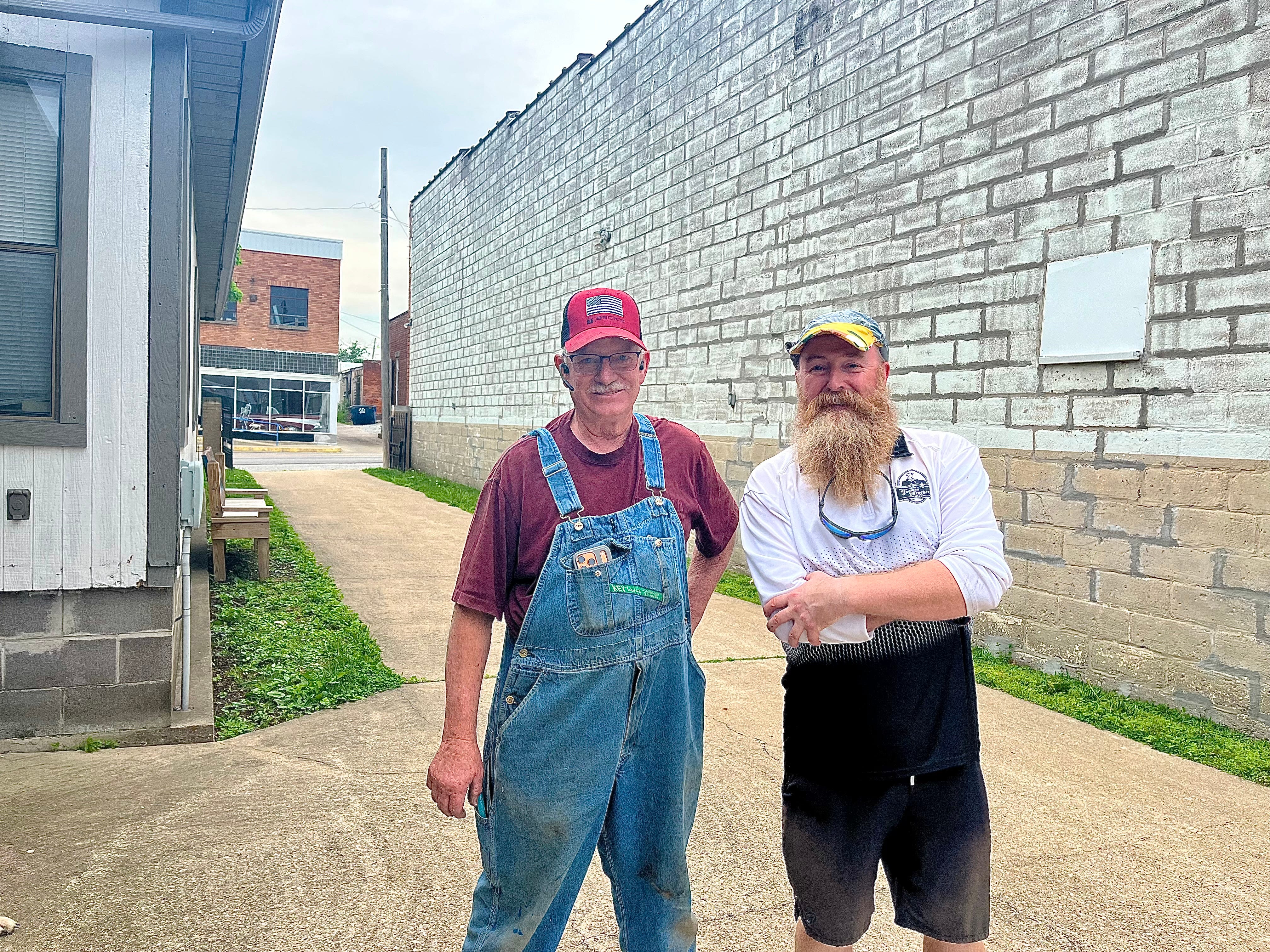
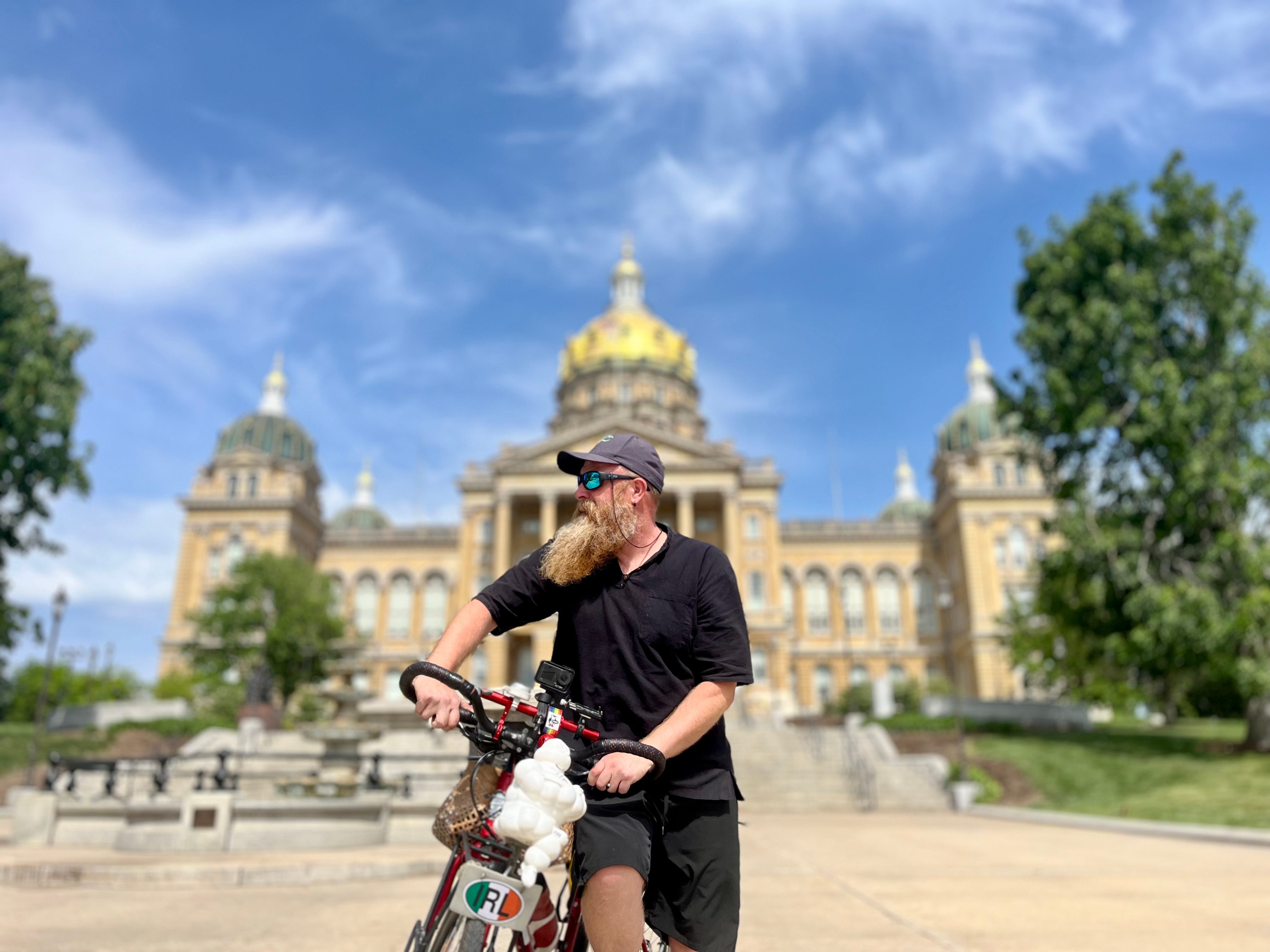
Before the weather had turned south, we had spent a couple of nights in Des Moines, the state capital of Iowa. Our wonderful WarmShowers hosts in the city were Mindy and Scott. Mindy’s work in cycling infrastructure meant that some of the trails we’d been following into town were things she had worked on.
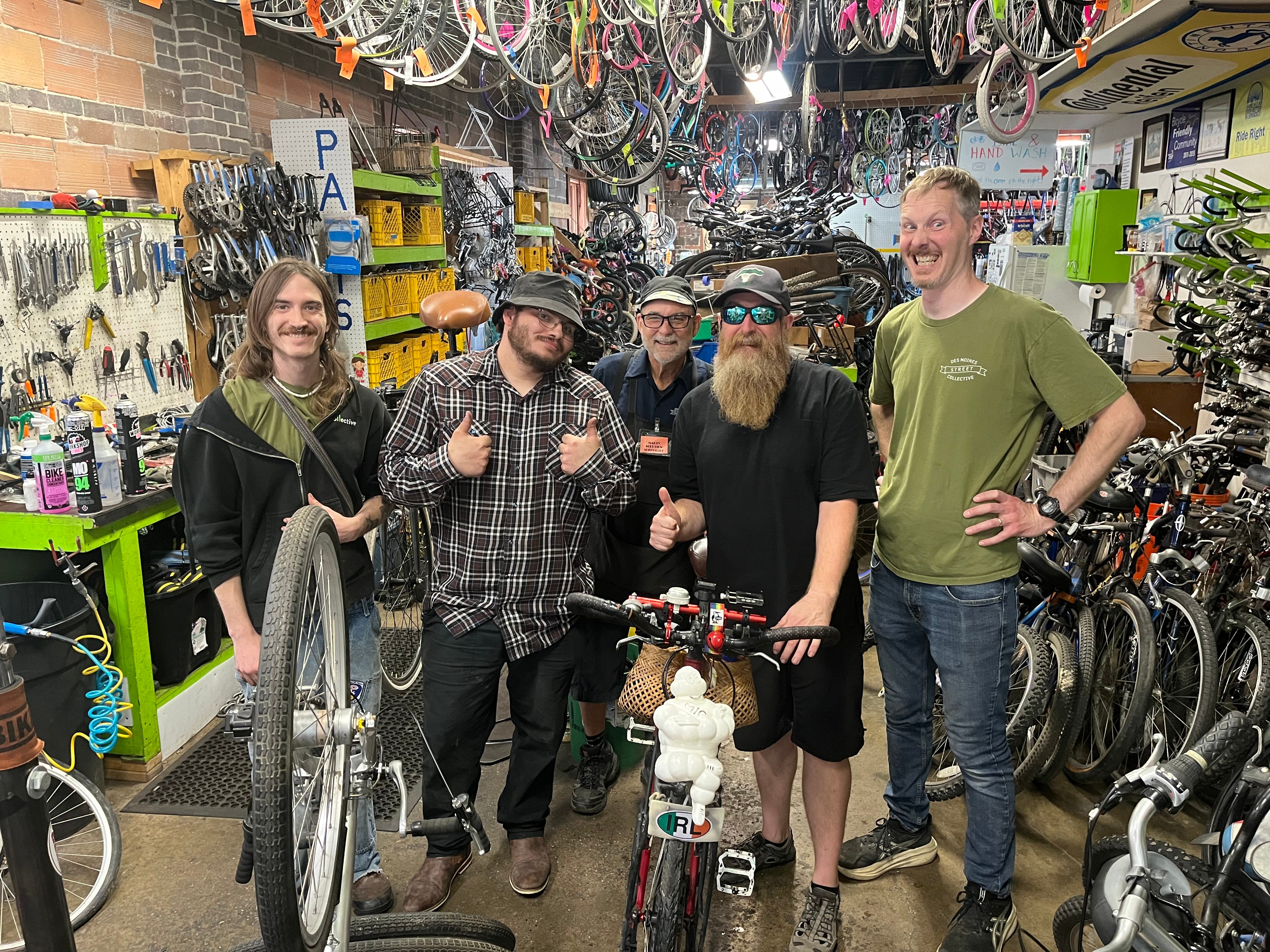
Mindy also used to be involved with the Street Collective bicycle cooperative in the city.
They provide work bench time, tools, classes and advice for folks interested in building and fixing bikes. We spent an afternoon there working on our bikes, and for the first time on this trip we had the tools and space to change our own bottom bracket.
When Mindy’s husband Scott met us at their door, he was wearing a t-shirt of famous Irish authors. We were made feel immediately at home. Scott cooked us amazing meals and we had the best chats with himself and Mindy. The scales weighing up the benevolent and bellended was completely redundant in Des Moines.
Crossing the Mississippi was a moment we’d been looking forward to for a while. We reckon it must be the most sung about river in the English language. Our crossing of Old Man River also saw us skipping over the border from Missouri into Illinois.
We long ago noticed that due to the scale of the United States each new state feels like a different country. Nowhere was this sensation more pronounced than it was when we crossed the Mississippi.
On one side of the river it was country music and corned beef, on the other it was blues and barbecue. The change of culture we experienced by having just crossed over one bridge was incredible.
We spent the night in the cheapest motel we could find in the town of Quincy on the banks of the Mississippi. It’s an impressive city, streets lined with tall, ornate, and commanding red brick buildings. At the height of riverboat trade along the river it was a bustling and wealthy metropolis.
Samuel Clemens was born a little ways downriver of Quincy, and he worked on the riverboats along this stretch of the Mississippi. When he became an author, he took his nom de plume from one of the boat-piloting terms that would often be shouted to the helmsman and captain of the steam boats he crewed that tied up in Quincy. When a boat entered two fathoms of water the pilot would shout “mark twain!”
The most striking thing about those grand buildings in Quincy now is that many of them are empty.
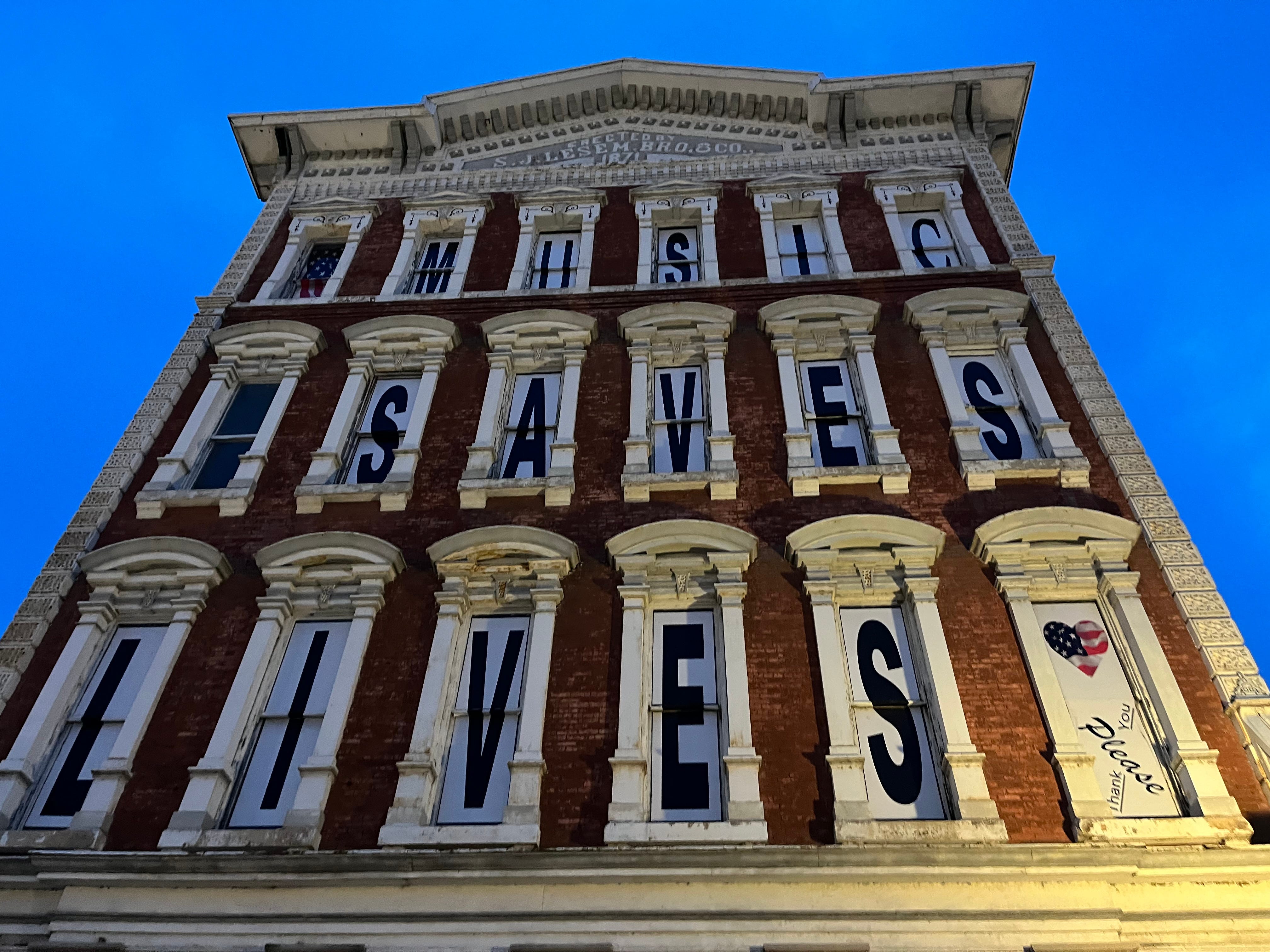
It’s mind-boggling to see so many of these imposing and beautiful buildings sitting dormant. When we asked why there isn’t anything being done with some of them we were told that Illinois state legislation makes it unmanageable for anyone who tries to do something worthwhile with the empty structures.
It felt like Quincy was replicating Lucas, but on a much grander scale. Coincidentally, one of the most impressive empty buildings in Quincy was also an empty bank. We could see the safe through the window. It was open and empty.
Towns with derelict buildings, closed businesses, and dropping population numbers was becoming a recurring theme on our bicycle journey across America.
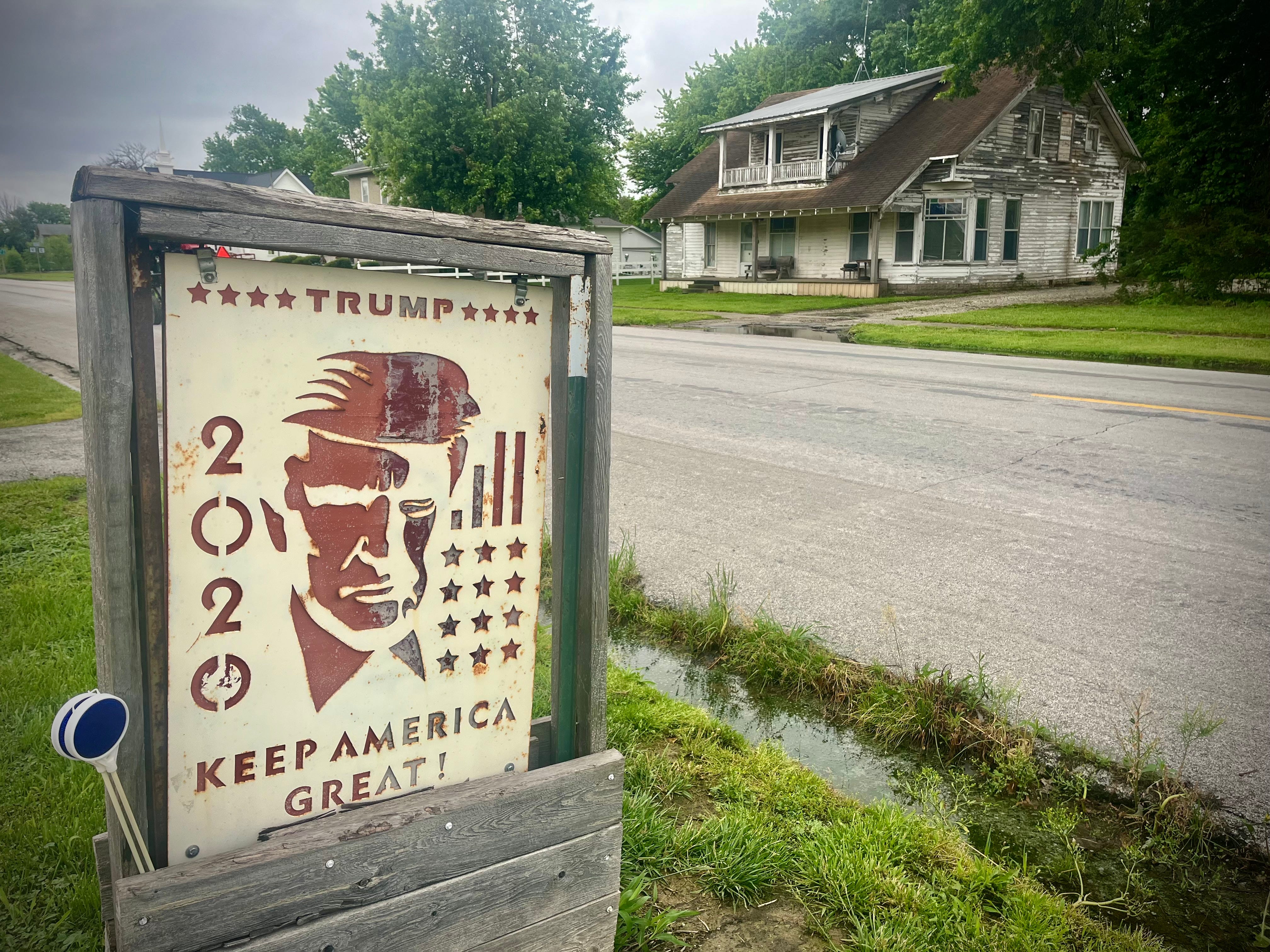
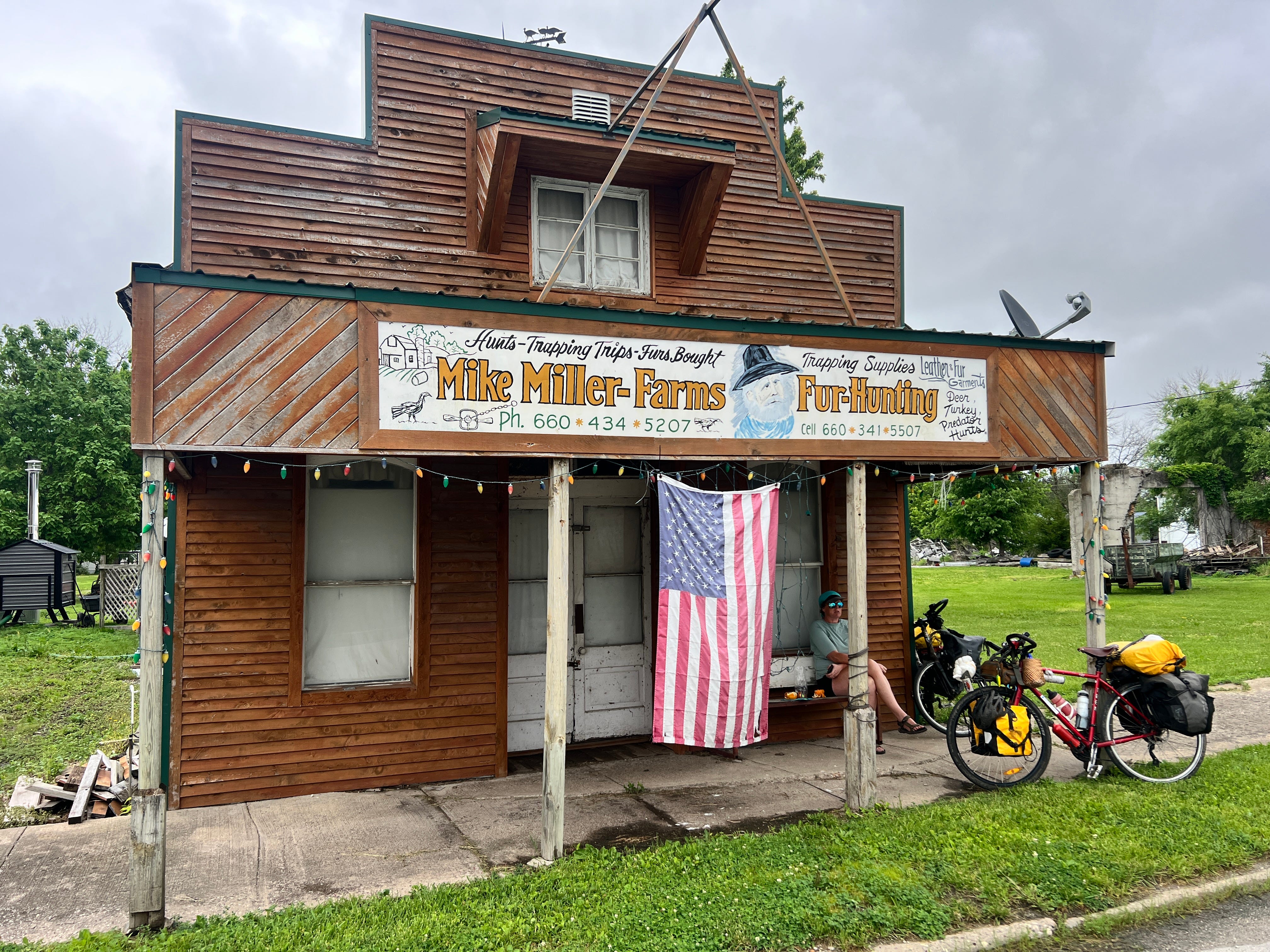
One of the most stark examples of these was Knox City, Missouri. We stopped there for a sandwich break the day before reaching Quincy. There are more churches in that town than open businesses. There is no grocery store. The number of empty and dilapidated buildings is shocking. The town hall is in a ramshackle building, with the back of it disintegrating into rubble.
We sat on a bench outside a closed hunting supplies shop, next to a closed pub, and ate our sandwiches watching a whole heap of nothing happening on the Main Street. As we left town a lone dog barked, and a sign supporting Donald Trump in the last election read “keep America great.” It was difficult not to be depressed by it all.
During these two weeks on the road in the United States the overwhelming theme has been kindness and generosity. We don’t need a scales to tell us that the one-to-one encounters we’re having with people from all walks of life are filling our hearts and affirming our faith in human kind.
Outside those one-to-one encounters, the lasting feeling I have from cycling through small town mid-west America over these two weeks is one of underlying sadness.
Disintegrating towns populated by folks arguing with each other about politics and trivial differences instead of channeling their energy, skills, and talent towards some common good all contribute to that feeling.
The Iron Riders made it to St. Louis, but their expedition was not successful. The army disbanded the Bicycle Corp after their first and only mission.
Sgt. Mingo Sanders was one of the most respected members of the Iron Riders group. After 25 years of outstanding military service in the 25th Infantry, he was wrongfully dishonourably discharged, along with 166 other black soldiers, by President Roosevelt in an infamous case of racial injustice known as the Brownsville Affair in 1906. Neither Sgt. Sanders, his family, or any other of the soldiers involved, received any military pension. All 167 soldiers were granted a posthumous pardon from President Nixon in 1972 after a new army investigation found all the accused innocent.
Part of the reason I wanted to follow the Lewis and Clark route was to cycle through the huge Sacagawea-shaped hole in the story of that expedition. How her life ended is unclear. She either died of a fever shortly after the epic journey or rejoined the Shoshone tribe and lived to be 100 years old. However she met her end, learning about the ways in which she was an integral part of the Lewis and Clark expedition has been enlightening.
The complexity of that western expansion, supported by the 25th Infantry and others, feels like something that does still need a scales of cost and benefit to be applied to it. Not just for the all of the people involved, but for the land and for the collective consciousness of all of us who have been influenced by it.
When the American government’s support of the genocide being carried out by Israel in Palestine is viewed through the lens of the celebration and mythologising of the western expansion of the United States, there is a chilling logic to it.
“Freedom is not free,” read a gravestone at an American military memorial we cycled past recently. That sentiment has stayed with me. Exactly who pays the price for freedom? What does it mean to be truly free? It feels like the answer to both those questions is deeper and broader than that military memorial intends.
It’s not surprising that it’s during our time in America that we’ve been less regular and much later with posts than we have from any other country. The further we cycle into America, the more difficult it is to fathom. We long ago passed mark twain.
Rather than catalogue a list of what we did and when we did it, we’re trying to document how our experiences make us feel, what we think about those experiences, and how they’ve changed us. Figuring all that out before getting to write it down isn’t always easy or timely. Apologies for that.
Even much later than usual, I’m still wrestling with what exactly these two weeks have meant to us. What have we actually learned? Maybe finding out that agathokakological is a real word, and that it takes us one day longer to cycle from Missoula to St. Louis than the Iron Riders is enough.
If you enjoy reading about our journey and our existential crises, maybe you would you consider buying us a coffee to fuel us getting through both? Thank you.
No posts
Comments
Nothing yet. Say the first thing.
Sign in to join the conversation.