
Such is the competition between soft drinks giants PepsiCo and Coca Cola in the US that in small-town restaurants, when the waitress comes to ask diners what they want to drink, you’ll hear old farmers ask, “do you carry Coke or Pepsi?” before selecting a soft drink.
They know that if the restaurant serves Coca Cola, they can have Coca Cola, Sprite, Fanta, Dr Pepper, Barq’s Root Beer or Minute Maid.
If the restaurant serves PepsiCo, they can choose Pepsi, Mountain Dew, Starry, Mug Root Beer, or Crush.
These are served in huge 20oz tumblers and refills are free: set down your cup empty at any stage during the meal and a waitress, keen to make tips, will come and fill your glass right back up again.
20oz of Coca Cola or Pepsi contains 16 teaspoons of sugar, so if you go for one free refill, you will have consumed 32 teaspoons of sugar alongside your meal. Of course there are “Diet” options, which give you a vast dose of Aspartame, listed by the International Agency for Research on Cancer (IARC) as a possible carcinogen, instead.
“Oh honey, don’t drink the water in this town,” a waitress in Jordan, Montana had said to me with a laugh. “If you did that, you’d be sick for a week.”
I sighed. “Ok. Do you carry Coca Cola, or Pepsi?”
I had so much wanted to hydrate without sending my poor pancreas into shock. But there wasn’t any water, not even bottled water. Just Coke or Pepsi.
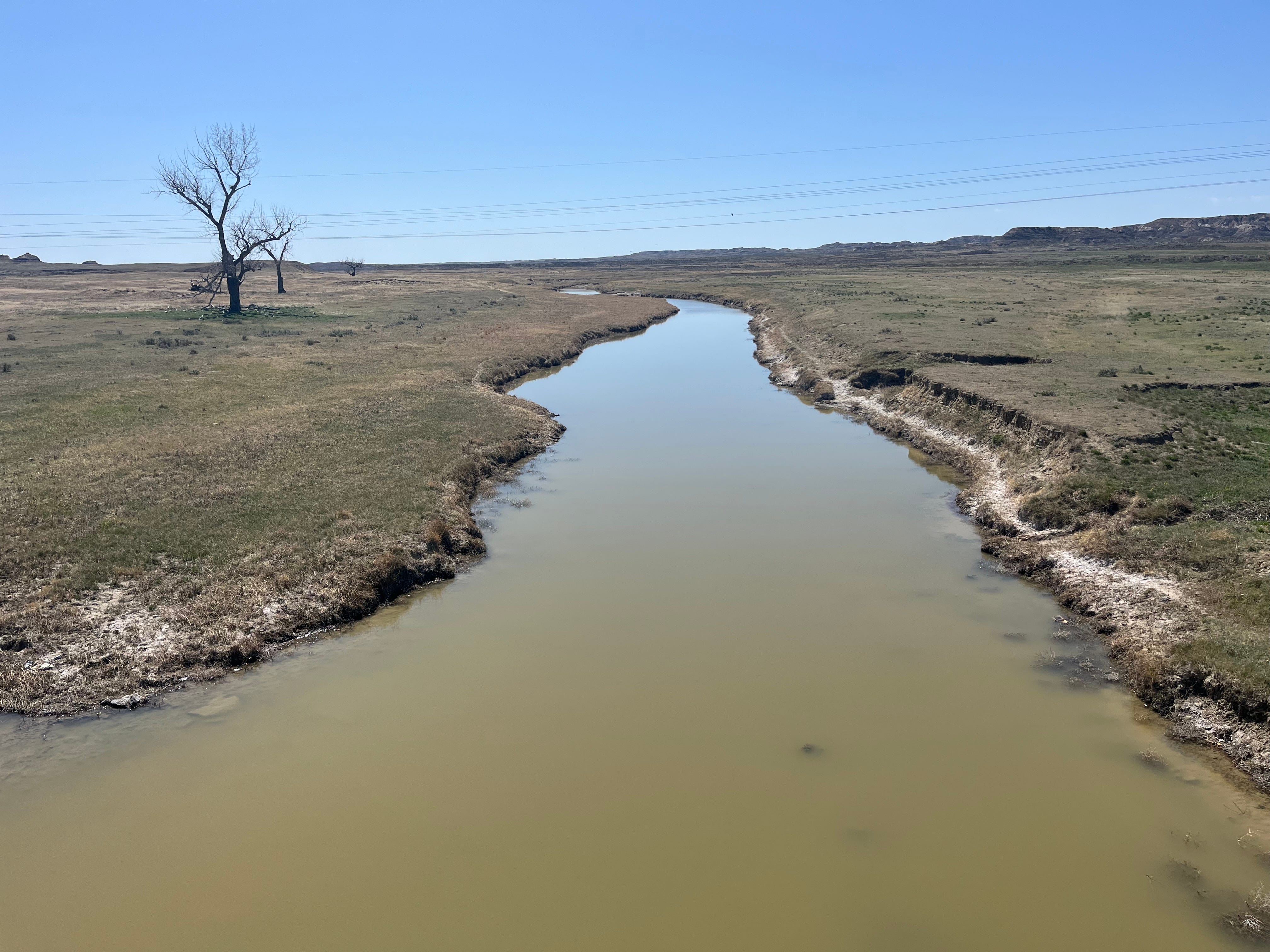
Throughout the prairies of Montana and North Dakota, which used to be a great prehistoric seabed, you can find whitish powdery alkaline salts ringing lakes and ponds and drying creeks. The water is very hard. A lot of the water is privatised. Some has issues with nitrates and other farm run-off. In short, many people can’t drink the water that comes out of their taps.
The choice between Coke and Pepsi has come to serve as a very good metaphor for the current state of US politics for me. Even the colours are the right ones.
It’s a false choice between two kinds of junk: Coke or Pepsi. Both will make you sick, and neither will quench your thirst or even address the issue of why your simple need for water isn’t being met.
While people are busy asking “Coke or Pepsi?” (Republican or Democrat) and then hemming and hawing over their illusion of choice, the thing they really need, and that would actually be good for them and support their lives is being destroyed.
Natural resources are being polluted and carved up for profit. But we’re all fighting over red or blue.
Everywhere we go, it’s clear that the divisions in American life, fomented and manipulated by targeted social media ads and a virtually unburstable filter bubble, are reaching crisis point.
Divide and conquer.
Personally, I am not interested in fomenting division. I am looking for what unites us, and sometimes this means encountering beliefs you don’t share. And there’s nothing wrong with this, apart from my own discomfort, which is mine to overcome.
At the start of our week in North Dakota, I was very happy with this position. By the end of the week, in South Dakota, I wasn’t so sure.
Bismarck is North Dakota’s state capital, but not its most populous city: it’s home to 80,000 people, while Fargo claims 125,000 inhabitants.
As soon as we cycled into Bismarck’s outskirts across a bridge over the broad gravel shallows of the Missouri, we were greeted by two Igoes on bicycles.
Cody Igoe and his daughter Charley guided us back to their home to meet Cody’s wife Andrea and Charley’s brother and sister, Nash and little Wyatt.
Mark had posted an introduction and request for recommendations on a Bismarck community Facebook page, and Cody had offered to put us up for the entire duration of our rest stop in Bismarck. This act of incredible hospitality and generosity to strangers didn’t stop there: he put together a whole itinerary of interesting things for us to do, including a surprise for the second morning of our stay, and he wouldn’t tell us what it was going to be.
“Cody is really, really good at surprises,” Andrea told us with a smile, but she would divulge no more.
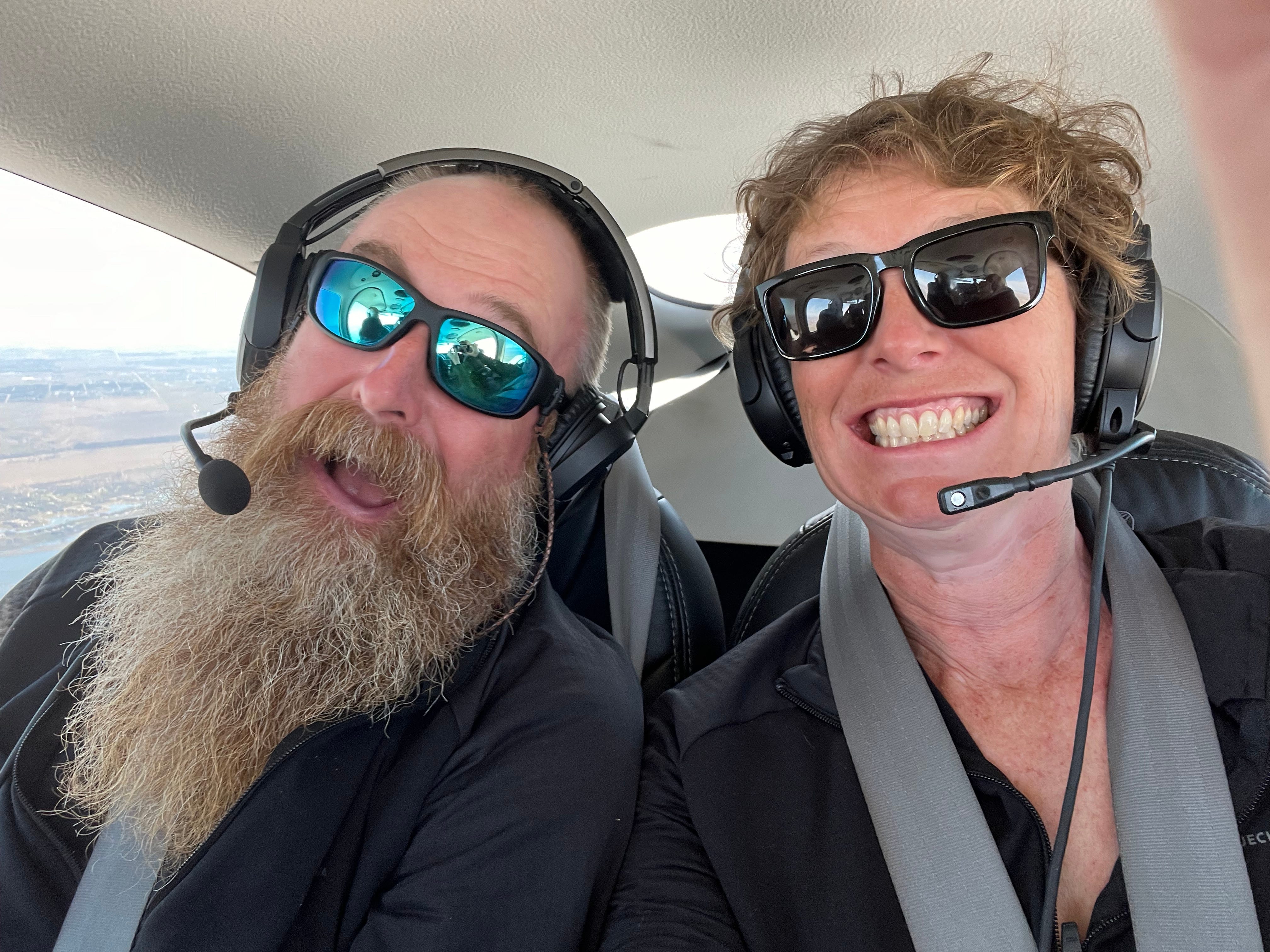
We were a tiny bit nervous the following morning, and I got even more so as Cody’s truck turned into what was clearly a flight school and air field, and it became apparent that our surprise was a trip in a light aircraft to see Bismarck from the sky.
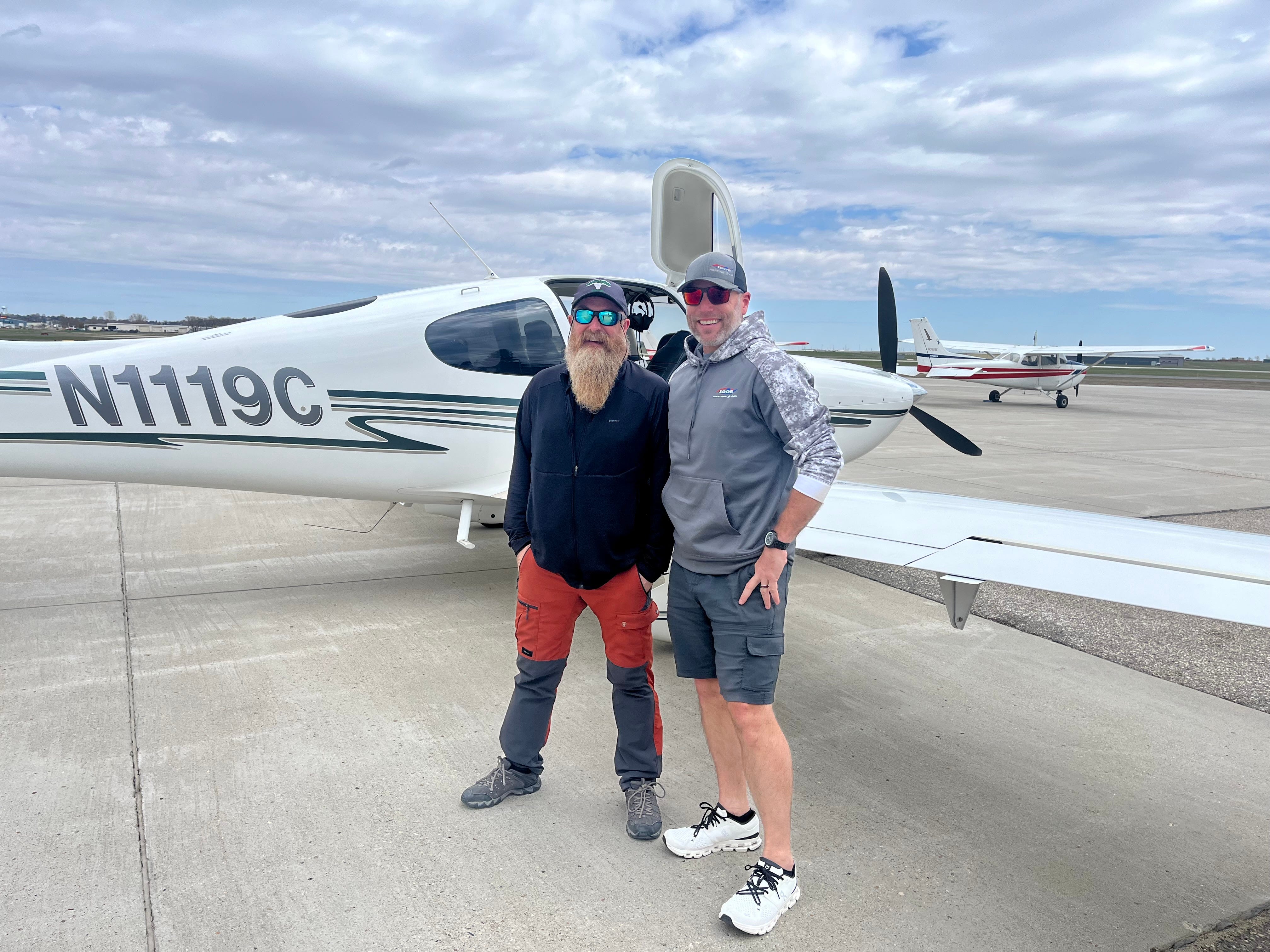
I’m a little scared of heights, and I really really didn’t want to let the side down by emitting squawks and screams.
We met Bob Simmers, the founder of Bismarck Aero Center and our pilot for the morning, and I should have been put at ease by his 50-year flight safety record, but I still had unpleasant butterflies of the stomach as we made our way out onto the runway and into a tiny little four-seater Cirrus aeroplane.
It was fine. Better than fine: it was truly an amazing surprise and a fantastic way to see some of North Dakota. Having crossed the badlands at 20km an hour, we now got to see them at 200km an hour, from high above.
Bob took us out to see the coal mines and oil fields, and we flew over Garrison Dam, which was built in the 1950s and created Lake Sakakawea, a 1,240 km2 reservoir that provides Bismarck with water and produces hydroelectric power.
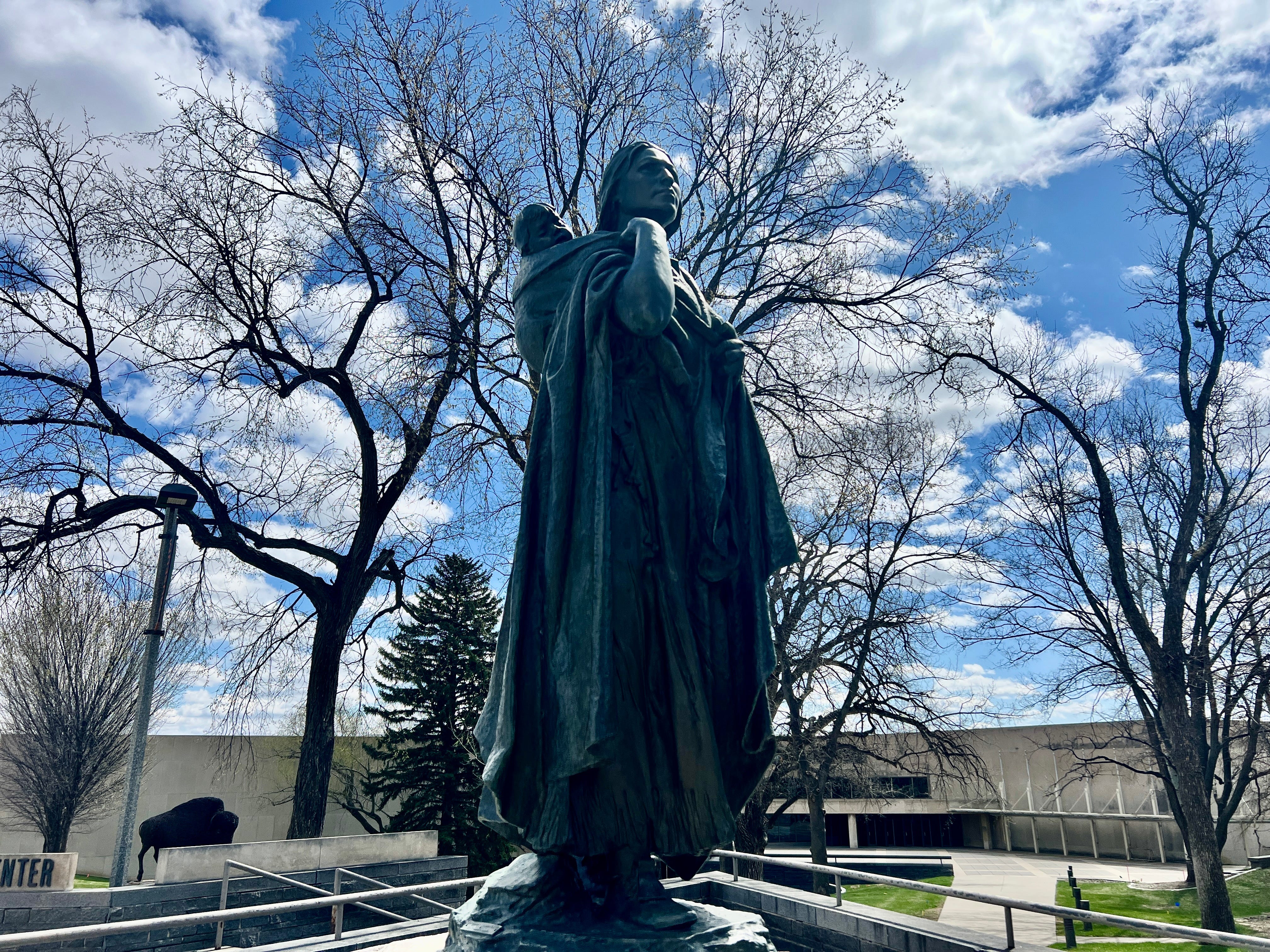
Sakakawea is what people in North Dakota call the Native American woman who travelled with the Lewis and Clark expedition who we have mentioned in past instalments because we’ve been roughly speaking following in their footsteps.
She actually joined the Lewis and Clark expedition near Bismarck; she had been kidnapped from the Shoshone tribe further west by Hidatsa people, and sold to Toussaint Charbonneau, a French fur-trapper, when she was in her teens.
We had always heard her referred to as Sacajawea, or sometimes Sacagawea with hard “g” sound.
Mind you, William Clark, whose diaries form the backbone of Lewis and Clark expedition history, was nothing if not a terrible speller and he variously referred to her as Sahkahgarwea, Sahcahgagwea, Sarcargahwea, and Sahcahgahweah in his writing.
“Why do you call her Sakakawea?” I asked Cody. He laughed. “Because that’s her name.”
“Her name may well be both,” Lori Nohner, a research historian at North Dakota State Museum told us the next day, when we were back on terra firma and the thrill of the plane ride had worn off.
“Hidatsa people say her name is Sakakawea, which translates as Bird Woman, but Shoshone people say it is Sacajawea, which means ‘boat launcher’ in their language,” Lori elaborated.
How nice: everyone has a point, and everything is a matter of perspective.
A visit to the North Dakota State Museum was another of Cody’s outings, but not content with just a visit, he arranged for Lori to give us a personal behind-the-scenes tour of the museum’s impressive collection of artefacts.
Having seen the bird’s eye view of North Dakota from the air, now we got to delve into its minutiae, getting up close and personal with artefacts ancient and new from the lives of its people.
It’s a fantastic collection and it was hard to leave.
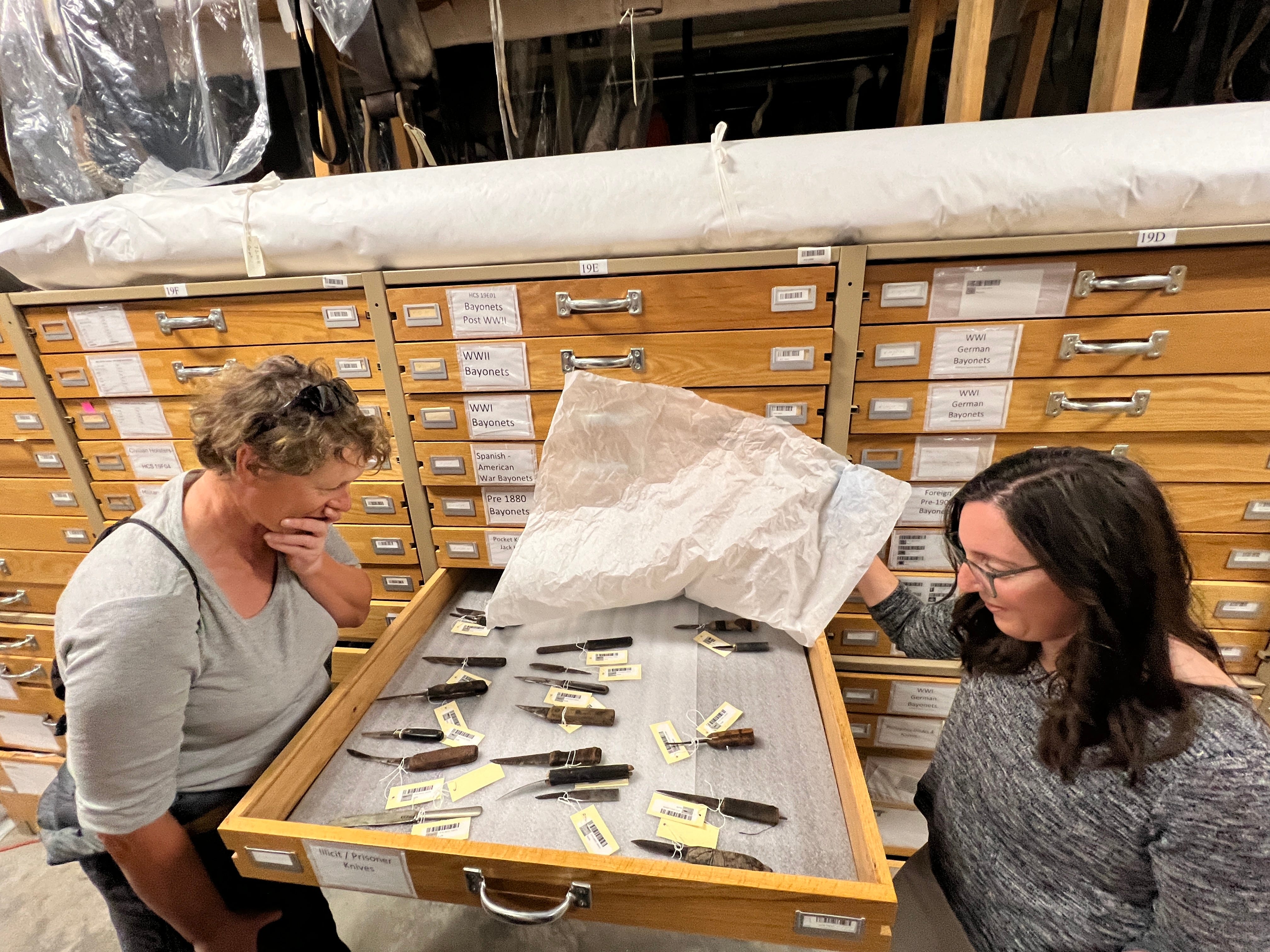
A whole drawer of improvised shivs and shanks confiscated from inmates at the State Penitentiary in the 1970s grabbed our attention.
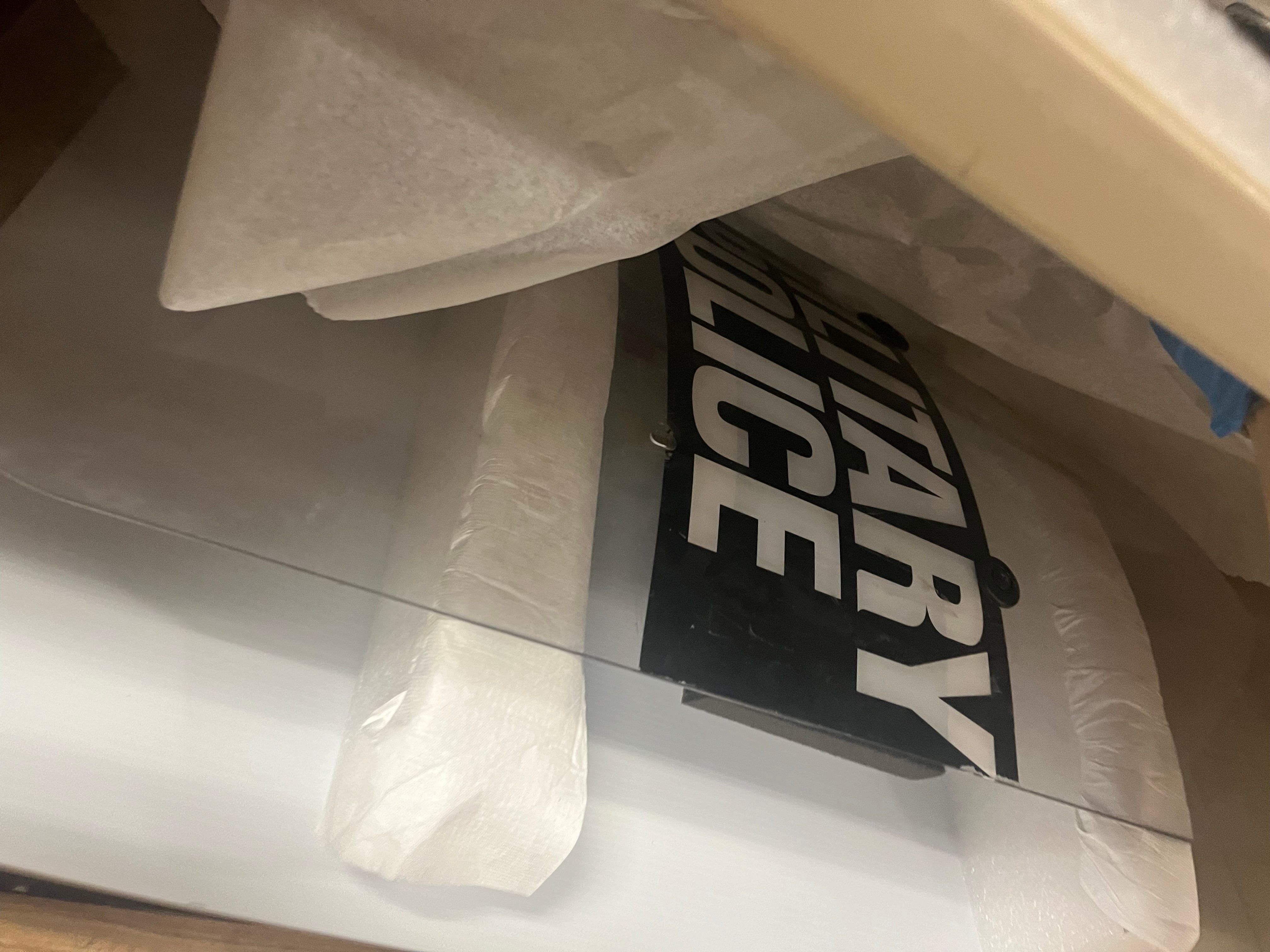
Nearby, there was a collection of objects from the Standing Rock Dakota Access Pipeline Protests of 2016, including riot shields and headgear from police, and personal items left behind by protestors.
Cody has a particular connection to the museum: his grandfather was Bill Guy, North Dakota’s longest standing governor, who helped get the museum off the ground in the first place: it was one of the proudest achievements of his enduring political career.
Bill Guy was a Democrat, and he was personal friends with JFK.
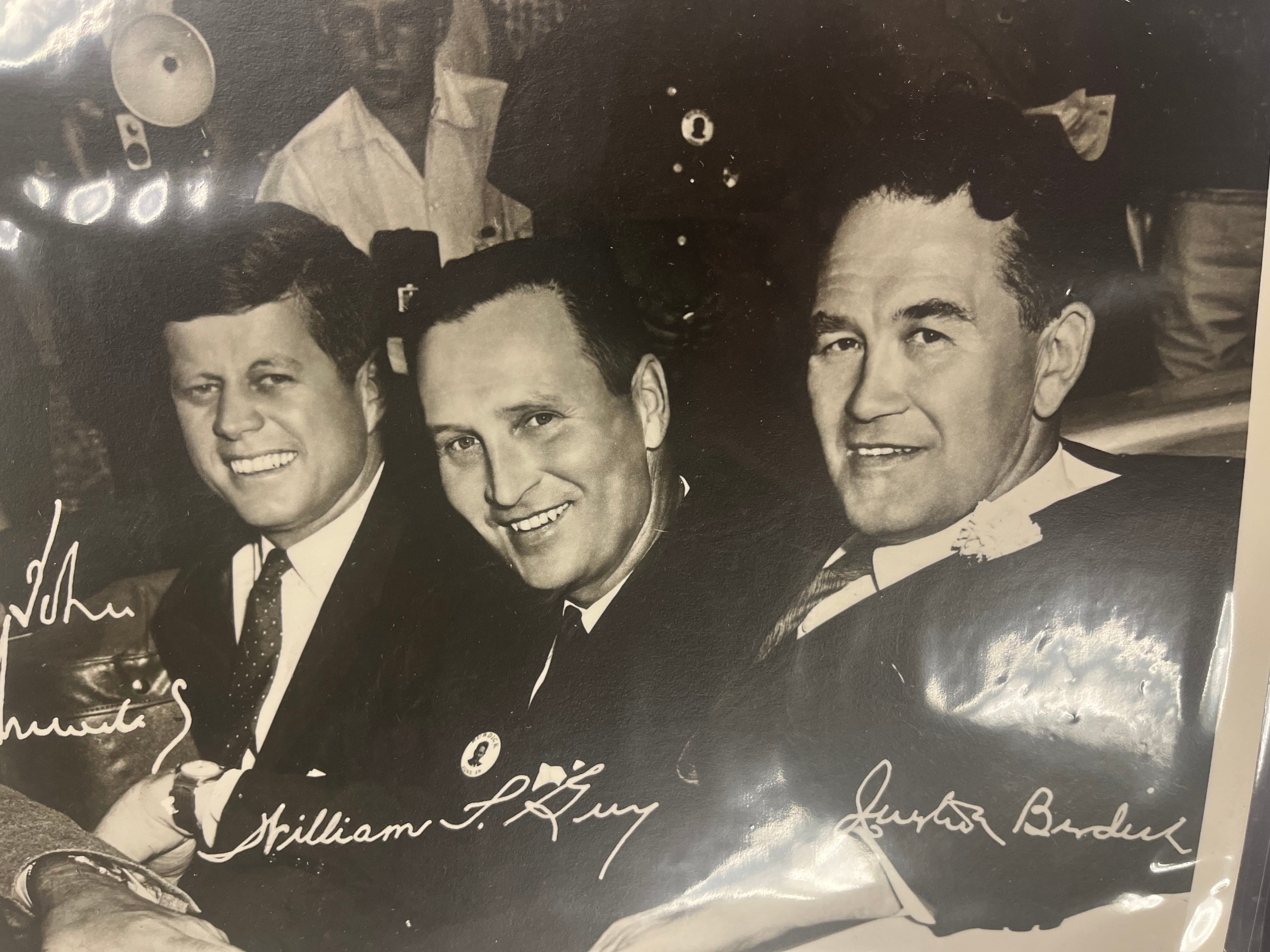
Towards the end of our museum visit, Lori took us to the archives where we saw a selection of the correspondence between the two men: some, JFK signed simply “Jack.” There was a letter from JFK congratulating Bill Guy warmly on his election success, and another thanking him for raising the issue of poverty amongst farmers in North Dakota.
Cody told us that even at the end of his life, his grandfather was profoundly affected by Kennedy’s assassination, shedding a tear when he spoke about it.
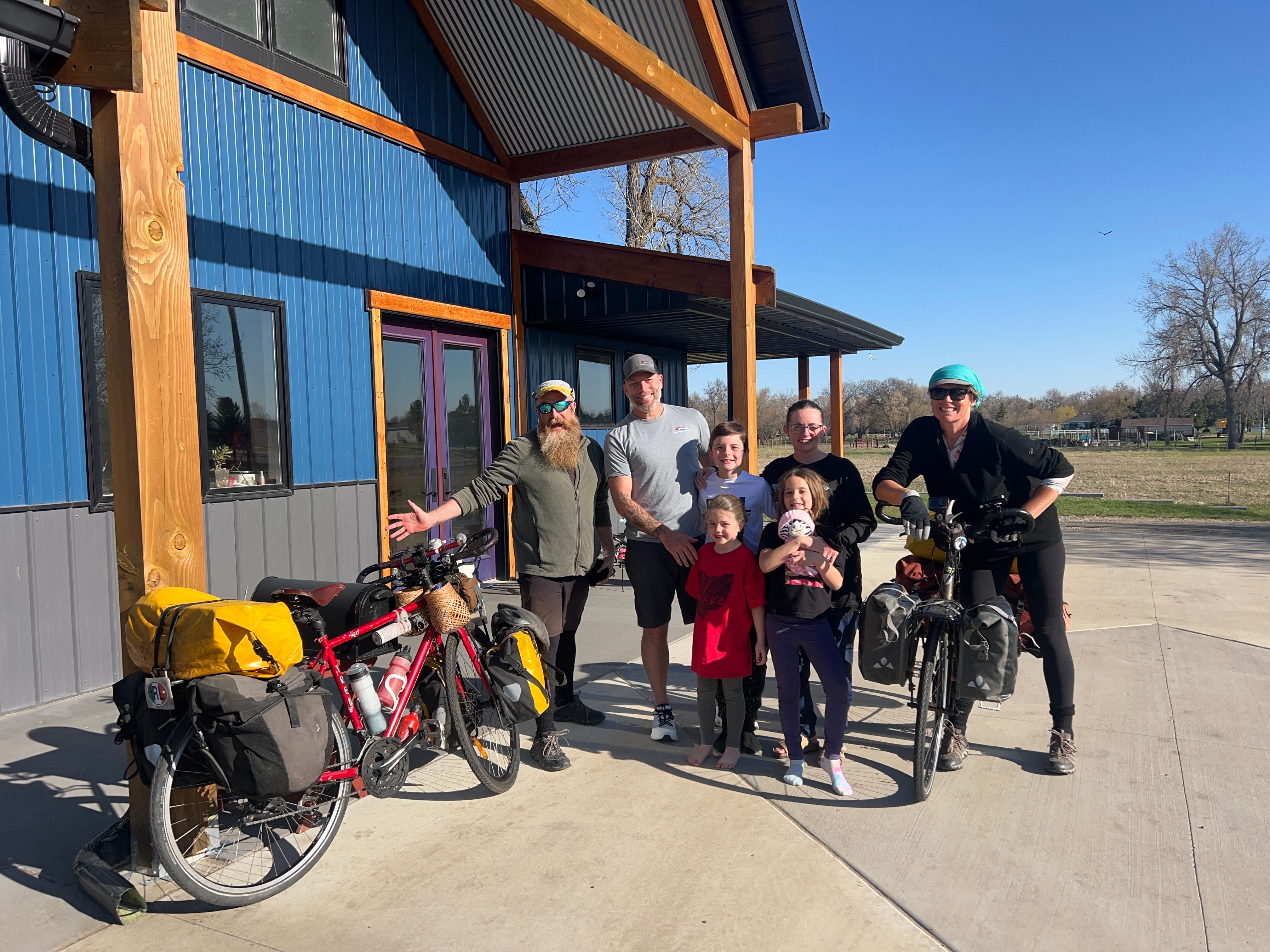
Leaving the Igoes was tough to do: between late-evening beers, cooking dinner and colouring with their little girls Charley and Wyatt, and going out to hear a rock band, we had such an incredible time and made friendships that we hope will last long beyond this trip.
Three days flew by and soon it was time to get back in the saddle.
The Igoes’ kindness hadn’t stopped with everything they had already done for us: they put us in touch with Mark and Nicole Vander Vorst, ranchers on the banks of the Missouri some 104km south, a perfect day’s ride away.
Nicole and Mark have three little ones: Blake, Ty, and baby Katie. Staying even one night with them was an eye-opening insight into just how tough life out on isolated ranches can be.
Recently, Mark had been having back trouble when the cows started calving in the middle of the night. They had a friend staying in the house, so leaving the two older children, Nicole put baby Katie in her seat in the jeep and went out to the calving.
There was a blizzard blowing.
“Then one of the cows knocked her calf down into the creek,” Nicole said with a laugh. “So I climbed in to get her.”
“Mommy, you were all muddy and smelly when you came home,” little Blake, 6, cut in.
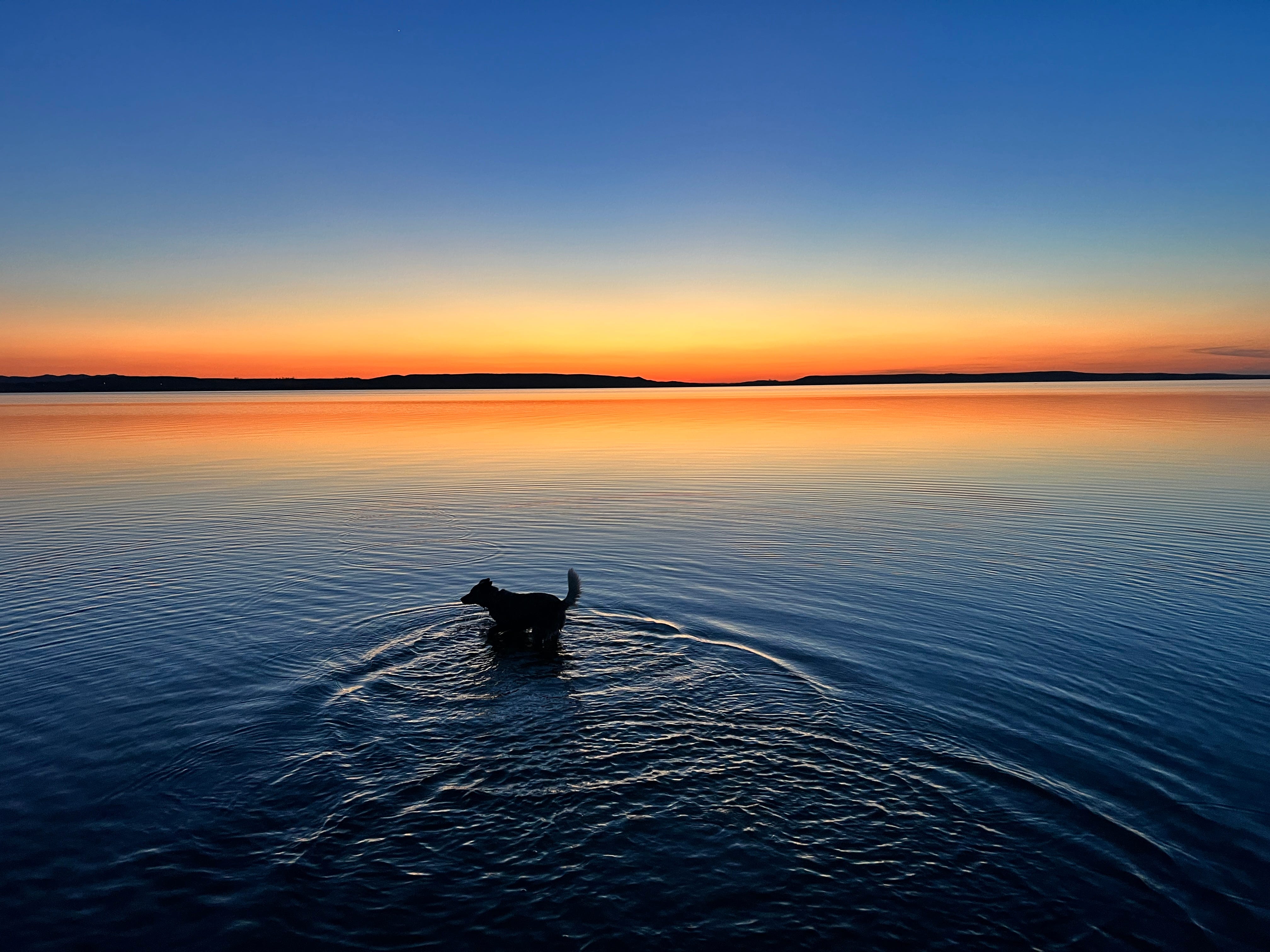
Unfortunately, Mark was so busy with the cattle that he only had time to welcome us and he was gone again, but we spent a lovely evening with Nicole and the kids, and we went down to the riverside beach they have on the Missouri for sunset, and skimmed stones with the kids.
Nicole drove us down to the beach in the all-terrain vehicle Americans call “side-by-sides,” bumping over banks and weeds and ridges with baby Katie on her lap.
Middle child Ty, she told us, had been born in the back of the jeep: the closest hospital was in Bismarck, and her labour was fast, and she birthed Ty with Mark’s help.
“We called the hospital after and they said, “well do you need us to come out?” and we said we were fine and we’d just bring him in,” she said. For her third baby, she stayed in town in the lead-up to the birth.
The following morning, they were going to a calf branding at her mother’s ranch: Nicole was taking the kids, her own horse and Blake’s little pony, Shorty. They would stay all day, roping calves, working with extended family and friends.
Nicole had woken early to prepare us a breakfast of biscuits and gravy and strong coffee. Our admiration for this hard-working, resourceful woman ran very high. The Vander Vorsts, like the Igoes, let us into their home with unquestioning hospitality.
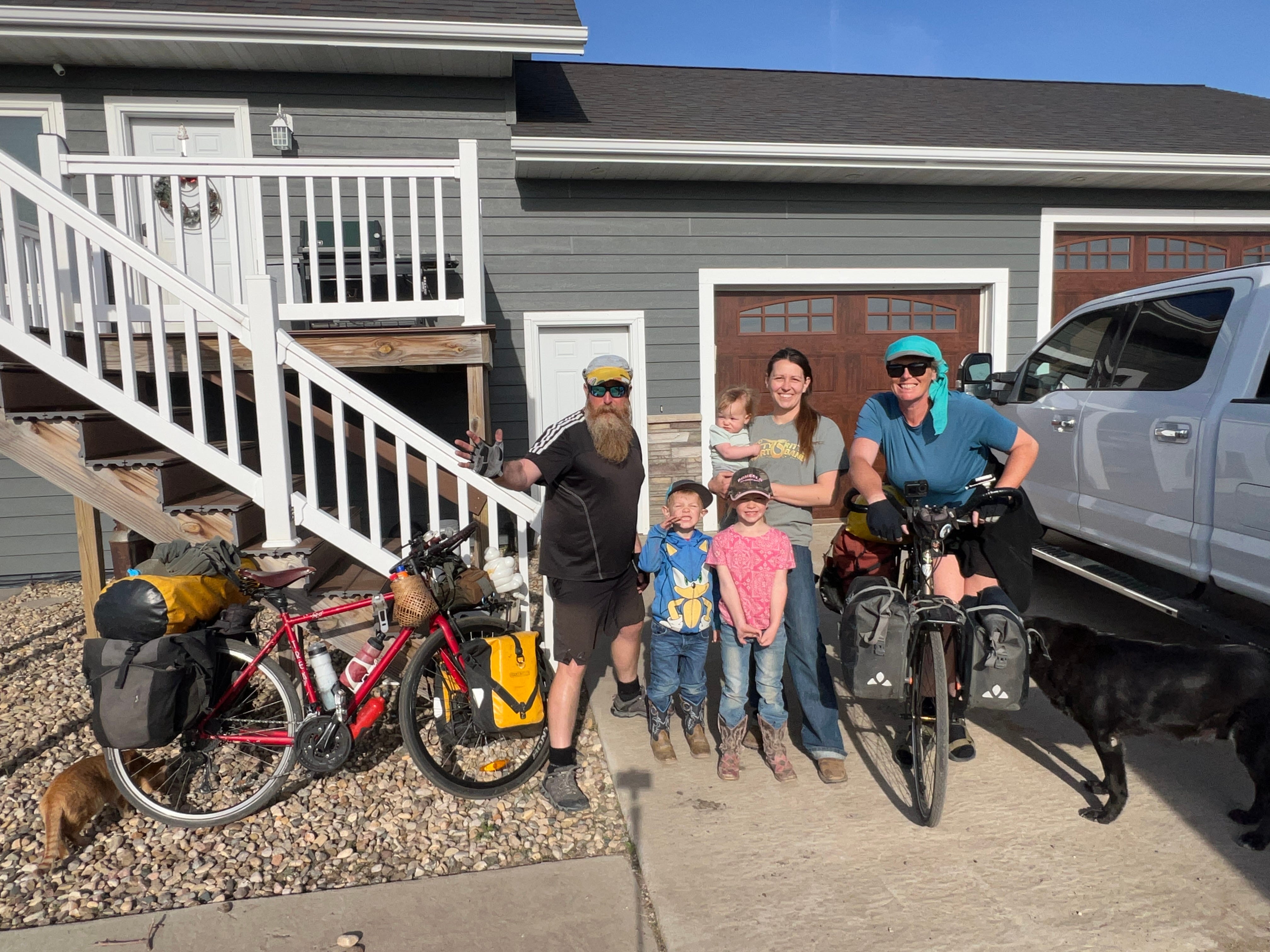
The Vander Vorst children are homeschooled. They say grace before meals. The family almost certainly have beliefs that a lot of people would consider politically conservative. I almost certainly don’t share some of these beliefs.
But the rancher’s life is tough in ways many can’t even imagine. Who would I be to try to tell these people, making such a success out of such a life, what to think about anything?
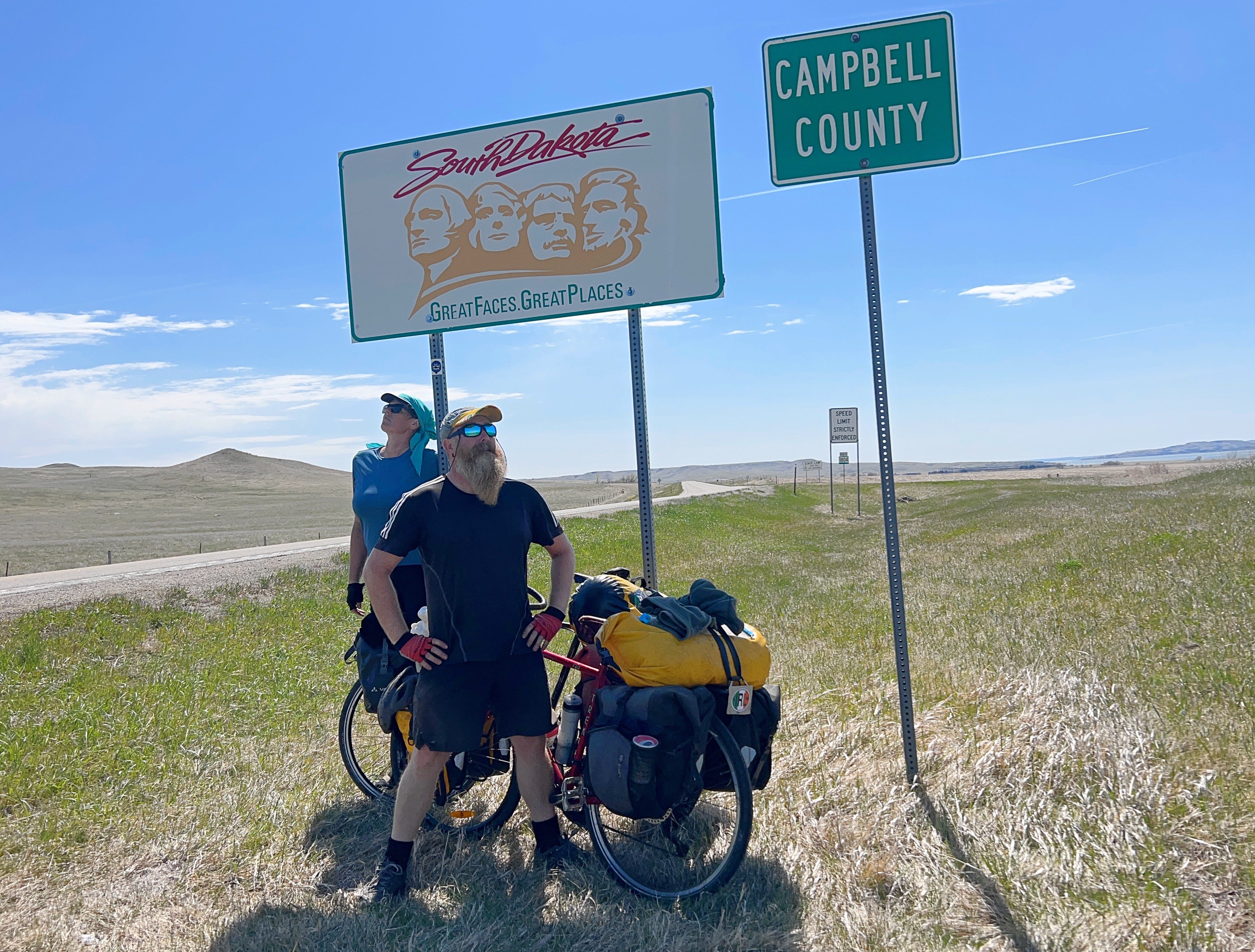
Cycling away from the ranch the next day, we were headed to the state line with South Dakota.
I found myself wondering if part of the problem of political division in the US is coming from people thinking that they should be able to tell others how to live, when we all seem to suffer from such a lack of empathy and imagination.
A New Yorker couldn’t possibly imagine the challenges in Nicole’s life, or the types of regulations tolerable to her. Similarly, Nicole couldn’t imagine the challenges of raising a family on a tiny income in a cramped apartment in a city. And maybe neither knows what’s good for the other. And maybe you can’t legislate for all.
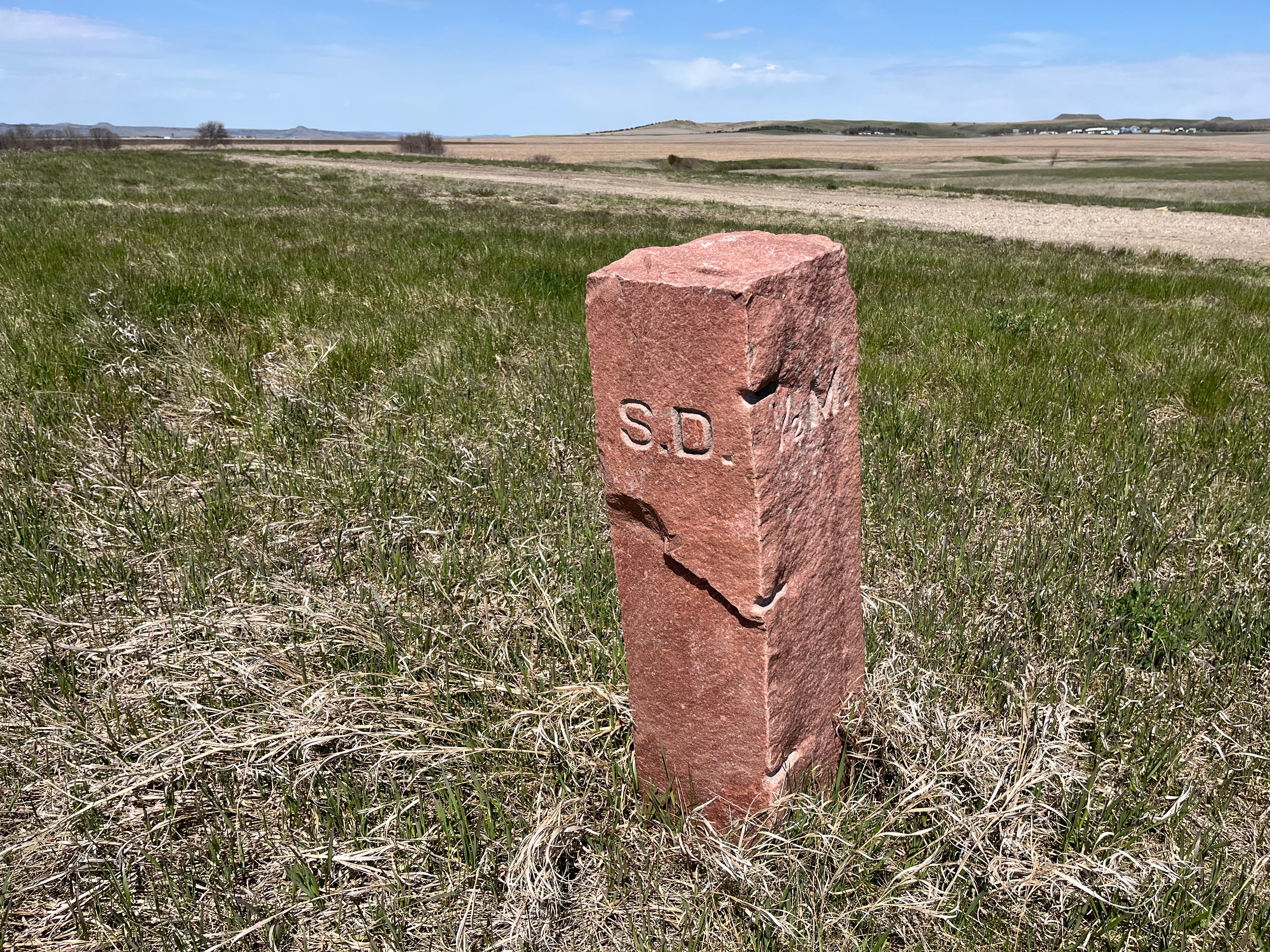
The first town we hit after the South Dakota state line was called Pollock. It was a tumbleweedy kind of town, but there was a bar serving food open, and we went in.
The server - let’s call her Janet - was having a very loud conversation with a couple of customers seated at the bar. They were talking about mutual acquaintances.
“Oh yes, she passed very quickly,” Janet said. “She got some rare nervous disease, Creutzfeldt-Jakobs. It was very sad.”
“Oh god,” I thought, looking down at my burger. “That’s Mad Cow disease.”
The next tale was lengthy, and it involved the waitress going to nursing school alongside two brothers studying to be doctors.
“Brad,” Janet said wistfully to her regulars, caught up in her memories, wiping the counter absentmindedly. “Remember Brad? We used to go dancing together. Brad sure could jitterbug, let me tell you.”
“That means she rode him,” Mark whispered unsubtly to me. I shushed him. I hadn’t needed his Irish subtitles: I was catching the jist just fine.
“Anyway we kind of drifted apart, and they both graduated,” Janet continued. “Years went by, you know? And then, would you believe it?!”
I waited with bated breath. This was gearing up to be a romance for the ages, a Casablanca, a Sliding Doors, a Love Actually… Brad was about to make a re-entry into Janet’s life, just not in a way any of us would have predicted.
“Well I was having all this stomach trouble and so I had to go in to the hospital to have a colonoscopy,” Janet said, in a confidential faux-whisper that echoed around the bar. “And would you believe who the doctor was? I said to him, Brad, I don’t believe it. After all these years!”
I looked down at my burger again. It had gone cold.
The towns of South Dakota engage some strange marketing ploys to try to attract visitors and drum up business.
Pulling into the town of Leola one evening in search of a campsite, we were intrigued to find a huge sign outside the town saying “The rhubarb capital of the world.”
One might expect that such a town would be surrounded by rhubarb farms, and that shops and restaurants would sell a wide variety of different rhubarb-based products?
No. Signage aside, there was no sign of any rhubarb. We asked in a café if they had any rhubarb pie and the waitress looked at us as though we were stupid and said “that’s in summer.” Call me naive, but I would imagine that the rhubarb capital of the whole world would arrange to freeze a few batches of pie filling.
Next, we passed through Redfield, the Pheasant Capital of the World. After that, and in a slight failing of imagination, the next big town was Huron, home of the World’s Biggest Pheasant. Or at least, a big model of a pheasant.
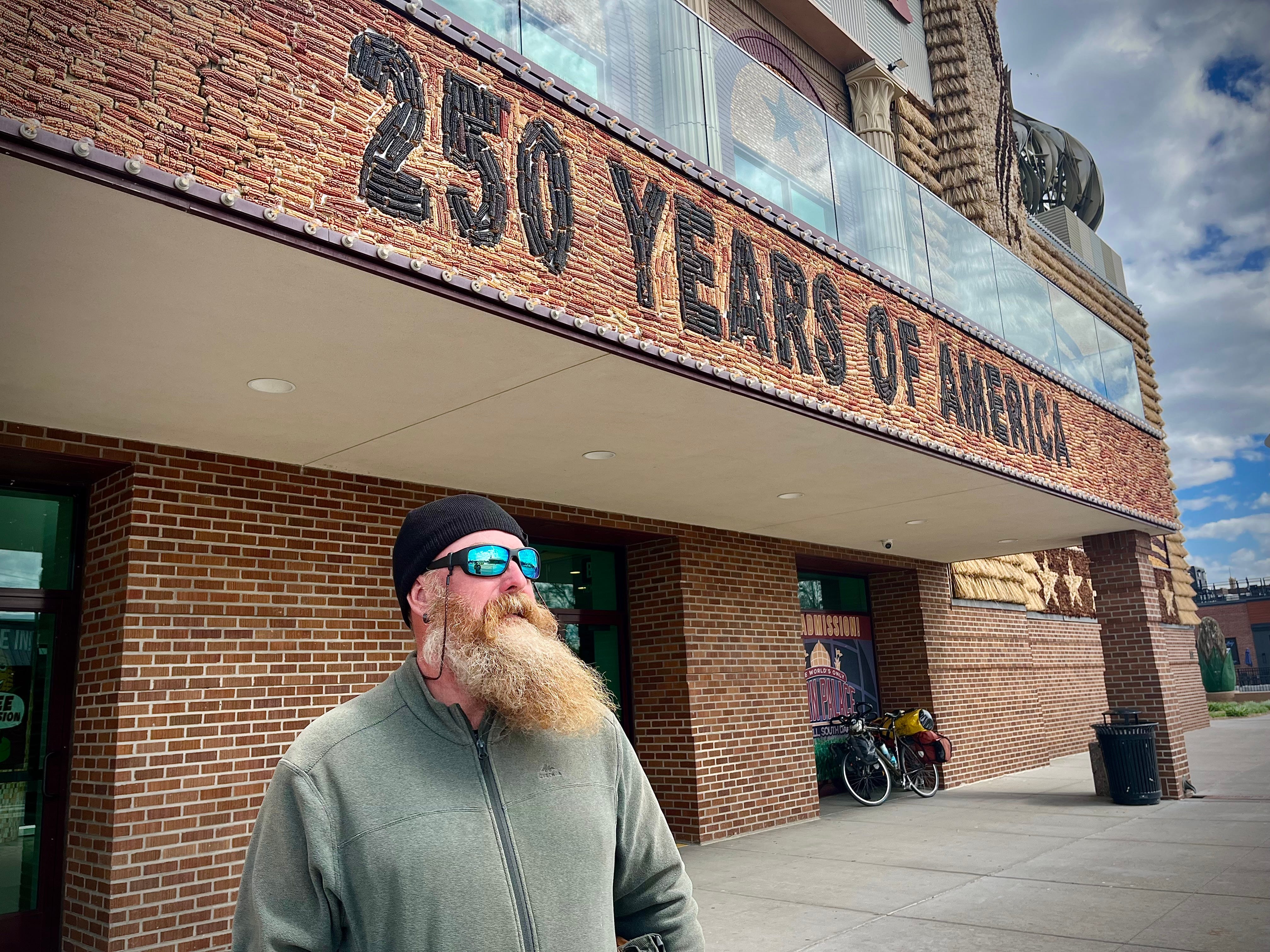
By the time we reached Mitchell, home of The World’s Last Remaining Corn Palace, I may have been exhibiting some scepticism regarding all these town-council-derived superlatives.
Corn Palaces used to be quite the thing in the Midwest. A lot of towns built them. But then, LP records and TV and eventually Netflix came along and people aren’t as bored as they used to be, and so the Corn Palace is a thing of the past, except in Mitchell.
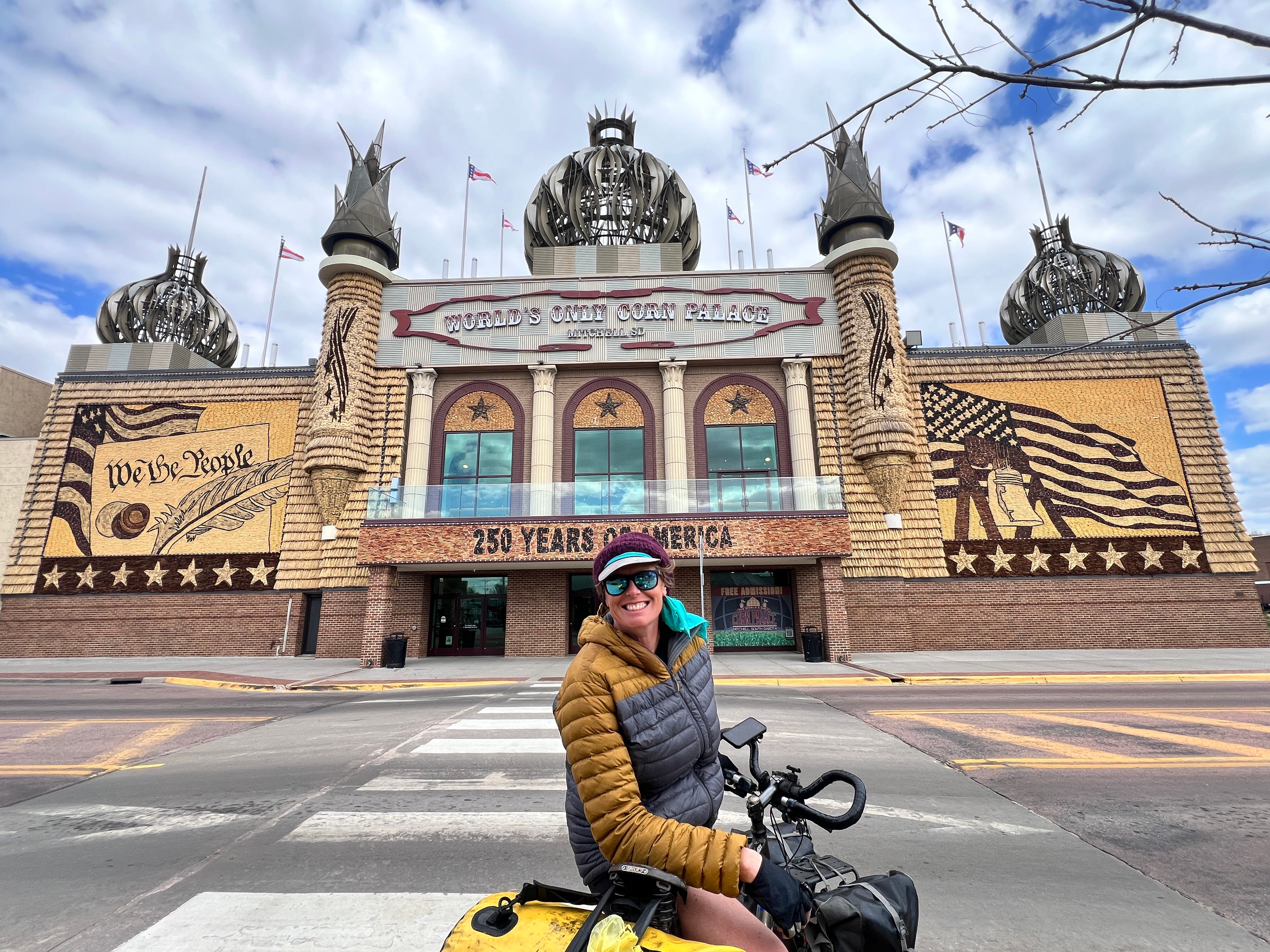
What is a Corn Palace? Well, it’s supposed to be a building made out of corn. But Mitchell’s Corn Palace, to my jaded, rhubarb-and-pheasant fatigued eyes, was clearly a red brick building with fancy metal roof doodads and some panels of dried corn on the outside.
I was expressing my disappointment at the non-corn nature of the building’s construction to Mark when a lovely couple from Kansas walked up alongside us to marvel at the sight with us.
“Isn’t it amazing?” the woman said, looking up at the building.
“Yes, but it’s not really made out of corn,” I blurted out. The couple looked astonished.
“Oh it is,” the man said. There was a pause. I didn’t really know what to do with this contradiction of empirical evidence. We were both looking at the same bricks and mortar, surely?
“Eh, I mean, I can see the bricks,” I hazarded. “So it’s not actually, you know, made out of corn.”
“Oh sure,” the couple said cheerfully. “But you see those?” The man pointed at the decorative panels. “They nail each individual ear of corn on to them.”
We bid each other a cheerful farewell. And then the entire staff of the chamber of commerce came out of an office across the way, presented us with corn keychains and a postcard, and took photos for their social media.
Mitchell is a town that is trying its damnedest, you have to give it that.
After leaving Mitchell, we had planned to make it as far as a little town called Alexandria, putting us within a nice easy 80km of Sioux Falls the next day.
But just a few kilometres outside Mitchell, we happened on a KOA (Kampgrounds Of America) campsite, and pulled in on an impulse, and discovered that even though it was incredibly expensive - $38 to pitch a tent! - it had amazing facilities including a laundry room and very luxurious showers, so we decided to stop.
We were immersed in our evening routine of pitching tent and cooking and showering when a retired orthopaedic surgeon from South Carolina strolled by walking his dog, and stopped for a chat.
Eventually, the subject of Vietnam came up in conversation - he had asked us what countries we had enjoyed cycling in the most.
“I was talking to a friend of mine recently and he was looking kind of down, and I asked him what was wrong and he said, ‘my kids found some pictures in the attic.’”
The man smiled and chuckled, shook his head.
The pictures, he told us, were of his friend in Vietnam, posing and “messing around” with the dead bodies of Vietnamese fighters. In one of the pictures, he was wearing a necklace made out of human ears.
I’m afraid all my “we all think different things and that’s fine” philosophy went rapidly out the window. During the course of the next couple of minutes, I pointed out to the man that the US was an invading force in Vietnam, with no business being there at all. When he said it was to prevent communism from spreading, I couldn’t help myself from pointing out who won the war, and that Vietnam remains a communist country.
When we mentioned visiting the My Lai massacre site in Vietnam, which you can read about in Week 35 below, it was immediately apparent that this man, like the handful of other Americans with whom we have discussed the incident, was under the impression that the US army was under enemy fire when they killed 504 women, children and elderly men one one day in March 1968.
The man seemed very definitely of the opinion that the ear necklace photos, and the fact that his friend had kept them, were excusable as youthful high jinks. Boys will be boys, and all that. Mark and I were pretty flabbergasted.
The conversation had started with the man telling us that his Pastor was Northern Irish, from the same place as Rory McIlroy. He was clearly religious, so Mark asked him how he could square away such war atrocities with his religious beliefs.
“Well, There’s a time for war and a time for peace,” the man started, sounding a little hesitant, like he was constructing this particular ethical framework on his feet.
“And is there a time for making necklaces out of ears?” Mark asked with a disingenuously puzzled look on his face.
“Well…no, but if you were at war you’d take a trophy,” the man said.
He turned to me. “I don’t know about the ladies, but when a man’s blood is up, it’s like….” then he made a kind of roaring noise that I don’t think I can spell. “I mean,” he said to Mark, “you’d take a trophy wouldn’t you?”
“I don’t think I would.” Mark said quietly. I resented the implication that if I had some kind of moral qualms about making necklaces out of human ears that it was because I was a member of the weaker sex.
Desecration of corpses is a recognised as a war crime under the Geneva Convention, which was not drafted entirely by “the ladies,” after all.
After that, the conversation kind of petered out. We said a few more things to each other about how pleasant the countryside was, how big the farms. And then the man left.
But within minutes, he returned. He walked up to Mark, and handed him $40. Both Mark and I tried to refuse it and give it back, and in the end, he insisted so much that Mark looked at him with one of those hints of a steely glint with which I am very familiar and said, “ok, we’ll find a good cause to donate it to.”
The man agreed. “I just want you to have it because I’m an ambassador for my country, in the same way that you are for yours,” he said.
We were kind of speechless for a while. I felt sad, hollow, angry. Maybe I don’t have to believe everyone has a right to their opinion, I found myself thinking.
We found a very good cause to donate the money to.
I’m busy trying to fully restore my “encountering beliefs you don’t share” stance for the rest of our time in the US.
No posts
Comments
Nothing yet. Say the first thing.
Sign in to join the conversation.