
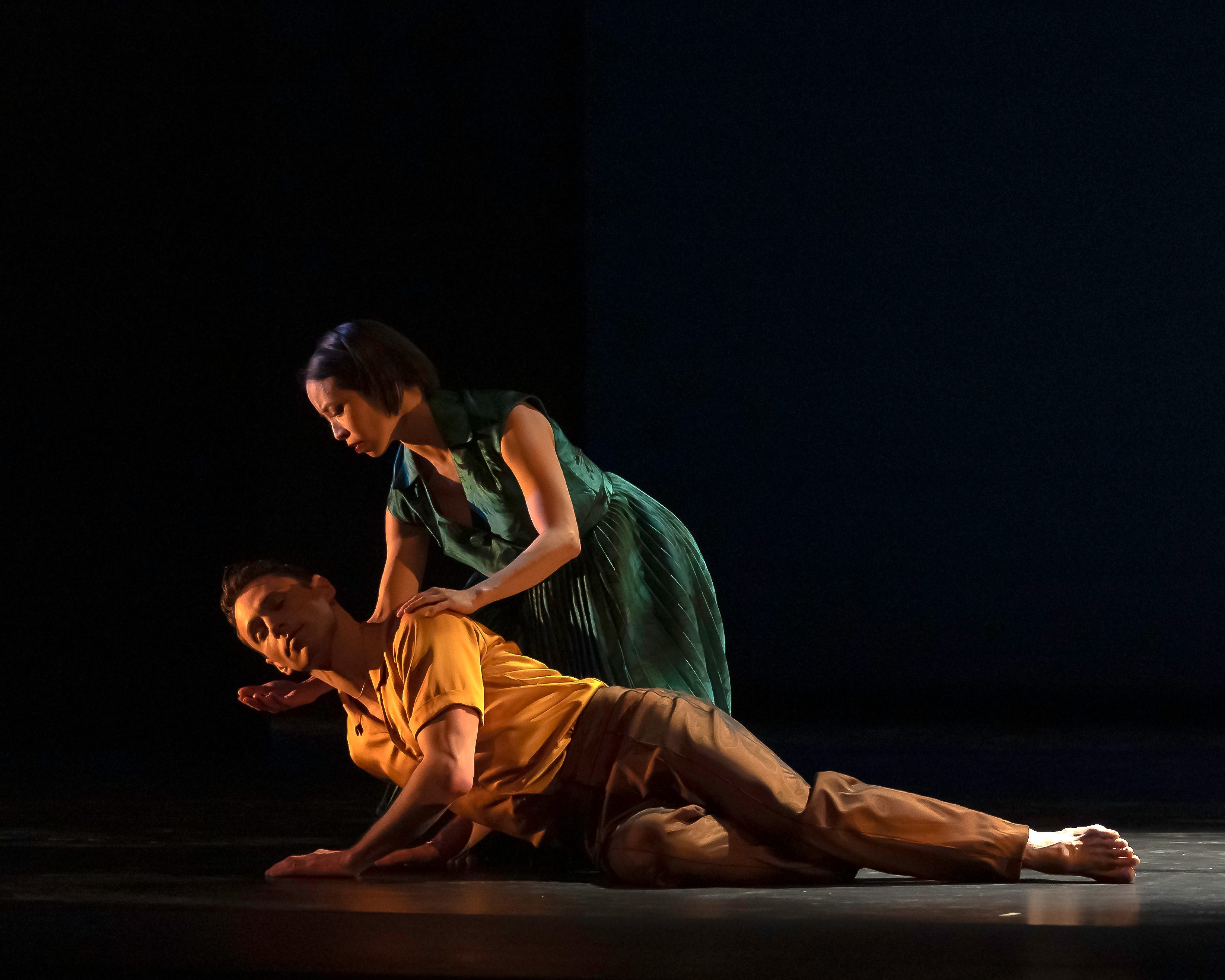
Hope Boykin radiates positivity. Her warm spirit and captivating movement made her a star during a twenty-year performing career with the Alvin Ailey American Dance Theater, from which she retired in 2020, and Boykin brings those qualities to her work as a choreographer. How Love Sounds, commissioned from Boykin by the Paul Taylor Dance Company for its 2025 Kennedy Center season and making its New York debut during the company’s fall season at Lincoln Center, shimmers with color and a tender sense of human connection.
Raised in Durham, North Carolina, Boykin received training at the American Dance Festival, was an original member of Complexions Contemporary Ballet, and danced with PHILADANCO! prior to joining Ailey. She has been commissioned by BalletX, Dallas Black Dance Theatre, American Ballet Theatre’s Studio Company, and Hubbard Street Dance Chicago among others, and has created four works for Ailey. The two-time “Bessie” Award winner is also the artistic advisor for dance education at the Kennedy Center and artist-in-residence at the University of Southern California Glorya Kaufman School of Dance.
But Boykin’s sunny sky isn’t cloudless, and she is direct about the struggles she has faced in the dance world. Determined to pave a smoother path for future generations, she founded HBArts Collective, a multifaceted nonprofit that takes on colorism, sexism, and body acceptance and promotes a more equitable ecosystem for young artists, women, and female artists of color.
Our conversation started with How Love Sounds and its inspiration—simply enough, a playlist of Boykin’s favorite songs. But while she allows that her work “doesn’t have to be deep,” there is no talking to Boykin about her art without delving into what’s underneath: a delicate yet high-tensile web of her experience as a woman, as a Black woman, as a caring person willing to be vulnerable in a very imperfect world.
Claudia Bauer: In your Behind the Curtain interview for Taylor’s Kennedy Center shows, you describe the opening of How Love Sounds as looking in on a party that’s already in progress. You say that the first duet represents “what I want love to be like for me,” and that the work is about “the standard of love I want to come to me.” I found that so moving. What was your inspiration?
Hope Boykin: I’d been going to see the company a lot. Carolyn Adams had invited me to teach classes. So I felt like I was really immersed in the culture of the of the company. I’m going to go backtrack a little bit—I have to always give [credit to] Jonathan Alsberry, who’s rehearsal director of Hubbard Street, works with Azure Barton a lot, just an incredible human. We were having dinner, and I think I was complaining. You know, the complaining that you do when you’re like, “Oh, I have so much work to do creatively.” I shouldn’t have been complaining. I said, “I need to create new vocabulary.” And he said, “Why? The next piece you make is just a continuation of the last work you’ve made.”
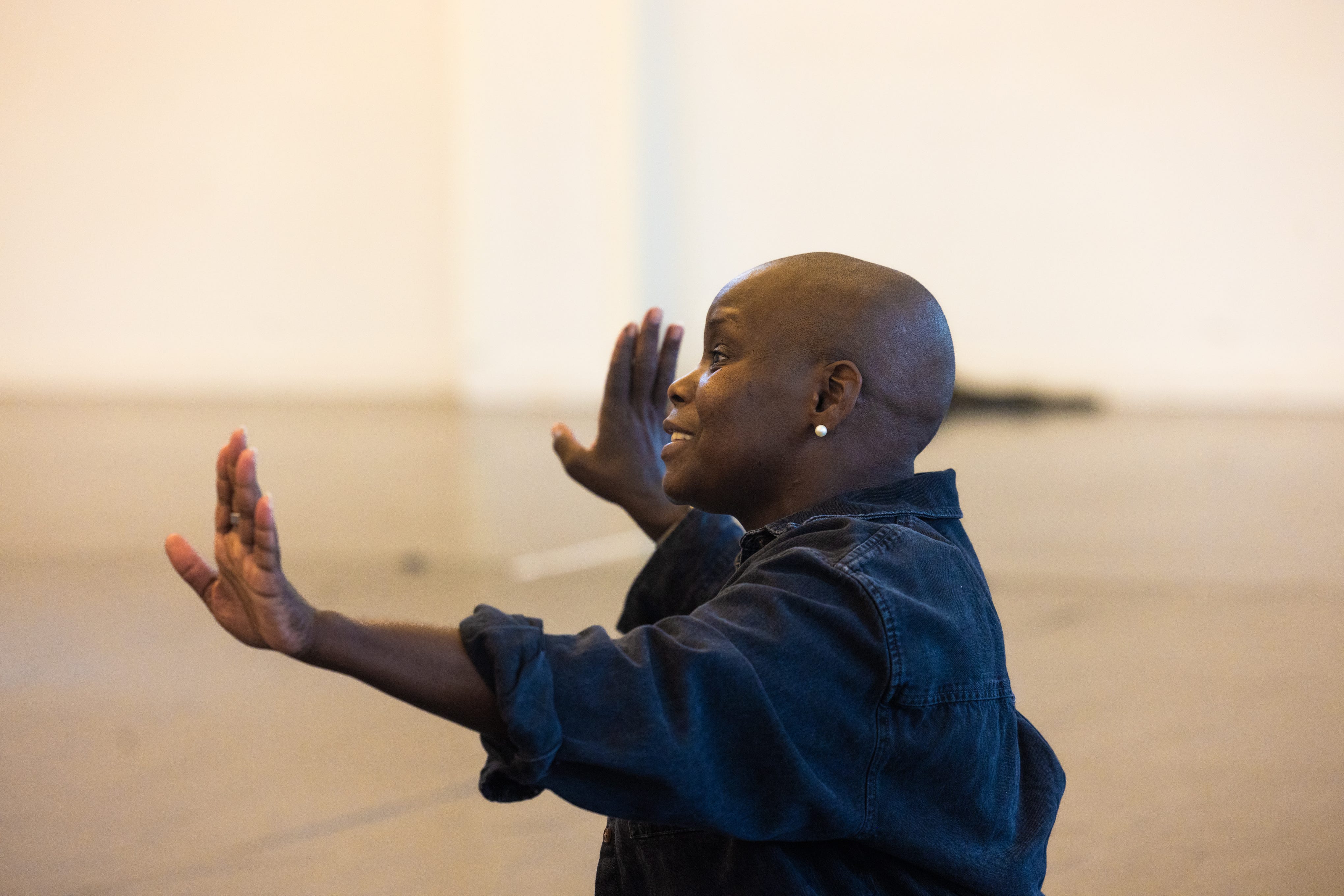
It blew my mind. Because we want to be recognized for our work, but we also want the work to be new. I really was gratified for that statement, because it put me in a different place. “I am the same person, I am evolving. I have these ideas. What’s missing, and what do I want to say, and what’s frustrating me?” These are all the levels. And when I think back on the titles of my work—Endure, My Time, Soar, Loving, Finding Free—all of these things were built around something that needed to come up out of me. And then someone said, “Well, you know, if you put yourself in the position, things will come to you.” And I said, “Oh, this is what this is. This is my playlist of love songs.” There’s Roberta Flack on there, there’s some other incredible artists. What if I just showed you how I think love sounds?
I also write, and I found that my text and my movement cadence are very similar. The intonations in my words and phrases match the intonations in my movement. It was very interesting to unpack, in a way that didn’t need to be—heavy is the wrong word. I wanted it to be very transparent in a way that was sweet. “Sweet” meaning you’re in this “I’m good with where I am” space. I’m working to love the body that doesn’t dance. I’m working to love the fact that something hurts. So, I have a little shift in my gait because I’m accommodating. I’m working to be in this space of encouragement and joy in the room, no longer on a stage, but in the room that has given me the most pleasure, from a gift that’s given me the most pleasure. So let’s watch a recreation of how love can sound.
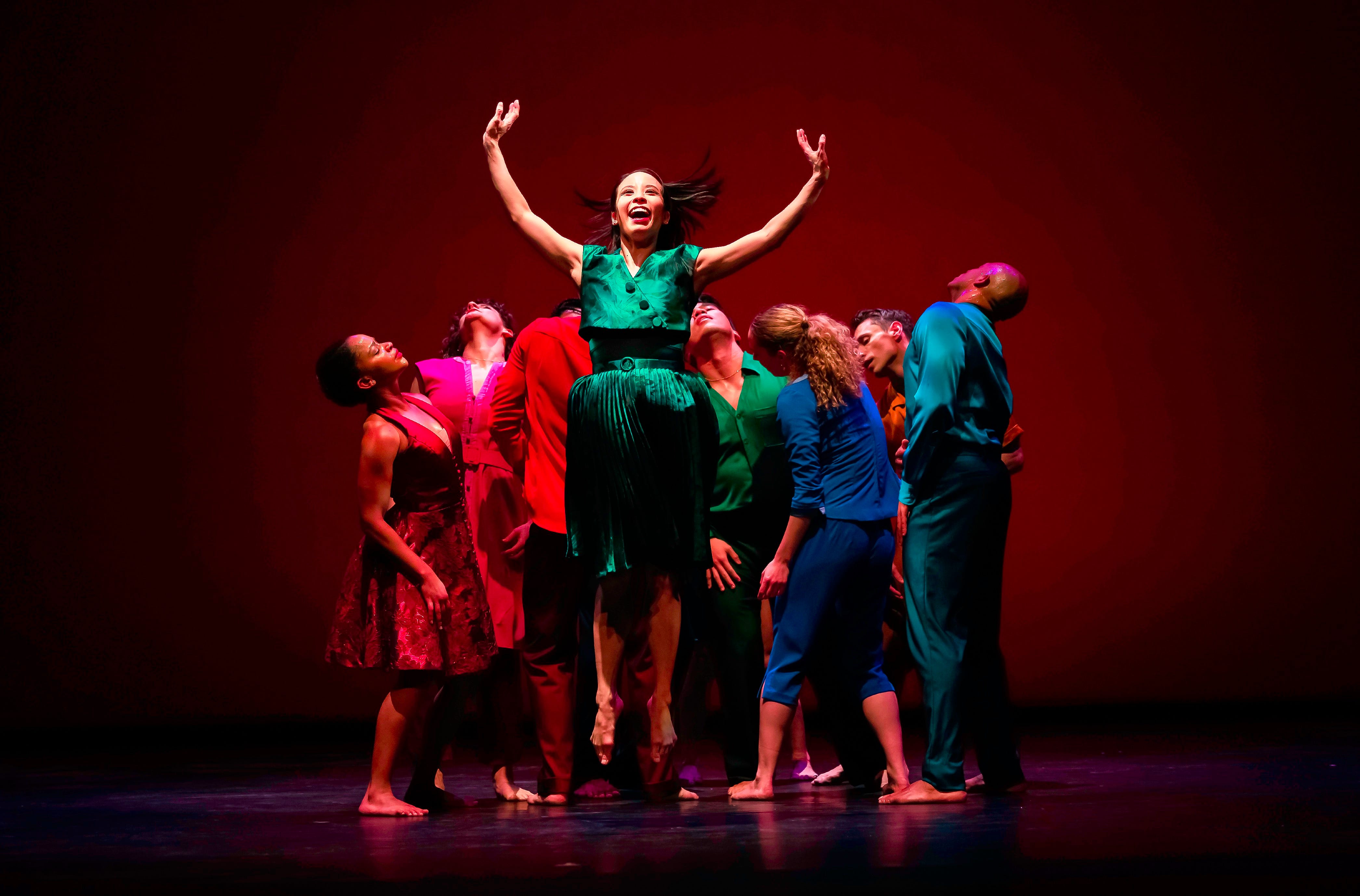
CB: Did you have a story in mind when you started the creation process with the dancers?
HB: It started off really abstract. I wasn’t trying to make a story ballet. They’re maybe in some club, or maybe in somebody’s house, maybe it’s a cookout, maybe it’s after a celebration and these are the people who are left. And then these songs come on that everybody loves. But the pinpoint of the songs, the Dvořák, the Patsy Cline, Billy Joel—these songs are the ones that have kind of been stirring me as I’ve been making my work. They do live in a playlist, but I want to create something that has nothing to do with the music. I use this music because it pulls something out of me—the rhythms, the extended notes, the writing. Stevie Wonder says, “When I fall in love with you, it will be forever”—that’s just unbelievable to be to have someone write a song that is that simple. And then I cap it off with [Donna Summer’s] “I Feel Love.” So it’s not really deep, but it doesn’t have to be deep. It could be very surface for an audience member. But these songs are pretty special to me. I’m not trying to make everyone come down this path or this storyline, but I think that we can relate to the beauty of some of the music and watch beautiful artists create this movement in space.
CB: It’s great when art has different access points, because we all bring our own full life experience into the room when we watch dance or experience art in some way. And we don’t control what people are going to perceive in what we make. You have a real sense of acceptance that this is a thing you create with other artists, you bring yourself to it, and then you put it out in the world for other people to bring their selves to it.
HB: I mean, yeah, but we want to be liked, you know? It would be silly to say it’s all for me. That’s one of the first questions my mother asks me all the time, and it bothers me, but I know she’s correct: “Hope, was it received well?” You want people to like it, but ultimately, I have to like it, right? I’m working that out for myself too.
“I’m working to be in this space of encouragement and joy in the in the room, no longer on a stage, but in the room that has given me the most pleasure, from a gift that’s given me the most pleasure.”
CB: It sounds like you approach your artistic process from a very personal place. Other people come to it from a cerebral point of view—they’re not bringing their personal emotions into it, or maybe that’s how they access their emotions, I don’t know. But the way that you describe it, you’re thinking about something, and choreography is one of the ways you work it out for yourself.
HB: Yeah. I’m in artist in residence at USC, and I taught a two-hour class that has dancing and discussion in it. And I was telling them, I truly believe movement is abstract. Like, it means nothing. Passé is just a standing leg with your foot at your knee, right? We know we can do things in those shapes, but it really means nothing. But then all of a sudden, the way it’s done, the music it’s done to, gives it clarity and understanding. It is personal to me, but I also know that I will find out what it’s supposed to be once I start. I have general ideas, and then I continue to get it unpacked.
CB: It’s interesting to hear you say that, because if we were to dial the dance clock back 100 or 200 years, a lot of movements did have symbolic meaning, they were a language that people read in a particular way, and that still exists somewhat in ballet mime. It’s evolved, and now dance is a different sort of painter’s palette, if you will. It’s neither better nor worse, it’s just different, and it allows a different kind of approach.
HB: Yes, agreed.
CB: So as you’re working with the with the Taylor company, are you trying to take the Taylor idiom into account? Or are you doing what you feel in terms of the steps and the movement?
HB: Someone asked me, “Is it very Taylor? Did you make it a Taylor work?” And I said, “Well, it’ll be a Taylor work because Taylor is performing it. But it’s also a Hope work.” I’m a modern dancer, and Taylor style is a modern dance style. I consider myself a contemporary Horton teacher. I bring a new idea—how new can it be at my age now, but you know what I mean. My thoughts are not necessarily regimented by the structure of the way it’s taught in academia, but I respect it. I’ve made my own language from this.
I was really fortunate to be able to dance Taylor works while I was in the Ailey company. And I believe that they were in the rep because they made sense on the bodies that were in the room. And it makes sense to me. With the exception of doing jetés in Piazzolla [Caldera]—when we had to do that, fine. [laughter] But other than that, the movement makes sense. I joke that, “We’re going to do these arms today, this is an Esplanade turn, this is Mr. Ailey, it’s the river, this might be a [Martha] Graham.” Because I have enough classical training, in ballet and modern classics, it’s who I am, it’s very easy for me to pull on all of the ingredients that I’ve been taught. I’m a student of the American Dance Festival, because I’m from Durham, so I’ve been watching these historic American modern dance companies for a really long time. So they’re in me.
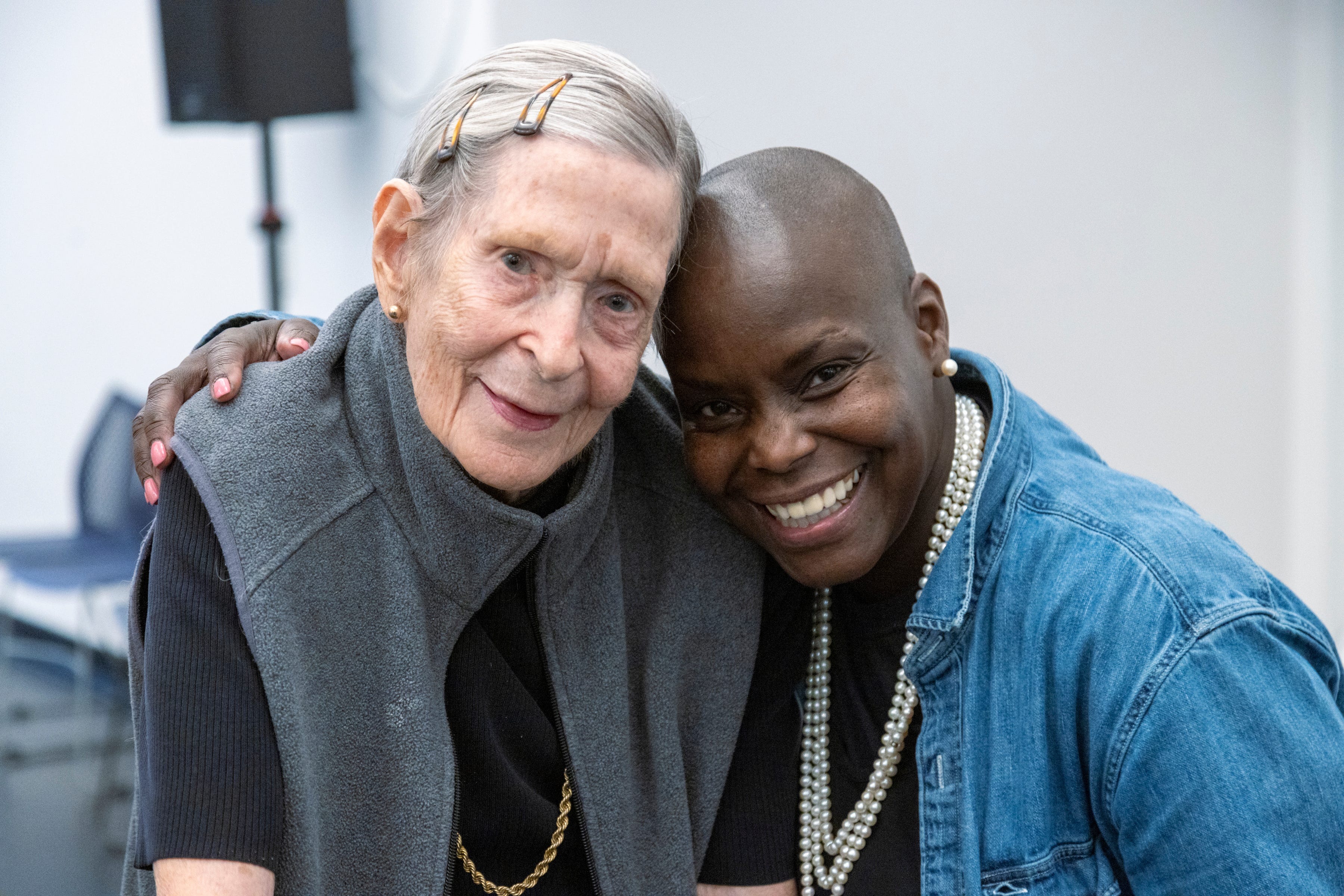
CB: Your elevator pitch about yourself is “I am an educator, creator, mover, and motivator.” You have these different techniques that you’ve trained in and the intentions you bring to your creative practice. And through the HBArts Collective, you’re teaching, you’re consulting, you’re doing so much more. Your mind and spirit encompass so much more than we could talk about in one conversation. Underneath it all, what are the values that drive you?
HB: I came up in dance hearing no a lot. And I think I heard no for reasons that—a good deal of them I could control, and some of them were just a preference that you are fighting against. There is a certain aesthetic in certain schools, there’s an aesthetic in certain companies, meaning that there’s a beauty that they attribute to their style, and this is what they want. And understanding that, how did I succeed, how did I survive, and how did I thrive in that? I think I had care and I had love, and I had prayers that were surrounding me, and there was something that stopped me from believing the noes. I pushed against them. I think that I am an exception, but in the way that everyone is exceptional, if they continue to trust what they have and know who they are is beautiful.
I want to create a space and environment for working that is positive and safe—but you know I’m going to tell you the truth. I tell students and company members, “No is my favorite word, but let’s let no get us to yes.” So then, no isn’t vague, it’s very clear. It’s not a punishment. It is a statement of “This is not what I want.” And then how do I wrap them in this care? How do I teach them that instead of looking at in the mirror, at the person next to you, you are really diving into all that you are, that you’re only in competition with yourself. Every day, you have a chance to be greater than you were the day before. If I had carried this through my career, I would have enjoyed myself more.
I tell them, “You signed up, you auditioned, you came to the school, you came to this company. This is your job. This is your choice, and you still want to work hard for yourself.” My job as an educator is to be a truth teller. My job as a motivator is to remind you that this is for you, your path is yours, it’s not anyone else’s. That provides a certain trust to students and to company members, and that’s the position that I want to be in. If I were to take all of the tools and things that I’ve learned and keep them to myself—that’s not why I’m here. That’s why educator is first in my mission—I educate first.
“I want to create a space and environment for working that is positive and safe—but you know I’m going to tell you the truth. I tell students and company members, ‘No is my favorite word, but let’s let no get us to yes.’”
CB: I was going to ask you if you put “educator, creator, mover, and motivator” in that order for a reason.
HB: I did. It is my mission, in four words.
CB: I really appreciate what you said about no and, by extension, boundaries. I think that those things go both ways. It’s very easy to perceive noes and boundaries as the end of something. I think what you’re getting at is that noes and boundaries, whether they come from within us or we’re receiving them from others—and as hard as they often can be to hear—are just another gateway. And they’re a really important gateway to learning the truth about ourselves, and that is where our power lies.
HB: Yes. I was at a symposium at the Met [Museum], and Kerry James Marshall was the artist. Someone asked him, I think it was the director of the Los Angeles Museum of Modern Art, “What do you do when you’ve failed, when something isn’t working? How do you find your way?” He said, “Failure?” And I literally was searching for my pen, right? He said, “Failure is a lack of an imagination for a way out.” Now, as an artist on a canvas, you know, you think you’ve done one brushstroke wrong. But maybe that stroke is not incorrect, it’s leading to something else. It’s exactly what no is. No is not the end; it should be a beginning. I have this thing that I wrote that’s called “At My Lowest,” and it says, “My lowest is not my weakness, not my failure, not my end. My lowest is where I regain, recover, regain, renew, regain, find more. Find more to give, because I have enough now to give.” Because you’re coming from this place that you’re not afraid to be down, right? The fall is recovery.
CB: You make a direct statement on your website that you are taking on colorism and body acceptance, empowerment of women, and empowerment of Black women in particular. Each of these issues needs focus and progress, and you’re taking them all on at once. But I thought about it more, and they really are intersectional—I’m not sure you can make improvements in one without addressing the others.
HB: I work really hard to value any and everyone who wants to come in my space. I’m thinking of one woman from Texas who’s very blonde, very much not a Black woman, and I can see her hard work and what she wants. And then there are young men that come into my life who just need that extra aunt to be there if the family can’t be there. And then there are the Black women who I want to be the example for, so they can say, “Oh, here’s this dark-skinned Black woman who has had room to move, and if she’s had room, then maybe there is room.” Because colorism exists. We are judged by our looks, by the way we speak, by the way we articulate.
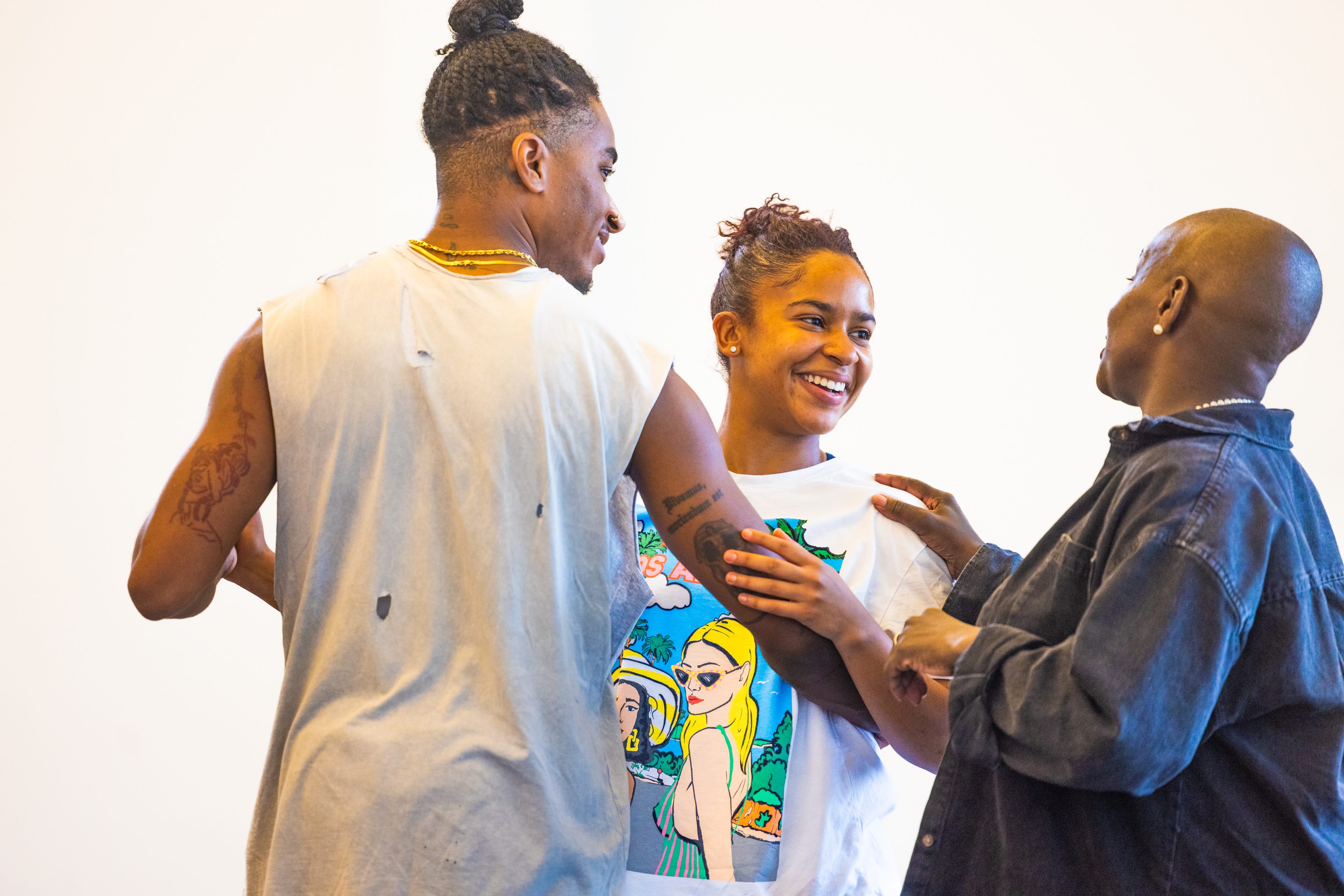
“We’re so tender, you know. We’re so tender, and then we’re taught to be afraid to be truthful. But we should be able to see someone’s tenderness and speak to them in truth at the same time.”
You said “elevator pitch” earlier, and I’m working with this cohort of eight artists who have just transitioned out of college, and they all want to be in their desired companies. It’s called the NEXT. We give them a stipend, and they show up twice a month, and we just help them be better. They’re working on their artist statements, which is your elevator pitch on paper. How do you present yourself? Let’s speak demonstratively—not “I plan to,” but “I will.” Let’s get it out there.
Sometimes the work can feel performative. It can be exhausting. But what if you could use my frailties and some of my mistakes as an example? You know, I tell them when I’ve applied for a job and didn’t get it. I’ll tell them when I went in to make a piece and it wasn’t received well, and how I felt. I tell them that the gap is not that great, that we are all longing to be liked. We’re all longing to get the claps. We’re all longing for someone to applaud and say, “Well done,” right? But if we’ve done our best every day, then we can look in the mirror and know that we have given everything. And that’s really what it all means. As a as a dark-skinned Black woman, sure, I’m standing up for this particular demographic, but I am for anyone who is willing to hear the truth.
CB: You’re such an interesting combination of this deep expertise and deep knowledge with this beginner’s mind. You are as present in the moment as these students who are just out of college. How do you do that?
HB: You know, a good friend of mine said, “Hope, I love that you’re curious.” And it didn’t dawn on me that that’s how it is until she said it. I do want to understand what they like, and I do want to understand their language, and their gestures. I want to be a part of that and sit back and watch them build community. I want to sit back and watch them grow together. I remember doing a piece for Ailey, I think it was 2016, and I was still in the company, but I would go out every time and watch the performance, even if I was performing. And I was like, Oh, I like this viewpoint. I like seeing the work and then seeing what I thought I meant, but then finding out that it means something else, because someone else is performing it. That’s exciting for me. We can say it’s a calling—I think I’ve been fighting against it, but now I’m resolved to get the messages that say, “Hope, I don’t know how to write an invoice. Could you help me?” Sure. “Hope, I’m negotiating my agreement. Can you read my contract with me?” Sure. Even professionals—“Hope, do you have five minutes?” Yes. Because then I’m with them onstage, right?
CB: You talk a lot, and understandably so, about these gifts that you want to bring to others, and your dreams for them, and this world that you’ve created for them to thrive. But what is your hope for yourself?
HB: [tears up] This interview is at a tough time, because physically, I’m feeling really different things. So it hurts, you know? I can’t tell you how much love I am getting from [students]. Wrapped in love. Wrapped in wanting to be a part of the thing that I just thought was my job to give. My mind is blown. Not to just bring this back to How Love Sounds, but really, it’s creating a space not just to give but to accept it, and to make room for it to come to me. And I do, I feel it. Because I’ve opened my eyes to accept it. So if some of my words are imparting that, and then I can receive it back, then that really is—you ready?—how love sounds. [laughter]
CB: One of the most perplexing things about life and love is that receiving love for who we are right now, despite all of our frailties and imperfections, is at once healing and heartbreaking.
HB: Yeah, yeah.
CB: Now I’m gonna cry, Hope! [laughter]
HB: We’re so tender, you know. We’re so tender, and then we’re taught to be afraid to be truthful. But we should be able to see someone’s tenderness and speak to them in truth at the same time. But you know, we’re walking on eggshells, and then we put up armor and can’t accept the things that are right there. The small gifts really have been resonating with me lately.
CB: I’m really glad for you. That’s wonderful.
HB: Thank you. Thank you. It’s really been a joy working with the Taylor people. I feel that they brought me into their space, their family, their organization, without a prerequisite. It was just, “Hey, we’re offering you this, what can you share with us?” Not, “What can you give us as a trade?” I just have so much respect for them and so much joy. I’m so grateful to be a part of that family.
Paul Taylor Dance Company’s fall season runs Tuesday, November 4, through Sunday, November 23, at the Koch Theater at Lincoln Center. Follow Hope Boykin Dance on Instagram @hbdance.
Comments
Nothing yet. Say the first thing.
Sign in to join the conversation.