
I’ve gone through every single phase of movement wear there is, and I didn’t clock it until recently, but my own closet has kind of been reenacting this entire history of the category.
As a kid I lived in cotton biker shorts and a t-shirt, a dancer through and through, though my parents made me try every sport under the sun, and I remember loving the fit of my basketball shorts (though I’d wear my ballet tights underneath them). Then I got old enough for my first sports bra at dance, and that was my whole introduction to performance fabric, the moment my clothes stopped just being clothes and started being equipment. College at UT Austin swung me back the other way entirely, oversized t-shirts, running shorts. Then I moved to LA after graduation, started building pilates studios while working in fashion, and went full matching set, head to toe, no exceptions. And now, the last few years, I’ve been drifting back to cotton again, vintage pieces, mixing everything instead of defaulting to a set.
I didn’t think much of that pattern until I started itching to go down a rabbit hole: who actually decided this is what workout clothes are supposed to be?? Who decided exercise clothes should be tight and shiny?
It turns out my closet’s little back & forth isn’t a personal quirk, it’s basically the entire history of women’s activewear happening on a loop.
It starts with an insult.
In 1849 a health journal started telling women their clothes were making them sick, which, fair, corsets and floor length skirts were not exactly built for a cardio sesh. The alternative some women started wearing, loose trousers under a shorter skirt, got named after Amelia Bloomer, one of its loudest defenders, and “bloomers” was not a compliment when people started using it. The women who actually wore them called it “reform dress.” They weren’t dressing for fitness content, they were trying to be allowed to move!
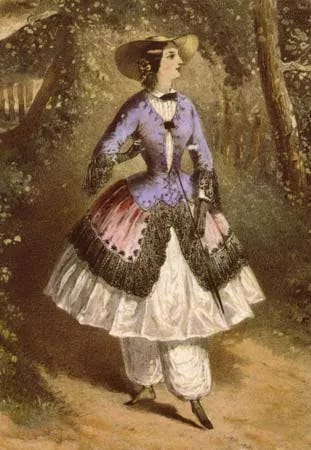
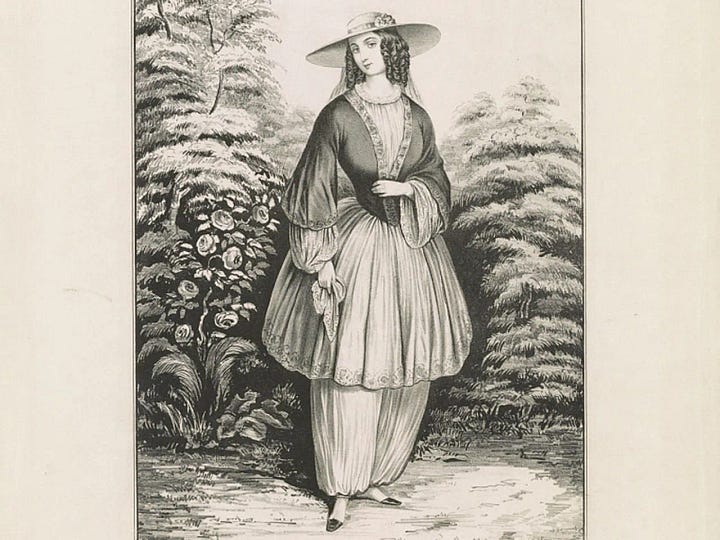
That’s the part that got me, actually, the whole starting point of activewear isn’t fashion, it’s a fight for permission and the fabric doing the work of that fight for the next several decades was primarily cotton.
Cotton did the unglamorous labor for a hundred years.
Comments
Nothing yet. Say the first thing.
Sign in to join the conversation.