
Every few centuries, humanity discovers that reality is nothing like the picture we had carefully built in our minds, and what once seemed obvious begins to look almost childlike when viewed from the other side of a new discovery. We believed the Earth stood still at the centre of everything until Copernicus moved us into orbit around the Sun, we believed time passed evenly for everyone until Einstein showed that it stretches and bends depending on speed and gravity; and we believed matter was solid until physicists looked more closely and found atoms made mostly of empty space, held together by forces that no human eye has ever seen.
Then came another revelation, quieter in some ways and even more unsettling in others: everything we can observe directly, from the stars and planets to our bodies, homes, trees, oceans, and every object we have ever touched, appears to make up only a small fraction of the universe. Most of reality seems to consist of dark matter and dark energy, names we have given to something we still cannot properly see or explain, although we can observe the traces it leaves behind.
The more we learn, the more mystery seems to grow around us, as though knowledge does not close the door on wonder but keeps opening new doors behind it. This pattern has followed science throughout its history, because every answer makes reality clearer in one direction and infinitely stranger in another, which makes me wonder whether our societies might be waiting for a similar shift in perspective.
What if human life also has an invisible architecture beneath everything we can easily observe? What if families, friendships, companies, cities and entire civilizations are shaped by fields and forces that are no less real simply because we have not yet learned how to measure them?
This would not mean reducing people to particles or pretending that love can be captured inside an equation. It would mean borrowing the imagination of physics and asking whether the patterns we see in nature might offer us another way of understanding human beings, not as isolated objects moving independently through life, but as participants in vast and constantly changing fields of influence.

Perhaps what physics is for matter, social physics could one day become for humanity.
One of the most beautiful things about science is that humanity rarely discovers invisible forces by seeing them directly. We discover them because something visible behaves as though an unseen presence is acting upon it, and gradually, through observation, repetition, and doubt, we begin to understand that what we cannot see may be shaping everything we can.
Nobody has ever picked up gravity, placed it under a microscope or held it in the palm of a hand. Newton did not find gravity lying beneath the apple tree; he noticed that apples fell in a consistent direction and asked what invisible relationship connected the fruit to the Earth, the Earth to the Moon and the planets to the Sun.

Einstein did not photograph space bending around a star. He developed a description of gravity in which matter and energy curve spacetime, and observations later confirmed that light itself follows those curves. Physicists did not watch the Higgs field moving through the universe as we might watch wind crossing a meadow; they searched for the particle associated with that field and studied the patterns left behind when particles collided.
The invisible reveals itself through behaviour.
We already use this logic in ordinary life, even when we do not call it science. We cannot see tension, but we notice the silence at a family table and understand that something has changed. We cannot photograph trust, but we observe how people behave differently when it is present, speaking more freely, taking greater risks, and recovering more easily from mistakes. We cannot hold belonging in our hands, yet we recognise the way a person’s body softens when they enter a room where they know they are welcome.
Could society be filled with forces that we already feel, respond to, and organise our lives around, even though our measurements are still too crude to describe them?
Walk into almost any gathering and, given enough time, you will notice a kind of social geometry beginning to form. Conversations collect around certain people, attention shifts in particular directions, and some individuals seem to change the atmosphere of the room before they have even said very much, while others can speak repeatedly without truly being heard.
Nobody needs to announce this arrangement or draw it on a board. It simply emerges.
Children create it in classrooms and playgrounds, companies create it inside meeting rooms, families create it around dinner tables, and societies create it around public figures, institutions, ideas, and symbols. People begin to orient themselves around whatever carries the greatest social weight, which may be power, competence, beauty, wealth, fear, charisma, trust, or the ability to make others feel safe.
In physics, gravity describes how mass and energy shape the motion of other things. In social life, influence seems to work similarly, although what creates social mass is more complicated than physical matter. Reputation accumulates through repeated behaviour, trust grows through kept promises, authority emerges through knowledge or position, and sometimes fear gives a person enormous gravitational power even when affection and respect are entirely absent.
Different people create different fields around them. One person attracts attention, another attracts confession, someone else draws conflict toward themselves, while another seems to create calm simply by remaining present. There are homes we enter and feel ourselves exhale, meetings that become more honest when one particular colleague arrives, and friendships that quietly influence the course of our lives because the other person sees something in us that we had not yet learned to see.
Consider how a good teacher changes the path of a child. The teacher may offer one sentence of encouragement, barely remembering it the next day, while the child carries it for decades and chooses a profession because someone once treated their curiosity as valuable. A manager who responds to mistakes with humiliation creates one kind of field, while a manager who combines responsibility with dignity creates another, and the entire team gradually changes its behaviour according to the emotional gravity in which it works.

We often speak as though people make decisions entirely by themselves, yet our paths are constantly curving toward and away from one another. We move toward those who recognise us, away from those who repeatedly diminish us, closer to communities where our values are reflected and sometimes into the orbit of ideas whose gravitational pull we do not fully understand until years later.
Perhaps social gravity is what happens when trust, fear, love, reputation, and meaning acquire enough weight to alter the direction of human lives.
The Higgs field offers an even stranger image for thinking about identity. In modern physics, elementary particles interact with the Higgs field, and this interaction helps explain why some of them have mass. The field is understood to exist throughout the universe, which means particles do not encounter it only in certain places; they move through it everywhere.
Human beings also move through fields from the moment we arrive.
A child is born with a body, a temperament, and an enormous range of possibility, yet they are not born with a fully formed story about who they are. Confidence, shame, worthiness, ambition, fear, and belonging take shape gradually through thousands of interactions, many of them so small that nobody around the child realises anything important is happening.
A child whose questions are welcomed begins to experience curiosity as a strength, while one whose questions are repeatedly dismissed may learn that silence is safer. A girl praised mainly for being agreeable may learn to make herself smaller in order to remain loved, while a boy whose sadness is mocked may grow into a man who experiences tenderness as danger. Another child, surrounded by adults who apologise when they are wrong, may grow up believing that mistakes can be repaired without destroying love.
None of these identities appears in isolation. They develop through interaction with parents, siblings, teachers, friends, institutions, languages, religions, economic systems, and cultural expectations, until the social field becomes internalised and begins speaking from inside the person as though it had always belonged there.
This is why two people with similar abilities may move through the same opportunity so differently. One enters the room carrying the accumulated memory of being encouraged, while the other carries years of being overlooked, interrupted, or made to feel burdensome, and although both appear to be standing in the same physical space, they are moving through entirely different social fields.
A company creates such a field, too. One workplace tells people, through countless small signals, that initiative is welcome and failure can be examined honestly, while another claims to value creativity but punishes every deviation from the familiar. In the first environment, people become more experimental; in the second, they begin protecting themselves, asking fewer questions, and gradually losing the part of them that once wanted to contribute.

What if identity is not something we possess once and for all, like an object placed inside us at birth? What if it is continuously shaped in the meeting between what we carry and the fields through which we move, which would mean that changing a relationship, a community, or a culture can change the apparent weight of a human life?
Dark matter is one of the great mysteries of cosmology because we do not observe it directly through light, yet galaxies behave as though additional invisible mass is present. Without it, our current models suggest that the visible matter we can see would not be enough to hold galaxies together in the way they appear to be held.
Human systems also depend on invisible structures that rarely appear in formal reports. A company may list its revenue, costs, inventory, salaries, customer numbers, and profit margins, yet anyone who has worked inside an organisation knows that these figures never tell the entire story. Beneath them lives a less visible reality composed of trust, morale, shared memory, unspoken resentments, loyalty, fatigue, pride, fear, and the degree to which people still believe their work matters.
A business can look healthy on paper while the human structure beneath it is already beginning to fracture. Meetings become quieter, talented people stop offering ideas, mistakes are hidden, departments protect themselves from one another, and the official strategy remains unchanged long after the emotional centre has collapsed. The numbers may continue looking stable for months, just as a tree can remain standing after disease has begun spreading beneath its bark.
The same is true in families. We can count the people at the table, the years of marriage, the birthdays remembered, and the holidays spent together, yet none of these measurements tells us whether the family feels safe, whether difficult truths are allowed to be spoken or whether affection still circulates between its members. Two homes may look almost identical from the outside while one is held together by trust and the other by fear, duty, or the simple fact that nobody knows how to leave.
Countries depend on invisible matter too. Laws, institutions, and infrastructure are essential, yet they only function for as long as enough people continue to believe in their legitimacy. Money works because we share confidence in its meaning, elections work when people trust the process enough to accept outcomes they dislike, and public institutions function when citizens believe that rules apply with at least some degree of fairness.
Once trust disappears, the visible structures remain for a while, but their ability to hold society together begins to weaken.
Could we say that trust is the dark matter of civilization, unseen in most of our measurements yet necessary for everything else to remain in orbit? Belonging, shared purpose and collective memory may belong to the same invisible category, because no society survives on infrastructure alone; it survives because enough people continue to recognise one another as participants in a common world.
Quantum entanglement describes correlations between particles that have interacted, even when they are later separated by great distances. It is a precise physical phenomenon and should not be confused with telepathy or mystical communication, yet as an image it offers something powerful for thinking about the lasting nature of human relationships.
We also remain connected to one another long after the original encounter has ended.
A teacher’s remark can shape a student’s choices twenty years later, a parent’s fear can travel quietly into the next generation, and a grandparent’s resilience can become part of a family’s character without anyone knowing exactly where it began. A child may repeat phrases used by someone who died before they were born, because stories, habits, gestures, and emotional patterns continue moving through families even when the original person is no longer present.

History is full of such forms of human entanglement. Marcus Aurelius wrote private reflections almost two thousand years ago, yet people still open them during sleepless nights and find language for difficulties the emperor could never have imagined. A woman teaches her daughter how to knead bread, the daughter moves across an ocean and teaches the same movement to her own child, and a gesture that began in one kitchen continues living in another country generations later.
Brands, religions, political movements, and communities also depend on this capacity for meaning to travel beyond the immediate relationship. An idea spoken in one room becomes a book; the book reaches people the author never meets, those people change their choices, and the consequences continue moving outward through time.
Even small acts can become part of this chain. A stranger holds a door when someone is having a terrible day, a nurse sits beside a frightened patient for two extra minutes, a manager defends an employee who expected to be abandoned, and the recipient carries that experience into the way they later treat someone else. The original action disappears from view, yet its effect remains active inside the network.
Stories might be one of the ways humanity stays connected across time, while memory is the field through which people continue influencing worlds they no longer physically inhabit.
Physics teaches us that in an isolated system, entropy tends to increase, which is often described as a movement toward greater disorder or a dispersal of usable energy. We can see something similar in ordinary life whenever maintenance stops.
Leave a house unattended and dust settles, paint peels, hinges stiffen, water finds its way into cracks, and the garden slowly reclaims the path. Nothing needs to attack the house; order simply requires energy, while disorder accumulates naturally when that energy is no longer given.

Relationships behave in much the same way. Friendships rarely vanish in one dramatic moment, marriages do not always collapse because of a single betrayal, and teams seldom lose their shared rhythm overnight. More often, attention decreases gradually, conversations become practical, appreciation is assumed rather than expressed, and small hurts remain unrepaired until the people involved can no longer remember exactly when closeness was replaced by distance.
A family may continue performing all the visible routines of family life while its emotional energy slowly leaks away. Meals are prepared, children are collected, bills are paid, and birthdays are marked, yet nobody asks the question that would open the room again. The structure remains, but the warmth that once animated it has thinned.
Companies experience social entropy whenever departments stop communicating, old processes remain because nobody has the energy to question them, and shared purpose is replaced by private survival. At first, the decline appears as minor friction, then as repeated misunderstandings, duplicated work, cynicism, and the quiet withdrawal of people who no longer believe that speaking will change anything.
If disorder increases when energy is withdrawn, then attention may be one of the most important forms of social energy we possess. Conversation restores information, apology repairs damaged structure, celebration renews belonging and honest conflict can prevent resentment from hardening into permanent distance.
Love, in this sense, is more than an emotion that appears when circumstances are favourable. It is the repeated work of maintaining connection against the natural drift toward separation, which may be why relationships can remain deeply loving even during periods when affection feels less visible. Love may be civilization’s maintenance system.
Place two instruments close enough together and, under certain conditions, a vibration in one can cause the other to respond. Resonance occurs when a system is driven at or near one of its natural frequencies, allowing energy to transfer more effectively.
Human beings also respond to one another before words are fully understood.
One anxious person can change the emotional temperature of an entire meeting, not because everyone agrees with their thoughts but because nervous systems are constantly reading posture, voice, facial expression, speed, and silence. A calm adult can help a frightened child settle, while an overwhelmed adult may intensify the child’s distress even when their words are reassuring.
We see this on a larger scale whenever emotions spread through groups. One person laughs and soon the room is laughing without knowing why; one employee speaks honestly and others discover the courage to follow; one frightened rumour passes through a community and caution becomes panic before anyone has verified the facts.
Social media has amplified this kind of resonance to a scale previous generations could hardly imagine. A video filmed in one bedroom can alter the mood of millions of people within hours, while anger, tenderness, outrage, humour and hope move through networks faster than any physical traveller could carry them.

This does not mean people are passive instruments played by others, yet it does suggest that emotion is never entirely private. We carry our inner states into rooms, relationships, and digital spaces, where they become part of the field through which other people must move.
Cultures may emerge through resonance as much as through instruction. A leader can write values on a wall, yet the true culture is created by the behaviours that are repeated, rewarded and emotionally echoed until everyone understands what kind of person succeeds there. Families do the same when certain feelings are welcomed and others quietly forbidden, teaching children which parts of themselves may safely vibrate in that particular home. Social change begins when enough people begin resonating with a different possibility before the old structure has visibly changed.
Einstein’s theory of relativity transformed our understanding of time and space by showing that measurements depend on the observer’s frame of reference. Time is not experienced identically in all conditions, and although everyday human life does not involve relativistic speeds, the larger principle offers a useful reminder: where we stand influences what we can see.
Human conflict is often built from competing frames of reference. Two people remember the same conversation differently, not always because one is lying, but because each experienced it through a different history, fear, expectation, and need. A parent believes they were protecting a child, while the child experienced control; a manager believes they were being direct, while the employee felt humiliated; one partner thinks silence prevented conflict, while the other experienced it as abandonment.
From within each frame, the story may appear coherent.
This becomes even more complex across social classes, generations, and cultures. A policy that feels like progress to one group may feel like loss to another, a tradition experienced as comforting by one person may feel restrictive to someone else, and an opportunity that appears equally available from a distance may be almost impossible to reach from another starting point.
Social relativity does not mean every interpretation is equally accurate or that truth does not exist. It means that understanding human behaviour requires us to ask where the person is standing, what forces have acted upon them and which parts of reality are visible from that position.
A more mature society might learn to hold multiple frames of reference without immediately surrendering its ability to judge, recognising that empathy is not the same as agreement and that seeing through another person’s eyes does not require abandoning our own.
Modern physics increasingly treats information as something fundamental, especially in fields such as quantum theory, thermodynamics, and the study of black holes. Whether information is ultimately more basic than matter remains an open philosophical and scientific question, yet in human civilization, its power is already impossible to ignore.
A banknote is physically only paper, ink, and security features, while its economic value comes from a shared system of belief. A passport is a small booklet that can determine whether someone may cross a border, a marriage certificate is a sheet of paper that changes legal and social relationships, and a company can lose billions because of a few sentences that alter public confidence.
Civilization is built from physical materials, yet it is organised by information.
Laws are written agreements, brands are accumulated associations, money is coordinated trust, nations are stories reinforced through borders, institutions, education and memory, while identity itself is partly formed by the narratives we repeat about who we are and what our lives mean.
Consider a family heirloom. Its material value may be modest, yet a story transforms it into something irreplaceable because the object now carries information about belonging, ancestry, grief, and love. The matter has not changed, but the meaning has.
The same transformation occurs in fashion, art, religion, and ritual. A linen dress is fabric until it becomes the dress someone wore at a wedding, inherited from a mother, or chosen during a season when they were learning to become visible again. The object remains material, yet its human value lives in the information surrounding it.
Societies rarely collapse only when physical systems fail. More often they collapse when shared information becomes too fragmented for people to recognise the same reality, when facts lose authority, stories no longer connect generations, and public language becomes incapable of holding complexity.
Matter gives civilization a body, but information gives it memory, direction, and meaning.
Many complex systems display emergence, which means that large-scale patterns arise from interactions among smaller parts even though no single part contains the complete design. An ant colony can organise itself without one ant understanding the entire colony, birds can form coordinated flocks without a central choreographer, and markets produce patterns no individual buyer or seller planned.
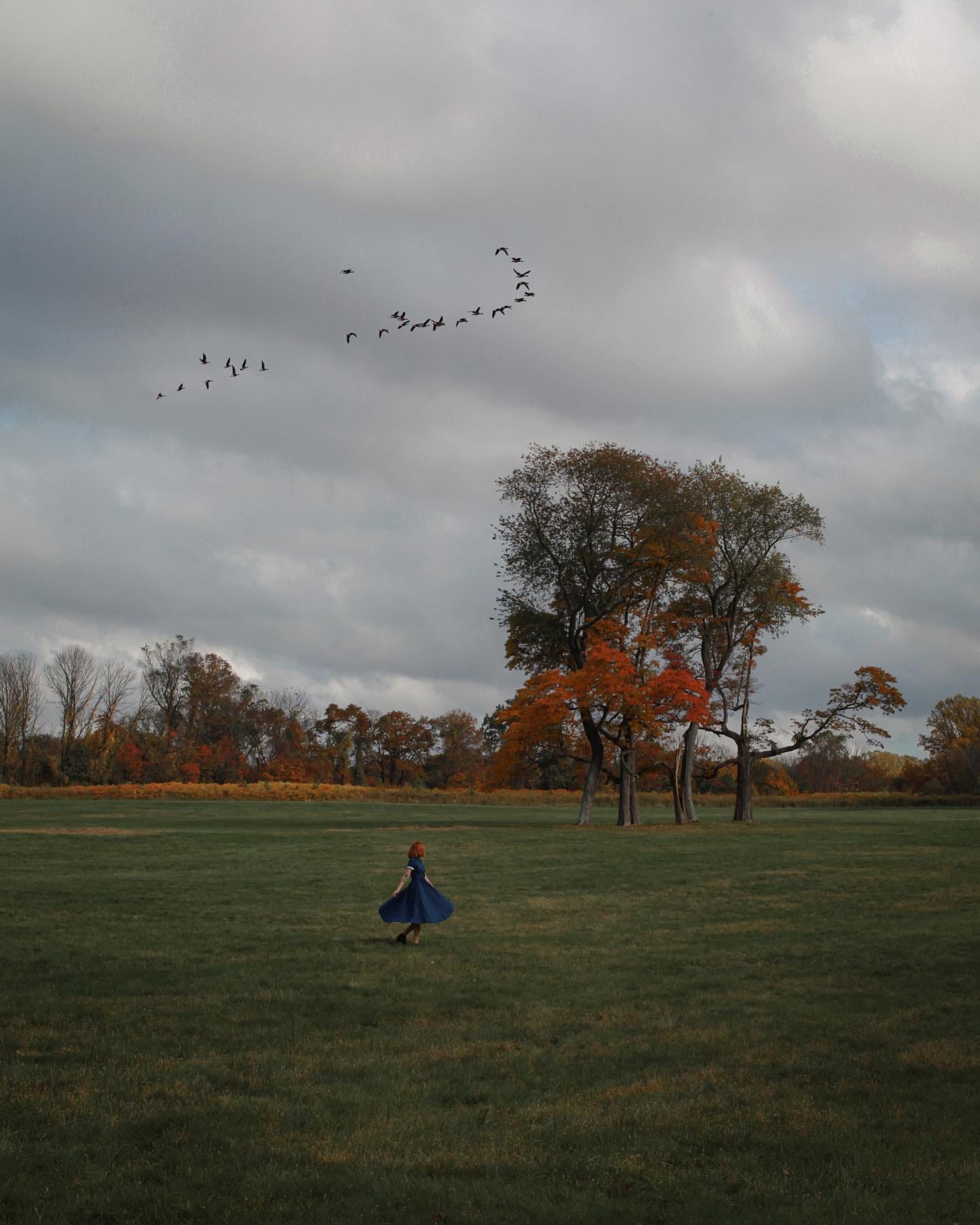
Human societies are full of emergent behaviour.
No single person created language, yet generations of interaction produced systems rich enough to carry philosophy, poetry, science, and law. No one designed every detail of a city’s culture, yet customs, neighbourhoods, rhythms and identities emerge from millions of repeated choices.
Companies often discover that culture cannot be fully manufactured from the top because it emerges from what people actually do when nobody is watching, how they respond under pressure, which behaviours receive status and which truths are quietly discouraged. The official values may say one thing, while the emergent culture says another.
A crowd can become compassionate, celebratory, or violent depending on how people begin responding to one another. Small acts are mirrored, repeated, and amplified until the group seems to acquire a personality of its own, although that personality exists nowhere outside the interactions of its members.
This may be one of the most hopeful and frightening principles of social physics. It means no individual controls the whole, yet every individual participates in what the whole becomes. A single act may feel insignificant, but systems are built from repeated small behaviours, and when enough people alter those behaviours, a new pattern can emerge without anyone having planned every detail in advance.
For all its extraordinary achievements, physics still does not explain why subjective experience exists. It can describe the behaviour of particles, predict the movement of planets, model the evolution of stars and send spacecraft across the solar system, yet it cannot fully explain what it feels like to see colour, hear music, grieve someone, forgive a betrayal or recognise oneself in another person.
Consciousness remains a boundary where measurement becomes difficult, and the observer can no longer be easily separated from what is observed.
A future social physics might map influence, study networks, model the spread of information, and develop increasingly accurate predictions of collective behaviour, yet it would still face this mystery. It could record that someone stayed beside a dying parent for six hours, but it could not fully capture what those six hours meant. It could measure the language of love, the frequency of contact, and the long-term effects of care, while the lived experience itself remained larger than the data.
This is important because every science is tempted to mistake what it can measure for everything that exists. Revenue is easier to count than meaning; followers are easier to count than trust, and productivity is easier to measure than whether a person’s work leaves them feeling alive.
The limits of measurement do not make measurement useless. They remind us to remain humble about the difference between a map and the world it attempts to describe.
If I were to map social physics down, the purpose of it would not be to reduce humanity to equations, but to reveal how much of human life has been left outside our equations because our instruments were designed for what is visible.
If there is any truth in this thought experiment, then human beings are not separate units moving independently through empty social space. We live inside overlapping fields of language, memory, power, fear, affection, attention, history, and expectation, and every field changes the way we experience ourselves and one another.
A family creates a field in which certain identities become easier to inhabit. A school creates a field around knowledge, authority, and possibility. A company creates one around risk, value, and belonging, while a society creates larger fields that influence whose voice is trusted, whose pain is believed, and which futures appear imaginable.
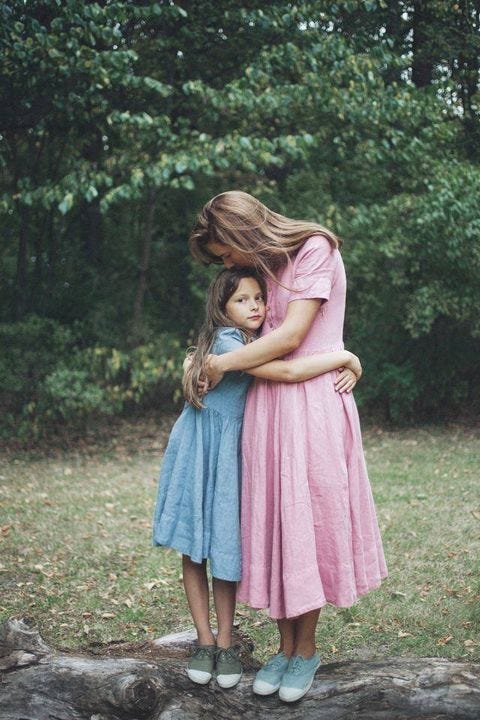
These fields are not permanent. They are strengthened through repetition and weakened through neglect, which means every conversation, policy, story and act of courage contributes to the social environment that other people will later experience as reality.
We already understand this intuitively. We know that children grow differently when surrounded by safety, teams create more when mistakes can be discussed honestly, and communities recover more easily when trust remains intact. We know that fear narrows attention, humiliation reduces participation, and belonging releases forms of intelligence that isolation keeps hidden.
The future of civilization may depend as much on the fields we create between people as on the technologies we build around them. Artificial intelligence, biotechnology, and space exploration will alter human life, yet none of them can decide whether the social field surrounding those technologies will be shaped by dignity, competition, care, domination, or shared responsibility.
Physics taught us that space itself is not an empty background but something dynamic, capable of bending, expanding, and carrying waves. Perhaps social space is not empty either. Perhaps every human presence changes it.
We have spent centuries learning to measure the visible parts of society: population, wealth, production, votes, employment, sales, followers, territory, and growth. These measurements matter because they reveal patterns we would otherwise miss, yet physics offers a humbling lesson about the danger of assuming that visible matter tells the whole story.
Gravity cannot be seen, time cannot be held, space has no colour, dark matter has not been directly detected in the ordinary sense, and the Higgs field does not reveal itself to our senses, yet all of them belong to our best current descriptions of reality because their effects are woven into the behaviour of the universe.
Human life may also be held together by forces that do not appear on the balance sheet.
Trust. Meaning. Attention. Memory. Belonging. Love.
We notice them most clearly when they disappear, because the structure that once seemed stable begins to weaken and we realise that what held it together was never the visible form alone.
A company without trust becomes a collection of contracts. A family without attention becomes a schedule. A society without shared meaning becomes a population living beside itself, while a person deprived of belonging may begin to feel as though they are moving through a world in which gravity itself has changed.
Perhaps one day we will develop a more mature science of these invisible social forces, one capable of combining the clarity of data with the humility required by consciousness, yet we do not need to wait for that science before noticing the fields we create around us.

Every time we listen without immediately preparing a defence, we change the field. Every time we keep a promise, repair a mistake, welcome a question or treat another person’s dignity as real, we add weight to the invisible structures that hold human life together.
The history of science suggests that reality is almost always stranger, deeper, and more connected than it first appears. Matter is not as solid as it looks, empty space is not truly empty, particles gain properties through interaction, and galaxies depend on forces we still do not fully understand.
Humanity may be telling us the same story.
What appears to be individual may be relational. What appears to be empty may be filled with influence. What appears weak because it cannot be measured may be the very thing holding the entire structure together.
If physics is the study of the visible and invisible forces that shape the material universe, perhaps social physics could become the study of the forces that shape us, beginning with the most honest scientific position available to us - not certainty, but wonder…
Yours Truly, Vaida { vaida@sondeflor.com}
No posts
Comments
Nothing yet. Say the first thing.
Sign in to join the conversation.