
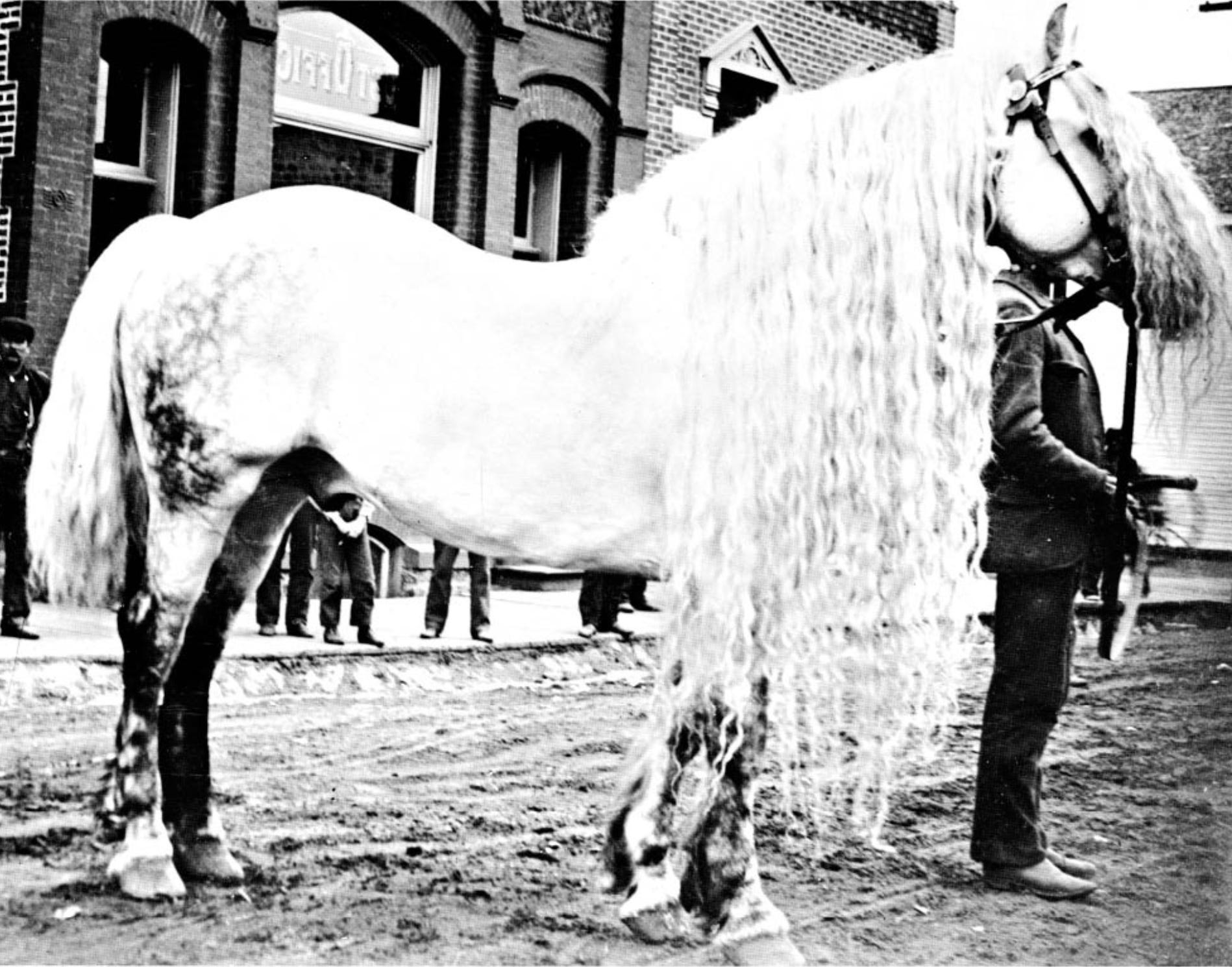
From Wisconsin Death Trip
“I could not breathe in class today,” Cassidy Exner, a student in my experimental creative nonfiction course, wrote. In class, that day, we’d had a visitor: Michael Lesy, author of 15 books since his first, Wisconsin Death Trip, was published in 1973. Cassidy and her classmates had read Death Trip, and watched the 1997 adaptation by the Oscar-winning filmmaker James Marsh. We’d conducted an interview with him as a class.
What’s the book about? From a passage about Death Trip in the book that gives this Substack its name, “Scenes from a Slow Civil War”:
Wisconsin Death Trip began as a staple-bound pamphlet and as a book became an unlikely mirror of its moment, even as it depicted the 1890s. History’s like that sometimes, our faith in the forward motion of chronology suddenly evaporating, leaving us standing, disoriented, in a dry, still riverbed. Death Trip was, on the surface, a benign album of seemingly ordinary photographs—portraits, patriotic displays, happy youth—from one small town in Wisconsin, Black River Falls, during the last decade of the nineteenth century. Interspersed are excerpts from the town newspaper, the Black River Falls Badger State Banner, and whispers from a “town gossip.” In 1973, a year of crises as varied and vast as those of this year, most White Americans still imagined the previous century as an idyll, apart from a brief interruption for civil war, fought for reasons they thought “romantic.” Virtuous country life, bustling urban industry. American greatness. The Banner spoke other truths. Epidemic disease, whole families consumed; diphtheria, the formation in the throat of a “false membrane”; “astonishing bank failure”; “incendiaries,” arsonists who loved to watch things burn; “vigilance committees”; “the private made public”; a woman, once a “model wife and mother,” who traveled the state smashing windows; soul after soul remanded to the asylum; so many suicides; a woman who died “from a criminal operation performed upon herself” after she failed to find a doctor with the courage to help her. There was beauty in the book, too, even in its carefully arranged photographs of dead infants. That’s what you did then, when your baby died. If you had the money, you hired the town photographer to make the infant’s picture, tucked into a little coffin with flowers, eyes tenderly brushed closed.
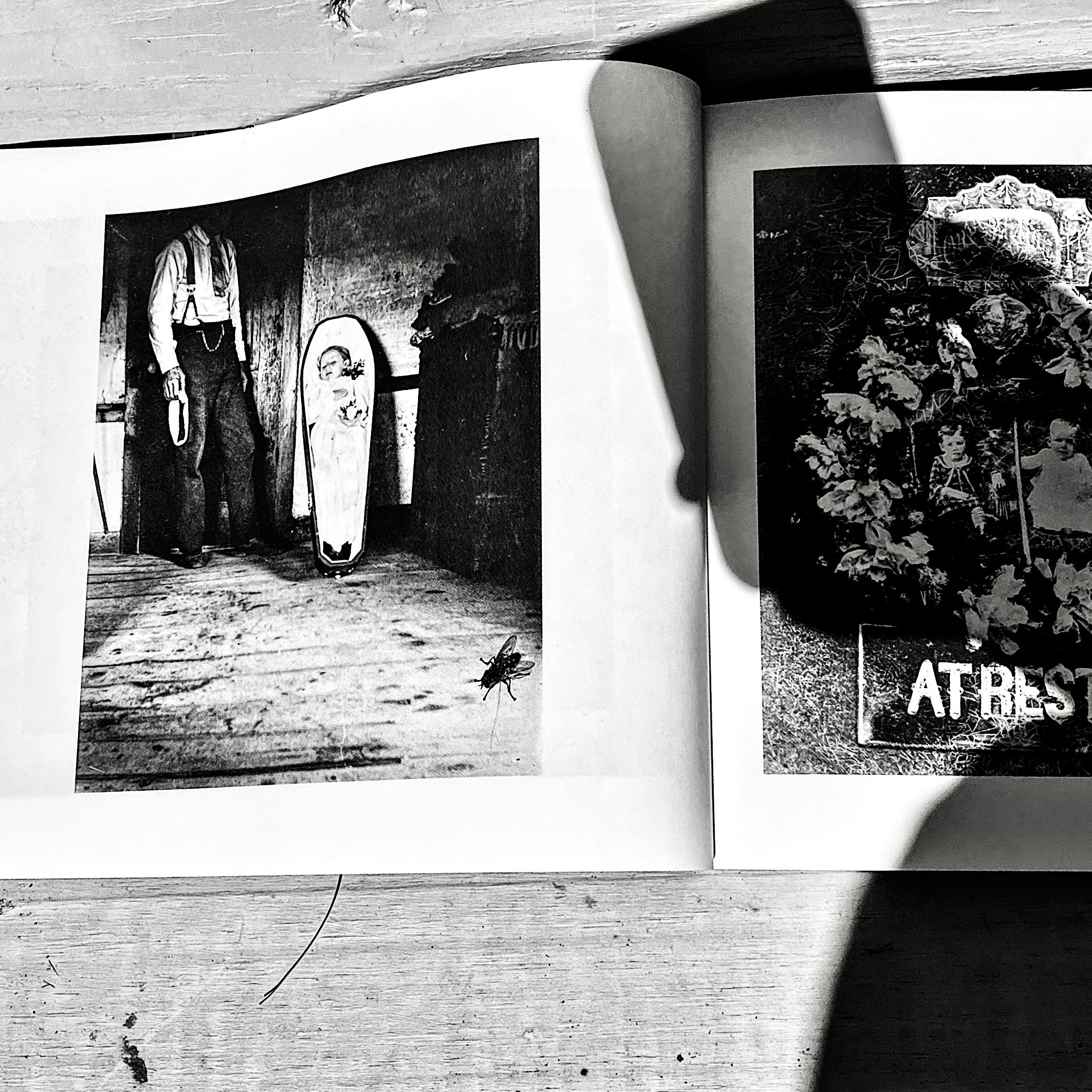
Thirty-four years ago, Lesy was my teacher. He didn’t assign his own book, didn’t mention it, but I’d found it, and learned from it that a “death trip” is a memento mori, a reminder that we all must die. Which is, in turn, a way to remember what it is to be alive.
“It was not that Wisconsin Death Trip scared me,” Cassidy Exner, continued,
but that I saw myself so deeply in his words that I wanted to cry. “They are dead!” he shouted about the faces that looked back at him from [the archive]. “They’re all gone! But when you look at them, they’re alive! You get it, I thought, you get it. I don’t know yet whether “you” meant me, or him. But that has always been the stakes for me in all of this. There are stakes in every single act of hunting and gathering from archives. It matters because things happened and were forgotten and people lived and were buried, and for one moment, things are remembered, and people breathe again. Maybe it is easy to believe that is a reason to write, but the believing is what keeps me from blinking or turning away.
Cassidy posed the first question: “How do you avoid becoming captive to the archive?”
Cassidy loves archives so much she makes her own, assembling vast-but-particular collections of her interests, which she then translates into prose. But sometimes, she says, the archive overwhelms the story she wants to tell. How do you emerge with a story to tell from an experience in which you’ve immersed yourself so deeply it redefines reality? How do you avoid becoming captive to the archive?
“You can’t!” said Lesy. “You have to become captive to the archive.” He spoke of making his 2017 book Looking Backward from an archive of turn-of-the-century stereographs, "views" studied by millions in the late 19th and early 20th centuries, cards featuring double photographs which, when looked at through a “stereoscope”—something like wooden VR goggles—appeared three-dimensional.
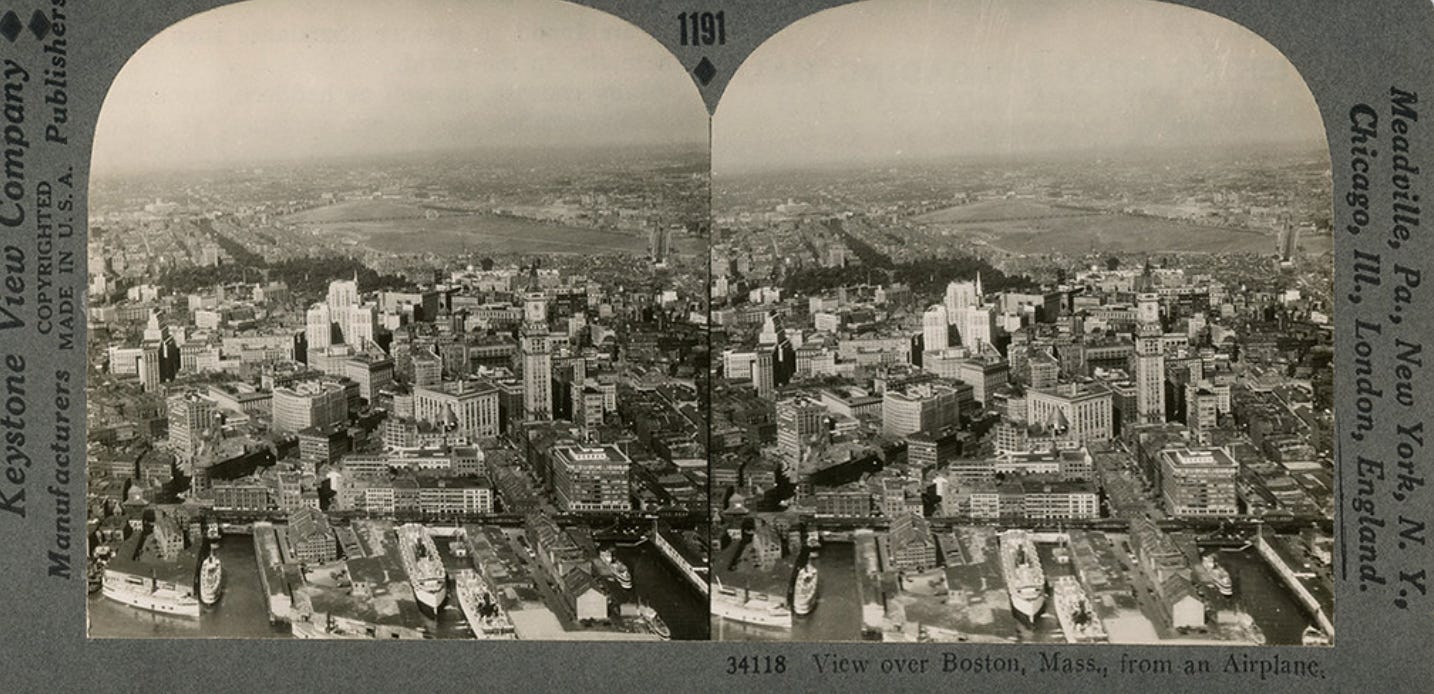
An archive of some 350, 000 stereographs obsessed Lesy for years, the moments in which these images were made and consumed by everyday people who saw—in the aerial views they’d never been able to imagine and the natural wonders they’d never visit, yes, and also in the guns and the corpses photographed and collected like trophies of colonialism, and in the factories and smoke towers, coal burning into vast and distant skies—three-dimensional, “virtual reality” pictures of a glorious future. Industry triumphant; the savages pacified; Pax Americana. To understand it, Lesy had to give himself over to it. But there is, he said, a method by which you can attempt to set yourself free.
Lesy: I’d go back home and I’d sort through the stuff. “Oh, these are all patterns of men and women with babies. And these are patterns of men with horses.” I began to realize I was looking at patterns. That’s the second stage. And then the third stage is actually trying to believe that I wasn’t projecting. Ha!
[Lesy often interrupts himself with a laugh that is much an exclamation. Sometime of irony or absurdity, sometimes of horror.]
I was trying to believe that I wasn’t crazy. Of course, I was. But there’s a plausible kind of craziness. And if you read that book, you’ll see I can make a case about how racism was transmitted, how war was transmitted. All sorts of things that are like heavy anchors that were transmitted through those images. It was a gradual process of realizing what I’d already seen and then formalizing it. And then trying to transform it into narrative. Remember, I’m looking at images. Images go both ways, or maybe four ways, or maybe five ways or maybe six ways. Part of that is your own projection. And part of it is just unearthing the meanings that are hidden in the image.
Clarissa Melendez: I wonder how you build that skill.
Lesy: It’s like learning how to run long distance. First of all, I think in order to really study photographs, you have to have been a photographer. That’s a problem for historians because they’re really word-oriented. Looking at an image as both a work of art and a document is like rubbing your belly and patting your head at the same time. Most historians are word-driven people. When they look at an archive, or they know about an archive that has 40,000 images, or 250,000 images? These things exist all over the country, and they’ve been guarded by librarians for 30, 40, 50, 60, 70, 80 years, just waiting for someone who can rub their belly and pat their head at the same time to walk in and say, “Oh, I’d like to look at the Bain Collection if you don’t mind.” And no one has said that to them ever in their lives. They’ve just been guarding the collections.
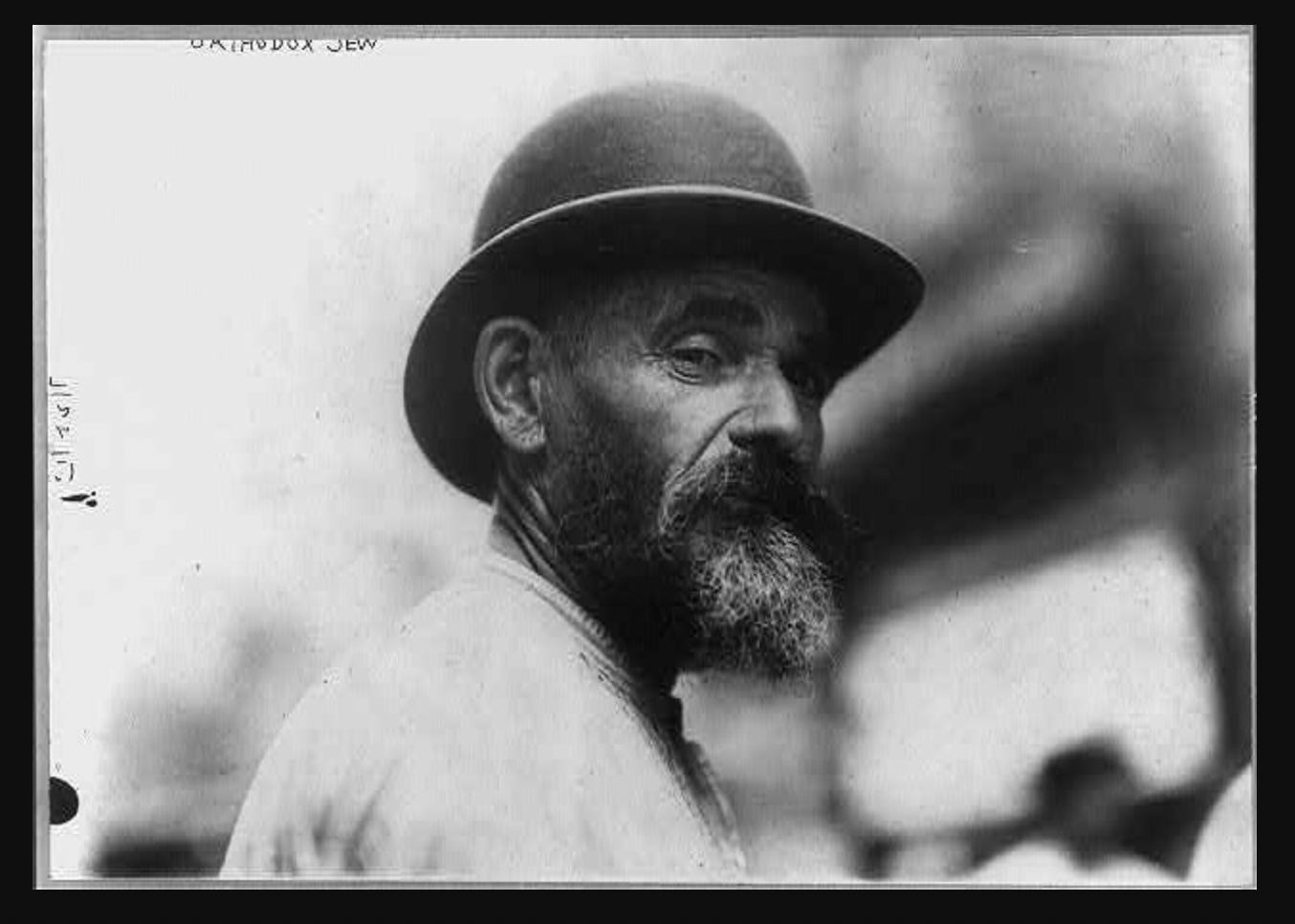
[Lesy’s current book-in-progress is based on The Bain Collection, 50,000 images from one of the first news photo agencies. He’d written about the Eastern European pogroms that are almost visible in the gaze of this Jewish immigrant’s glance over his shoulder—
—and at the time of his visit with us, Lesy was writing about the East St. Louis Massacre of 1917, in which white mobs attacked Black neighborhoods, murdered dozens, and displaced thousands. Only, there were no Bain photographs of the assault. Or so Lesy thought, until he found what appeared to be photographic evidence:
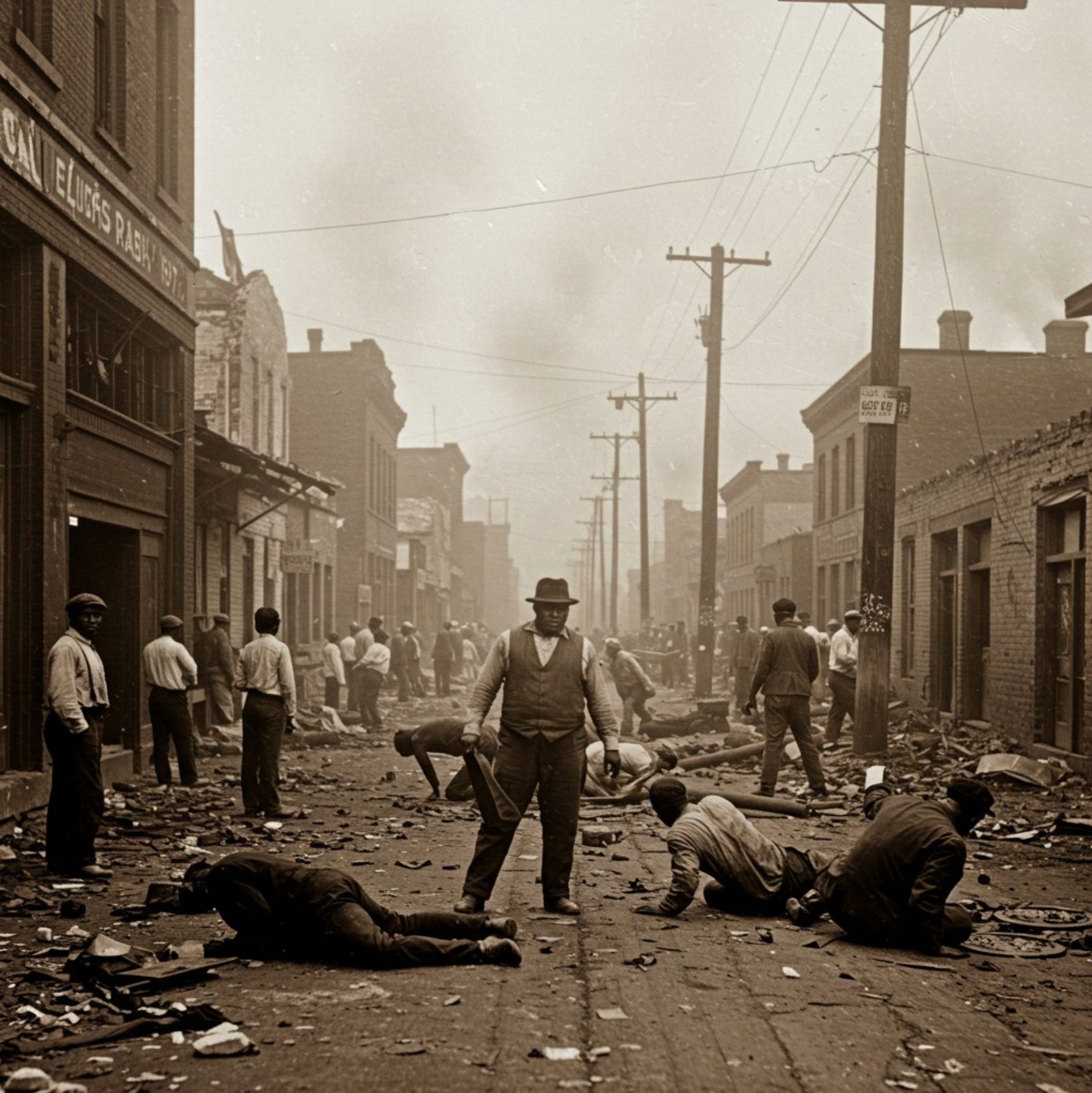
Only, this image isn’t real. AI. It’s false. Untrue. A lie someone asked a machine to make because they decided that a “true fiction” was the same as a fact. It’s not.]
Lesy: In order to really look, first of all, you have to have practiced photography. That is, you have developed an eye. You have to understand what goes into making the image. Then you have to be a historian. Archives are about certain moments in time. It’s tens of thousands of images. So you have to know the context: when an image was made, for what purposes, how it was used later, and how you’re going to use it, not as illustration, but as art and forms of information. My books are arranged in sequences. The same way that you edit a film. One image flows into another or back, beats up against another. It both confirms and contradicts. Most verbally-driven people will look at a photograph and actually think that what they see is what they get. You need to able to ponder, to be able to ponder really fast. That’s a contradiction, isn’t it? Ponder; fast. But you can build that up over time. You can build the ability over time to run a half a mile, and then a mile, and then a marathon. Otherwise, you become overloaded with images. You become saturated. You forget. You can’t recall.
Eben Desilva: You talked about the prejudice in which a photo could be taken. Once I read the conclusion to Wisconsin Death Trip, I understood l how a lot of the material that you’re working with is probably biased in that it’s medicalized or—
Lesy: Maybe. It was just a bunch of people coming into a small town photographer to have him make a portrait. That’s all it was.
Eben Desilva: In that case, my question is how do you work with material knowing that it is imbued with prejudice?
Lesy: You’ve got to know first of all that you’re imbued with prejudices. Ha! Then you’ve got to know that what you’re doing is ripping these photographs out of their proper place into another place that you are willfully creating. You’re always misusing the photograph. But what I want to do is say, “Look, these are visual documents. They can recreate a past, not through explanation, but through retinal experience.” You can be inside the past by reading, oh, I don’t know, quartermaster records from the Civil War, and realizing that one regiment would go through so much whiskey in a month. That’s information. But then if you could see these guys standing around? They’re all dead. Ha! They’re gone. They just actually vanished. But when you look at them, they’re alive. They are alive because they strike your nerve, your optic nerve, and you live in the presence of dead people. They live in your presence, too, in a way they they’d never anticipated. Using images in this way is always an act of magic, and revivification, and re-experience. And if you don’t do that, if you can’t, because you’ve never taken a photograph in your life, you’ve never meditated on a single image, you’ve never dreamed with your eyes open? Ha! Then you have no business looking at pictures as historical documents, because they’re slippery. They’re both works of art and forms of information.
Imagine if you could use both sides of your brain, if that’s not antique neurology. Imagine being able to use both side of your brain, to look at the world. That you’re not just a police detective looking at mugshots. But you’re a police detective looking at character. Does anyone remember who Bertillion was? No. Okay, so [Alphonse] Bertillion is a guy who lives in Paris. He’s the son of a police chief. About the time of Alfred Dreyfus.
[A French military officer, roughly turn-of-the century, falsely accused of espionage. Dreyfus was Jewish, which for many French gentiles was evidence enough of an inclination toward treason; and some antisemites pressed on with his persecution even when it became clear that the army had scapegoated Dreyfus for the crimes of a gentile. “When was it?” Lesy asked. He told us to look it up on our “machines.” I don’t permit them in the classroom. He insisted. I turned on my phone. Wikipedia: accused in 1894, pardoned in 1906.]
Lesy: 12 years. The golden years of photography, by the way. Bertillion decides that in order to keep track of criminals, they should be photographed. Think about where mugshots come from. It comes from this crazy guy named Bertilion, who was the son of a police chief, who was such a misfit that they put him in an archive, which had nothing in it. And Bertillion then creates an archive based on what they thought were accurate physical measurements like the distance between this and this. [Lesy gestures to his elbow and then his wrist.] Body measurements. They thought you could understand criminal character by measuring people’s arms, the lengths between their eyes and their mouths. That was what the archive was. Bertillion understands those as measurements and then says, ‘Ah yes, but what about photographs?’ Bertillion’s the guy who thinks up mugshots.
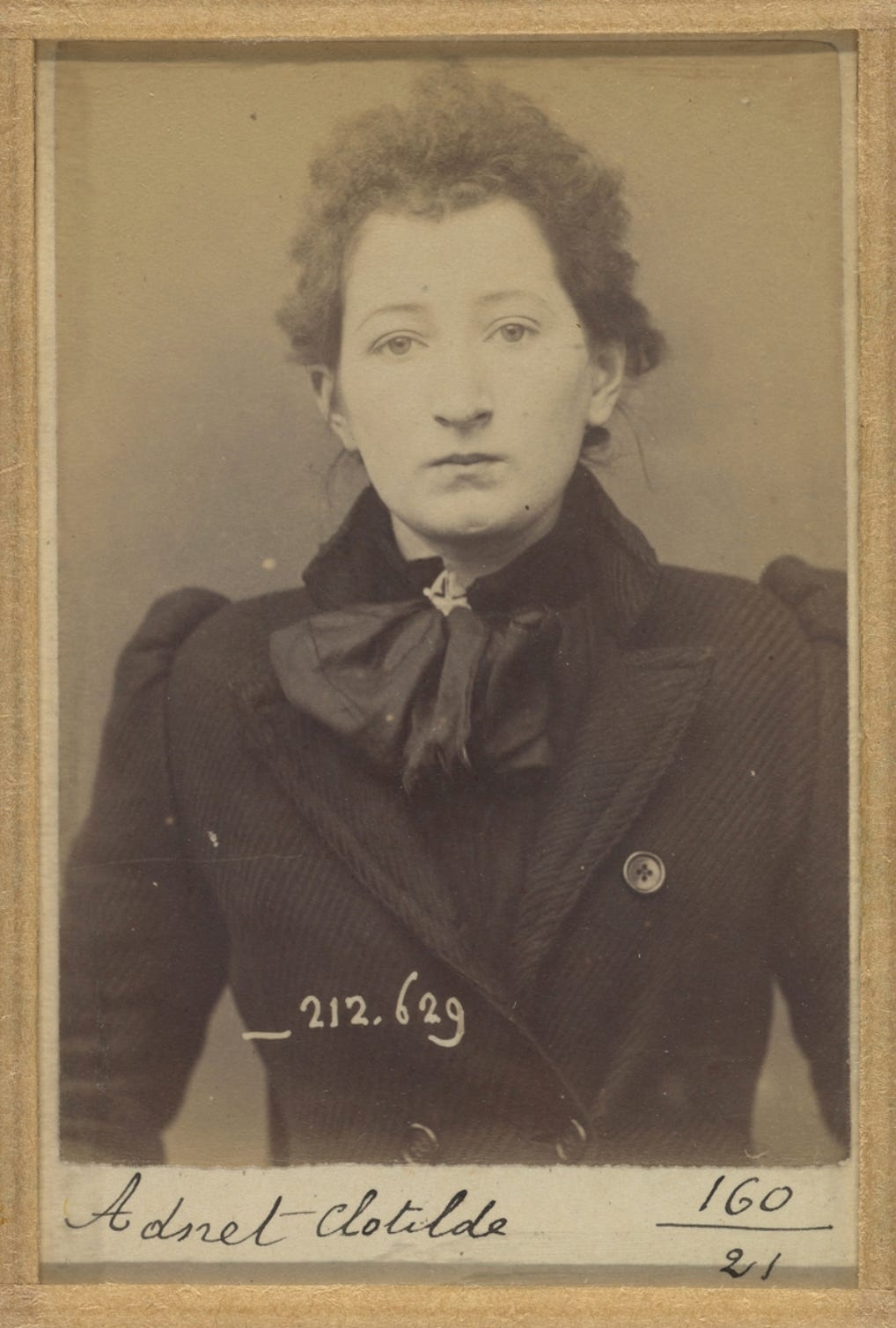
From “Mugshots of Suspected Anarchists from French Police Files,” at the Metropolitan Museum of Art, attributed to Bertillion.
Lesy: All of a sudden the police archives become full of pictures of people, along with the distance between your index finger and your thumb. Oh--who thought up fingerprints? Where did fingerprints come from? Who was using fingerprints?
Eben Desilva: Ellis Island?
Lesy: Before that! The Punjab, the Brits, legal documents of ownership that native peoples, that is the people the Brits conquered, used on documents. Your fingerprint. The Brits, who were nothing but predatory, took that idea and used it for ID. So we’re talking about early 19th. That’s where we get fingerprinting.
At this point, I say, so what was your question? Ha!
Eben Desilva: I interpreted your book as kind of highlighting the absurdity of the production of madness and poverty in this rural--
Lesy: Well, wait a second, let’s forget about my book. This course is “gleaners,” right?
Sharlet to Lesy:That’s the name of the course, The Gleaners.
[From the syllabus:
…gleaners lived on the remains. I’m fascinated by that idea in relation to creative nonfiction, a form of documentary art. That is, art made of the real stuff of the world, because it’s what’s there. What can we do with what’s there? What can we glean? There’s another sense of the term gleaning that has developed over the years, of assembling a story bit by bit from the facts you can find. A process akin to another documentary art: collage. It’s in this sense that the idea of gleaning will guide us in our study and practice of creative nonfiction, with a nod toward its roots in necessity and necessity’s cousins, bitterness and hope.]
Lesy: You’re supposed to make something out of nothing. So you walk around and you’re looking, and you see a matchbook cover to a bar. And then you see another matchbook cover, if they still exist, to another bar. And you make a series of matchbook covers, page to page to page, and you are clearly misusing the matchbook coverage, because what you’re interested in is how they decay, and how they look up against each other. So you’re misusing the matchbook covers as evidence, as visual evidence, as part of a book that you’re making. You’re mis-using the matchbook covers because they exist--if they still do--to light cigarettes. And you’re using them for another reason. So you’re always misappropriating.
Eben Desilva: There’s a narrative to the news reports about this town, Black River Falls, that goes crazy and no one can understand why.
Lesy: Oh, they don’t go crazy. They react to dysentery, diphtheria, smallpox, a huge economic depression, being strangers in a strange land. They don’t go crazy, they just react like anyone would react to a series of catastrophes. They’re no different than us.
Chaya Liebe Vaynshtayn: You were talking about dreaming with your eyes open. And this process of living in the archive. I was wondering if ever you start to have relationships with the people in the photographs.
Lesy: It’s not that simple. It is and it isn’t. In other words, it isn’t like I look at a picture and the picture starts talking to me. “Michael, how good of you to call.” What happens is I project onto the image without even knowing. So the picture reminds me of my grandmother. You’re suddenly startled by a glance that never existed until you looked back.
I had an experience once, as an undergraduate. I went to Columbia, and in those days, you were allowed into the stacks, and there were flat files, and I pulled open a drawer, and there was a picture of a guy with the most intense hair. He was an astronomer, a member of the Lunar Society. But he was in a drawer, face down, with a blazing glance, until I turned him over. And the glance blazed into me, into my eyes. I looked back at him when all he’d been doing for the last 100 years was looking at the back of another print. So do I have a relationship with the people in it? Sometimes. But it’s not a Disney film.
Madeleine Saraisky: I was wondering what your physical experience of exiting the archives was like after this deep immersion and having relationships, sometimes, with the people and the photographs.
Lesy: By the end of a day, of looking, at images from the past, sometimes faces, sometimes scenes, sometimes episodes, I, I—come back. Up. Into the air. Into the sunlight. Into the world of people walking at the end of the day, home for dinner or to a bar, but I’ve been in the past for—if I’m lucky—five to seven hours straight. My experience is that of a stranger in a strange land. I’ve been somewhere else in time, in experience, in retinal experience, in intellectual experience. And then I wake up. In the present, and I’m as alienated as I once was from the past, as I am now coming up out of the past into the present.
The present is animated. The present has aroma, a woman passing me with perfume, the smell of a cheesesteak in the air. But I was in the past, and here I am in the present, and I’m deeply shaken by it. And I have to walk back to where my hotel is. And I have to walk through the lobby, past the front desk, to the elevator, into the elevator, up into the corridor, then into my room. And I’m still strung out by being in the past. It’s the experience of someone who’s just landed on Earth. And imagine doing that one day and then the next, and the next and the next, five days, until the archive closes for a weekend. Does that describe the physical experience?
Madeleine Saraisky: Do you think that that, because you’re immersed in it, do you think the contrast between the things that you noticed in the past and the present helped you make sense?
Lesy: Oh, absolutely. If you know the past, you’ve time traveled. You live in the present, I live in present. But I know for a fact that we are ghosts. Ha! That we’re just spectres. We’re moving through this moment, but our actions, without us even knowing it, are rhymes to the past. You know, there’s the Ken Burns quote--he appropriates the quote, “history doesn’t repeat itself, it rhymes.” Ha! The experience always is being in two places at the same time. And if you do that over and over , and you don’t quite know what you’re doing, the images begin to work their way with you, because you’re immersing yourself day after day after after day in five hundred, seven hundred, eight hundred, a thousand images a day. You are definitely bent out of shape as a normal human being.
Clarissa Melendez: You talked about how looking at a photograph kind of makes the subject alive and not dead.
Lesy: Momentarily.
Clarissa Melendez: Is there a reciprocity to that moment?
Lesy: Ha! Do they say, “Oh, thank you for looking at me?”
Clarissa Melendez: By immersing yourself in the past in that way are you kind of folding into that?
Lesy: Yes, you absolutely are. In other words, you have to be willing to give yourself over, and then that act of giving yourself over leaves a trace in you. It’s a unique experience because I’ve been damaged, or distorted, or stretched, or compressed, or altered, by all the images that I’ve seen of—[he gestures toward Melendez]—someone young, female, sitting in a room under the light. Everything has a resonance.
Jackie Wright: I was thinking about ghosts. You said you believe in ghost stories more so than ghosts.
Sharlet to Lesy: I shared a passage from your story in the Reader about the Hotel San Diego, the supposedly haunted hotel being made over as a generic Hotel Anytown for conventioneers.
The ghost stories weren’t just the result of poor communication. The hotel had been stripped of its special identity. It had become a barren place. Interchangeable with a thousand others. Question: if human beings are confined to barren places, cells or stalls or cubicles, what do they do? Answer: they scribble on the walls. That’s what those ghost stories were: they were graffiti. They were the natural reaction of human imaginations to the pastel walls of an empty place. The ghost stories were decorations. They were efforts to transform the emptiness.
Lesy: When I went into that hotel, every hotel in San Diego at that time was pandering to tourists, saying, oh, you’ve got to stay in this place because this place is haunted by, like, the Del Coronado, which is a grand 19th century hotel in San Diego, haunted by a woman who, as they say, had an unhappy love affair. She probably had an unintentional pregnancy and died. That’s what they say. Anyway, all the hotels were trying to get business by saying, “We have our ghosts, too!” So I went into this place. Which was across the street from dive bars and tattoo parlors, mostly patronized by Marines. Thinking to myself, “wow, a haunted hotel. And I get paid to write about it! Oh, how wonderful.” So, what did I do? I talked to people. Who worked in the hotel. And they all understood that that cold breeze that came up the stairwell as they were walking down the stairwell was this ghost of the owner, the original owner of the hotel. So did I ever see a ghost? No. But boy, I heard a lot of stories.
Jackie Wright: Wisconsin Death Trip, I don’t know if I agree with this, but It’s supposed to be very creepy--
Lesy: I never thought it was.
Jackie Wright: Yeah!
Lesy: I thought it was funny, and I thought it was tragic, and it thought it was a Holocaust without Jews. But when you put art into the world, people use it in whatever way. It’s like they decide that they have an itch, which you never anticipated, and the book is going to scratch that itch. So that book, at a certain point, became a book to be read during Halloween, for example. I didn’t think it was one of those sorts of books. I thought it represented immense suffering, and that suffering then turned us into dreamers who wanted everlasting life in the form of consumer goods. That life was nothing but, I don’t know, penny candy, because the alternative was suffering, and death, and grief, and loss. And by the way, that comes pre-packaged with economic depression. What a great system that is! So that book has been interpreted and misinterpreted in ways that I never anticipated. But, once you make art, and you put it out into the world, and it becomes an automaton, you don’t have any control over it. This book. I never thought I’d be sitting here talking to you about the book. I never even thought the book would exist 50 years or however long it’s been around. It’s so strange to me.
Jackie Wright: It was the first time that I had seen pictures from this time that I didn’t think were immediately creepy. Your book did something different. In the past, pictures from the beginning of photography have seemed very creepy to me. But I thought that the pictures in your book, maybe something about the way they’re arranged, or something about a photographer, or I don’t know.
Lesy: The people. They walked in and asked to have a picture made. But behind that very prosaic act, or not so prosaic act, of asking to have the portrait made, is this low-groan hum of misfortune and catastrophe. So one of the ways that this book is made is to hope that the reader will put two and two together without actually knowing that they’re putting two and two together. And understand that these people sitting there for their picture are living in a world in which things are falling over like dominoes, but they’re still sitting for their pictures.
Jackie Wright: You look at these pictures and at these people and you see the suffering, the low hum underneath them asking to have their pictures taken. I’m wondering about your emotional experience.
Lesy: It’s stretched like toffee. It’s pulled. All the time, by the next face and by the next glance. So it’s an emotionally and intellectually and philosophically and aesthetically difficult task, from image to image to image to image.
Jackie Wright: Just the task of writing about these people with dignity.
Lesy: It’s hard, isn’t it?
Jackie Wright: It’s what I wonder about. All you have are these fragments, a lot of fragments, but they’re still fragments, and something that we talk about a good deal in class about is the stakes of a story. What’s at stake.
Lesy: Telling the truth is at stake all of the time.
Emilie McKenna: I think having a history is really a part of human identity in a way that it isn’t necessarily for other beings. Trees have the rings in their trunk and there are other ways that they might have “history,” but for humans at least, we seem to hold on to our histories, there’s some importance and value that we see in it.
Lesy: Well, I think, you underestimate trees.
Emilie McKenna: They hold on to their history in their body.
Lesy: Yes, And we do too.
Emilie McKenna: Scars.
Lesy: And scars we can’t see. And projections that we make without even knowing them. And memories of dead sisters, or memories of fathers, or memories of your second grade teacher. We’re all walking around with this stuff.
Emilie McKenna: But we also cling to the history of previous lifetimes. Why do we keep these histories? Why do we preserve these archives? Economically, it takes up space and time, and those are also things that we value. Yet not everybody seems to value the archive in terms of visiting it and immersing themselves in it in the way that you do. So, why do we do this? I do find value in it, but why do you find value in it?
Lesy: Because I could travel into the past. Why am I interested in a particular moment in the 19th century? Because my parents were born into the world, opened their eyes from whatever lives they had lived before. My parents were born between 1900 and 1903. I wanted to know, as an only child, what their world was like before I had entered it. I was--I remain--tremendously curious about that time past. As a child and then as a human creature now, I still want to go back to that time to know what the air smelled like then. What the roses looked like, or what a sidewalk felt like. I’m very curious. And also, I’m in the presence of death. That’s the bad thing about us. I mean, for example, all the people who have ever fought in the war, really fought in the war, have perished. They haven’t passed on any hive memory or collective memory. They’re all dead! We in the present read about them, but we never have experienced that, that body memory, of pain and loss and sorrow and anger. Wouldn’t it be wonderful if we could really remember the past in that way so we wouldn’t make the same moral mistake again? And so one of the things that I do is I try to see and immerse myself in the past so that I can live in the present more fully. That’s what photographs do. They deny the passage of time, if you permit them to deny the passage of time.
Emile McKenna: When textbooks are written, the ones that you read when you’re first learning history, there are certain things that are deemed worthy of learning about, and Black River Falls might never make it into those textbooks, because it’s not Thomas Jefferson, or it’s not Napoleon. Do you think there’s a way to change that system and teach people how to look at photographs and actually immerse themselves in the past?
Lesy: Of course! I told you about this archive of stereographs. They were so used in the primary and secondary school education that boxcars full of crates of these stereographs, with stereo viewers, were sent all across the country and they became part of the curriculum. Now, they were heavily controlled. Because on the back there was a narrative. “These people who are not like us because they’re ignorant.” And on the front is a Guatemalan mother and her daughters grinding corn but on the back they’re demeaned and diminished by the narrative. If you look at the photograph, you see the mother and the daughter and the love and the task. So how can you look in an image without taking the baggage of prejudice with you? I contend that if you look at the image in a way that is naive but also sophisticated, you will not think about the great men of history. You’ll just look at those women, that woman and her children. That would be the way to teach. But it’s never gonna happen.
Because people being educated mean being people who are controlled, being told what to think, what to do. I mean, look, the thought police is not a modern invention. Ha! But you see, photographs talk about history in a way that defies orthodoxy, convention. What if you looked at this photograph of U.S. Grant—
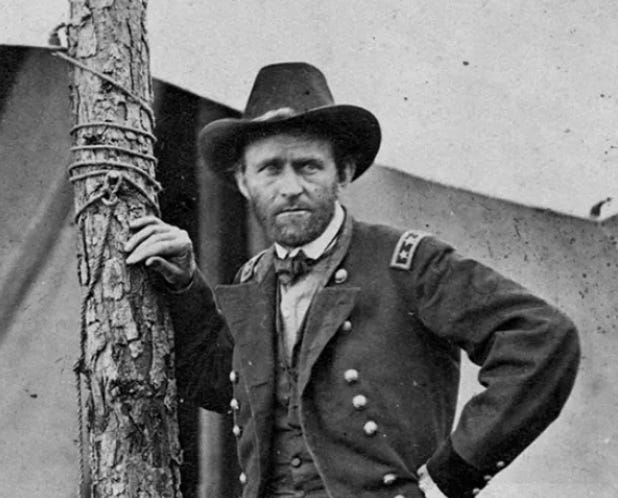
—and realized that he was fully aware of how many dead men he carried with him as a general, and that he drank himself into a stupor every night, but you saw it in his face. Wouldn’t that be amazing? Rather than, “oh, he’s a very successful general, and then, of course, he got elected president. The presidency was compromised by railroad thievery and blah, blah, bah.” But look at his face!
Ava Razavi: I’m Ava, and I also write about death a lot. And I have dumb questions.
Lesy: The best kind.
Ava Razavi: Does writing Wisconsin Death Trip make you sad? Because reading it made me sad.
Lesy: At the end of every day I would go out into the light. And the only way I could get from the sidewalk in front of the Wisconsin State Historical Society back to this place where I lived, which wasn’t too far, was to recite, from Kurt Vonnegut’s Slaughterhouse-Five, “So it goes.” Have you ever read Vonnegut? There’s an old guy in a boxcar. They’re headed toward Dresden. [About to be massively bombed by the Allies, creating a firestorm that would kill 25,000.] They’re American POWs and the guy in the boxcar, everyone’s freezing to death and he says, “You think this is cold? Well, let me tell you, when I was younger!” And by the time they get to wherever it was, Dresden, or whatever, he’s solid as an icicle, and Vonnegut says, “so it goes.” The only way I could survive that work was to remember the Vonnegut.
Ava Razavi: “So it goes.” Does that make it better to accept that this is just what life is? Life is a town where everyone just kills themselves and sets things on fire and smashes windows?
Lesy: You have to understand where I’m coming from. Most of my relatives either made it across to the U.S. before 1924, or they went up the chimneys. If you’ve got that as your baggage, if you’re carrying that baggage, then you understand why catastrophe is a matter of normal fact.
Sharlet: Ava took a class with me last spring. We were trying to look directly at the moment. We said, Let’s watch in real time the dismantling of higher education and libraries and fundamental freedoms. About halfway through the term, Ava, you said, “I don’t wanna think about this.” I misunderstood you. As I came to learn from your writing, what you meant was, “I can’t not think about this.”
Ava Razavi: I think there’s so much that we want that we can’t have. I was reading Death Trip and I was like, I want these people to not be doing this. But so it goes, it’s totally out of my hands. I found a semblance of appreciation for the arrangement. That you were willing to put that together.
Lesy: I think one of the responsibilities is to bear witness. if you can, you should. You shouldn’t blink. One of the things that’s important as a nonfiction writer is not to blink. Everyone blinks. No one doesn’t blink. Everyone walks around wearing latex or polypropylene gloves. No one wants to rub their hands right up against the shit. It’s absolutely normal. To blink, to not touch the dead, to not be in the presence of a firestorm. It’s just normal. But if you refuse that, it’s not going to stop the catastrophe. But it will prevent another catastrophe, maybe, if you say, “What are you guys doing?” Of course, after such knowledge, what forgiveness?
Sharlet: Let’s look at the last picture of the book: The river:
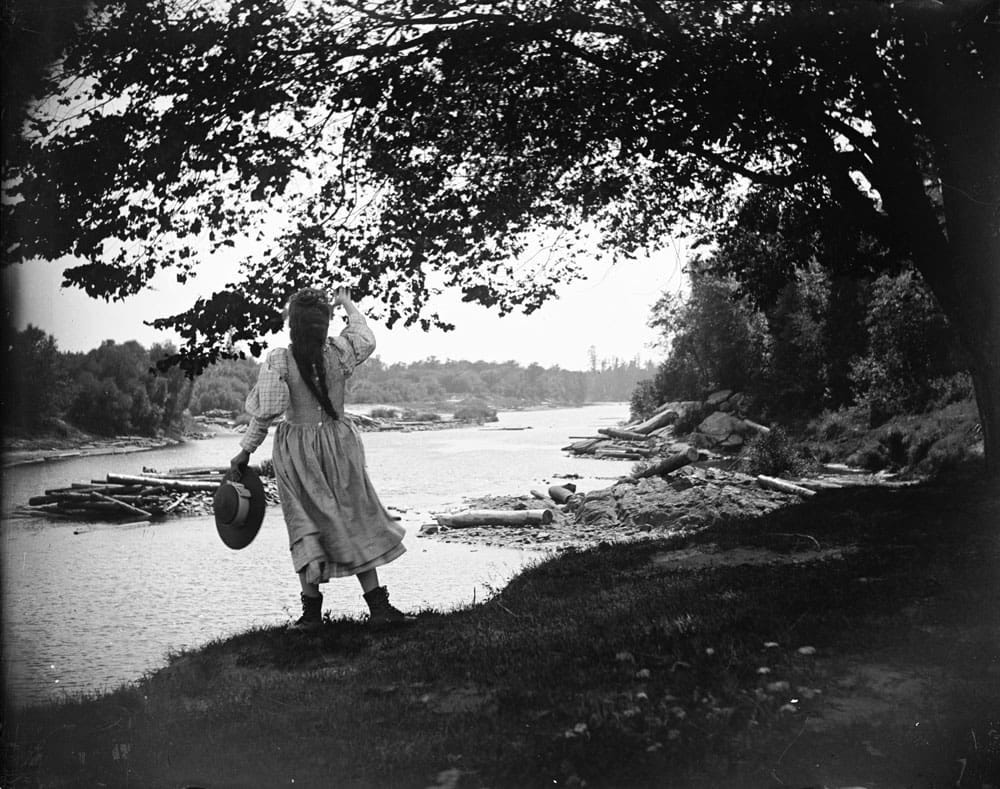
Lesy: The book is arranged based upon Jungian archetypes. It’s based upon life cycles of birth, death, young girlhood, young manhood, families, and of course it begins with the horses. If there is ever an image of potency male, female life! You begin the book with those images of a stallion, and you end the book with a picture of a girl by a river. How many people knew that that was the trick I was pulling? I don’t mean in this room, I’m not quizzing you. I mean all the fools who said, “oh man, this is such a spooky book.” Ha!
Sharlet: There’s a back and forth in your work, between these books of archives, photographs, fragments—books that may have that arc only for those with eyes to see—and then a book of prose, The Forbidden Zone, Rescues, Murder City—in which you turn toward narrative. How does looking at pictures, which is where it starts for you, get carried into a story?
Lesy: How does the study of photographs turn into prose? Because the study photographs makes you visually acute. And the study of photographs allows you to retain those images in memory. And therefore it affects your ability to describe and narrate reality that you witness. So I think that every prose writer should always begin as a photographer. But if you can write, you should learn how to photograph. It will increase your ability to memorize a scene. And it will increase your ability to be acutely aware of the drama of a scene that unfolded in front of your eyes.
Sharlet: We were talking about this at lunch, an assignment that I wished I could give. I said, “Michael, these are all some of the most skilled photographers you’ve ever encountered.” Everybody is. Walker Evans, how many images did he take in his life? And how many frames, Ava, how many pictures do you have in your camera roll?
Ava Razavi: Like 20,000. But they’re all my dog. They’re all the same picture.
Sharlet: All of your dog! What a study. You’ve been studying this dog, right? And thinking, “How do I make this picture of this dog that somehow reflects this emotional experience I have with the dog?”
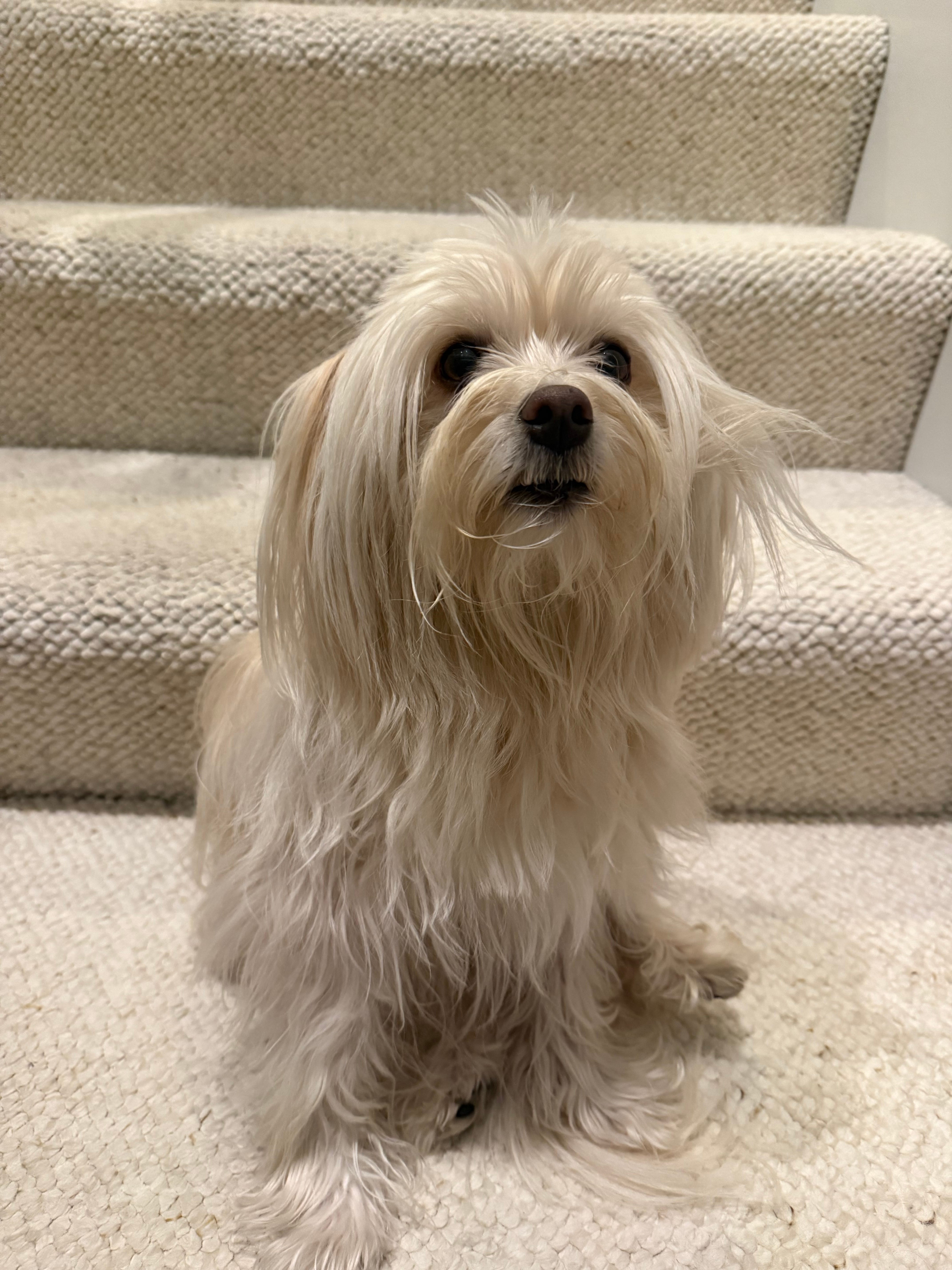
Coco, from Ava’s camera roll.
Sharlet: You are all photographers. What if I asked you to trade phones, to give access to your camera roll to someone else. with no explanation, and they must sequence from this archive, say, 20, 30 photographs?
[Nervous laughter.]
Lesy: Before I wrote whatever it is I wrote, I was a graduate student at Rutgers. Tthey gave me a chance to teach. I entitled the course, “How to Tell What Time It Was.” It relied on photographs of the Civil War. One of the assignments was, “bring in your snapshot album. You don’t have to show everyone, but sit down with me and show me your snapshots.” There was a guy in the class who brought his stuff, and he looked so sad in the album, page after page. I said, “You look really sad. What happened?” He said, “Well, my parents were busy working, they were both working, making money, so, uh all I had was Hazel.” I said, “Who’s Hazel?” An African-American woman, made lunch for him, made snacks for him. Baby-sat for him. Hazel.
Ok. So we go through the album. Where’s Hazel in the pictures? There’s not a single goddamn picture of Hazel in the album. And she kept him alive!
You understand, what’s left in, and what’s left out?
Ha!
*
Extracts:
“…photographs looked as if they were replicas when in fact they were metaphors. They appeared to be records of actuality when they were frequently allegories. They seem to display a few simple truths when, as often or not, they were paradoxes….” — Michael Lesy, Visible Light, 1985
“We can respond to the images in a variety of ways, seeing them as foolish, as naive, even as tragic. Or we can understand them as images of possibility, not as models to reconstruct what was, but as reminders of a state of hope—that, knowing all we know, we might, in some fashion, be able to make the world seem whole again.”—Dreamland, 1997
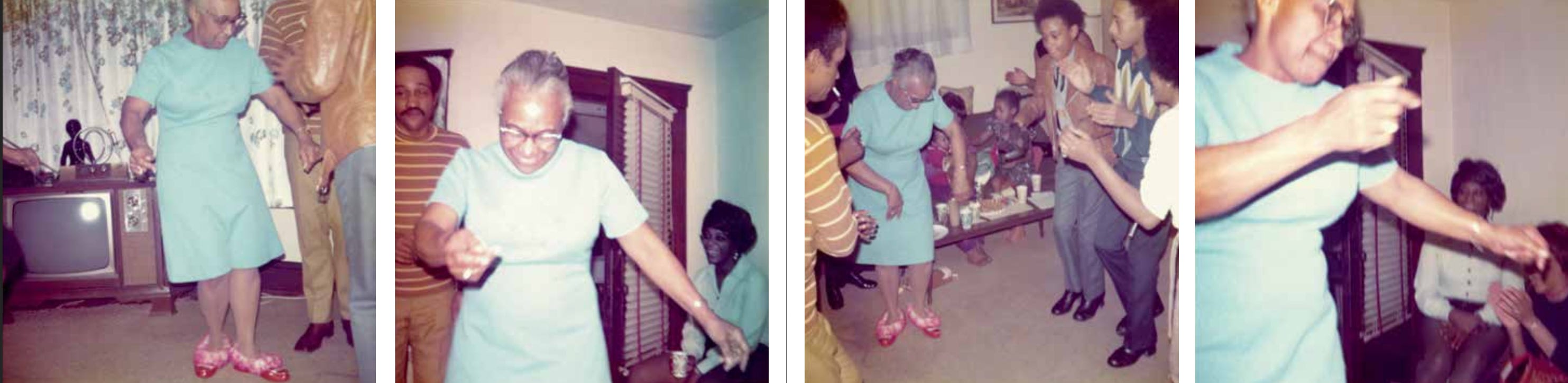
Snapshots 1971-77 (2021):
Comments
Nothing yet. Say the first thing.
Sign in to join the conversation.