
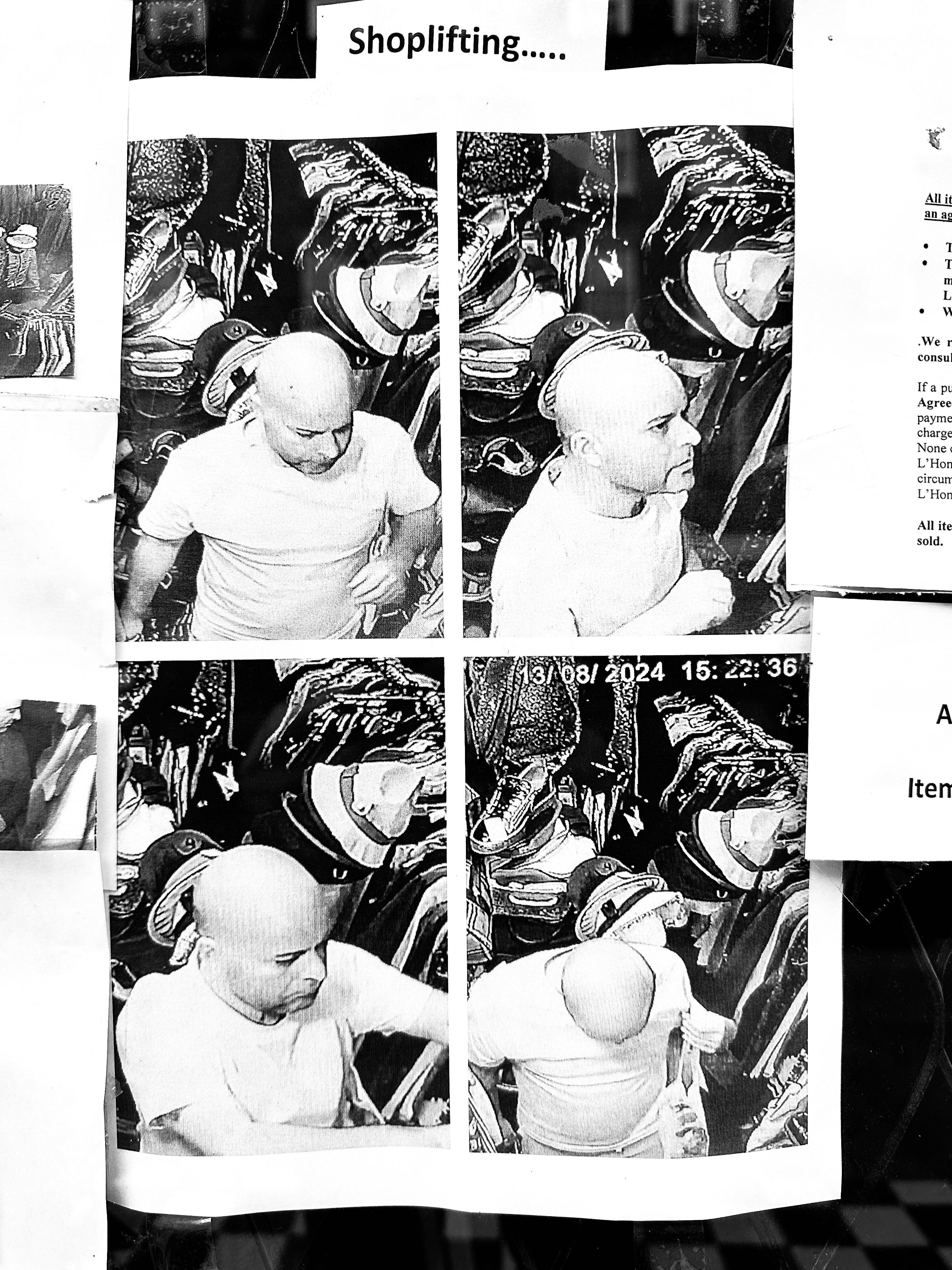
A London entry into my collection of surveillance photos of thieves, posted as warning to the pictured not to return. Public portraiture. Another collection waiting for an essay. Maybe every collection awaits such an accounting. A map of the strange constellation in the collector’s mind, a peeling back of the literal-minded category. In this case, “surveillance photos of thieves posted on shop doors as warnings.” From the door of a second-hand high fashion shop for men, so expensive I was afraid to even walk in the door. Other thieves are bolder.
The Prophetess Who Was Not Believed
“I’m the guy who says the king has no clothes,” declares Terry. The blue in his scarf speaks to his eyes, calm, like his voice, in which he speaks of the end of his world, this neighborhood of boarded-up council flats into which I’ve intruded.
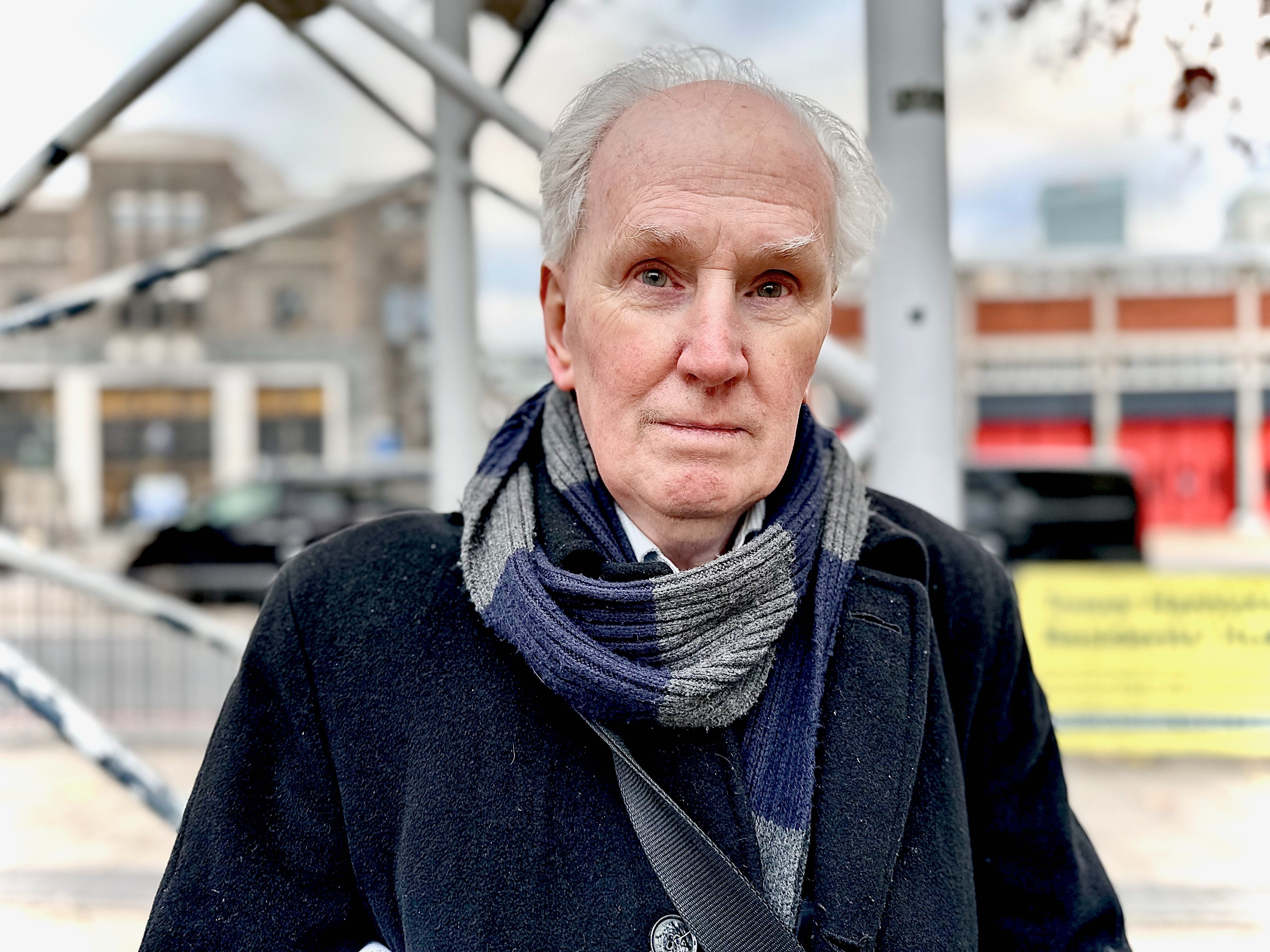
“Or Cassandra,” says my friend Ian. The prophetess who was not believed.
Terry accepts this. “The Greek,” he murmurs, as if in consideration.
Ian’s a historian. I’ve joined him on a walk with his students, their topic “gentrification.” We’d started among the glass cathedrals of Canary Wharf, the banks planted on that which once had been docklands, streets now that might be New York or Kuala Lumpur as easily as London. A “city disembedded,” Ian had said.
“The ruination of particularity,” remarked a student. Sad, pretty phrase. She'd grinned. “But,” she'd added, “I think that’s a good thing.” She’ll have a room with a view there one day.
We'd crossed a bridge over a highway into Terry's land, Tower Hamlets, next in line to fall and then rise reborn in steel and glass. Terry points to boarded-up windows in concrete council flats. Soon comes the wrecking ball. “Now,” he cries, “gentrification’s crossing the East Viaduct Road! Into the heartland! Of where people used to live! And depend on social housing! Because that’s all there was.”
He’s been here 40 years. “It’s going to
be turned into Manhattan.” He has just last night completed an essay “of 6,500 words” to present to the council. He's come from the attempt. They would not listen.
“There’s a song, actually,” he says, that got at the matter. “One of the old stations last night, on came The Walker Brothers! ‘The Sun Ain’t Gonna Shine Anymore.’”
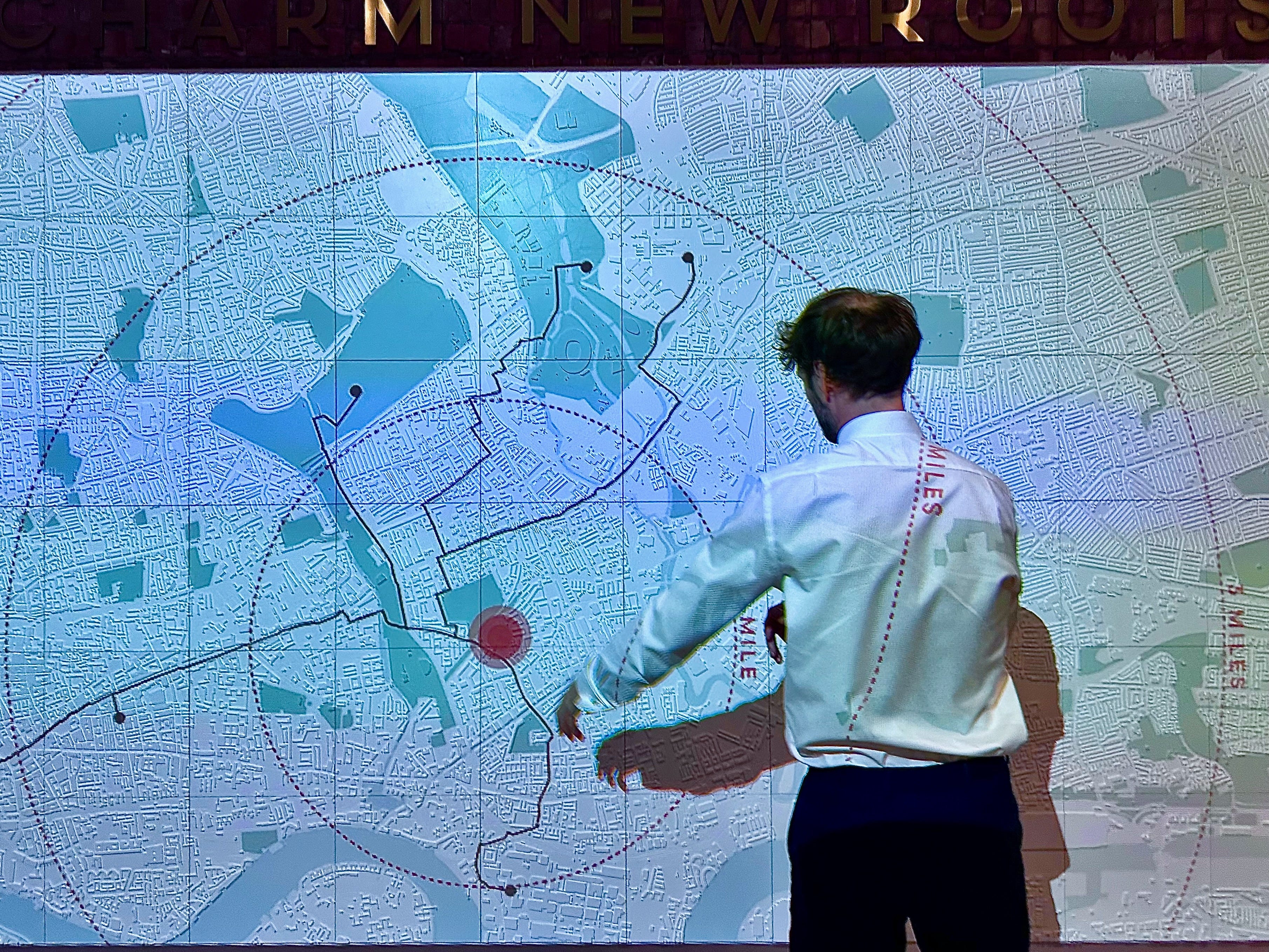
I leave Terry and Ian and walk on into the ruin of particularity. In the sales office of a rising new tower I find a map onto which a projector casts the future. “The old gasworks,” says Rupert the front desk man. Points to ground zero of his company’s vision. Condos, “93% full.” From a central red dot like a target he traces the radiation. “New homes, surrounded by nature.” Across the street from his map still stand old homes, small, dense crooked. “Soon, it will be beautiful,” promises the salesman. He means the demolition, the replacement, that which the company calls “placekeeping.”
To See Otherwise
1. Below comes Del of the BBC, whose job some crisp nights is to guard the BBC’s statue of George Orwell. There had been no attacks, says Del, not on the statue per se. But sometimes after a BBC story—he gestures to metal barricades. “We drag ’em out.” Yes, he says, those above know which stories will bring the people. That’s not his remit. Orwell? No, he has not read the fellow. Need he do so to stop a soul from lobbing a stone? Also, mainly it’s paint some want to throw. “What color?” I don’t ask. Seems off-point.
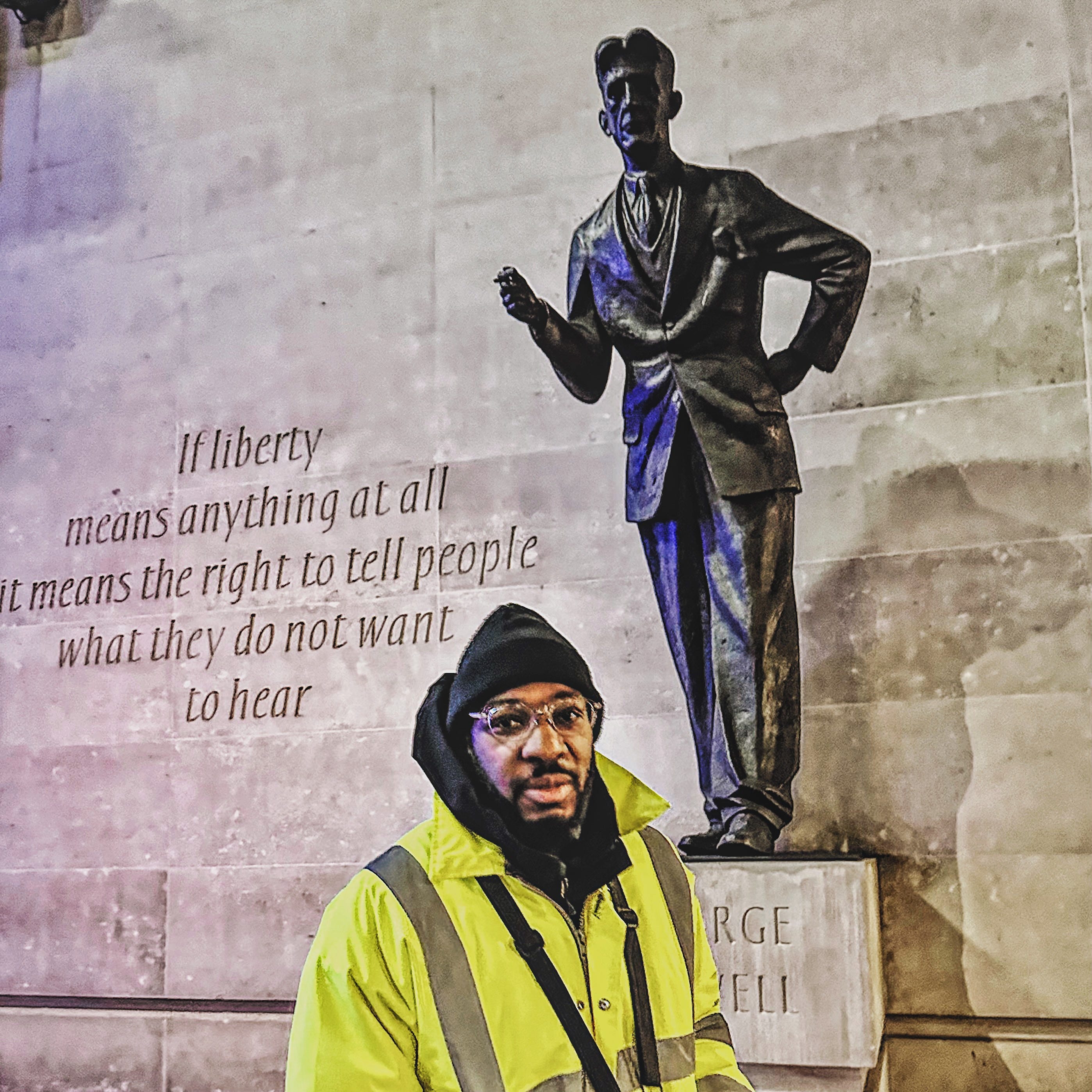
2. A journalist-friend wanted to re-read 1984. She was considering some perversions of the common tongue. It put in mind one thing and then another, and soon I was writing a letter about a movie, and then another: “Years later, I’d see Inglourious Basterds. In between I’d spent a few years working a job sucking up the poison of Holocaust survivors and the death of Yiddish. Nathan M., strangler of Vilna—that was his job, sneaking in from the swamp, he had strong hands and he was quiet, he’d show you how he made his approach, a regular golem and a Gollum, and he’d squeeze whoever was in his way while his comrades would sneak in to rescue books—murder for books!—to bury for whatever would come after the war. Dina A., the even tinier librarian, also once a partisan, I never was clear what she’d done, whether she’d known Nathan, or whose body she’d stepped over. Chava R., such a writer! Hinted at cannibalism, the starvation of liberation, did she eat the dead? Was she before that a kapo? No clean heroes. I wept when I saw Basterds: In a movie, on a screen, you could just kill Hitler! Blow ’em all up. Why hadn’t fiction done this for us before?”
3. I did not send the letter.
4. Didn’t send this, either: Orwell was a ratfink, or rather, he was not a ratfink and then he was. I’ve never revered him as a writer, and I’m disdainful of his collapse but not sympathetic to the way he’s written off now. He was a colonial tool who taught himself for a while to see otherwise, and then he saw so much so quickly. What a wreck of a human being.
5. But—to think—he once taught himself to see, for a time, otherwise.
Your Child Is Not Yours
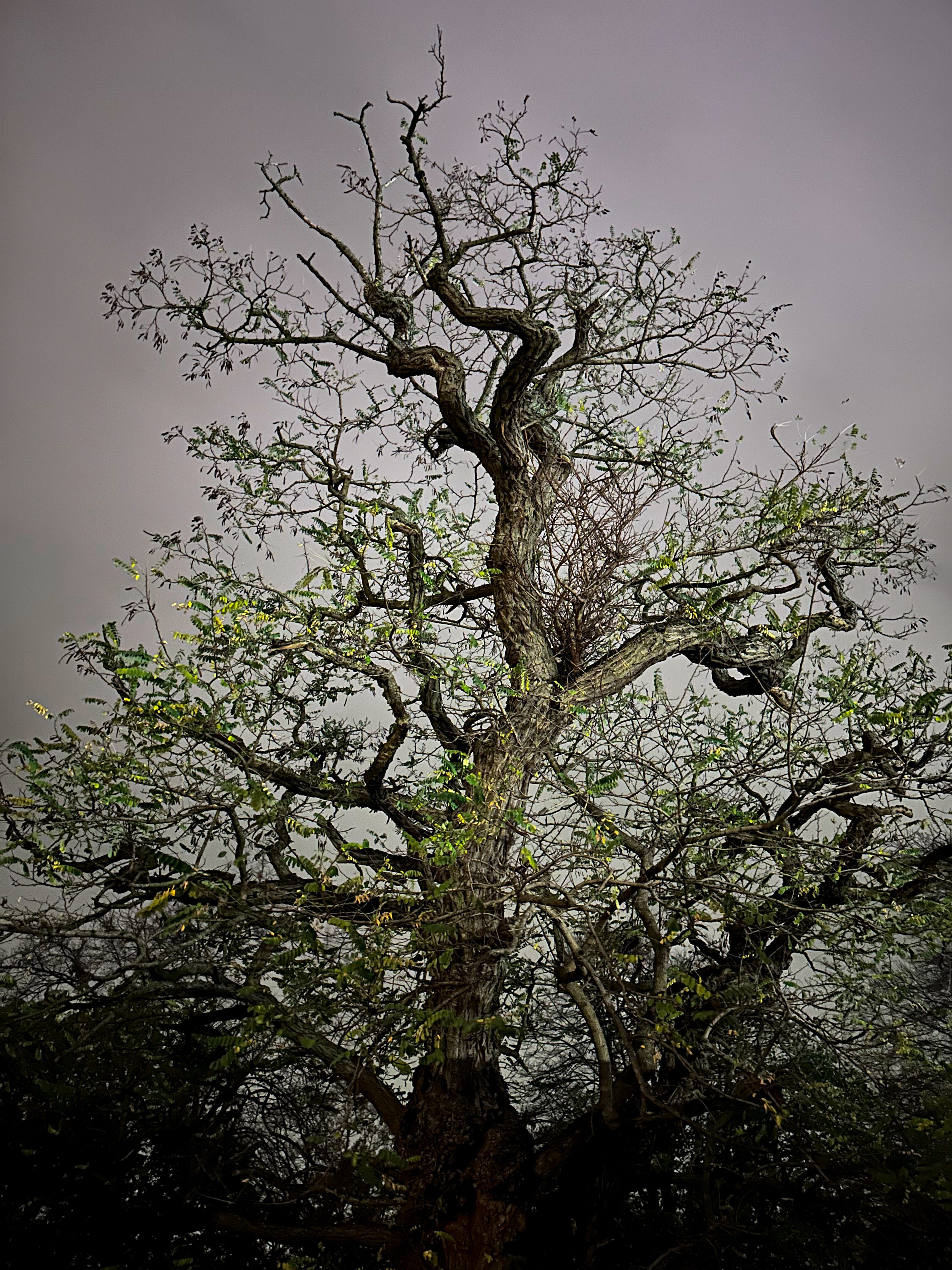
I spoke to no strangers today, because I spoke so much with one I know best, my eldest, Rei, which is not their real name. Oh, the photographs I took today of my firstborn! Rei with an emerald crown of blinking lights, Rei standing on the divider of a parkway sparkling with the tiny white and red headlamps of bicycles at night. But I don’t share my children’s real names, or their images. I ask strangers to tell me stories, but there are some of mine I keep close, because they’re not really mine: Your child is not yours. They belong to themselves.
Rei and I walked through London until it was dark, until this tree. Imagine the photograph I might have taken had I carried a real camera. The silver in the leaves, cloud-purple subtle density, a whisper of blues glimmering off Winter Wonderland neon, a carnival soon to open behind us as we gazed up at the branches. Rei was reminded of a different tree, on their college campus. “It’s called the tree of heaven,” they said. By whom? “That’s just its name.” On campus? No, a formal name. Ailanthus altissima. Native to China, the Tree that Grows in Brooklyn in the book nearly of that title, which had meant something to Rei when they were younger. “Noxious weed,” say gardeners. It smells bad but its leaves are pretty. It grows fast but it doesn’t live long.
Rei had helped core theirs for a class, it’s 52 years old, two years older than average, one year younger than me. “It thrives,” said Rei, “in disturbed soil.” I could relate. So could Rei, which is how they’d found the abandoned swimming pool that had once belonged to the Catholic seminarians who’d first inhabited their haunted campus, before the cultists, before the college; the pool now crumbling, floored with poison ivy, trees of heaven foresting over its edges.
I said, “the tree of heaven thrives in disturbed soil?”
Rei nodded. They also love the way language can fall into place, the way it sometimes does the work for you. But Rei had done the work for me. “If you use that, you have to give me credit.” My children know what I’m up to.
I Fall for Certain Phases
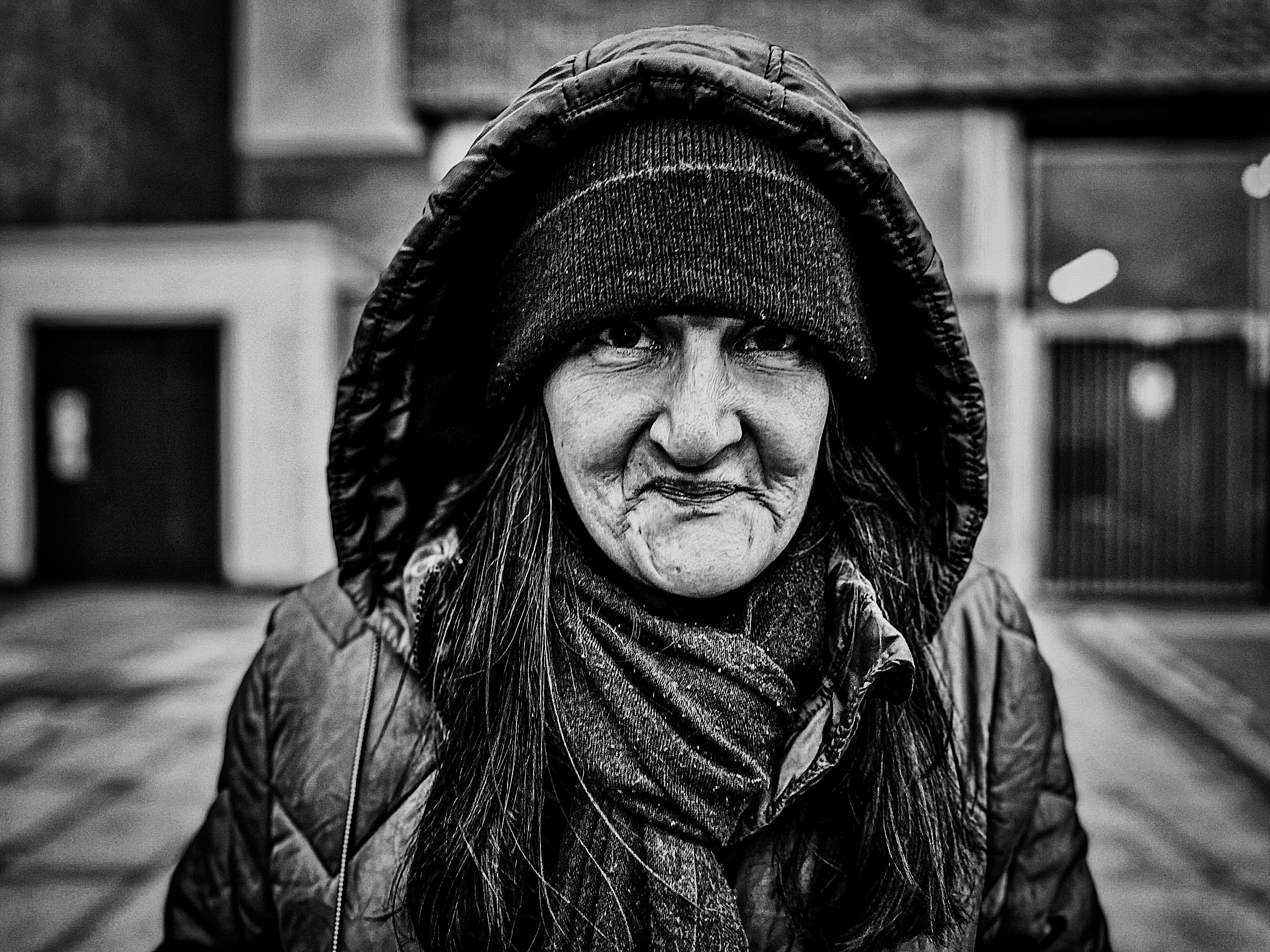
Here’s all I know about Asama: She was standing on the side of an empty road, as if waiting to cross. There were no cars, no people. Everything had been rebuilt and everything was starting to crumble. Except Asama. Was it the hood? The hair? Her scarf? Why did I ask to take her picture? Why did she nod? Why did she smile? Why, when I lowered the camera, did she open her lips to show her one tooth, and why didn’t I take this picture then? I make too many assumptions. She wasn’t from there. She lived “here,” but only since September. Before that she’d lived “there,” the other there, she didn’t know how many years. Why had she come? “Had to leave.” Good answer.
It was the eighth of thirty days in a project comprised of cheap shots in London, cheap because I don’t look for a story. I take what I find, or that which finds me. Walk, click, look—this is what I saw. Not this, of course, not black and white, not so sticky with pixelated ink. Except, yes, this, more or less, not exactly. The “effects” of my perception, which pauses most often on gloom or smile. I fall for certain phases. Oh, autocorrect! You know I meant “faces.” But the typo tells the truth, I am really speaking of phases. Big and craggy and once-beautiful. You know what I mean by “once.” You know she’s beautiful, right now, in this picture. You know why I asked if I could photograph her. Maybe you know why she answered. Why she smiled, and why, when after we had used up our few words and stood for a while next to each other on the curb and then I kept walking, Asama stepped into the empty road. “My brother is here,” she said. Not strictly speaking, but I took her meaning.
If you read me for politics you may find above lacking. No discussion of the regime. In Part 1 of this series I explain my intention: a month-long writing practice of walking and snapshots and notes. A wandering practice. An attempt to slip beneath the clouds of abstraction in which most of us—me, too—normally organize our understandings of the world, particularly those aspects of it we call “politics.” I named this site “Scenes from a Slow Civil War,” but this London diary is more like a series of moments from a long struggle. It’s not news; it is, implicitly, an argument with what I see as as our ever-narrowing news funnel. My more long-way-round, one-thing-leads-to-another, don’t-dismiss-the-obvious-or-even-mistake-it-for-obvious method.
Comments
Nothing yet. Say the first thing.
Sign in to join the conversation.