
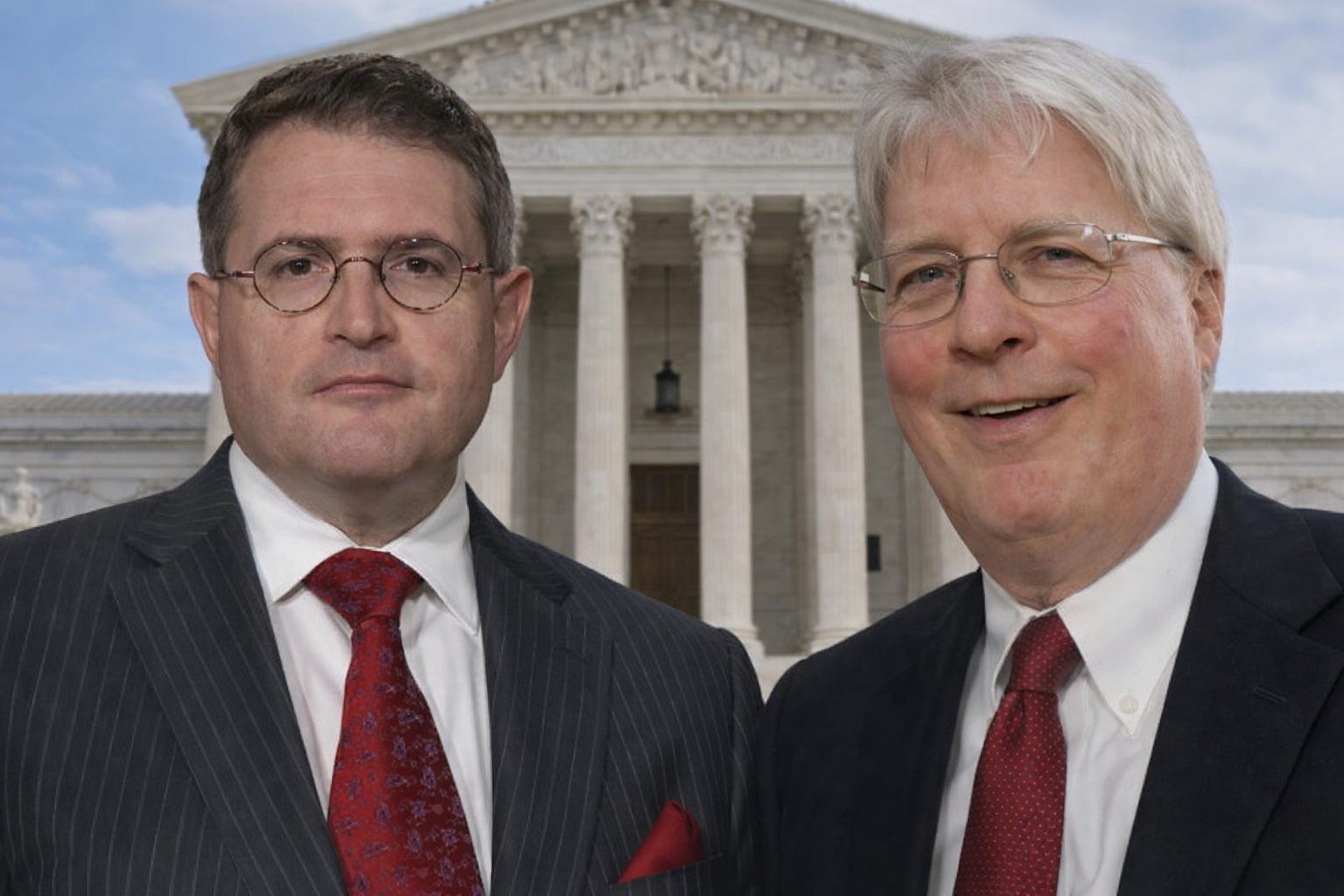
The morning of June 25, 2007 was hot in Washington and a little hotter in Terre Haute, Indiana, where James Bopp Jr. had a phone on his desk and a clerk standing in his doorway with the printed opinion in her hand. He had been waiting, in various ways, for thirty-four years.
He was fifty-nine. He had a law degree from the University of Florida, an Eagle Scout pin in a drawer somewhere, and a wife named Christine and three daughters all of whom carried Grace as a middle name. The address on his firm’s letterhead had not moved since the Carter administration: 1 South Sixth Street, Terre Haute, Indiana. Population fifty-eight thousand, on a good day. Closest interstate, I-70. Closest United States Supreme Court Justice, six hundred miles east, in marble.
The clerk handed him the opinion. Federal Election Commission v. Wisconsin Right to Life. 5-4. Chief Justice John Roberts wrote the plurality. Justice Samuel Alito joined it. The two newest members of the Court - both of them less than eighteen months on the bench - had cast the deciding votes, and they had cast them for the legal theory James Bopp Jr. had spent the better part of a decade trying to sell.
SIDEBAR: What is a plurality?
When the Supreme Court hands down a decision, what most people picture is a majority opinion - five or more justices signing the same piece of writing, which then becomes the binding law of the land.
A plurality is the slightly weaker version. A plurality opinion is what you get when the Court agrees on the outcome of a case but cannot get five justices to agree on the reasoning behind it. The biggest group of justices who do share a reasoning - say, four of them - writes the lead opinion. One or two more justices agree with the result but file their own separate concurrence explaining why. The lead opinion gets called a “plurality” instead of a “majority” because it does not have five signatures on its specific argument.
In practical terms, a plurality is still the ruling - the case is decided, the lower court is reversed, the parties go home with their win or loss. But the plurality’s reasoning is not fully binding on future cases the way a true majority opinion would be. Lawyers in later cases can argue about which parts of the reasoning count as precedent.
Federal Election Commission v. Wisconsin Right to Life was decided 5-4. Chief Justice Roberts wrote the lead opinion. Justice Alito joined it - but also filed a separate concurrence saying he would have gone further. Justices Scalia, Kennedy, and Thomas concurred in the result but wrote their own opinion saying the entire underlying campaign-finance law should be struck down. So the headline number is “5-4 in favor of Bopp’s client,” but only two justices fully signed Roberts’ reasoning. The other three wanted to go bigger. That mattered enormously three years later, when Citizens United came down.
It was the first United States Supreme Court argument he had ever won. He had argued three before he won one.
I try to picture him reading it. Sixty-something pages, dry as a flour bag, in the dense unmusical prose of a federal opinion. Bopp himself is not a dull man - reporters who have spent time with him describe a folksy Midwestern lawyer with a quick mouth, a taste for a good one-liner, and the kind of plainspoken charm that has, three times now, gotten him to a lectern in front of nine justices. But he is not a celebrant. The lawyers and clients who have known him longest describe a man who marks a victory the way a farmer marks a good harvest: quietly, with the understanding that the next season starts Monday. So I imagine him standing in his office with the paper in his hands and the fluorescent light buzzing overhead. I imagine him calling Christine. I imagine him driving home that night to a quiet street in Terre Haute, where his wife had probably made something and he had probably had a glass of something. And I imagine him back at his desk by Monday morning, working the next rung.
Here is what he did not know on the drive home.
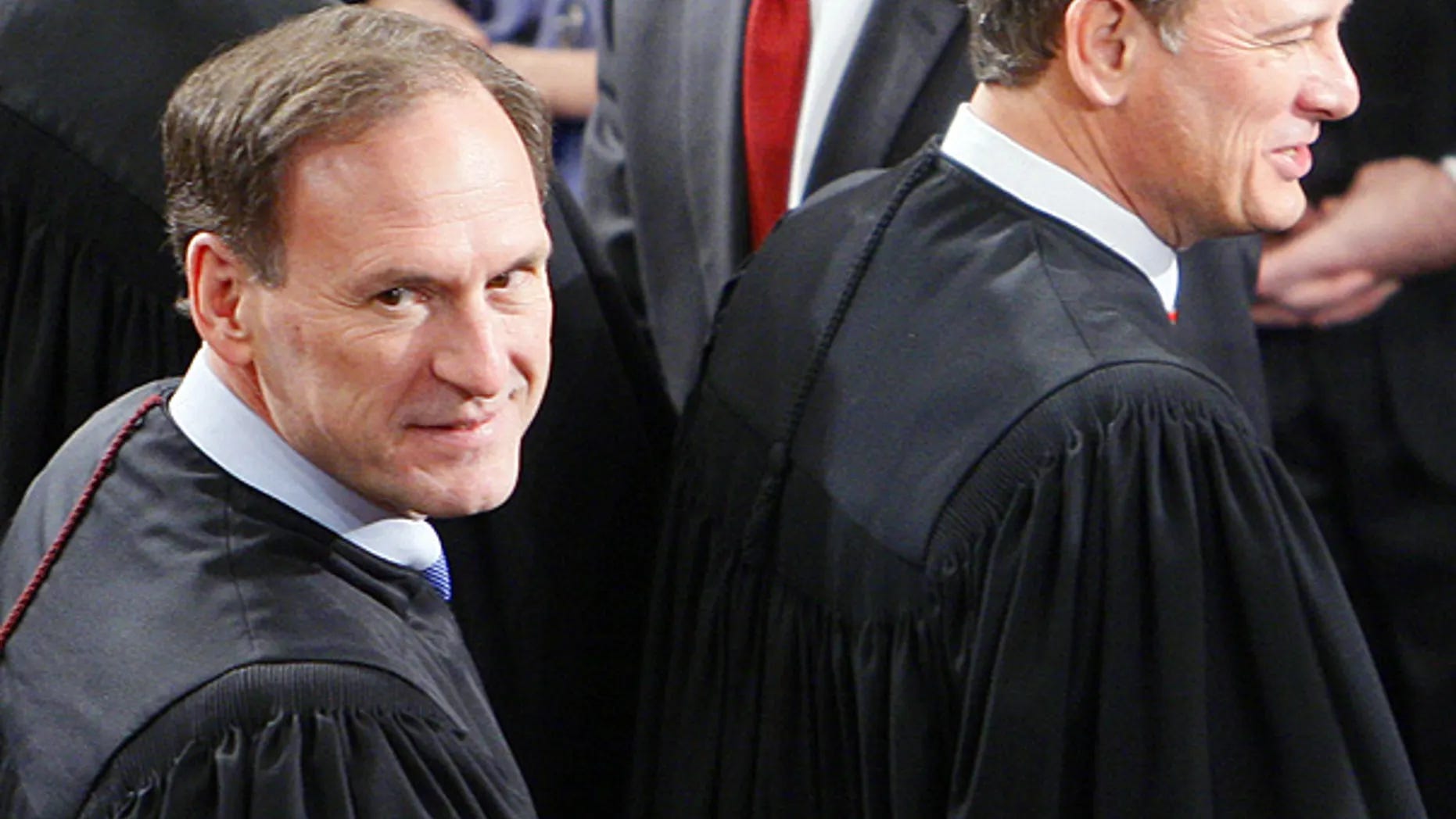
The two justices who had just handed him his career - John Roberts and Samuel Alito - had not been put on the Court by James Bopp Jr., or by anyone James Bopp Jr. had ever met for a drink. They had been put on the Court by a man named Leonard Leo, of Long Island, New York, with a Cornell law degree and a clerkship on the D.C. Circuit and a desk in Washington at the headquarters of an outfit called the Federalist Society. Leo had been the operational head of the Federalist Society since the late 1990s. His full-time job, for which he had been paid handsomely, was to find conservative lawyers, audition them in front of senators and presidents, and walk them onto federal benches. There is no civics-textbook description for this job because the civics textbook assumes the country is not in the habit of outsourcing the judicial branch to a guy with a 501(c) and a Rolodex.
In 2005, two years before that opinion landed on Bopp’s desk, Leo had taken a leave from the Federalist Society - and one assumes a paid one, since nothing in the public record suggests the organization stopped writing him checks - and run what amounted to a private nominations campaign out of an apartment in Washington. He had raised the money quietly. He had organized the surrogates. He had killed off Harriet Miers, Bush’s first pick for the O’Connor seat, after a small jury of conservative legal commentators - which is to say, men no one had elected to anything - decided she was insufficiently committed to overturning Roe v. Wade and ran her out of town. He had handed Bush a replacement: Samuel Alito of the Third Circuit. He had done the same kind of work for Roberts, two months earlier, when Rehnquist died and the chief seat opened up. By the time both men were sworn in, Leo had not just helped put them on the Court. He had, in any operational sense, put them on the Court.
Now, here is the thing nobody had told Bopp on June 25, 2007, and would not tell him for years.
He and Leo had been working under the same roof.
Not a metaphor. An actual institution. The Federalist Society, where Leo sat as Executive Vice President from the late nineties onward, ran something called the Free Speech and Election Law Practice Group - the corner of the operation that handled campaign-finance litigation. From 1996 to 2005, nine consecutive years, James Bopp Jr. served as co-chairman of its Election Law Subcommittee, working remotely from his law office in Terre Haute. The records are in his own resume (Bopp Resume 2025).
They were not friends. They were not partners. They were not, by any honest read of the documented record, men who picked up the phone and called each other about cases. But they were on the same masthead, listed in the same Federalist Society directory, for nearly a decade before that June 25 opinion came down. The popular telling has them as strangers - two men running parallel tracks, never quite meeting. The popular telling is wrong. They were colleagues inside the same institution, working different corners of the same operation, on the same printed roster, year after year, for a decade.
Bopp ran the election-law subcommittee. Leo ran the institution.
And that is just the part that is easy to document.
SIDEBAR: Same Institution, Different Corners
The Federalist Society has dozens of internal practice groups - subject-matter committees that organize panels, host conferences, and produce position papers within a specific area of law (Federalist Society Practice Groups directory). Two of them matter for this story.
The Free Speech and Election Law Practice Group is the practice group that has, for the entire post-1996 history of the Federalist Society, served as the institutional home for the lawyers building the legal case against American campaign-finance regulation. James Bopp Jr. served as Co-Chairman of its Election Law Subcommittee from 1996 to 2005 (Bopp Resume 2025). The subcommittee published white papers attacking McCain-Feingold. It hosted panels featuring Bopp and other conservative election-law specialists year after year. It was, for nine years, the operational center of the litigation strategy that produced Wisconsin Right to Life and Citizens United.
The Federalist Society itself was led, throughout the same period, by Leonard Leo - first as Executive Vice President starting in 1991, then as the operational head of the organization’s national programming. The leadership of the Society is the institutional pipeline through which conservative lawyers were vetted for judicial nominations.
Same institution. Different corners. Bopp out in Terre Haute, organizing the legal strategy as a remote subcommittee chair. Leo in Washington, organizing the judges as the operational head of the Society. Both men paid by the same network. Both men working toward the same end. Neither one of them, at any point in twenty-five years, ever had to pick up the phone to ask the other for help. They worked in the same institution. The institution did the asking for them. Which is, presumably, what the founders of the Federalist Society meant in 1982 when they said they were starting a debating society for law students.
Starting in 2008 - the year after Bopp’s first Supreme Court win - both men began getting their money from the same pipeline.
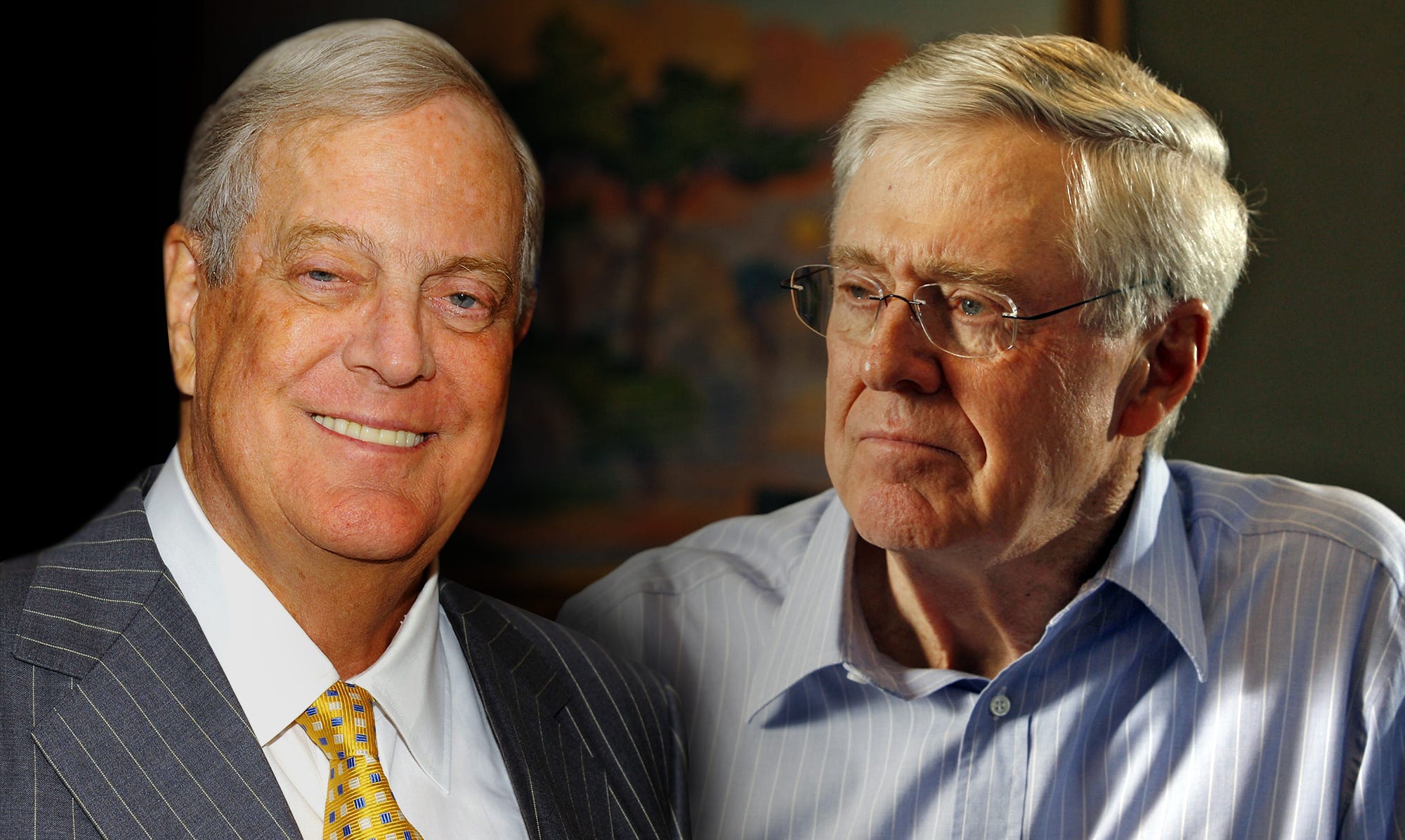
The pipeline had a name. The Wellspring Committee. A Virginia nonprofit registered with the IRS as a 501(c)(4), which is the dry tax code for what most of us would just call a dark-money group: an organization that takes anonymous donations from rich people and passes the money along to political operations while keeping the donors’ names off the page. The Koch brothers built it. Charles and David Koch, the petrochemicals billionaires, who by the mid-2000s were running a long-term A/B test on American democracy - specifically, how much of the conservative movement they could quietly underwrite without showing up on anyone’s disclosure form. Wellspring was one of their early prototypes - one of the first nonprofit shells they used to test the limits of nondisclosure (DeSmog, “Wellspring Committee”; Ken Vogel, Big Money; Mother Jones, March 2016).
Between 2008 and December 2018, when Wellspring quietly closed up shop, it moved $83.6 million through the conservative legal and political network.
Here is where that money went, in the order that matters to this story.
Fifty-four million dollars - more than half of everything Wellspring ever handed out - went to a single recipient. The Judicial Crisis Network. A former Leonard Leo associate would later describe the Judicial Crisis Network to ProPublica as “Leonard Leo’s PR organization - nothing more and nothing less” (ProPublica, “We Don’t Talk About Leonard Leo”). If you have ever seen a slick television ad attacking or praising a federal judicial nominee, odds are decent the Judicial Crisis Network paid for it.
One-point-six-seven million dollars went to a Delaware LLC called BH Group, which Wellspring listed on its tax filings as a “consultant” and “public relations” contractor. BH Group was Leonard Leo’s personal consulting shell - the same BH Group that, eight years later, would collect a million dollars from the 2017 Trump inaugural committee and turn around and pledge a million dollars to the Vatican. Wellspring paid Leo’s shell company nearly two million dollars and called it consulting fees. What Leo was consulting on, and for whom, is the kind of question the IRS forms politely decline to ask.
Six hundred and ten thousand dollars went straight to the Federalist Society, in installments from 2008 to 2011 - the years Leo was running the place and Bopp was running the election-law shop inside it.
Five hundred and forty-two thousand dollars - in 2008 alone - went to the National Right to Life Committee, the country’s oldest and largest anti-abortion advocacy organization. James Bopp Jr. has been National Right to Life’s general counsel since 1978. He was on its payroll the year Wellspring wrote it a half-million-dollar check.
One million dollars went to the Susan B. Anthony List. Bopp’s resume lists Susan B. Anthony List as a representative client. Two hundred and fifty thousand dollars went to the Faith and Freedom Coalition. Bopp client. Fifty thousand dollars went to Concerned Women for America. Bopp client.
One hundred and eighty-six thousand dollars went to the Judicial Education Project, the smaller sister organization to the Judicial Crisis Network, which would later morph into a vehicle called the 85 Fund - the centerpiece of Leo’s post-2020 dark-money empire (New Republic, Sept. 2024). Forty thousand dollars went to the Rule of Law Project, a smaller Leo-affiliated outfit on whose board Leo personally sat.
Now let me add that up for you.
Roughly $1.84 million of Wellspring’s money flowed to Bopp’s clients. Roughly $56 million flowed to organizations Leo controlled, founded, sat on the board of, or was openly described as running. Two men. One pipeline. Ten years. The dollar figures in the paragraphs above come from the Wellspring Committee’s IRS Form 990 filings, which became public after the organization’s dissolution (Wellspring Committee 990s via ProPublica Nonprofit Explorer; DeSmog, “Wellspring Committee”).
They did not need to meet. They did not need to talk. They did not need to pick up the phone. The money met for them, every January and June, in the tax filings of a Virginia nonprofit nobody had ever heard of.
SIDEBAR: Where the $83 Million Went
The Wellspring Committee, between 2008 and its closure in December 2018, distributed approximately $83.6 million through the conservative legal and political network. The IRS filings, which became public after the organization’s dissolution, allow us to trace the largest recipients (DeSmog, “Wellspring Committee”; IRS Form 990 filings via ProPublica Nonprofit Explorer).
Of that $83.6 million:
• $54 million went to the Judicial Crisis Network, the 501(c)(4) Leonard Leo operated as the public-facing arm of his confirmation operations. ProPublica has called JCN, in print, “Leonard Leo’s PR organization.”
• $1.67 million went to the BH Group, the Virginia shell organization Leo chaired and which redistributed money to other entities he controlled.
• $610,000 went directly to the Federalist Society.
• $542,000 went to the National Right to Life Committee, the largest anti-abortion organization in the country and one of James Bopp Jr.’s longest-running clients. The payment is recorded for the 2008 cycle - the year Bopp was litigating Wisconsin Right to Life’s aftermath and beginning to design what would become Citizens United.
• $1 million went to the Susan B. Anthony List, the anti-abortion political organization Bopp also represented.
• $250,000 went to Faith and Freedom Coalition, founded by Ralph Reed.
• $50,000 went to Concerned Women for America, also a Bopp client.
• $186,000 went to the Judicial Education Project, another Leo-controlled entity that has gone through several name changes.
• $40,000 went to the Rule of Law Project, also Leo-aligned.
The takeaway is not that any single transaction was illegal. None of them were. The takeaway is that for the entire decade in which James Bopp Jr. was litigating the cases that gutted American campaign-finance law and Leonard Leo was building the Court that would deliver the rulings, the same Virginia nonprofit - bankrolled by anonymous donors, with no public-facing operations of its own - was simultaneously funding the legal organizations Bopp represented, the political organizations Leo controlled, and the Federalist Society itself. The two men did not have to coordinate. The pipeline was coordinating for them.
Now I want to slow down with you, because the rest of this article hinges on what kind of claim I am making here, and I do not get to be sloppy about it.
Both men have insisted, for years, that they do not coordinate. There is no document in the public record that shows them calling each other up about a specific case. The Wellspring Committee, as far as anyone outside the room can prove, distributed its money according to its own decisions, not on instructions from either Bopp or Leo. I’m not arguing the two of them were running a joint conspiracy. I’m arguing something more disturbing, and it requires me to say it precisely: a documented fact is not the same as a defensible inference.
The documented fact is that two men - one of them in Terre Haute, Indiana, the other in Washington, D.C. - were fed by the same dark-money pass-through for a decade. The defensible inference is that they did not have to coordinate, because by 2008 the Wellspring Committee - and the larger dark-money plumbing the Koch brothers were testing through it - had grown developed enough to do the coordinating for them. The principals no longer needed to talk. The money routed itself. A donor wrote a check to Wellspring, Wellspring distributed the check according to its own internal politics, and the check landed in an organization that was already aligned with what Leo or Bopp would have asked for if they had been asked. That is what mature infrastructure does. It removes the need for a phone call. The dormant constituency had its lawyers, hand-picked. The lawyers had their funders, anonymous. The funders had their judges, confirmed. And the judges, on June 25, 2007, while James Bopp Jr. was sitting in his office in Terre Haute pretending not to celebrate, had handed him his first majority opinion.
SIDEBAR: The Same Trick, Larger
The James Madison Center for Free Speech was incorporated in 1996. Its address was 1 South Sixth Street, Terre Haute, Indiana - which is to say, James Bopp Jr.’s law office. Its general counsel was James Bopp Jr. Its tax status was 501(c)(3) - the same charitable category as a soup kitchen or a museum (Brief of Amicus Curiae James Madison Center for Free Speech, Inc., No. 16-1466, Nov. 2017).
That tax status is the whole point. A donor cannot deduct legal fees paid to a campaign-finance law firm. A donor can deduct a contribution to a 501(c)(3). The Center existed to convert non-deductible legal fees into deductible charitable gifts. Donors gave to the Center. The Center paid Bopp’s firm. Bopp’s firm ran the cases. The donors took the write-off.
In 2013, the watchdog group Citizens for Responsibility and Ethics in Washington (CREW) filed an IRS complaint alleging that, between 2006 and 2011, the James Madison Center paid roughly 99.5 percent of its revenue back to the Bopp Law Firm. CREW alleged private inurement, self-dealing, and that the Center was “nothing more than the Bopp Law Firm’s alter ego” (Forbes, “CREW Director Insists Case Against Citizens United Attorney Is Strong,” July 2013; James Madison Center 990 filings, ProPublica Nonprofit Explorer).
The IRS never acted on the complaint. The IRS rarely does. By 2013 the IRS enforcement division had been cut to the bone by a decade of Republican appropriations bills that congratulated themselves on reducing paperwork and trimming the budget, which is what a fox calls it when he votes to defund the henhouse alarm system. The agency that was supposed to catch a 501(c)(3) paying 99.5 percent of its revenue back to its founder’s law firm was busy not being funded enough to catch anything. The structure - a 501(c)(3) whose entire business was paying its founder’s law firm - kept operating. Donors kept deducting. The cases kept getting filed. Whether the creation of the Center skirted the law is a question that depends on which law you mean. The creation itself was legal under the tax code as written. The operation of it, in CREW’s reading, violated the rules against private benefit that are supposed to police 501(c)(3) status. Nobody enforced those rules. So the structure stood.
In 2010, four years after Citizens United was filed, the BH Group was incorporated in Virginia. Its address was a P.O. box. P.O. box addresses will now and forever be associated, in the American political mind, with the hiding of cash flows. Its public-facing existence was almost nothing - no website, no published staff, no annual reports - which is what a Fortune 500 public-relations consultancy normally looks like, if the Fortune 500 had been replaced by a single mailbox in suburban Virginia. Its purpose, the IRS filings would eventually show, was to receive anonymous donations and redistribute them to other 501(c)(4) organizations in the conservative legal network (CRP / OpenSecrets profile of BH Group; Washington Post, May 2017). The chairman of BH Group, when reporters finally tracked one down, was Leonard Leo.
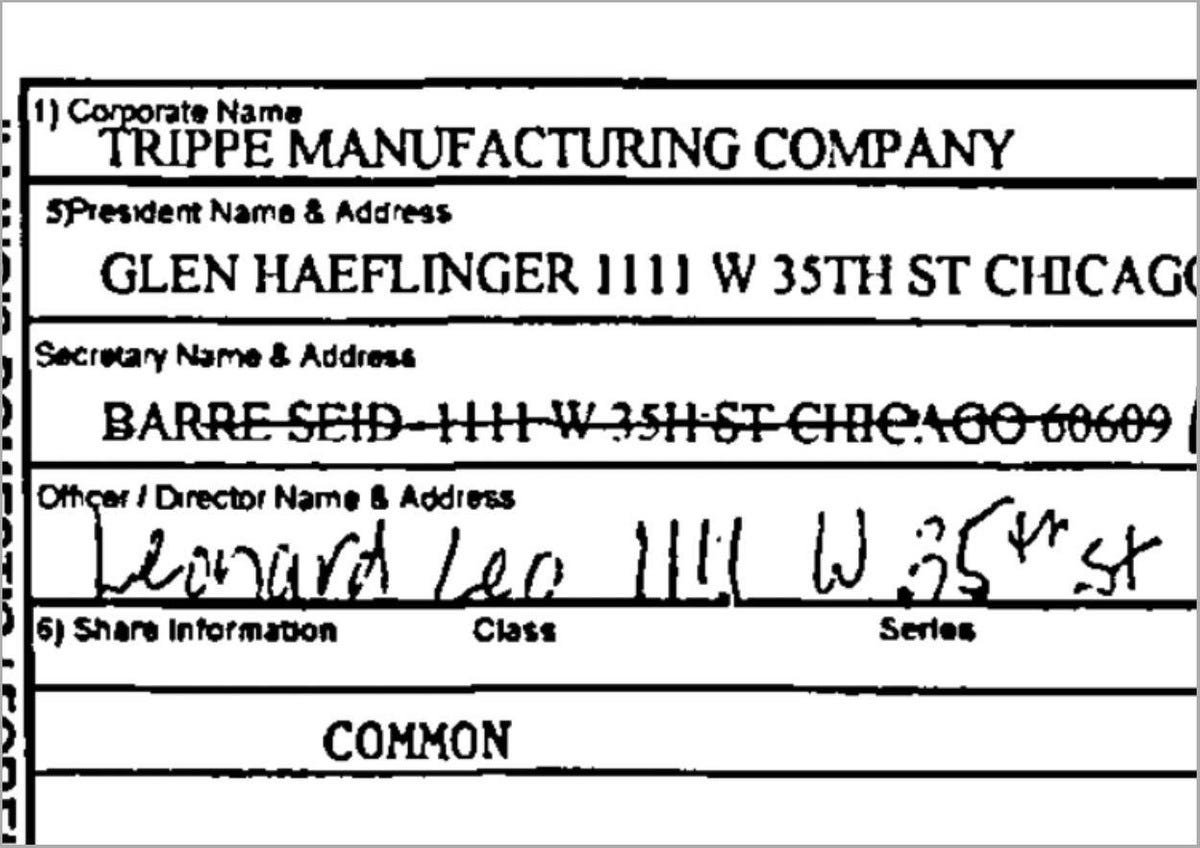
In 2020, Barre Seid sold his electronics manufacturing company, Tripp Lite, in a transaction worth approximately $1.65 billion. He did not receive the proceeds personally. He had transferred his ownership of Tripp Lite, prior to the sale, into a single 501(c)(4) nonprofit. The nonprofit was the Marble Freedom Trust. Its sole trustee was Leonard Leo. The structure of the donation allowed Seid to avoid as much as $400 million in capital gains taxes - a sum that, had he paid it, would have funded the entire annual budget of the National Endowment for the Arts twice over, or every public school lunch in three mid-sized states for a year. Instead it went into a trust whose sole trustee is Leonard Leo, who can spend the proceeds on political and legal advocacy more or less indefinitely (ProPublica/The Lever, August 2022). The donation was, in the language of the tax code, charitable. The charity was the conservative legal movement. Mother Teresa would like a word.
Notice the shape. Each vehicle is bigger than the last. Each one is structured to convert private money into political activity through a tax-advantaged charitable form. Each one is controlled by the same network. The James Madison Center was a single law office’s litigation fund in the 1990s. The BH Group was a Virginia mailbox redistributing seven and eight figures in the 2010s. The Marble Freedom Trust is a $1.6 billion war chest controlled by one man in the 2020s.
Same trick. Larger room. The pattern was set in Terre Haute. The infrastructure was scaled in Virginia. The endgame was capitalized in Chicago. The country is the room in which the trick is now being performed.
The oligarchy is the chassis. The bigotry is the engine. And in the early summer of 2007, the chassis got itself a Court.
To understand how the chassis got its Court, go back two years - to a Tuesday morning in early September 2005. President George W. Bush walked into the East Room of the White House and announced his pick for Chief Justice of the United States: John Glover Roberts Jr., a fifty-year-old judge on the D.C. Circuit.
Roberts wasn’t Bush’s first instinct. He’d been picked back in July to fill Sandra Day O’Connor’s seat. Then Chief Justice Rehnquist died on Labor Day weekend, and the White House did a quick shuffle - Roberts to the center chair, a new pick to come for O’Connor’s. The new pick, two weeks later, was Harriet Miers. She was Bush’s White House counsel and his friend. She lasted about three weeks. Conservative legal commentators - much of the noise organized through Federalist Society channels - decided she wasn’t reliable enough on Roe v. Wade and they ran her out of town. On Halloween 2005, Bush nominated Samuel Alito instead, a Third Circuit judge with a long, documented conservative record.
The man working the back rooms on every move - Roberts, the Miers withdrawal, the pivot to Alito - was Leonard Leo. He had taken leave from his day job to do it.
That sentence sounds normal until you stop and look at it.
Leo wasn’t a White House staffer. He wasn’t a senator’s chief of staff. He wasn’t even a registered lobbyist. He was the second-in-command at a tax-exempt educational nonprofit called the Federalist Society - the kind of organization that, on paper, hosts panel discussions about constitutional theory, and in practice picks Supreme Court justices. His name stayed on the masthead the whole time he was gone. I’m going to assume he was on paid leave because nobody has ever said he wasn’t, and the Federalist Society has never produced a record showing the leave was unpaid. What he ran, out of an apartment in Washington, was a private confirmation campaign funded by money ProPublica would later describe as “a dark money network to rally support for George W. Bush’s Supreme Court nominees, John Roberts and Samuel Alito” (ProPublica, Aug. 2022).
Read that quote twice. In 2005, the dark-money operation that would, fifteen years later, place three justices on the Court under Donald Trump - and would, by 2024, hold $1.6 billion in a single trust Leo controlled - was being born in that rented apartment. The midwife was Leo. The first child was the Roberts Court.
Leonard Leo was born in 1965 on Long Island. His father died when he was small. His grandfather - an executive at Brooks Brothers - helped raise him. He went to Cornell for college and Cornell for law school. He clerked for a federal appeals judge in D.C. He joined the Federalist Society right after, and by the late 1990s he was running it (New Yorker, “The Conservative Pipeline to the Supreme Court,” April 2017; ProPublica, Aug. 2022).
That last sentence does a lot of work, so let me slow it down. By “running it” I don’t mean he was the public face. There were public faces. Leo ran the institution. He decided which young lawyers got introduced to which sitting judges at which dinners. He decided which judges got promoted from the speaker circuit to the short list. He decided who the short list was. He did this for two decades, with money other people gave him, and the people who gave him the money mostly preferred to stay anonymous, which is the polite way to say they preferred their names not appear next to the words “bought a Supreme Court.” Meanwhile the United States Senate, which the Constitution charges with the advice-and-consent role on judicial nominations, was waving the resulting nominees through on roll calls so routine you could set a watch by them. The people the founders trusted to vet federal judges were, by 2017, rubber-stamping a list someone else had drafted in a building they had never visited, funded by people whose names they would never be told. Article II, Section 2, as performed by a body that had forgotten what its own job was.
He is a Catholic of the traditionalist kind. He goes to Latin Mass. He sits on the board of a place called the Catholic Information Center, at 1501 K Street in Washington - two blocks from the White House and, by every public account, the operational hub of Opus Dei in the United States capital (National Catholic Reporter, “William Barr - the nation’s top lawyer and culture warrior Catholic”; ProPublica).
I have to be careful here, because the line between “documented fact” and “defensible inference” runs right through this terrain. So let me lay it out clearly. The Catholic Information Center is not a parish church. It is a Catholic intellectual gathering place affiliated with Opus Dei - a conservative Catholic group founded in Spain in the 1920s and given formal Vatican standing in 1982. Being a member of Opus Dei is a serious commitment that is different from sitting on the board of the CIC. Plenty of CIC board members are not Opus Dei members. Plenty are. Whether Leo himself is a member, an affiliate, or just sympathetic is not on the public record, and I am not going to guess. What is on the record is the board seat. The board seat is the room he chose to sit in.
The room is the same room William Barr was in. Barr chaired the CIC board from 2014 to 2017, right before he became Donald Trump’s Attorney General. After he gave up the chairmanship, he was given a named chair at the Center. Pat Cipollone - Trump’s White House counsel during the first impeachment - was on the board. So was Roger Severino, who ran the civil rights office at the Department of Health and Human Services under Trump. The longtime director of the CIC, a priest named C. John McCloskey, was the one who personally walked Newt Gingrich, Senator Sam Brownback, Robert Bork, and the economist Larry Kudlow into the Catholic Church (National Catholic Reporter; ProPublica; Gareth Gore, “Opus Dei and the moneybags kid”).
That is not a parish bulletin. That is a roster.
Three of the six conservative justices on the Supreme Court right now were raised Catholic and still practice. Justice Clarence Thomas is the godfather to one of Leonard Leo’s seven children (ProPublica, “We Don’t Talk About Leonard Leo”). I’m going to say that one more time, slowly, in case it slid by: a sitting justice of the United States Supreme Court is the godfather to a child of the man who runs the dark-money confirmation machine that produced six of that justice’s colleagues.
Here’s where I want to be careful with you, because this is the part where people reach for the wrong objection. The ethics problem is not the shared faith. Shared faith among colleagues is ordinary, and the Court has had Catholic majorities, Protestant majorities, and Jewish justices working alongside both. The problem is something more specific. It is the sacramental kinship tie between a sitting justice and the man who built and runs the pipeline that produced the rest of the bench.
Think about how that would land in any other professional setting. In medicine, in accounting, in the bar association of any state in this country, a relationship that close between a decision-maker and a party with business in front of that decision-maker’s institution would have to be disclosed. In most of those professions it would also get you removed from the case. On the United States Supreme Court, it is not even something you have to write down.
The Court polices its own ethics, which is to say, it effectively has no police at all. Thomas has never stepped back from a case involving Leo-aligned interests because of the godfather relationship. The rules do not make him. The rules, as it happens, are written by the same nine people the rules are supposed to apply to. The fox is, once again, writing the henhouse policy manual.
I’ll get to what that did to the docket. But first I owe you the personality question, because by this point you have the right to know what kind of man we are talking about.
Leo’s former media-relations director did not stay.
Tom Carter quit. He went on the record, in a long Rolling Stone interview in September 2023, and he was specific (Rolling Stone, “He Quit Working for Leonard Leo,” Sept. 2023). Carter described an operation in which dissent was treated as betrayal. Leo’s read of a situation was the only read permitted. Disagreement was not debated; it was punished. And the public-facing piety - the Latin Mass, the rosary, the Vatican audiences - was inseparable from a quieter game. Carter described a man who needed to be seen, inside the conservative Catholic world, as the most important Catholic in it. The faith was real. The need to be its biggest name was also real. The two ran on the same track.
The evidence supporting Carter’s read is in the public record. It does not require him to confirm it.
Leo has spent years quietly lobbying the Vatican to have his late daughter Margaret, who died at fourteen in 2007, declared a saint (ProPublica). Grief is real and I will not patronize anyone about it. But a private grieving Catholic does not lobby the Holy See for canonization of a family member. That feels like a different exercise. That is using the most sacred mechanism in his faith to gain status.
He founded the Stewards of Saint Peter, a Catholic donor club whose membership card is a million-dollar pledge to the Vatican (ProPublica). He himself is on the donor list. In October 2022 he accepted the John Paul II New Evangelization Award. In May 2023 he accepted an honorary doctorate from Benedictine College in Atchison, Kansas, and gave a commencement speech in which he announced that he was engaged in a “battle with barbarians, secularists, and bigots.”
The apostle Paul, writing to the church at Galatia roughly two thousand years before the Benedictine commencement, identified the fruits of the Holy Spirit. They are not a long list. They are nine. Love. Joy. Peace. Patience. Kindness. Goodness. Faithfulness. Gentleness. Self-control. They are the diagnostic the historic Christian tradition has used, for two millennia, to distinguish authentic spiritual life from its counterfeits.
The fruits of Leonard Leo’s public life, by his own production, have been in the opposite column.
I cannot, in this series, write a clinical diagnosis of Leo - say, Narcissistic Personality Disorder, or something else that might fit the behaviors. I am not licensed to, and the libel exposure is real. What I can do is lay out the pattern, with sources, and let you draw the inference yourself. The pattern is a man who has built institutions to certify himself, who has structured ninety-million-dollar money flows so that every credit returns to him personally (CREW, Nov. 2024), who has selected a religious register that explicitly legitimizes hierarchy and male headship, who has manufactured family-as-evidence of his spiritual seriousness, who has sought canonization-grade recognition for a child too young to consent to the use of her memory, and who treats critics not as people he disagrees with but as agents of an enemy civilization.
Take that pattern in. Carry it. It will matter in a few pages, when we get to what the Roberts Court actually did with the Constitution between 2007 and 2010.
The man building the Court is the man you have just been reading about. The Court is the only thing he has built (besides his own fortune, of course).
What you’ve just read is the build. The architects, the money, the godfather room, the man at the center of it. Part B is what they did with it.
The case is called Citizens United v. FEC. It was argued twice, which is the strangest thing about it and the thing nobody at the time quite knew what to do with. It was decided 5-4. It rewrote American campaign-finance law in a single afternoon, and it did so by answering a question nobody had asked.
I’ll meet you in Part B, on the night before the ruling.
No posts
Comments
Nothing yet. Say the first thing.
Sign in to join the conversation.