
The night of January 20, 2010, James Bopp Jr. went to bed in a brick house in Terre Haute, Indiana, having no particular reason to believe the next morning would be different from any other morning in his fifty-one-year career at the bar. He knew the Citizens United decision was coming. Everyone who followed the Court knew. The case had been argued twice, the second time in September, and the Court had been sitting on it for four months. The opinion would land sometime. It might land tomorrow. It might not. He had stopped trying to guess.
Three hundred and fifty miles to the east, in a Federal-style townhouse in Washington’s Kalorama neighborhood, Leonard Leo went to bed knowing roughly the same thing. He had spent fifteen years building the conservative legal movement’s confirmation infrastructure. He had personally helped install two of the five justices in the Citizens United majority. He had every reason to expect the ruling would land in his favor. He had no particular reason to expect it would land that next morning.
Somewhere in Northern Virginia, Theodore Olson went to bed. He had argued the case. He had spent most of his sixty-eight years standing in or near a courtroom. Whatever the Court decided would arrive on his desk by morning.
In Terre Haute, in Washington, in Northern Virginia, three men went to sleep on the same Wednesday night. None of them, when they woke up on Thursday morning, knew that the United States of America was about to become a country with no upper limit on the amount of money that a corporation, a labor union, or any other organization could spend on independent political advocacy. The men running the country’s legal architecture had been working toward this morning for fifteen years. The country itself had no idea it was coming.
That is roughly always how it goes. The architects know. The country finds out on Thursday morning, in a single paragraph on the Supreme Court’s website, after fifteen years of work nobody in the general public had any reason to follow.
I want to walk back to where the work started, because the standard telling of Citizens United skips it. The standard telling treats the ruling like a thunderclap - a thing that happened in January 2010, suddenly, out of a clear sky. It was not that. The morning of January 21, 2010 was the morning of the last step of a ladder it took thirteen years to climb, and the man at the bottom of that ladder, in 1997, was sitting in an office at 1 South Sixth Street, Terre Haute, Indiana, drafting a complaint nobody outside his own building thought was worth filing.
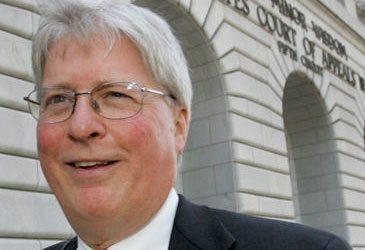
His name was James Bopp Jr.
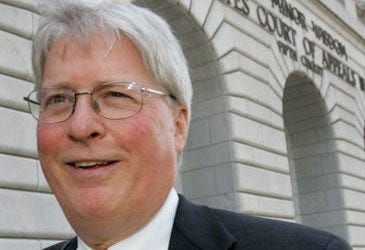
James Bopp, Jr. did not win his way to the Supreme Court. He lost his way there. The lawyer who would, by 2010, have been credited as the architect of Citizens United v. FEC spent the first half of the decade getting beaten - at the trial level, at the circuit level, and twice at the Court itself - while building, with each loss, a more refined version of the next argument. The Roberts plurality of June 25, 2007 was not Bopp’s first Supreme Court appearance. It was his fifth. He had argued before the Court three times before he ever won there.
Think of it like this. Bopp was not trying to knock down the campaign-finance laws all at once. He was trying to chip them away, one small win at a time. Each case he brought asked the Court for a little carve-out - a narrow exception, a slim margin, one specific situation in which one specific rule shouldn’t apply. Each carve-out, on its own, looked modest. Lined up in order, they were a staircase. James Bopp Jr. built every rung.
The ladder, in order:
Rung one: Republican Party of Minnesota v. White (2002). Bopp argued the case and won, 5-4. The state of Minnesota had a rule on its books saying that candidates for judicial office were not allowed to publicly announce their personal opinions on hot-button legal issues - abortion, the death penalty, that kind of thing. The reasoning was that judges should keep an open mind on cases that might come before them. Bopp argued that the rule violated the First Amendment, because it gagged the speech of people running for office, and the First Amendment protects political speech first and most strongly of all. The Court agreed. (Republican Party of Minnesota v. White, 536 U.S. 765).
The case had nothing directly to do with campaign finance. But it gave Bopp the principle he would build the next twenty years on: when people running for office talk about political issues, the First Amendment gives them the broadest possible protection. That is the foundation of the ladder. Without White, the rest of it has nothing to stand on.
Rung two: FEC v. Beaumont (2003). Bopp argued. Bopp lost, 7-2. The case was about whether a nonprofit corporation could give money directly to a federal candidate’s campaign. Federal law had banned corporations from doing that since 1907 - back when Teddy Roosevelt was president and the law was called the Tillman Act. Bopp argued the ban violated the First Amendment. The Court said no, by a thumping margin (FEC v. Beaumont, 539 U.S. 146).
This case is almost never mentioned in the Citizens United coverage. It should be, because of what Bopp took away from it. He learned, in 2003, that the Court was not yet willing to let him knock down the corporate-contribution wall directly. The frontal attack would not work. So he stopped trying frontal attacks. He started looking for side doors.
Rung three: McConnell v. FEC (2003). Bopp was on the legal team that lost. The case was the conservative movement’s big swing at the McCain-Feingold law, which Congress had passed in 2002 to tighten up campaign spending. The Supreme Court upheld nearly the whole thing, including the two pieces Bopp most wanted gone: the rule that political parties couldn’t take unlimited “soft money” from corporations and unions, and the rule that corporations couldn’t pay for TV ads naming a federal candidate in the thirty days before a primary or sixty days before a general election (McConnell v. FEC, 540 U.S. 93).
That second rule - the TV-ad rule - was the one the conservative legal movement was going to spend the next seven years dismantling. The vote to uphold it was 5-4. Justice Sandra Day O’Connor was the fifth vote on the side that upheld it. Six months later, in July 2003, O’Connor announced she was retiring. By 2006 she would be replaced - by Samuel Alito, the second of Leo’s picks. The fifth vote against Bopp in 2003 became, by 2007, a fifth vote for him. That is the entire story in one swap of one seat.
There is one more thing worth slowing down for here. The losing argument Bopp made in McConnell - that the TV-ad rule shouldn’t apply to “real” issue ads, the kind that talk about policy rather than candidates - was the argument he turned around and filed again, in narrower form, the next year. The losing argument in 2003 became the winning argument in 2007. Same lawyer, same theory, different client, two new justices.
Rung four: FEC v. Wisconsin Right to Life (2007). Bopp argued. Bopp won, 5-4 (FEC v. Wisconsin Right to Life, 551 U.S. 449; FEC case summary). Roberts wrote the plurality. Alito joined. The two justices Leo had spent 2005 putting on the Court were now, less than two years into their tenures, casting the deciding votes for the same argument Justice O’Connor had voted against in 2003. On the surface, the ruling looked small. The Court only said that the TV-ad rule could not be used to stop “real” issue ads - ads about policy questions, not candidates. But Roberts wrote a definition of “real issue ad” so generous that, in practice, almost any ad short of literally saying “vote for X” qualified. The hole he punched in McCain-Feingold was the size of a barn.
The ads in Wisconsin Right to Life, by the way, were about judges.
Bopp’s client, the Wisconsin Right to Life Committee, wanted to run TV ads attacking Senator Russ Feingold - the same Feingold whose name was on the law Bopp was trying to undo - for joining other Senate Democrats in blocking three of George W. Bush’s nominees to the federal bench. The McCain-Feingold law blocked those ads from running in the thirty days before Wisconsin’s primary, because Feingold was on the ballot. So Bopp sued.
Stand back from that for a second. The first Supreme Court case James Bopp Jr. ever won - the case that started the slow demolition of American campaign-finance law - was a case in which his client wanted to use TV ads to pressure the Senate to confirm more conservative judges. The judges who, three years later, would be the votes that finished the demolition. If a screenwriter pitched this loop to a Hollywood studio, the studio would send it back with a note saying the audience would never buy it. Real life is under no such obligation.
A man who had spent his career trying to take the guardrails off political money won his first case by representing a group that wanted to use political money to put conservative judges on the bench. Those judges then took the guardrails off political money.
Rung five: Davis v. FEC (2008). Bopp was not the lead lawyer this time. He filed a friend-of-the-court brief - a “we agree with the plaintiff” submission lawyers can send to the Court when they want to support a case they’re not directly arguing. But the case extended the argument he had been building. McCain-Feingold had a provision called the “Millionaire’s Amendment,” which let candidates running against a self-funded rich opponent raise money in larger chunks than the normal rules allowed. The idea was to level the playing field for non-millionaires running against millionaires. The Court struck it down, 5-4, with Justice Alito writing the majority opinion. The conservative bloc - Roberts, Scalia, Kennedy, Thomas, Alito - was now reliably a five-vote majority on campaign-finance questions (Davis v. FEC, 554 U.S. 724). The practical effect of the ruling was to let the candidate with the most money win, which is roughly the situation we find ourselves in now, just as surely as Citizens United delivered us there.
Five rungs. Two wins, three losses, seven years. By the summer of 2008, Bopp had everything a long-game lawyer dreams of having. He had a Supreme Court win on the narrow version of his theory. He had a definition of “issue ad” written into the law in his own favor. And he had a five-justice bloc that had now ruled with him twice in a row and was clearly willing to keep going.
What he needed next was a case the Court could use to go further. He already had one. He had filed it in December 2007.
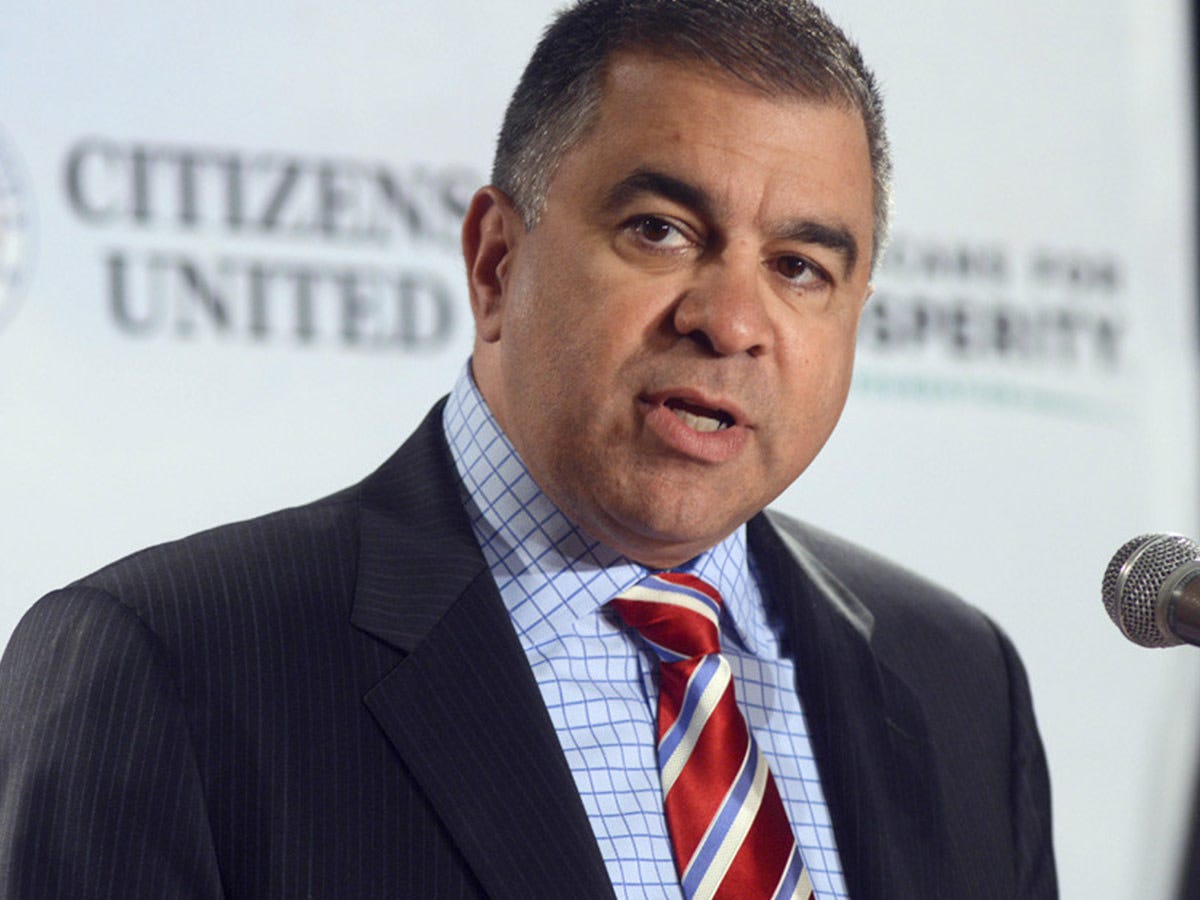
The client was David Bossie.
If the name does not immediately ring a bell, that is by design. Bossie has spent thirty years operating in the negative space of American conservative politics - close enough to the principals to matter, far enough from the cameras to keep working. He came up the back way. No fancy schools, no New York firm, no clerkship. He got himself to Washington in the mid-1990s the way a lot of right-wing operatives did in that era - by becoming useful to congressional Republicans who needed someone to dig through paperwork nobody else wanted to dig through.
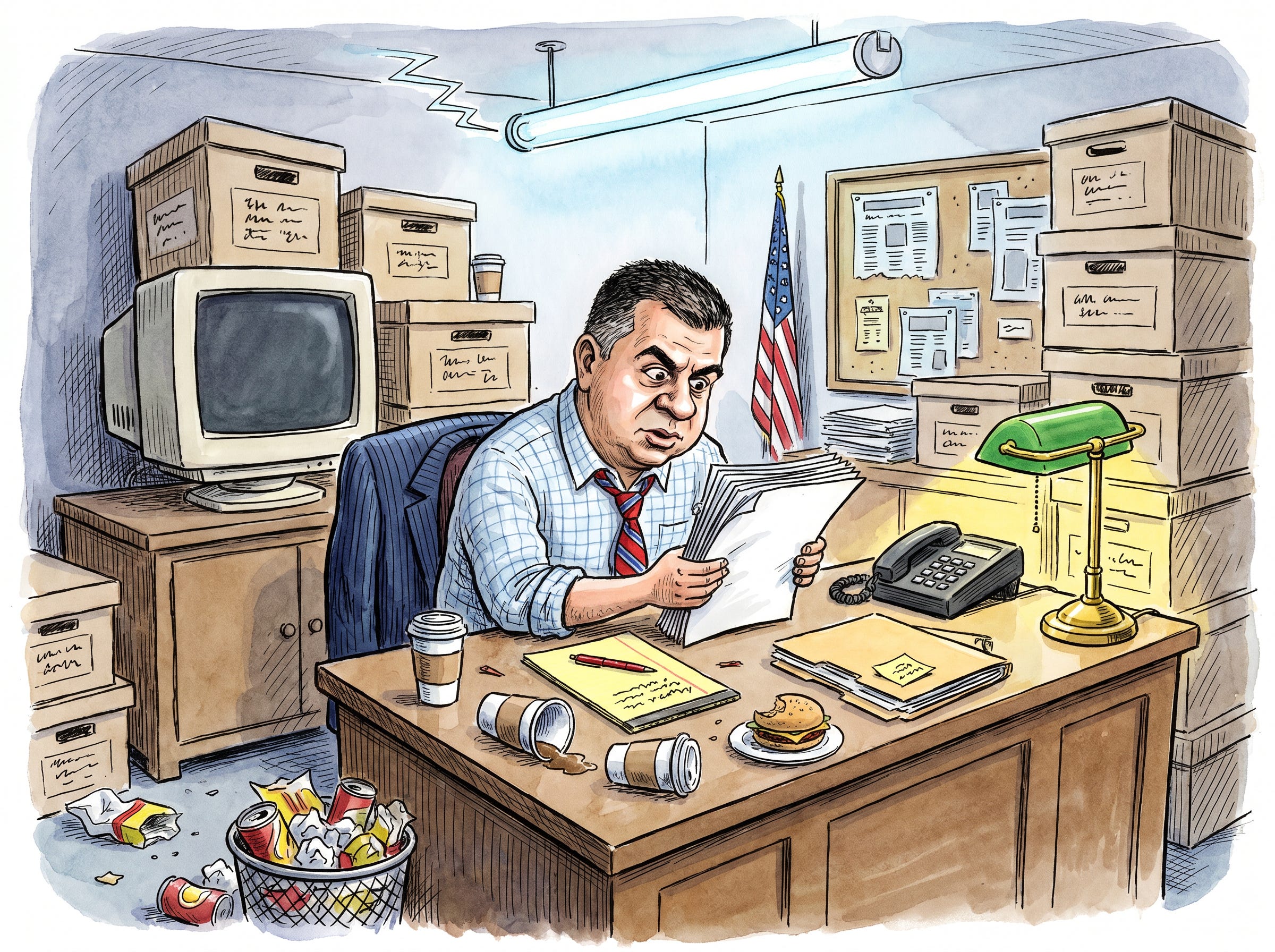
In my imagination, I picture his Capitol Hill office in those years the way the old hands describe a certain kind of investigator’s office in any congressional building - file boxes stacked floor-to-ceiling along one wall, a desk under a single banker’s lamp, a wastebasket full of Diet Coke cans and McDonald’s wrappers, a thirty-something with a buzzcut and a tie loose at the collar reading the same Whitewater deposition for the fourth time, looking for the part somebody else missed. I cannot prove any of those details. I have not interviewed him. But there is a kind of investigator who reads paper for sixteen hours a day looking for the loose thread, and the public record is clear that Bossie was that kind of investigator.
His particular obsession was the Clintons. In 1996 he was hired by Representative Dan Burton of Indiana to serve as chief investigator for the House Government Reform and Oversight Committee, which was then looking into the Clinton campaign’s fundraising practices (New York Times, May 7, 1998; Chicago Tribune, May 6, 1998). He spent the next eighteen months as Burton’s most trusted aide.
Then he did something even Burton could not stomach.
In May 1998, Bossie was personally responsible for editing roughly 150 hours of prison phone calls made by Webster Hubbell - a Clinton ally and former associate attorney general - down to a one-hour version. That one-hour version was released to the press. The parts that got cut, somehow, were the parts in which Hubbell exonerated Hillary Clinton from a billing-fraud allegation.
That is not editing for length. That is editing for narrative.
Burton fired him on May 5, 1998. The bipartisan pressure to fire him included Speaker Newt Gingrich. Burton himself - the same Burton who had publicly called President Clinton a “scumbag” only weeks earlier - eventually conceded the editing had been indefensible. The committee’s chief attorney had already resigned the previous year, citing what he called Bossie’s unprofessional behavior. When a man named Dan Burton concludes you have crossed a line, you have crossed a line that is visible from space.
Bossie took the firing, went away for a few years, and came back through a different door. In 2001 he took over a sleepy little nonprofit called Citizens United and spent the next decade turning it into a production house for grievance documentaries with titles like Hillary: The Movie, Hype: The Obama Effect, and Border War: The Battle Over Illegal Immigration (Ballotpedia, David Bossie). By 2016 he would be the deputy campaign manager for Donald Trump’s first presidential run. By 2024 he would be at the convention again, working the floor, still standing close enough to the principal to matter.
Bopp had been Bossie’s lawyer for years. He had handled smaller campaign-finance scrapes for the Citizens United organization, knew the staff, knew the books, knew the kind of trouble Bossie liked to get into. And by the summer of 2007, both men understood what the Roberts plurality in Wisconsin Right to Life had just handed them. The Court had opened a small door in the McCain-Feingold wall. The question was: what would they walk through it with? They needed something specific - one product, one client, one fact pattern - that would let them push the door open a little further. Bossie supplied it.
Hillary: The Movie was a ninety-minute documentary that Citizens United produced in late 2007. Its purpose - announced openly, in fundraising materials and press releases - was to be broadcast on video-on-demand cable systems during the 2008 Democratic presidential primary, when Hillary Clinton was the presumptive front-runner. The film argued that she was unfit to be president. It interviewed Dick Morris, Ann Coulter, and the Reverend Jerry Falwell Jr. It was, by every honest description, an attack ad in feature-length form. The word “documentary,” applied to this product, is doing the same kind of work that the word “consultant” was doing on the BH Group’s tax filings - it is the federal-paperwork term for whatever the lawyers needed it to be called that week.
Here is why that mattered. McCain-Feingold - the same law Bopp had been chipping at for half a decade - said that corporations could not pay to broadcast TV content naming a federal candidate within thirty days of a primary. Hillary: The Movie was paid for by a corporation. It named a federal candidate. It was set to run within thirty days of the New Hampshire primary. Under the law as it stood, putting it on cable was illegal.
That was the entire point.
Bopp did not design Hillary: The Movie to be a legitimate documentary that happened to bump into a regulation. He designed the whole thing as a test case - a planned collision with the law, engineered so that the lawsuit afterward would let him ask the Court for another carve-out. Last time, in Wisconsin Right to Life, he had gotten the Court to say “the TV-ad rule doesn’t apply to real issue ads.” This time, he wanted them to say “the TV-ad rule doesn’t apply to feature-length documentaries on video-on-demand.” Each new exception, on its own, looked small. None of them, on their own, threatened to bring down the whole law. But stacked together, in the right order, they were going to leave nothing of the law standing.
Lawyers and political scientists have a name for this approach. They call it the salami strategy - a phrase that comes from a Hungarian communist named Mátyás Rákosi, who used it in the 1940s to describe how he was going to take apart Hungary’s opposition parties one slice at a time, none of the slices dramatic enough to provoke a unified pushback, until at the end he had eaten the whole sausage. That is what Bopp was doing to American campaign-finance law. Not a frontal attack. A series of small, individually reasonable-looking slices. Slice by slice, the law disappeared.
On December 13, 2007, Citizens United filed its complaint in federal court in Washington, D.C. Bopp drafted it. The complaint, on its surface, asked for almost nothing. It did not ask the Court to throw out McCain-Feingold. It did not ask the Court to throw out Austin v. Michigan Chamber of Commerce, a 1990 decision that had upheld the entire principle of restricting corporate political spending. It asked only for one narrow exception: hold that the TV-ad rule, while perhaps fine in general, could not be applied to this specific documentary on this specific platform during this specific election window. The Roberts plurality from six months earlier had opened the door. Bopp was asking the Court to open it a little further.
On January 15, 2008, the federal district court denied the request and ruled the documentary was, in fact, an electioneering communication subject to McCain-Feingold. The court wrote that the film was “susceptible of no other interpretation than to inform the electorate that Senator Clinton is unfit for office” (Citizens United v. FEC, 530 F.Supp.2d 274 (D.D.C. 2008)).
This loss, like every other loss on Bopp’s ladder, was the point. The district court ruling was exactly what Bopp needed - a ruling against him - because McCain-Feingold contained a special provision allowing certain constitutional challenges to skip the normal appeals process and head directly to the Supreme Court. By July 2008 the case was on the Supreme Court’s docket. By March 2009 it would be argued. By January 2010 it would be decided.
What Bopp did not know, in the late winter of 2008, was that he would not be the one arguing it.
The Supreme Court of the United States heard oral argument in Citizens United v. Federal Election Commission on March 24, 2009. The lawyer who stood up to argue on behalf of Citizens United was not James Bopp Jr.
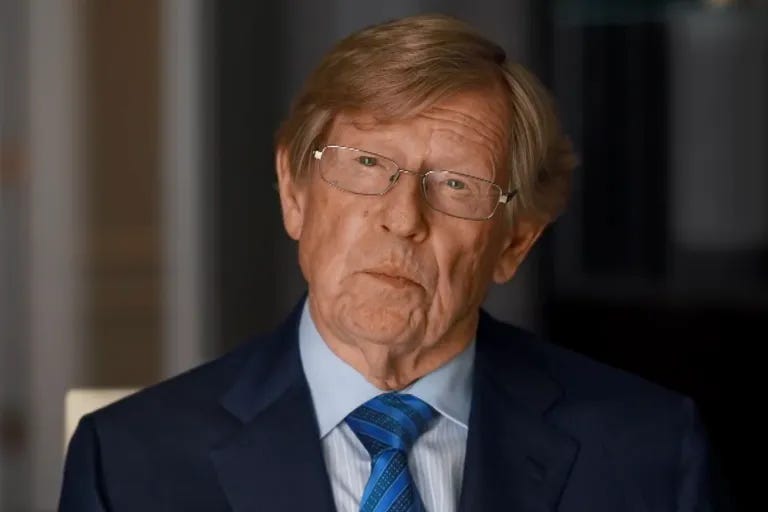
It was Theodore Olson.
Picture the room for a second, because it matters. The Supreme Court chamber is small - smaller than you think. Twenty-four marble columns ring a chamber roughly the size of a generous high school classroom. The justices sit on an elevated mahogany bench in nine high-backed chairs of nine slightly different sizes, because each justice’s chair, by tradition dating back to Chief Justice Warren Burger’s tenure in the 1970s, is built to that justice’s measurements (the Court’s own description of its bench; Washington Post on Burger’s seating overhaul). The lawyer arguing the case stands at a lectern roughly ten feet from the chief justice’s nose.
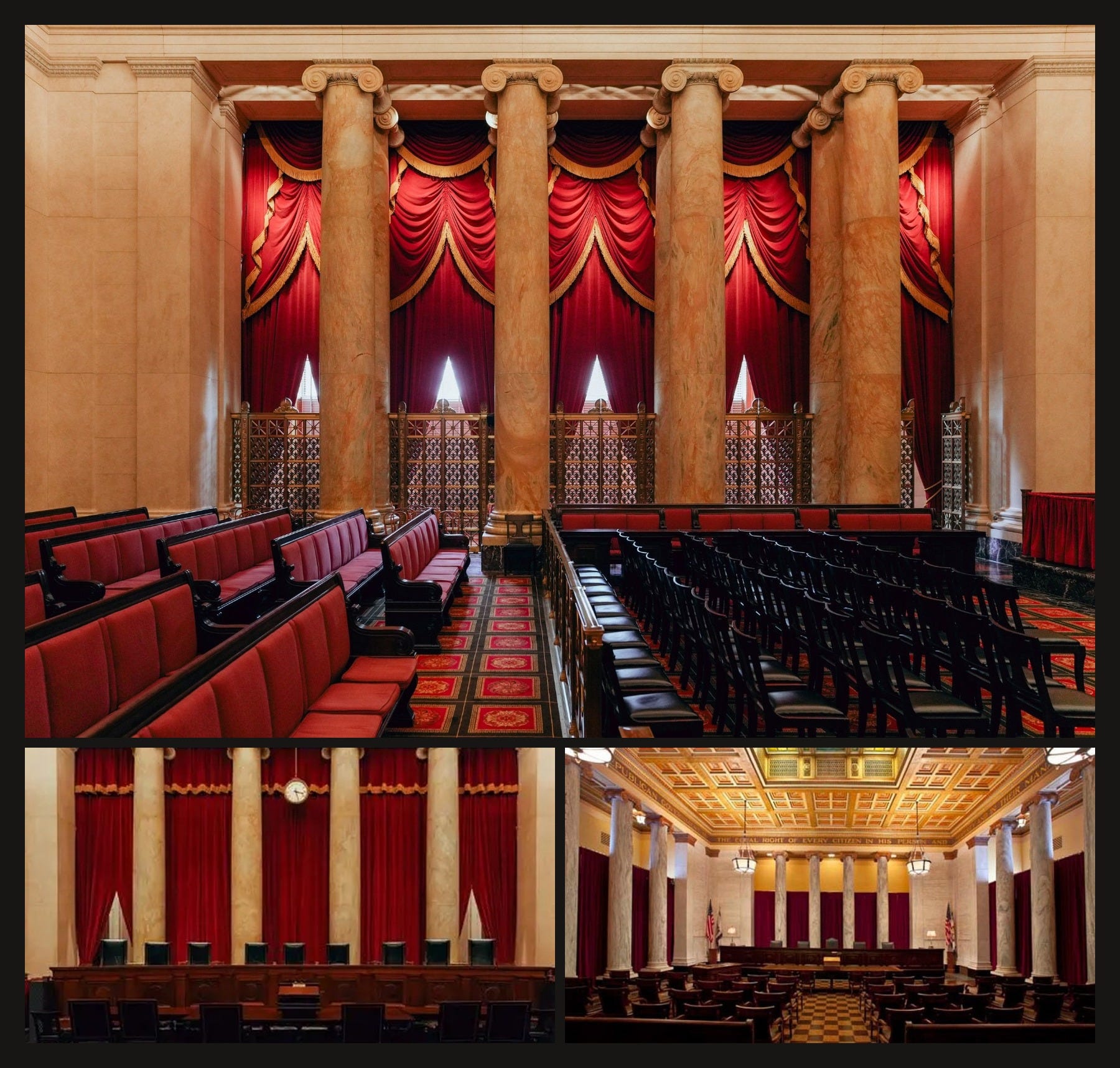
There is a red light on the lectern that comes on when the lawyer’s allotted time is up and a white light that comes on five minutes before that. Behind the lawyer, on hard wooden benches, sits the gallery - members of the Supreme Court bar in the front rows, then reporters, then a small handful of members of the public who have queued up since dawn for the seats that are not reserved. Above the bench, in marble relief, are figures representing the Majesty of Law and the Power of Government. On the south wall, a procession of eighteen historical lawgivers keeps watch - Moses with the Ten Commandments among them, alongside Hammurabi, Confucius, Muhammad, and Napoleon (Supreme Court, “Courtroom Friezes: East and West Walls”; Supreme Court, “South and North Walls”). The friezes were sculpted between 1932 and 1935, decades before the modern Establishment Clause cases would make a citizen wonder whether the highest court in a country with a First Amendment ought to have the Decalogue in its room at all. It is, as architectural settings go, designed to make a person aware of their own smallness.
Into that room, on the morning of March 24, 2009, walked Theodore Olson. Sixty-eight years old. Former Solicitor General of the United States under George W. Bush, which is the office whose job is to argue the federal government’s cases before this very Court. The man who had stood at this same lectern in December of 2000 and argued Bush v. Gore, and won. The partner the conservative legal movement called in when it had a case here that absolutely had to be won.
He had been standing in that room, in one role or another, for almost his entire adult life. There was no version of a Supreme Court argument that was going to throw him off his marks.
He had not built the Citizens United case. He had not drafted the complaint. He had not been at the district court. He had been brought in.
Bopp was second-chair. His name was on the briefs. He sat at counsel’s table. But the lectern - the moment when one lawyer faces nine justices and gets eight minutes to argue for his client - belonged to Olson.
This is not a small detail. It is the detail that tells you what the conservative legal movement had become by 2009.
The movement Bopp had grown up in was a different thing. When Bopp filed his first major campaign-finance cases - and you have to remember this includes losing in front of the Supreme Court twice before he ever won - the conservative legal movement was still mostly a network of true-believer lawyers doing ideological litigation on small budgets. James Bopp Jr. in Terre Haute. The Pacific Legal Foundation. The Federalist Society practice groups. The men who built it had been hand-to-mouth in the 1980s, working out of cramped offices, taking pro bono cases, building a movement on conviction and small-donor money. By 2009 that movement had become something else entirely. It had Leonard Leo running a confirmation machine funded by anonymous billionaires. It had Wellspring distributing $83.6 million through a Virginia mailbox. It had a five-justice majority on the Court.
And when the case of a decade reached the lectern, the movement looked at the man who had built it - a folksy Midwesterner with a buzzcut and an Indiana zip code - and said, no, let’s bring in the polished, telegenic, Bush-administration partner from one of Washington’s white-shoe firms. That is the entire shift in one decision. The movement had grown up. It had a brand to protect. It had stopped being a movement of believers and become an institution that hired closers. Bopp was the believer. Olson was the institution. The conservative legal movement, in 2009, had reached the moment in any successful organization’s life cycle when the founders get politely set aside in favor of the operators.
I do not know how Bopp felt about it. He has never said so publicly. He has continued to speak at Federalist Society conventions, continued to be cited as a Citizens United architect, and his resume now lists Citizens United v. FEC as a case in which he filed two friend-of-the-court briefs - which is technically true and, in context, the kind of polite professional cover the movement provides for its bricklayers when it brings in the stonemason for the keystone.
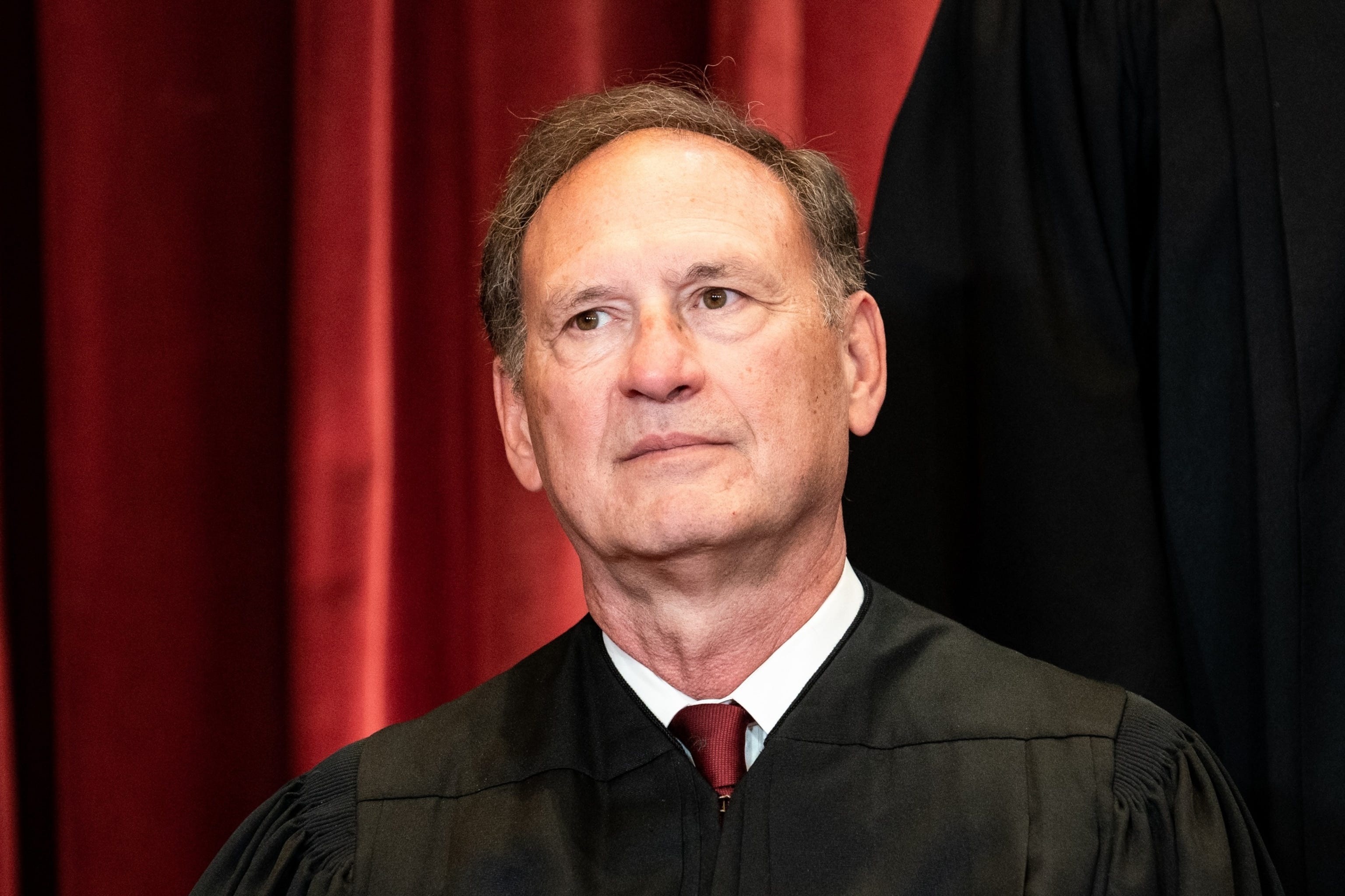
According to the official transcript of the March 24, 2009 oral argument (Citizens United v. FEC, oral argument transcript), something more important than Bopp’s role happened that morning. The Court asked Olson a question that, looking back, was the entire eventual ruling in seed form. It came from Justice Alito and it was about books.
The question went something like this. If the government can use McCain-Feingold to stop a corporation from paying to broadcast this ninety-minute documentary about Hillary Clinton during an election window, what else can the government stop a corporation from doing? What if the corporation is a publishing house? Could the government, under the same law, ban that publishing house from putting out a five-hundred-page book about Hillary Clinton during the same election window? Olson, careful in his answer, said yes - in some circumstances, under the existing legal framework, the government could. Deputy Solicitor General Malcolm Stewart, arguing for the FEC, agreed.
That answer blew the case wide open.
What had walked in the door that morning as a narrow argument about one documentary on video-on-demand walked out, by lunchtime, as a referendum on whether the federal government could ban books. The new framing was not in the original briefs. It was not in the question the Court had agreed to hear. It was created right there at the oral argument, by a justice the conservative legal movement had spent fifteen years working to install, in a single exchange that lasted less than ninety seconds. The case had been rewritten in real time. Bopp’s careful, narrow, salami-slice complaint about cable video-on-demand was now, in the Court’s hands, about the entire constitutional question of whether corporations could be regulated when they spent money on political speech.
That was on a Tuesday in March.
On June 29, 2009 - the last day of the Court’s term that year - the justices did something unusual. They did not decide the case. Instead, they issued an order telling both sides to come back in September and argue it again, this time on a much bigger question. They wanted both sides to be ready to argue whether the Court should throw out the entire 1990 Austin v. Michigan Chamber of Commerce decision and parts of the 2003 McConnell v. FEC decision - in other words, whether the whole framework of restricting corporate spending on political campaigns should be torn down (Citizens United v. FEC, 557 U.S. 932 (2009) (per curiam order)).
In plain English: the Court was not going to decide the narrow question Bopp had filed. The Court was going to use Bopp’s narrow case to decide a much bigger question Bopp had not asked it to decide. This is not how the Supreme Court is supposed to work. The Court is supposed to take the cases that come to it and answer the questions those cases present. It is not supposed to flag down a passing case like a cab and ask the driver to take it somewhere else. But the Court is whatever five justices decide it is on any given Tuesday, and on this Tuesday they had decided it was a body that flagged down cabs.
Now, here is what nobody can prove and what, in my opinion, is sitting in plain sight.
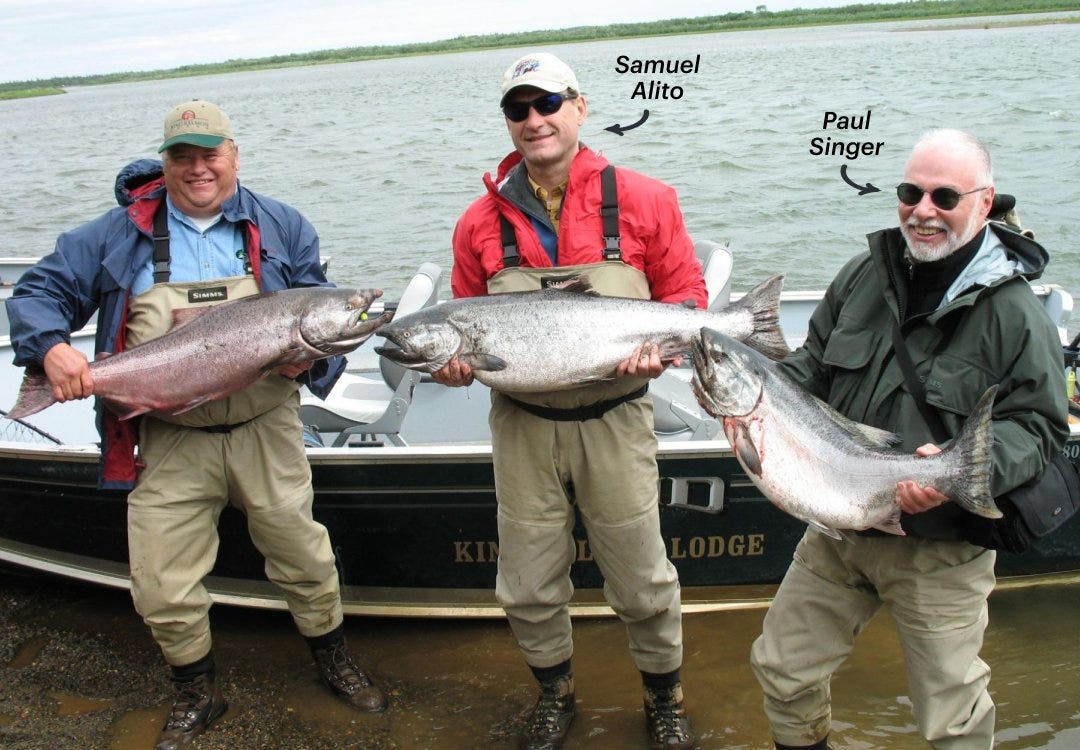
In July of 2008 - eight months before Justice Alito asked the books question, and eleven months before he joined the order asking for the case to be reargued bigger - Samuel Alito flew on a private jet to a luxury fishing lodge in Alaska. The trip was organized by Leonard Leo. Leo personally invited a hedge fund billionaire named Paul Singer along for the trip, and Leo personally asked Singer whether he, Alito, and the rest of the party could fly on Singer’s plane. They could. The flight alone was estimated at $100,000 each way. The lodge - the King Salmon Lodge in Alaska - was owned by a California mortgage-industry executive named Robin Arkley II, another Leo donor, who charged paying guests $1,000 a night and charged Alito nothing. Alito reported none of it on his financial disclosures. The form he was required to file has a section for gifts, and the section was blank, as if the round-trip private jet flight and the lodge stay had been imagined. Singer’s hedge fund, in the years after the trip, would have at least ten cases in front of the Supreme Court. Alito has never recused himself from any of them. In one case in 2014 he voted with the majority for Singer’s hedge fund, netting Elliott Management $2.4 billion (ProPublica, June 2023; NPR, June 21, 2023). The return on investment, by my arithmetic, was about twelve thousand to one. Even a hedge fund cannot ordinarily promise numbers like that.
Fishing trips, for the record, are a time-honored conservative vehicle for the kind of conversation that does not show up in writing. Alaskans of a certain political vintage will remember a group of state legislators in the mid-2000s who got tagged with the name “Corrupt Bastards Club.” The phrase was coined by Lori Backes, a newspaper columnist, in spring 2006, during the early stages of the FBI investigation into oil-industry bribery. The corrupt did not name themselves that. The vehicle in their case, repeatedly, was the fishing trip.
I cannot prove that anyone on that 2008 boat in Alaska leaned across the breakfast table and asked Justice Alito to please, when the Citizens United case came up, take the broader question. I cannot prove a phone call. I cannot prove an email. What I can show you is the receipts on the trip, the receipts on the reargument order, and the calendar dates. In any other sector of American life - any corporation, any university, any government office - a luxury vacation of that magnitude, taken with parties who would later have repeated business in front of you, would be a disqualifying conflict on its face. And the request that came down in the reargument order - the order asking both sides to come back and argue whether to demolish the foundations of American campaign-finance law - is the kind of request that, if it had been made on a piece of corporate stationery, would have ended careers in three news cycles. Because it came from the justices themselves, on a Monday at the end of the term, in a one-paragraph procedural order, it was treated as a curiosity.
The poker game was happening in plain sight. The cards were being dealt by the dealers.
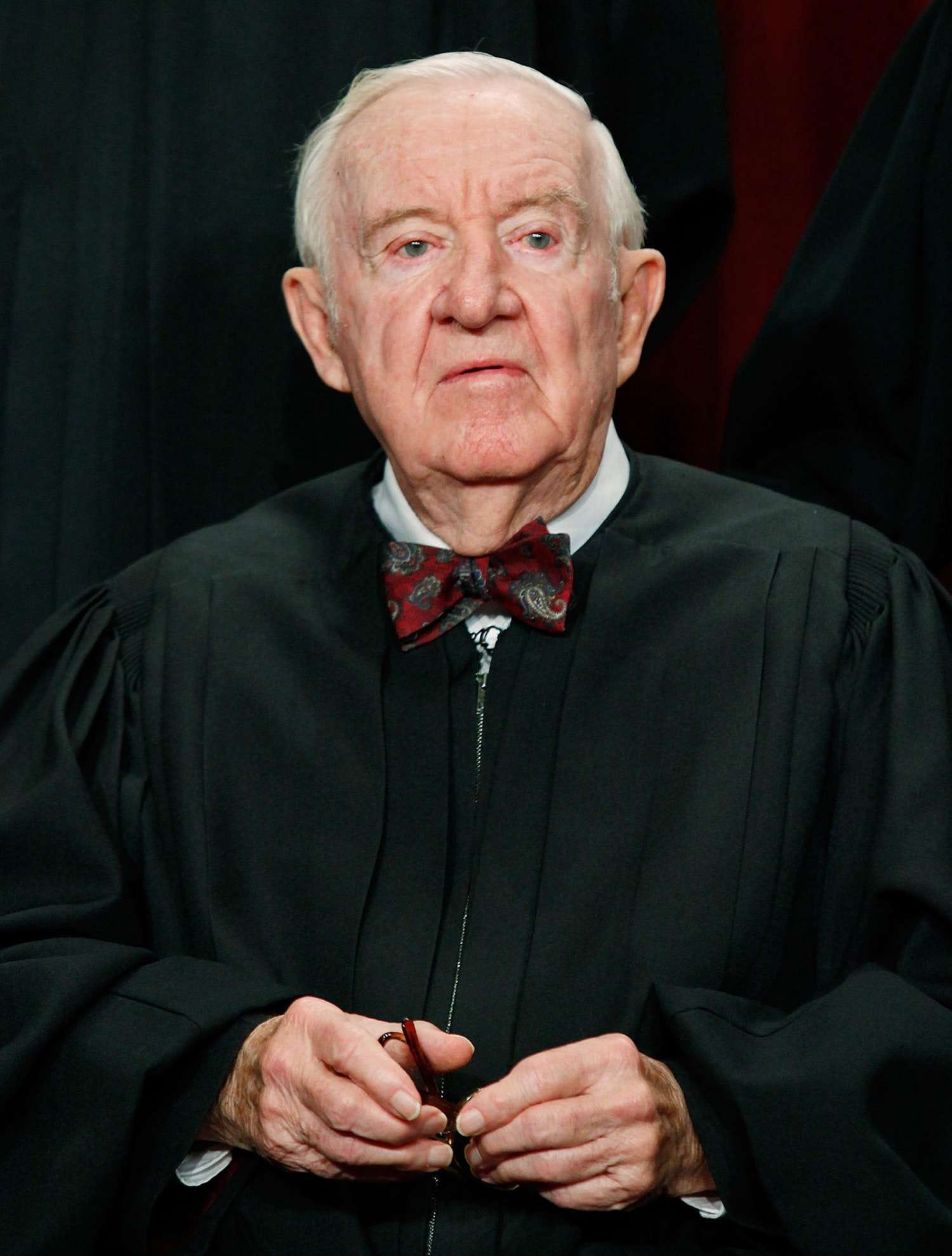
Justice John Paul Stevens, who would write the eventual dissent, later put it as bluntly as any sitting justice has ever put anything. He accused the majority of having “changed the case to give themselves an opportunity to change the law.” That is exactly what they did. This order - the one telling both sides to come back and argue bigger - is the strangest thing about Citizens United, and the thing nobody at the time quite knew what to do with. It is the single strongest piece of evidence for the claim, which I will defend more fully in Piece 5, that the Roberts Court did not stumble into the Citizens United ruling by accident. It went looking for it.
The re-do argument happened on September 9, 2009. By then Justice David Souter had retired and Justice Sonia Sotomayor had taken his seat. The conservative bloc was unchanged - Roberts, Scalia, Kennedy, Thomas, Alito. The liberal bloc had Sotomayor in Souter’s chair, joining Stevens, Ginsburg, and Breyer. The vote that was coming was not in doubt to anyone who could count.
On January 21, 2010 - a Thursday morning, twelve years and one day after President Bill Clinton’s grand jury testimony, a coincidence I mention only because nothing in this story is not somehow about the Clintons - the Supreme Court of the United States issued its decision in Citizens United v. Federal Election Commission. The vote was 5-4. Justice Kennedy wrote the majority opinion, joined by Roberts and Justices Scalia, Thomas, and Alito. Justice Stevens wrote a ninety-page dissent, joined by Ginsburg, Breyer, and Sotomayor.
The ruling: the First Amendment does not permit the federal government to restrict independent political spending by corporations, associations, or labor unions. The framework that had been built up across the entire twentieth century - the 1907 Tillman Act, the 1947 Taft-Hartley Act, the 1971 Federal Election Campaign Act and its 1974 amendments, the 2002 Bipartisan Campaign Reform Act - was, in the parts that had restricted what corporations could spend on independent political advocacy, gone.
The lawyer who had built the case was sitting at the second chair. The lawyer who had argued the case was at the lectern. The architect of the Court that handed down the ruling was in Washington, running a confirmation network that had now placed two of the five justices in the majority. And the legal infrastructure that would, twelve years later, allow a single donor to route $1.6 billion through a trust funded by the secret sale of an electronics company - to a recipient who was not the donor and not the trust - had just been handed down from the bench.
Fifteen years of careful architecture. Five rungs of litigation. One ninety-second exchange about a hypothetical book. The chassis had its Court.
I want to be precise about what the Citizens United decision actually said, because the popular shorthand for it has gone soft over fifteen years.
The ruling did not, technically, allow billionaires to write personal checks of unlimited size directly to a federal candidate’s campaign. That has been illegal since the Federal Election Campaign Act of 1971 and remains illegal today. What the ruling did was unlock a different category - what the federal election laws call “independent expenditures,” which is the dry legal term for spending that supports a candidate but is not formally coordinated with that candidate’s campaign. The Court held, by 5-4, that corporations, labor unions, and associations cannot be prevented from spending unlimited amounts of money on independent political advocacy.
In normal language: a billionaire still cannot hand a million dollars to a candidate’s campaign manager. A billionaire can, starting on January 21, 2010, hand ten million dollars to an entity that will then run TV ads supporting that candidate, as long as the entity is not formally part of the campaign. The entity will, of course, be staffed by the candidate’s friends. It will, of course, be coordinated in every way short of a written memo. The “independent” part of “independent expenditure” became, within about ninety days of the Citizens United ruling, a polite fiction.
Three months later, in March 2010, the D.C. Circuit Court of Appeals applied Citizens United’s reasoning to a case called SpeechNow.org v. FEC and held that if independent expenditures cannot be limited, then contributions to organizations that make only independent expenditures also cannot be limited. The FEC, in two advisory opinions issued in July of that year, formalized the framework. And just like that, the country had a new kind of political organization - one that could take unlimited money from any source, including corporations, and spend that money on advocacy supporting or attacking federal candidates, as long as it filed the right paperwork.
These new entities had a clinical-sounding name. They were called independent expenditure-only political committees. The press, almost immediately, gave them a better one.
Super PACs.
SIDEBAR: What is a Super PAC?
Before January 2010, federal political organizations came in two main flavors. There was a candidate’s campaign committee - the formal organization a candidate sets up to run for office, which is allowed to take limited contributions (currently $3,300 per individual per election) and is required to disclose every donor by name. And there was a political action committee, or PAC - a separate organization that could take limited contributions (currently $5,000 per individual per year) and spend that money on advocacy supporting or opposing candidates. PACs also had to disclose their donors.
After Citizens United and the follow-up case SpeechNow.org v. FEC in March 2010, a new kind of organization came into existence. The IRS calls it an “independent expenditure-only political committee.” The press calls it a Super PAC.
A Super PAC is different from a regular PAC in two ways. First, it can accept contributions of unlimited size from individuals, corporations, labor unions, or other organizations. Second, it cannot contribute money directly to a candidate’s campaign or coordinate its spending with that candidate’s campaign. In every other respect it can do what a PAC can do - run ads, fund mailings, hire pollsters, produce videos, pay for travel for surrogates.
The “cannot coordinate” rule is, in practice, a polite fiction. A Super PAC supporting a candidate will almost always be staffed by that candidate’s former employees, friends, or family members. The candidate cannot legally direct the Super PAC’s spending in any specific election. But the candidate can publicly announce, in a speech, that they wish a Super PAC supporting them would run ads in Ohio. And the Super PAC, having heard the announcement, can spend money on ads in Ohio. The line between “coordination” and “the candidate giving a speech” has never been satisfactorily drawn. The FEC, the agency that is supposed to draw it, has been deadlocked at three Republicans to three Democrats for most of the post-Citizens United era, which means the agency cannot agree on what coordination is and therefore does not enforce a rule against it. The rule is on the books. The enforcement is not. A speed limit that nobody can be ticketed for is a suggestion.
Super PACs are required to disclose their donors to the FEC. But a Super PAC can accept money from a 501(c)(4) nonprofit, which is not required to disclose its donors at all. So the structure that has emerged in practice looks like this: a billionaire writes a check to a 501(c)(4) nonprofit (no disclosure). The nonprofit writes a check to a Super PAC (one line of disclosure naming the nonprofit, not the billionaire). The Super PAC spends the money on ads. The public learns that “a 501(c)(4) called Some Patriotic-Sounding Name spent $20 million” and learns nothing about who actually paid.
This is the structure Citizens United unlocked. The ruling did not, on its face, do this. The ruling on its face only said that corporations and associations cannot be prevented from making independent expenditures. The Super PAC and the dark-money nonprofit are the structures lawyers built, in the months and years after the ruling, to operationalize what the ruling said.
In the 2008 presidential cycle, the year before Citizens United, total outside spending by groups not affiliated with the campaigns themselves was roughly $338 million (Center for Responsive Politics / OpenSecrets, outside spending data). In the 2012 cycle, the first presidential cycle after the ruling, that number was $1.04 billion. In 2016, $1.6 billion. In 2020, $2.95 billion. In 2024, by the most recent estimates, well over $4.5 billion. The trendline is not subtle. The ruling that, in the popular telling, “let corporations spend money on elections” let a great deal more than that. It let the spending happen at a scale, and through a structure, that the framework of American campaign-finance law was simply not designed to absorb.
Most of that money does not come from corporate treasuries. It comes from individuals - a small number of very wealthy individuals - who give the money to nonprofits and Super PACs that then spend it. Citizens United opened the door for corporate spending and what walked through, mostly, was billionaire spending. The corporations turned out to mostly not need the new freedom. The billionaires absolutely did.
This is the part nobody arguing the case in 2009 said out loud. The Court spent its time, in oral argument, on the constitutional rights of corporations - whether General Motors had a First Amendment interest in running political ads, whether a book publisher’s right to publish was at stake. Those were the framings. The actual effect of the ruling was something else. The ruling did not unleash the political voice of America’s corporations. It unleashed the political checkbooks of America’s richest individuals, using corporate shells and nonprofit shells as the laundering vehicles. The constitutional theater was about corporate speech. The practical infrastructure was about dark money.
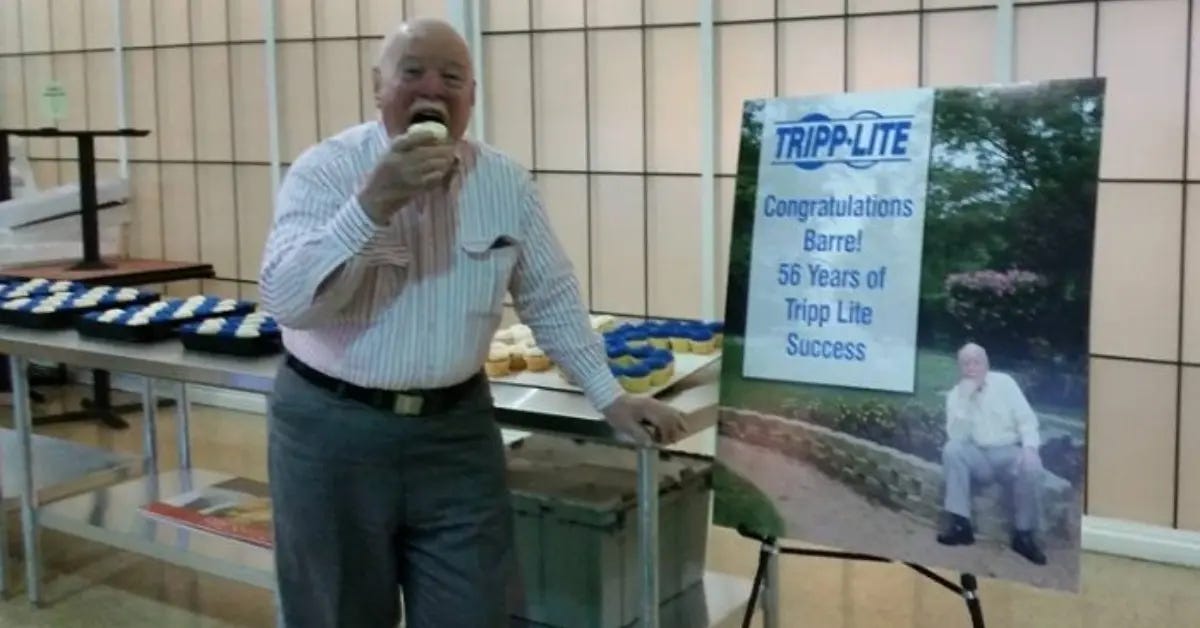
Twelve years after the ruling, a man named Barre Seid - a ninety-year-old electronics manufacturer from Chicago who had spent his life largely outside the public conversation - quietly transferred the entirety of his company, Tripp Lite, into a single 501(c)(4) nonprofit controlled by Leonard Leo. The transaction was structured so that the nonprofit, not Seid, received the proceeds of the sale, which meant Seid avoided as much as $400 million in capital gains taxes. The nonprofit was called the Marble Freedom Trust. The value of the gift, when ProPublica and The Lever broke the story in August 2022, was $1.6 billion. It was, by an order of magnitude, the largest single donation in the history of American political philanthropy (ProPublica, August 2022).
I want you to hold that number against the structure I have been describing for the last several thousand words.
In 2007 Leonard Leo was running a confirmation operation out of borrowed space at the Federalist Society, with Wellspring Committee funneling money in the high seven-figures through a Virginia mailbox. In 2010 the Roberts Court, with Leo’s two confirmed justices casting the deciding votes, removed the ceiling on political spending by corporations and the entities that take corporate money. In 2022 a single ninety-year-old donor placed $1.6 billion in a single Leo-controlled trust, which Leo can now spend, more or less indefinitely, on judicial confirmations and political infrastructure of his choosing. The trajectory from 2007 to 2022 is not a coincidence. The trajectory is the design.
This is the part the popular framing gets wrong. Citizens United did not happen and then, later, Leo’s network got rich. The two are the same project. The same man who handed George W. Bush the two justices that produced the Citizens United majority is the same man who has now collected, into a single trust, more money than every major conservative legal foundation in the country had spent in the entire prior century combined. The Court he built unlocked the funding mechanism that capitalized the next iteration of the Court he is still building.
There is a line I have been holding for this part of the article.
The historian Timothy Snyder, in his small and ferocious book On Tyranny, written in 2017 in response to the first Trump administration, opens with a one-sentence lesson that I think about a great deal. Do not obey in advance. Most of the power that authoritarian movements ever acquire, Snyder argues, is power that institutions and individuals hand to those movements before being asked. The compliance does most of the work. The orders, when they finally come, come into a system that has already accommodated them.
I want to apply that frame to the Supreme Court of the United States, and specifically to how American culture talks about the rulings of the Supreme Court of the United States.
We talk about Supreme Court decisions the way we talk about weather. The Court ruled. The case came down. The decision was handed down. The verbs in the popular reporting are passive, atmospheric, almost meteorological. The framing treats a 5-4 ruling by nine human beings in robes as if it were an event in the natural world - as if it descended from above, fully formed, after a process of impartial deliberation, and now we, the citizens, are obligated to adjust our lives around it.
We are not.
The Supreme Court is nine people. They were chosen by elected officials. They are appointed for life because that is the rule we made, not because that is the rule the universe gave us. Their rulings are the product of human choices made by human beings whose backgrounds, donors, fishing trips, godchildren, and ambitions are all matters of public record, when they are matters of record at all. A 5-4 decision is not the voice of the Constitution. It is the opinion of five people, narrowly outvoting the opinion of four people, on a question that was put to them by lawyers paid by clients with interests.
The habit of treating Supreme Court rulings as facts of nature, rather than as choices made by individuals operating inside an institution we collectively designed, is a form of what Snyder is talking about. It is a form of obeying in advance. The institution has not yet asked the public to treat its rulings as unappealable holy writ. The public has been doing that on its own for two generations. The institution did not have to argue for the principle. The public conceded the principle without being asked.
The Citizens United ruling, in particular, deserved to be received the way every other 5-4 ruling on a question of constitutional interpretation deserves to be received: as the contested opinion of five identifiable individuals, joined to a process that had been built, over fifteen years, by an identifiable network of donors and operators with an identifiable financial interest in the outcome. It was not received that way. It was received, by most of the country, the way you receive weather. It came down. It is now the law. We must adjust.
We did not have to adjust. We chose to.
I think about this every time I see someone, in the year 2026, refer to Citizens United the way you might refer to the law of gravity. As if the rule that says billionaires can spend unlimited money on independent political advocacy was a discovery about the natural order of the United States Constitution, instead of a 5-4 opinion authored by Justice Anthony Kennedy and joined by four colleagues, two of whom had been installed by a confirmation network funded by anonymous billionaires, one of whom had been on a fishing trip in Alaska eight months before he asked the question that broke the case open, one of whom was the godfather to that confirmation operative’s child. It is not weather. It is five people, with names, with biographies, with private trips, with documented relationships to the people whose interests their ruling served. We get to say so. We are allowed to say so.
This is, in the end, what I am asking you to take from this article. Not a policy proposal. Not a legislative fix. Not a constitutional amendment, although there are several reasonable ones being drafted. The thing I am asking you to take is the permission to look at the United States Supreme Court the way you would look at any other room full of fallible people, and the refusal to obey, in advance, the rule that says you cannot.
In Piece 5 of this series, I will return to the convergence. The Citizens United ruling is the moment in which the four threads of this series - Stephen Bannon’s media operation, the Mercer family’s data and money apparatus, the Federalist Society’s judicial pipeline, and James Bopp Jr.’s patient litigation - intersect in a single afternoon in a marble chamber in Washington. Each of them depended on the others. None of them, on its own, could have produced the country we now live in. I will lay out the convergence, name what it unlocked, and close the series on what comes after.
For now, this is what I have for you. Two men on a ledge in 2007. One ladder. Five rungs. A confirmation network funded by anonymous billionaires. A fishing trip in Alaska. A one-paragraph procedural order issued on the last day of a Supreme Court term. A 5-4 ruling on a Thursday morning in January. A $1.6 billion trust. And a country that has spent the fifteen years since obeying, in advance, the rule that none of this was anybody’s choice.
It was all somebody’s choice.
The chassis got its Court. And the oligarchy, having been built deliberately, can be taken apart deliberately. That is the entire point of writing any of this down.
No posts
Comments
Nothing yet. Say the first thing.
Sign in to join the conversation.