There’s an old line your grandmother probably used on you at some point.
You are the company you keep.
It’s not a fair thing to say about a kid picking friends at school. It is a fair thing to say about a grown man who spent twenty years picking business partners, hires, travel buddies, and people to share a stage with.
So before I make a single argument here, I want to put the names on the table. Not buried in the paragraphs where your eyes skip past them. Right here, up front, like the guest list for a dinner you already regret going to.
This is the list of people Steve Bannon hired, replaced, defended, campaigned with, traveled with, briefed, did business with, or otherwise kept around him over twenty years. Every one of them shows up in court filings, sanctions lists, guilty pleas, or named reporting from mainstream outlets. None of this is rumor. None of it is guesswork.
Read it slowly. The whole story grows out of this list.
· Brock Pierce. Named as a defendant in a 2000 civil suit alleging sexual abuse of minors connected to the Digital Entertainment Network. The suit was later withdrawn. Pierce was never criminally charged. Bannon replaced him as CEO of Internet Gaming Entertainment in 2007.
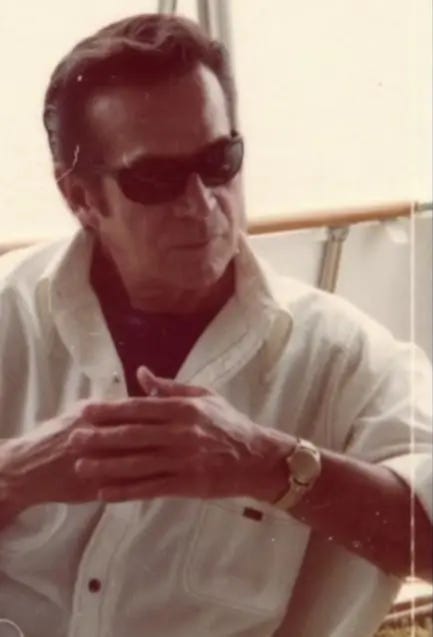
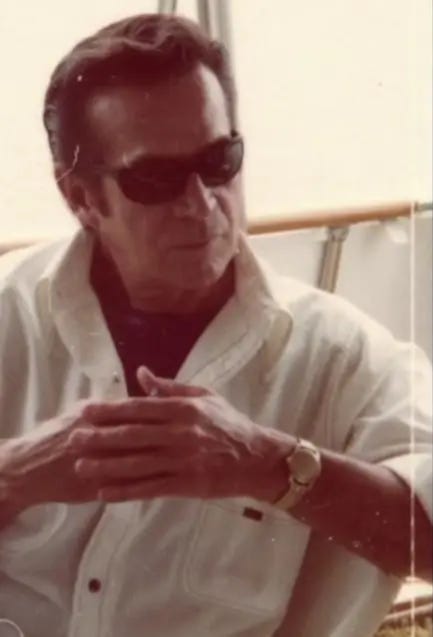
· Marc Collins-Rector. Pierce’s DEN co-founder. Pleaded guilty in 2004 to federal charges of sex-trafficking of minors.
· Milo Yiannopoulos. Hired at Breitbart in 2014. Resigned in February 2017 after recordings surfaced of him making comments that minimized pedophilia.
· Roy Moore. Bannon campaigned with him at an Alabama rally on December 5, 2017, twenty-six days after The Washington Post published detailed allegations that Moore had sexually initiated contact with a fourteen-year-old girl when he was thirty-two.
· George Nader. Convicted in 2003 in the Czech Republic on child-pornography charges. Convicted again in 2020 in U.S. federal court on charges of transporting a minor for sex. Appears in a June 4, 2019 message exchange involving Bannon.
· Jeffrey Epstein. Documented in a roughly two-hour 2019 interview with Bannon and in June 2019 message exchanges with him, later expanding into evidence of shared political interests in Europe and Brexit.
· Peter Thiel. Recipient of Epstein’s post-Brexit “return to tribalism” email and an important figure in the same broader anti-globalist, post-democratic political orbit.
· Sebastian Gorka. Bannon hire at Breitbart and later at the White House. Family connection to the Hungarian Vitézi Rend, which the U.S. State Department has listed as having operated under the direction of the Nazi government of Germany. Gorka denies membership.
· Erik Prince. Met the head of a U.S.-sanctioned Russian sovereign wealth fund in the Seychelles on January 11, 2017, then briefed Bannon at Bannon’s home, according to the Senate Select Committee on Intelligence.
· Konstantin Kilimnik. Designated by U.S. Treasury on April 15, 2021 as a Russian intelligence officer who provided Trump campaign internal polling data and strategy to Russian intelligence services.
· Roger Stone. The January 2019 federal indictment referred to Bannon by role as the “high-ranking Trump campaign official” who communicated with Stone about WikiLeaks releases.
· Andrew Badolato. Named by DOJ as a co-conspirator and “primary beneficiary” in an IBOT pump-and-dump scheme in 2008. Never charged in that case. Sentenced to 36 months in prison in 2023 for the We Build the Wall fraud, alongside Bannon.
· Brian Kolfage. Bannon’s We Build the Wall co-defendant. Sentenced to 51 months.
· Timothy Shea. Bannon’s We Build the Wall co-defendant. Sentenced to 63 months.
· Guo Wengui (Miles Guo). Convicted in July 2024 of a fraud conspiracy prosecutors valued at more than a billion dollars. Bannon was arrested on Guo’s yacht in August 2020.
That’s more than a dozen names. More than a dozen documented threads. Two decades. One operator in the middle.
I’m not asking whether Bannon committed the crimes these men were charged with. He didn’t, and he has not been charged in those cases. I’m asking what it means that he kept ending up around the same kind of people.
A Pattern Is Not a Verdict
What follows is a list. I built it around things you can actually point to: convictions, indictments, civil filings in public records, U.S. government sanctions, and named investigative reporting from mainstream outlets. I’m not leaning on anonymous whispers, social-media theories, or six-steps-of-separation nonsense.
The four threads are labeled sex-crime-adjacent, far-right, Russia-adjacent, and fraud-adjacent. They are just ways of organizing the kind of documented relationships we are looking at.
The argument here is pretty simple. A political operator who keeps moving through rooms that produce this many criminal convictions, sanctions, and indictments has made choices people deserve to see. The record is the argument.
Thread One: Sex-Crime-Adjacent Association
Marc Collins-Rector
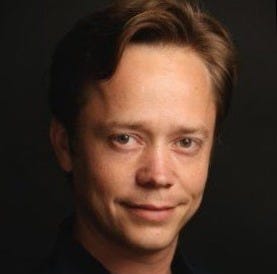
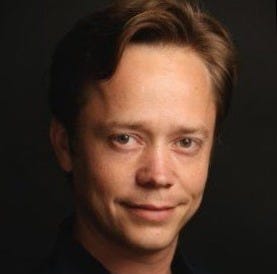
Brock Pierce
s
The first thread runs across two decades and four relationships. I am taking them in order because the order matters. Each one matters on its own. Together, they add up to a pattern.
In June 2007, Bannon became chief executive of Internet Gaming Entertainment, replacing Brock Pierce as CEO. The succession itself was straightforward enough. The Goldman-backed Hong Kong gold-farming company needed a professional executive, and Bannon was available. What was also on the record, for anyone who bothered to look, was that Pierce had been named as a defendant in a 2000 civil lawsuit filed in Los Angeles Superior Court. The suit alleged sexual abuse of minors connected to the Digital Entertainment Network, an early web-video company Pierce had helped build in the late 1990s. The allegations against Pierce were later withdrawn. He was never criminally charged.
Sidebar — Civil Suit vs. Criminal Charges A civil lawsuit is a case brought by a private person asking for money or some other remedy. A criminal charge is brought by a prosecutor and can lead to jail time. Being named in a civil suit does not mean the person did what was alleged. The case can be withdrawn, dismissed, or settled without a finding of guilt. Saying someone was never criminally charged means prosecutors either did not think they could prove the case or chose not to bring one.
Sidebar — DEN and the Collins-Rector Guilty Plea The Digital Entertainment Network was a Los Angeles company founded in 1996 to produce video for the early web. Marc Collins-Rector, a DEN co-founder, pleaded guilty in 2004 to federal charges of sex-trafficking of minors after fleeing to Europe, being caught by Interpol in Marbella, Spain, and extradited. Brock Pierce, who had been a teenage DEN executive, was named in the 2000 civil suit but was never criminally charged. Bannon’s link to Pierce is not personal friendship on the public record. It is that he replaced him as CEO of IGE in June 2007.
Milo Yiannopoulos
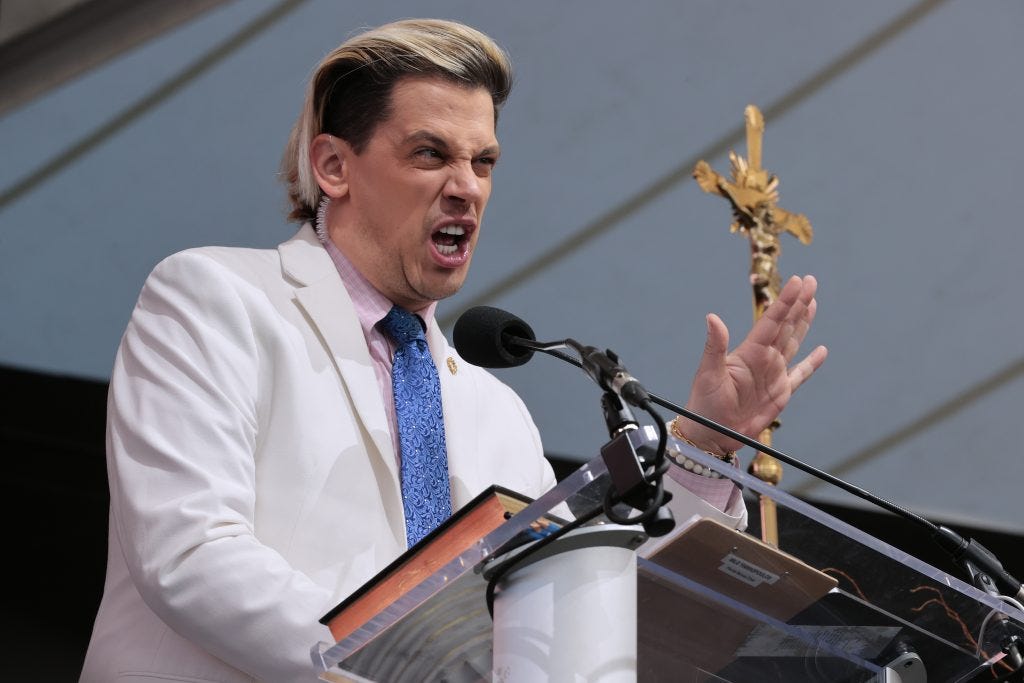
In 2014, Bannon hired Milo Yiannopoulos as a technology editor at Breitbart News. Yiannopoulos built an audience as one of the most visible voices of what was then being called the alt-right, using Breitbart as his platform and Bannon’s institution as the amplifier. In February 2017, recordings surfaced of a podcast appearance in which Yiannopoulos made comments that appeared to minimize the seriousness of sexual abuse of minors by adults, including remarks some commentators described as defending relationships between adult men and adolescent boys. He resigned from Breitbart on February 21, 2017, while Bannon was serving in the Trump White House.
Roy Moore
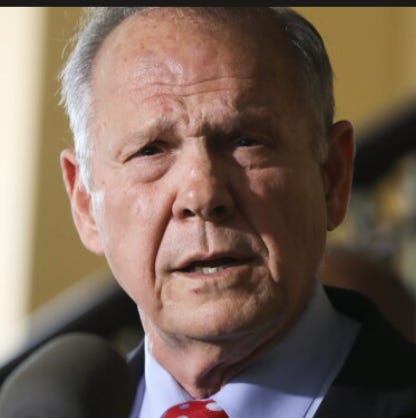
On November 9, 2017, The Washington Post published an investigation in which a woman said Roy Moore had initiated sexual contact with her when she was fourteen and he was thirty-two. The story named four women. More accusers came forward in the weeks after. Moore denied the allegations. On December 5, twenty-six days after the story’s publication, Bannon campaigned with him at an Alabama rally and did not withdraw his endorsement. Moore lost the special Senate election one week later.
Bannon and Epstein
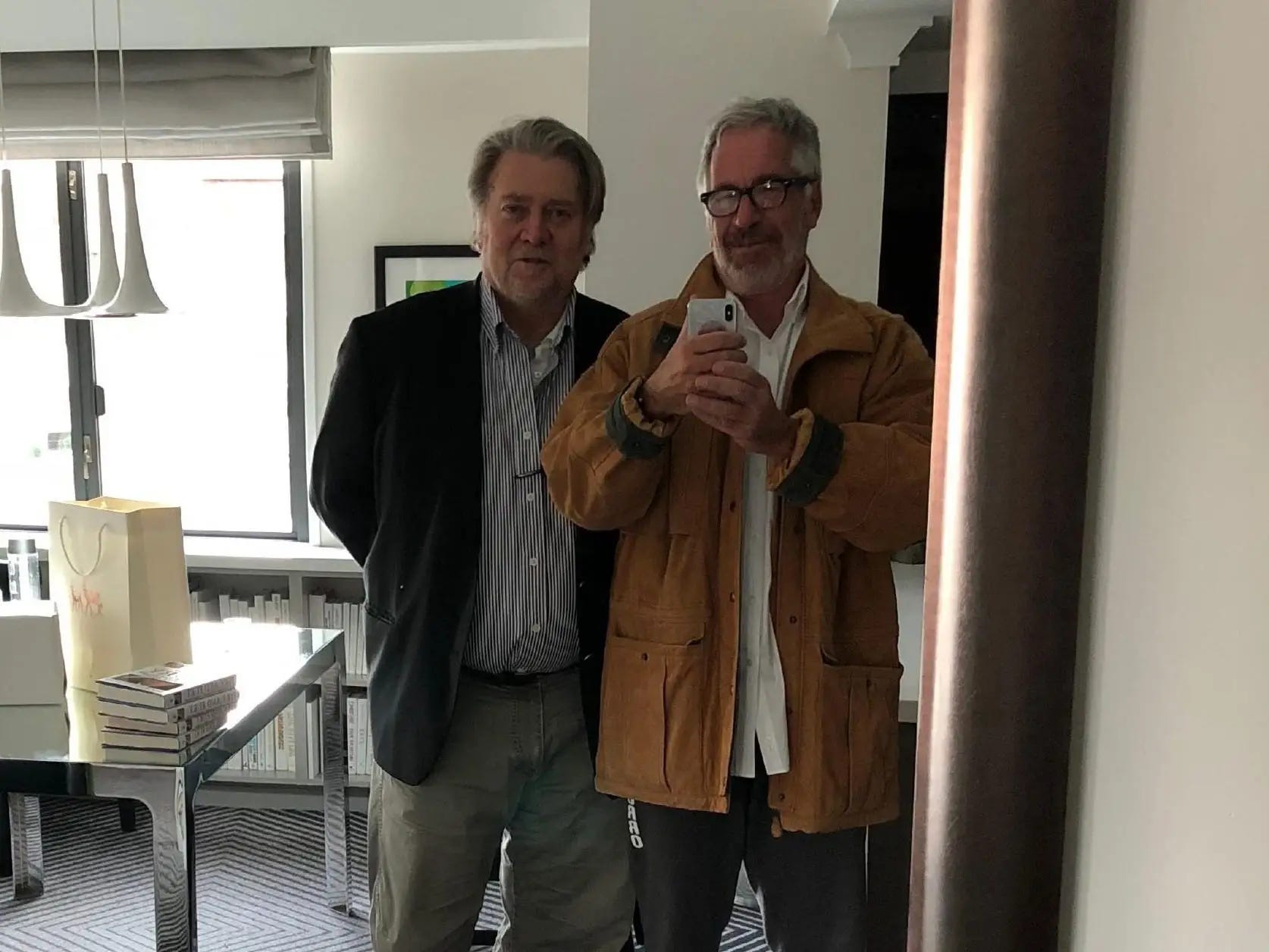
The fourth entry in this thread is the most recent one, and the one we know the least about. According to the Department of Justice‘s January 30, 2026 release of Epstein investigation files, the documentary record shows two contacts between Bannon and Jeffrey Epstein: a roughly two-hour interview, conducted around 2019, in which Epstein appears to have been the subject of journalistic or research questioning, and a June 4, 2019 message exchange about George Nader.
But newer reporting pushes this further. The released messages do more than show Bannon leaning on Epstein for introductions and backup. They point to a shared long-running push for a hard-line Brexit, with Theresa May seen as the obstacle in the way. Byline reporting based on the released messages says Bannon told Epstein in July 2018 that ‘we are overthrowing May right now,’ and described himself as being in London with Boris Johnson during that same period. The Brexit angle matters here, but not because Britain is the whole point. It matters because the same batch of Epstein records shows him writing to Peter Thiel just days after the 2016 referendum to say Brexit was ‘just the beginning’ of a ‘return to tribalism, counter to globalization, amazing new alliances.’ That is not just a throwaway line about one vote in one country. It reads like a mission statement for the bigger world Bannon was trying to build: nationalist blocs, broken institutions, and cross-border alliances among hard-right elites who saw democracy as something to beat, not protect. Put plainly, the Thiel email gives the Brexit material a larger frame. It shows that Bannon’s ambition was not confined to American elections or even to one allied country. He was thinking globally.
That matters for this piece because it sharpens what the Epstein contact was about. This was not just social overlap and it was not just one creepy name in one phone. The record now points to political collaboration, or at minimum political coordination, around a larger anti-democratic project in Europe. If that is how these men were talking and working overseas, it becomes much harder to pretend that the wealthy in the United States sat outside the same worldview.
Sidebar — George Nader’s Convictions George Nader is a Lebanese-American political operative who served as an adviser in Middle East policy circles. He was convicted in 2003 in the Czech Republic of child-pornography offenses. In 2020, he was convicted in U.S. federal court on charges including transporting a minor across state lines for sexual abuse and was sentenced to ten years in federal prison. The June 4, 2019 Bannon-Epstein exchange about Nader is documented in the DOJ’s February 2, 2026 file release. What exactly was said, and why, is still only partly public.
Investigative note The Epstein files, the Bannon texts, and Epstein’s emails to Peter Thiel show a shared project: break down democratic guardrails, push hard-right “tribal” politics, and build “amazing new alliances” across borders. The paperwork we have now stops one layer short of the full picture. We can see the same billionaires and strategists operating inside the dark-money, post–Citizens United universe — super PACs, 501(c)(4)s, and shell groups built for secrecy — but we cannot yet draw a straight, documented line from this circle into the original Citizens United legal machine. That missing line is not an argument for innocence. It is an assignment for anyone still digging.
Bannon was in direct contact with Epstein during the same period both men were involved in political work that aimed at breaking down democratic institutions in Europe. The contacts are real, the politics are real, and they belong in this story.
Thread Two: Far-Right Associations
In this second thread, I’m looking at ties to people and groups on the American and European far right
Sebastian Gorka
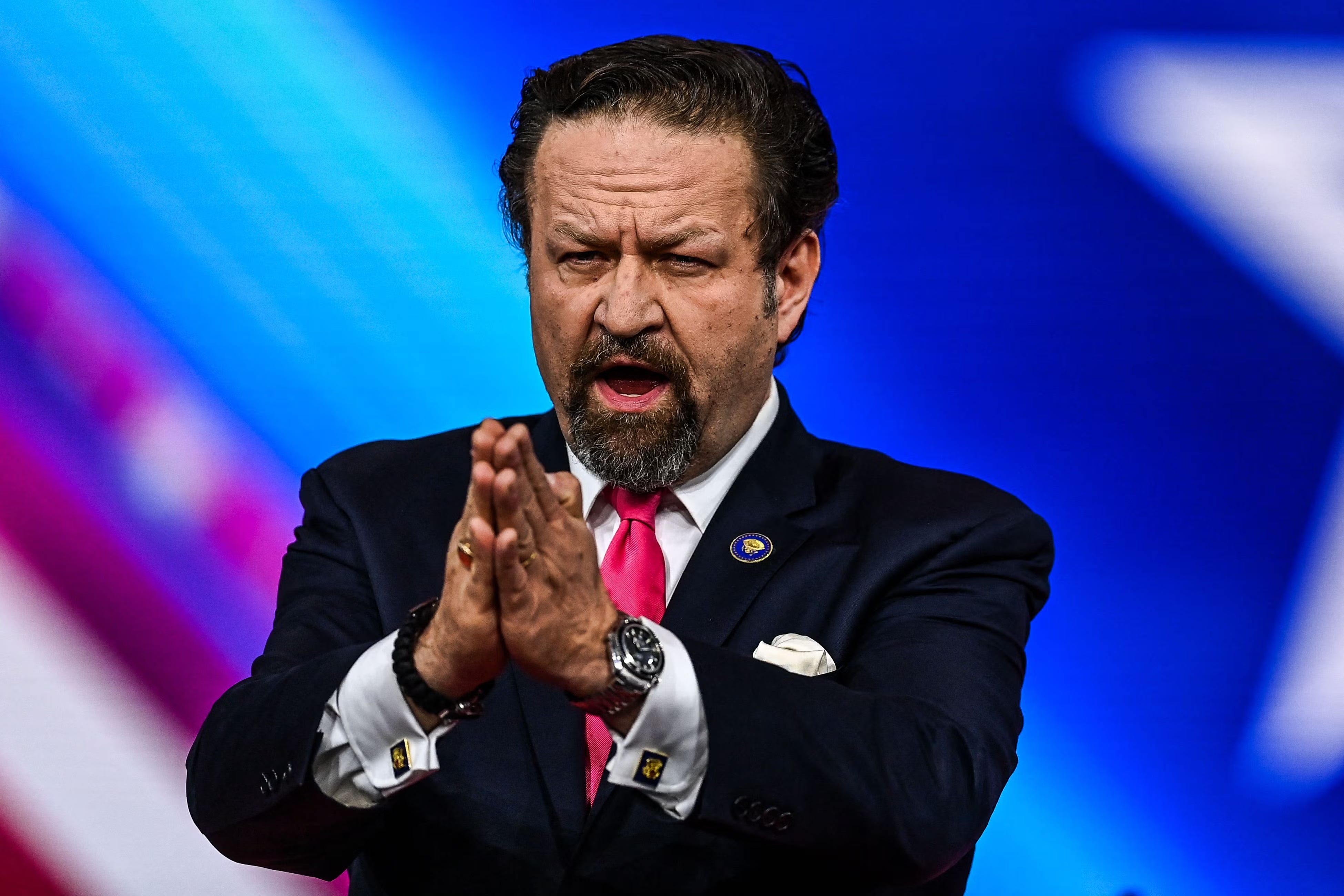
.Sebastian Gorka was hired by Bannon at Breitbart News in 2014 as a national security editor, then joined the White House in January 2017 as a deputy assistant to the president, with Bannon’s support. In April 2017, Tablet published the central public account of Gorka’s family connection to the Vitézi Rend, a Hungarian organization. The U.S. State Department has listed the Vitézi Rend as having operated under the direction of the Nazi government of Germany during the Second World War. Tablet presented evidence tying Gorka’s family to the organization and raised questions about whether Gorka himself held membership. Gorka has consistently denied membership. What matters here is the State Department listing, Tablet‘s reporting, and Gorka’s denial.
Sidebar — Vitézi Rend and the U.S. State Department The Vitézi Rend, or Order of Vitéz, is a Hungarian honorific organization founded in 1920. The U.S. State Department has listed it as an organization that operated under the direction of the Nazi government of Germany during the World War II period. Under U.S. immigration law, membership in such an organization can create grounds for inadmissibility. That is a government classification, not a criminal conviction. Sebastian Gorka denies being a member.
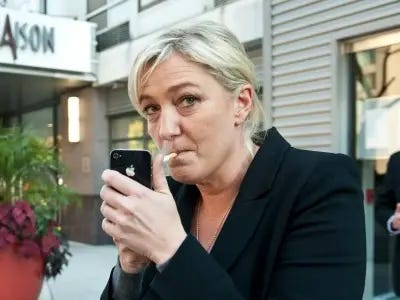
On March 10, 2018, Bannon delivered a speech to the congress of the Front National, Marine Le Pen’s political party, in Lille, France. BBC coverage quoted him telling the delegates: “Let them call you racist. Let them call you xenophobes. Let them call you nativist. Wear it as a badge of honor.” He gave that speech roughly five months after leaving the White House, as part of what he described as a global nationalist movement.
Sidebar — Front National / Rassemblement National The Front National, or National Front, was a French far-right party founded by Jean-Marie Le Pen in 1972. Marine Le Pen took over in 2011 and rebranded it as the Rassemblement National in 2018. The party is associated with nationalist, anti-immigration, and Eurosceptic positions. French and European institutions have documented the party’s historical ties to antisemitism and Holocaust minimization, especially under Jean-Marie Le Pen, though Marine Le Pen has tried to distance it from that past.
The Gorka thread and the Lille speech do not mean Bannon and the European far right are the same thing. They do show where he chose to work, who he chose to hire, and which rooms he kept walking into. For a man who is always sold as some misunderstood populist, he sure spends a lot of time in rooms where you need a lot of disclaimers.
Thread Three: Russia-Adjacent Associations
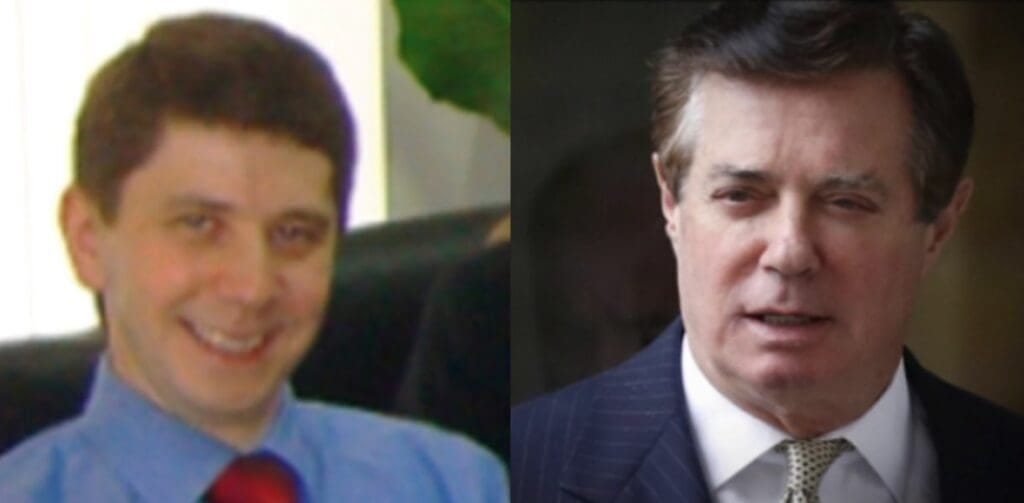
Konstantin Kilimnik and Paul Manafort
The third thread comes from the Mueller investigation, the Senate Intelligence Committee, and the U.S. Treasury. There is no documented direct contact between Steve Bannon and Konstantin Kilimnik. Kilimnik’s route into Trump campaign data ran through Paul Manafort. Bannon did not become campaign CEO until after Manafort resigned in August 2016.
Sidebar — Mueller Report and SSCI Vol. V The Mueller Report is the two-volume report produced by Special Counsel Robert Mueller III and released in 2019. Volume I covers Russian interference in the 2016 election; Volume II addresses potential obstruction of justice. The Senate Select Committee on Intelligence produced a five-volume bipartisan report on Russian active measures; Volume V, released in August 2020, is the fullest public account of campaign-level Russian influence efforts. Both are major government investigations built on subpoena-backed documents and testimony.
One Russia-adjacent piece of the Bannon story sits inside Cambridge Analytica itself. The Senate Select Committee on Intelligence concluded that Cambridge Analytica had a degree of intersection with and closeness to Russia and, specifically, to Russian intelligence services. Christopher Wylie testified that Bannon approved Cambridge Analytica focus groups about Vladimir Putin in 2014. It tells me that one of Bannon’s core political projects was operating in a space where Russia kept appearing, and not by accident.
This is also where the missing-data problem shows up. After the scandal broke, Britain’s Information Commissioner’s Office moved to secure Cambridge Analytica and SCL records. At the same time, U.S. regulators kept trying to answer a simple question that never got a simple answer: where did the data go, who still had it, and what survived the corporate collapse. The FTC’s effort to compel Bannon’s testimony in the Cambridge Analytica scandal was part of that larger search for the Facebook data and the accountability chain around it.
This was about a “consent decree” and a “civil investigative demand.” The government was trying to figure out whether the thing had actually died or had just changed its name on the paperwork.
Aleksandr Kogan
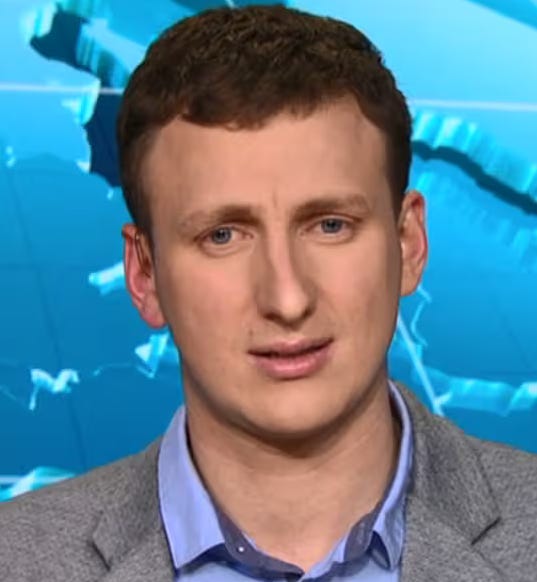
Another part of the same story includes the people around Cambridge Analytica. Public reporting tied Aleksandr Kogan to St. Petersburg State University and to Russian government grants, while separate reporting described interest from Lukoil in Cambridge Analytica-style voter and consumer profiling techniques. When you pull on the Cambridge Analytica thread, Russian connections keep showing up.
What is documented more directly is that Konstantin Kilimnik was designated by U.S. Treasury on April 15, 2021 as a Russian intelligence officer who provided Trump campaign internal polling data and campaign strategy to Russian intelligence services through Paul Manafort. The Treasury designation states that the data transfer ran through Manafort, not through Bannon.
Sidebar — Konstantin Kilimnik and the Treasury Designation Konstantin Kilimnik is a Ukrainian-Russian political operative who worked for Paul Manafort for years, mainly on Ukrainian political campaigns. On April 15, 2021, the U.S. Treasury designated him under the Global Magnitsky Act as a Russian intelligence officer who “provided the Trump Campaign’s internal polling data and information on campaign strategy to the Russian Intelligence Services.” That is an executive-branch sanctions action, not a criminal conviction, and Kilimnik has not been extradited to the United States to face trial.
Eric Prince
Kirill Dmitriev
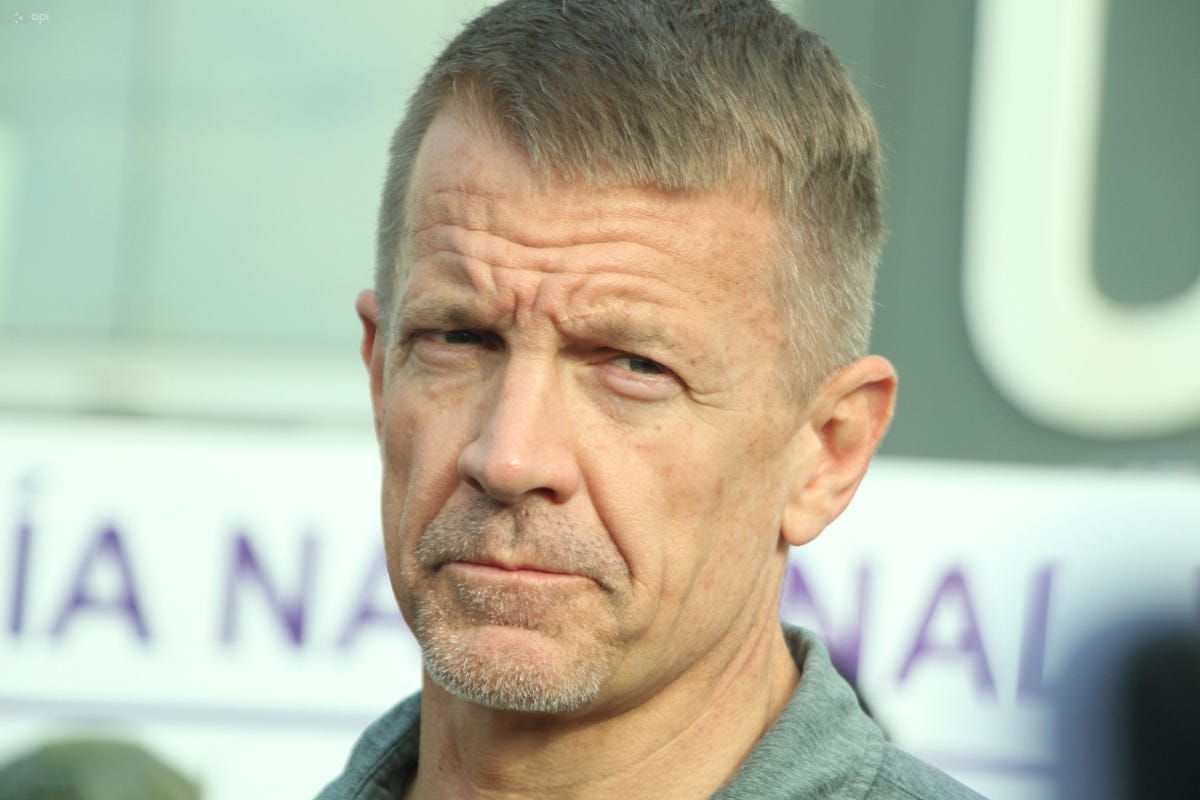
On January 11, 2017, Erik Prince met in the Seychelles with Kirill Dmitriev, the head of the Russian Direct Investment Fund, Russia’s sovereign wealth vehicle. According to SSCI Vol. V, Prince later briefed Bannon at Bannon’s home. Bannon told Mueller’s investigators that he did not recall the briefing. Prince’s own claim that the Seychelles meeting was a chance encounter was contradicted by other testimony reviewed by the committee. There is another reason Prince belongs in this thread: public accounts of his background say he was once invited to train and drink with Alpha Group, an elite special-forces unit of Russia’s FSB. Prince also sat on the advisory board of We Build the Wall, which makes him one of the few men in this story who functions as a literal bridge between the Russia-adjacent and fraud-adjacent threads.
Sidebar — Russian Direct Investment Fund (RDIF) The Russian Direct Investment Fund is Russia’s sovereign wealth fund, created in 2011 to attract foreign co-investment into Russian companies and infrastructure projects. Kirill Dmitriev has led it since its founding. RDIF and Dmitriev have been sanctioned by the United States under frameworks tied to Russia’s aggression in Ukraine. The Seychelles meeting between Dmitriev and Erik Prince was documented in the Mueller Report and examined in detail by SSCI.
On December 29, 2016, three weeks before the inauguration, incoming National Security Adviser Michael Flynn called Russian Ambassador Sergey Kislyak at Mar-a-Lago to discuss the Obama administration’s sanctions on Russia announced that same day. The call became one of the central episodes in the Mueller investigation. According to the Mueller Report, KT McFarland told investigators that she discussed the sanctions issue with Bannon on December 29.
Sidebar — The Logan Act The Logan Act, 18 U.S.C. § 953, is a 1799 federal statute barring unauthorized private citizens from conducting diplomacy with foreign governments on matters in dispute with the United States. It has never produced a successful federal prosecution. It mattered here as context: the Flynn-Kislyak calls raised the question, even if DOJ ultimately pursued Flynn for false statements rather than a Logan Act violation.
The fourth entry in this thread concerns Roger Stone. On January 25, 2019, DOJ indicted Stone on charges of obstruction, witness tampering, and false statements. The indictment referred to a “high-ranking Trump campaign official” who had been in contact with Stone about WikiLeaks releases during the 2016 campaign. Subsequent reporting identified Bannon as that official. Stone was convicted on all seven counts in November 2019 and pardoned by Trump in December 2020.
Sidebar — The Roger Stone Indictment Federal indictments often refer to uncharged people by role rather than by name: “Person 1,” “a senior official,” “a high-ranking campaign official.” When the Stone indictment used that phrase, it was alleging facts about communications, not charging that unnamed official with a crime. Subsequent reporting identified Steve Bannon as the person referenced. He was not charged in the Stone case.
Thread Four: Fraud-Adjacent Associations
The fourth thread has the biggest paper trail of the four. Most of these facts already showed up in Bannon I. Here they sit inside the bigger pattern this story is building.
Andrew Badolato
The Florida years, the eight-year run of pink-sheet-company board seats Bannon shared with Andrew Badolato from 2003 to 2011, established an operating rhythm that held all the way through We Build the Wall.
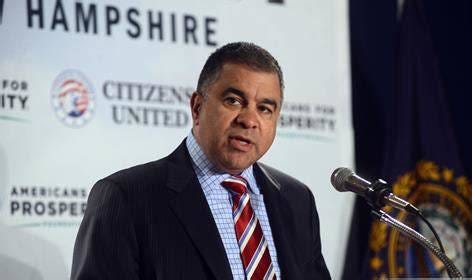
There is one more bridge here to the larger series argument, and it matters. Long before Bannon was simply using the post-Citizens United system, he was working inside Citizens United’s own production shop. David Bossie’s group “turned to Bannon to write, direct, and produce political films” through Citizens United Productions, and tax filings later showed Citizens United Foundation paying Bannon-linked firms hundreds of thousands of dollars in fundraising and film-consulting fees. The same reporting also shows Mercer money flowing into Citizens United Foundation and, in 2015, Bannon’s Government Accountability Institute giving $125,000 back to Citizens United Foundation. That is not the whole map, but it is a direct line between Bannon, the Mercer network, and the Citizens United world years before the current dark-money system got this big.
Sidebar — Bannon and Citizens United’s Film Machine Before most people knew Bannon as a White House strategist, he was making political documentaries for David Bossie’s Citizens United operation. Reporting in the Chicago Tribune says Citizens United Productions hired Bannon to write, direct, and produce films including Generation Zero, The Hope & The Change, and Occupy Unmasked, while Citizens United Foundation later paid Bannon-linked firms for fundraising and film consulting. The same reporting describes Mercer Foundation money flowing into Citizens United Foundation and Bannon’s Government Accountability Institute sending money back into that same orbit. Bannon was not just a later beneficiary of the post-Citizens United system. He had already been paid inside the Citizens United ecosystem itself.
Steve Bannon and Guo Wengui
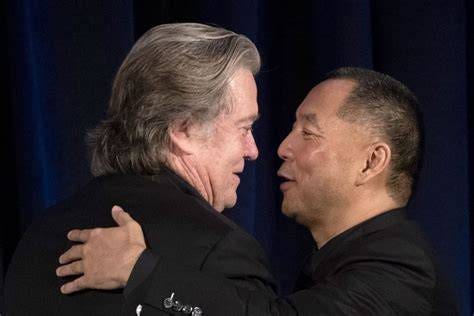
The Guo Wengui relationship shows how long that kind of adjacency could last. Guo, also known as Miles Guo, fled China in 2017 and became a high-profile figure in anti-Chinese Communist Party media, including platforms he built with Bannon. In 2017, he loaned Bannon $150,000. In 2018, he paid him $1 million in consulting fees, according to SDNY filings. In August 2020, Bannon was arrested aboard Guo’s yacht, the Lady May, in waters off Connecticut. On July 16, 2024, a federal jury in the Southern District of New York convicted Guo of orchestrating a fraud conspiracy prosecutors valued at more than a billion dollars. Bannon was investigated but not charged in that case.
Brian Kolfage
Timothy Shea
We Build the Wall was launched in late 2018 as a 501(c)(4) nonprofit and raised about $25 million by promising donors that every dollar would go directly to private border-wall construction and that the organizers would take no salary or fee. On August 20, 2020, SDNY indicted Bannon, Badolato, Brian Kolfage, and Timothy Shea, alleging that more than $1 million had been diverted from the campaign’s proceeds through shell entities for the personal benefit of the organizers.
Sidebar — 501(c)(4) “Social Welfare” Nonprofits A 501(c)(4) is a tax-exempt “social welfare” organization under the Internal Revenue Code. Unlike a 501(c)(3), it can engage in lobbying and some political activity, so long as that is not its primary purpose. Contributions are not tax-deductible, but the organization pays no federal income tax. Crucially, it is not required to disclose its donors publicly, which makes it an attractive vehicle for fundraising with no transparency.
Trump pardoned Bannon on January 19, 2021, his final full day in office, eliminating the federal case against him. Kolfage, Badolato, and Shea were not pardoned. Kolfage and Badolato pleaded guilty in April 2022. Shea was convicted by jury after a mistrial. They were sentenced to 51, 36, and 63 months respectively.
Sidebar — Federal Pardon vs. State Charges A presidential pardon applies only to federal offenses. It does not erase potential state liability arising from the same underlying conduct. Trump’s January 19, 2021 pardon wiped out the federal SDNY case against Bannon, but it could not block state prosecutors from bringing charges under New York law. That is why Manhattan District Attorney Alvin Bragg could recharge him later on the same facts.
That is what happened. Manhattan District Attorney Alvin Bragg recharged Bannon under New York law after the pardon. On February 11, 2025, Bannon pleaded guilty to one state count and received a three-year conditional discharge. No jail. No restitution order. His co-defendants, who had no pardon to rescue them, had already served or were serving federal prison time.
Sidebar — Conditional Discharge A conditional discharge is a sentence in which the court enters a conviction but imposes no incarceration so long as the defendant complies with specified conditions, often simply avoiding new lawbreaking for a set period. In New York, a three-year conditional discharge means the conviction stands on the defendant’s record even though no jail term is imposed. It is not an acquittal and not a dismissal.
This comparison doesn’t need much help from me: Bannon pleaded guilty to one state count and got no prison time. The three men charged beside him got 36, 51, and 63 months in federal prison.
The Curshen prosecution was the 2008 federal fraud case over a pump-and-dump scheme involving IBOT stock. The scheme worked by artificially driving up the stock price and then cashing out before it collapsed. DOJ filings in that case described Badolato as a co-conspirator and the scheme’s ‘primary beneficiary.’ He was never charged in that case. David Otto, the Seattle attorney who shared multiple boards with Bannon and Badolato, later settled SEC civil charges in a separate pump-and-dump matter involving MitoPharm, paid more than $200,000, and accepted a five-year penny-stock bar. The Florida chapter did not produce a Bannon charge. The pump-and-dump created relationships that lasted.
The Pattern and the Record
Across all four threads, the same thing happens over and over. Bannon is right next to the action. He’s there at the hiring. There at the launch. There at the rally. There when the thing gets built. Close enough to matter, but usually not the one whose name ends up on the conviction, sanctions list, or guilty verdict.
Collins-Rector pleaded guilty. Pierce was named and never charged. Bannon replaced Pierce at IGE and was not charged either. Yiannopoulos resigned under fire; Bannon was his editor. Moore lost the election; Bannon campaigned with him. Gorka carried the Vitézi Rend controversy; Bannon hired him. Kilimnik funneled polling data toward Russian intelligence through Manafort; Bannon ran the campaign after Manafort. Stone was convicted; Bannon was the unnamed “high-ranking campaign official” in his indictment. Kolfage, Badolato, and Shea went to prison; Bannon received a conditional discharge.
That’s the point. Over twenty years, across four different areas, Bannon kept choosing to hire, travel with, campaign beside, and do business with men whose legal trouble ended up serious, specific, and public.
The four threads are not tied together by one magic theory. They are tied together by one person and one repeated fact: the men who worked closest to Bannon, or whose institutions he most eagerly backed, kept ending up in courtrooms, investigative files, or on sanctions lists.
This is the same operator pattern I laid out in Bannon I, just tested against the company he kept. The man at the center keeps showing up close to the machinery, close to the money, close to the damage, and then half a step back from the paperwork that sends other people to prison. That’s not a legal conclusion. It’s a description of his career.
I can’t tell you whether that pattern comes from strategy, not caring very much, or just a lifelong taste for useful men with bad histories. But I can tell you this: Bannon hired these men, traveled with these groups, and kept these ties. The men were convicted. The groups were sanctioned or discredited. Bannon moved on.
Piece 3 follows the money that made all of this consequential at scale: the Mercer family, Cambridge Analytica, and the infrastructure that turned an operator into a political force.



Comments
Nothing yet. Say the first thing.
Sign in to join the conversation.