
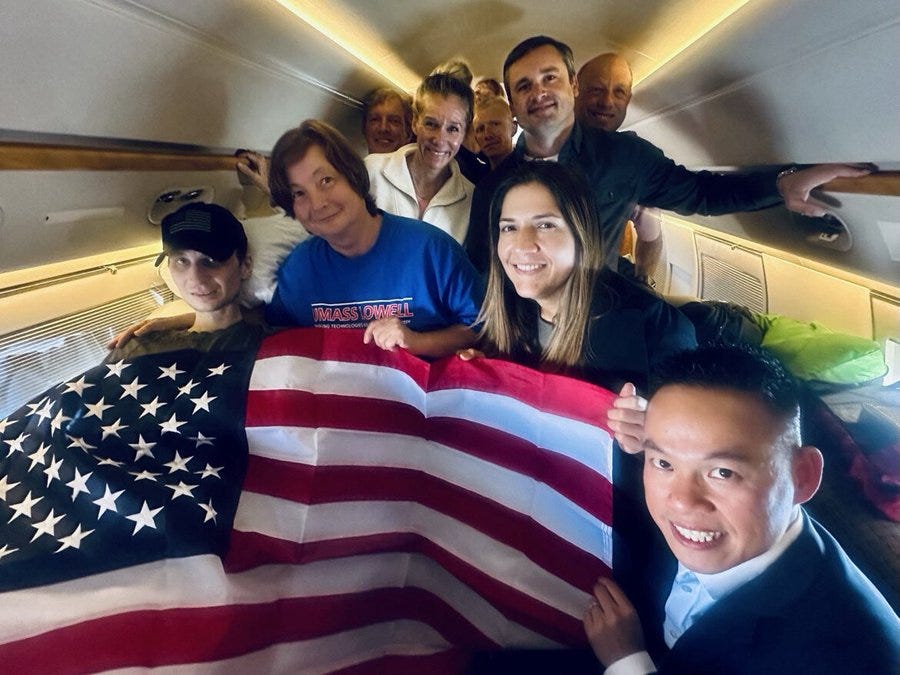
Let me start with the most important thing.
I am genuinely happy that Robert Gilman is free. Any prisoner walking out of a Russian prison alive is something to celebrate, because many don’t, as I will explain. Any family getting their son, father, brother, husband, and in some cases, wife or daughter back after years inside that system deserves their moment.
A system where, at best, your life expectancy is, I’ll hazard a guess, probably less than five years.
Frankly, I don’t care which administration secured his release, I didn’t much care during my own exchange whether it was Labour, Conservative or anyone else involved and nor should anybody else. I would hope that any human being with a rational mind and a decent set of ethics would do everything within their power to bring one of their own people home.
And I certainly didn’t care which politician got to put a tick next to their name for helping make my exchange happen. When you’re sitting in a Russian prison wondering whether you’re going to get out alive, domestic political point-scoring is about as irrelevant as it gets.
The important thing is that he is home.
That should have been the story.
And for Robert Gilman and his family, it still is.
But there is something about the way Robert Gilman’s release has been presented that has made me deeply uncomfortable, well actually, there are several things.
Perhaps it bothers me more because I’ve been on the other side of that aircraft door. I’ve also sat on that same journey home from Russian captivity, albeit to London.
The main difference is that I’ve had nearly four years since then to process what happened to me, to understand the system I survived, and to reach my own conclusions about Russia and what it is doing today.
Robert Gilman had barely begun that journey.
He had spent more than four years in Russian detention and, by the time of his release, his condition had deteriorated dramatically to a point that just five days before he was freed, Reuters reported that Gilman’s sister and hostage advocacy groups feared he could be close to death.
He had reportedly slipped into a stupor in June, was largely unresponsive and was being fed through a tube. His family and advocates also alleged that he had been tortured and injected with mind-altering drugs while imprisoned in Russia.
So why, days later, was Rubio’s State Department thanking Russia on social media? I’ll come back to that shortly.
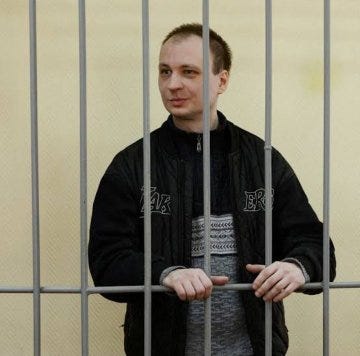
However, Associated Press also reported that Gilman had been in what his advocates described as a “dissociative stupor” for 47 days, allegedly as a result of abuse suffered in prison. He had been transferred to a civilian hospital, where he was being fed through a tube and, according to his advocates, handcuffed to the bed, while his mother travelled to Russia trying to see him, but she was denied access.
After his release, AP reported that Russian hospital records had described his condition as “dire and life-threatening.”
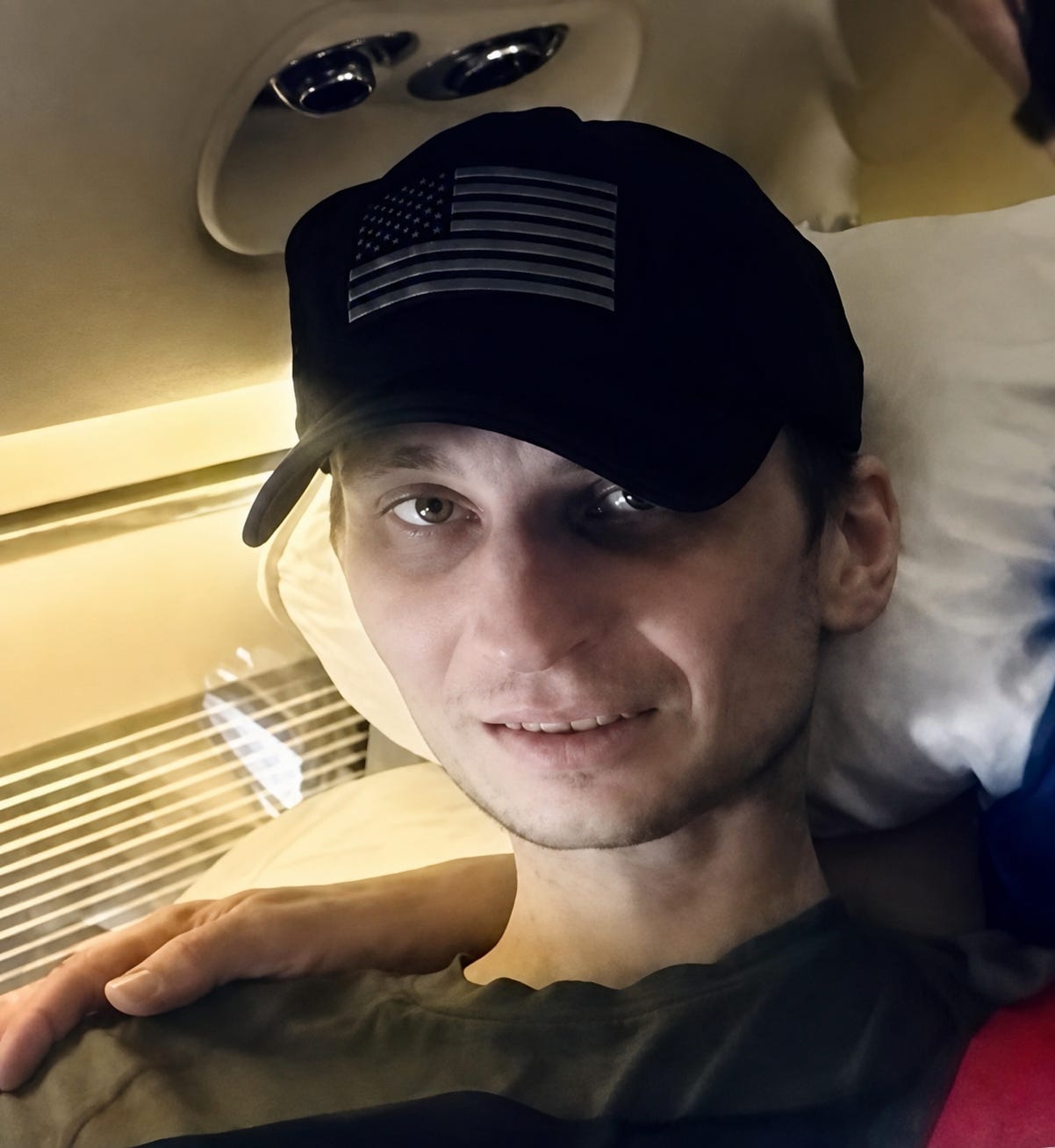
I mean, look at the photographs of him.
Gaunt, ill, a man who visibly looks like he has spent years inside the Russian prison system, and I know a little something about what that looks like.
Within hours of his release, Robert Gilman’s face was everywhere, photographs, social media, and statements from the Trump administration. While Congratulations & political victory laps were only telling half the truth.
Steve Witkoff also welcomed him home and publicly thanked Vladimir Putin for granting the pardon and for his “personal engagement” in securing Gilman’s release. Donald Trump also thanked Russia for releasing him without demanding a prisoner exchange. Marco Rubio’s State Department thanked Russia for working with Witkoff and the administration to bring him home.
Just think about the sequence of events here.
Five days earlier, his family feared he might die in Russian captivity, now the government bringing him home was publicly thanking Russia, and I found myself looking at those photographs and thinking:
Would I have wanted that?
I don’t think I would.

Secretary Marco Rubio@SecRubio
Today, after more than four years of detention in Russia, Robert Gilman is on his way home to be reunited with his family. Mr. Gilman joins over 100 Americans whom President Trump has freed during his second term in office. We thank Russia for working with Special Envoy Steve

4:14 PM · Aug 11, 2026 · 2.22M Views
1.46K Replies · 4.89K Reposts · 30.5K Likes
When you come out of captivity, you aren’t walking out of a hotel. You don’t simply cross a border, have a shower, eat something decent and suddenly become the person you were before somebody locked you away.
I came out of Russian captivity after being tortured, starved, beaten, electrocuted, stabbed, psychologically abused and sentenced to death.
I had spent months inside a system designed to break people, and even if I wanted to believe there was nothing wrong with me, the reality was that I had changed.
When I was exchanged, I was physically and mentally exhausted. Your head isn’t necessarily processing the enormous geopolitical significance of what has just happened; you’re processing freedom, and with that comes something I can only describe as every one of your senses suddenly working in overdrive, all at the same time.
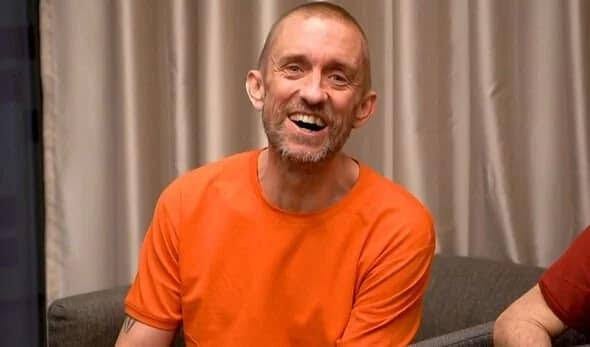
After months of captivity, it is almost impossible to process everything at once, and it’s overwhelming.
You’ve been shut off from information for months, sometimes years, drip-fed only Russian propaganda, so what’s actually happening in the outside world isn’t exactly a subject you’re going to specialise in on Mastermind or some game show.
You’re thinking about much simpler things.
Food.
Family.
Safety.
Sleep.
The strange realisation that the person standing next to you isn’t going to hit you, or steal something from you.
Even the most basic choices can feel unfamiliar, while I remember finding it highly amusing that I could simply get up and go to the toilet without asking for anyone’s permission, and actually do it on my own at 35,000 feet aboard a Saudi Air Force One aircraft.
My first solo crap in over 1 year, so completely mundane, suddenly felt like an extraordinary privilege.
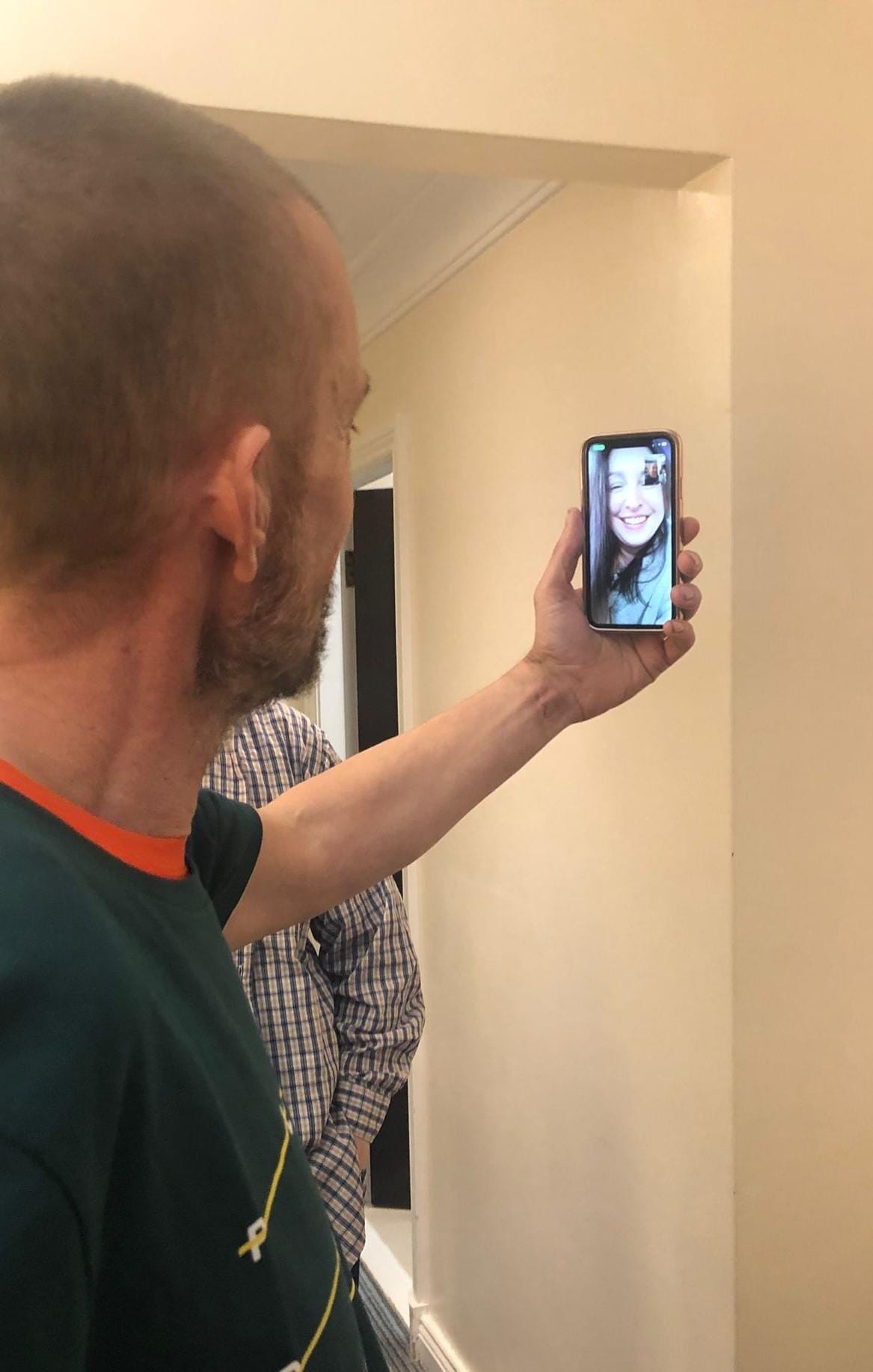
That is what coming home from captivity actually feels like, so when I look at Robert Gilman, visibly gaunt and unwell, surrounded by American officials and immediately appearing across political social media, I don’t see a successful communications opportunity.
I see a former prisoner.
And I wonder whether anybody stopped to ask what he wanted?
Would I have wanted politicians in the UK, during my release, thanking the very man and the very nation that wrongly accused me, stole my home and killed my friends?
Absolutely fucking not.
Maybe he was completely comfortable with it, I genuinely hope he was, but I strongly doubt he was even in the right frame of mind to make that decision, and if he wasn’t happy with it, then I know exactly how intrusive that moment could feel.
Because your release shouldn’t automatically make your face government property, and your suffering shouldn’t become political currency before you’ve even had time to understand what has happened to you.
It is the language and the thanking that gets me, genuinely making me feel physically sick.
There is something grotesque about it all.
It’s like, thanking Hitler for the memories.
Comments
Nothing yet. Say the first thing.
Sign in to join the conversation.