
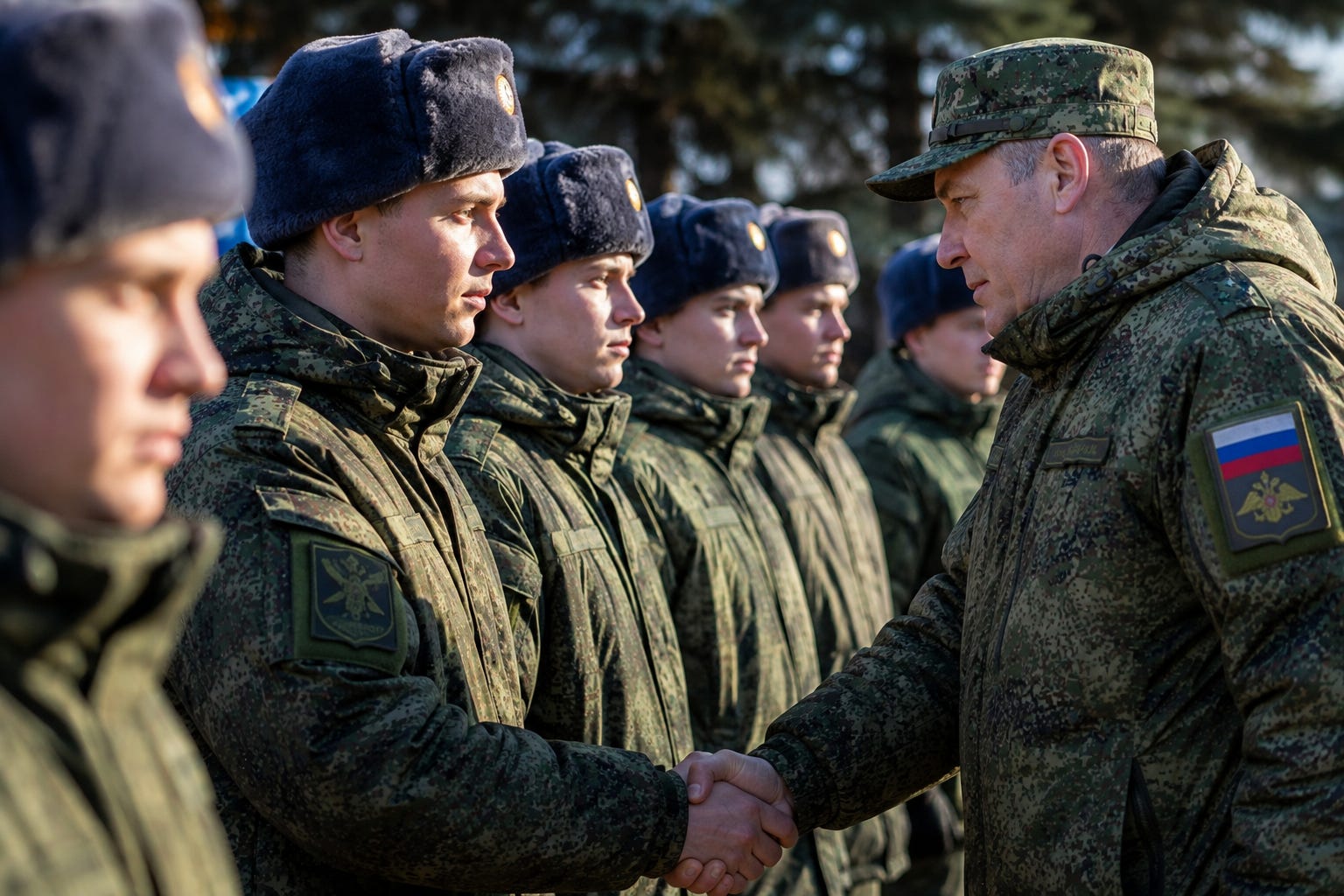
The only way to stop Putin is to make this war so physically, militarily and economically draining that he can no longer continue pursuing his genocidal, imperialist ambitions.
In other words, Russia has to be beaten in Ukraine.
To anybody who has lived through this war in Ukraine, that has been obvious since day one.
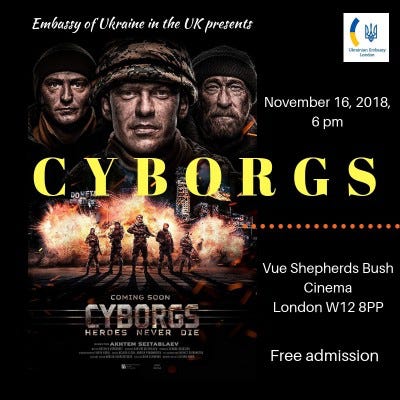
There is an important part of the history that is often forgotten, and that is before the full-scale invasion of February 2022, Ukraine had been steadily improving its position in the Donbas. Ukrainian forces were regaining ground around Donetsk, including areas close to Donetsk Airport, where the legendary Cyborgs had held out for months against Russian-backed proxy forces between the 6 May 2014 & 22 January 2015 — approximately 242 days, while further south, Russian-controlled separatist formations had also been pushed back from Mariupol.
By the time Russia launched its full-scale invasion in February 2022, the conversation inside the Ukrainian military had changed considerably. We were no longer simply talking about how to hold the line in the Donbas. At the tactical level, discussions had begun about what an eventual operation to retake Donetsk might actually look like.
So prior to Russia invading, Ukraine wasn’t collapsing, it was actually becoming more capable, more experienced and increasingly difficult for Russia to control through proxies alone. Moscow’s war in the Donbas had failed to deliver the political outcome the Kremlin wanted, while Ukraine’s military was becoming considerably stronger.
Even now, some 12 years after Russia invaded East Ukraine, it’s still unable to capture Donetsk Oblast and was one of the crucial reasons Putin escalated from a covert and proxy war into the full-scale invasion.
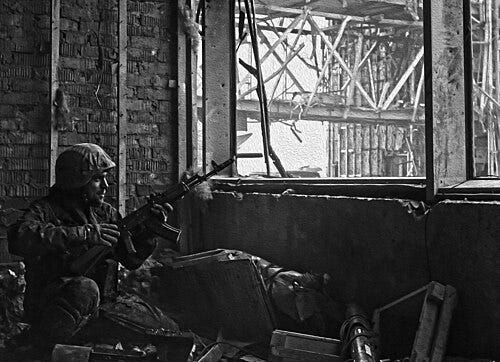
If you don’t know the true story of the Cyborgs of Donetsk Airport, I’ll add some links below this article. Their defence became one of the defining stories of the early war, legendary, and I was fortunate enough that one of those men later became my Marine platoon commander.
Knowing what he and the others had endured at Donetsk Airport, and then serving under him myself, was inspiring in its own right, and it is worth remembering today because the fundamental lesson has not changed.
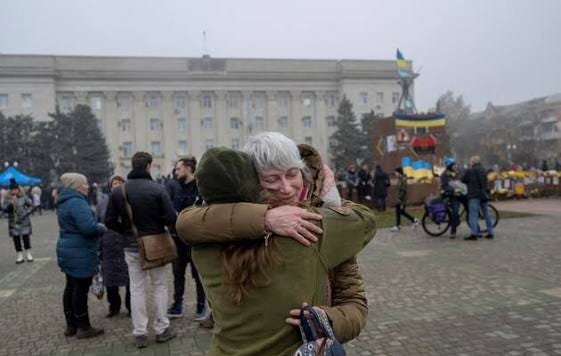
Putin does not stop when he is accommodated, he stops when Russia is physically prevented from going any further.
While there is a dangerous tendency to look at Russia’s ability to keep feeding men into Ukraine and conclude that Vladimir Putin’s war is somehow going well, and of course, he says exactly that week in and week out.
clearly, the opposite is true.
You do not need to recruit foreign fighters, bring North Korean regular army troops into your war, import millions of rounds of ammunition and ballistic missiles, and then prepare to mobilise hundreds of thousands more Russians if your lightning-fast, three-day “special military operation” is going swimmingly.
It’s looking increasingly like Putin is having to reach deeper and deeper into the available manpower pool simply to sustain the war he started more than four years ago, and now, into a 5th year of full-scale war, Putin appears to be preparing the political, digital and social machinery required to do it again.
Because if the Russian military were achieving its strategic objectives at an acceptable cost, the Kremlin wouldn’t need to contemplate imposing another politically dangerous mobilisation on its own population.
Yet, that is increasingly what Ukraine believes is coming, and frankly, what many analysts and anybody with half a brain cell can already see taking shape.
President Volodymyr Zelenskyy has warned multiple times that Russia is preparing for mobilisation in the autumn, potentially after September’s parliamentary elections, while the Kremlin has simultaneously moved against the country’s only registered anti-war political party.

Shaun Pinner@ShaunPinnerUA
Putin bans another opposition party, Yabloko, ahead of elections in September… Talk of peace obviously had him paranoid enough to just ban them outright
9:50 PM · Aug 10, 2026 · 19.7K Views
51 Replies · 162 Reposts · 598 Likes
On 10 August, Russia’s Supreme Court barred Yabloko, the country’s only officially registered party openly opposing the war in Ukraine, from contesting September’s parliamentary elections. Yabloko was advocating a ceasefire and negotiations, but it is important to put the threat it posed to Putin and United Russia into perspective.
Yabloko is a small party, holding only a handful of regional seats and posing no realistic threat to United Russia’s grip on power. In the 2021 parliamentary election it received just 1.3% of the vote, and polling earlier this year had it at around 3%, below the 5% threshold required for proportional representation.
But that almost makes the decision to remove it more revealing.
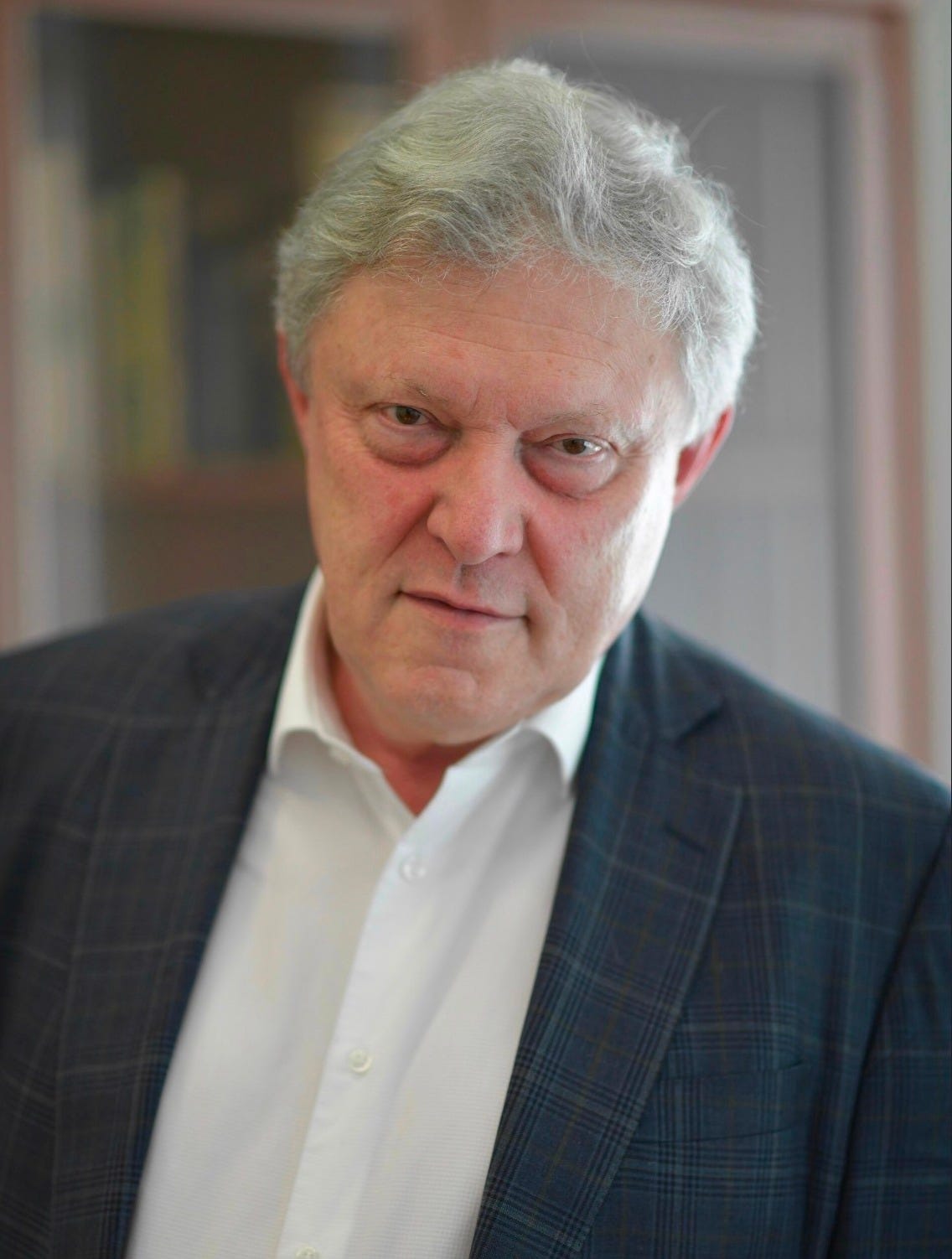
Yabloko had been attempting to capitalise on growing frustration with the war, presenting itself as the one legal electoral vehicle through which Russians could explicitly register an anti-war vote. Just days before it was barred, reporting from Moscow noted that the party itself believed dissatisfaction with the war could translate into increased support.
Whether that support would ever have become electorally significant is almost beside the point. The Kremlin did not need to fear Yabloko taking power; it only needed to fear what a growing anti-war vote might reveal, at the moment when Putin may soon ask Russian society to absorb another enormous mobilisation, showing even a small but visibly growing anti-war constituency becomes politically inconvenient.
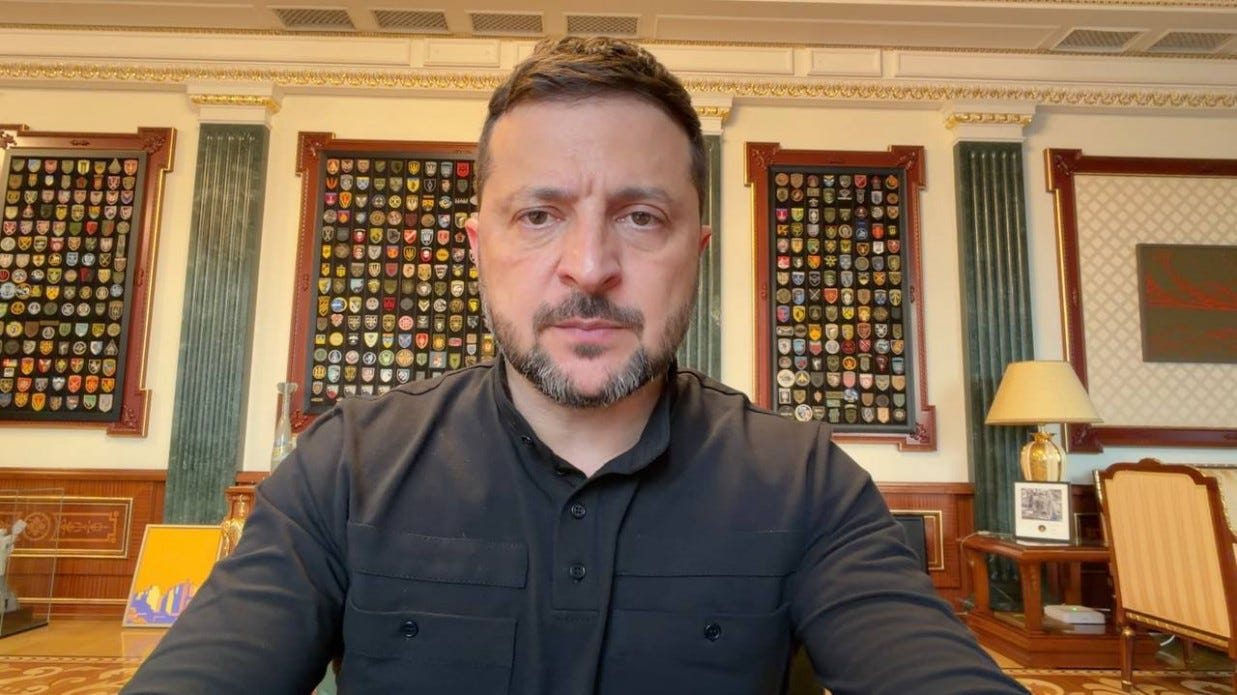
President Volodymyr Zelenskyy has now publicly warned that Ukrainian intelligence believes Russia is preparing another rapid expansion of its armed forces after the September vote, potentially beginning before the end of 2026 and continuing into next year. Reporting around those assessments has put the potential scale as high as around half a million additional personnel. Moscow, unsurprisingly, denies that another mobilisation is necessary, however, I think it could be more than 500,000 as Putin looks to end this once and for all, and may not get a second bite of the cherry.
We have also seen this play out before.
In September 2022, after Russia’s original invasion force had failed spectacularly to achieve Putin’s objectives and Ukraine had smashed through Russian lines in Kharkiv, the Kremlin then announcing its so-called “partial mobilisation”.
Some 300,000 men were called up.
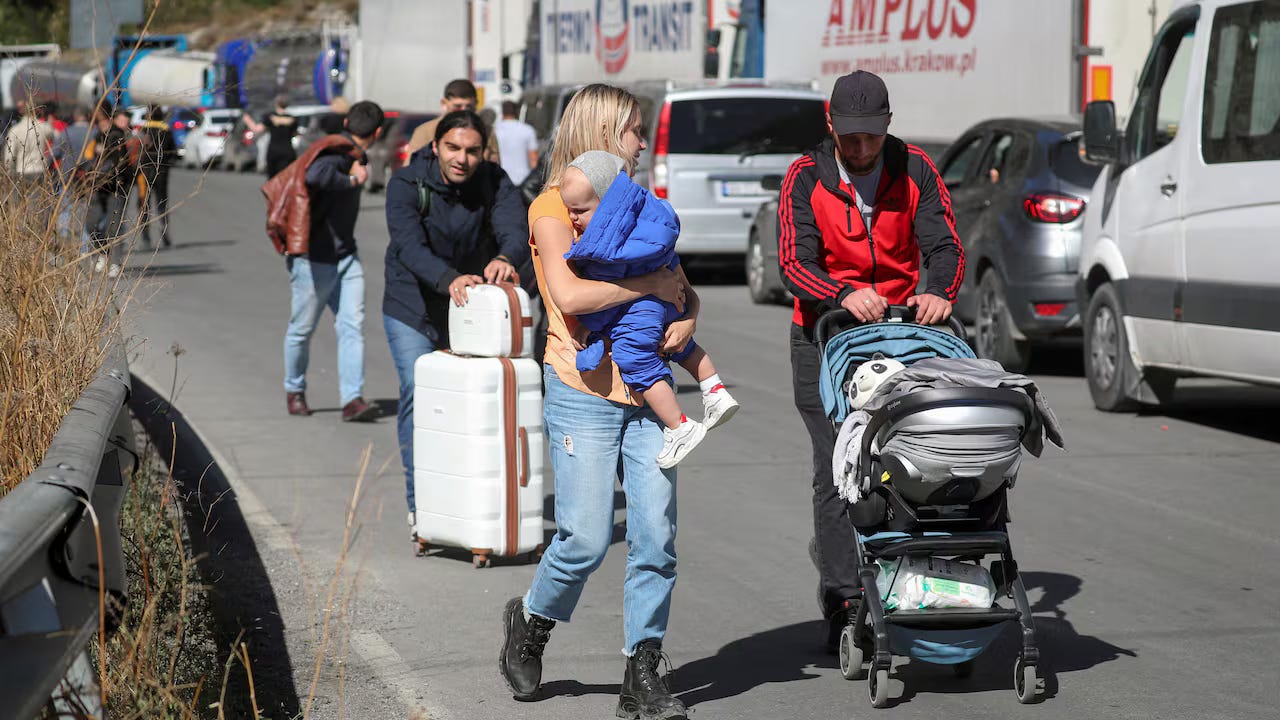
It was chaotic, many men fled the country, borders crossing points filled while draft notices were incorrectly issued. Russia’s antiquated military bureaucracy struggled simply to determine who was eligible, where people lived and whether some of them were even fit to serve.
Putin has had nearly four years to make sure the next one is different, so he has been busy preparing.
Once you have removed the political opposition, the next step is knowing where everybody is, and Putin has, for some time, been simultaneously strengthening Russia’s digital state, creating one of the most significant differences between the chaotic mobilisation of 2022 and the Russia that exists today.
The Kremlin learned from 2022, and the next mobilisation, if and when it comes, will take place inside a country with far greater digital control over its population.
After the disastrous paper-based mobilisation of 2022, Moscow changed its laws to allow military summonses to be delivered electronically through Gosuslugi, Russia’s government services portal.

Anton Gerashchenko@Gerashchenko_en
More and more videos of Russians receiving military summonses are appearing as Russia prepares for mobilization. Those who fail to report to a military enlistment office face restrictions on registration procedures, driver’s licenses, and leaving the country, they say.

Anton Gerashchenko @Gerashchenko_en
Russia will launch a new wave of mobilization this fall - without calling it mobilization. Sources are already reporting that there are orders for the regions to recruit up to 800,000 people. Men will be detained under any pretext on the streets, at work, and in educational https://t.co/GhTaXq2Ddi
11:52 AM · Aug 12, 2026 · 7.74K Views
7 Replies · 35 Reposts · 123 Likes
Under the system, a summons can be treated as delivered electronically. Failure to comply can trigger restrictions including a prohibition on leaving Russia and other administrative penalties. Crucially, these rules were designed not merely for ordinary conscription but for future mobilisation campaigns as well.
In other words, the state no longer has to find you physically before it can begin restricting you.
At the same time, Russia has been progressively closing its population inside a far more controllable digital environment.
Western platforms have been blocked or throttled, Telegram and WhatsApp have faced restrictions, while Internet shutdowns have become increasingly common. Meanwhile, Moscow has aggressively promoted MAX, the state-backed messaging platform that Russia ordered pre-installed on smartphones and tablets from September 2025.
Telegram is particularly important here, because it’s not some niche Western platform Russians could simply abandon. It is one of the most widely used messaging and information platforms in Russia, with more than a billion users globally, and has become deeply embedded in Russian society and, crucially, in how information about the war itself is distributed
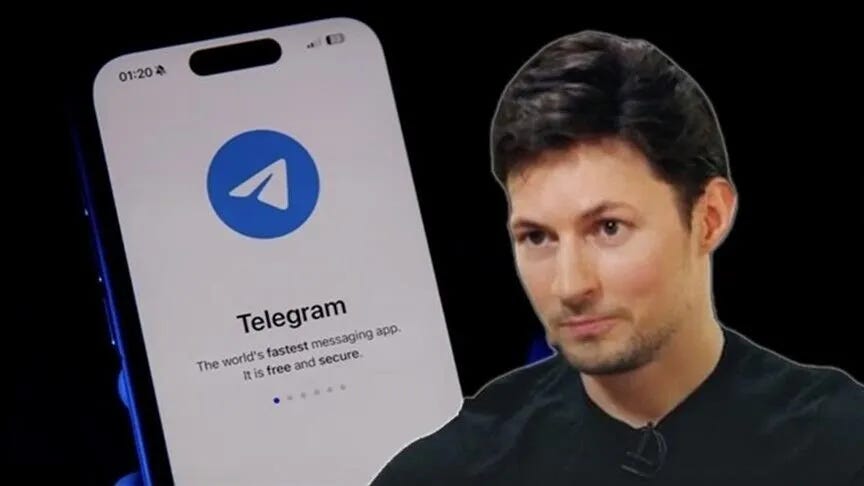
Yet on 29 July 2026, Russia’s Federal Security Service (FSB) charged Telegram’s Russian-born founder Pavel Durov with facilitating terrorist activities and issued an international warrant for his arrest. The FSB accused Telegram of failing to remove channels, chats and bots it claimed were being used by Ukrainian intelligence services and other organisations to coordinate attacks inside Russia.
That came as Russian authorities were already restricting Telegram and pushing Russians towards the state-backed MAX platform.
Critics have therefore raised obvious concerns that MAX could become another mechanism through which the state monitors its citizens. When the Kremlin is simultaneously restricting independent digital platforms, targeting the founder of one of Russia’s most important communications networks and promoting its own state-backed alternative, the direction of travel is difficult to ignore.
By 2026, Reuters was reporting that even some Russian officials were carrying separate phones because they did not want MAX mixed with the rest of their digital lives, and in a system with few meaningful safeguards, little independent oversight and security services such as the FSB wielding enormous power, the potential for these digital tools to be abused is obvious.
A state that can increasingly control what its citizens see, know where they are and communicate with them directly has also built an extraordinarily powerful infrastructure for mobilisation and repression.
A state preparing for a long war benefits enormously from knowing who its citizens are, where they are, how to contact them, whether they have received a military notice, whether they are attempting to leave and — increasingly — what information they are consuming and sharing.
The chaos of 2022 depended partly on Russia not knowing where hundreds of thousands of its own military-age men actually were, so Putin has spent the intervening years solving that problem.
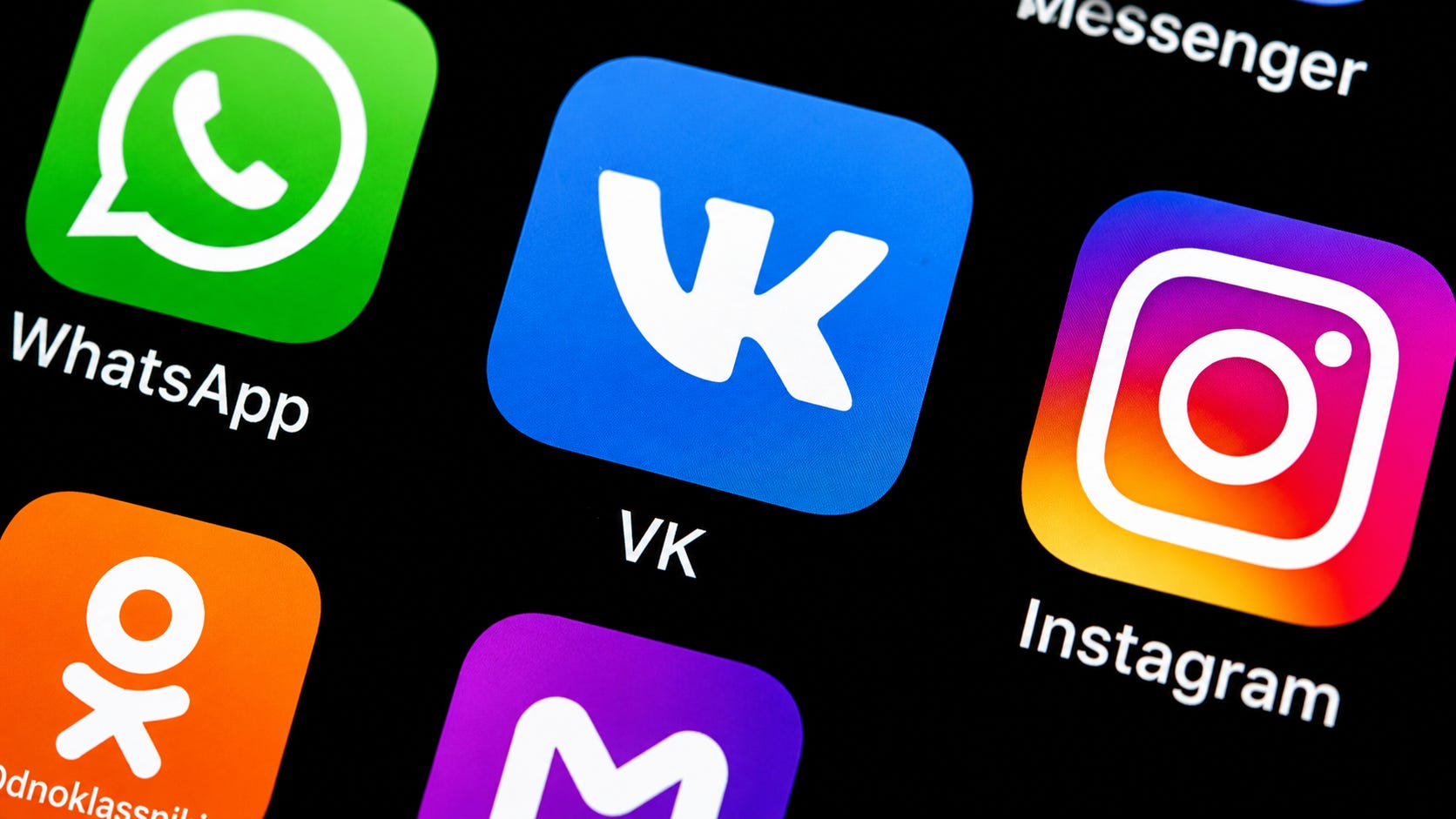
It’s also worth pointing out that, as Russia has moved to curtail Western platforms and tighten control over its domestic digital space, Google Play has recently removed Russian state-backed and Kremlin-linked apps including MAX, VKontakte and Odnoklassniki, following EU sanctions.
There is another reason Russia has been able to delay politically difficult decisions about mobilisation: North Korea.
I have written extensively about this already, so I will not go into it in great detail here, however, it is worth reiterating that Pyongyang has become increasingly important to Moscow.
North Korean ammunition, ballistic missiles and troops have allowed Putin to supplement Russian resources and manpower while limiting some of the immediate political cost at home. Zelenskyy said this week that Russia is receiving further North Korean ballistic missiles and warned that Pyongyang is preparing additional military support.

But there are limits to what North Korea can provide. Pyongyang can help Putin sustain the war, but it cannot replace Russia’s requirement to regenerate its own forces across a frontline stretching hundreds of kilometres.
Foreign manpower can plug gaps, ammunition can keep Russian guns firing and ballistic missiles can maintain pressure on Ukrainian cities, but ultimately Russia still needs Russians to replace its enormous battlefield losses and build the forces required for a longer war.
If Moscow is genuinely preparing another mobilisation potentially measured in the hundreds of thousands, then North Korean involvement should be understood partly as a bridge, helping Putin maintain the pressure while Russia prepares the next much larger pool of manpower.
Another Russian mobilisation would undoubtedly be dangerous for Ukraine.
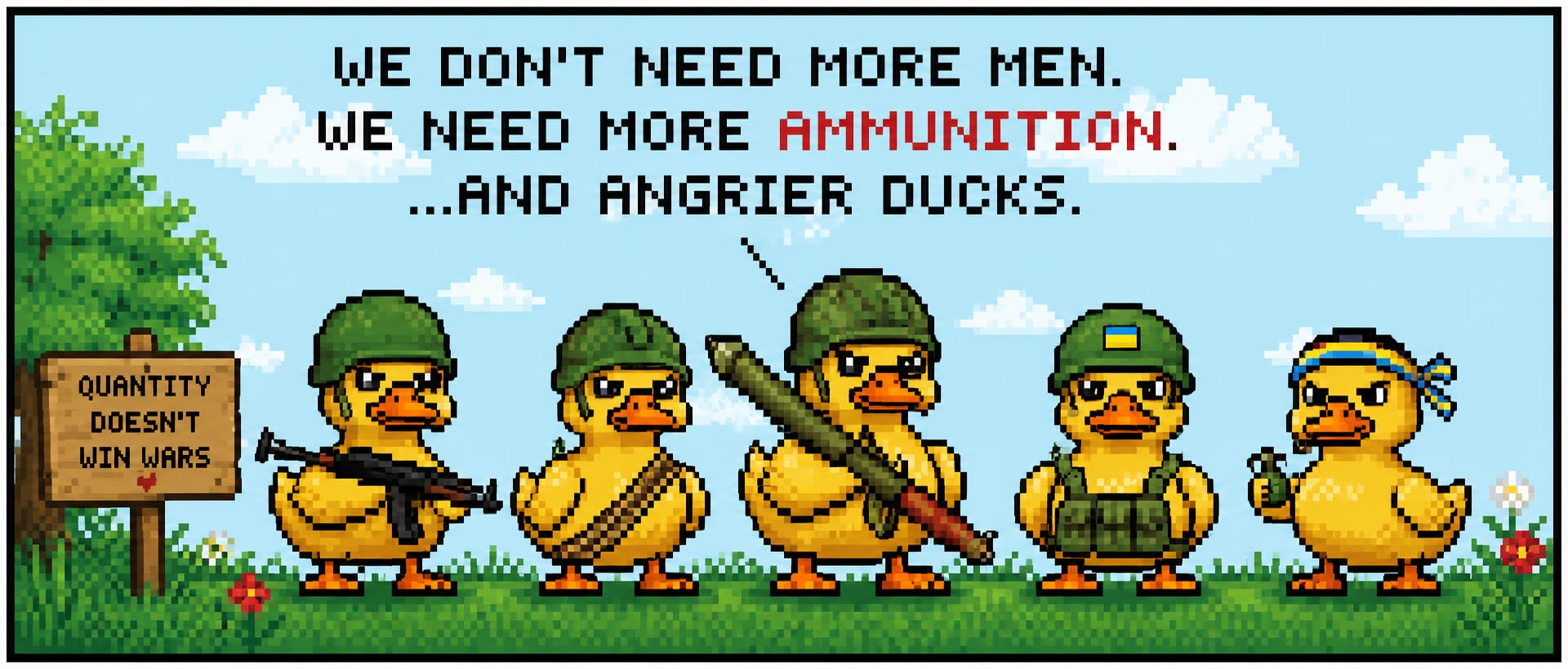
Half a million additional men — even if poorly trained — cannot simply be dismissed. In the army, during the most mind-numbingly boring periods, we would invent ridiculous debates to pass the time: who would win in a fight, a bull or 1,000 angry ducks?
It sounds ridiculous, but we are looking at something resembling the same military problem. The bull is obviously stronger than any individual duck, but at some point, sheer numbers become a capability of their own.
Russia has repeatedly demonstrated that it is prepared to substitute mass, time and casualties for operational elegance. It does not need every soldier to be exceptional. It needs enough men to replace losses, maintain pressure, reinforce exhausted formations and force Ukraine to keep expending its own precious manpower and ammunition.
I love that phrase — “operational elegance” — because it perfectly describes what the Russian military has repeatedly shown it is prepared to do without. Brute force can compensate for an extraordinary number of military shortcomings when you are willing to absorb the casualties.
Eventually, even the bull has a problem with 1,000 angry ducks.
Zelenskyy’s warnings about a longer war need to be taken seriously, not least because the signs are already there. The assumption that Russia will eventually exhaust itself and simply stop has proved catastrophically optimistic before.
And frankly, if I hear one more prediction that Putin is about to die from some mysterious illness or the Russian economy will collapse next week, I am likely to poke somebody in the eye.

WarMonitor🇺🇦🇬🇧@WarMonitor3
Video of Putin coughing heavily before his March 8th speech and asking for retakes amid speculation of his poor recent health.
4:13 PM · Mar 10, 2026 · 123K Views
71 Replies · 52 Reposts · 961 Likes
Preparing for another Russian mobilisation does not mean pretending it represents Russian success, actually, it is quite the opposite and evidence of what Russia has already been forced to do simply to keep Putin’s original war going.
Russia’s invasion in 2022 intended to decapitate the Ukrainian government, but it failed & Kyiv survived. Russia was also driven from northern Ukraine, Kherson was liberated, The Black Sea Fleet has been pushed away from much of occupied Crimea, so Russia mobilised 300,000 men, recruited prisoners, offered enormous financial incentives for military contracts, imported millions of North Korean artillery rounds and ballistic missiles, and eventually brought North Korean troops into the war as a response.
Now, more than four years after the full-scale invasion began, Russia may be preparing to mobilise hundreds of thousands more.
That isn’t evidence that the original strategy worked, it is evidence of what has been required by Russia to prevent it from failing completely.
There is another piece of this puzzle that deserves considerably more attention: Crimea.
For Putin, occupied Crimea was supposed to be the irreversible prize — the jewel in the crown. Its annexation in 2014 became central to the mythology surrounding his rule, presented domestically as proof that Russia had returned as a great power.
Yet Crimea today is under increasing military and logistical pressure.
Ukraine has increasingly targeted the peninsula’s energy infrastructure, logistics networks and supply routes. These attacks have contributed to fuel shortages, while Ukraine has also focused on the two principal supply arteries connecting Crimea with Russia: the Kerch Strait and the land corridor through occupied southern Ukraine.
Shaun Pinner@ShaunPinnerUA
“I see nothing…” This is what Putin’s so-called “land bridge” to Crimea looks like today. Russia’s one major strategic territorial gain since 2022 is increasingly under threat and the corridor Moscow fought so hard to establish is becoming harder to protect, supply and
7:26 AM · Aug 7, 2026 · 12.1K Views
19 Replies · 219 Reposts · 982 Likes
Ukraine’s expanding long-range strike campaign is also bringing Russia’s own energy and logistics infrastructure increasingly within reach.
That does not mean Crimea is about to fall.
It means something strategically important is changing: Russia is having to spend ever greater resources defending territory Putin once wanted Russians to regard as permanently secured.
And that creates another demand for air defence, logistics troops, engineers, coastal defence, forces protecting the land corridor, replacements and reserves.
More people everywhere.
The mistake would be waiting for Putin to announce mobilisation before responding. Russia’s first mobilisation exposed enormous weaknesses in the Russian state, a second one may not.
Putin is getting his ducks in a row — yes, I am talking about ducks again…
The Kremlin has had years to digitise the process, tighten its borders, suppress opposition, control information and construct the machinery necessary to find military-age Russians considerably faster than it could in 2022.
The election on 20 September may therefore represent more than just a political date on the calendar. Once the vote is safely behind him, Putin may have considerably greater freedom to impose another deeply unpopular cost on Russian society.
Another half-million troops would not arrive overnight, however, mobilisation creates a pipeline where men have to be identified, registered, processed, equipped, trained, organised and deployed.
And that creates a window.
Ukraine needs the ammunition, drones, long-range weapons, air defence and industrial capacity to exploit that window before those hundreds of thousands of men begin translating into effective combat power.
The time to prepare for Putin’s next army is before he builds it, not after it arrives in Ukraine.
What concerns me most is Ukraine’s shortage of interceptors and its ability to defend critical infrastructure. If Russia is preparing the manpower for a longer war while simultaneously using ballistic missiles and drones to degrade Ukraine’s energy network, defence industry and critical infrastructure, what we are seeing now may simply be the groundwork for what comes next.
Above all, I hope Western governments stop interpreting Russia’s continued willingness to escalate as evidence that its strategy is working, because a country importing shells, ballistic missiles and soldiers from North Korea while preparing another enormous domestic mobilisation after more than four years of war is not demonstrating the effortless success of a military superpower.
But the silence from Europe and America about what appears to be coming next is becoming deafening.
If Russia is preparing for another major mobilisation, then we should be preparing for it too, with our partners, not waiting until hundreds of thousands more Russian soldiers are already making their way towards Ukraine.
Vladimir Putin is prepared to consume extraordinary resources rather than admit that his invasion has failed. Meanwhile, Crimea the great prize on which so much of the Putin mythology was built, is becoming increasingly expensive to hold, and that is why September matters, not because Putin is preparing Russia for peace.
But because every indication suggests he is preparing Russia for more war, and this time, we need to be ready before he is.
I just wanted to say a genuine thank you.
Last month we’ve reached more than 3,000 subscribers here on Substack, and Voices from the Front has become a Substack Bestseller, regularly ranking in the Top 50 for World Politics.
I’ll be publishing a Pinner’s Patter monthly update very shortly, looking back on what has been an incredibly productive—and very busy—July.
When I started writing, my aim was simple: to provide honest, independent reporting from Ukraine, backed by firsthand experience rather than headlines or soundbites. I never imagined so many people from around the world would choose to come on that journey with me.
I’ve also always tried to keep the vast majority of my work free to read. I believe that reporting from Ukraine, particularly at a time when misinformation is so widespread, should be accessible to as many people as possible. Those who choose to subscribe make that possible. Your support doesn’t just help this publication grow, it helps ensure that everyone else can continue reading, whether they can afford a subscription or not.
Every subscription, every comment, every restack and every recommendation has helped build this community. In a world where misinformation spreads quickly, you’ve shown there is still a place for thoughtful analysis, reporting from the ground, and conversations rooted in facts rather than algorithms.
Many of you have been with me since Mariupol, through Russian captivity, the death sentence, my return to Ukraine, and now this new chapter of reporting, writing and broadcasting. Others have joined more recently, but whichever camp you’re in, thank you for your trust. I never take it for granted.
This isn’t just another milestone. More than 3,000 people on Substack have chosen to support independent journalism from someone living and reporting in Ukraine. Across all platforms, Voices from the Front is now followed by more than 250,000 people. That support allows me to spend more time where I believe it matters most, on the ground, documenting events, speaking to the people living through them, and trying to explain not just what is happening, but why it matters.
There is still much more to do. I’ll continue reporting from the ground, producing Voices from the Front, and telling the stories that deserve to be heard.
Thank you for reading, sharing, challenging me, and supporting this work.
We’re only just getting started.
Shaun
No posts
Comments
Nothing yet. Say the first thing.
Sign in to join the conversation.