
To start, my credentials, I’m a critically acclaimed children’s book author and a school librarian of over 15 years. I’ve worked K-12 and I’m a mom of two beautiful kids who are reading above grade level. That’s not to say that both kids were always rocking and rolling. Every kid isn’t going to pick up on the habit or even want to make reading a habit, but it’s a necessary skill. Here are 10 ways to make SURE your kid isn’t featured in a viral video stumbling over ‘extraordinary’ for views and ridicule.

This will tell you what their reading level is. Is this the be all and end all of academic measures? No, but it is an old one. You can find books based on Lexile and map out a plan for how much growth you want to see without having to buy a fancy program or do any additional testing at home. Your public library may even have the Lexile printed on the outside of the books so you can see how difficult a book is and whether your kid is progressing. The school will have done testing this year. I don’t know if they shared your kids’ results with you. Ask. Ask explicitly for that Lexile score.
It will be very hard to usher your kid into a lifetime of reading proficiency if you are not a reader yourself. Do you hate to read? Why? Is it too loud in your house to concentrate? Do you need someplace cozy to read? Do you need recommendations? Ask a librarian (not AI) for recommendations. You can also look online using the hashtags #booktok #blackbooktok #bookstagram #horrorbooks, etc. Sift through the many, many accounts and spend a day getting a few recommendations for things to try. You will need to model the behavior you want to see in your kid. They do as we do.
One of the biggest problems with getting kids to read is that they haven’t found a genre they like yet and they’re being forced to read things that bore them. I don’t like Horror movies. If all anyone ever showed me on television or otherwise were Horror movies, I might say that I wasn’t a movie person. Hit the library and pick out a few different titles and read the first chapters. Don’t be afraid to take things back and switch it out. And explore other mediums. Graphic novels are great for kids who don’t see pictures in their head when they read. Comics and Graphic novels are still books! Audiobooks are great for building vocabulary too and the library will have apps for both. Remember, the library is free.
I’ve mentioned the library several times because it’s a free resource. Use it! If your kid is very young they’ll be churning through those smaller books at a pretty quick pace. Who has money for that! Also, libraries have summer programs that can be fun.
Get a paper dictionary and a thesaurus too. The dollar store may have some pocket options for older kids. Show them how to look up a word and similar words. A lot of kids lose interest in reading because they just flat out don’t understand enough vocabulary for it to make sense. Pre-K kids will need sight word flash cards and phonics cards. You can also get those from the dollar store. Sight words are the basic words we need to know to read the most basic sentences, but can’t be figured out by sounding it out or are needed to make sense of a sentence (the, and, for, with, etc). Phonics flashcards give kids the building blocks of reading so they can sound out a word when they come across it. Many times they’ve heard the word already and can gain meaning from there.
This one can be difficult for some people. You need to set aside time each day and week for reading. No screens, no distractions, just reading. For people who don’t like reading this can feel like a punishment, but it’s a dedicated time. Remember, I said that you’ll need to become a reader too because it’s best if everyone is reading at the same time so there are no excuses. It can be twenty minutes or an hour depending on stamina. And if you build a nice reading nook, all the better. Note: Some people say that reading should never be given as a punishment, but I will say that there is nothing wrong with giving kids reading time and or certain books that you’d like them to read. It’s lovely to want kids to love reading, but they’ve got to build that critical skill BEFORE they love it.
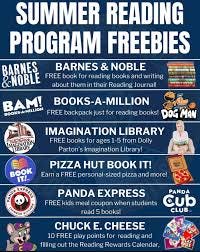
Many libraries have reading programs with prizes for younger kids. The Freebie Guy has a list of some Nationwide programs below. For older kids, you can set whatever incentive you like. If you’re looking for lists to conquer you can check out the AP list of most common books referenced on the AP test. It’s good to get some under your belt in the summer because there isn’t a lot of time during the school year to tackle all the possible books on the Advanced Placement Tests. There’s the Outstanding Books for the College Bound and there are a ton of statewide Reading Bowl books. Both of my kids were voluntold to join the Reading Bowl team and they got treats for every book they read on the lists. If you’re in Georgia check out the Helen Ruffin Reading Bowl Lists.
Maybe there a kids at camp or at church or in the neighborhood who also have parents who are trying to get their kids to read. Start a club. Set a tiny goal of one book a month for older kids and two for younger.
The newspaper is written at around a 7th grade reading level. Have your kid read an article and use the five finger rule. Every time they stumble over a word or sentence hold up a finger (you don’t have to show them). Once they get to five they can stop. If they get to five that means the passage is too difficult. It’s a rough measure, I know, but it accessible to you and can help you, especially if they’ve been getting good grades in class and you realize that they’re not proficient with a day to day task like reading the newspaper.
Some battles you have to recognize you cannot win. If you’re working with your kid and they are consistently mispronouncing words you know you’ve gone over. They can’t seem to progress or they are much, much further behind than you realized, it’s time to get professional help. Ask your child’s teacher if they know anyone. Google local tutors. Ask if the church has a retired teacher who may be willing to help. Some colleges may even have summer programs for struggling kids. And if you’re suspecting dyslexia or some other learning issue, now is the time to get an evaluation. Even in big cities the wait lists can get pretty long. Early intervention WILL make all the difference. A dyslexia or dysgraphia or other learning issue diagnosis does not necessarily mean your kids will be pulled from regular classes or be given a less rigorous education. What it WILL do is make sure your kid gets the extra tools they’ll need to access the learning being offered at school. Imagine climbing a hill with a rolled ankle. Nobody sets the ankle. Nobody even acknowledges that your ankle is swollen and purple. You might think something is wrong with you. You might even give up. We don’t want that to happen.
Got any other tips for parents?
Some lists I’ve built!
The Bookish Boy
·
April 1, 2025
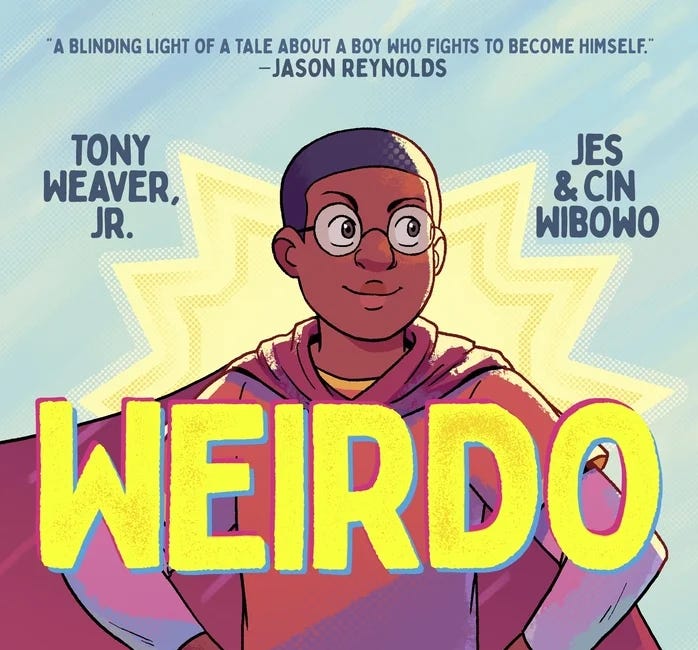
There has been a lot said about the state of Black Boys and their college attendance. College attendance among boys has been dropping for awhile now, and we all know that when America catches a cold, Black America catches the flu. Toure just went viral
The Essential Black "Family" Library
·
March 31, 2025

An executive order, which have now just become long form tweets, issued last week orders the removal of any exhibit that promotes “improper ideology” from the Smithsonian. This will affect the National Museum of African American History and Culture. You can expect all funding to be cut off from the institution and the removal of the contributions of Bla…
Essential Black Literature List
·
January 30, 2025

As a librarian of going on 15 years I have always held libraries in the highest regard. They serve as time capsules, they excite and inform and they give us a look into the past so we can design our future. As they say, we don’t want to reinvent the wheel, nor do we want to reinvent the atomic bomb. Our destruction lies in our ignorance, so it is of utm…
Comments
Nothing yet. Say the first thing.
Sign in to join the conversation.