
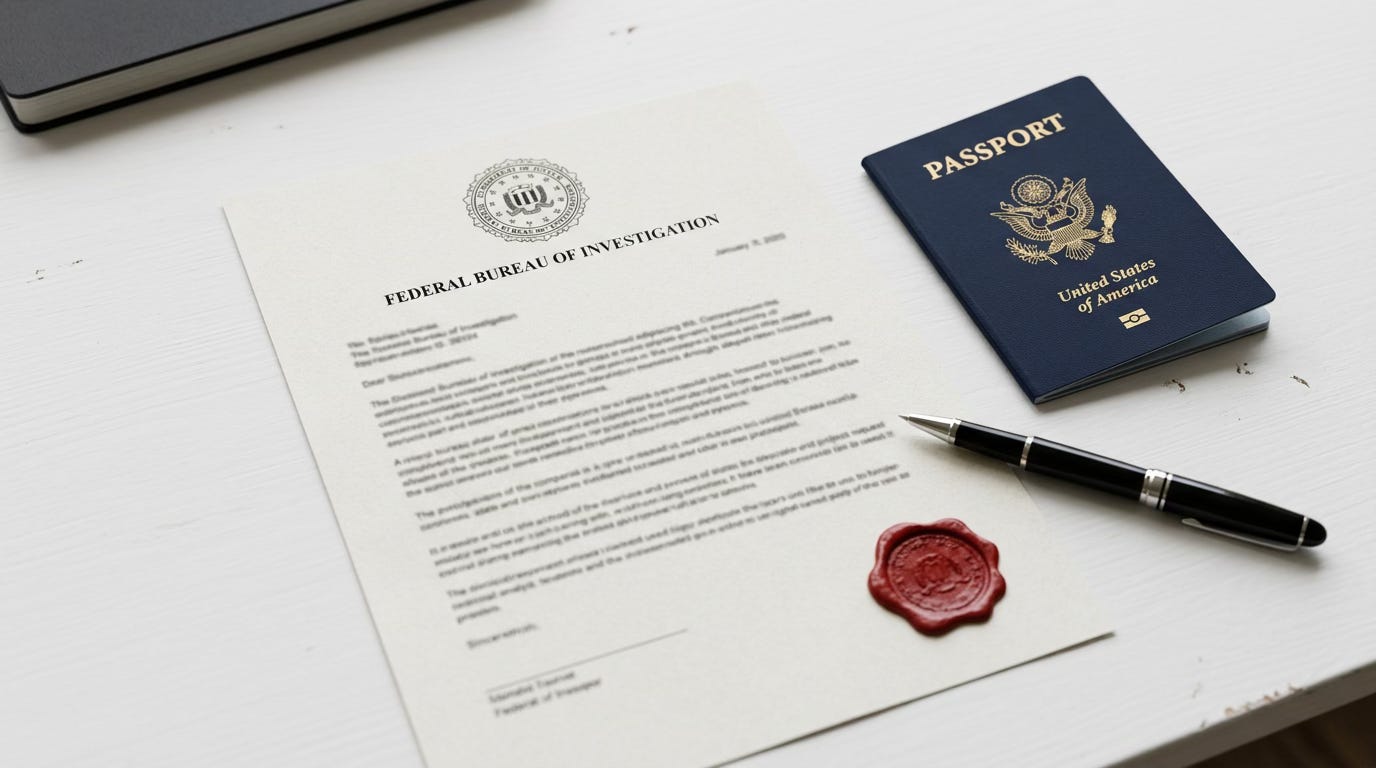
I processed enough of these cases in California to recognize the pattern. Someone gets all the way to the final stage of their visa or residency application — months of paperwork, fees, appointments — and then learns they needed this document six weeks ago.
What it is
The FBI Identity History Summary is a federal document that shows your criminal history record as maintained by the FBI. It is not a state-level background check. It is not a court document. It is a federal summary, and it comes directly from the FBI.
Most countries that issue long-term visas, retirement visas, or residency permits require it. Spain requires it for the non-lucrative visa. Italy requires it for the elective residency visa. Portugal requires it for the D7. Brazil requires it for permanent residency. The list is longer than most people expect.
The country doesn’t just want the document. They want it apostilled. That’s the federal certification that makes it recognized internationally under the Hague Convention. And many of them also want it translated into the local language by a certified translator.
The process, in order
Step one: request your FBI Identity History Summary. You can do this directly through the FBI’s website. It requires a set of fingerprints, either submitted electronically through an approved channeler or by ink card through the mail. The direct FBI channel takes around 12 to 16 weeks. An approved channeler can cut that to 3 to 5 weeks.
Step two: once you have the document, get the apostille. The FBI background check is a federal document, which means the apostille comes from the U.S. Department of State, not from your state government. This is a point of confusion I ran into constantly. State apostilles are for state documents. The FBI check requires a federal apostille from Washington, D.C.
Step three: get the certified translation if your destination country requires it. Most do. The translation must be done by a certified human translator, not a machine, not a bilingual friend, not anyone other than a credentialed professional who can certify their own work.
The timeline problem
The standard FBI process, done without expediting, can take four months or more from fingerprint submission to apostilled document in hand. If you’re working against a visa appointment deadline — and most countries book those months in advance — four months is the difference between making your application and missing it entirely.
This is why I tell anyone planning an international move: start the FBI background check before you think you need it. Before the visa appointment is booked. Before the lease is signed. Before the flight.
The people who came to me in a panic were almost always people who had done everything else right. They had their birth certificates apostilled. They had their marriage certificates translated. They had their bank statements and their health insurance letters and their lease agreements. And then they realized, three weeks before the appointment, that the FBI check would take twelve.
What expedited looks like
Working through an approved FBI channeler speeds up the fingerprint processing significantly. Some channelers can return results in 24 to 72 hours for the electronic submission portion. The apostille from the Department of State then adds additional processing time, though expedited options exist there as well.
For the translation, a professional certified translation service can typically turn around an FBI background check document in one to two business days. It is not a long document. The challenge is not the length but the certification, which must be done correctly or the receiving authority will reject it.
For expedited apostille processing on federal documents, RushedPassport has handled these cases reliably: https://rushedpassport.com/ref/30/
For certified translations accepted by foreign consulates and immigration authorities, Idiomatic handles the FBI and Apostille combination: https://idiomaticaffiliates.com/order-a-translation/ref/apostillehelp/#TaxID
The part that catches people off guard
The apostille on an FBI background check is not the same as an apostille on a birth certificate or marriage certificate. The issuing authority is different. It’s federal rather than state, and the process goes through Washington. If you’ve already apostilled other documents through your state’s Secretary of State office, don’t assume the same office handles this one. They don’t.
The second thing that catches people: some countries want the apostille on the original FBI document before it’s translated. Others want the translation done first, then the apostille applied to the translated document. A few want both: the original apostilled and the translation separately certified.
Which one you need depends entirely on the destination country and the specific visa or residency category. This is the question to ask your immigration attorney or the consulate directly before you order anything.
The documents that travel well
In this series I’ve written about apostilles, certified translations, interpretation, and foreign tax IDs. The FBI background check is the document that connects all of them. It’s often the last piece, the one that determines whether the entire application package is accepted or sent back.
If you’re planning an international move, a retirement abroad, or a residency application in any country that requires a clean record certification, start this process now. The paperwork will wait for you. The consulate appointment won’t.
Affiliate link — I may earn a commission at no extra cost to you.
Getting your documents right is part of the same journey. This space covers both: the paperwork and the places.
No posts
Comments
Nothing yet. Say the first thing.
Sign in to join the conversation.