
The SIM card drawer is a particular kind of travel artifact. Everyone who has moved between countries more than twice has one, a small container, usually a repurposed Altoids tin or a labeled ziplock, filled with thumbnail-sized chips from a dozen different carriers. Portugal. Japan. Brazil. Mexico. Each one representing a forty-minute queue at an airport kiosk, a conversation conducted mostly through hand gestures, a plan that worked fine until the data ran out at the worst possible moment on a mountain road outside Oaxaca.
You manage it. Everyone manages it. It just costs more attention than it should.
The people who have stopped managing it, the ones who now land in a new country and open their laptop on the taxi ride from the airport, tend to have made one quiet decision: they stopped treating connectivity as something to solve on arrival and started treating it as something they carry.
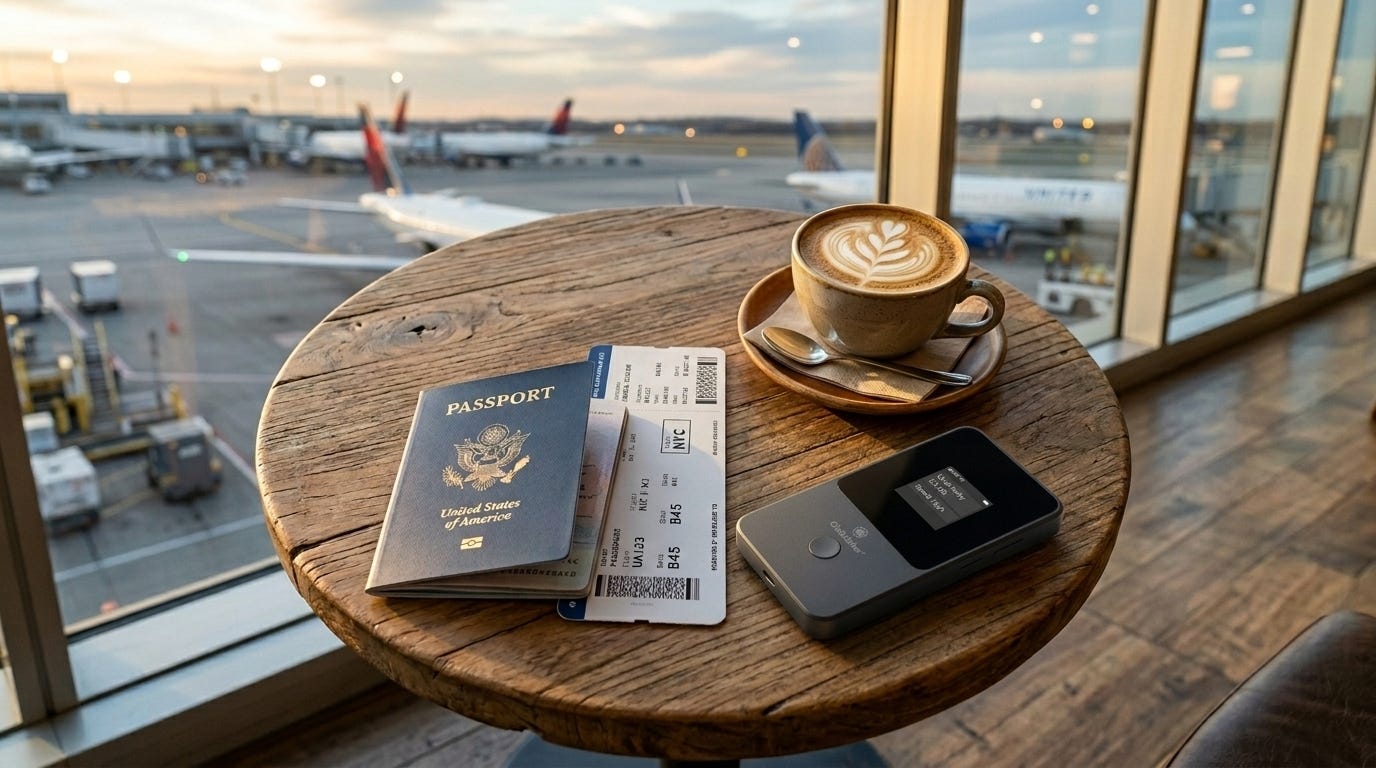
Portable WiFi hotspots are not new. What has changed is the underlying technology. The older devices required a local SIM just like a phone, same problem, smaller screen. The newer generation uses CloudSIM, which means the device reads available networks automatically and connects to the strongest signal without any physical card. You land in Lisbon or Seoul or São Paulo, power it on, and it finds the network the way a phone finds WiFi, without asking you to do anything.
Globlinker is built on this architecture. One device. 130+ countries. No SIM, no contracts, no setup beyond the initial charge. Up to ten devices connect simultaneously, phone, laptop, tablet, all running off the same hotspot. The data plans are prepaid: seven days, thirty days, or a year. The device itself comes with ten gigabytes of US data and two gigabytes free every month for life, which for light users, maps, messaging, email, the occasional voice call, covers a reasonable amount of daily travel.
The battery runs a full day under normal use. Reviewers who used it across multiple countries in a single trip, Portugal to Spain, US to Ireland, Japan to South Korea, report it switching networks without any intervention. You don’t feel it happen. One country becomes another and the connection continues.
The travelers who get the most from a device like this are not necessarily the ones taking the most trips. They are the ones for whom a dropped connection has a cost, a missed check-in window, a navigation failure on an unfamiliar road, a video call that drops during something that mattered. Reliability at that level is not a luxury. It is just the condition under which the rest of the trip works.
For the slower kind of travel, a month in one place, moving between cities by train, working from guesthouses and small cafés, a dedicated hotspot also separates your work connection from your phone plan in a way that turns out to matter more than expected. Phone stays on local calls and camera. Hotspot runs everything else. The two things stop competing.
If you’re still sorting out your connectivity setup, or if the SIM card drawer has gotten out of hand, this is the device most long-term travelers land on eventually.
Check current Globlinker pricing and plans.
Editor’s note: I own a GlobLinker device. Specific plan and performance details are based on research and reported traveler experience. Affiliate link, I may earn a commission at no extra cost to you.
No posts
Comments
Nothing yet. Say the first thing.
Sign in to join the conversation.