
The exhibition at the Tate this summer is James McNeill Whistler, on until late September, and it’s a fabulous way to see a wide range of Whistler’s work. I love exhibitions that focus on a single artist, enjoying seeing the development of their abilities, tracing ideas across their working lives, spotting influences and allusions - and visiting this exhibition I felt completely immersed in Whistler’s oeuvre. I’m no expert on Whistler, though of course his spat with Ruskin and relationship with the Pre-Raphaelites is familiar to me, and wasn’t aware of the extent to which he was inspired by Rembrandt, for example, and so his etchings with which the exhibition opens were a revelation, especially after seeing the Rembrandt etchings exhibition in Birmingham last year.
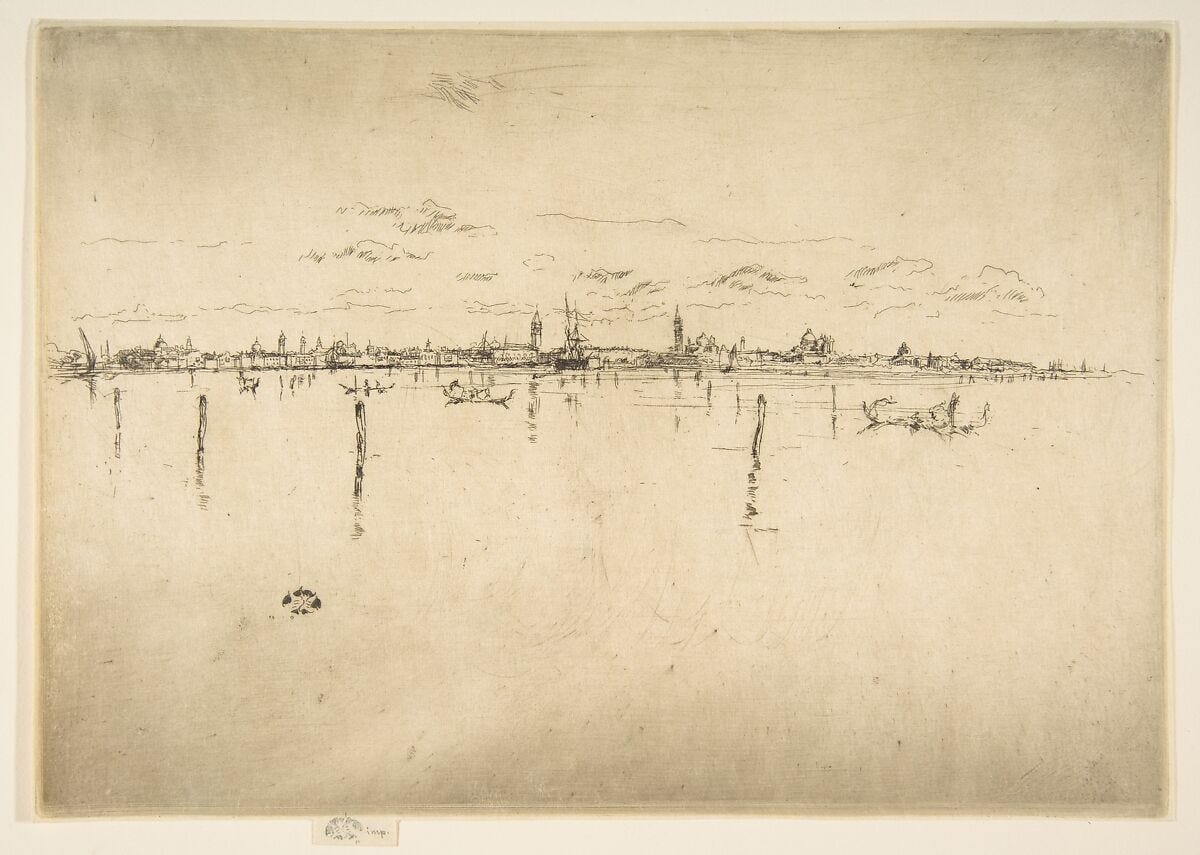
The etchings and sketchbooks, many reflecting Whistler’s travels, with their immaculate detail and style which seemed to me both ancient and modern (and occasionally recalled Ruskin, despite their mutual antipathy), are worth close study, but what really caught my eye was Wapping (1860-4), painted early in his life in London.
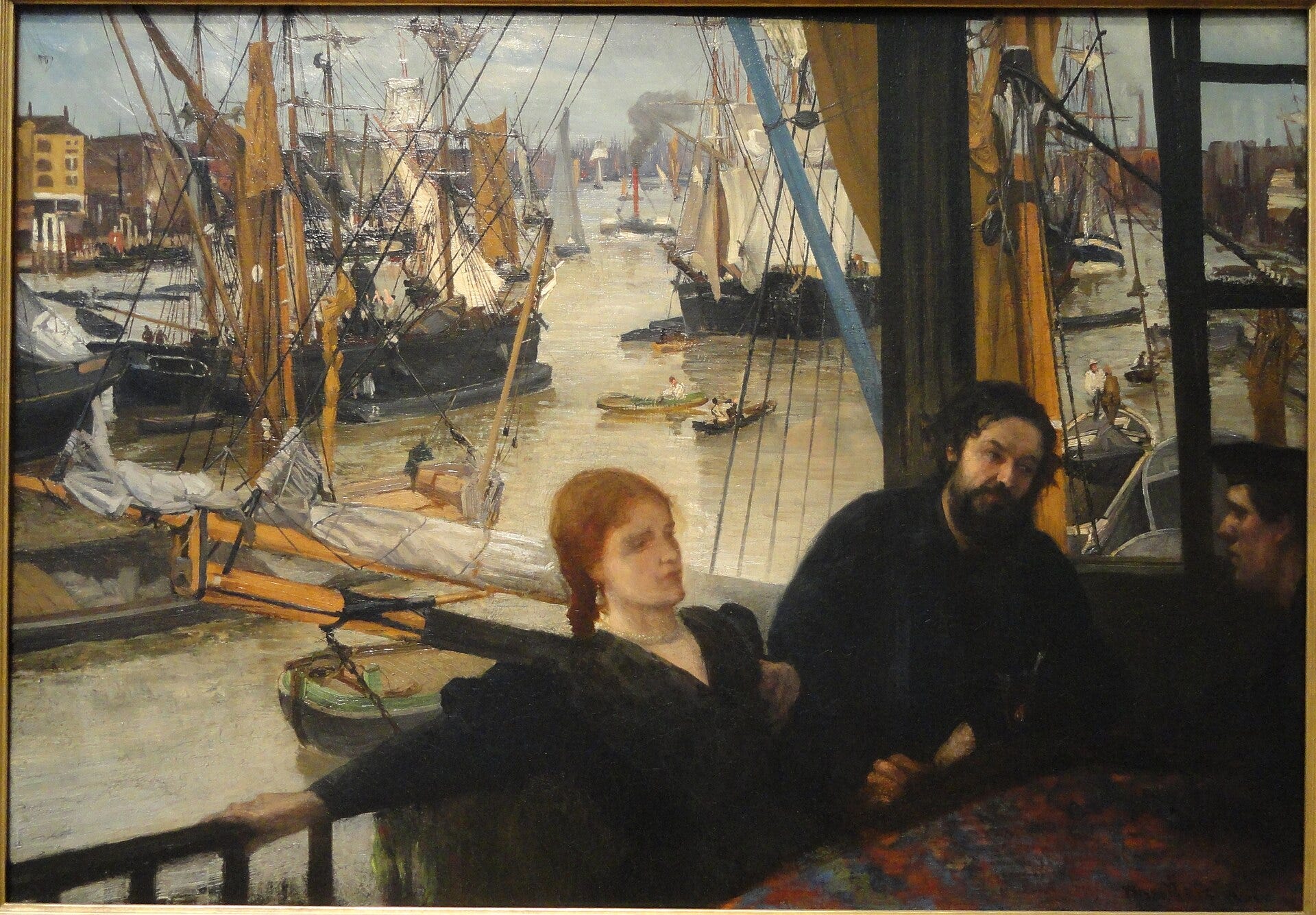
Three figures sit in a tavern by the Thames, heavily industrialised, and I think there are clear traces of French influence and proto-Impressionism here, and yet - and yet: surely this painting exhibited the year before, Thoughts of the Past by John Rodham Spencer Stanhope, is truly Pre-Raphaelite, and very similar in configuration?
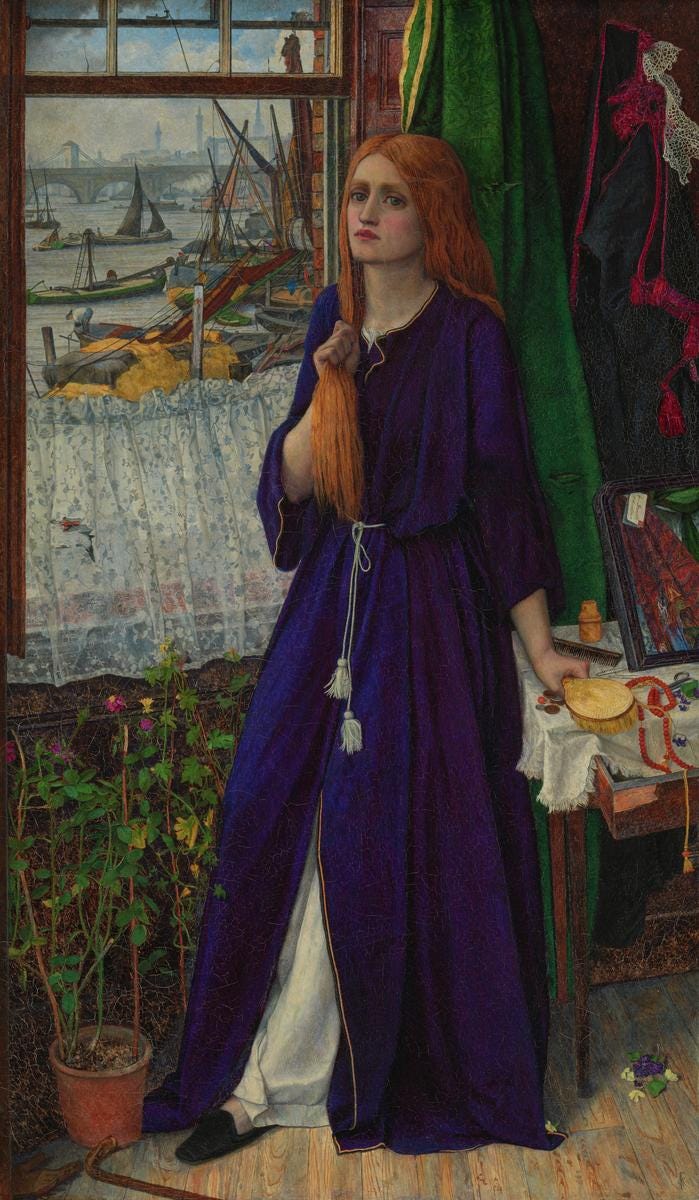
And yet the titles - one evocative, melancholy, hinting at a story, the other practical, almost mundane - themselves suggest a difference of position and approach which characterises the gulf that separated Whistler from the Pre-Raphaelites. While he was friends with some, particularly Dante Gabriel Rossetti, their literary, story-telling approach and sometimes didactic work was directly opposed to Whistler’s ‘art for art’s sake’ ideology. Yet Whistler’s focus on beauty, on surface and on shifting modes of representation are in many ways not so far removed from the PRB. And they shared influences, too, particularly that of Japanese art and design.


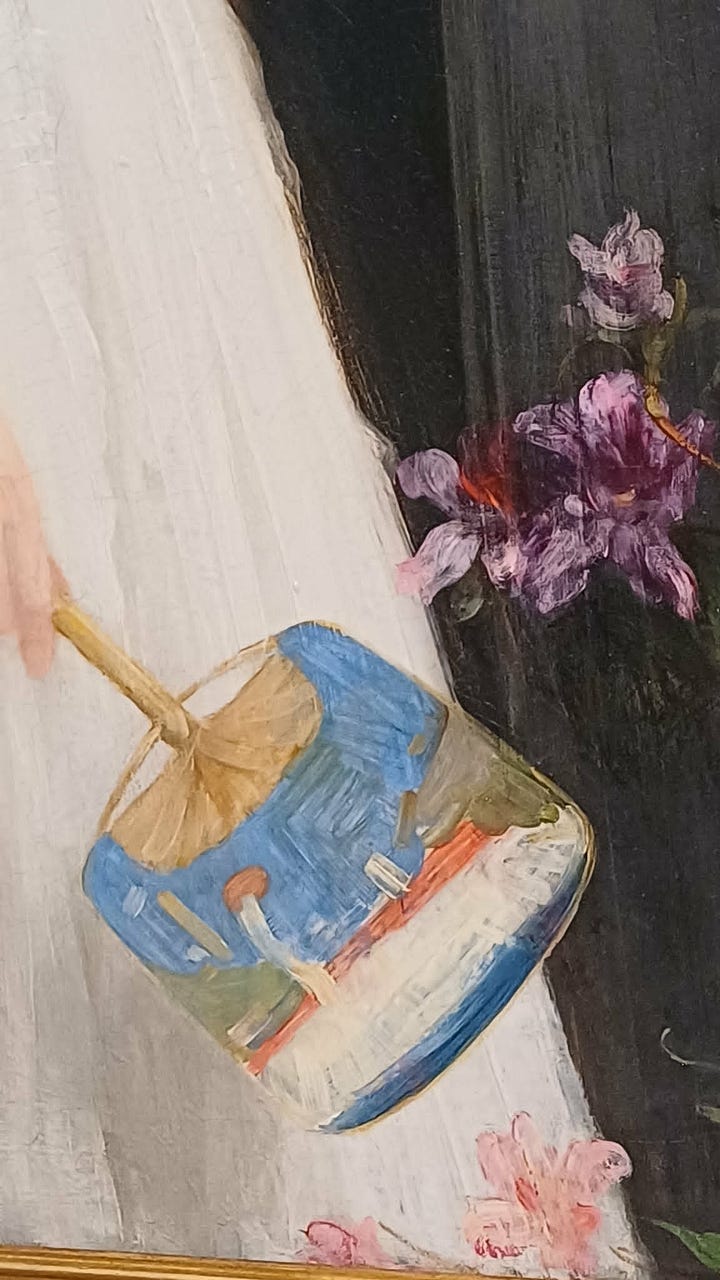

This is the painting recently in the news for having inspired a poem which inspired Vaughan Williams to write a song that has just been discovered (more here), and is one of many splendid portraits. They feel a long way from Wapping: taking place in a rarefied atmosphere of decadent beauty that is a long way from the Impressionist city of Wapping and some of the etchings. That decadent atmosphere is also inescapable in the wonderful recreation of the Peacock Room, which Whistler designed for a patron.
Some of his later landscapes seem to me to echo Turner, and certainly he is un-Pre-Raph in his determination that nature is best painted from home, rather than on the spot! And yet his determined comments that art may ne separated from nature, is artifice, might suggest a superficiality or emptiness which is absolutely dispelled by the marvellous Nocturnes, hung around the room so that they move from light to dark. There is something so magnificently, movingly simple about them, while at the same time their immediacy has depth and pulls us into the image. For me, they were the highlight, almost abstract and so restrained in colour.
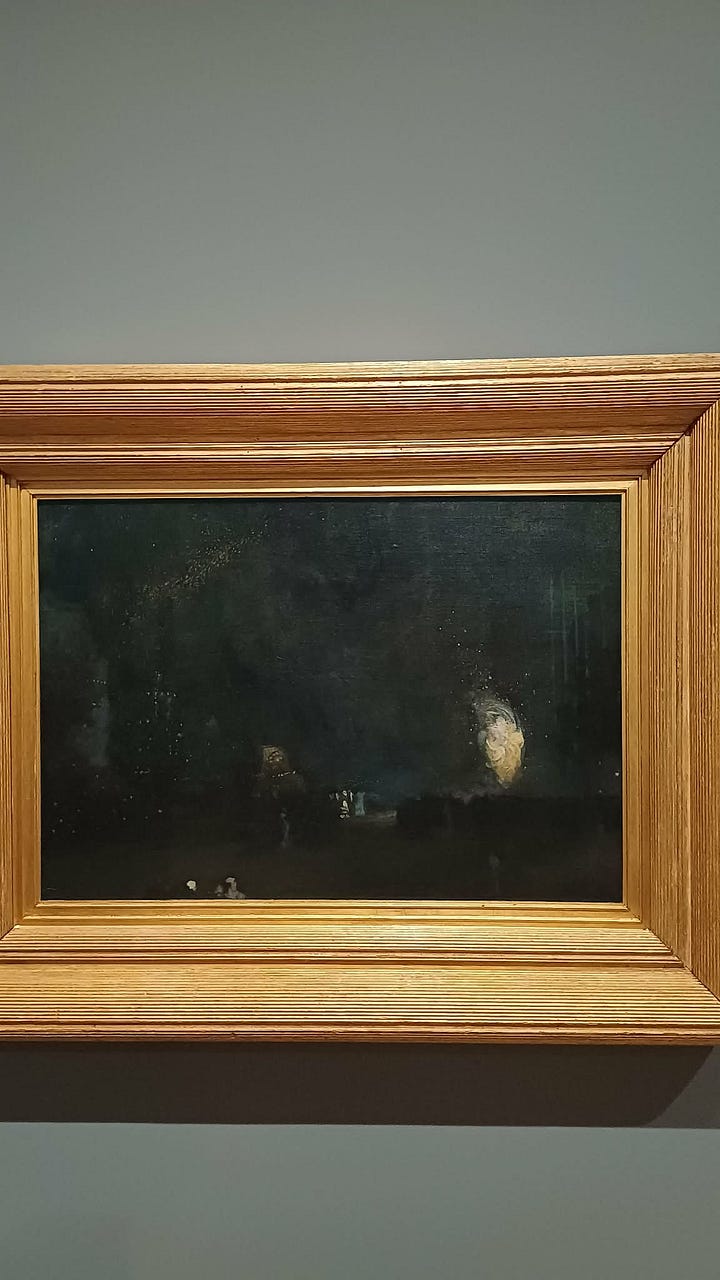

The one on the left was described by Ruskin as “flinging a pot of paint in the public’s face”, and I love the fact that this was so central to debates about modern art that, I think, still affect critical views today. I’m planning to read Falling Rocket by Paul Thomas Murphy soon to learn more about it.
Comments
Nothing yet. Say the first thing.
Sign in to join the conversation.