
I have written before about how I can see strong Pre-Raphaelite influences in some of the work of Elizabeth Adela Forbes. While she wasn’t really a part of the Pre-Raphaelite circle, she was inspired by Ruskin, whose work she read while studying at the Kensington Schools, and was clearly aware of them; for example, she lived next door to Rossetti for a while, and though they never met she was apparently fascinated by him and his work. Paintings such as her Will-o’-the-Wisp (c. 1900), inspired by William Allingham’s poem ‘The Fairies’, show the Pre-Raphaelite influence, and Christiana Payne, in Singing from the Walls: The Life and Art of Elizabeth Forbes, comments that in her work ‘a wide variety of artistic influences are evident, ranging from the twilights of Millet and the costume pieces of the Pre-Raphaelites through to the stylised landscape forms of Art Nouveau and the strong colours and vertical lines of Post-Impressionism.’
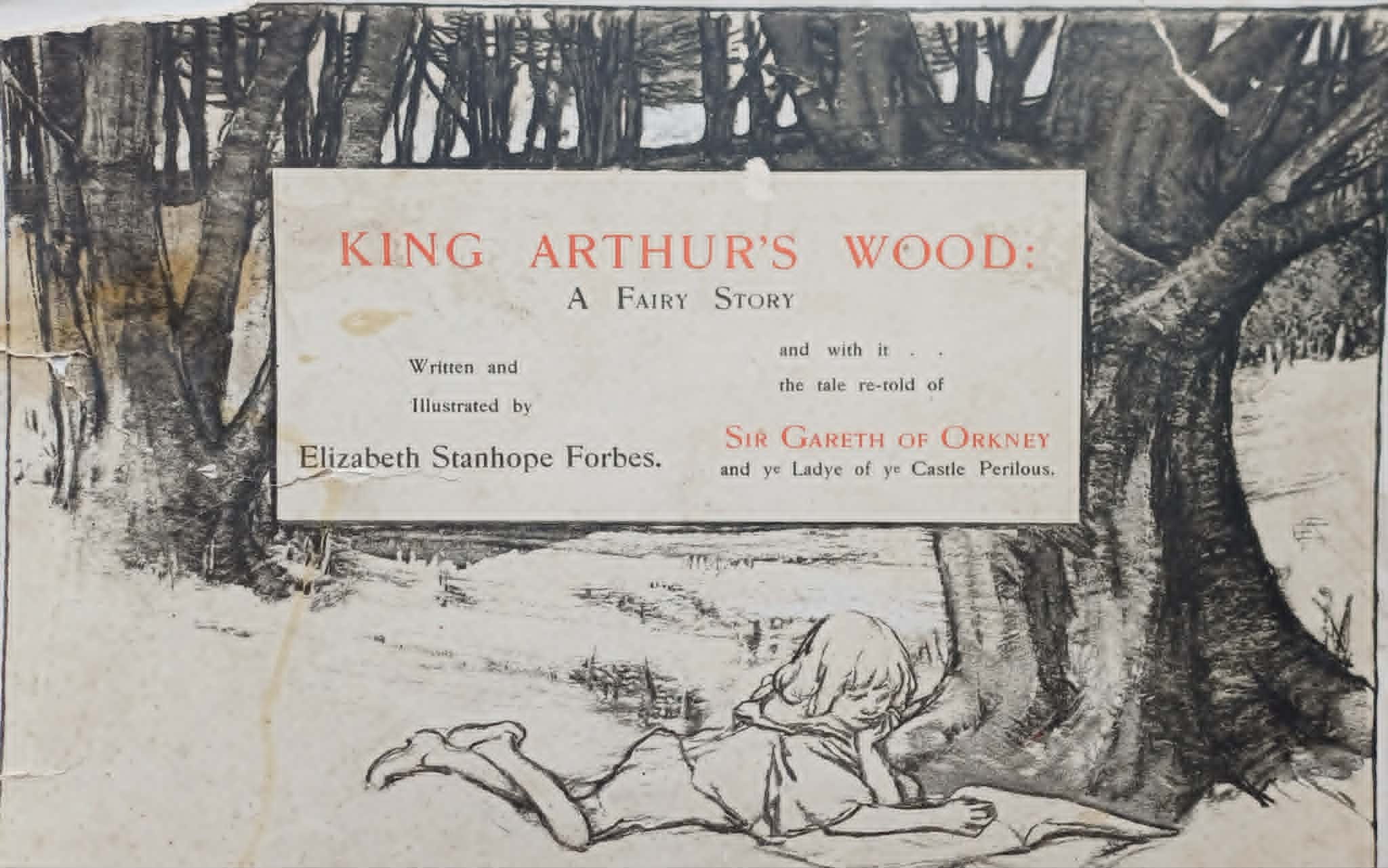
This week I have been looking at her book King Arthur’s Wood at the Morrab Library in Penzance (not far from Newlyn where Forbes and her husband Stanhope lived). Forbes was interested in depicting children, and in 1900 held an exhibition of her work at the Fine Art Society in London entitled ‘Children and Child Lore’. That interest manifested itself in a different way in King Arthur’s Wood, a children’s story published in 1904 and dedicated to her son: ‘To my little friend and comrade Alec, this book is dedicated, with his mother’s love’. It was a limited print run of 350 copies, but if you’re interested there is an ebook available here.
The story tells of Myles, a boy who moves to a cottage on a hillside in Cornwall with his mother and sister Noel, after his father has been drowned at sea. He goes to play in the wood, where he finds a cave with a book. Unintentionally, he leaves with the book after being frightened by an owl, and that night is visited by a small brown sprite demanding its book back. The next day he returns it, and is told a story: that of Sir Gareth of Orkney, one of the knights of King Arthur’s Round Table.
The story is heavily based on Malory, and continues over several sessions, and after each it is clear that Myles has changed a little, learning to care for wildlife and to be kind and thoughtful. By the end of the story, he is mature enough to find work to support his mother and sister. It’s not quite as twee as it sounds, and the descriptions of the natural world are lovely, and clearly inspired by the countryside around Newlyn:
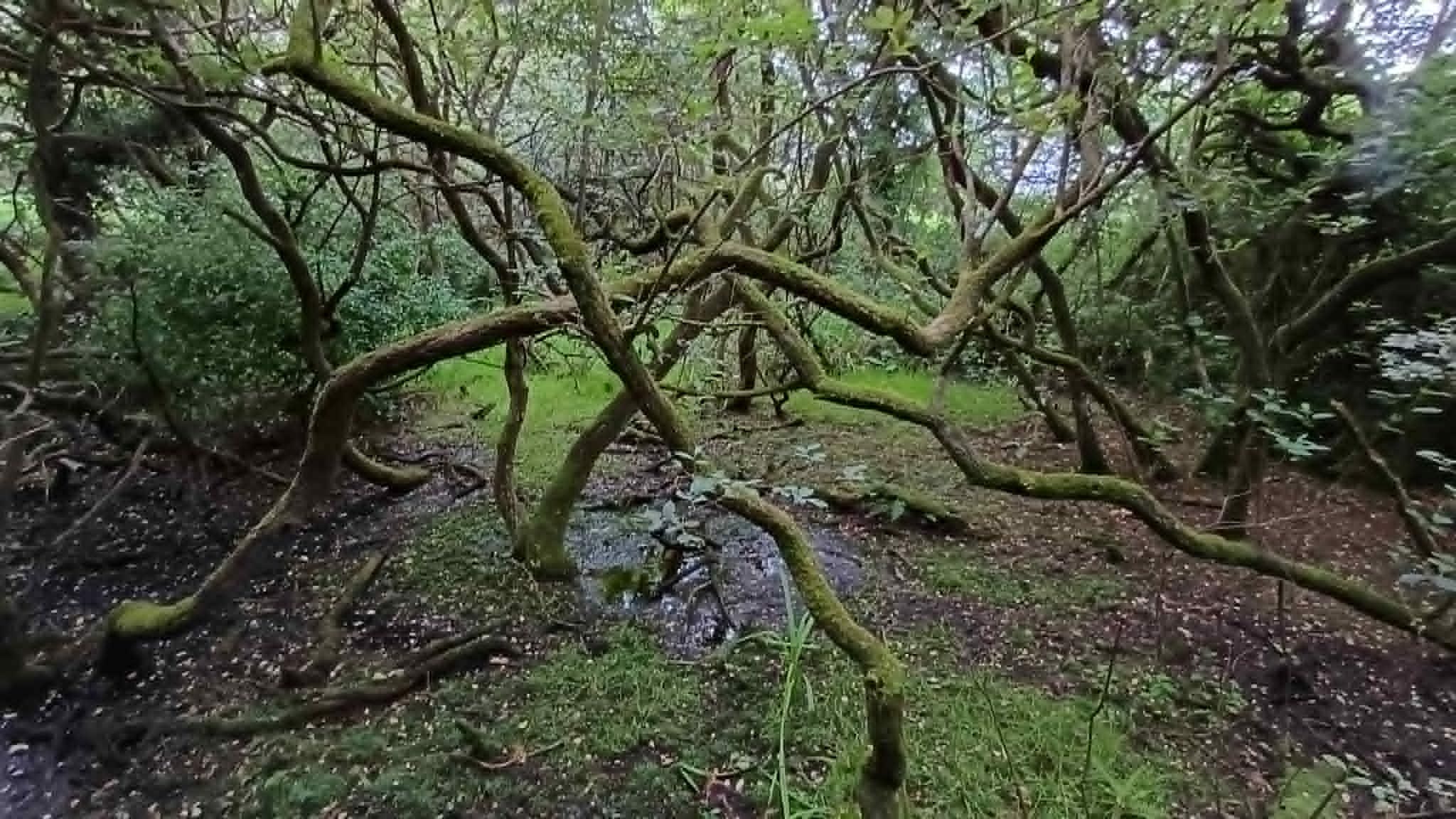
He found he had come to a yet wilder part of the wood. Huge rocks, covered with grey and tawny lichen, towered overhead; the last red rays of the sun had gone, and a cold breath like a shiver ran through the trees. Here twisted, blackened roots writhed among the rocks and across the path. Once or twice a fancy of a little grinning impish face hiding among the ferns and stones came into his mind, and his heart was beating fast when, all of a sudden, he found himself opposite a great opening in the rocks like the mouth of a cave.
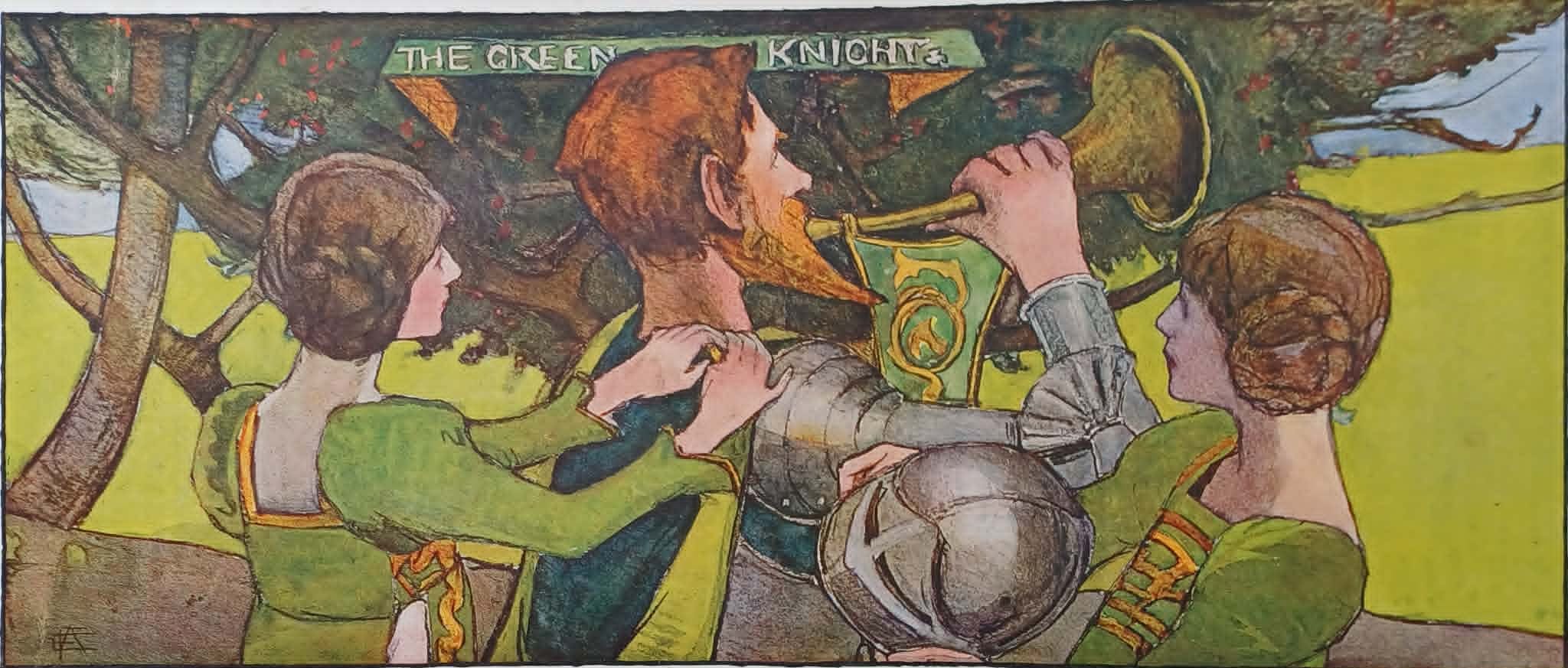
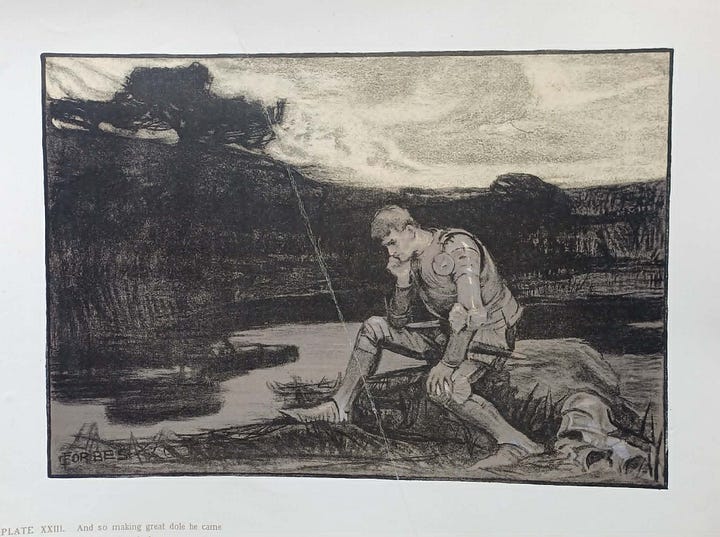
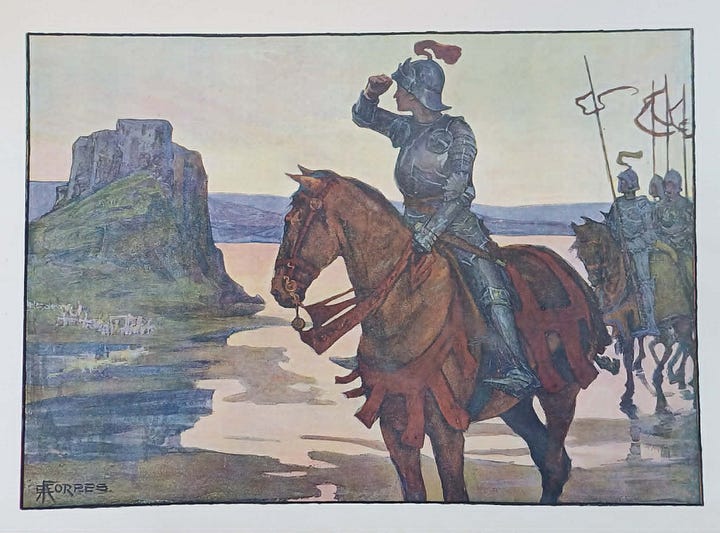
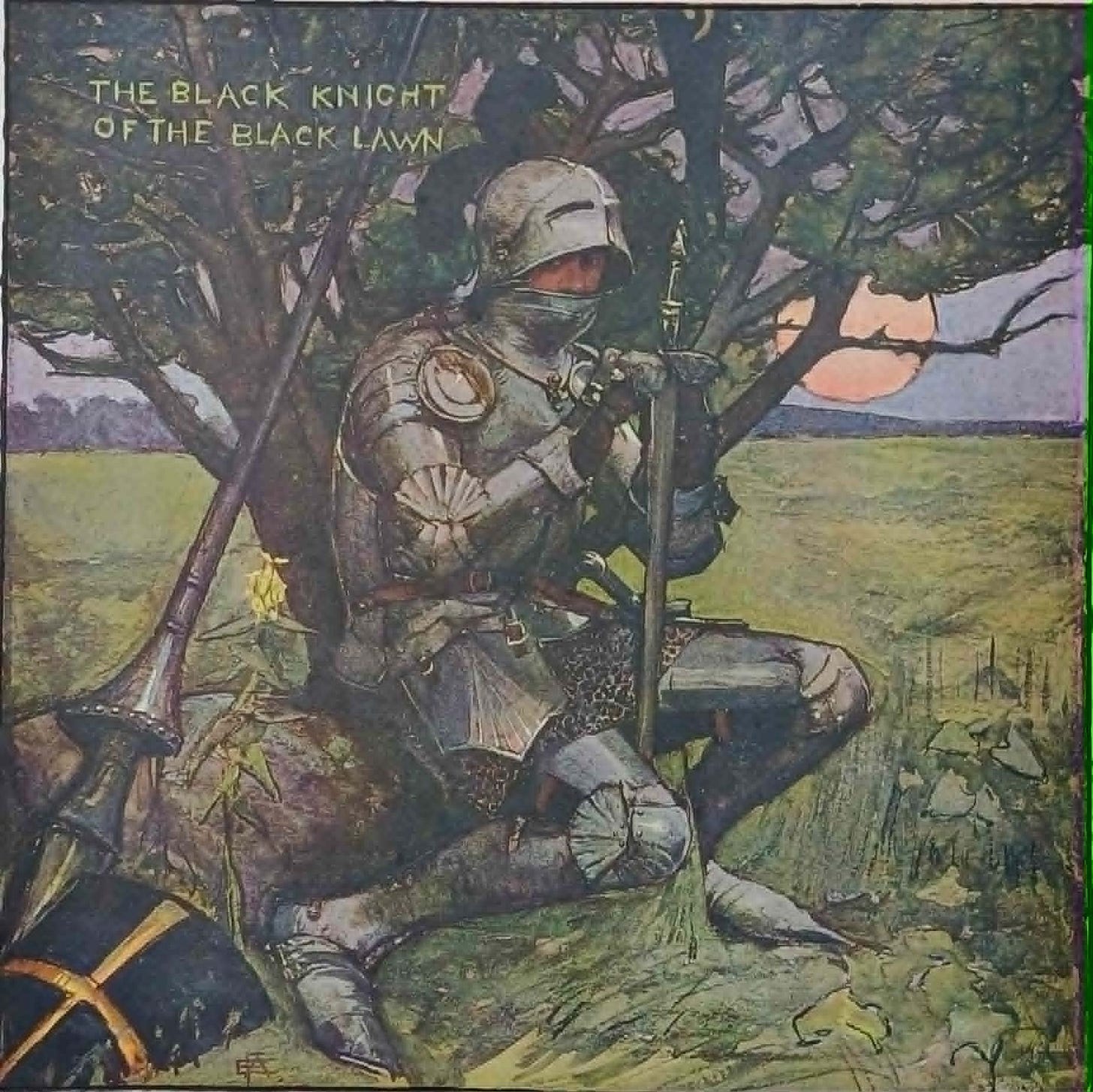
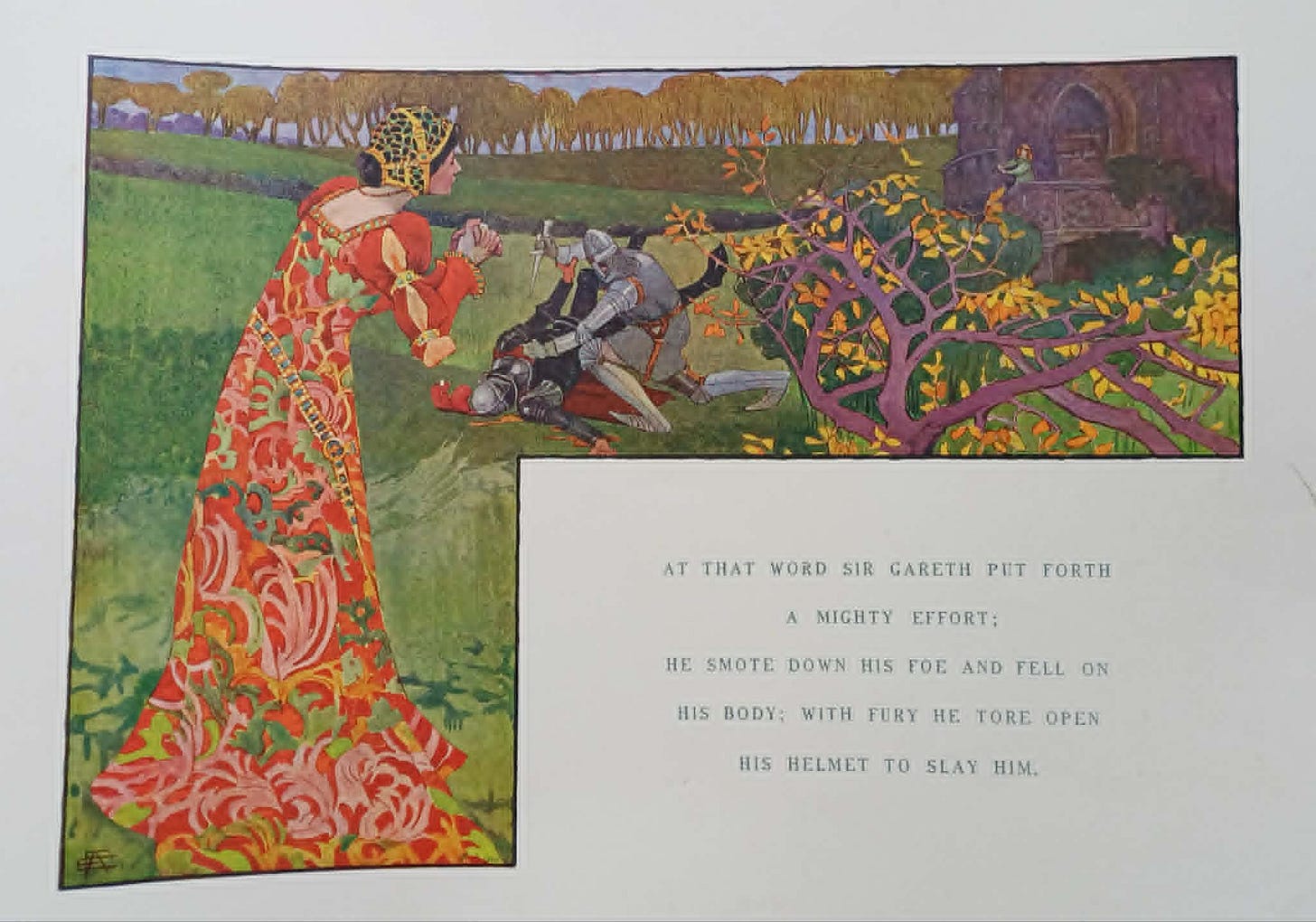
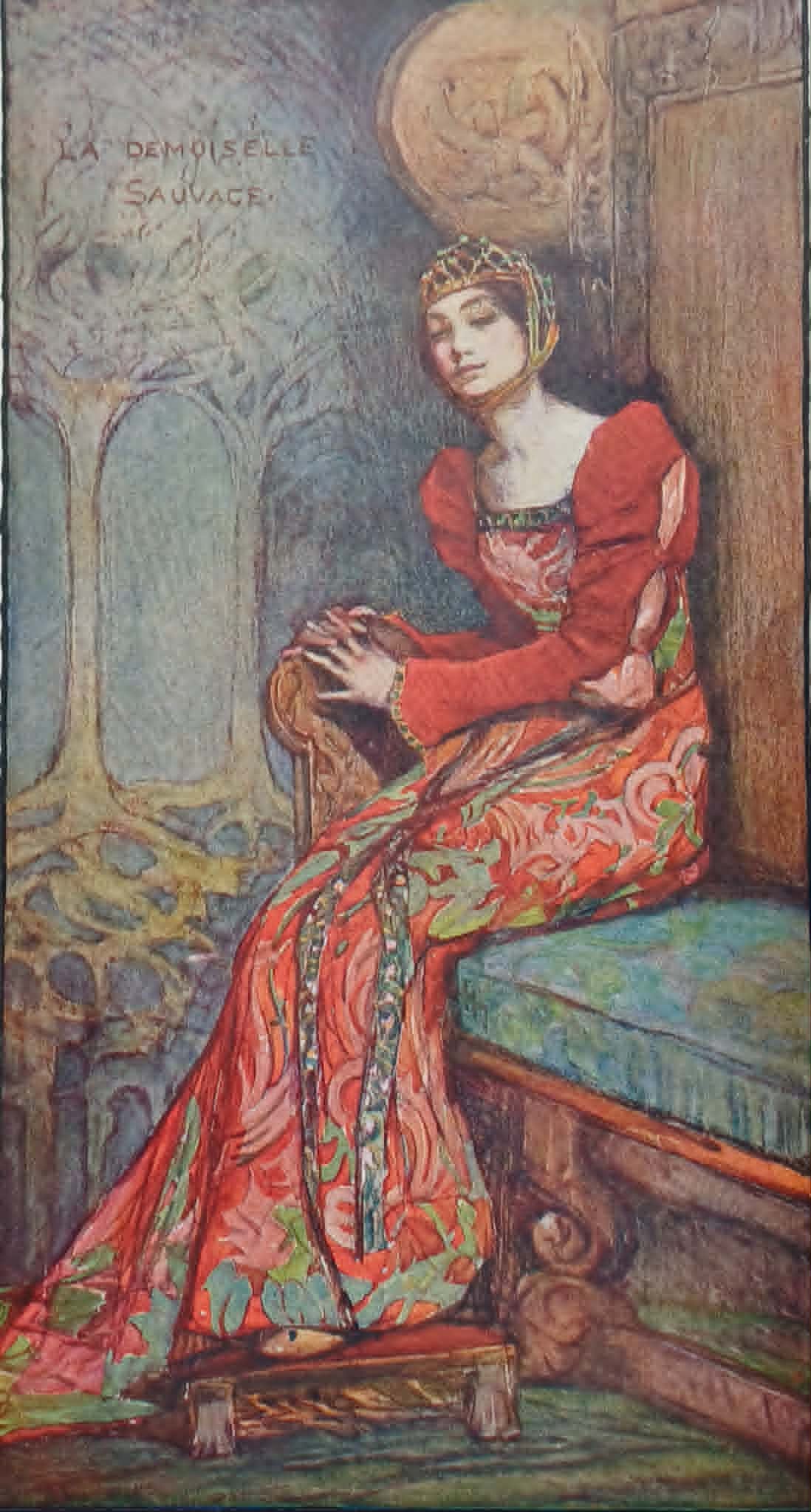
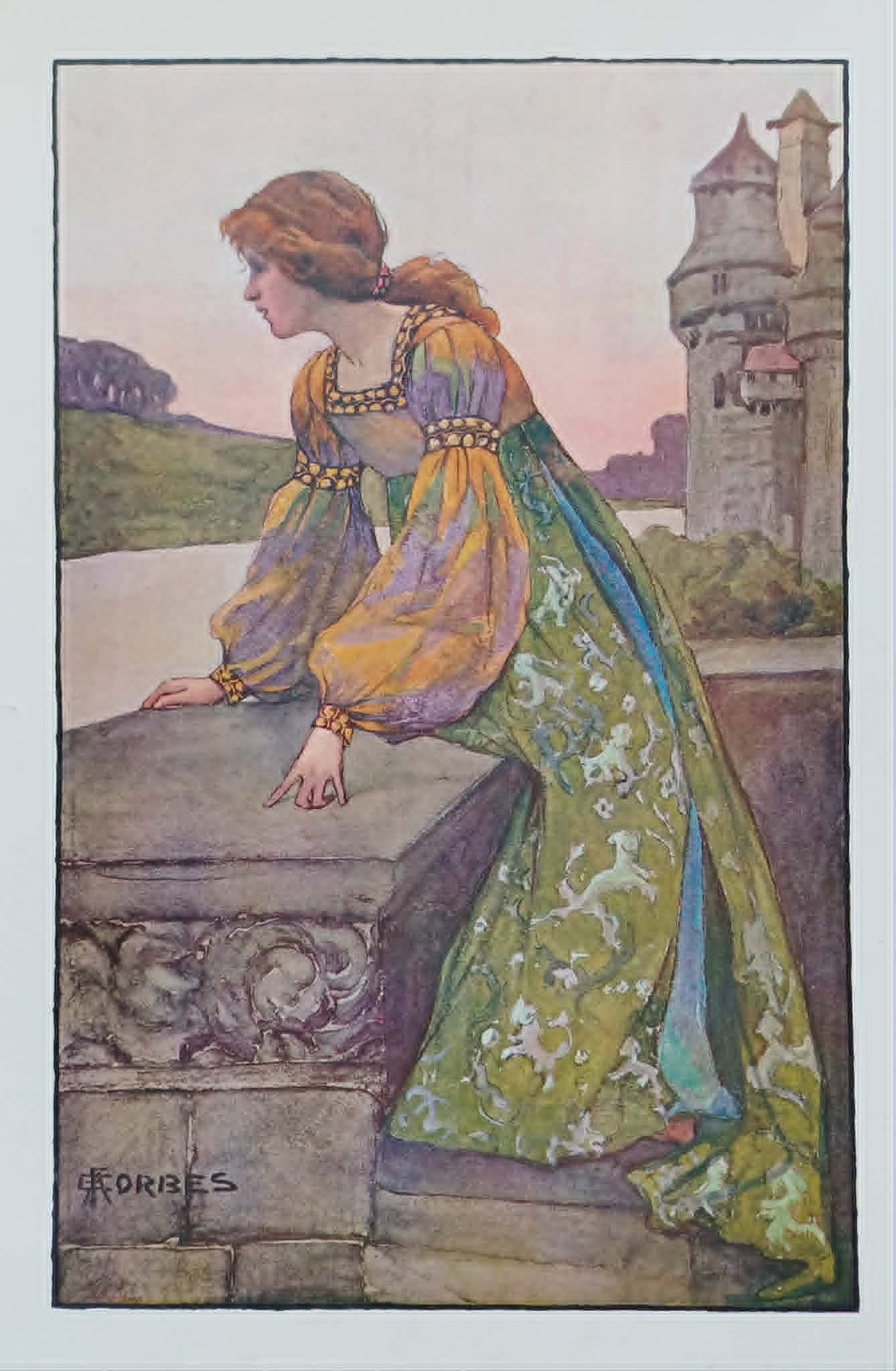
The book also contains 28 illustrations, some of which are watercolours, which are easily comparable to those of Eleanor Fortescue-Brickdale in her illustrations for Tennyson’s Idylls of the King, full of colour and medieval/Pre-Raphaelite detail. Others are charcoals which are evocative and dreamy, illustrating different aspects of the narrative.
It is a shame there aren’t more copies of this book (which is huge, by the way – A3 size) available, because it seems to me a gem of late Pre-Raphaelite illustration, as well as a rare example of an artist both writing and illustrating a book.
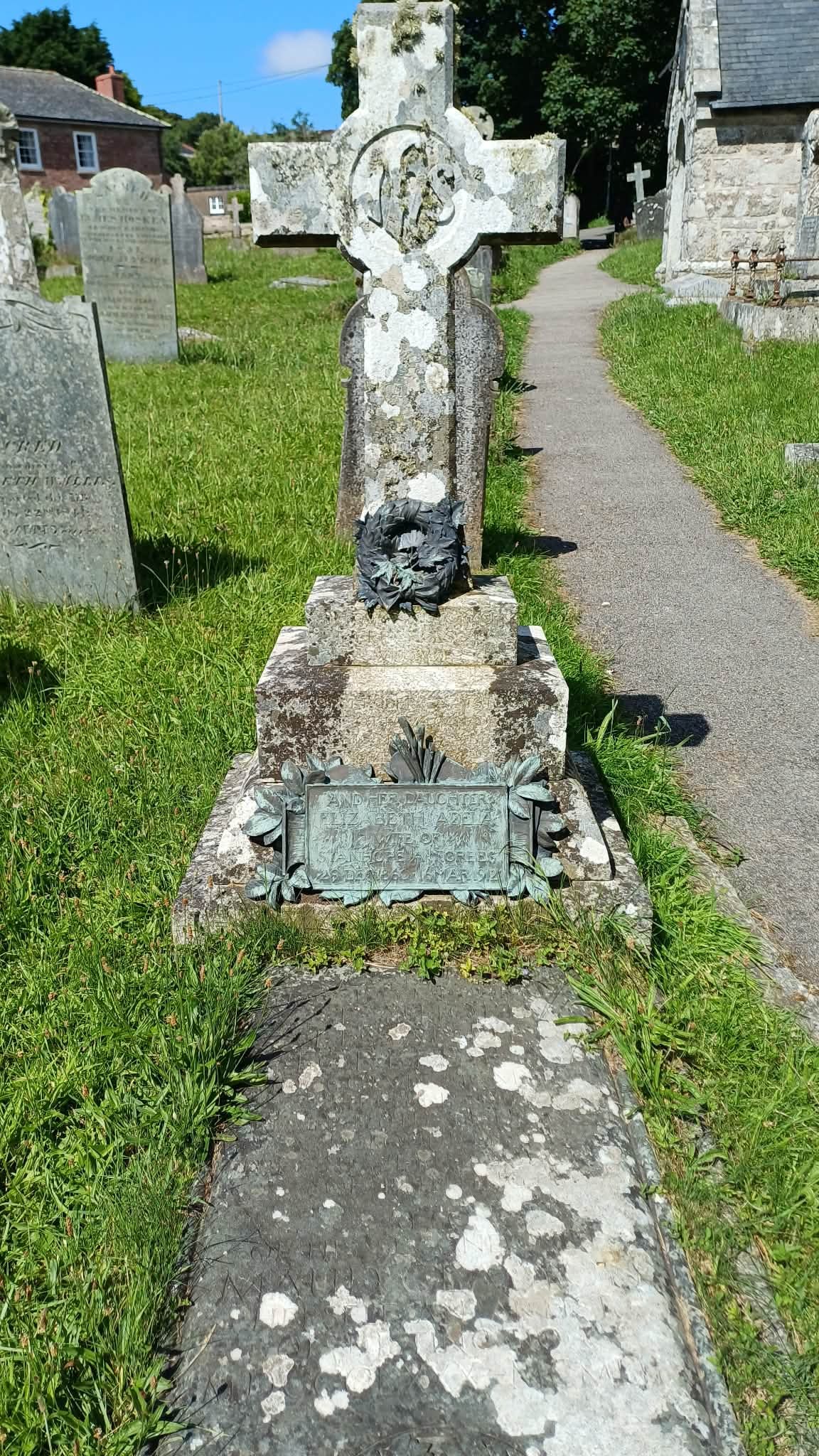
I also made a quick visit to the church of St Creden at Sancreed, where Elizabeth Forbes and her mother are buried. It’s a beautiful, peaceful place in the Cornish countryside.
Comments
Nothing yet. Say the first thing.
Sign in to join the conversation.